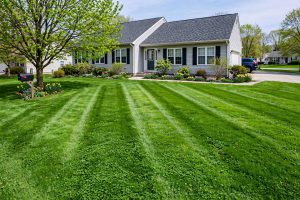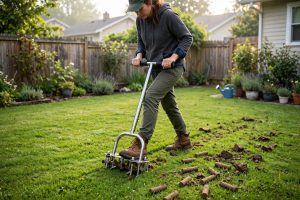

Your lawn can look fed, watered and still tired. The grass feels spongy underfoot. Water sits on top after a light rain instead of soaking in. Thin patches keep coming back in the same places. In many yards the cause is hiding in plain sight: thatch, the tight layer of dead stems, roots and runners that builds up between the green blades and the soil.
A thin layer is normal and even helpful. Once it passes about half an inch, it starts to block water, air and fertilizer, and roots begin growing into the mat instead of the soil. The fix does not have to start with renting a machine. For most small and medium lawns, the best dethatching rake and a free Saturday will pull out a surprising amount of dead material and give the grass room to recover.
Below are the ten manual rakes we would actually shortlist in 2026, from a classic hardwood workhorse to wheeled and system tools that are kinder to your back. After the picks you will find the timing, the technique and the overseeding steps that turn a hard morning of raking into a thicker lawn by next season.
A note on how we picked: Agribloom is written by a plant pathologist (BSc Agriculture, MSc in Plant Pathology). We analyzed manufacturer specifications for head design, tine shape and count, handle build and warranty, and cross checked them against long term owner feedback from retailer listings for every tool below. We did not hands on test these rakes, and we will not pretend otherwise. Where a tool is weak, the specifications or the owners say so, and we pass that on. No prices: just verified specifications and honest trade offs.
Quick Picks: All 10 Dethatching Rakes Compared
| Product | Soil Type | Lawn Size | Durability | Our Verdict |
|---|---|---|---|---|
 AMES Adjustable Thatch Rake (2915100) AMES Adjustable Thatch Rake (2915100) | All soils | Small to medium | Excellent | Excellent |
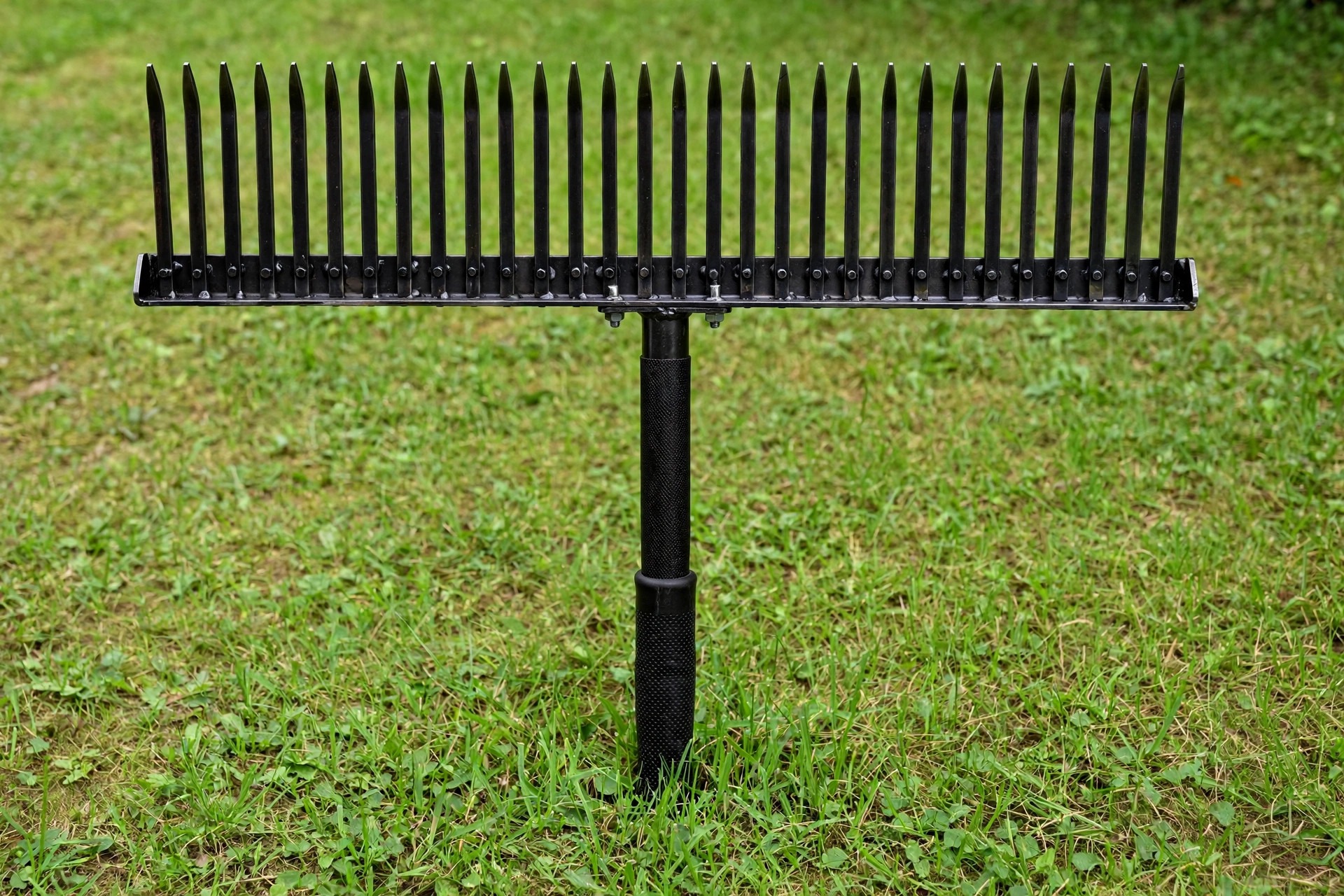 Bully Tools 24-Tine Thatching Rake (92312) Bully Tools 24-Tine Thatching Rake (92312) | Heavy thatch, clay and loam | Medium to large | Excellent | Excellent |
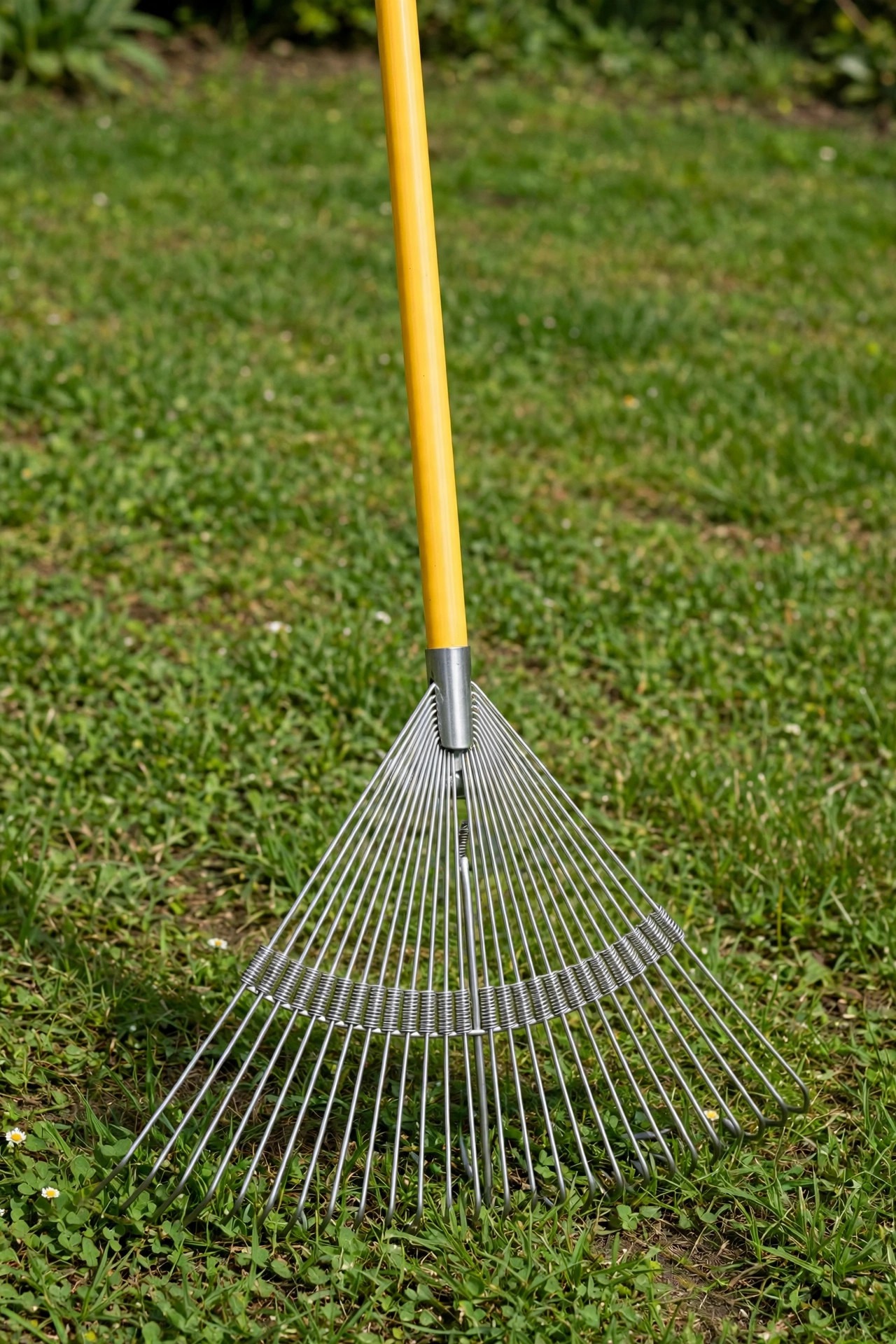 The Groundskeeper II Rake The Groundskeeper II Rake | Light to moderate thatch, sandy and loam | Medium | Excellent | Very good |
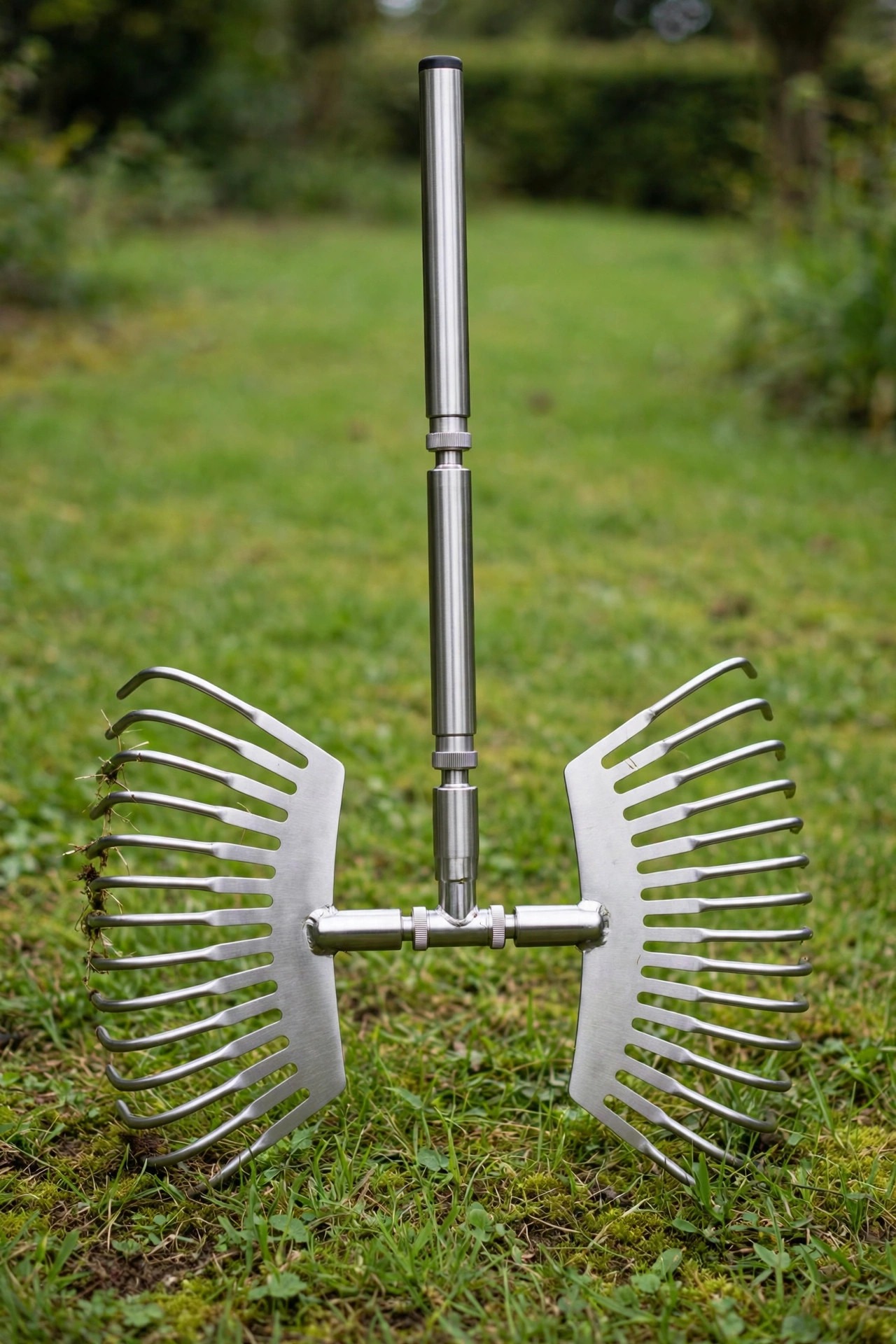 Walensee Thatch Rake Walensee Thatch Rake | All soils | Small | Good | Good |
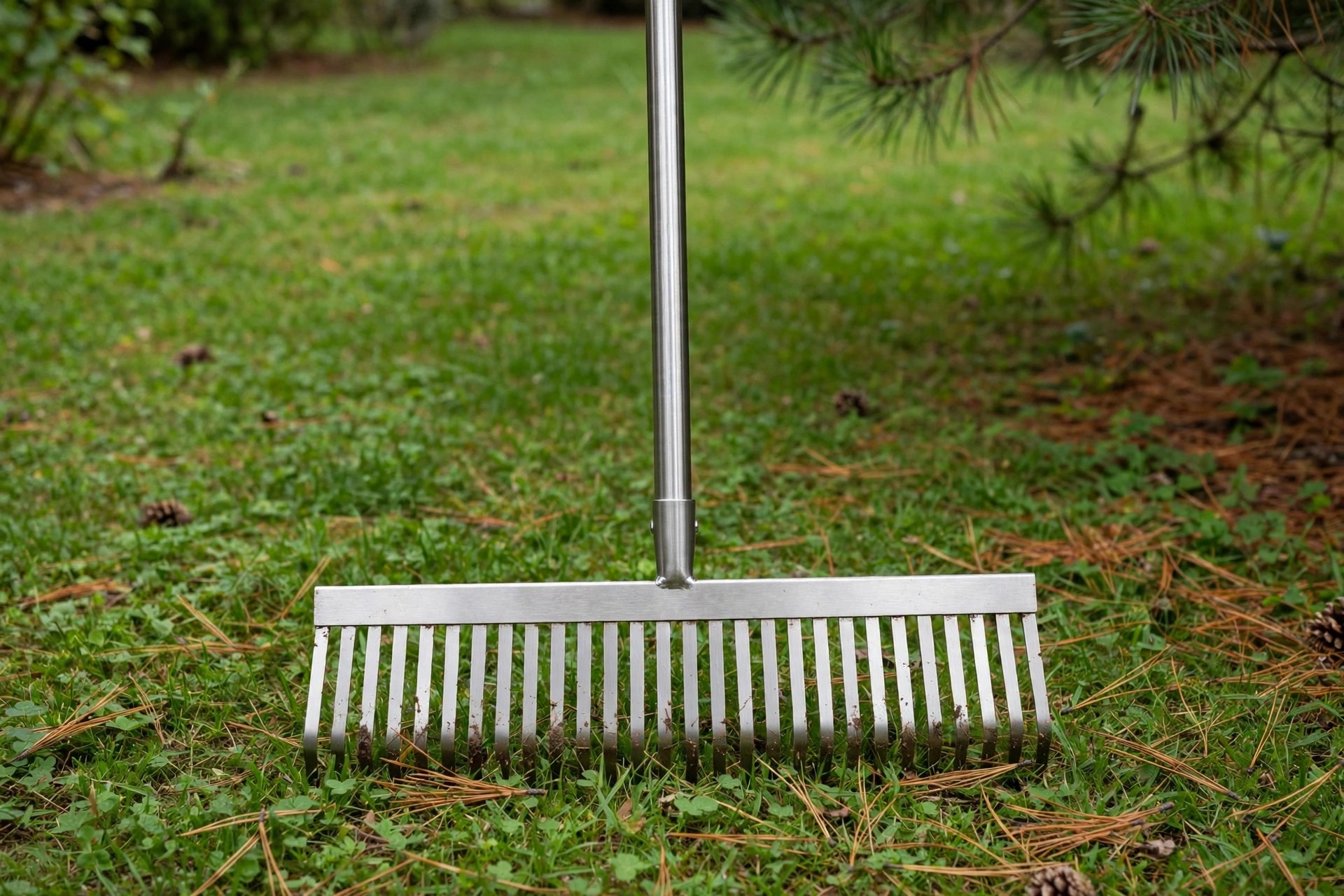 Colwelt Thatch Rake Colwelt Thatch Rake | Light thatch, pine needle yards | Small to medium | Good | Good |
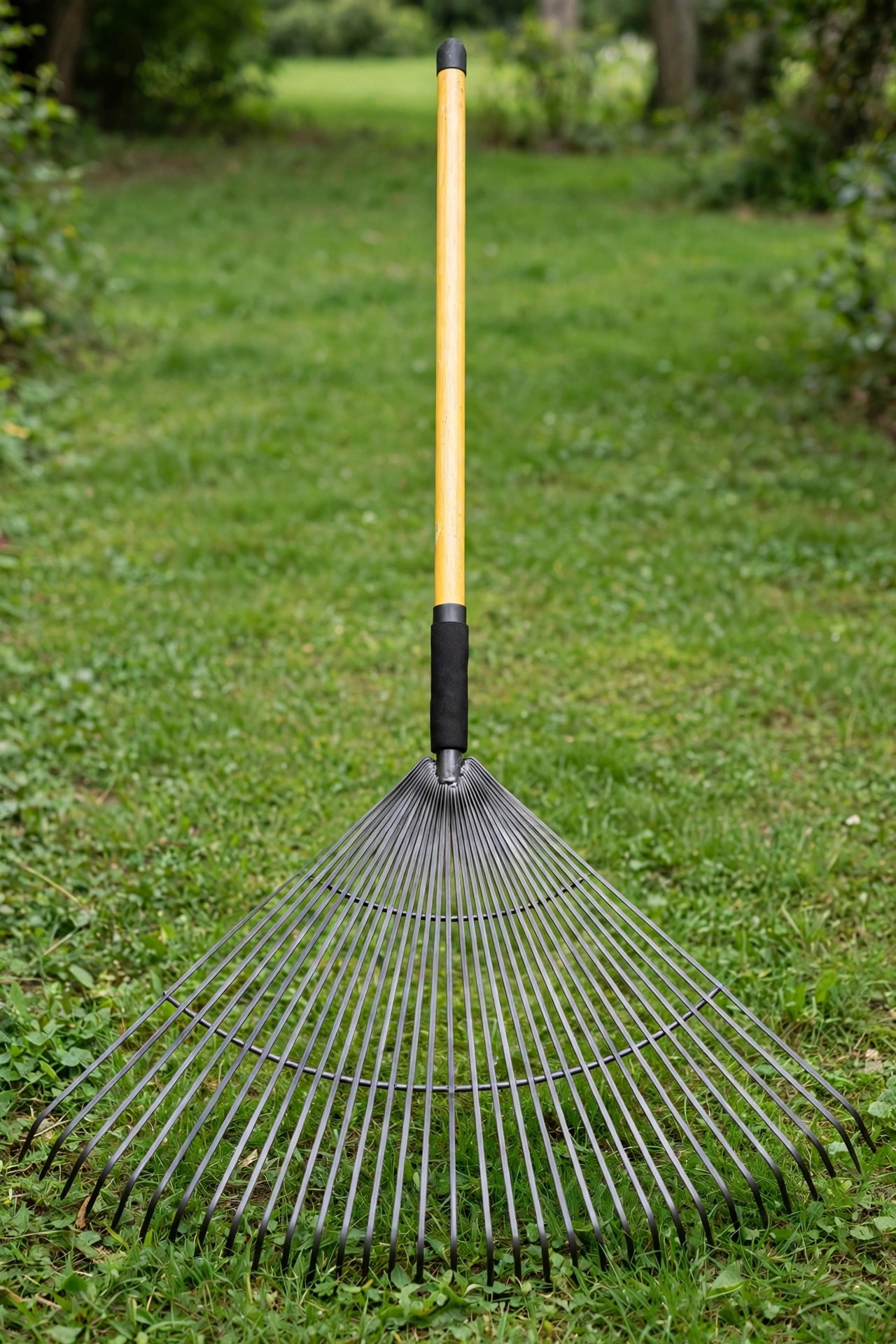 Razor-Back Thatch and Leaf Rake (2915212) Razor-Back Thatch and Leaf Rake (2915212) | Light thatch, leafy lawns | Medium | Good | Good |
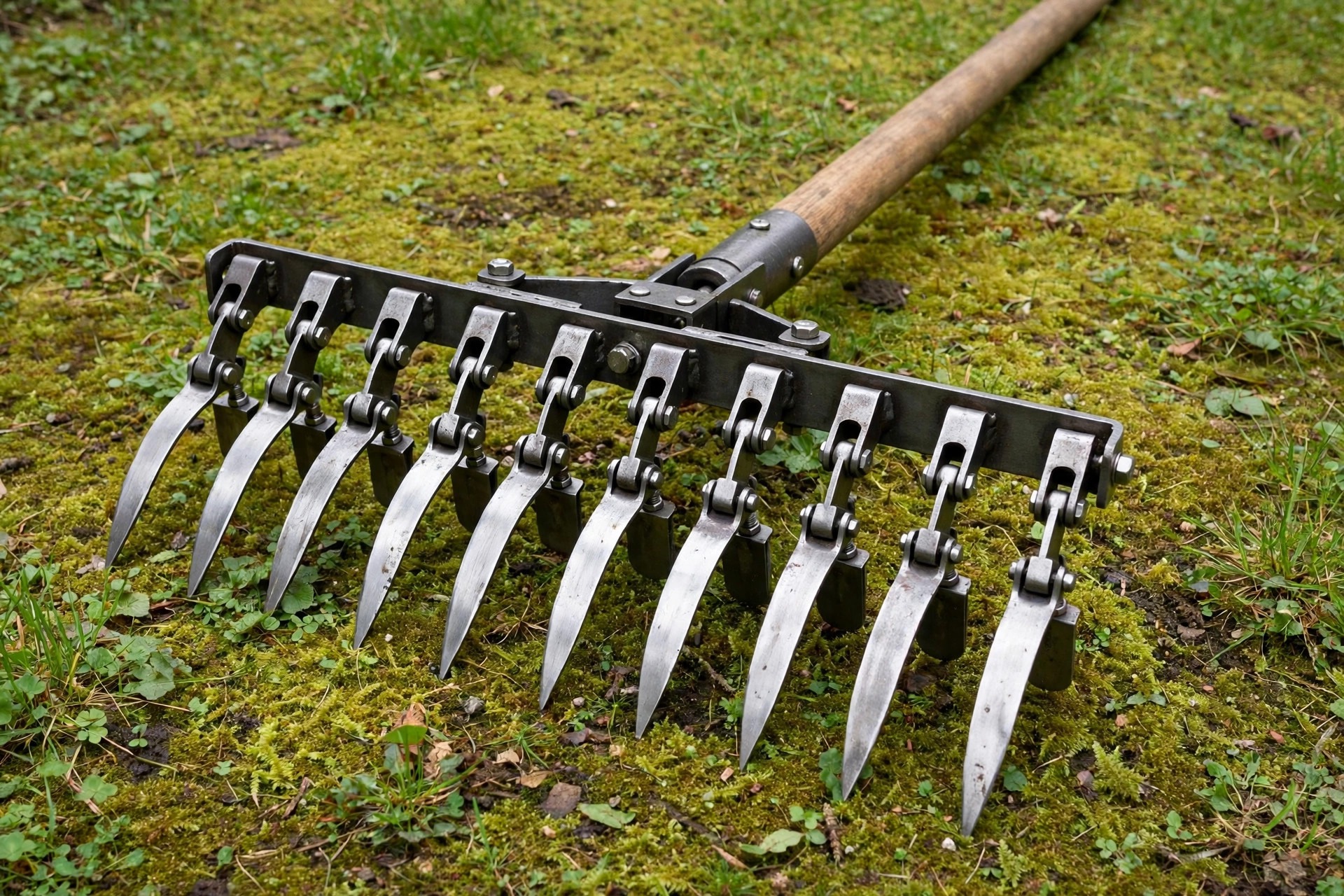 WOLF-Garten multi-change Scarifying Rake UG-M3 WOLF-Garten multi-change Scarifying Rake UG-M3 | Mossy lawns, all soils | Small | Excellent | Good |
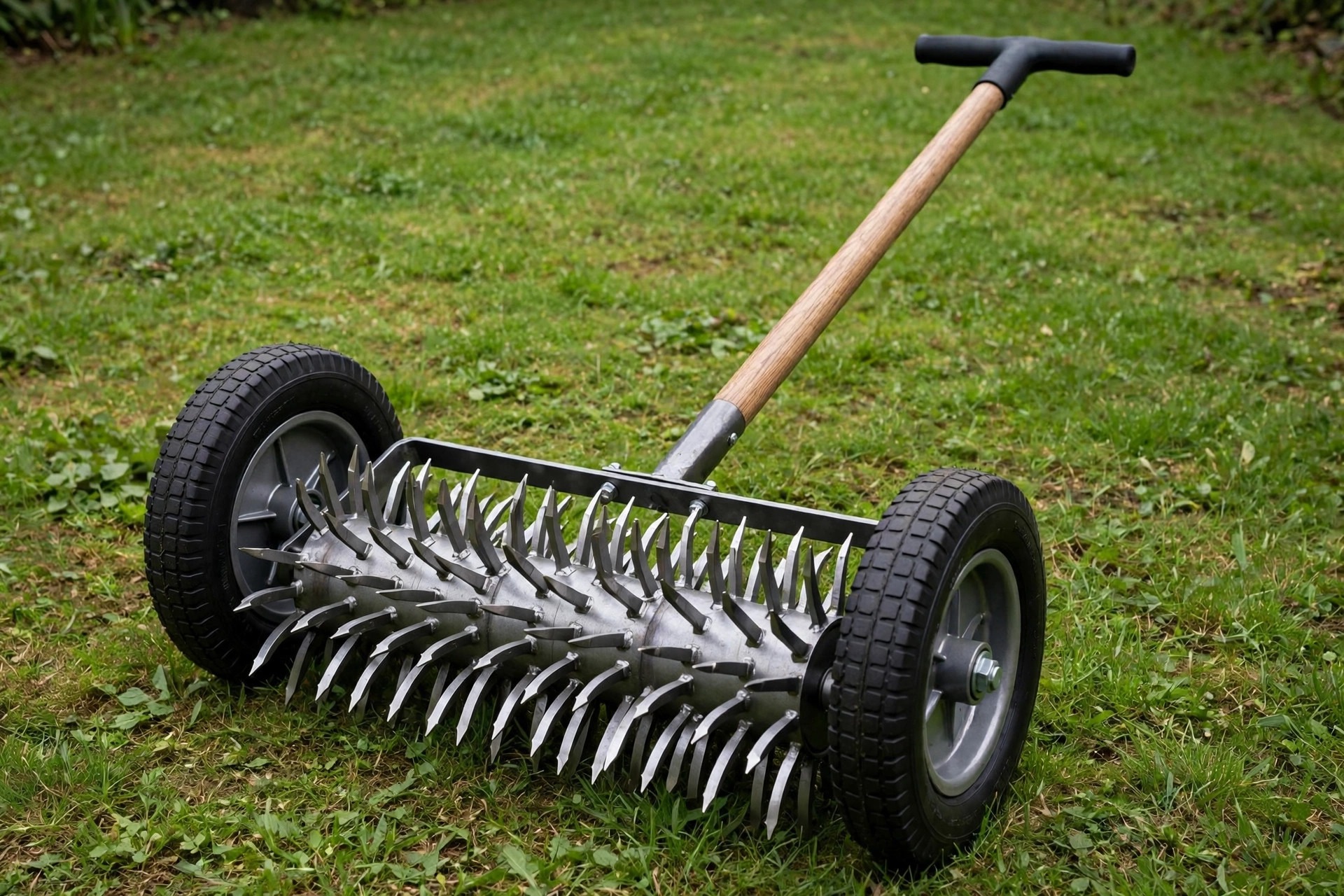 WOLF-Garten multi-change Scarifying Roller UR-M3 WOLF-Garten multi-change Scarifying Roller UR-M3 | Thin or delicate lawns | Small | Good | Fair |
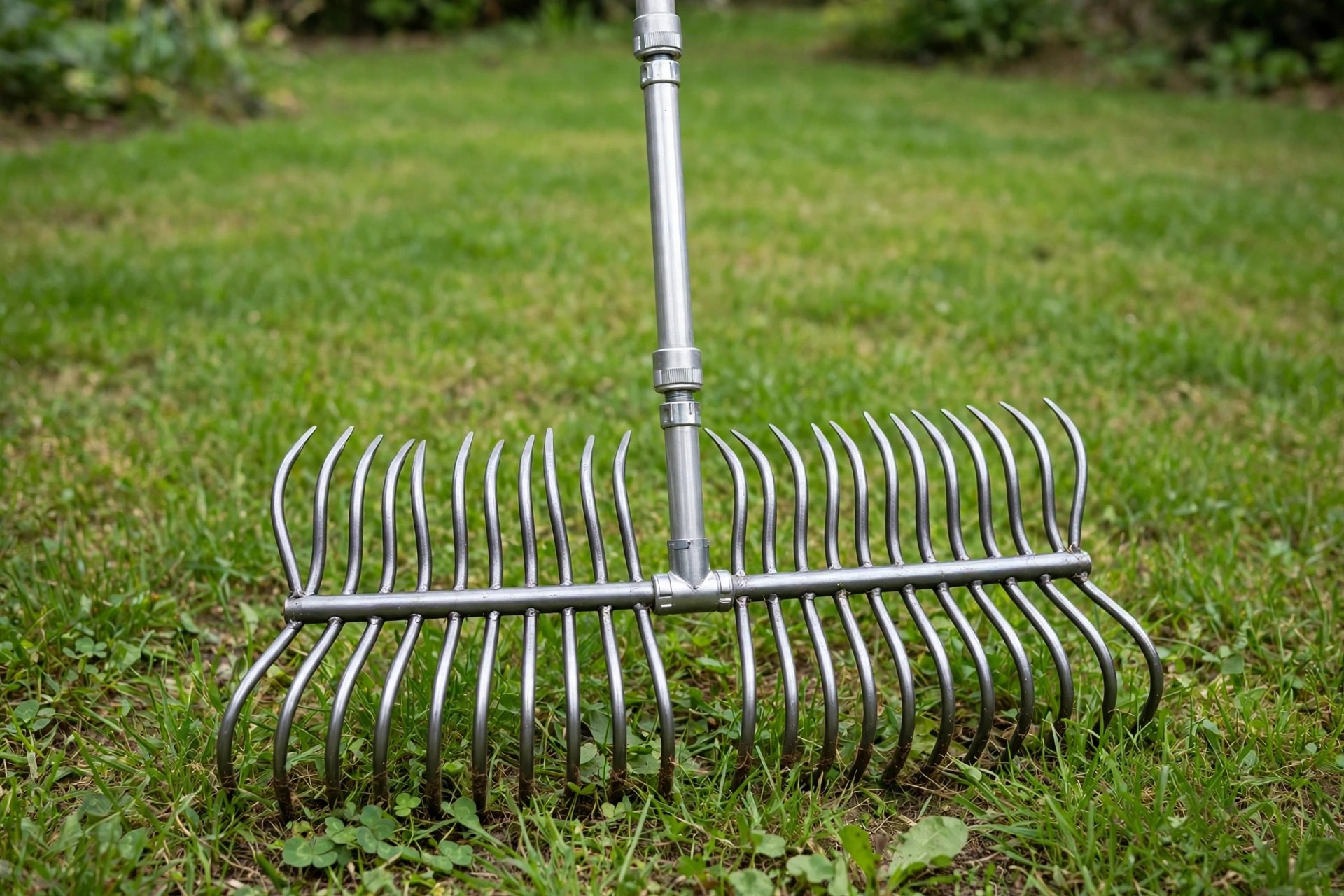 Niovrooro Thatch Rake Niovrooro Thatch Rake | All soils | Small to medium | Good | Fair |
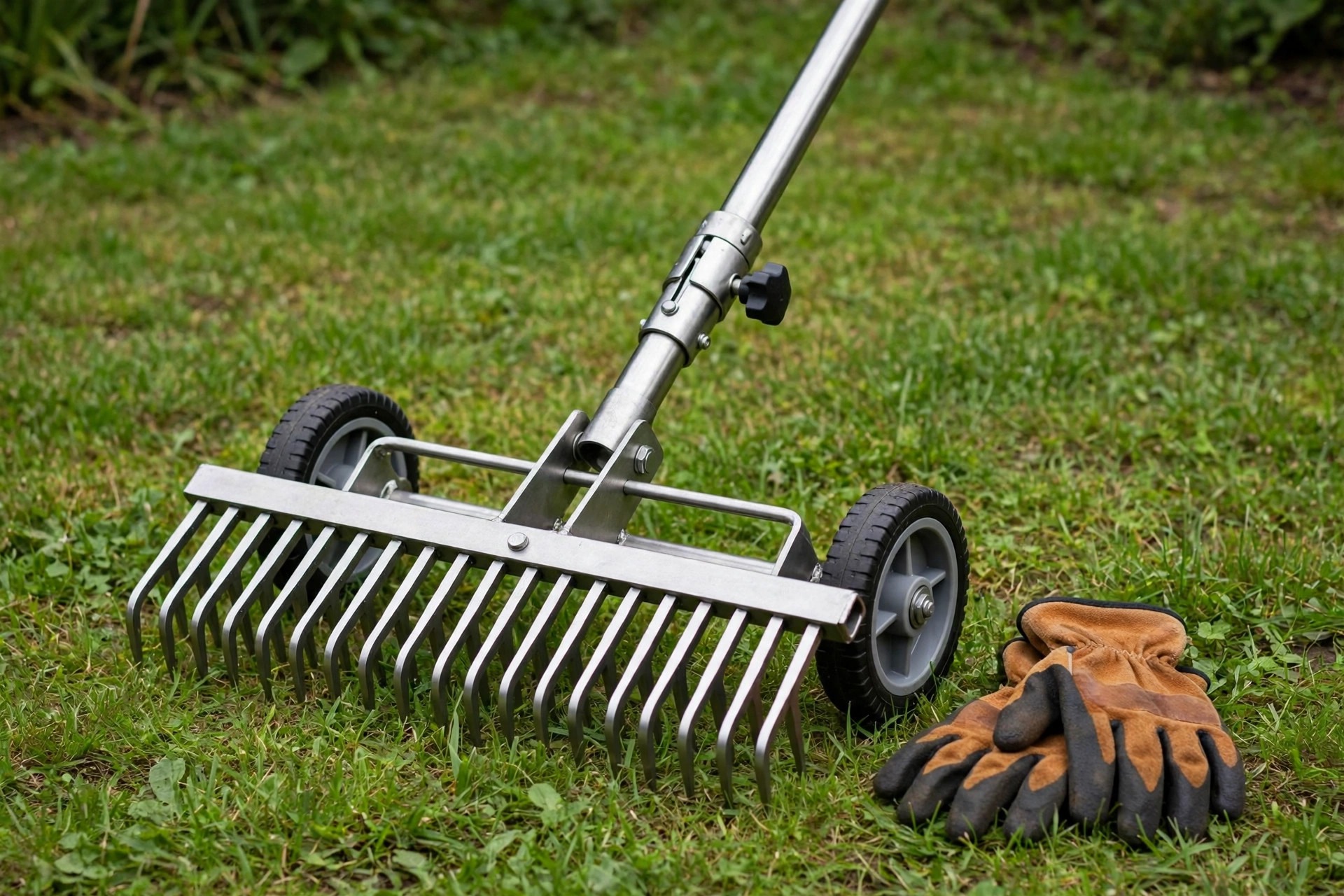 YITIAOYU Wheeled Dethatching Rake YITIAOYU Wheeled Dethatching Rake | Light to moderate thatch | Small to medium | Fair | Fair |
Our verdict weighs build quality from the manufacturer specifications, how well the head design matches real dethatching work, and long term owner feedback.
Short answer first: the best dethatching rake for most homes is the AMES at pick 1. The Bully Tools is the best dethatching rake for a heavy mat on a wide lawn, and the Groundskeeper II is the pick when low weight matters most. The notes below explain the rest.
Signs Lawn Needs Dethatching
Do not dethatch on a schedule. Dethatch on evidence. Extension services give a simple test: cut out a small wedge of turf a few inches deep, or push a trowel under the grass and lift a flap. Look at the brown, felt like layer sitting on top of the soil. If that layer measures more than about half an inch when compressed, mechanical removal is worth doing. Under half an inch, leave it alone, because that thin cushion protects crowns and slows moisture loss.
The other signs lawn needs dethatching are easy to spot once you know them:
- A spongy feel underfoot. The lawn bounces slightly as you walk, and the mower seems to sink and scalp high spots.
- Water that will not soak in. Rain or sprinkler water pools or runs off, even though the soil below is dry.
- Thin, weak growth in spite of feeding. Fertilizer sits in the mat, roots stay shallow, and the lawn fades fast in the first dry spell.
- Disease and insects that keep returning. A thick mat holds moisture against the crowns and shelters pests, which is a pattern any plant pathologist learns to respect.
- Bare patches after winter. Grass rooted in thatch rather than soil is the first to die back in cold or drought.
If two or three of these sound familiar, measure the layer before you buy anything. Five minutes with a trowel tells you whether you need the best dethatching rake you can find or no rake at all.
Best Time to Dethatch Lawn
Timing matters more than effort. Dethatching tears at the lawn, and the grass needs active growth to stitch itself back together. Get the season wrong and you open space for weeds instead of new grass.
For cool season lawns (Kentucky bluegrass, tall fescue, perennial ryegrass), the best time to dethatch lawn areas is late summer into early fall, with early spring as the second choice. Fall wins for the same reason it wins for seeding: warm soil, cooler air, and far less weed pressure.
For warm season lawns (Bermuda, zoysia, St. Augustine, centipede), dethatch in late spring to early summer, after the lawn has fully greened up and is growing hard. Never dethatch a dormant warm season lawn in winter, and avoid the job in peak summer heat or drought for either type.
Two conditions apply everywhere. Work when the soil is moist but not wet, so tines pull through the mat instead of ripping chunks of turf. And mow a little lower than usual first, so the rake reaches the thatch instead of skating over tall grass.
The 10 Best Dethatching Rakes in 2026
Short on time? Start with the AMES for most yards, the Bully Tools for heavy mats, and the Groundskeeper II if you want the lightest tool on the list. The full notes below explain who each rake suits and where each one falls short.
1. AMES Adjustable Thatch Rake (2915100): Adjustable Head, 19 Curved Steel Tines
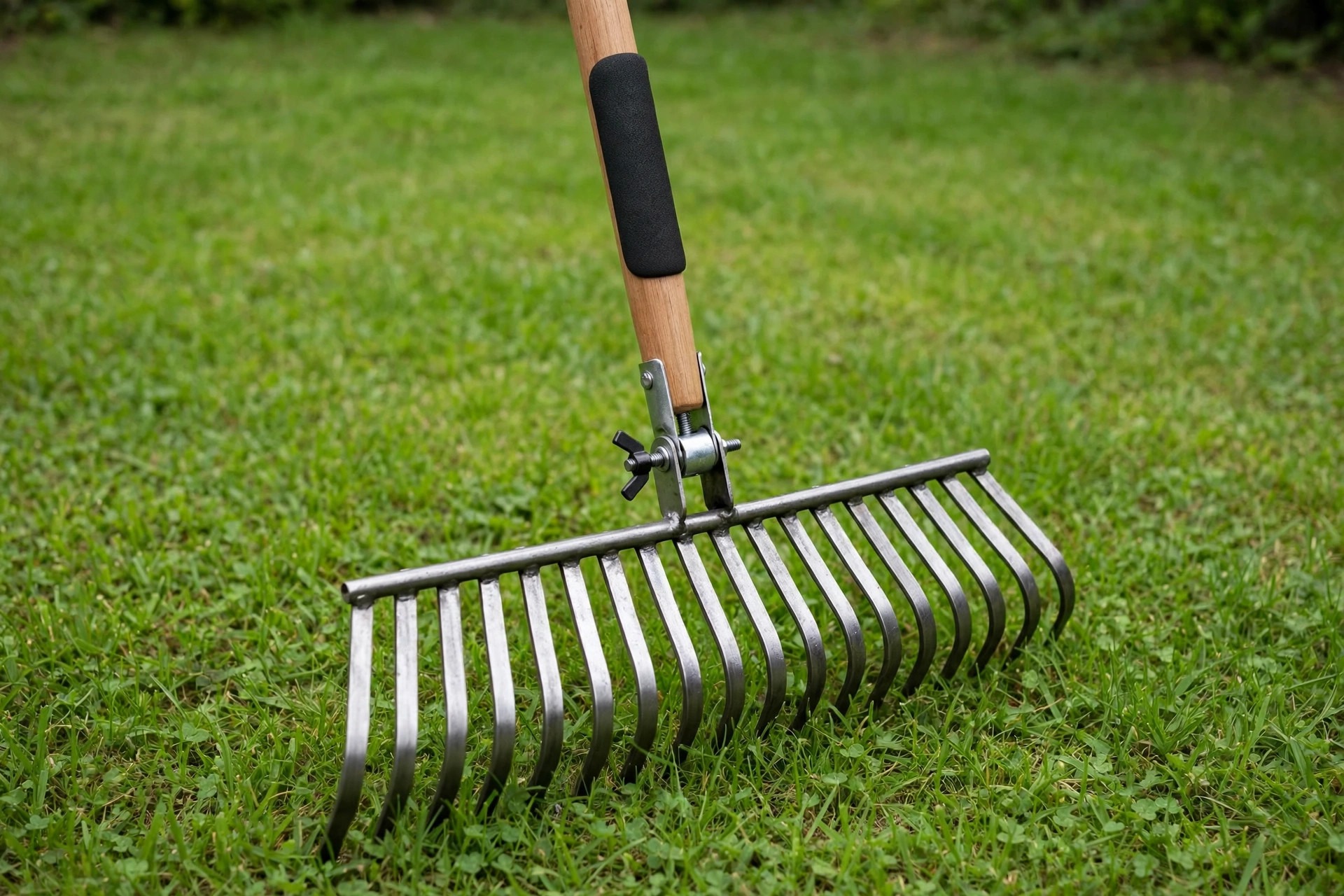
If a neighbour asks which single tool to buy, this is the answer, and for most homes it is the best dethatching rake here. The AMES pairs a 15 inch self cleaning head with 19 curved steel tines and a 54 inch hardwood handle finished with a 10 inch cushion grip. The head angle adjusts, so you can set a gentle pass for light cleanup or a steeper bite for a real mat, and the flared tine points work on both the push and the pull.
What owners praise most is balance: heavy enough to dig in, light enough to work a small lawn in sections without wrecking your shoulders. The 15 year limited warranty listed by major retailers also says something about how the maker expects it to last.
Best for: Most small to medium lawns with a real thatch layer, light cleanup or a heavy mat. Skip if: Your lawn runs over half an acre, where a full hand dethatch turns into a two day job.
Pros: adjustable, self cleaning head; strong hardwood handle with a comfortable grip; long warranty backing; a proven design sold for decades.
Cons: manual dethatching is still hard work, and this rake does not change that; check the head bolts now and then, because a loose head is the most common owner complaint.
2. Bully Tools 24-Tine Thatching Rake (92312): 24 Tempered Tines for Heavy Mats
The Bully Tools is the heavy lifter of the group. Its spec sheets list 24 tempered steel tines on a wide head, a fiberglass handle with a rubber grip, a weight of about 3.8 pounds, and a limited lifetime warranty. The steel is US made, and the head to handle connection is reinforced, which is exactly the joint that fails first on cheaper rakes when you lean into a matted lawn.
Choose this one for Bermuda or zoysia with a serious mat, or for a medium to large lawn where a narrow head would take all weekend. The width covers ground fast, and the tines flex enough to pull thatch without scalping healthy grass on every pass.
Best for: Medium to large lawns with heavy, felted mats, especially Bermuda and zoysia. Skip if: You mostly work tight beds and corners, or you want a light tool for short sessions.
Pros: widest, toughest head in this guide; tempered tines that resist bending; lifetime warranty; built for big jobs.
Cons: the width that makes it fast also makes it awkward in tight beds and corners; it is a two handed, full effort tool, so pace yourself.
See the full specifications and price on the Bully Tools Thatching Rake product page.
Check the current price on Amazon
3. The Groundskeeper II Rake: 28 Spring Tines at About 2 Pounds
The Groundskeeper II looks different because it is different. Instead of flat tines, it uses 28 round, spring loaded steel tines, each working on its own torsion spring, set in a 21 inch copolymer head on a 55 inch fiberglass handle. The whole tool weighs about 2 pounds. The angled tines are designed to dig in with no downward pressure from you, so you rake standing upright, and flipping the head over clears the tines in one pass.
Landscapers like it for exactly that reason: less fatigue over a long day. For anyone who dreads this job, it may be the best dethatching rake simply because it is the one you will actually use. For dethatching, it shines on light to moderate mats and on sandy or loose soils where a hooked thatch rake would tear turf. Individual tines are replaceable, which extends the life of the tool well past a single bent tine.
Best for: Light to moderate thatch on sandy or loose soils, and anyone who dreads raking bent over. Skip if: Your mat is a thick felt over half an inch, where a hooked rake’s bite clears it in fewer passes.
Pros: lightest serious tool here; no down pressure needed; self cleaning flip design; replaceable tines; made in the USA.
Cons: on a truly heavy, felted mat it takes more passes than the AMES or Bully; owners say the spring action takes a few minutes to get used to.
See the full specifications and price on the Groundskeeper II Rake product page.
Check the current price on Amazon
4. Walensee Thatch Rake: Handle Builds to 40, 55 or 70 Inches
Walensee takes the classic 15 inch, 19 tine layout and makes the handle the feature. The dual sided head uses curved steel tines on one side for lifting thatch and a second side for loosening the surface, and listings describe a hardened manganese steel head with a powder coat against rust. The sectional stainless handle builds to roughly 40, 55 or 70 inches, so a tall user, a short user and a teenager can each set a length that keeps their back straight.
It also comes apart for storage, which matters in a crowded garage. For a small lawn and a small shed, this is often the best dethatching rake to live with day to day.
Best for: Small suburban lawns, small storage spaces, and households sharing one tool between people of different heights. Skip if: You want a one piece handle with no joints to check, or a brand with decades of track record.
Pros: three working lengths from one handle; dual sided head; rust resistant finish; packs down small.
Cons: sectional handles need a firm tighten before you start and a quick check mid job; the brand does not carry the decades long track record of AMES or Bully Tools.
See the full specifications and price on the Walensee Thatch Rake product page.
Check the current price on Amazon
5. Colwelt Thatch Rake: 18 Inch Head for Pine Needles and Light Thatch
The Colwelt stretches the head to 18 inches with 24 steel tines, on a 54 inch stainless handle for a total length of about 63 inches. Retailer listings put it under 3 pounds, and the angled, spring style tines are meant to work with a simple pull toward you rather than a sawing motion. That gentle action, plus the wide head, makes it a natural for pine straw, fallen needles and light surface thatch, the exact mix that clogs narrower hooked rakes. For pine straw yards, many owners treat it as their best dethatching rake and their everyday cleanup rake in one.
Best for: Yards under pine trees, pine straw cleanup, and light surface thatch. Skip if: You need to tear out a half inch felt mat; this head is built for gentle work.
Pros: wide head clears light material fast; light in the hands; long total reach reduces bending; good second rake for general cleanup.
Cons: it is built for light to moderate work, not for tearing out a half inch felt mat; as with most sectional handles, keep the joints snug.
See the full specifications and price on the Colwelt Thatch Rake product page.
Check the current price on Amazon
6. Razor-Back Thatch and Leaf Rake (2915212): 24 Inch Head for Leaves and Light Thatch
Razor-Back builds this one around a 24 inch, one piece steel head with 24 flexible steel tines, bolted to a 54 inch fiberglass handle with a cushion grip, for an overall length of about 68 inches. It is sold as a leaf rake that also pulls thatch, and that honesty is its strength: the flexible tines glide over healthy grass, gather leaves and lift loose dead material without the aggressive bite of a hooked thatch rake.
Pick it if your real problem is a mix of leaves, clippings and light thatch on a medium lawn, and you want one wide tool for fall cleanup and spring grooming. It will not win best dethatching rake for heavy work, and it does not pretend to.
Best for: Medium lawns where the real job is a mix of leaves, clippings and light thatch, and fall cleanup in general. Skip if: Your thatch is heavy and compacted; you need a true thatching head instead.
Pros: very wide head; secure bolted, one piece head; comfortable fiberglass handle; gentle on healthy turf.
Cons: flexible tines are not made for heavy, compacted thatch; for a thick mat you still need a true thatching head like the AMES.
7. WOLF-Garten multi-change Scarifying Rake UG-M3: Pendulum Blades for Mossy Lawns
The UG-M3 is a head only tool in the WOLF-Garten multi-change system, so you click it onto a separate handle, with the ZM 170 recommended. The working width is 30 cm, about 12 inches, and the head carries pendulum mounted blades on 10 oscillating tines, at a head weight of about 0.95 kg. The action is clever: the head glides when you push and bites when you pull, which suits mossy, shaded lawns where moss and thatch arrive together.
It is the best dethatching rake here for moss heavy lawns. It is made in Germany, and retailers list long warranty cover, up to lifetime on some listings. The trade off is plain: you are buying into a handle system, and US availability is thinner than the big US brands.
Best for: Moss heavy, shaded small lawns, and gardeners already using the WOLF-Garten multi-change system. Skip if: You do not want to buy a handle separately, or you need fast coverage on a wide lawn.
Pros: pendulum action is efficient in moss; narrow head is precise between beds; system handle can serve many other heads; strong build quality.
Cons: handle is sold separately, so the true cost is higher; harder to find in US stores than the AMES or Bully Tools.
8. WOLF-Garten multi-change Scarifying Roller UR-M3: Wheeled Roller for Thin, Delicate Lawns
The UR-M3 is the wheeled sibling in the same system. It also works at 30 cm wide with hardened scarifying blades and a pendulum action, but large wheels carry part of the depth, so the blades are less likely to dig too deep. Retailer specifications list a 10 year warranty for this model, and the same ZM 170 handle recommendation, sold separately.
That depth control is the whole point. On a thin, young or delicate lawn, a fixed rake can rip out as much good grass as dead material. The roller is slower and narrower, but far more forgiving.
Best for: Thin, young or delicate lawns where digging too deep does real damage. Skip if: Your lawn is thick and tough; the narrow, gentle roller will feel slow and unnecessary.
Pros: wheels guard against digging too deep; good control on thin turf; same quality system build as the UG-M3.
Cons: narrow width means slow coverage; handle cost on top; overkill if your lawn is thick and tough.
See the full specifications and price on the WOLF-Garten Scarifying Roller UR-M3 product page.
Check the current price on Amazon
9. Niovrooro Thatch Rake: 70 Inch Handle, Two Head Modes
Niovrooro is the value pick that earns its place on reach and flexibility. Listings describe a 15 inch head with 19 curved, double sided steel tines about 5 inches long: one side to clean the turf, the other to loosen soil. The four section handle builds up to about 70 inches, the head angle adjusts, and you can set the head screws for a fixed mode for loosening or a looser cushion mode for thatch removal. The head arrives pre assembled.
For tall users, it makes a real claim as the best dethatching rake on reach alone. The difference shows in your posture: an extra few inches of handle is the difference between raking upright and raking bent.
Best for: Tall users, and anyone who wants the longest reach in this guide at a value price. Skip if: You want a decades proven brand with local store support and a long review history.
Pros: longest handle in this guide; two head modes and two working sides; adjustable angle; keen value for the specification.
Cons: a newer brand with a shorter track record; check every nut and joint on arrival and again after the first session, as the listing itself advises.
See the full specifications and price on the Niovrooro Thatch Rake product page.
Check the current price on Amazon
10. YITIAOYU Wheeled Dethatching Rake: Wheeled Head That Glides Instead of Drags
The YITIAOYU puts its 15.3 inch head on dual support wheels, so the stroke becomes a push and pull glide instead of a drag. The stainless handle adjusts from about 35 to 67 inches, the head angle adjusts for deeper scarifying or light grooming, and the listing includes garden gloves with a simple twist together assembly.
On paper, wheels change the job more than any other feature here. If bending, dragging and arm fatigue are what stop you dethatching at all, this is the best dethatching rake for getting the work done, even if it would not be our first pick for a heavy mat.
Best for: Gardeners with back, shoulder or arm trouble, on light to moderate thatch. Skip if: Your ground is uneven, or long term durability matters more than easy effort today.
Pros: wheels cut dragging effort and back strain; wide adjustment range; adjustable head angle; quick assembly.
Cons: long term durability is unproven compared with the established brands; wheels are happiest on reasonably level ground.
See the full specifications and price on the YITIAOYU Wheeled Dethatching Rake product page.
Check the current price on Amazon
Dethatching Rake vs Power Rake: Which Do You Actually Need?
This is the decision most homeowners overthink. A dethatching rake vs power rake comparison comes down to lawn size, thatch depth and how often the job really needs doing.
A manual rake like the ten above costs you effort and nothing else. It is precise, it works around beds, trees and sprinkler heads, and for a small to medium lawn with a mat up to about three quarters of an inch, it finishes the job in a morning of steady work. You also control every pass, so overseeding prep stays gentle.
A power rake or vertical mower, usually rented, uses engine driven blades or tines to slice and lift thatch across the whole lawn. It is the right call for a large lawn, a mat thicker than about three quarters of an inch, or a full renovation. It is also easier to overdo: set too deep, it can shred healthy turf, and you still have to rake up and remove the debris it brings to the surface.
Our honest rule: own the manual rake, rent the power rake. Most lawns need light dethatching far more often than heavy renovation, and the tool hanging in your garage gets used. The rental machine is there for the one year in five when the mat wins.
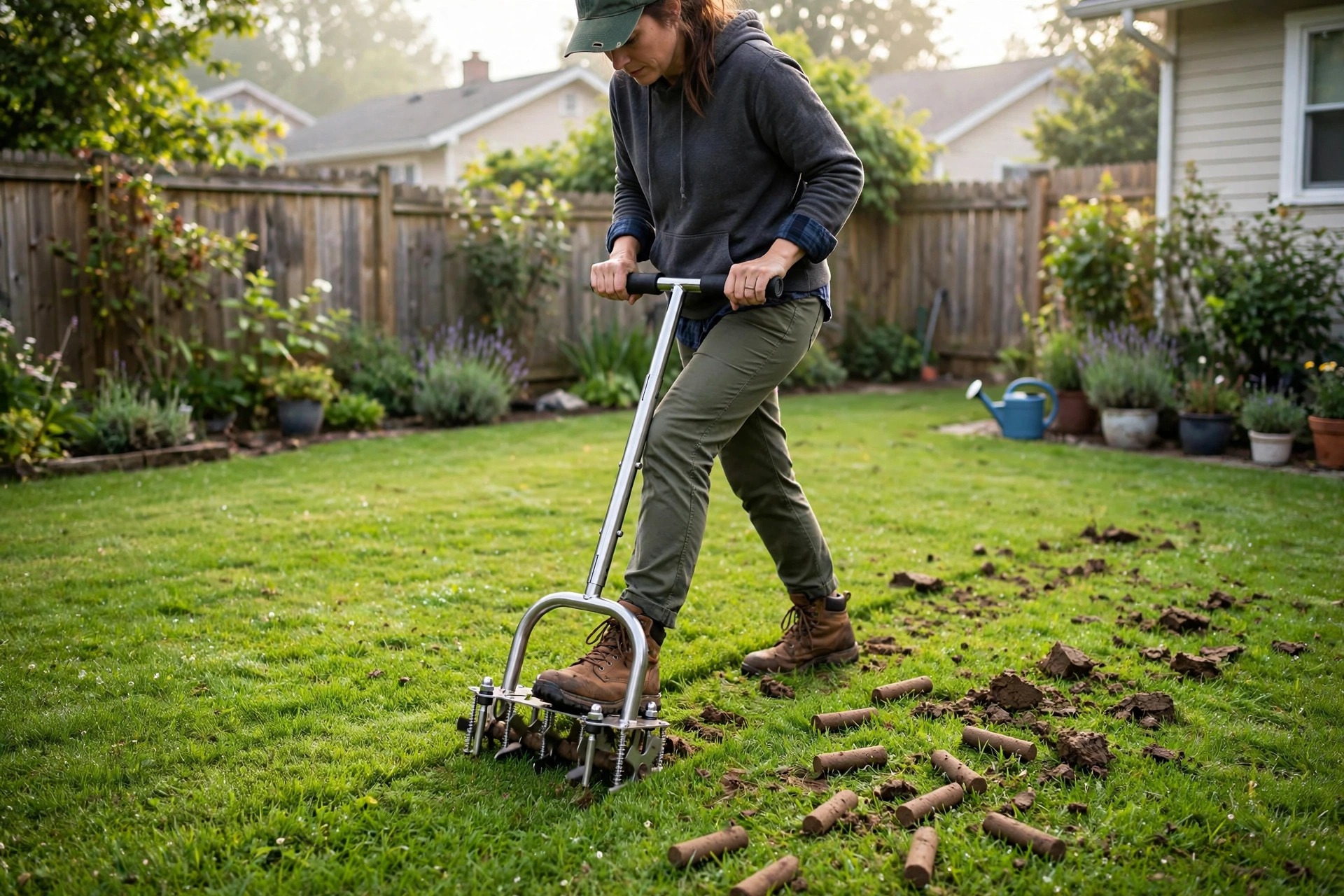
Dethatching and aeration solve different problems, and many lawns need both in the same season: dethatching removes the surface mat, while aeration relieves compaction below it. If your soil is hard as well as matted, plan the two jobs together.
How to Choose the Right Lawn Dethatcher Tool
Head design first, brand second. A good lawn dethatcher tool matches your thatch depth, your lawn size and your body. Work through these four checks:
- Tine shape. Hooked, curved steel tines (AMES, Walensee, Niovrooro) bite and lift a real mat. Spring or flexible tines (Groundskeeper II, Colwelt, Razor-Back) are gentler and faster on light material. Bladed scarifying heads (the WOLF-Garten pair) suit moss.
- Head width. Fifteen inches is the sweet spot for control on small lawns. Eighteen to 24 inches covers ground faster but tires you sooner and struggles in tight corners.
- Handle. Hardwood and fiberglass one piece handles (AMES, Bully Tools, Razor-Back) are the most durable. Sectional stainless handles (Walensee, Colwelt, Niovrooro, YITIAOYU) adjust for height and storage, but their joints need checking. Match the length to your height so you can rake upright.
- Weight. Around 2 pounds is easy to swing for an hour. Around 4 pounds digs better but tires your arms sooner. Wheels and spring tines exist to cheat this trade off, and for many backs they are worth it.
If you only dethatch to prepare for seed, the best dethatching rake is the one with control over aggression. A moderate head that opens the surface without scalping will serve you better than the heaviest rake on the shelf.
How to Dethatch Lawn Manually: Step by Step
Learning how to dethatch lawn manually is mostly pacing and moisture. The technique itself is simple, and your lawn will look worse before it looks better. That is normal.
- Test first. Measure the thatch in two or three spots. Below half an inch, stop here and spend the morning on something else.
- Mow low and clear up. Cut a little shorter than usual and rake off clippings and leaves, so the tines meet thatch, not loose debris.
- Check the moisture. Soil should be moist, not muddy. Water lightly the day before if the ground is dry and hard.
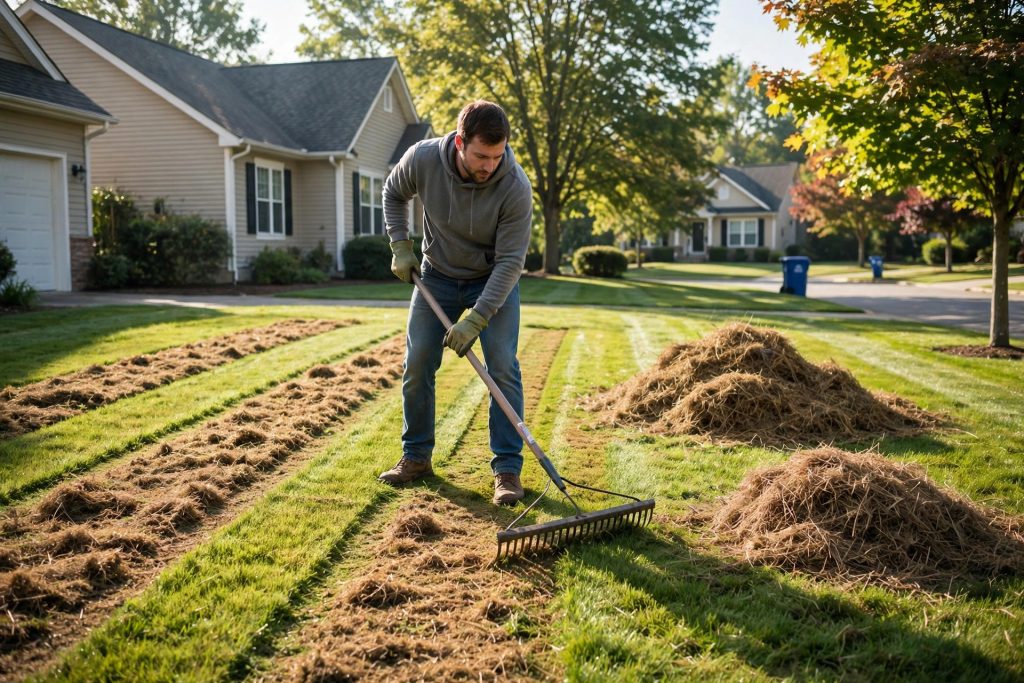
- Work in sections. Divide the lawn into strips you can finish. Pull the rake toward you in short, firm strokes, letting the tines bite on the pull. Shake the gathered material into piles as you go.
- Do a second pass only where needed. Cross the worst strips at an angle. Healthy areas rarely need more than one pass, and over raking tears good grass.
- Remove everything you lifted. Rake up the debris and get it off the lawn. Leaving it in place smothers the turf you just freed. Compost it only if the lawn has not been treated with weed killer recently.
- Water and rest the lawn. Water well after you finish, so exposed roots do not dry out. Keep heavy traffic off for a few days.
Expect to fill bags. A matted lawn can release a startling volume of dead material, and that volume is the proof the job was overdue.
Dethatching Before Overseeding: The Best Finish
Dethatching before overseeding is where this job pays for itself twice. Seed needs contact with soil to germinate. Spread on top of a thatch mat, it dries out, feeds birds and fails, no matter how good the seed is.
Once the mat is lifted and removed, the grooves and openings left by the rake give seed exactly the sheltered, soil touching spots it needs. Spread seed straight after dethatching, while the surface is open, then water lightly and often until it sprouts. For cool season lawns this pairing is why early fall is prime time: dethatch, seed and feed in one renovation window, and the lawn thickens before winter instead of limping into it.
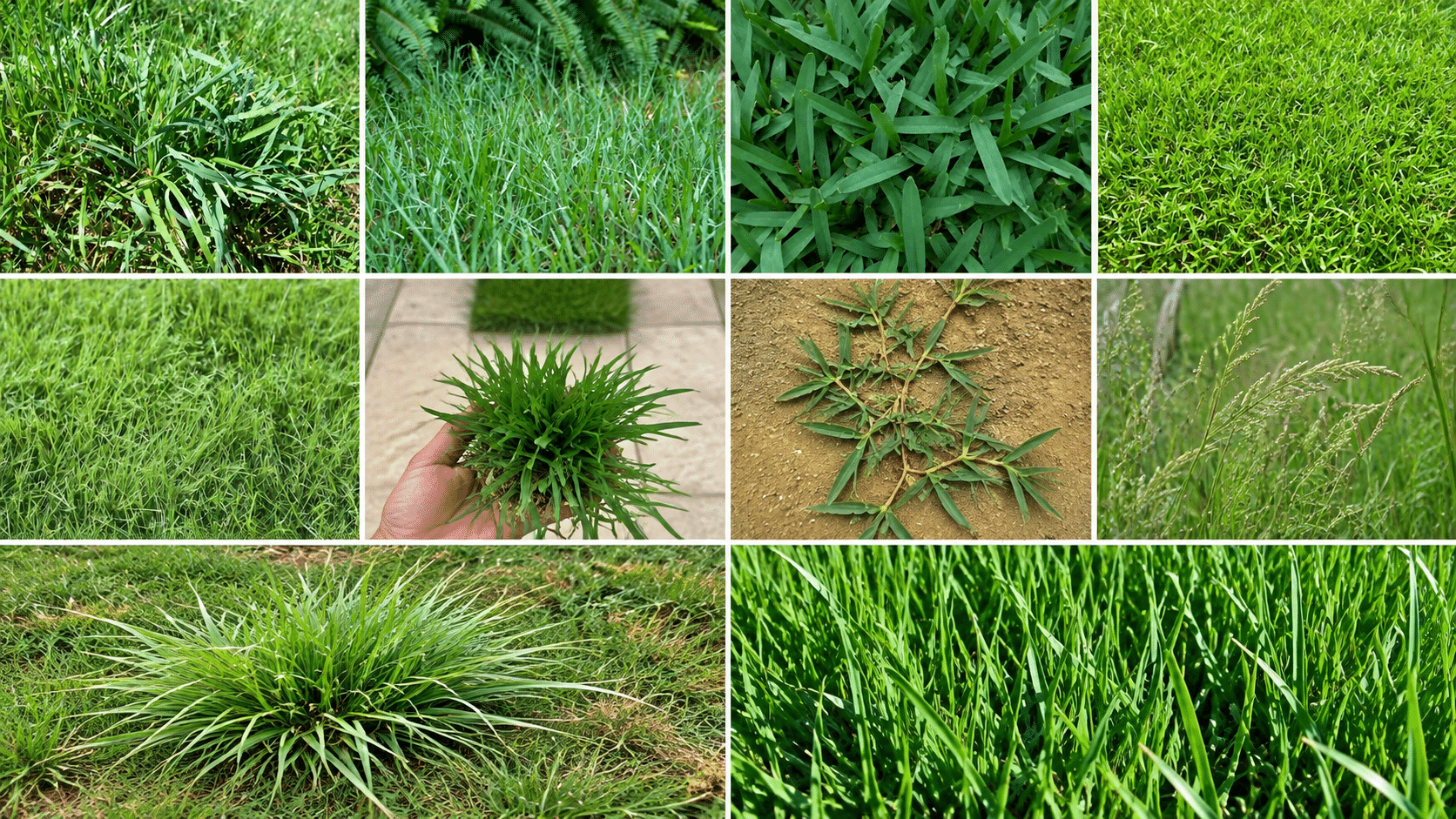
Choose seed for your sun, shade and region rather than by the bag picture, because the right blend matters more after all this work than any other single decision.
Feeding after renovation also needs a measured hand. A soil test and a moderate, well timed application beat a heavy dose guessed from the bag, especially on a lawn whose roots are recovering.
One warning that saves a whole seeding: skip pre emergent herbicide in any area you plan to overseed. The same barrier that stops crabgrass seed will stop your grass seed just as reliably.
Mistakes That Make Dethatching Backfire
- Dethatching when the lawn cannot recover. Dormant, drought stressed or frozen turf tears and stays torn. Wait for active growth.
- Going too deep in one pass. You want the mat gone, not the crowns. It is safer to do two light passes in a season than one brutal pass.
- Raking wet soil. Tines rip chunks, feet compact the soil, and the mess costs more grass than the thatch did.
- Leaving the debris behind. Lifted thatch left on the surface smothers the lawn and puts the problem straight back.
- Feeding hard to force recovery. Heavy nitrogen on a stressed lawn pushes soft growth and future thatch. Feed moderately and let roots lead.
Final Thoughts on Finding the Best Dethatching Rake
Thatch is a slow problem, and it rewards a steady hand more than an expensive machine. For most homes the best dethatching rake is the AMES: adjustable, proven and backed for years. Buy the Bully Tools if your mat is heavy and your lawn is wide, the Groundskeeper II if you want the lightest tool that still does real work, and a wheeled or system head if your back or a delicate lawn asks for a gentler approach.
Then time the job to active growth, measure before you rake, and finish with seed while the surface is open. Do that once, in the right season, and you will feel the difference underfoot by the next one: firm turf, water soaking in, and grass rooted in soil where it belongs.
References
- Clemson University Cooperative Extension, Home and Garden Information Center, Controlling Thatch in Lawns: vertical mowing method, blade spacing by grass type, and aftercare watering and feeding guidance.
- University of Massachusetts Amherst, Turf Program, What is Thatch?: the half inch to three quarter inch action threshold, why timing and moist soil matter, and cultural practices that slow buildup.
- Iowa State University Extension and Outreach, Yard and Garden, How Do You Remove Thatch?: why a layer of half an inch or more calls for mechanical removal, and why late summer timing aids recovery.
- Kansas State University Turf and Landscape, Got Thatch?: warm season timing in early summer, choosing core aeration for moderate thatch, and avoiding excess nitrogen and light frequent watering.
Frequently Asked Questions
What is the best dethatching rake for most lawns?
For most small to medium lawns, the AMES Adjustable Thatch Rake (2915100). Its 15 inch adjustable head, 19 curved steel tines and hardwood handle handle light cleanups and real mats with the same tool, and the design has been proven over decades of use.
How thick should thatch be before I dethatch?
Act when the compressed thatch layer measures more than about half an inch. Below that, the layer protects the grass crowns and helps hold moisture. Cut out a small wedge of turf and measure the brown layer between the green growth and the soil.
When is the best time to dethatch a lawn?
Dethatch cool season lawns in late summer to early fall, or in early spring as a second choice. Dethatch warm season lawns in late spring to early summer, after full green up. In both cases the grass must be growing actively so it can recover, and the soil should be moist but not wet.
Is a dethatching rake or a power rake better?
A manual dethatching rake is better for small to medium lawns, moderate thatch and precise work around beds and trees. A rented power rake is better for large lawns or a mat thicker than about three quarters of an inch. Many homeowners own the manual rake and rent power only for a full renovation.
Should I dethatch before overseeding?
Yes. Dethatching removes the mat that blocks seed from reaching soil, and the openings left by the rake shelter the seed. Spread seed straight after dethatching and debris removal, keep it moist until it sprouts, and do not apply pre emergent herbicide where you seed.
How often should you dethatch a lawn?
Only when the thatch measurement says so. Many lawns need it every two to three years, fast growing or heavily fed lawns may need it more often, and some lawns rarely need it at all. Measuring first prevents the damage that routine, unneeded dethatching causes, and it tells you whether buying the best dethatching rake is money well spent this year at all.

Thesis Link : https://saulibrary.edu.bd/daatj/public/uploads/BAU200601_19-Pp_5.pdf
- 10 Best Dethatching Rakes for a Thicker, Healthier Lawn - October 6, 2026
- Lawn Care Calendar: Month by Month Guide for US Lawns - October 5, 2026
- 10 Best Manual Lawn Aerators for a Thicker, Healthier Lawn - October 4, 2026