
Your lawn can look hungry even when you feed it on schedule. The fertilizer goes down, the colour improves for a week or two, then the grass slips back to pale and thin. In many yards the problem is not the fertilizer at all. It is lawn soil pH, the number that decides whether the nutrients already sitting in your soil are actually available to the roots.
Get the pH right and the same fertilizer programme suddenly works harder. Get it wrong and you can spend a whole season adding nutrients the grass can barely use. This guide walks through what lawn soil pH means, the right range for your grass type, how to test properly, and how to raise or lower pH at rates backed by university extension guidance. No guessing, and no lime or sulfur without a test result in front of you.
What Lawn Soil pH Means, in Plain Terms
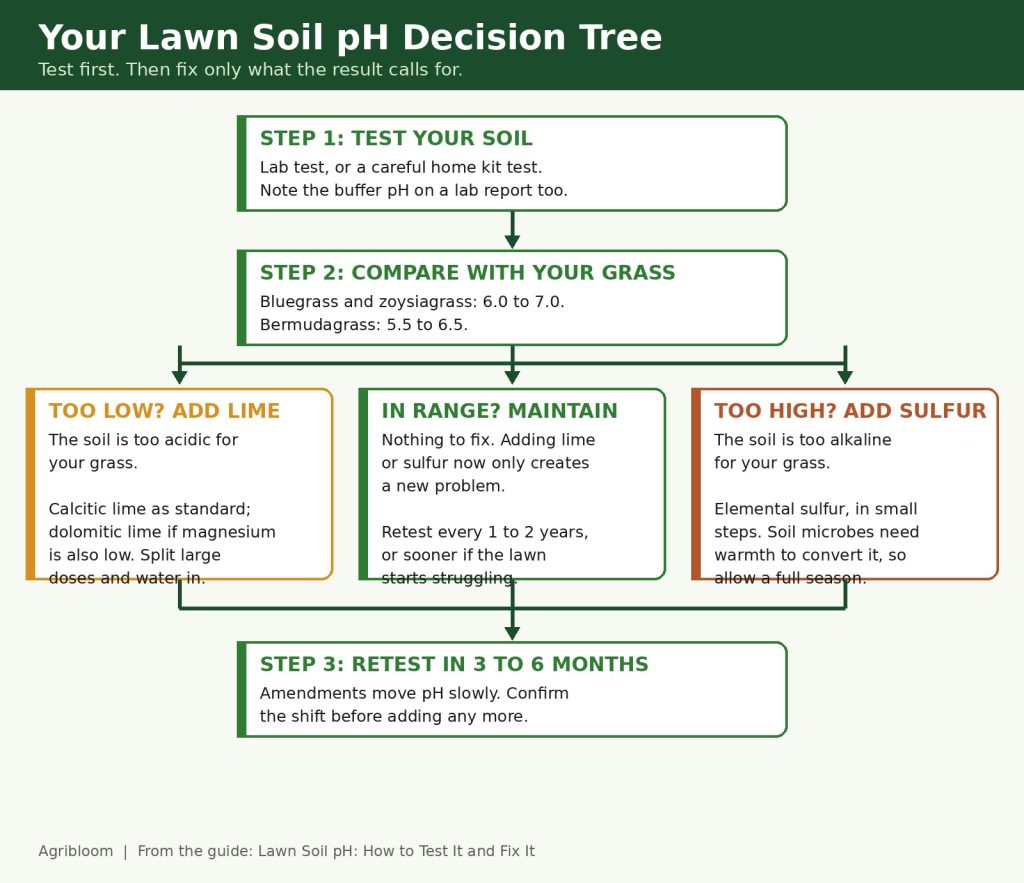
pH measures how acidic or alkaline your soil is, on a scale from 0 to 14. A reading of 7 is neutral. Below 7 the soil is acidic, above 7 it is alkaline.The scale is logarithmic, which matters more than most gardeners realise. A soil at pH 5.5 is ten times more acidic than a soil at pH 6.5. That one point that looks small on a report is a big chemical difference underground, and it is why a lawn can change so much when pH moves by half a point in the right direction.pH controls two things your grass depends on:
The scale is logarithmic, which matters more than most gardeners realise. A soil at pH 5.5 is ten times more acidic than a soil at pH 6.5. That one point that looks small on a report is a big chemical difference underground, and it is why a lawn can change so much when pH moves by half a point in the right direction.
pH controls two things your grass depends on:
- Nutrient availability. Nitrogen, phosphorus, potassium and the micronutrients each become easier or harder for roots to absorb at different pH levels. Well outside the preferred band, nutrients can be present in the soil yet largely locked away.
- Soil life. The microbes that break down organic matter, cycle nutrients and help suppress some turf problems work best in the same mildly acidic to neutral range most lawn grasses prefer.
That is the whole reason this number deserves attention before you buy another bag of anything. Fix the chemistry first, then feed.

The Right Lawn Soil pH for Your Grass Type
There is no single perfect number for every lawn. The right target depends on the grass you grow, and one common lawn grass is a clear exception to the usual advice.
| Grass type | Preferred soil pH range |
|---|---|
| Kentucky bluegrass | 6.0 to 7.0 |
| Zoysiagrass | 6.0 to 7.0 |
| Bermudagrass | 5.5 to 6.5 |
| Tall fescue | 5.5 to 6.5 |
| St. Augustinegrass | 5.5 to 6.5 |
| Centipedegrass | 5.0 to 6.0 |
Source: University of Georgia Extension turfgrass fertility guidance.
Most home lawns sit comfortably somewhere between 6.0 and 7.0. Centipedegrass is the outlier. It prefers more acidic soil, between 5.0 and 6.0, and extension guidance is blunt about it: do not apply lime to centipede unless a soil test specifically calls for it. Liming a centipede lawn out of habit is one of the fastest ways to make it decline.
If you do not know your grass type, identify it before you chase a number. A target that suits bluegrass can overshoot a centipede lawn by a full point.


How to Test Lawn Soil pH Properly
A good correction starts with a good sample. A careless sample gives you a confident answer about soil your lawn is not actually growing in.
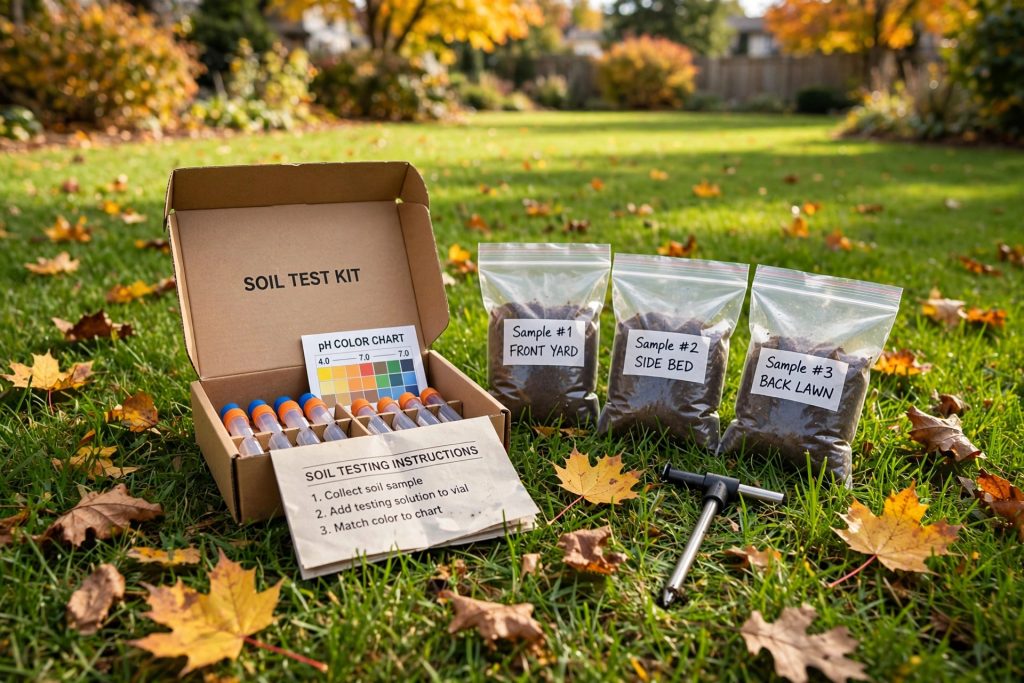
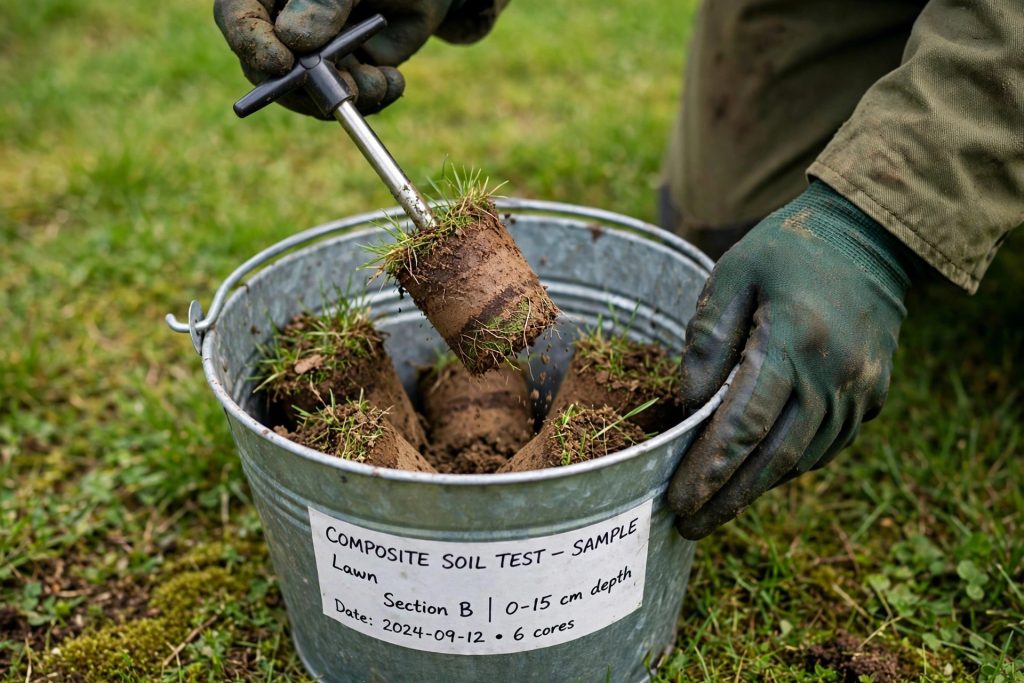
Take a composite sample
- Pick one lawn area with the same soil, slope and history. Front and back yards often need separate samples, and a problem patch should be sampled on its own.
- From that one area, take small cores or slices from several spots, from the root zone below the thatch layer. Ten to fifteen spots is a sensible target for a typical yard.
- Mix those cores together in a clean plastic bucket. This combined sample is called a composite sample, and it represents the whole area far better than one scoop by the gate.
- Remove stones, roots and thatch, let the soil dry a little if it is wet, then fill the lab bag or box from the mix.
- Repeat the process for any area that differs in soil type, drainage or past treatment.
Lab test or home kit?
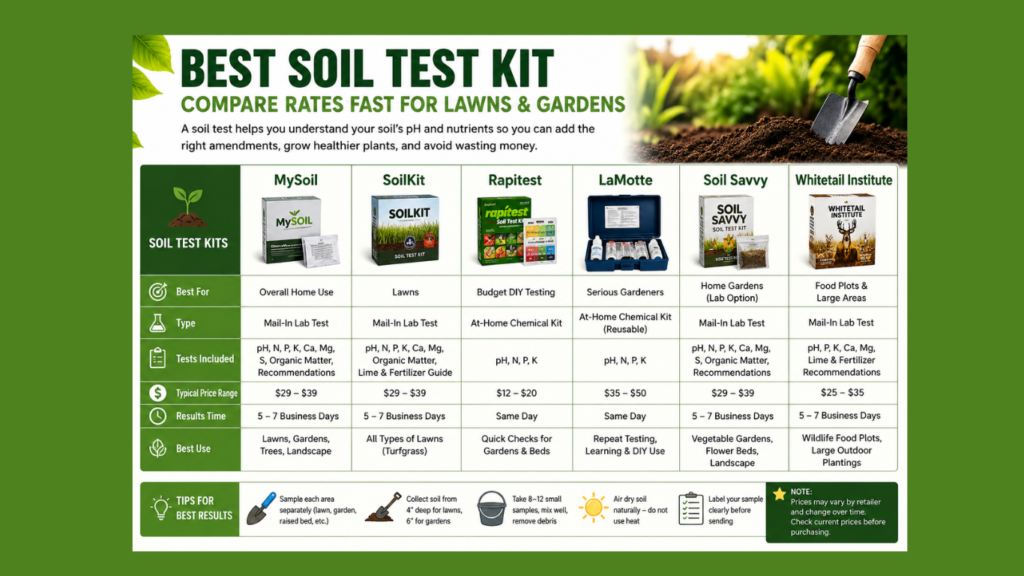
A laboratory soil test, through your state extension service or a reputable mail in lab, is the reliable route. It reports your soil pH, your nutrient levels, and a lime or sulfur recommendation calculated for your soil.
A home colour kit or a cheap probe can tell you the direction, roughly acidic or roughly alkaline. What it cannot do is set a rate. Two lawns can both read pH 5.8 and need very different amounts of lime, which brings us to the number most homeowners never see explained.
Read the buffer pH on your report
Many lab reports include a second figure called buffer pH, or a lime requirement worked out from it. Buffering is your soil’s resistance to change. Clay and organic matter resist pH change, so a clay soil needs more lime to move the same distance. Sand has little buffering and changes easily, so it needs less.
This is why honest lime advice never comes from the pH number alone. The lab uses the buffer information to calculate how much material your specific soil needs. If a bag chart or a neighbour’s rate ignores soil type, treat it as a rough example, not a prescription for your yard.
Once you understand what a soil test can tell you, choosing a kit and reading your first report gets much easier.
Short on time? Skip the arithmetic. Our free calculator turns your soil test result into exact lime or sulfur amounts for your lawn size and grass type.
How to Raise Lawn Soil pH With Lime
If your test shows acidic soil below your grass type’s range, limestone is the standard correction. It works slowly and steadily, which is exactly what you want for a lawn you have to live on while it changes.
Calcitic lime or dolomitic lime?
- Calcitic lime is mostly calcium carbonate. It raises pH and supplies calcium.
- Dolomitic lime supplies calcium and magnesium as well.
Let the soil test decide between them. If your report shows low magnesium, dolomitic lime does two jobs at once. If magnesium is already adequate, calcitic lime is the cleaner fit. Guessing here can push one nutrient up while crowding out others.
Rates, splitting, and timing
Extension guidance gives clear guardrails, and they are worth following exactly:
- Apply no more than about 50 pounds of lime per 1,000 square feet in a single application.
- If the lab recommends more than that, split it. A clay soil recommendation can run to about 70 pounds per 1,000 square feet in total, applied as two half applications about four months apart. A sandy soil may need only about 40 pounds per 1,000 square feet in total.
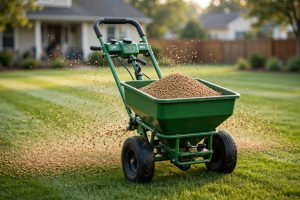
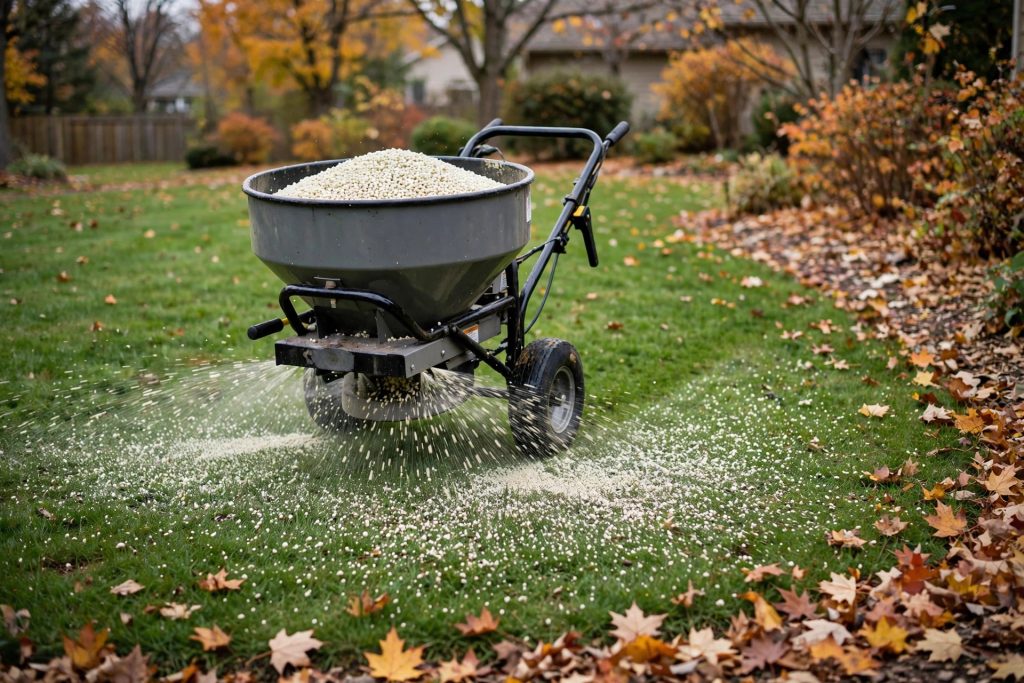
- Pelletized lime is easier for most homeowners to spread evenly with a broadcast spreader and makes less dust. Finely ground lime reacts a little faster but is messier to handle.
- Fall is the best season to apply. Lime reacts over months, not weeks, so a fall application has the winter to work before spring growth asks anything of the soil.
- Water lightly after spreading if rain is not expected, just enough to wash granules off the blades and into contact with the soil.
Set the right expectation now: you will not see the full result this month. Test again after the correction has had time to react, and judge the programme by the new number, not by a quick colour change.
And one warning that bears repeating: never lime just in case. On a lawn that is already in range, extra lime pushes pH too high and trades one nutrient lockout for another.
Getting pH into range only pays off if the feeding that follows matches the report.
How to Lower Lawn Soil pH, Honestly
Lowering pH is the harder direction, and any guide that promises a quick fix here is not being straight with you.
Elemental sulfur is the standard material. Soil microbes convert it into acid over time, so the process is slow, measured in weeks to months, and it depends on warm soil for the microbes to work. On soils that contain free lime or carbonate, common in many dry western areas, sulfur may barely move the number at all. In that case the better plan is often to manage around the pH: choose a grass that tolerates it, use acidifying nitrogen sources for your regular feeding, and treat iron chlorosis symptoms, the yellowing between leaf veins, as they appear.
Where a test based sulfur programme does make sense, University of Georgia guidance keeps the rates cautious:
- Never apply more than 5 pounds of elemental sulfur per 1,000 square feet to mature turf in one application.
- Lower split applications are safer. Around 2 pounds per 1,000 square feet, spaced roughly 8 to 10 weeks apart, reduces the risk of foliar burn.
- Irrigate with about 0.3 to 0.5 inch of water straight after applying, to wash the sulfur off the leaves and down to the soil where it belongs.
- Retest after the second application before you even consider a third.
Warm weather raises the burn risk, so avoid sulfur applications in the hottest part of summer. And if your pH is only modestly high, below about 7.8, acidifying nitrogen fertilizers can nudge it down gradually as part of normal feeding, without a separate sulfur programme at all.
Patience is not a footnote here. It is the method.
Soil pH in the Bigger Lawn Picture
pH does not live on its own. The same soil habits that build a healthy lawn, returning clippings, adding organic matter where soil is thin, and feeding to a test report, all interact with it. If you are improving beds and borders at the same time as the lawn, the principles carry over: test first, amend second, and retest before you amend again.

If you plan your lawn work by the season, put the soil test on the fall list. A fall result leaves time for lime to react, for a sulfur programme to be planned for warm soil, and for spring fertilizer decisions to be made from real numbers instead of habit.
Common Lawn Soil pH Mistakes
Most pH problems I see described in lawn forums come from the same short list:
- Liming without a test. The single most common error. Without a buffer based recommendation you do not know the rate, the lime type, or whether you need lime at all.
- One huge application. Dumping a full correction on in one go risks an uneven result and wasted material. Split anything above about 50 pounds per 1,000 square feet.
- Expecting results in two weeks. Lime and sulfur both work over months. Judging them at week two leads people to add more, and overshoot.
- Liming centipedegrass by routine. Centipede wants acidic soil. Lime only when a test specifically says so.
- Trusting a fizz test to set a rate. Vinegar or baking soda tests can hint at acidity or alkalinity. They cannot replace a lab test and they cannot tell you how much of anything to apply.
- Sampling one spot by the door. One scoop describes one scoop. Composite sampling across the area is what makes the result worth acting on.
- Forgetting to retest. A correction without a follow up test is a story without an ending. Retest every 2 to 3 years on a stable lawn, and sooner while you are correcting a problem or on sandy soil that shifts faster.
Final Thoughts on Lawn Soil pH
Lawn soil pH is the quiet number underneath almost every lawn problem that feeding alone will not fix. Learn yours from a proper lab test, compare it with the range your grass type actually wants, and correct it slowly with lime or sulfur at the rates your report, not a generic chart, sets out.
Do that once, retest on a steady rhythm, and the rest of your lawn care, seed, feed and watering, starts working the way the bag labels promise. Fall is the season to start. Take the sample this week, and let next spring be the first season your lawn is fed from real numbers.
References
- University of Georgia Extension, Turfgrass Fertility: Soil Texture, Organic Matter, Aeration, and pH
- Penn State Extension, Understanding Soil pH
- Penn State Agricultural Analytical Services Lab, Lime Recommendations for Turf
- LSU AgCenter, Louisiana Home Lawn Series: Soil pH
- Purdue Extension, Soil Testing for Lawns (AY-18)
Frequently Asked Questions
What is the best soil pH for a lawn?
It depends on the grass. Most lawns do well between 6.0 and 7.0. Bermudagrass, tall fescue and St. Augustinegrass sit a little lower, around 5.5 to 6.5, and centipedegrass prefers 5.0 to 6.0.
How do I test my lawn soil pH?
Take small cores from several spots in one lawn area, mix them into one composite sample, and send it to a lab through your extension service or a mail in service. A home kit can show the direction but cannot set a lime or sulfur rate.
How much lime does my lawn need?
Only your lab report can say, because the rate depends on buffer pH and soil type as well as the pH number itself. As guardrails, single applications are capped at about 50 pounds per 1,000 square feet, and larger recommendations are split into two applications months apart.
How long does lime take to work on a lawn?
Months, not weeks. Lime reacts slowly with soil acidity, which is why fall is the preferred application season. Retest after it has had time to react before deciding whether more is needed.
Can I lower my soil pH if it is too high?
Sometimes, slowly. Split applications of elemental sulfur, around 2 pounds per 1,000 square feet spaced 8 to 10 weeks apart and watered in, can lower pH over time. On soils with free lime it may barely move, and managing around it with tolerant grass and acidifying fertilizer is often the better plan.
How often should I retest my lawn soil?
Every 2 to 3 years on a stable lawn. Retest sooner while you are running a correction programme, and on sandy, high rainfall or low organic matter soils, which tend to shift faster.

Thesis Link : https://saulibrary.edu.bd/daatj/public/uploads/BAU200601_19-Pp_5.pdf
- Lawn Soil pH: How to Test It and Fix It - October 10, 2026
- Best Garden Hose No Kink – 10 Picks That Stay Flexible - October 10, 2026
- How to Dethatch a Lawn: Signs, Timing and Methods - October 9, 2026