
Learning how to improve sandy soil starts with understanding why it behaves the way it does. Sandy soil drains fast, warms up early in spring, and is easy to dig. Those are real advantages. The trouble starts a day or two after watering, when the bed is dry again and the fertilizer you applied seems to have vanished with the water.
About this guide: Sayed Zahur Ahmed studied agriculture (BSc) and plant pathology (MSc) at Bangladesh Agricultural University and ran his own nursery from 2007 to 2024, where mulching was part of everyday water management. He has written about gardening since 2024. The amendment rates in this guide were checked against the university Extension sources listed in References.
Sand particles are large, so the gaps between them are large too. Water runs straight through those gaps instead of lingering where roots can reach it. Sand also holds very little by itself. The tiny clay particles and the dark organic matter that grip nutrients in richer soils are mostly missing, so nutrients wash down past the root zone.
The fix is not a single product. It is a habit: add organic matter, protect the surface, and keep roots in the ground for as much of the year as you can. Done that way, a sandy
bed changes gradually from a sieve into a sponge. This guide walks through the steps in order, with the amounts extension services actually recommend.
The Quick Answer
If you only have one weekend, do these three things in this order. First, spread compost over the bed. Second, mix it into the top few inches where roots live. Third, cover the surface with mulch so the sun and wind cannot dry it out again.
| Problem | Quick fix | How much |
|---|---|---|
| Bed dries out within a day of watering | Compost worked into the top 8 to 12 inches, then mulch on top | 3 to 4 inches of compost on a new bed; 2 to 3 inches of mulch |
| Plants look hungry even after feeding | Feed little and often, and water after feeding | Split the season total into several smaller feeds, never one heavy dose |
| Soil feels lifeless and dusty | Aged compost plus living roots for as much of the year as possible | Compost at least once a year; cover crops in empty beds |
| Water runs off the surface | Loosen the top few inches before watering, and water slowly | Water in two shorter rounds instead of one fast soak |
Compost is the single most reliable amendment for sandy soil, and every source in the References section says the same thing in different words. Mulch and cover crops protect the gain that compost makes. Everything else in this guide is detail around those three moves.
How to Tell You Have Sandy Soil
You do not need a lab test to spot sandy soil, although a lab test is still worth doing before you spend money on amendments. Three quick checks at home will tell you most of what you need to know.
The squeeze test is the fastest. Take a handful of moist soil and squeeze it into a ball. Sandy soil feels gritty, falls apart as soon as you open your hand, and will not form a ribbon when you press it between thumb and finger. If it holds a smooth ribbon, you are dealing with clay, not sand, and the fixes are different.
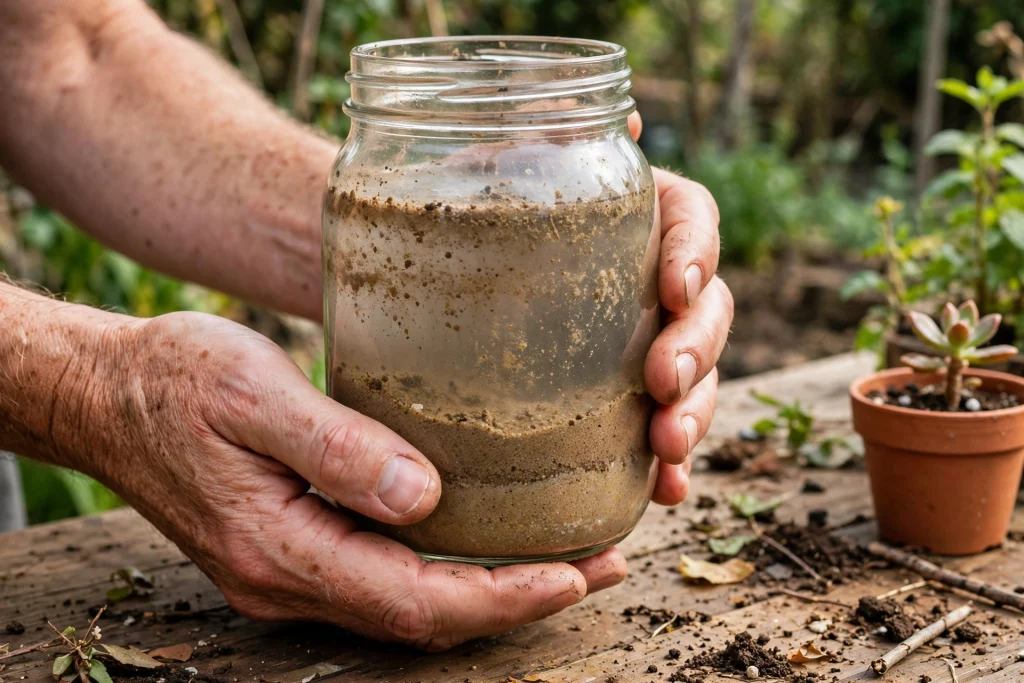
The jar test shows the proportions. Fill a straight-sided jar one third full of soil, add water until it is nearly full, shake it thoroughly, then leave it undisturbed for 24 to 48 hours. Sand settles first at the bottom, followed by silt, while the finer clay particles settle last and form the uppermost mineral layer. In sandy soil, the bottom sand layer will be noticeably thicker than the silt and clay layers. Any dark organic matter floating on the water should not be mistaken for clay.
The drainage test is the most practical of the three. Water a patch well, then check it the next morning. In sandy soil the top few inches are already dry, even though you watered deeply. If water still sits on the surface hours later, drainage is not your problem.
How to Improve Sandy Soil Step by Step
Step 1: Test before you amend
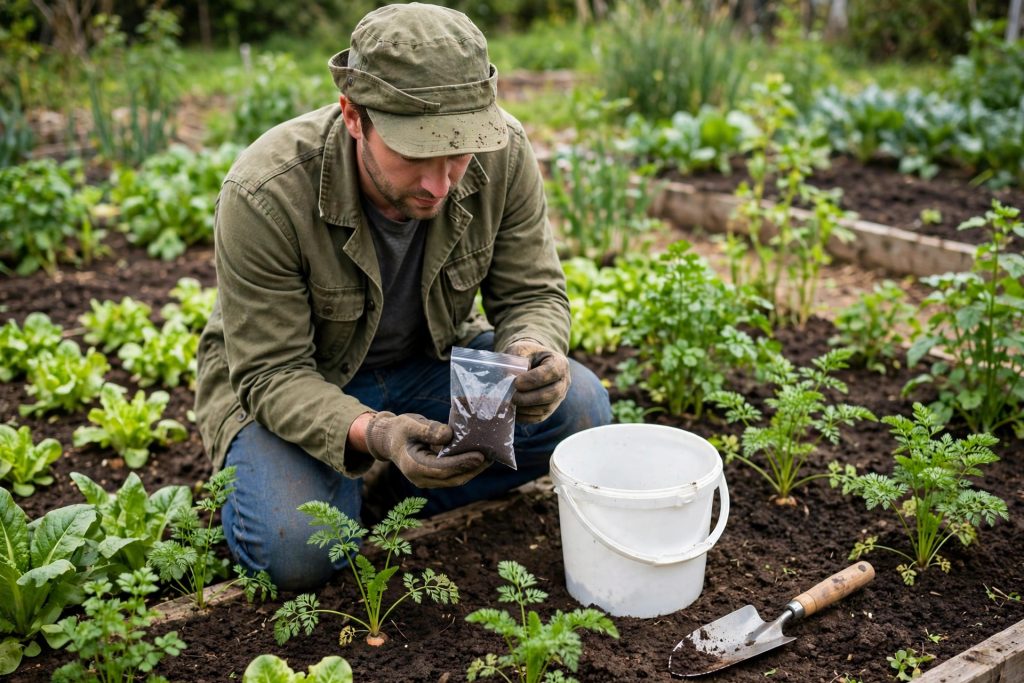
A soil test tells you two things a squeeze test cannot: the pH and which nutrients are actually short. Sandy soils are often low in several nutrients at once, but guessing which ones leads to the classic mistake of adding a bag of balanced fertilizer when only one nutrient was missing, or adding lime when the pH was already fine.
Take samples from 6 to 8 inches deep, from several spots in the same bed, and mix them into one composite sample for the lab or the home kit. Wait at least 8 weeks after any fertilizer or lime before sampling, or the results will reflect the last application rather than the soil itself. When the report comes back, fix pH first, then organic matter, then individual nutrients, in that order.

Step 2: Spread compost and mix it in
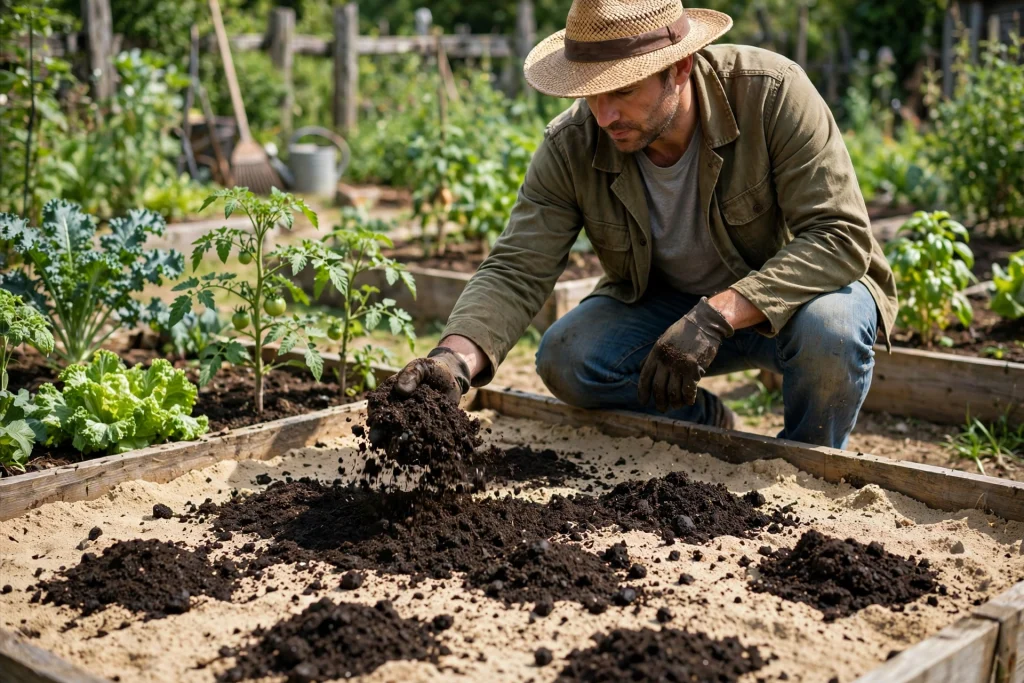
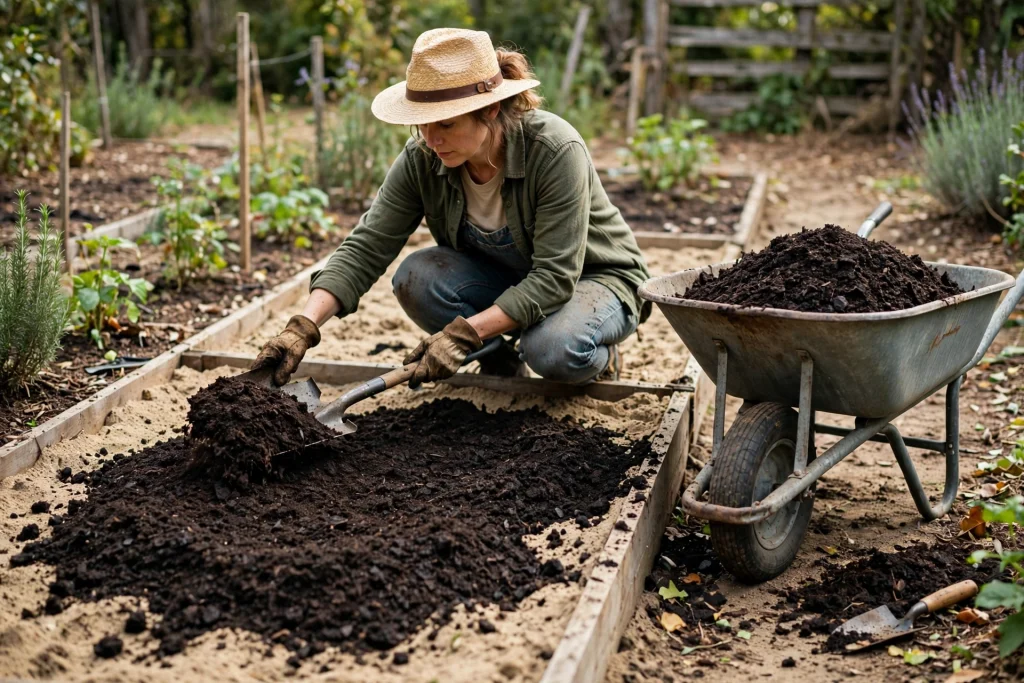
Compost is the workhorse here. It adds the organic matter sandy soil lacks, and organic matter is what holds water and nutrients in the root zone. Oregon State University Extension puts it plainly: adding organic matter is the best way to improve nearly all kinds of soils, and for sandy soils it improves the ability to hold nutrients and water. For a new bed, spread 3 to 4 inches of compost over the surface, then work it into the top 8 to 12 inches with a digging fork or spade.
That depth matters. A thin sprinkle on top helps the surface, but roots live deeper, and the compost needs to be where the roots are. For an existing bed that is already planted, spread a quarter inch to 1 inch of compost on the surface each year and let worms and watering carry it down. Do not dig deeply around established plants to force it in. Here is a worked example so you can order the right amount. A bed 10 feet by 10 feet is 100 square feet.
A 3 inch layer is a quarter of a foot deep, so the bed needs 25 cubic feet of compost. A cubic yard holds 27 cubic feet, so order about 1 cubic yard for that bed. For a 4 inch layer, the same bed needs about 33 cubic feet, or roughly 1.25 cubic yards. Most bulk suppliers sell by the cubic yard, so round up slightly rather than running short halfway across the bed.
Step 3: Mulch the surface
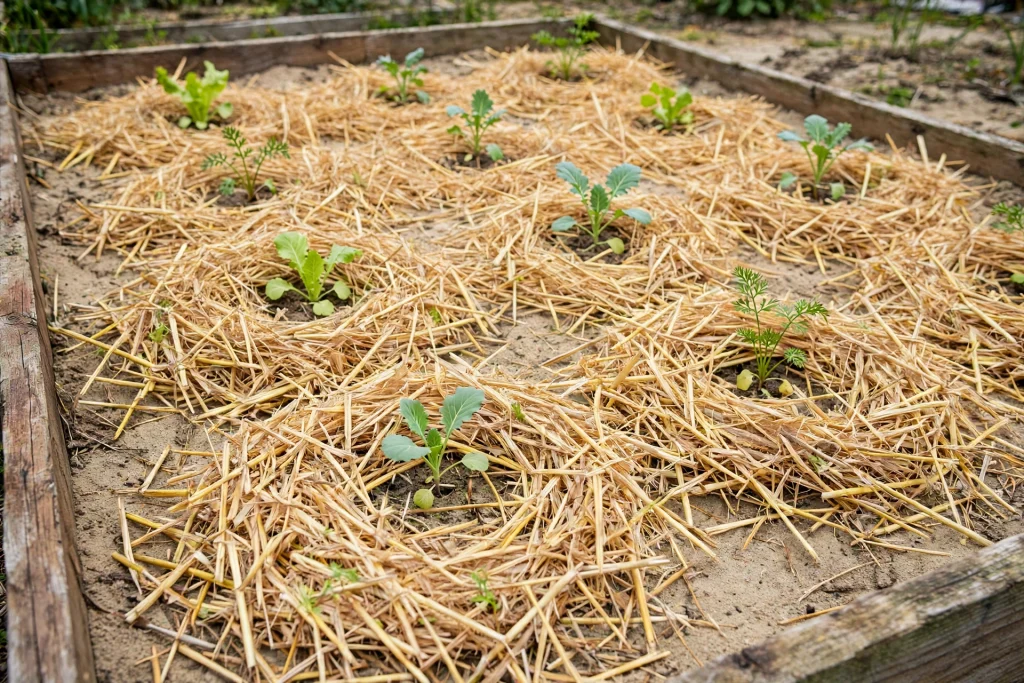
Compost mixed into the soil does the holding. Mulch on the surface does the protecting. Bare sandy soil loses moisture to sun and wind fast, and a hard rain can wash loose sand and compost right off the top. A mulch layer slows evaporation, softens the impact of rain, and breaks down slowly into more organic matter. In vegetable beds, straw is a good choice because it is light, easy to move at planting time, and breaks down within a season.
Around trees, shrubs, and paths, wood chips last longer and need topping up less often. Aim for 2 to 3 inches of mulch, and keep it a few inches away from plant stems and tree trunks so moisture does not sit against the bark and invite rot. Mulch also changes how you water. Water soaks through mulch slowly, which suits sandy soil better than a fast blast from a hose. If water runs off a mulched bed, the mulch layer may be matted down. Fluff it with a fork and water in two shorter rounds, letting the first round soak in before the second.
Step 4: Water deeply and feed little and often
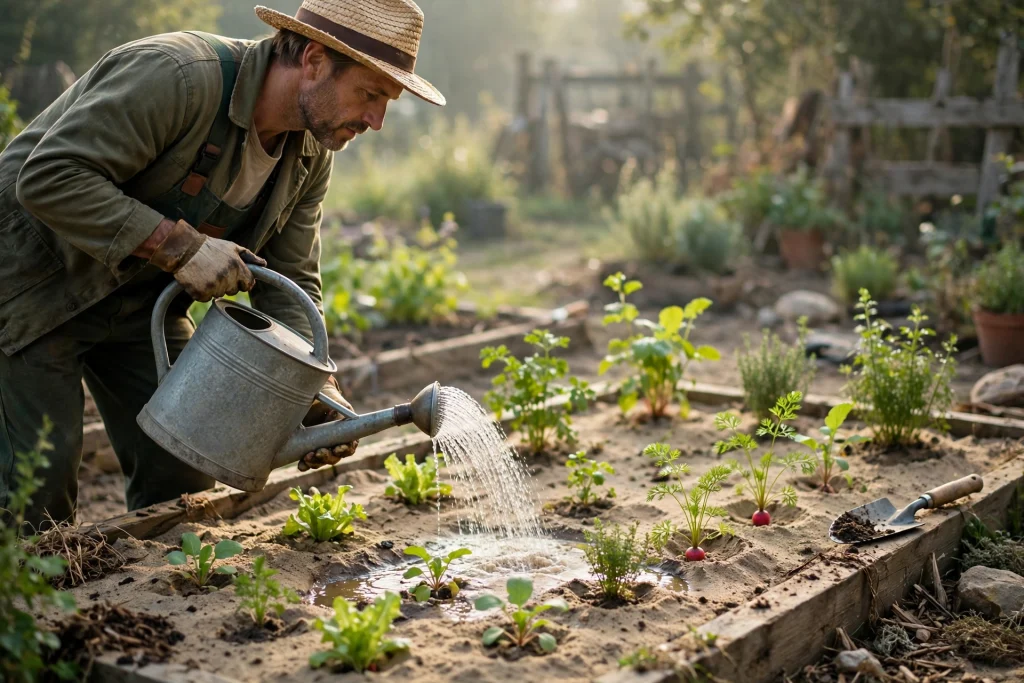
Sandy soil punishes the two commonest watering habits: a light sprinkle every day, and a single heavy feed once a season. A light sprinkle wets only the top inch, which dries again within hours, and roots stay shallow. A single heavy fertilizer dose washes past the roots with the next watering, because there is almost nothing in sand to hold it. Water deeply, but slowly, so moisture reaches 6 to 8 inches down. Then wait until the top inch or two dries before watering again. In hot weather that may still mean watering often, but each watering should count.
A simple finger check beats a fixed schedule: push a finger into the soil. If it is moist at the second knuckle, wait. If it is dry there, water. Feed the same way: little and often. Split the season total for a crop into several smaller applications, and water after feeding so nutrients move into the root zone instead of sitting on a dry surface. Slow release fertilizers and compost both suit sandy soil for the same reason: they release nutrients gradually instead of all at once. A liquid feed can help a hungry plant quickly, but on sand it is a short term fix, not a soil building strategy.
Step 5: Keep living roots in the soil
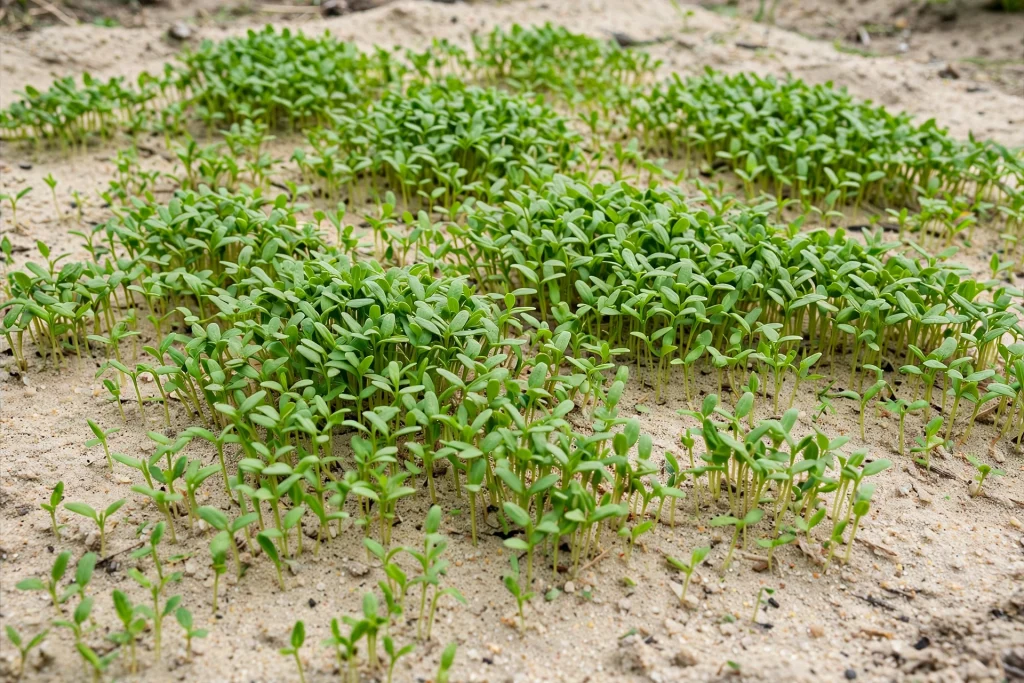
An empty bed is a bed going backwards. Without roots, the soil life that compost feeds has nothing to work with, and every rain carries a little more organic matter away. Cover crops are the cheapest way to keep a bed alive between plantings. North Carolina Cooperative Extension lists crimson clover, hairy vetch, and mustard as winter cover crops, and buckwheat, cowpeas, and pearl millet for summer.
Sow them in beds that would otherwise sit empty, and turn them into the soil just as they begin to flower. Their roots open channels in the sand, their tops become organic matter, and legumes like clover and vetch add nitrogen as well. In a lawn area, the same principle applies on a smaller scale. Leave grass clippings on the lawn instead of bagging them, and the clippings slowly build organic matter in the top few inches. It is slower than compost, but it costs nothing and it never stops.
Sandy Soil Amendments Compared
Compost leads, but it is not the only amendment worth knowing. The table below compares the options a home gardener is most likely to meet, with the honest limits of each.
| Amendment | What it does for sand | How to use it | Watch out |
|---|---|---|---|
| Compost | Adds organic matter that holds water and nutrients, and feeds soil life | 3 to 4 inches on new beds, mixed into the top 8 to 12 inches; a quarter inch to 1 inch yearly on existing beds | Check the source: compost can carry herbicide residue that damages vegetables |
| Aged manure | Adds organic matter plus nutrients, similar to compost | Use only well aged or composted manure, mixed in before planting | Fresh manure can burn plants and carries food safety risks on edible crops; never use it fresh on a growing bed |
| Leaf mold | Light, spongy organic matter that holds water well | Mix into beds or use as a surface mulch | Low in nutrients, so pair it with compost or fertilizer, not instead of them |
| Biochar | Very porous particles that can hold water in sandy soil | Mix a small amount into the root zone with compost; research results vary by feedstock and rate | Effects are inconsistent across studies, and large amounts can hold water too tightly for roots; treat it as an experiment, not a cure |
| Coco coir | Holds water well and breaks down slowly | Mix into potting mixes and raised beds, or use as part of a compost blend | Almost no nutrients of its own, and quality varies; check whether it was rinsed of salts |
| Vermiculite | Mineral particles that hold water and nutrients better than sand | Mix into potting mixes and seed starting mixes | It does not add organic matter or feed soil life, so it complements compost rather than replacing it |
Two cautions run through the whole table. First, no amendment fixes sandy soil in one application. Organic matter breaks down, especially in warm climates, so the yearly compost habit matters more than any single large dose. Second, more is not always better. A bed that is half compost and half sand can hold too much water for plants that like sharp drainage, and a heavy manure dose can overload a small bed with phosphorus.
What Not to Do With Sandy Soil
Adding sand to sandy soil sounds logical and is almost always a mistake. Sand does not hold water or nutrients, so adding more of it only dilutes the organic matter you already have. Oregon State Extension makes the same point about sand as an amendment in general: it functions as a wedge that separates particles, and it does not hold water and nutrients well.
Do not rototill deeply every season either. Tilling mixes compost in well the first time, but repeated deep tilling breaks up the soil structure that organic matter and roots have built, and it can create a hard layer below the tilled depth. Once compost is mixed in, switch to a fork for later additions and let worms do the deeper work.
Fresh manure is the third trap. It is cheap and looks rich, but on a growing bed it can burn roots, and on edible crops it raises food safety questions. Compost manure first, or buy it already aged, and keep fresh manure out of beds that are in production.
Finally, do not leave a sandy bed bare over winter and expect spring compost to undo the loss. Rain and wind move bare sand easily. A cover crop, a mulch layer, or even a layer of fallen leaves held down with a little straw will protect more soil than any spring rescue.
A Seasonal Calendar for Sandy Soil
Sandy soil work follows the same rhythm every year, and writing it down keeps the habit going when the garden is busy.
In fall, take your soil test, because fall results leave time for lime or other slow amendments to work before spring planting. Spread compost on beds you are clearing, and sow a winter cover crop in any bed that will sit empty.
In winter, leave cover crops and mulch in place. This is the season sandy soil rests, and bare soil is soil being lost. Order compost early if you buy in bulk, since spring demand is high.
In spring, work compost into new beds before planting, mulch as soon seedlings are up, and start the little and often feeding pattern with the first crops. Check drainage after the first heavy rain: compost should have slowed it, not stopped it.
In summer, water deeply and slowly, top up mulch where it has thinned, and sow a summer cover crop in any bed you harvest early. Watch for hunger signs, pale leaves and slow growth, and feed in small doses rather than one large one.

Final Thoughts
Learning how to improve sandy soil is mostly learning to be patient with a soil that rewards steady work and punishes quick fixes. Compost does the heavy lifting, mulch protects the result, and living roots keep the improvement going between crops. None of it transforms a bed overnight, and that is fine. A sandy bed that gets compost every year, stays covered, and is watered deeply will grow noticeably better in its second season than in its first, and better again in its third.
Start with the soil test, even if the rest of the plan feels familiar. It costs little, it stops you buying amendments you do not need, and it gives you a baseline to measure against when you test again in a year or two. Then spread the compost, lay the mulch, and let the soil do the slow work it does best.
References
1. North Carolina Cooperative Extension, Pender County Center, Improving Sandy Soils: compost at 3 to 4 inches tilled in before planting, yearly compost in vegetable gardens, and cover crop choices.
2. Oregon State University Extension, Adding Organic Matter Improves Garden Soils: organic matter is the best way to improve nearly all soils, and it improves the ability of sandy soils to hold nutrients and water.
3. Oregon State University Extension via Plant Something Oregon, Adding Compost Improves Soil Texture and Adds Nutrients: 3 to 4 inch compost layer on new beds incorporated into the top 8 to 12 inches, and a quarter inch to 1 inch yearly on existing beds.
4. University of Illinois Extension, Composting for the Homeowner: compost improves the water holding capacity of sandy soils and improves plant growth and health.
5. Li and co-authors, Role of Biochar in Improving Sandy Soil Water Retention and Resilience to Drought, Water 2021 (USDA Forest Service copy): biochar can increase water holding capacity in sandy loam, with results varying by feedstock and rate, which is why this guide treats biochar as experimental.
How long does it take to improve sandy soil?
You will see better moisture holding within the first season after a good compost application, but real change takes two to three years of yearly compost, mulch, and cover crops. Organic matter breaks down, so the improvement only lasts if you keep adding it.
How much compost do I need for sandy soil?
For a new bed, spread 3 to 4 inches and work it into the top 8 to 12 inches. A 10 foot by 10 foot bed needs about 1 cubic yard of compost for a 3 inch layer. For an existing bed, add a quarter inch to 1 inch on the surface each year.
Can I just add topsoil instead of compost?
Topsoil alone rarely fixes sandy soil, because bought topsoil is often sandy itself and adds little organic matter. Compost adds the organic matter that actually holds water and nutrients, so it is the better first purchase.
Is sandy soil good for anything as it is?
Yes. Sandy soil drains well and warms up early, so carrots, herbs, and Mediterranean plants often do well in it. The goal is not to turn sand into clay, but to give it enough organic matter to hold water and nutrients between waterings.
Should I add clay to sandy soil?
Usually no. Mixing clay into sand in garden quantities tends to make a dense, cement like mix unless the proportions are carefully managed, and it is hard to mix evenly by hand. Compost is safer, easier to mix, and improves the soil in more ways at once.
Do I need to test sandy soil before amending it?
Testing is strongly recommended. It shows pH and nutrient levels that a squeeze test cannot, and it stops you adding lime or fertilizer you do not need. Test once before a big amendment program, then again in a year or two to check progress.

Thesis Link : https://saulibrary.edu.bd/daatj/public/uploads/BAU200601_19-Pp_5.pdf
- How to Improve Sandy Soil: A Practical Guide for Gardens - October 31, 2026
- Best Seedling Heat Mats: 10 Picks for Faster Germination - October 31, 2026
- How to Improve Clay Soil: A Practical Guide for Gardens - October 29, 2026