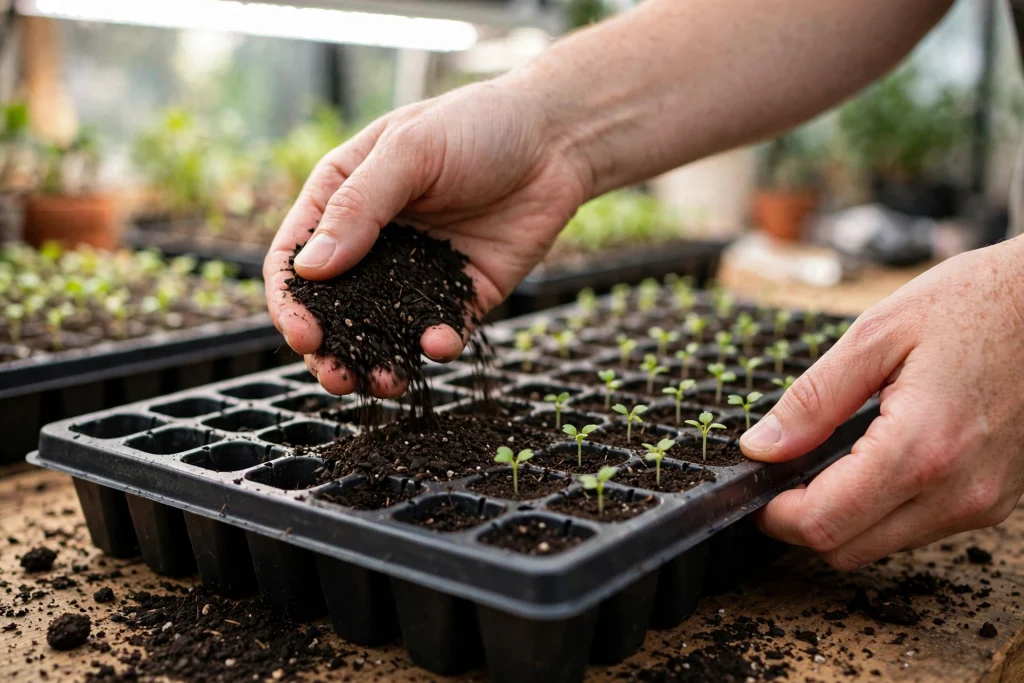

The best seed starting mix is fine, light, and even. It holds water without staying soggy, it lets air reach young roots, and it does not feed seedlings too hard too early. That balance matters more than the brand on the bag, because a seed carries its own first food. What it needs from the mix is steady moisture, air, and a soft path for roots.
Garden soil fails that test indoors. It packs down in a small cell, it dries into a hard plug or stays wet for days, and it can carry fungi that attack seedlings at the soil line. A bag labeled for seed starting is usually soilless for a reason. Peat moss or coconut coir holds water, perlite or vermiculite opens air spaces, and a little lime steadies the pH. Some mixes add a gentle feed, some add none, and that one choice changes how you water and feed later.
This guide compares 10 real seed starting mixes you can buy in the United States, with each mix judged on its base, its feed, its bag size, and the job it suits best. If you only want the fast answer, read the Quick Recommendation and the comparison table, then jump to the mix that fits your trays.
- Quick Recommendation
- The 10 Best Seed Starting Mixes Compared
- How to Choose a Seed Starting Mix
- How Much Seed Starting Mix Does a Tray Need
- The 10 Best Seed Starting Mixes
- Seed Starting Mix vs Potting Soil
- A Simple DIY Seed Starting Mix
- When to Feed Seedlings
- Damping Off and Clean Trays
- How We Chose
- Final Choice
- References
- Frequently Asked Questions
Quick Recommendation
For most home seed starters, Espoma Organic Seed Starter is the safest first bag. It is a peat and perlite mix with no synthetic feed, it comes in 8 quart and 16 quart bags, and it suits vegetables, flowers, and herbs in ordinary cell trays. You control the feeding later, which is exactly what small seedlings need.
If you want to avoid peat, choose Burpee Organic Coconut Coir. It ships as compressed bricks that expand with water, it holds moisture well, and it gives you a clean peat-free base. Plan to feed once seedlings have true leaves, because coir on its own brings almost no nutrition.
If you want one bag that feeds a little from the start, Coast of Maine Sprout Island Blend is the organic pick, and Miracle-Gro Seed Starting Potting Mix is the widely stocked conventional pick. Both suit gardeners who may forget that first weak feeding. Just do not add more fertilizer on top of a fed mix in the first week.
For a big sowing weekend, PRO-MIX Premium Organic Seed Starting Mix in the 16 quart bag, or Territorial Seed Starting Mix for 50-cell trays, makes bag math simple. For one windowsill tray, Hoffman Seed Starter Soil or an 8 quart bag of any mix above is plenty, and a small bag stays fresh for the next sowing.
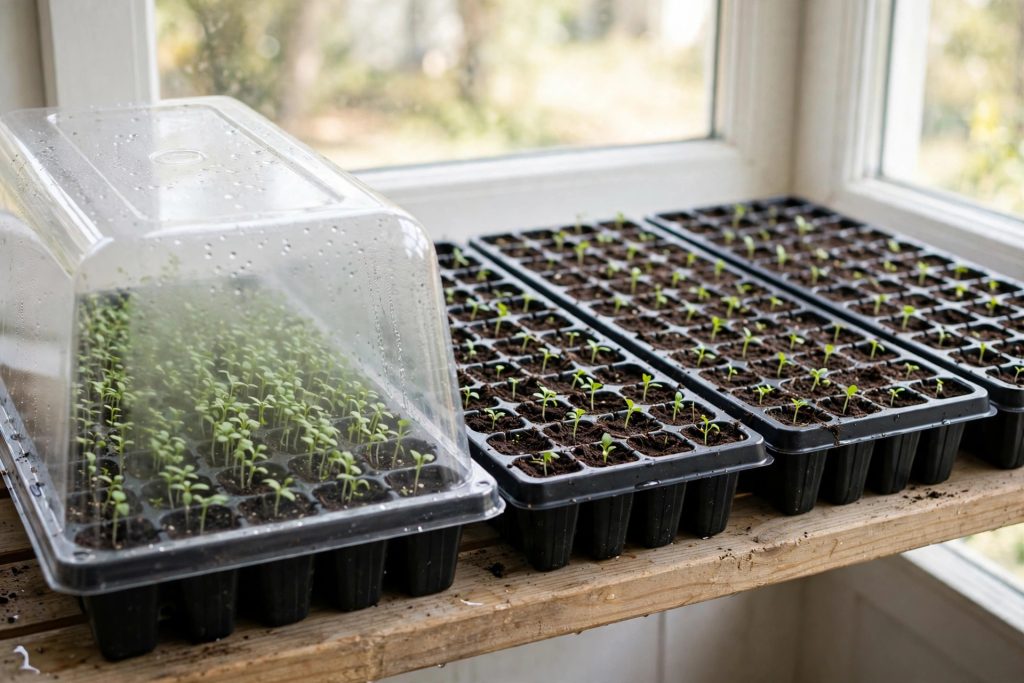
A good mix still needs the right tray, and the trays guide below sorts cell sizes and domes.
The 10 Best Seed Starting Mixes Compared
| Product | Base | Added feed | Bag size | Best for | Our rating |
|---|---|---|---|---|---|
| Espoma Organic Seed Starter | Sphagnum peat moss, perlite | None synthetic; mycorrhizae | 8 or 16 qt | Most cell trays | 4.9 out of 5 |
| Jiffy Natural and Organic Seed Starting Mix | Peat moss, vermiculite | None stated | 16 qt | Simple peat recipe | 4.6 out of 5 |
| Burpee Organic Coconut Coir | Coconut coir only | None stated | 8 or 16 qt expanded | Peat-free sowing | 4.7 out of 5 |
| Miracle-Gro Seed Starting Potting Mix | Sphagnum peat moss, perlite | Fertilizer included | 8 qt | Beginners who want feed included | 4.5 out of 5 |
| Sun Gro Black Gold Seedling Mix | Canadian sphagnum peat moss, perlite | None | 8 or 16 qt | Fine texture, small seeds | 4.7 out of 5 |
| FoxFarm Light Warrior Seed Starter | Sphagnum peat moss, perlite | Light feed, 0.20-0.05-0.05; worm castings | 1 cu ft | Cuttings and longer starts | 4.6 out of 5 |
| Coast of Maine Sprout Island Blend | Sphagnum peat moss, perlite, compost | Mild organic charge, 0.35-0.10-0.05 | 8 or 16 qt | Organic growers | 4.7 out of 5 |
| PRO-MIX Premium Organic Seed Starting Mix | Canadian sphagnum peat moss, coir, perlite | Organic fertilizer, gradual feed | 8 or 16 qt | Larger batches | 4.6 out of 5 |
| Territorial Seed Starting Mix | Screened Canadian sphagnum peat moss, perlite, vermiculite | None stated | 8 or 16 qt | 50-cell trays | 4.5 out of 5 |
| Hoffman Seed Starter Soil | Peat moss, vermiculite | None stated | Small bag, check listing | One windowsill tray | 4.4 out of 5 |
Read the bag size column with the tray math below. An 8 quart bag sounds small until you see how many small cells it fills, and a 16 quart bag can still run out fast if you sow 72-cell trays all weekend.
How to Choose a Seed Starting Mix
Fine texture first
A seed starting mix should feel soft and even when you rub it between your fingers. Large bark chips and sticks belong in garden beds, not in a cell the size of a thumb. Fine texture gives small seeds even contact with moisture, and it lets roots move without hitting a hard chunk. If a bag feels coarse, sift out the largest pieces for tiny seeds such as lettuce and petunias, or save that bag for larger pots.
Water and air must share the cell
Peat moss and coir hold water. Perlite opens drainage and air pockets. Vermiculite holds water and nutrients a little longer than perlite. A good mix balances the two jobs, so the surface is damp but the cell never sits in standing water. If your trays stay wet for days, you need more air in the mix, better drainage holes, or less water, in that order. Do not fix a soggy mix by letting it dry rock hard, because dry peat can be hard to rewet.
Feed or no feed is a real choice, not a detail
Seeds do not need fertilizer to sprout. Seedlings do need a little food once they have true leaves, the second set of leaves that look like the plant itself. A mix with no feed gives you full control, but you must remember that first weak feeding. A mix with a light feed covers forgetful weeks, but it can burn tender roots if you add strong fertilizer on top. Check the bag, not the brand name, and follow the feeding section below for the timing that fits your mix.
Peat, coir, or a blend
Peat moss has a long record in seed starting, it holds water well, and it is slightly acidic, which suits most vegetables. Coir is peat-free, pH neutral, and holds water well, but it carries almost no nutrition, so feeding matters sooner. Blends try to take the best of both. Choose peat-free if that matters to you, and choose peat if you want the most forgiving moisture behavior in a dry house. Either base works when the texture is fine and the watering is steady.
Bag size and freshness
Buy for the trays you will actually sow this season. A bag left open in a damp garage can pick up algae, gnats, or mold, and an old bag can dry into a brick that resists water. Seal the bag between sowings, store it dry, and moisten only the mix you plan to use that day. If you sow in waves, a smaller bag bought fresh beats a large bag that sat open all spring.
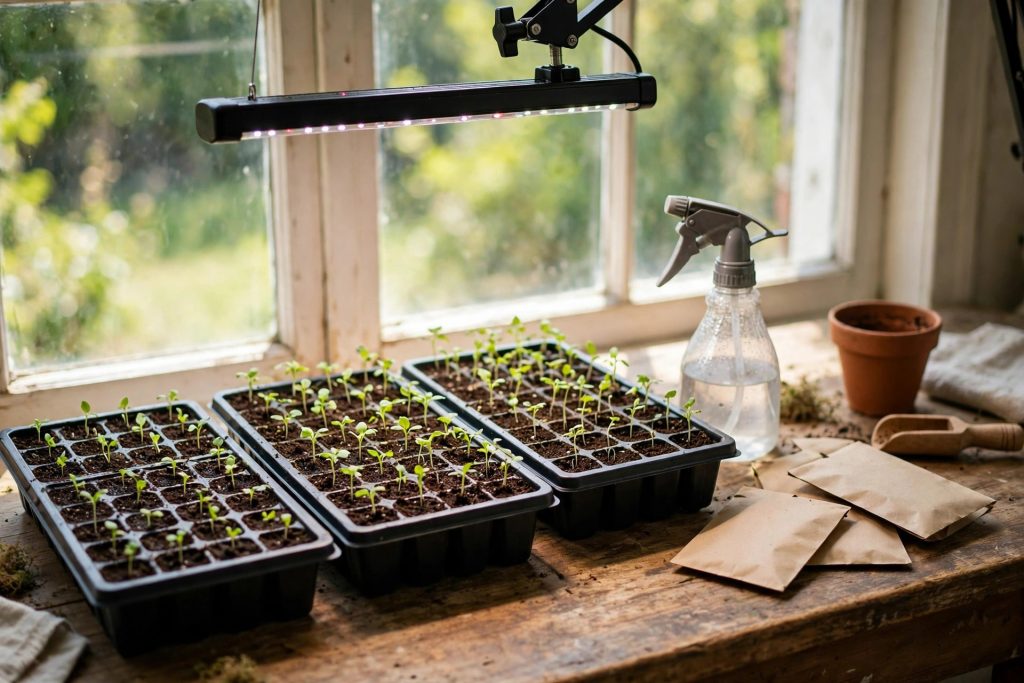
Once the mix is chosen, the indoor sowing guide below walks through sowing depth, light, and hardening off.
How Much Seed Starting Mix Does a Tray Need
Cell size changes the math more than tray count. A 72-cell tray uses far less mix per cell than a 6-pack of large pots, so a small bag goes further than most new growers expect. Two manufacturer figures show the range clearly.
Miracle-Gro states that one 8 quart bag fills about three 72-cell trays. Territorial states that an 8 quart bag fills two and a half 50-cell trays, and a 16 quart bag fills five 50-cell trays. The difference is cell volume, not a contradiction. Larger cells hold more mix, so they need more bags.
Use this simple plan. Count your trays, note the cell size, and buy one extra bag if you sow in waves or plan to pot seedlings on into larger cells before transplanting. Moisten the mix in a bucket before filling trays, fill each cell without packing it hard, tap the tray once to settle it, and top up any cell that sinks after watering. A cell filled only halfway dries fast and leaves roots exposed at the surface.
The 10 Best Seed Starting Mixes
1. Espoma Organic Seed Starter
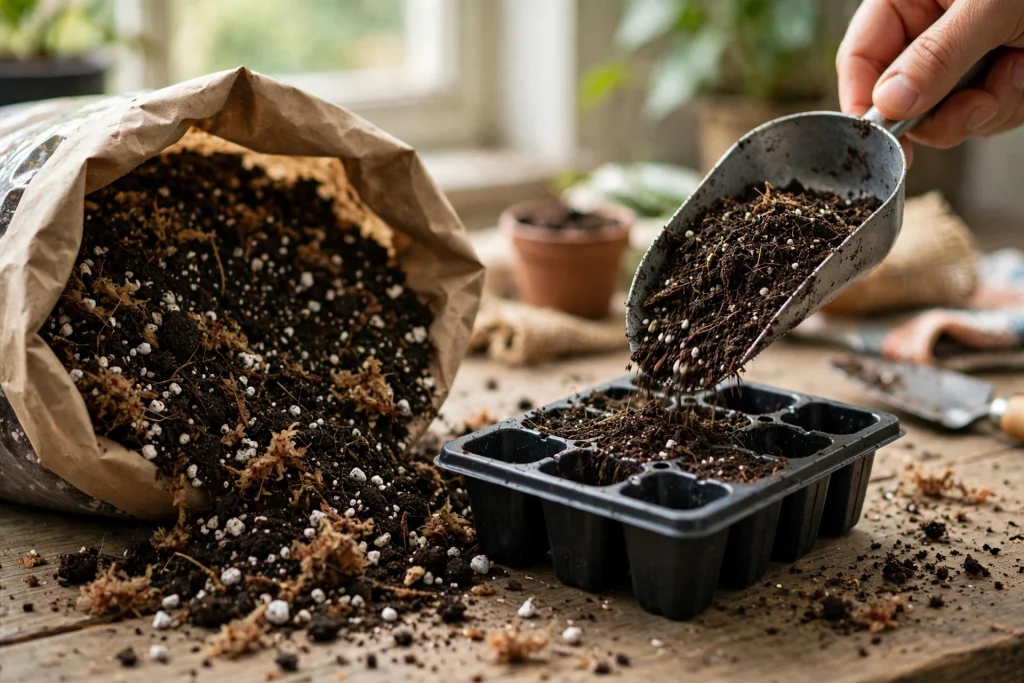
Espoma Organic Seed Starter is a rich blend of sphagnum peat moss and perlite, with limestone to adjust pH, yucca extract to help wetting, and Myco-tone mycorrhizae. Espoma lists the peat content at 80 to 90 percent, and the mix is sold in 8 quart and 16 quart bags. It contains no synthetic plant food, which is a strength for careful growers and a responsibility for forgetful ones.
Quick verdict: this is the mix to buy first if you want one bag for vegetables, flowers, and herbs. The texture is fine enough for small seeds, the perlite keeps it from packing down, and the lack of synthetic feed means you will not burn seedlings in week one. Feed at half strength once true leaves appear, and the mix carries seedlings cleanly to potting on.
Best for: most cell trays, organic growers, and anyone who wants to control feeding. Watch out: because it has no synthetic feed, seedlings left in small cells for many weeks will need feeding on schedule, not when you remember it.
2. Jiffy Natural and Organic Seed Starting Mix
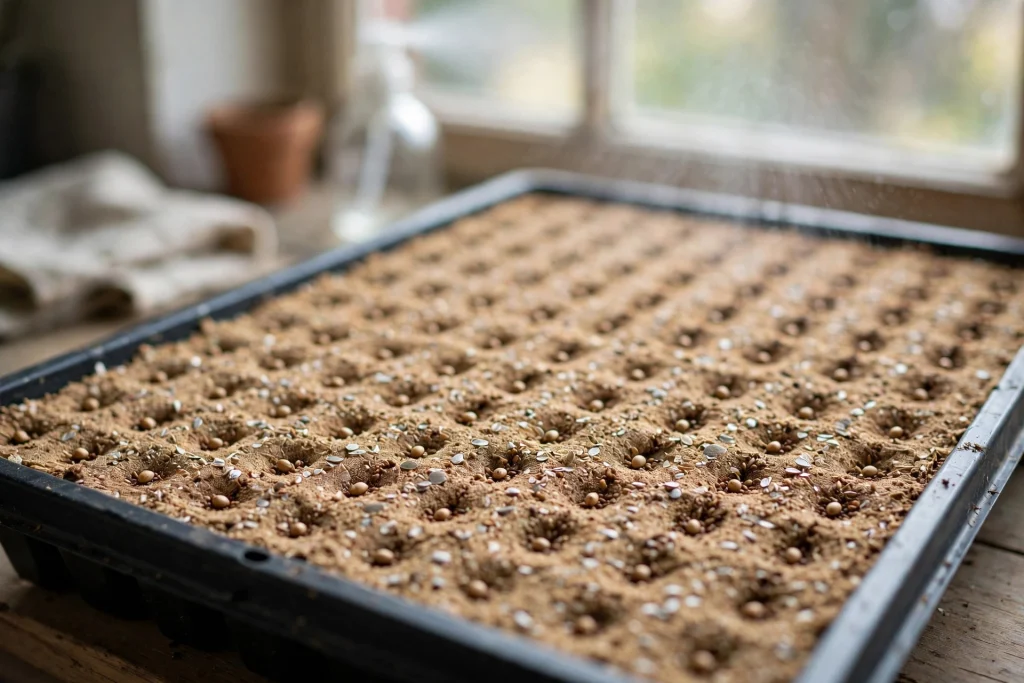
Jiffy Natural and Organic Seed Starting Mix keeps the recipe plain: peat moss, vermiculite, and lime. It is sold as a 16 quart bag, which suits a serious sowing weekend without forcing you into a bulk purchase. Vermiculite holds water a little longer than perlite, so this mix suits houses that run dry in winter, and it suits gardeners who water from below and want the cell to stay evenly damp.
This mix suits a grower who wants a simple, no-surprise base and plans to feed after emergence. It has no stated fertilizer analysis, so treat it as an unfertilized base. The limit is the same as its strength. Plain peat and vermiculite will not carry a slow-growing seedling for weeks without food, so set a feeding reminder for the true-leaf stage.
3. Burpee Organic Coconut Coir Seed Starting Mix
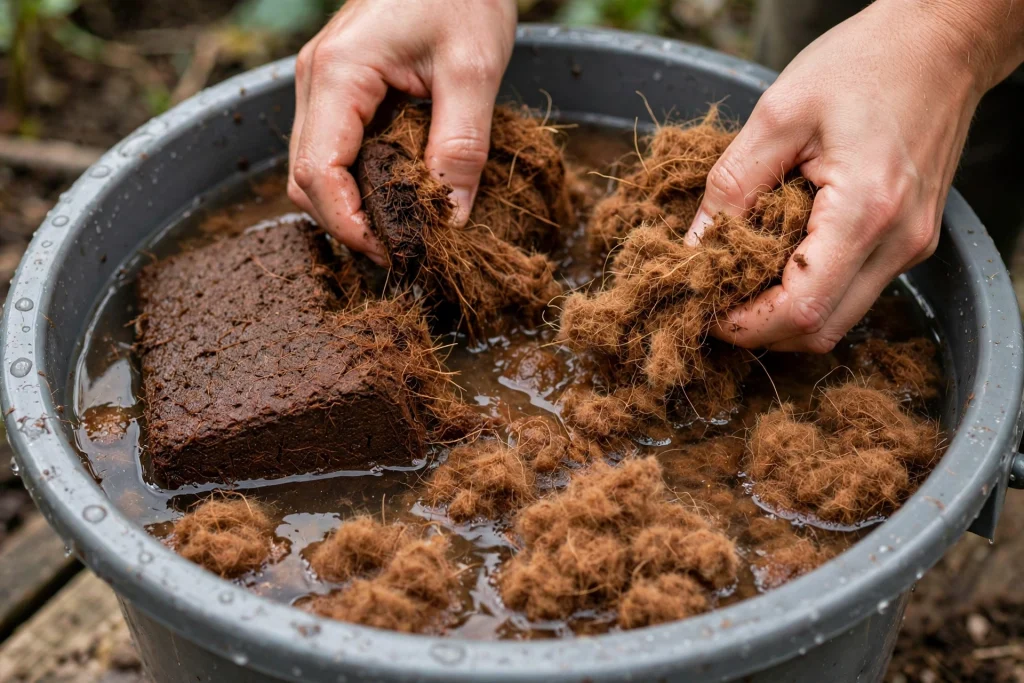
Burpee Organic Coconut Coir is the peat-free pick in this guide. It is compressed coir from coconut husks, sold as bricks that expand to 8 quarts or 16 quarts once water is added. Coir holds water well, it rewets more easily than dry peat, and it stores as a small brick until you need it, which helps in a small apartment.
Best for: peat-free growers, small storage spaces, and gardeners who like to mix their own perlite ratio. Skip if: you want a mix that feeds seedlings on its own, because coir alone brings almost no nutrition. Add a little perlite for drainage if your trays tend to stay wet, and start a weak liquid feed once true leaves show.
4. Miracle-Gro Seed Starting Potting Mix
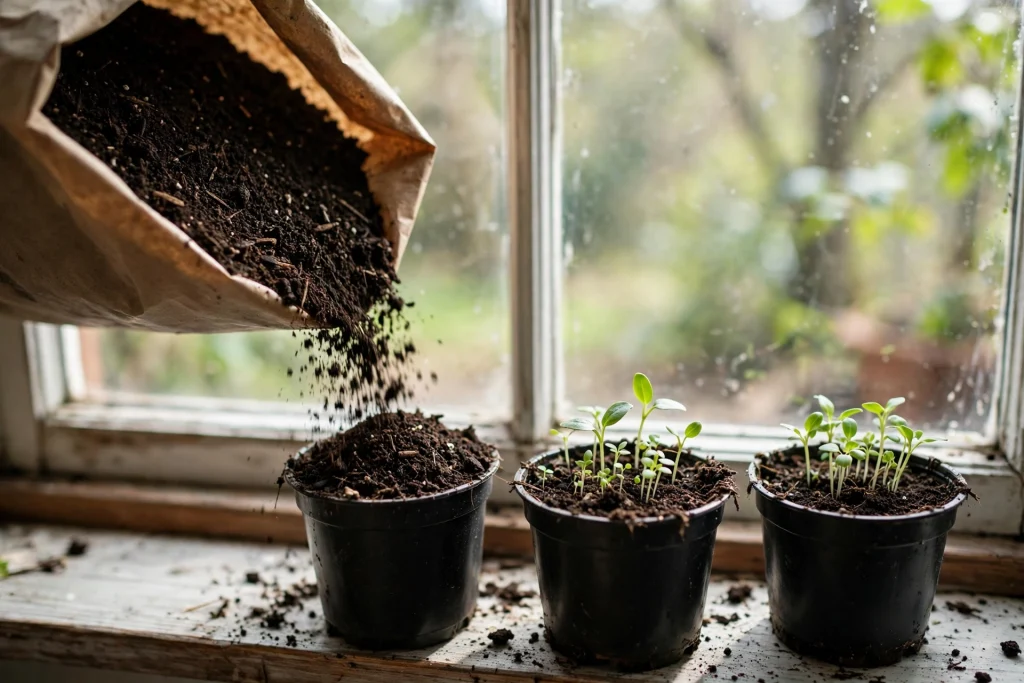
Miracle-Gro Seed Starting Potting Mix is the widely stocked conventional option, sold in an 8 quart bag. Its base is sphagnum peat moss and perlite, with fertilizer and a wetting agent included. The wetting agent helps dry peat take up water evenly, which is a real help on the first watering, when dry mix often sheds water off the surface.
Good choice when: you want feed included, you buy from a big-box store, and you sow a few trays at a time. Not ideal when: you grow strictly organic, or you plan to add strong liquid fertilizer in week one. With a fed mix, the safe move is to water plain at first, watch the seedlings, and add only a weak feed later if growth stalls. Miracle-Gro states that one 8 quart bag fills about three 72-cell trays, a useful check before you buy a second bag.
5. Sun Gro Black Gold Seedling Mix
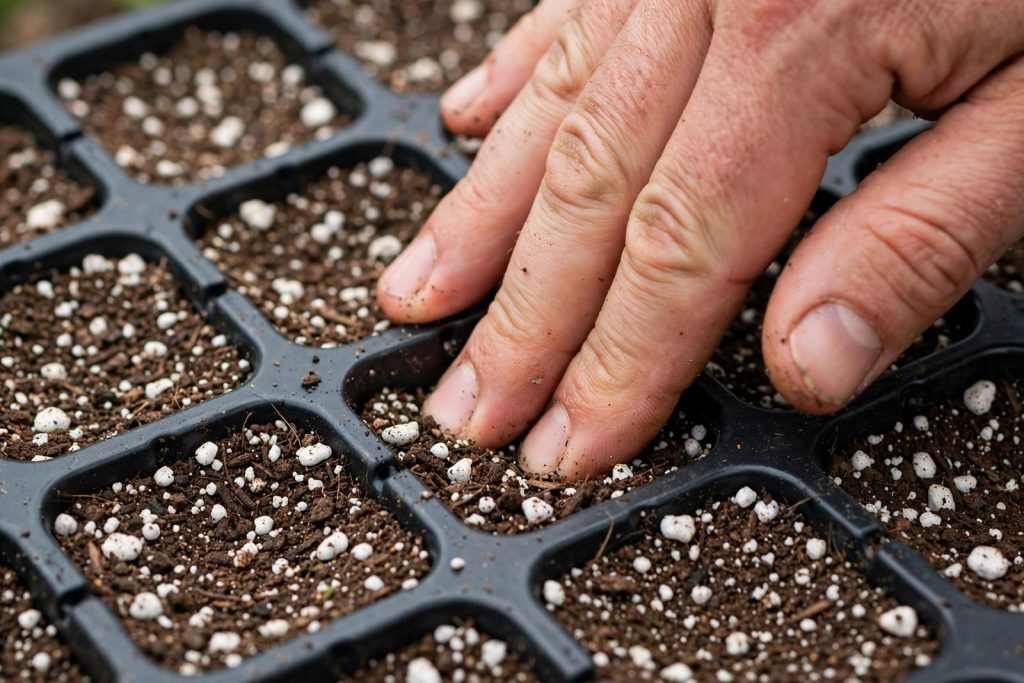
Black Gold Seedling Mix from Sun Gro is built around 70 to 80 percent Canadian sphagnum peat moss, with perlite, yucca extract as an organic wetting agent, and RESiLIENCE silicon dioxide, which the maker links to wilting resistance. It is OMRI-listed, it is double-screened for a fine texture, and it is sold in 8 quart and 16 quart bags. No added fertility is included, so you feed on your own schedule.
Real-world limitation: a very fine mix can stay wet if the tray has poor drainage or sits in a saucer of water. Use clean trays with drainage holes, empty the saucer after watering, and let the surface dry slightly between waterings. That one habit matters more than any ingredient on the bag. For tiny seeds, the fine texture is the reason to choose this mix, because seed-to-mix contact stays even across the cell.
6. FoxFarm Light Warrior Seed Starter
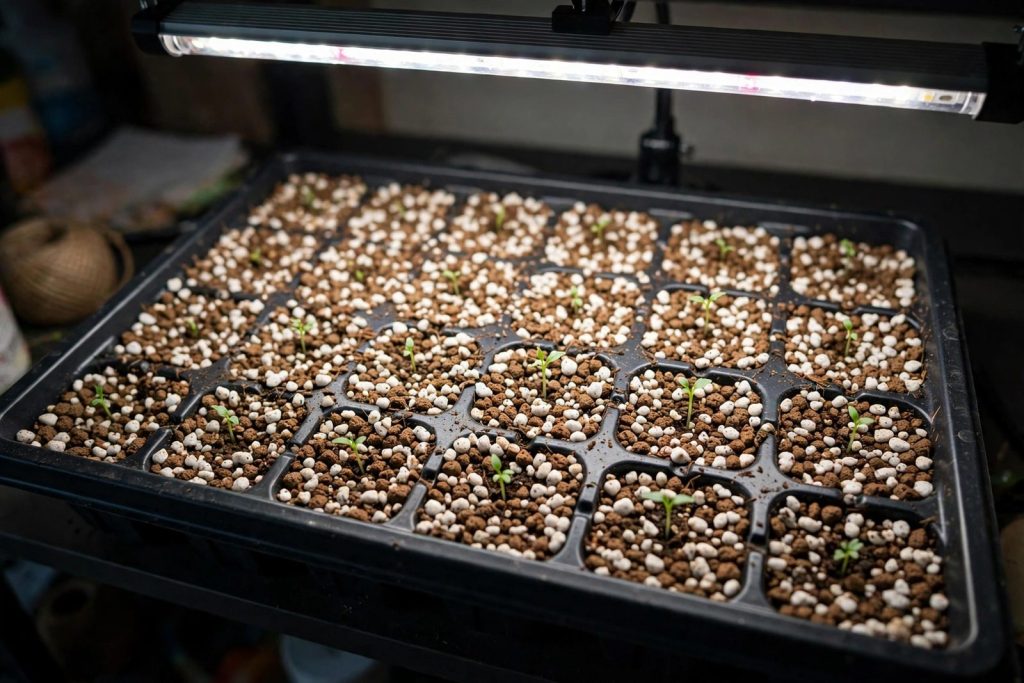
FoxFarm Light Warrior Seed Starter is designed for germination and root development, and it is the most complete small-plant mix in this guide. FoxFarm lists 45 to 55 percent sphagnum peat moss, plus perlite and fertilizer at 0.20-0.05-0.05. It also includes earthworm castings, mycorrhizal fungi, beneficial microbes, and humic acids, and FoxFarm adjusts the pH to 6.3 to 6.8. It is sold in a 1 cubic foot bag.
Who should buy it: growers who start cuttings as well as seeds, and growers who keep seedlings in the starter mix a little longer before potting on. The castings and microbes give seedlings a gentle start without the heavy feed of a potting soil. The trade-off is availability and bag size. A 1 cubic foot bag is more mix than a single windowsill tray needs, so share it with a gardening friend or plan several sowings, and store the open bag dry and sealed.
7. Coast of Maine Sprout Island Blend Seed Starter
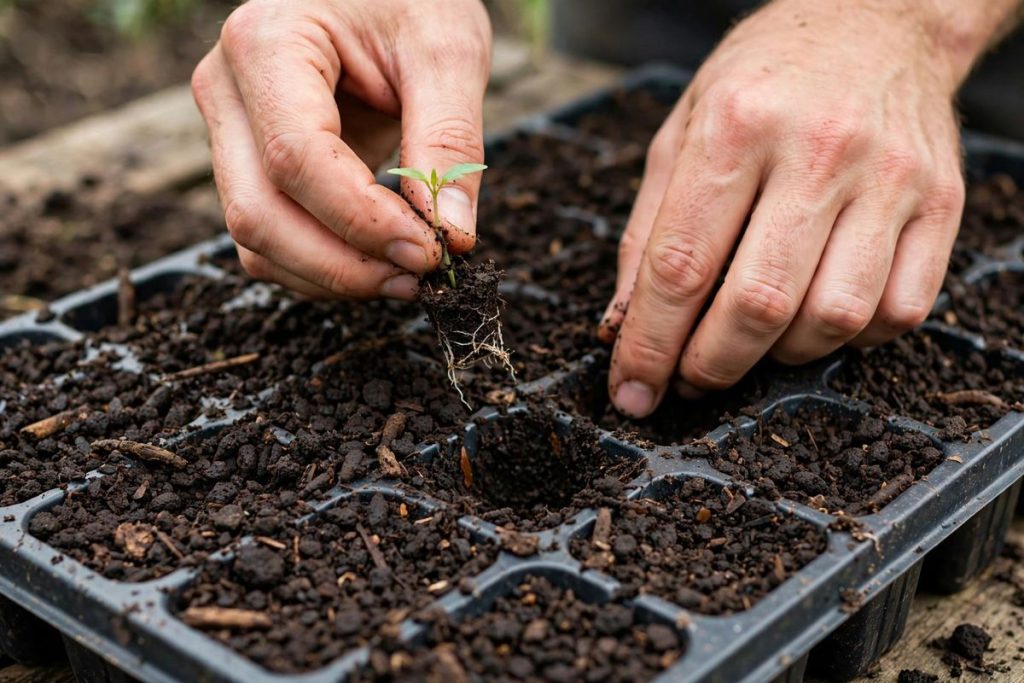
Coast of Maine Sprout Island Blend is the organic feed-charge pick. Its base is sphagnum peat moss, composted manure, compost, and perlite, with fertilizer derived from lobster and crab shell meal, kelp meal, and earthworm castings, at 0.35-0.10-0.05. It contains mycorrhizae, it is OMRI-listed, and it is sold in 8 quart and 16 quart bags. Coast of Maine recommends it for cell packs sized 72 or larger, which is a useful detail if you use large cells.
Best for: organic growers who want a mild feed built in, and gardeners who sow vegetables that stay in trays for several weeks. Watch out: a compost-based mix can hold more water than a plain peat mix, so water a little less at first and check the bottom of the tray, not just the surface. If the surface looks dry but the bottom is wet, wait. Seedlings need air as much as water.
8. PRO-MIX Premium Organic Seed Starting Mix
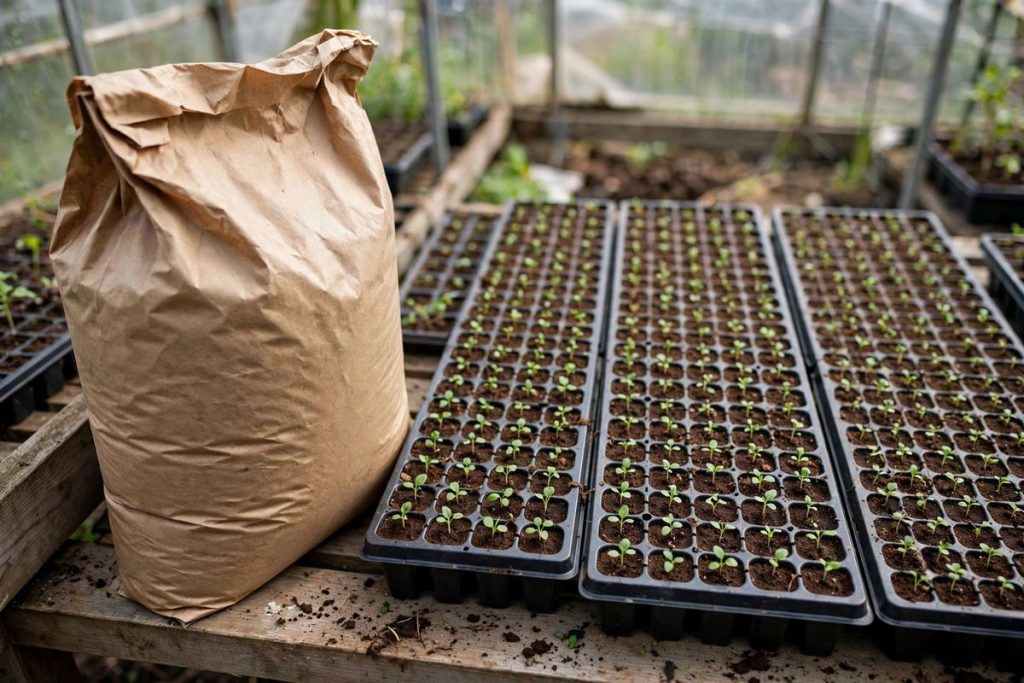
PRO-MIX Premium Organic Seed Starting Mix from Premier Horticulture is a peat-based organic mix with coir, perlite, limestone, organic fertilizer, and mycorrhizae with MYCOACTIVE technology. It is OMRI-listed, it is sold in 8 quart and 16 quart bags, and the organic fertilizer feeds gradually rather than in one strong dose. That gradual feed suits growers who sow many trays and do not want to track a separate feeding schedule for each batch.
Pros: a proven grower-style base, a gradual organic feed, and a bag size that fits a big sowing weekend. Cons: the gradual feed still counts as feed, so do not stack a full-strength liquid fertilizer on top in week one. If seedlings look pale after true leaves appear, a weak liquid feed is the right next step, not a heavy dose.
9. Territorial Seed Starting Mix
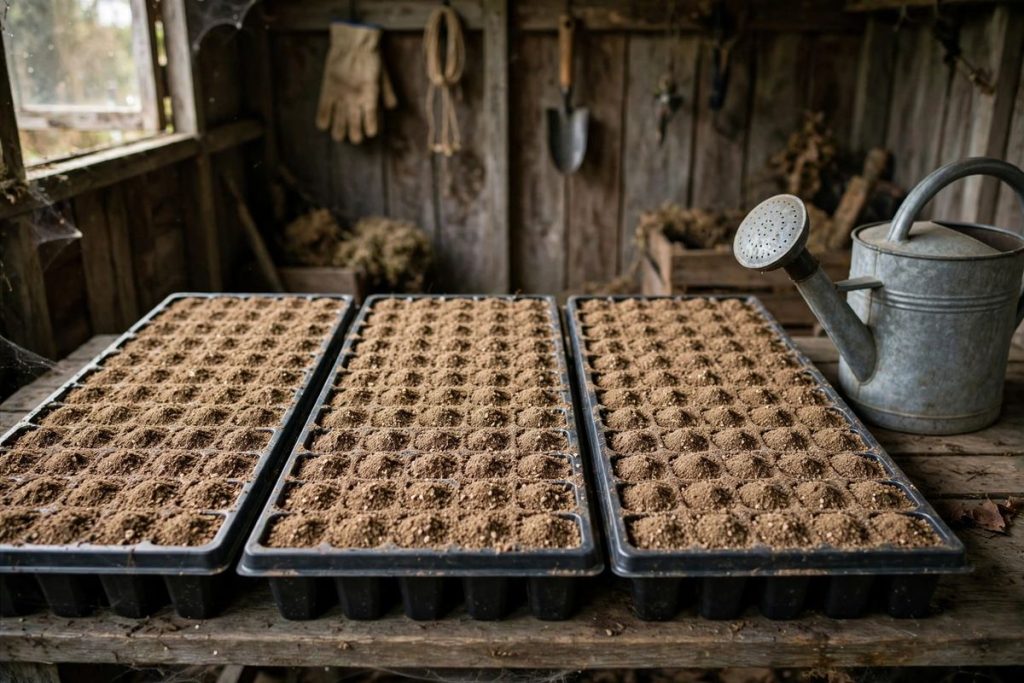
Territorial Seed Starting Mix is a seed-company mix, and that shows in the details. It blends screened Canadian sphagnum peat moss, plug-grade perlite, and vermiculite, and Territorial states the tray math plainly. An 8 quart bag fills two and a half 50-cell trays, and a 16 quart bag fills five 50-cell trays. That clarity helps when you order seeds and trays together and want no mid-week run to the store.
This mix is best for growers who use 50-cell trays or larger cells, and for growers who like a screened, even texture for plug production. Its limit is the same as other unfertilized mixes. No feed is stated, so plan that first weak feeding at the true-leaf stage. If you sow mostly 72-cell trays, compare the 8 quart math above with Miracle-Gro’s three-tray figure and buy for your cell size, not for the tray count alone.
10. Hoffman Seed Starter Soil
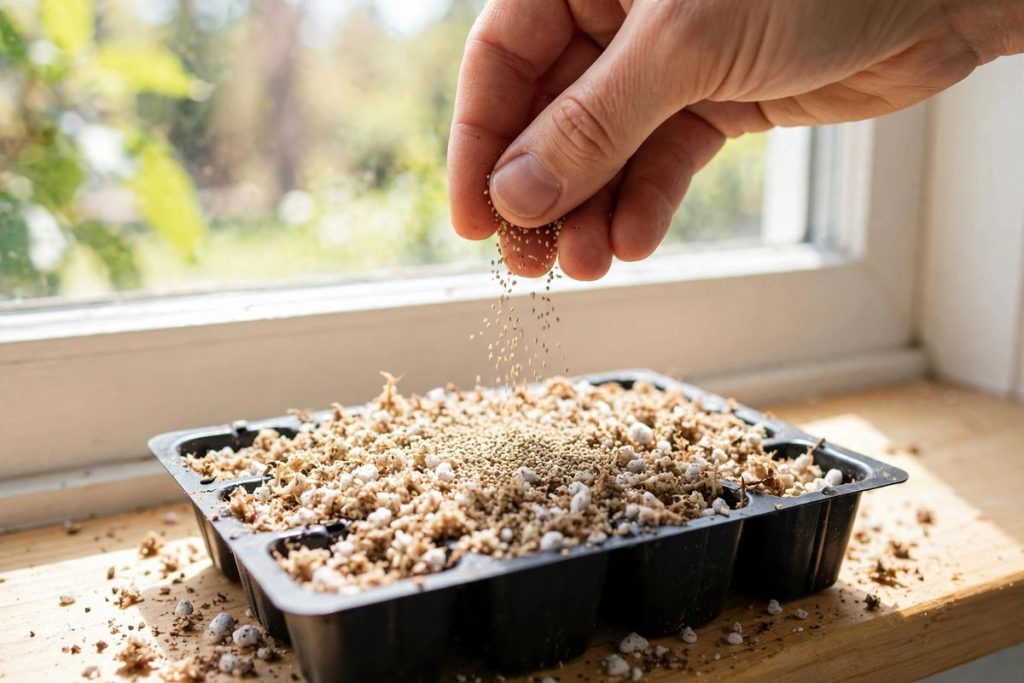
Hoffman Seed Starter Soil is the simple small-batch pick. It blends peat moss, vermiculite, limestone, and a wetting agent, and it holds moisture well while keeping the pH balanced for seedlings. It is sold as a small bag, so check the current listing for the exact bag size before you order, and buy it when you need one tray, not a whole season.
Buy it if: you sow a few pots on a windowsill, you want a plain base with no feed to manage, and you like a mix that stays damp without staying soggy. Skip it if: you sow many trays, because a small bag will run out mid-weekend and a larger bag from the picks above will save a second trip. For a first-time grower, Hoffman is a low-risk way to learn watering rhythm before committing to a larger bag.
Seed Starting Mix vs Potting Soil
| Feature | Seed starting mix | Potting soil |
|---|---|---|
| Texture | Fine, even, few or no bark chips | Coarser, often with bark and larger perlite |
| Feed | None or very light | Often moderate to strong |
| Water behavior | Holds moisture, drains in small cells | Holds more water, can stay soggy in small cells |
| Best use | Sowing seeds and rooting cuttings | Growing on potted plants |
| When to switch | Pot on once seedlings outgrow cells | Use after potting on, not for sowing |
Potting soil is not a bad product, it is the wrong tool for sowing. Its coarser texture can leave air gaps around a tiny seed, its stronger feed can burn a new root, and its water holding can turn a small cell into a wet plug. Start in a seed starting mix, then pot seedlings into potting soil once they have true leaves and roots fill the cell. That two-step move is the simplest way to avoid both weak germination and early fertilizer burn.
A Simple DIY Seed Starting Mix
You can mix your own seed starting mix if you want a peat-free or low-cost option, but keep it simple and keep it clean. A reliable home blend is 2 parts coconut coir or peat moss to 1 part perlite or vermiculite. Moisten the dry ingredients in a bucket before filling trays, because dry peat and coir shed water at first. Mix until the blend feels like a wrung-out sponge, damp all through, not dripping.
Do not use garden soil in a DIY mix for indoor sowing. Garden soil packs down, it drains poorly in a cell, and it can carry damping-off fungi. If you add compost, keep it to a small share and use finished, clean compost, because fresh or coarse compost can hold too much water for a small cell. A DIY mix with no feed needs the same true-leaf feeding as a bought unfertilized mix, so do not skip that step just because you made the mix yourself.
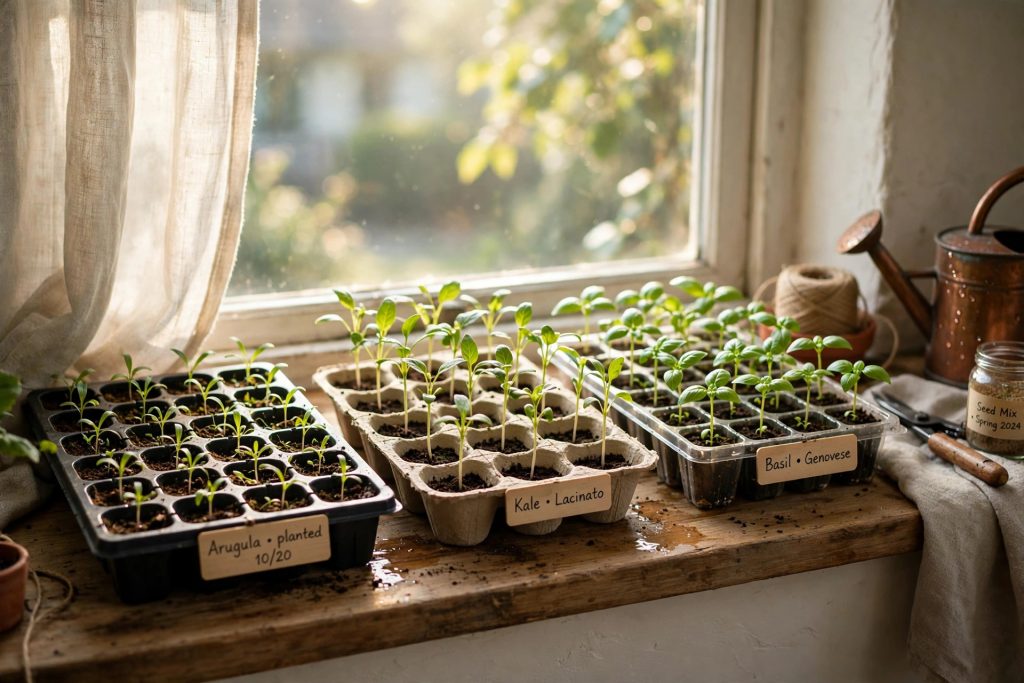
Mix choice and sowing date work together, and the zone timing guide below sets the sowing window for your last frost date.
When to Feed Seedlings
Wait for true leaves. The first leaves, the seed leaves, feed the seedling from the seed itself. Once true leaves appear, the plant needs outside food, and a weak liquid fertilizer at half the label rate, applied once a week, is a safe start for most vegetables and flowers. Water plain first if the mix is dry, then feed, so fertilizer does not sit on dry roots.
Adjust by mix type. For unfertilized mixes such as Espoma, Jiffy, Black Gold, Territorial, and Hoffman, start that weak feed at the true-leaf stage without delay. For fed mixes such as Miracle-Gro, Coast of Maine, PRO-MIX, and FoxFarm Light Warrior, wait and watch. If seedlings grow steadily and stay green, hold off. If growth stalls or leaves pale after true leaves, add a weak feed. Never feed a dry tray, never double-feed a fed mix, and always read the fertilizer label for seedlings, not for mature garden plants.
Damping Off and Clean Trays
Damping off is a group of fungal problems that rot seeds before they emerge or collapse seedlings at the soil line. Once a seedling falls over and the stem looks pinched and dark at the base, it rarely recovers. Prevention beats rescue, and the mix is only one part of that prevention.
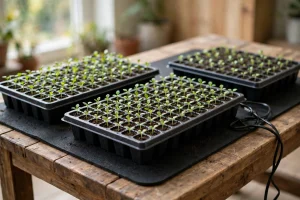
Start with clean trays. Wash reused trays with soapy water, then disinfect following extension guidance, often a 10 percent bleach solution, rinse, and dry before reuse. Use fresh seed starting mix, not last year’s open bag from a damp shed. Keep the mix barely moist, not soggy, and give seedlings air. Remove humidity domes once seeds emerge, space trays so air moves, and use a small fan on low if the room feels still. Penn State Extension notes that most commercial soilless mixes are free of damping-off fungi, and it recommends bottom heat so the mix stays at 70 to 75 degrees Fahrenheit during germination, with even moisture and sterile flats. That temperature and air advice is worth following even when the mix itself is fresh.
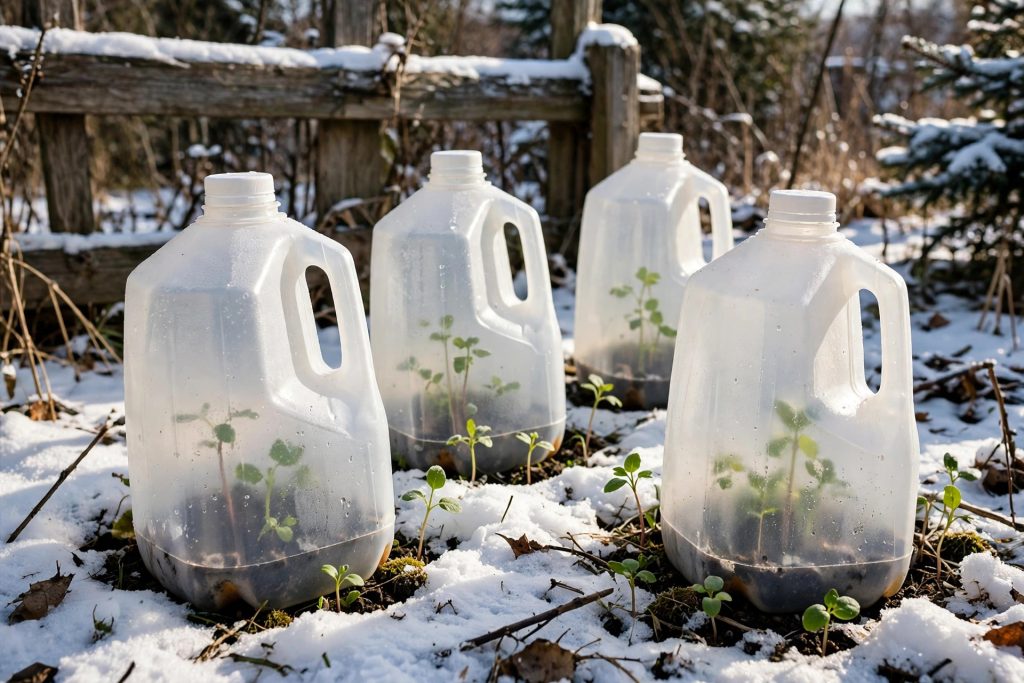
If indoor space is tight, winter sowing below uses containers outdoors instead of trays under lights.
How We Chose
Scores in this article come from verified manufacturer specs and owner feedback, not from hands-on testing. No product in this guide was tested by the author in a trial, and no germination rate is claimed from personal testing. The scoring system below keeps the comparison honest and shows where each mix gains or loses points.
| Factor | Weight | What it rewards |
|---|---|---|
| Texture and drainage | 30 percent | Fine, even mix that drains in small cells |
| Moisture balance | 25 percent | Steady dampness without soggy cells |
| Feed fit | 15 percent | Feed level that matches seedling stage |
| Organic and peat-free choice | 15 percent | Clear OMRI listing or peat-free base |
| Bag size and availability | 15 percent | Bag sizes that fit real tray counts |
A mix lost points when its bag size was unclear, when its feed level was unstated and left the grower guessing, or when its texture was too coarse for small seeds. A mix gained points when the maker stated the base, the feed, and the bag size plainly, and when the mix suited a clear job, such as peat-free sowing or 50-cell trays.
Final Choice
The best seed starting mix for most growers is Espoma Organic Seed Starter, because it pairs a fine peat and perlite base with no synthetic feed, so you control the first feeding. If you want peat-free, buy Burpee Organic Coconut Coir and plan a weak feed at the true-leaf stage. If you want feed included, Coast of Maine Sprout Island Blend is the organic choice and Miracle-Gro Seed Starting Potting Mix is the widely stocked choice. For a big sowing weekend, PRO-MIX Premium Organic Seed Starting Mix or Territorial Seed Starting Mix makes the bag math easy.
Whatever bag you buy, the habits matter as much as the mix. Fill trays with moist, not soaking, mix. Water from below when you can, empty the saucer, and give seedlings air and light once they emerge. A good mix gives roots a soft start. Steady water, clean trays, and a timely weak feed carry them from there.
References
- Penn State Extension, Damping Off: supports the clean-tray, pasteurized or soilless mix, and 70 to 75 degrees Fahrenheit bottom-heat guidance used in the damping-off section.
- University of California Master Gardeners of Placer County, The Dreaded Damping Off: supports the soilless mix, clean container, and barely moist, not soggy, watering guidance.
- FoxFarm Soil and Fertilizer Company, Light Warrior Seed Starter: supports the 45 to 55 percent sphagnum peat moss, perlite, fertilizer, worm castings, mycorrhizae, and pH 6.3 to 6.8 figures for that product.
- Coast of Maine Organic Products, Sprout Island Blend Seed Starter: supports the peat, compost, perlite, kelp meal, worm castings, mycorrhizae, and 0.35-0.10-0.05 figures for that product.
- Bob Vila, The Best Seed Starting Mixes: supports the Espoma, Miracle-Gro, Burpee coir, Coast of Maine, and Jiffy picks as widely recommended seed starting mixes, with bag sizes and ingredients compared.
Frequently Asked Questions
Can I use potting soil to start seeds?
You can, but it is not the best choice. Potting soil is coarser and often richer than a seed starting mix, so it can leave air gaps around tiny seeds, stay soggy in a small cell, or burn a new root. Start seeds in a fine seed starting mix, then pot seedlings into potting soil once they have true leaves and roots fill the cell.
How much seed starting mix do I need for a 72-cell tray?
It depends on cell size, so use a maker figure as a guide. Miracle-Gro states that one 8 quart bag fills about three 72-cell trays. If you sow larger cells, such as 50-cell trays, the same bag fills fewer trays, so count cell size, not just tray count, and buy one extra bag for potting on.
Do seedlings need fertilizer in the mix?
Seeds do not need fertilizer to sprout, because the seed carries its first food. Seedlings need a weak feed once true leaves appear. If your mix already includes feed, wait and watch before adding more. If your mix has no feed, start a half-strength liquid feed at the true-leaf stage, once a week.
Is peat-free seed starting mix as good as peat mix?
Yes, when the texture is fine and watering is steady. Coconut coir holds water well and rewets easily, but it carries almost no nutrition, so feeding at the true-leaf stage matters sooner. Peat moss holds water well and is slightly acidic, which suits most vegetables. Choose peat-free if that matters to you, and feed on schedule either way.
Why do my seedlings fall over and die at the soil line?
That pattern is often damping off, a group of fungal problems that attack seedlings in cool, wet, airless conditions. Use fresh seed starting mix, clean trays, and barely moist mix, not soggy mix. Remove humidity domes after emergence, give seedlings air, and keep the mix near 70 to 75 degrees Fahrenheit during germination, following extension guidance.
Can I reuse seed starting mix next year?
It is risky. Used mix can carry damping-off fungi, algae, and gnat eggs, and it may have lost its even texture. If you reuse trays, clean and disinfect them first. For the mix itself, a fresh bag is the safer choice for seeds, and old mix is better used in outdoor beds or large pots, not in small seed cells.

Thesis Link : https://saulibrary.edu.bd/daatj/public/uploads/BAU200601_19-Pp_5.pdf
- Best Grow Shelves with Lights: 10 Picks for Seedlings - November 2, 2026
- Best Seed Starting Mix: 10 Mixes for Strong Seedlings - November 2, 2026
- How to Read a Fertilizer Label - November 2, 2026