
Disclosure: As an Amazon Associate I earn from qualifying purchases.
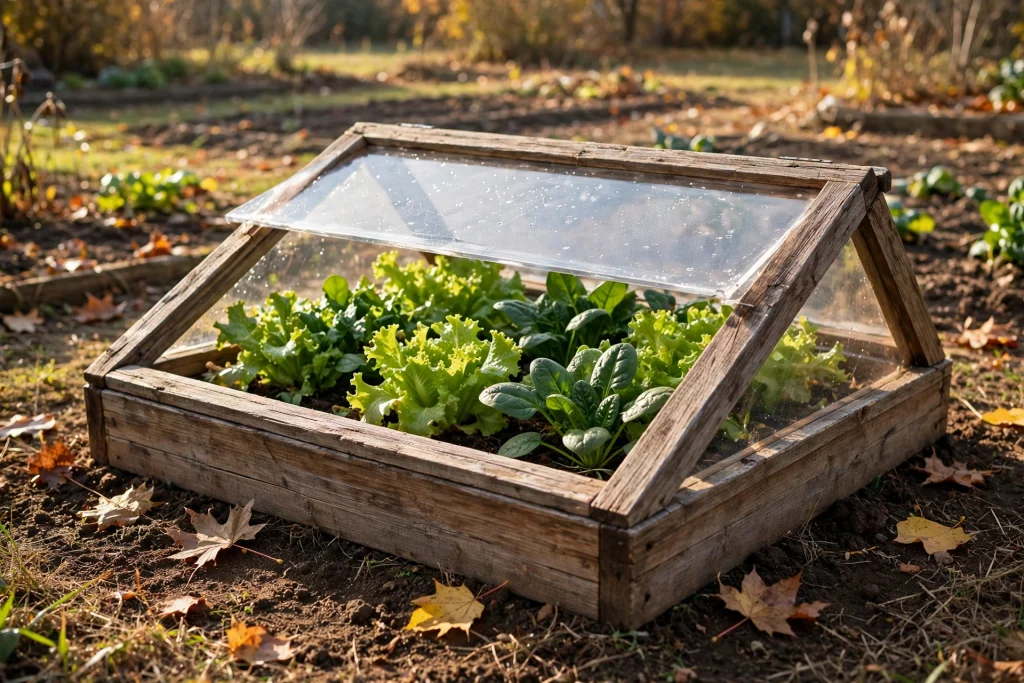
A cold frame is the smallest, simplest, and least expensive structure for protecting plants, in the words of the University of Nebraska Extension, and it is also the one most gardeners put off buying until the first frost has already taken their lettuce. It is a bottomless box with a clear lid that works like a tiny unheated greenhouse. The sun warms the soil and the frame during the day, the box holds some of that warmth through the night, and the plants inside get two to four extra weeks of growing season at each end of the year, per Iowa State University Extension. No heater, no power cord, no building permit. Just a box, a lid, and a habit of opening it on sunny mornings.
The best cold frame garden setup is not the biggest or the most expensive one. It is the one whose glazing actually insulates, whose lid vents before the plants inside cook, and whose size fits the bed or patio it will sit on. A twin-wall polycarbonate lid holds heat far better than a single sheet of plastic. An automatic vent opener saves a crop on the day you forget to prop the lid open. And a frame wider than three feet is a frame you cannot reach across without stepping inside it, which the Iowa State Extension warns against.
This guide compares the 10 best cold frames gardeners can buy in the United States in 2026, with every fact checked against the maker’s own catalogue or manual, a major retailer listing, or a university Extension source. Where a maker does not publish a spec, this guide says so. Where sources disagree, it prints the conflict instead of picking the bigger number. Ratings come from verified specifications and owner-feedback patterns, not from hands-on testing, and the scoring system is printed in full in How We Chose so you can check the maths yourself.
Quick Recommendation
If you only want the short answer, start here.
- Best overall for most gardeners: Juwel BioStar 1500 Premium Cold Frame, rated 9.0. Eight-millimetre twin-wall polycarbonate, three roof windows, and a paraffin automatic opener that vents the frame without power.
- Best cedar raised-bed frame: Backyard Discovery Aggie 4 ft x 2 ft Cedar Cold Frame, rated 8.8. Solid cedar with a wax-filled hinge that opens the lid above 70 degrees, on a raised bed with a mesh drainage liner.
- Best elevated frame for patios: Palram Canopia Plant Inn 4×4 Raised Garden Bed Greenhouse, rated 8.4. Waist-height growing on a deck or balcony, with two deep planting trays and a storage shelf underneath.
- Best bed-and-cover combo: Outsunny Raised Garden Bed with Polycarbonate Greenhouse 845-670V00GY, rated 8.0. Galvanised steel bed and fir wood cold-frame top in a single purchase, with two independent roof covers.
- Best for VegTrug owners: VegTrug Classic Cold Frame 1m, rated 7.7. FSC-certified cedar, purpose-built to sit on a VegTrug Classic Small 1m raised bed, with a hinged lid that props open for airflow.
- Best budget wooden frame: Outsunny Wooden Cold Frame Mini Greenhouse 39 in, rated 7.6. Solid fir, single-wall polycarbonate, and the lowest-cost wooden frame in this guide. It needs sealing for a long life.
- Best tiered cabinet: MCombo Wooden Cold Frame Greenhouse 0760, rated 7.3. An upright fir cabinet with two slatted shelves for pots and seed trays, suited to a small patio or deck.
- Best lightweight frame: Giantex Wood Cold Frame Greenhouse with Adjustable Roof 40 in, rated 7.1. Eight pounds, easy to move to follow the sun, and taller than the budget box, so it suits taller seedlings.
- Best portable cloche: Zenport SH3212A+BTP Garden Raised Bed Cold Frame Cloche, rated 7.0. A steel-tube frame with a zippered plastic cover that moves between beds through the season.
- Best for a whole 6 ft bed: Gardzen Mini Greenhouse GGH-P-S2, rated 6.9. Seventy-two inches long with a zippered door, covering a full raised bed at once, though its soft PVC cover needs anchoring in wind.
If you are buying your first cold frame, start with the crop, not the catalogue. Lettuce, spinach, kale, and radishes are the classic cold-frame crops, and a low box with a clear lid grows them well from early spring to late autumn. If you want to harden off tomato and pepper seedlings, you need height and a lid that opens wide. And if you leave home during the day, buy the automatic vent, because a closed cold frame in full sun can pass 130 degrees within about an hour, per Colorado State University trials, and that kills plants faster than any frost.
Eight of the ten picks are traditional low cold-frame boxes. Two are not: the Palram Plant Inn is an elevated raised-bed greenhouse, and the Gardzen is a low tunnel. They are included because they do the same three jobs, let light in, hold heat, and open for air, for gardeners who need waist-height growing or a whole bed covered at once. Their scores are not directly comparable with the low boxes on insulation and build, and each of their sections says so.
The 10 Best Cold Frames Compared
| Product | Glazing | Size | Venting | Best for | Our rating |
|---|---|---|---|---|---|
| Juwel BioStar 1500 Premium | 8 mm twin-wall polycarbonate | 59 x 32 in, 16/20 in high | Automatic paraffin opener + 2 prop vents | Best overall, hands-off winter growing | 9.0 |
| Backyard Discovery Aggie Cedar | Double-wall polycarbonate | 48 x 28.5 in, 32.25 in high | Automatic wax hinge above 70 F | Best cedar raised-bed frame | 8.8 |
| Palram Canopia Plant Inn 4×4 | Single-wall SnapGlas polycarbonate | 46 x 46 in, 58.5 in peak | Manual side hinges, sliding panels | Best elevated, waist-height growing | 8.4 |
| Outsunny 845-670V00GY | Polycarbonate panels | 48 x 24 in, 32.25 in high | Manual, 2 independent roof covers | Best bed-and-cover combo | 8.0 |
| VegTrug Classic Cold Frame 1m | 3.5 mm polycarbonate | 40.6 x 30.8 in, 17.9 in high | Manual hinged lid, vent post | Best for VegTrug raised beds | 7.7 |
| Outsunny Wooden Cold Frame 39 in | Single-wall polycarbonate | 39.25 x 25.5 in, 15.75 in high | Manual prop arms, 2 positions | Best budget wooden frame | 7.6 |
| MCombo 0760 Cabinet | Frosted polycarbonate | 29.9 x 18.2 in, 43.3 in high | Manual roof + front door | Best tiered cabinet for patios | 7.3 |
| Giantex Adjustable Roof 40 in | Transparent panels, material not stated | 40 x 21 in, 28 in high | Manual adjustable roof angles | Best lightweight, small spaces | 7.1 |
| Zenport SH3212A+BTP Cloche | Transparent plastic cover | 47 x 24 in, 24 in high | Manual zippered roll-up door | Best portable pop-up cloche | 7.0 |
| Gardzen GGH-P-S2 Tunnel | Clear PVC cover | 71.7 x 36.2 in, 42.5 in high | Manual zippered door + 1 vent | Best for a whole 6 ft bed | 6.9 |
A note on frost protection: no maker in this guide publishes a frost-protection degree rating for its own cold frame, so this guide prints none. The closest published figure is a university trial, not a product claim. Colorado State University measured 3 to over 6 degrees of frost protection from a plastic cover on a frame in Fort Collins trials, and the University of Missouri Extension states the temperature inside a cold frame is generally no more than 5 to 10 degrees warmer than outside. Treat any listing that promises a precise degree of frost protection for a cold frame with suspicion unless it names its source.
How to Choose a Cold Frame
A cold frame has only three jobs: let light in, hold heat, and let hot air out. Every buying decision comes back to those three. The glazing decides the first two. The venting decides the third. The frame material decides how many winters the box survives, and the footprint decides what you can grow in it.
Best cold frame garden for winter gardening
Winter gardening is where glazing thickness earns its keep. A twin-wall polycarbonate panel, two sheets with an air gap between them, insulates far better than a single sheet, and the difference shows on a freezing night. The Juwel BioStar 1500 uses 8 mm twin-wall polycarbonate with a maker-backed 10-year guarantee against yellowing, which is the thickest glazing in this guide. The Backyard Discovery Aggie and the VegTrug use thinner polycarbonate, and the soft-cover frames use a single layer of plastic that insulates least of all.
Weight is a second winter clue. A heavy frame stays put in a winter storm. The Aggie weighs 94.8 lb, which is a permanent fixture, while the Zenport cloche weighs 6 lb and the Gardzen tunnel 11.77 lb, and both need anchoring. Utah State Extension warns that portable, collapsible cold frames are lightweight and susceptible to blowing away, and must be secured in place.
For a winter of leafy greens, pick a rigid twin-wall or double-wall frame with an automatic vent, and site it facing south. For a mild winter in zones 8 and 9, a single-wall wooden frame does the job, because the frame only needs to take the edge off a light frost.
DIY vs premade cold frame
A premade cold frame buys you a finished lid, which is the hard part. A hinged, glazed, venting lid is fiddly to build well, and a lid that warps or leaks undoes the whole frame. Kits and pre-assembled cold frames are available for purchase, per Iowa State Extension, and some kits even contain automatic ventilation equipment, per NC State Extension.
The DIY route is cheapest and the classic one. An old glass storm window, a window sash, or a shower door makes a good recycled covering, per Iowa State, and scrap lumber with an old window sash keeps costs down, per Missouri Extension. The University of Minnesota Extension notes that building a simple cold frame takes a few hours and needs only a hammer, a drill, a saw, and nails or wood screws.
The trade is time against certainty. DIY saves money and lets you size the frame to your bed, but you build the lid, the hinges, and the vent prop yourself, and you choose the wood. Premade buys a tested lid and a warranty, and the two automatic-vent frames in this guide, the BioStar 1500 and the Aggie, are premade-only designs. If you are not handy, buy premade. If you enjoy building, DIY with untreated rot-resistant wood, and never use wood treated with creosote, CCA, or pentachlorophenol, which can damage plants in a closed frame, per NC State Extension.
How to use a cold frame
A cold frame is used in three seasons, and each one asks something different of it. In spring, it starts cool-season crops two to four weeks earlier than the open garden, per Iowa State Extension, and hardens off tender seedlings before they go into the ground. In summer, it mostly sits empty or shaded, because a closed frame in summer sun cooks plants. In autumn, it starts cool-season vegetables in late August or early September, then closes overnight as frost threatens, stretching harvests well into November in most growing seasons, per Iowa State.
The daily routine is simple and non-negotiable. Open the lid in the morning, close it before sunset, and check the temperature inside with a thermometer. Iowa State Extension states the sash should be raised when the air temperature inside rises above 85 degrees, and closed before sunset to retain heat. On sunny days above 45 degrees outside, ventilation matters most, per Virginia Tech and NC State Extension, even in late winter and early spring.
Watering changes inside a frame. The nearly airtight box slows evaporation, so it is easy to overwater, per NC State Extension, and watering should be done early in the day so plants dry before dark. The lid blocks rain, so the frame needs watering by hand even when it rains outside. Let the soil surface dry between waterings, but do not let plants wilt, per Missouri Extension.
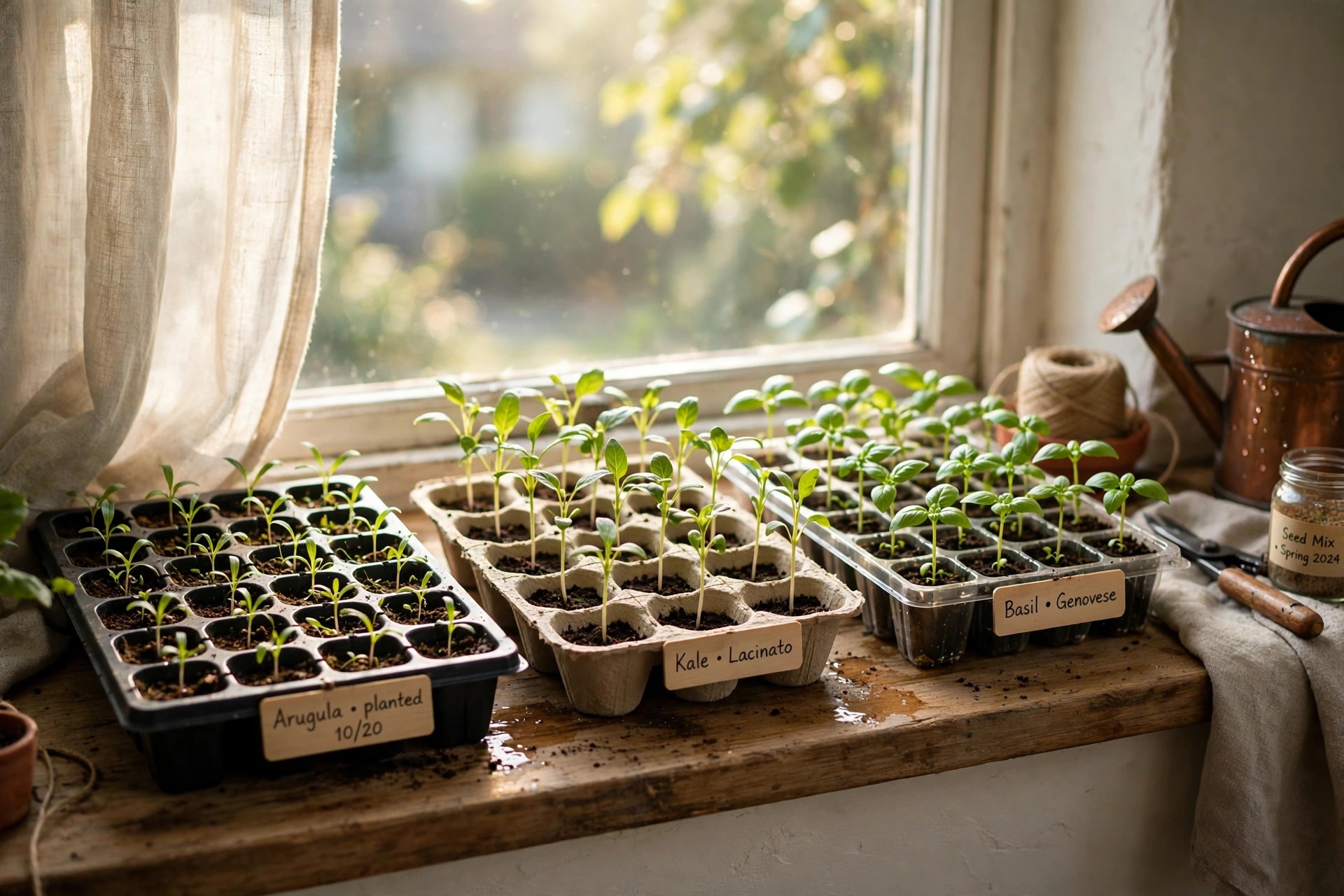
For hardening off, the frame is ideal. Place tomato, pepper, and eggplant seedlings grown indoors into the frame for a week or longer before planting out, per the University of Vermont Extension, opening the sash wider and longer each day, and keeping the sash ready to return if a late spring freeze threatens, per Missouri Extension.
Best cold frame placement
Placement decides how much heat the frame catches and how much it keeps. Every Extension source agrees on the same three rules: face south, shelter from the north wind, and drain well.
A southern exposure provides maximum sunlight and heating capacity, per Iowa State Extension. Virginia Tech, NC State, and Penn State Extension all describe the ideal location as a southern or southeastern exposure with a slight slope to ensure good drainage and maximum solar absorption. The University of Minnesota Extension adds that the site should receive direct sun for at least half the day, with due south best and southeast or southwest workable.
Wind protection comes from the north. A sheltered spot with a wall or hedge to the north protects against winter winds, per Virginia Tech, and Missouri Extension suggests a building, bales of hay or straw, a tight board fence, or an evergreen hedge as a windbreak. Nebraska Extension warns that the windbreak must not shade the frame. Placing the north end of the structure near a home, garage, or fence also reduces heat loss, per Iowa State.
Drainage is essential, because a frame that floods drowns the crop. Locate a cold frame over good, well-drained soil that does not flood or collect water, per Iowa State, and if natural drainage is poor, install drainage tile beneath the frame or build the base on a thick layer of coarse gravel, per Nebraska Extension. Sinking the frame into the ground somewhat also helps, using the earth for insulation, per Virginia Tech.
The lid slope matters too. Missouri Extension gives the slope from back to front as about 1 inch per foot, and Iowa State describes the ideal frame as about 12 inches high in front and 18 inches high in the back, a slope that lets more sunlight in. Keep the frame no more than 3 feet deep so you can reach the back without stepping inside, per Iowa State, though NC State notes 4 to 5 feet is workable when you can reach across from either side.
Ventilating cold frames
Ventilation is the skill that separates a cold frame gardener from a gardener with a box of dead lettuce. A cold frame with its lid shut on a sunny day heats fast. Colorado State University trials found temperatures under a closed cover can rise past 130 degrees within about an hour of sun. Iowa State Extension warns to check cold frames frequently, even on cloudy days, to prevent temperatures from getting too warm and killing the plants inside.
The rule is a number, not a feeling. Raise the sash when the air inside rises above 85 degrees, per Iowa State, and close it before sunset. On clear, sunny days when temperatures rise above 45 degrees outside, ventilation is most critical, per Virginia Tech and NC State Extension. Clemson Extension gives a stricter winter target for leafy greens in South Carolina, ventilating to keep the frame below 60 degrees, which suits winter greens rather than all crops.
How to vent is simple. Prop the lid open a couple of inches, which is enough on most days, per the University of Vermont Extension, and use a board or dowel to hold it. Missouri Extension advises raising the sash on the side opposite the wind, which prevents wind burn on young plants and stops strong wind from lifting the sash.
Automatic openers remove the daily chore. The simplest types are wax-filled cylinders that expand and push the cover open as temperatures rise and contract to close it as it cools, per Iowa State Extension. Two frames in this guide have them built in: the BioStar 1500 uses a paraffin automatic opener on one of its three roof windows, and the Aggie uses a wax-filled hinge that opens above 70 degrees. If you work away from home during the day, an automatic opener is the single most valuable feature a cold frame can have.
What to grow in a cold frame
Cool-season vegetables are the cold frame’s natural crop. Lettuce, spinach, kale, radishes, and scallions are the popular choices, per the University of Vermont Extension, and Iowa State Extension adds that these can start two to four weeks earlier in a frame than in the open garden. Penn State Extension lists the wider cool-season set suited to season extenders: Asian greens, beets, broccoli, Brussels sprouts, chives, cabbage, carrots, cauliflower, Swiss chard, kale, leek, lettuce, onion, parsnips, peas, radishes, spinach, and turnips.
In autumn, the frame earns its keep twice. Start cool-season vegetables in late August or early September with the frame open, then close it overnight as frost threatens, and harvest can continue well into November in most growing seasons, per Iowa State Extension. Clemson Extension lists a winter set for milder climates: spinach, kale, collards, mustard greens, and Swiss chard, with herbs such as chives, cilantro, parsley, dill, and sage, and roots including radishes, turnips, beets, and carrots.
Warm-season crops do not belong in a cold frame through winter. Tomato, pepper, eggplant, squash, and beans will not survive a hard freeze in an unheated frame. They belong in the frame only for hardening off in spring, a week or longer before planting out, per the University of Vermont Extension. And when daylight falls below 10 hours per day, plant growth largely ceases, per Nebraska Extension, so autumn sowings should be timed to mature before that point.
Cold frame vs greenhouse vs row cover
A cold frame sits in the middle of the season-extension ladder. NC State Extension lists the continuum from simplest to most complex as cloches, low tunnels and row covers, cold frames and hot beds, high tunnels, and greenhouses. A cold frame is a miniature, unheated, solar-only greenhouse that sits on the ground and is worked from outside by lifting the lid, while a greenhouse is walk-in, actively heated and ventilated, and usable year-round.
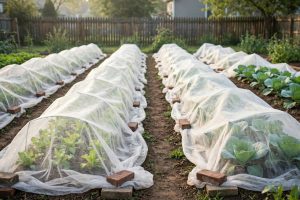
A floating row cover is lighter and cheaper, and it drapes directly over plants, letting air, water, and light through. Utah State Extension puts row-cover air temperatures 2 to 10 degrees higher than surrounding air, and NC State gives row covers 4 to 5 degrees of frost protection, so cool-season crops can be planted when air temperatures are as low as 28 degrees. A row cover costs 10 to 30 dollars, per Utah State, against 70 to 200 dollars for a cold frame, but a row cover cannot be opened and closed like a lid, and it offers no rigid protection against wind, snow load, or animals.
A cloche covers one plant. It traps solar radiation and can run 20 to 40 degrees hotter than ambient air on a sunny day, per Utah State, and must be opened or removed during the day. A low tunnel, a row cover over hoops, gives 2 to 4 degrees of protection, per Utah State, and suits a whole row rather than a single plant.
The honest comparison is this: a row cover is the cheapest way to gain a few degrees, a cloche protects a single prized plant, and a cold frame is the smallest rigid structure that gives real, repeatable season extension with a lid you can manage. A greenhouse does more, and costs 2,000 to 10,000 dollars, per Utah State, which is a different purchase entirely.
| Method | Warmth | Weeks gained | Cost |
|---|---|---|---|
| Cloche, one plant | 20 to 40 F hotter by day, per Utah State | A few weeks for single transplants | 15 to 45 dollars |
| Floating row cover | 2 to 10 F warmer air, per Utah State | 1 to 4 weeks | 10 to 30 dollars |
| Low tunnel | 2 to 4 F, per Utah State | 2 to 4 weeks | 20 to 100 dollars |
| Cold frame | 5 to 10 F warmer inside, per Missouri Extension | 2 to 4 weeks, per Iowa State Extension, up to 5 in favourable conditions | 70 to 200 dollars |
| High tunnel | A few degrees per day over weeks, per NC State | About 4 to 8 weeks | 1,000 to 5,000 dollars |
| Greenhouse | Actively heated, year-round | 4 to 8 weeks or more, year-round | 2,000 to 10,000 dollars |
The 10 Best Cold Frames
1. Juwel BioStar 1500 Premium Cold Frame
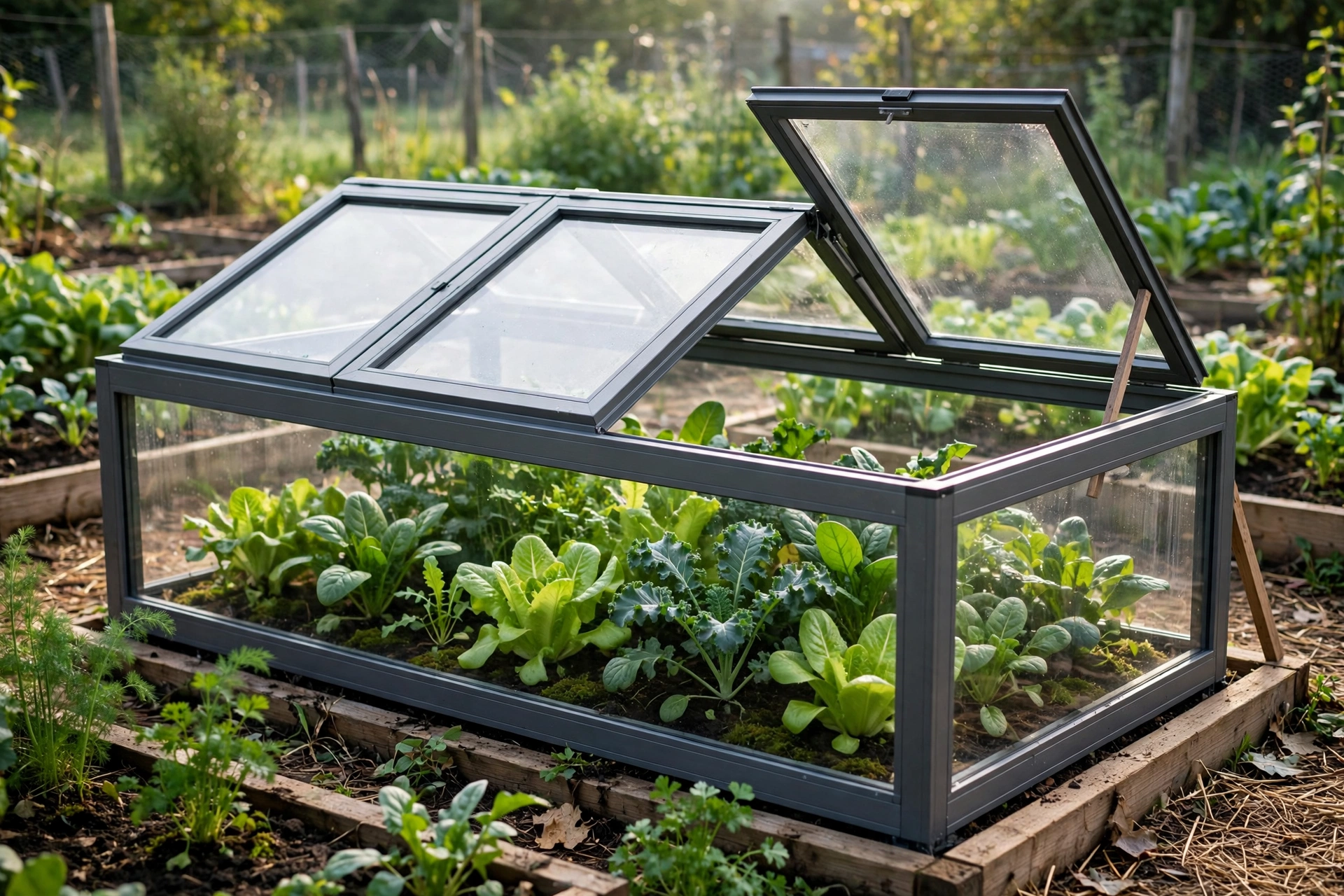
Best overall. The thickest glazing in this guide, with a vent that opens itself.
The BioStar 1500 is the frame to buy if you want to stop thinking about ventilation. Its three roof windows include one with a paraffin automatic opener, which expands as temperatures rise and pushes the window open, then contracts and closes it as the frame cools, with no power and nothing to remember. The other two windows prop open on adjustable-height stanchions, so you can set the airflow by hand when you are home. That combination is the closest a cold frame comes to looking after itself.
The glazing is the other reason this frame leads the guide. Eight-millimetre twin-wall polycarbonate, two sheets with an air gap between them, insulates far better than any single-wall panel here, and the maker backs it with a 10-year guarantee against yellowing. UV-stabilised panels that yellow in two seasons are a common cold-frame complaint, and this guarantee answers it directly.
At 59 inches wide by 32 inches deep, with a front height of 16 inches rising to 20 inches at the back, it covers a useful strip of bed, enough for two rows of lettuce or a row of kale with room to spare. The frame is 23 lb by a single source, as the maker does not publish a weight, and it carries a 5-year warranty per the Exaco catalogue. One honest gap: the frame material is not stated in the maker’s catalogue excerpt, and secondary sources disagree about it, so this guide does not claim a material. Buy it for the glazing and the automatic vent, which are verified, not for a frame composition no source agrees on.
Our rating: 9.0. The automatic opener and the 8 mm twin-wall glazing are the two features that matter most in a cold frame, and this is the only frame in the guide that has both.
2. Backyard Discovery Aggie 4 ft x 2 ft Cedar Cold Frame
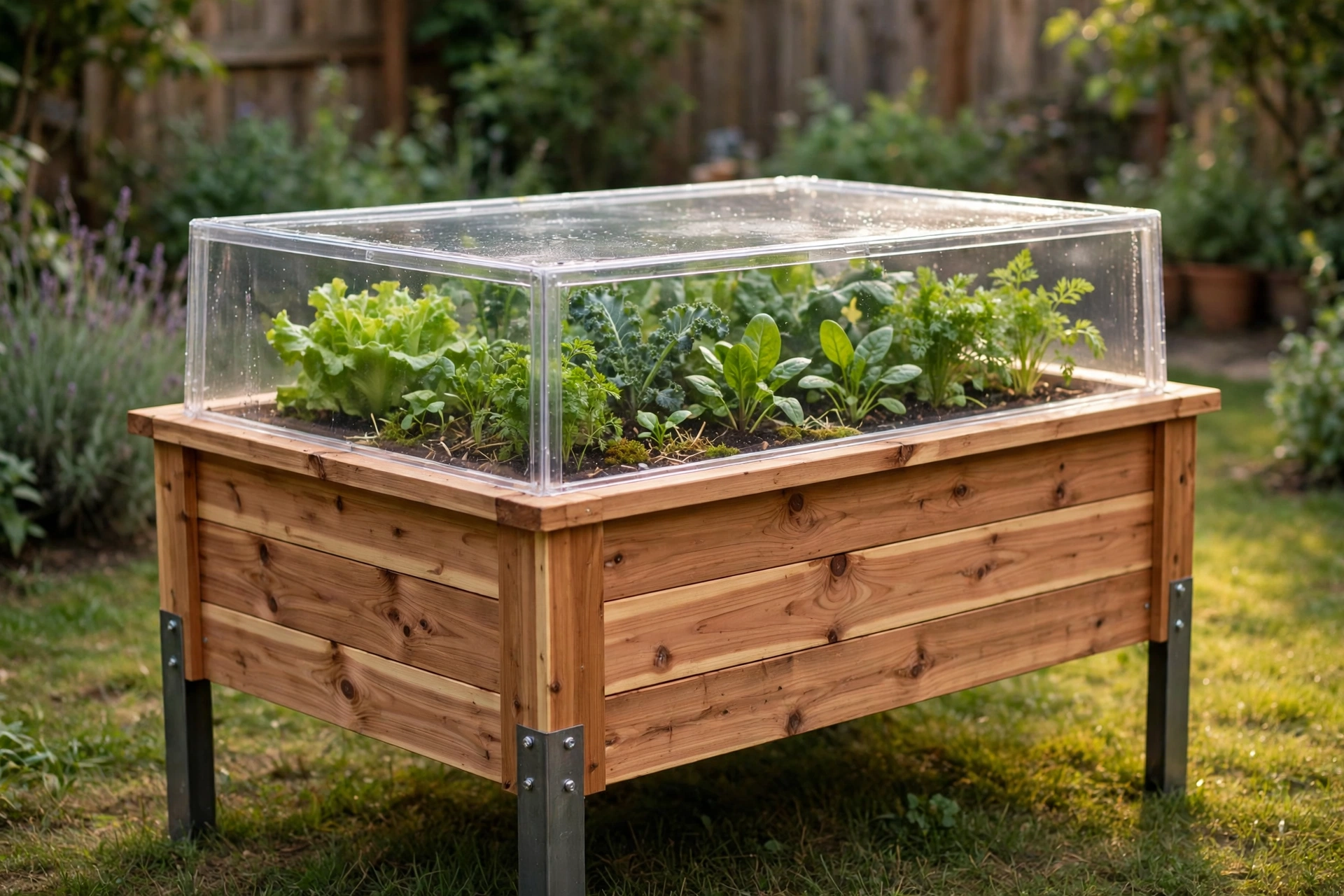
Best cedar raised-bed frame. A permanent bed that vents itself.
The Aggie is not a box you move around the garden. It is a raised bed with a cold frame lid, built from solid cedar with powder-coated steel legs and hardware, weighing 94.8 lb, and it stays where you put it. That permanence is the point. A frame this heavy does not blow away in a winter storm, and cedar is naturally rot resistant with no chemical treatment, which matters when the frame sits on soil you grow food in.
Its venting is automatic, like the BioStar’s, but simpler. A wax-filled, temperature-activated hinge opens the lid above 70 degrees and closes it as temperatures drop, with no electricity. The lid itself is double-wall polycarbonate, which insulates better than the single-wall panels on the budget frames, though not as well as the BioStar’s 8 mm twin-wall.
The bed details are practical rather than decorative. Wide bottom slats and a heavy-duty mesh liner give drainage, which a cold frame needs, since a frame that floods drowns the crop. Parts come pre-cut and pre-drilled, and the maker gives a 5-year warranty. The footprint is 48 by 28.5 inches and 32.25 inches high, a compact 4 by 2 ft bed that fits a small yard or a patio corner.
The trade is height and flexibility. At 32 inches tall it suits leafy greens and low crops, not tall seedlings, and you cannot move it to another bed in spring. But for a gardener who wants one permanent cold-frame bed that looks after its own ventilation, it is the best-built option in this guide.
Our rating: 8.8. Automatic venting, double-wall glazing, and a cedar bed built to stay put, held back only by a fixed footprint and modest height.
3. Palram Canopia Plant Inn 4×4 Raised Garden Bed Greenhouse (HG3320)
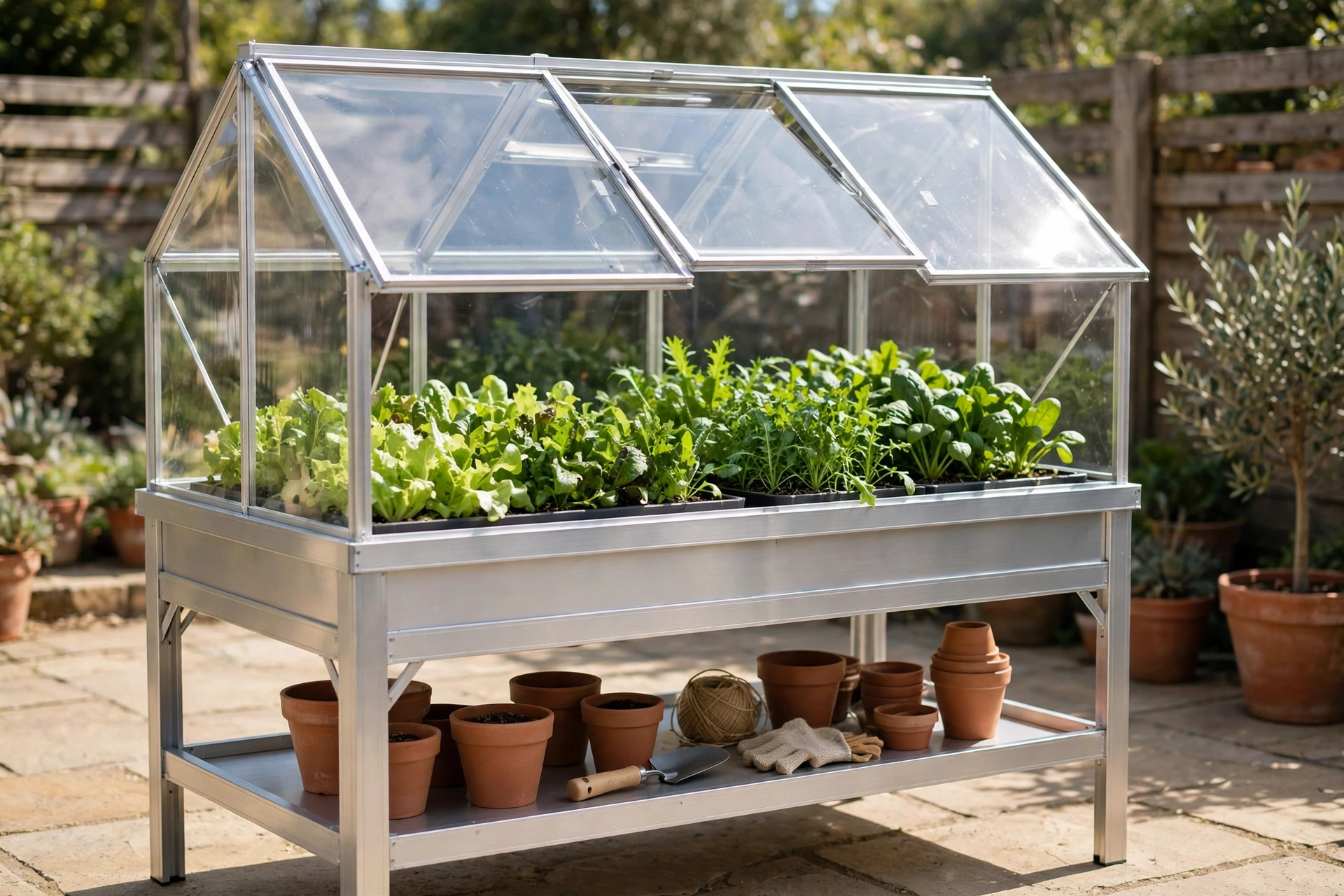
Best elevated frame. Waist-height growing for patios, decks, and bad knees.
The Plant Inn is the odd one out in this guide, and it earns its place honestly. It is an elevated raised-bed greenhouse, not a classic low cold-frame box, and it works as a cold frame because it does the same three jobs: it lets light in through clear polycarbonate, it holds heat under a sloped lid, and it opens for ventilation. It stands 46 inches wide by 46 inches long with a 58.5-inch peak height, and the growing surface sits at waist height. Its scores for insulation and build are therefore not directly comparable with the low boxes in this guide.
That height is the whole argument. No kneeling, no bending to reach the back of a low box, and the frame suits a patio, a deck, or a balcony where a ground-level box cannot go. Two deep planting trays with individual drainage hold salad greens, radishes, and seed starts, and a storage shelf underneath keeps tools out of the rain. The frame is corrosion-resistant aluminium, and the glazing is clear, single-wall, UV-protected SnapGlas polycarbonate, which the maker describes as virtually unbreakable.
Venting is manual. Side hinges open for ventilation and easy access, and the lower panels slide up. There is no automatic opener, so this frame needs a gardener who is home during the day or who accepts the risk on a sunny afternoon. The maker does not publish a weight, and the single-wall glazing insulates less than the twin-wall and double-wall frames above it, which is the honest limit of an elevated design. It carries a 5-year limited warranty and is sold by Amazon and Home Depot.
Who should buy it: a patio or balcony gardener, or anyone with knees that object to ground-level beds, who wants salad greens and seed starts at waist height and can open a lid in the morning. As of November 2026, Michaels lists this model as out of stock, and several other retailers show it out of stock, although Wayfair lists it in stock; check availability before ordering.
Our rating: 8.4. The best ergonomic pick in the guide, marked down for single-wall glazing and manual-only venting.
4. Outsunny Raised Garden Bed with Polycarbonate Greenhouse, 48 in x 24 in x 32 in (Model 845-670V00GY)
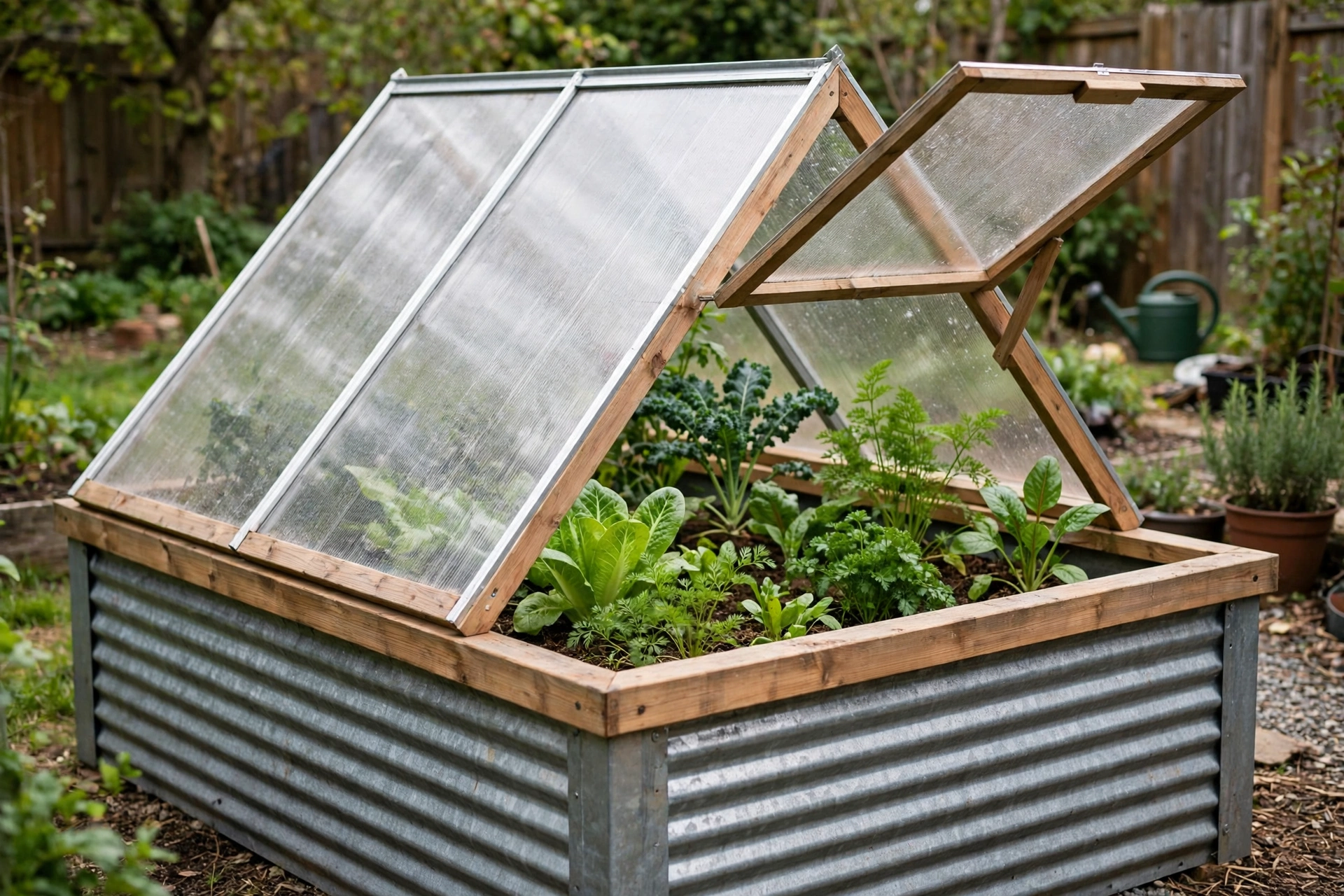
Best bed-and-cover combo. One purchase, bed and frame together.
Some gardeners want to buy a bed and a cold frame separately, matching each to the other. This Outsunny model is for the gardener who wants both in one box. A galvanised steel raised bed, 48 by 24 inches and 32.25 inches high, comes with a stained solid fir wood cold-frame top, so the bed and the cover arrive sized to each other and there is no measuring, no cutting, and no lid that does not quite fit.
The cover has two independent openable roof covers, which is a useful detail. Opening one side vents the frame while the other side stays shut, and you can open the side away from the wind, which Missouri Extension recommends to prevent wind burn on young plants. The pointed top sheds rain, and the cover can also be used on its own over another bed of the same size.
A note on the glazing, stated plainly. The maker’s manual for this model lists the cover only as polycarbonate, with no wall count. Twin-wall construction is stated for this product family in the maker’s manuals for sibling models, and the 90 percent light-transmission figure is Outsunny’s own, but this guide does not claim twin-wall for the 845-670 itself, because the model’s own manual does not confirm it. The frame weighs 26 lb.
For a gardener starting from bare lawn, this is the fastest route to a working cold frame: one box, one assembly, and a bed that is ready to plant the same weekend. It suits cool-season vegetables and seed starting in a 4 by 2 ft bed, and it suits a gardener who would rather be planting than shopping for parts.
Our rating: 8.0. A complete, well-matched combo, with the glazing specification kept honest where the model’s own manual stays silent.
5. VegTrug Classic Cold Frame 1m, Grey Wash
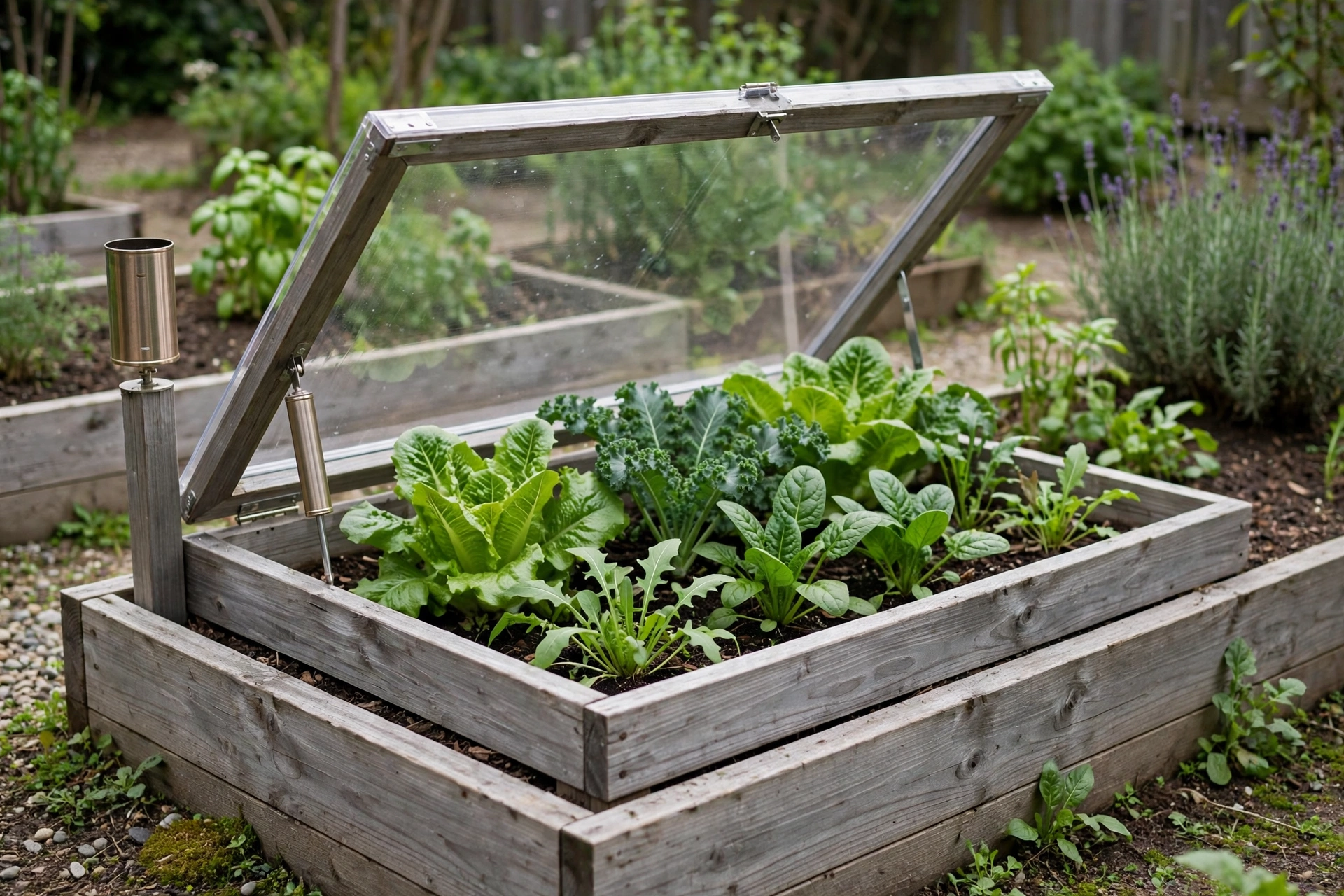
Best for VegTrug owners. A purpose-built lid for the raised bed you already own.
The VegTrug cold frame exists for one job: to sit on a VegTrug Classic Small 1m raised bed and turn it into a cold frame. At 40.6 inches long by 30.8 inches wide and 17.9 inches high, it matches that bed exactly, and it also sits directly on the ground over a bed of the same size. If you own the bed, this is the obvious cover. If you do not, it is still a sound low wooden frame, but the fit is the reason to choose it over the cheaper Outsunny box below.
The frame is 100 percent FSC-certified cedar wood in a grey wash finish, which is the most sustainable timber claim in this guide, and cedar needs no chemical treatment to resist rot. The glazing is shatterproof polycarbonate, 3.5 mm thick. Four sources agree on 3.5 mm, while one secondary source claims 6 mm, and this guide follows the four. The hinged lid opens fully and props open on a ventilation post for adjustable airflow, which is simple and reliable, though it needs a gardener at home to work it. It weighs 13.5 lb, per the more recent source, against an older 16 lb figure that likely includes packaging or a different size.
The limitation is height. At under 18 inches, it suits lettuce, spinach, radishes, and other low crops, and it will not house tall seedlings for long. It is also a manual-vent frame, so the daily open-and-close routine falls to you. But for a VegTrug owner who wants to stretch the season on the bed they already have, nothing else in this guide fits as well.
Our rating: 7.7. The best-fitting cover for its bed, with honest cedar and glazing specs, held back by low height and manual venting.
6. Outsunny Wooden Cold Frame Mini Greenhouse, 39 in x 26 in x 16 in
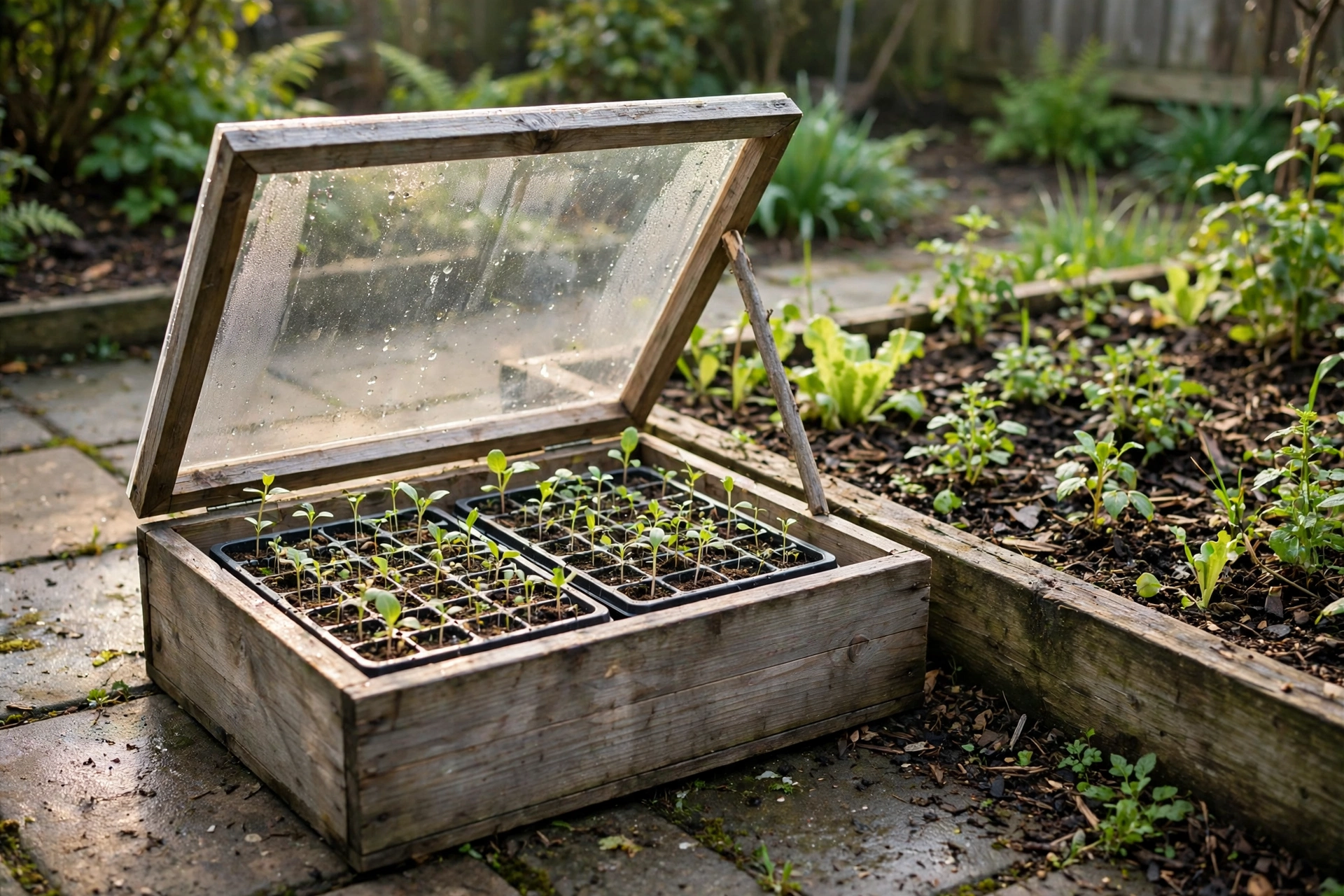
Best budget wooden frame. The classic low box, at the lowest wooden price here.
This is the cold frame most gardeners picture when they hear the words: a low wooden box with a slanted transparent lid, sitting at the end of a bed or on a patio, holding a few seed trays. The Outsunny classic measures 39.25 inches long by 25.5 inches wide by 15.75 inches high, as retailer-listed, which most roundups round to 39 by 26 by 16 inches. It weighs about 9.7 lb, and it is the lowest-cost wooden frame in this guide.
The frame is solid fir wood with single-wall transparent polycarbonate panels, and the slanted top cover opens on two side supports that catch in two positions, giving a small vent gap or a wide one. That is all the venting it has, and it is manual, so the morning routine matters. A closed frame in sun can pass 130 degrees within about an hour, per Colorado State University trials, and a budget box with single-wall glazing heats as fast as any frame.
Two honest limits come with the price. Fir is not pressure-treated, so the maker and owners note it needs sealing and weatherproofing for a long life, and single-wall glazing insulates less than twin-wall, so this frame takes the edge off a frost rather than holding back a hard freeze. Neither limit makes it a bad buy. It makes it a first frame: cheap enough to try, simple enough to use well, and the right size for seed starting and hardening off a few trays.
Our rating: 7.6. The best value wooden box, with its limits stated plainly: seal the fir, and do not expect twin-wall insulation at a single-wall price.
7. MCombo Wooden Cold Frame Greenhouse 0760, Orange
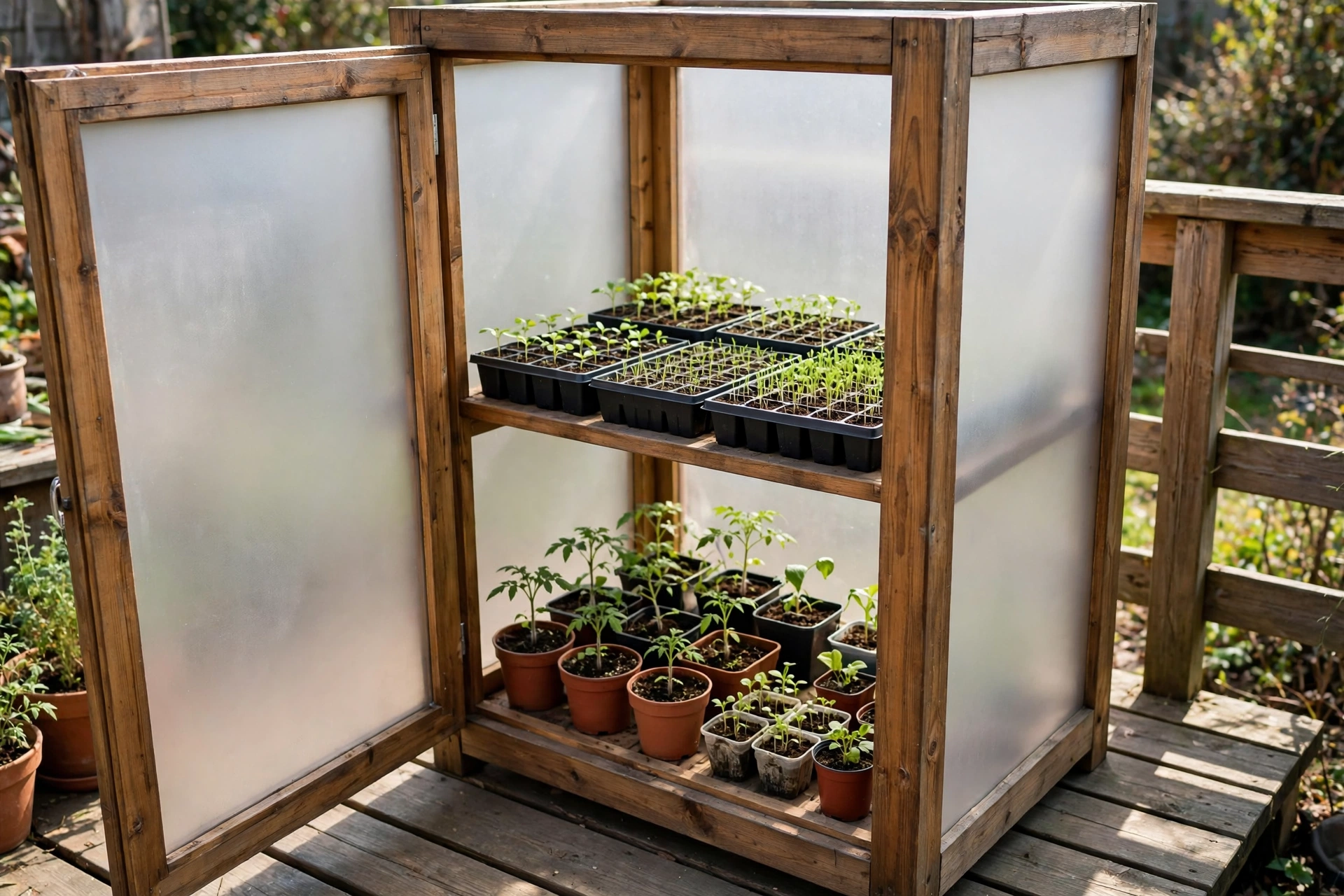
Best tiered cabinet. Shelves, not a bed, for pots and trays.
The MCombo 0760 is a cold frame for gardeners who grow in pots. It is an upright wooden cabinet, 29.9 inches deep by 18.2 inches wide and 43.3 inches high, with two slatted shelves, one adjustable, sized at 28.2 by 16.5 inches. Seed trays and small pots sit on the shelves, the roof opens, and a flat-panel front door gives access without lifting the whole lid. On a small patio or deck, where a ground-level box has nowhere to sit, a cabinet uses vertical space instead.
The frame is natural fir wood with frosted and translucent polycarbonate panels and metal hardware, and it weighs 26.7 lb. Frosted panels diffuse light, which suits seedlings, though they transmit less direct light than clear panels, and the maker does not publish a panel thickness. Venting is manual, through the openable roof and the front door together, which gives more airflow control than a single lid, if you are there to work it.
The honest trade is growing area. Two shelves of pots hold far less than a 4 by 2 ft bed, and the cabinet suits starting and hardening off rather than growing a winter of greens to harvest. It is also a decorative piece on a deck, which matters to some buyers and not at all to others. For a small-space gardener with more pots than beds, it is the most practical frame in this guide. For a gardener with a vegetable bed to cover, the low boxes above do more.
Our rating: 7.3. The best cabinet in the guide, scored for what it is: a tiered starter and hardener, not a bed cover.
8. Giantex Wood Cold Frame Greenhouse with Adjustable Roof, 40 in x 21 in x 28 in
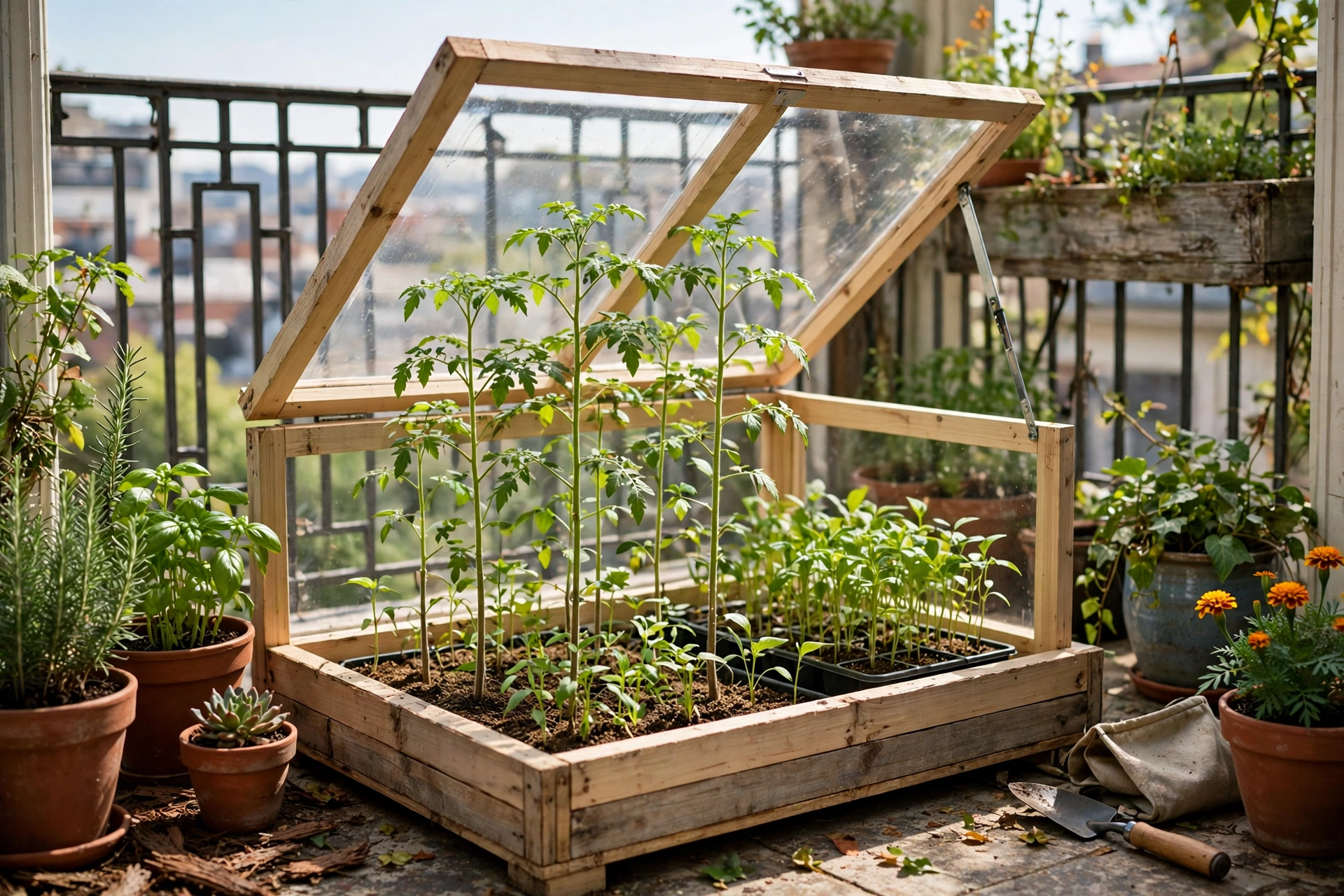
Best lightweight frame. Eight pounds, and tall enough for seedlings.
At 8 lb, the Giantex is the lightest rigid frame in this guide, and that is its whole case. A cold frame that one person can lift with one hand can follow the sun across a balcony, move off a bed when the crop is done, and go into storage without a second pair of hands. It measures 40 inches long by 21 inches wide by 28 inches high, which makes it taller than the budget Outsunny box, so it suits taller seedlings and young plants that have outgrown a low lid.
The frame is natural fir wood, and the roof adjusts through angle settings for airflow and sunlight control, which is more flexible venting than the two-position prop arms on the Outsunny classic. The panels are transparent, and this guide does not call them polycarbonate, because the maker does not name the panel material in the sources checked. That is a real documentation gap, and it costs the frame points: a buyer cannot know how the glazing will age or insulate.
Two cautions belong here. First, Giantex sells several similarly named cold frames, including a 37 by 25 by 16 inch flip-top, a 36 by 33 by 23 inch openable-roof model, and a 28 by 16 by 52 inch three-shelf cabinet. This entry is only the 40 by 21 by 28 inch adjustable-roof model, and its specs must not be mixed with the others. Second, a light frame needs anchoring in wind, as Utah State Extension warns for portable frames generally.
Our rating: 7.1. The most moveable rigid frame here, with a genuinely useful adjustable roof, marked down for an unnamed panel material.
9. Zenport SH3212A+BTP Garden Raised Bed Cold Frame Cloche
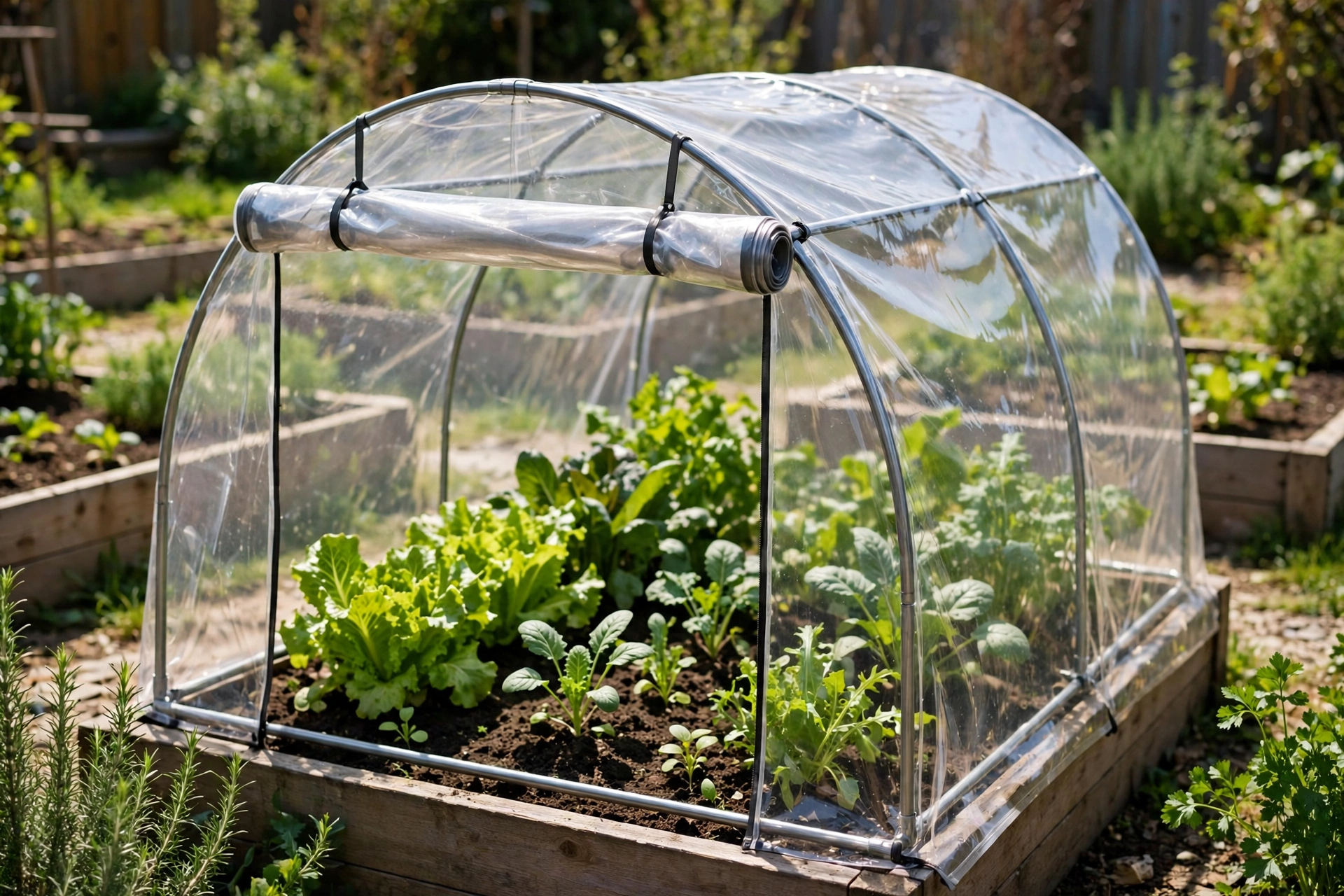
Best portable cloche. A tunnel you carry from bed to bed.
The Zenport is the only frame in this guide that is built to move. A green alloy-steel tube frame, 47 inches long by 24 inches wide and 24 inches high, carries a transparent waterproof plastic cover, and the whole thing weighs 6 lb. Pick it up, carry it to the next bed, set it down. Through a season, one cloche can protect spring seedlings in one bed, cover a row of greens in another, and shelter potted tomato and pepper seedlings on a patio, because at 24 inches tall it has room for pots.
Access and venting come through a zippered roll-up front panel, which opens for watering, for air, and for humidity control. That is simpler than a hinged lid and harder to break, though it gives less fine control than a prop arm with set positions. The maker lists the cover material simply as plastic, and owner roundups describe it as PE, so this guide calls it a plastic cover and nothing more specific.
The limitation is the cover itself. Soft plastic insulates less than rigid polycarbonate and lasts fewer seasons in wind and sun, and a 6 lb frame needs anchoring, as Utah State Extension warns for portable frames. It is a cloche, not a rigid box, and it should be bought as one: the cheapest way to move protection around a garden, not the warmest way to overwinter greens.
Our rating: 7.0. The most portable protection in the guide, with the honest trade that a soft cover insulates less and wears faster than rigid glazing.
10. Gardzen Mini Greenhouse, 71.7 in x 36.2 in x 42.5 in (Model GGH-P-S2)
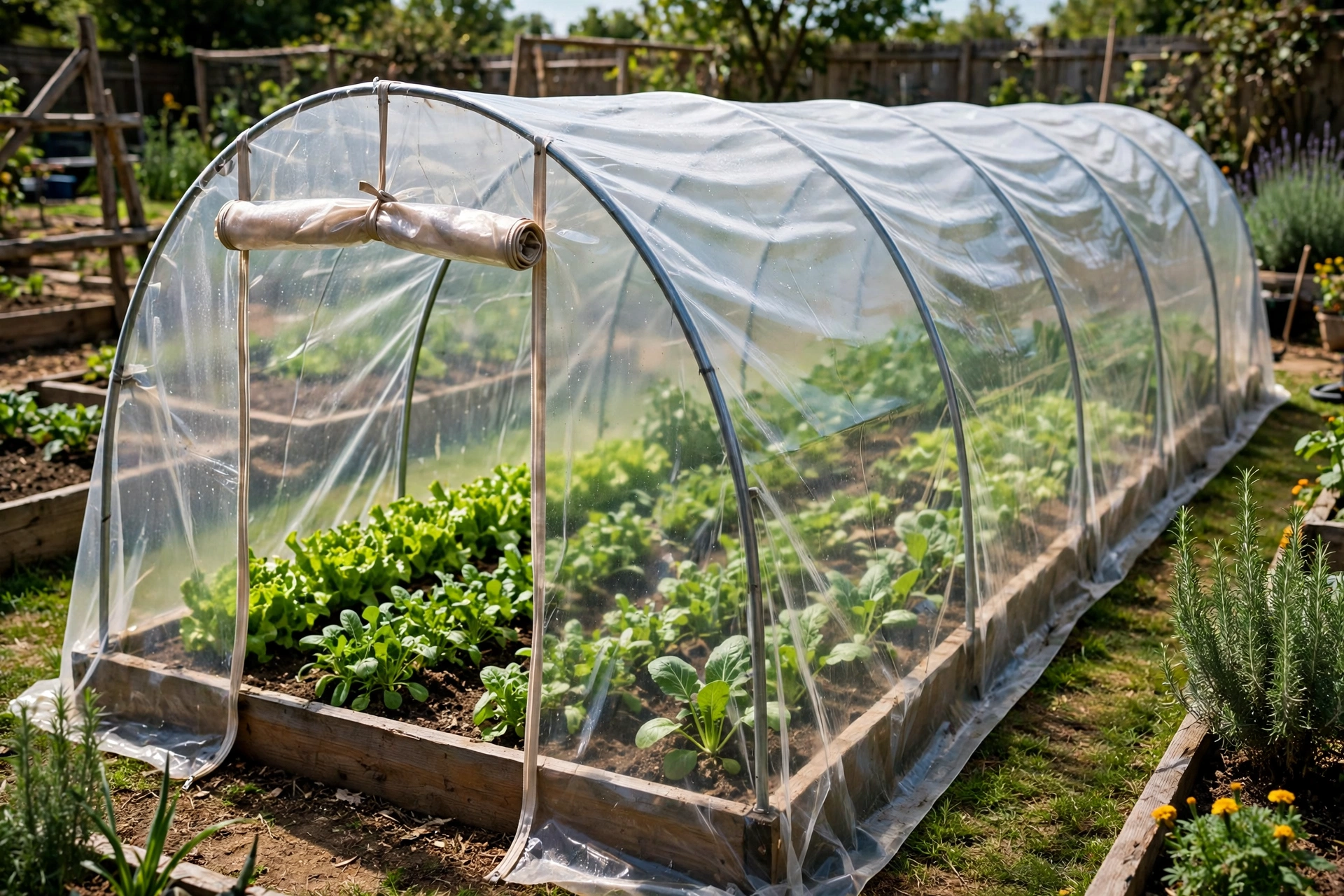
Best for a whole 6 ft bed. The longest frame here, covering a full bed at once.
The Gardzen is the longest frame in this guide, and it is included with its shape stated honestly: it is a low tunnel, not a standing-height walk-in, and not a classic low box. A powder-coated alloy-steel frame, 71.7 inches long by 36.2 inches wide and 42.5 inches high, carries a clear PVC cover over a whole 6-foot raised bed, or several seedling flats at once, with kneeling-height headroom inside. Its scores for insulation and build are therefore not directly comparable with the low boxes in this guide.
The cover has a full zippered door that rolls up and secures with ties, plus one vent, which gives good access for planting, watering, and harvesting along the whole bed. It weighs 11.77 lb, so one person can move it, and the price per square foot of covered bed is the lowest in this guide.
Two limits decide whether it suits you. The soft PVC cover needs anchoring in wind, and PVC degrades in strong sun over seasons, so it will not last as long as a rigid polycarbonate lid. And the listing’s own description text elsewhere gives the size as 73 by 37 by 42.5 inches and one roundup calls the cover PE, while the listing’s spec table says PVC and 71.7 by 36.2 by 42.5 inches. This guide follows the spec table. If you want the longest covered bed for the least money and you accept replacing a soft cover in a few seasons, it does the job. If you want a frame that lasts a decade, the rigid boxes at the top of this guide are the better buy.
Our rating: 6.9. The most bed for the money, held back by a soft PVC cover that needs anchoring and will age in sun.
How We Chose
Cold frames are simple boxes, and that simplicity makes honest scoring possible. There are no motors to compare and no apps to rate. What matters is the glazing, the vent, the build, the size, and whether the maker publishes real specifications. Every score below is an editorial assessment from verified manufacturer specifications and owner-feedback patterns. No frame in this guide was hands-on tested, and no score comes from a trial that did not happen.
The scoring system
| Factor | Weight | What it measures |
|---|---|---|
| Insulation and glazing | 25% | Glazing thickness and type, twin-wall against single-wall against soft cover, and published light transmission |
| Venting control | 20% | Automatic against manual venting, adjustability, and how many ways the frame opens |
| Build quality and durability | 20% | Frame material, warranty length, weather resistance, and weight against wind |
| Size versatility | 15% | Footprint, height, what fits inside, and whether the frame suits beds, patios, or pots |
| Ease of use | 10% | Assembly effort, portability, access for planting and watering |
| Documentation and availability | 10% | Confirmed currently sold in the USA, with manufacturer-page specs scoring above retailer-only specs |
Each total is the weighted sum of the six factor scores divided by 100. For example, the BioStar scores 10 for insulation, 9 for venting, 9 for build, 8 for size, 8 for ease and 9 for documentation, so (10 x 25) + (9 x 20) + (9 x 20) + (8 x 15) + (8 x 10) + (9 x 10) = 900, and 900 / 100 = 9.0. Totals are shown to one decimal place. Every total in this guide lands exactly on a tenth, so no rounding was needed, and you can check any score with the same sum.
Per-product factor scores
| Product | Insulation | Venting | Build | Size | Ease | Docs | Total |
|---|---|---|---|---|---|---|---|
| Juwel BioStar 1500 Premium | 10 | 9 | 9 | 8 | 8 | 9 | 9.0 |
| Backyard Discovery Aggie Cedar | 9 | 10 | 9 | 7 | 8 | 9 | 8.8 |
| Palram Canopia Plant Inn 4×4 | 8 | 8 | 9 | 8 | 9 | 9 | 8.4 |
| Outsunny 845-670V00GY | 8 | 8 | 8 | 8 | 8 | 8 | 8.0 |
| VegTrug Classic Cold Frame 1m | 8 | 7 | 8 | 8 | 8 | 7 | 7.7 |
| Outsunny Wooden Cold Frame 39 in | 8 | 7 | 7 | 8 | 9 | 7 | 7.6 |
| MCombo 0760 Cabinet | 7 | 8 | 7 | 7 | 8 | 7 | 7.3 |
| Giantex Adjustable Roof 40 in | 6 | 7 | 7 | 8 | 9 | 7 | 7.1 |
| Zenport SH3212A+BTP Cloche | 6 | 7 | 6 | 8 | 9 | 8 | 7.0 |
| Gardzen GGH-P-S2 Tunnel | 6 | 7 | 6 | 8 | 8 | 8 | 6.9 |
A word on the two scores that may surprise. The Giantex scores 6 for insulation because its maker does not name the panel material in the sources checked, and an unnamed panel cannot be credited with polycarbonate performance. The Gardzen scores 6 for build because a soft PVC cover, however practical, does not match rigid glazing for durability, and the maker scores are set by what is verified, not by what is claimed in a roundup.
Final Choice
For most gardeners, buy the Juwel BioStar 1500 Premium Cold Frame. It has the thickest glazing in this guide and the only paraffin automatic opener, which together solve the two problems that kill cold-frame crops: cold nights and forgotten ventilation. It is the frame that asks the least of you after the day you buy it.
If you want a permanent bed rather than a movable box, buy the Backyard Discovery Aggie. Solid cedar, a wax hinge that opens above 70 degrees, and a raised bed with proper drainage make it the best cold frame for a gardener who plans to grow winter greens in the same spot for years.
If you garden on a patio or a balcony, or your knees have opinions about ground-level beds, buy the Palram Canopia Plant Inn. Waist-height growing, two deep trays, and a shelf underneath make it the most comfortable frame here, and its single-wall glazing is a fair trade for a frame you can actually use every day.
If the budget is the deciding factor, buy the Outsunny Wooden Cold Frame, 39 inches. Seal the fir before its first winter, open it every sunny morning, and it will start your seeds and harden your transplants for seasons. And if you need to cover a whole 6-foot bed at once, buy the Gardzen tunnel, anchor it well, and accept that a soft cover is a consumable, not a heirloom.
Whichever frame you choose, put it facing south, shelter it from the north wind, drain it well, and open it in the morning. A cold frame rewards a daily habit more than a large budget, and two to four extra weeks of fresh greens at each end of the season, per Iowa State University Extension, is a good return on a box with a lid.
References
- Iowa State University Extension and Outreach, “Yard and Garden: All about Cold Frames”, what a cold frame is, 2 to 4 weeks of season extension, south-facing placement, the 85 degree vent rule, frame dimensions, and DIY materials.
- University of Missouri Extension, G6965 “Building and Using Hotbeds and Coldframes”, no artificial heat, the 5 to 10 degree inside-versus-outside difference, the 1 inch per foot lid slope, watering guidance, and hardening off.
- NC State Extension, “Appendix E. Season Extenders and Greenhouses”, the season-extender continuum, south or southeast placement with a slight slope, ventilation above 45 degrees outside, overwatering, and the treated-wood warning.
- Utah State University Extension, “Extending the Garden Season”, the cost table for season extenders, cloche and row cover temperature figures, and the warning that portable frames must be secured.
- Colorado State University Extension, GardenNotes #722 “Frost Protection and Extending the Growing Season”, the Fort Collins trial figures, 3 to over 6 degrees of frost protection, and temperatures past 130 degrees under a closed cover within an hour of sun.
- Exaco Trading Co. catalogue, Juwel BioStar 1500 Premium Cold Frame, dimensions, 8 mm twin-wall polycarbonate, paraffin automatic opener, 10-year guarantee against yellowing, 5-year warranty.
- Backyard Discovery official product page, Aggie Cold Frame Box, dimensions, cedar frame, double-wall polycarbonate lid, wax hinge opening above 70 degrees, mesh drainage liner, 5-year warranty; weight per the Backyard Discovery catalogue.
- Canopia by Palram official product page, Plant Inn 4×4, aluminium frame, polycarbonate panels, dimensions, manual side hinges, planting trays, storage shelf; SnapGlas name, 5-year limited warranty and retailer availability per the Greenhouse Nation listing.
- Outsunny instruction manual, model 845-670V00GY, dimensions, galvanised steel bed, fir wood top, polycarbonate panels, two independent roof covers, weight.
- Amazon listing, VegTrug Classic Cold Frame 1m, ASIN B074G5WQMW, dimensions, FSC-certified cedar, 3.5 mm polycarbonate, hinged lid with vent post, weight.
- Greenhouse Gear Lab, “Best Cold Frame Greenhouse”, Outsunny Wooden Cold Frame dimensions and single-wall polycarbonate, plus coverage of the BioStar 1500 and Outsunny 845-670.
- Amazon listing, MCombo Wooden Cold Frame Greenhouse 0760, ASIN B085BZ1SL2, dimensions, fir wood, frosted polycarbonate panels, shelves, weight.
- Thomas Acres, “Best Cold Frames”, Giantex adjustable-roof model dimensions and features, plus coverage of the Aggie.
- Zenport 2017 catalogue, Mini Greenhouses, SH3212A+BTP, dimensions, steel-tube frame, plastic cover, zippered roll-up door, weight.
- Amazon listing, Gardzen Mini Greenhouse GGH-P-S2, ASIN B0FDVHLYX3, dimensions, PVC cover, zippered door, vent, weight.
Frequently Asked Questions
How much earlier can I plant with a cold frame?
Two to four weeks earlier in spring, and two to four weeks later into autumn, per Iowa State University Extension and the University of Vermont Extension. The University of Nebraska Extension gives up to three to five weeks earlier in spring, and Colorado State University trials measured two to six weeks or more on both ends. A safe expectation is two to four weeks, with up to five weeks in favourable conditions. The gain depends on your climate, the frame’s glazing, and whether you vent it properly.
Do I need to vent a cold frame every day?
Yes, on any day with sun. Raise the sash when the air inside rises above 85 degrees, per Iowa State University Extension, and close it before sunset to retain heat. Ventilation matters most on clear, sunny days when outside temperatures rise above 45 degrees, per Virginia Tech and NC State Extension, even in late winter and early spring. A closed frame in sun can pass 130 degrees within about an hour, per Colorado State University trials, which kills plants faster than frost. A frame with an automatic vent opener does this job for you.
What vegetables grow best in a cold frame?
Cool-season vegetables: lettuce, spinach, kale, radishes, and scallions are the classic choices, per the University of Vermont Extension. The wider set includes Asian greens, beets, broccoli, Brussels sprouts, cabbage, carrots, cauliflower, Swiss chard, leek, onion, parsnips, peas, and turnips, per Penn State Extension. In winter, spinach, kale, collards, mustard greens, and Swiss chard do best, with herbs such as chives, cilantro, parsley, dill, and sage. Warm-season crops such as tomato and pepper belong in a frame only for hardening off in spring, not for overwintering.
Where is the best place to put a cold frame?
Face it south, or southeast, on a slight slope, with a windbreak to the north and well-drained soil. A southern exposure gives maximum sunlight and heating, per Iowa State University Extension. A wall, hedge, fence, or building to the north protects against winter winds, but it must not shade the frame, per Nebraska Extension. The soil beneath must drain well and never flood, and the frame should be no more than 3 feet deep so you can reach the back without stepping inside, per Iowa State.
Can a cold frame stay outside all winter?
Yes, for cool-season crops, and it can provide fresh greens, herbs, and root crops through the cold months, depending on how harsh the winter is, per NC State Extension. It will not keep warm-season crops alive through a hard freeze, because a cold frame has no artificial heat. In cold climates, cover the frame with a mat or blanket on the coldest nights, which adds a few degrees, per Missouri Extension, and keep the soil moist but not soggy, since growth slows in winter and overwatering causes disease.
Is a cold frame better than a row cover?
It depends on what you need. A cold frame is rigid, reusable for years, and gives 5 to 10 degrees of warmth inside, per Missouri Extension, with a lid you open and close. A floating row cover is cheaper, 10 to 30 dollars against 70 to 200 dollars for a cold frame, per Utah State Extension, and it drapes over plants letting air, water, and light through, but it gives only 2 to 10 degrees of warmth and cannot be managed like a lid. Choose a row cover for cheap, temporary protection over a row. Choose a cold frame for repeatable season extension in a fixed spot, year after year.

Thesis Link : https://saulibrary.edu.bd/daatj/public/uploads/BAU200601_19-Pp_5.pdf
- Poinsettia Care: How to Keep It Alive and Rebloom It - November 29, 2026
- 10 Best Cold Frames for Extending the Season - November 29, 2026
- Apple Tree Diseases – How to Identify and Treat Them - November 28, 2026