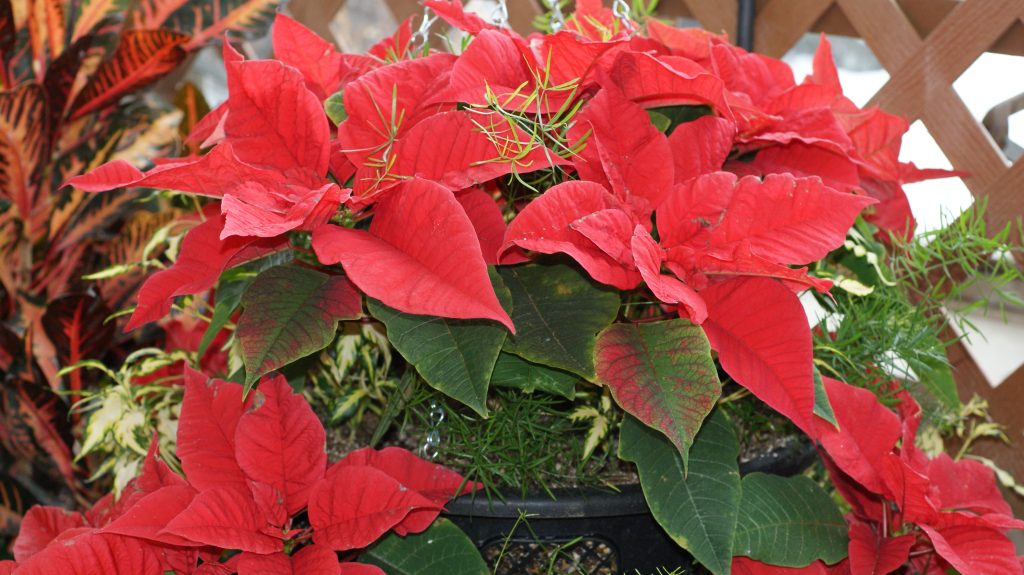

Poinsettia care is simple once you know the three rules that matter most: bright indirect light for at least six hours a day, temperatures between 60 and 70 degrees Fahrenheit, and water only when the soil surface feels dry. Water thoroughly until it drains out of the bottom, then empty the saucer and never let the pot sit in water. Give the plant no fertilizer while it is in bloom, and keep it away from cold drafts, heating vents and doors that open to winter air. Follow those rules and the red color lasts for weeks. Follow them for a year and the same plant can turn red again next Christmas.
Most poinsettias die for one of two reasons: they were watered too often, or they were left in a cold draft. Both are easy to avoid. This guide covers how to care for poinsettias from the store to the next Christmas: how to pick a healthy plant, poinsettia light requirements and a poinsettia watering guide, temperature and feeding, poinsettia care after Christmas, how to make poinsettias turn red again, poinsettia problems and solutions, and growing poinsettias indoors or outdoors.
No hands-on testing was done for this guide. Care advice in this guide follows university Extension sources, checked in November 2026.
Poinsettia Care at a Glance
| Need | What to do |
|---|---|
| Light | Bright indirect light, at least 6 hours a day |
| Water | Only when the soil surface feels dry; water through until it drains; never let the pot sit in water |
| Temperature | 60 to 70 degrees in the day, mid 50s to low 60s at night, keep above 55 degrees to be safe |
| Humidity | Average to high; use a pebble tray or a humidifier in dry rooms |
| Feeding | None while in bloom; balanced fertilizer every 2 to 3 weeks from late winter through summer |
| Rebloom | 14 hours of total darkness every night for 8 to 10 weeks from early October |
What a Poinsettia Is
A poinsettia is Euphorbia pulcherrima, a shrub native to Mexico and Guatemala. In its home range it grows into a woody shrub 10 to 15 feet tall. The plant sold in stores is the same species, grown in a greenhouse and pruned to stay compact. In a pot it rarely grows taller than 2 to 3 feet.
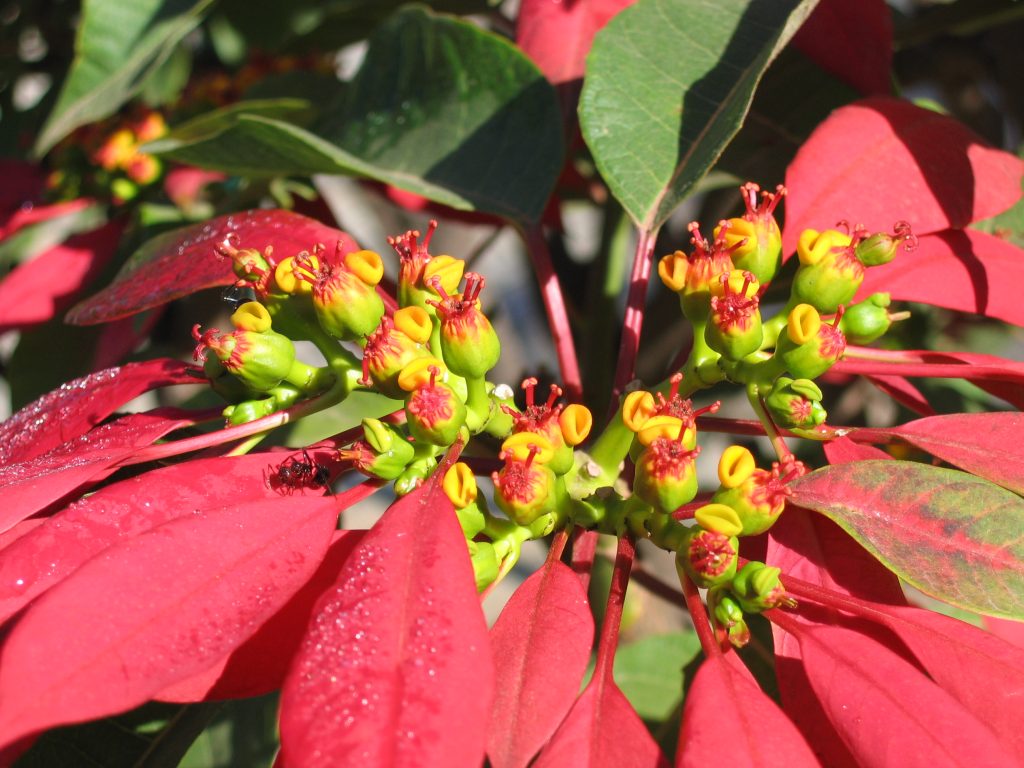
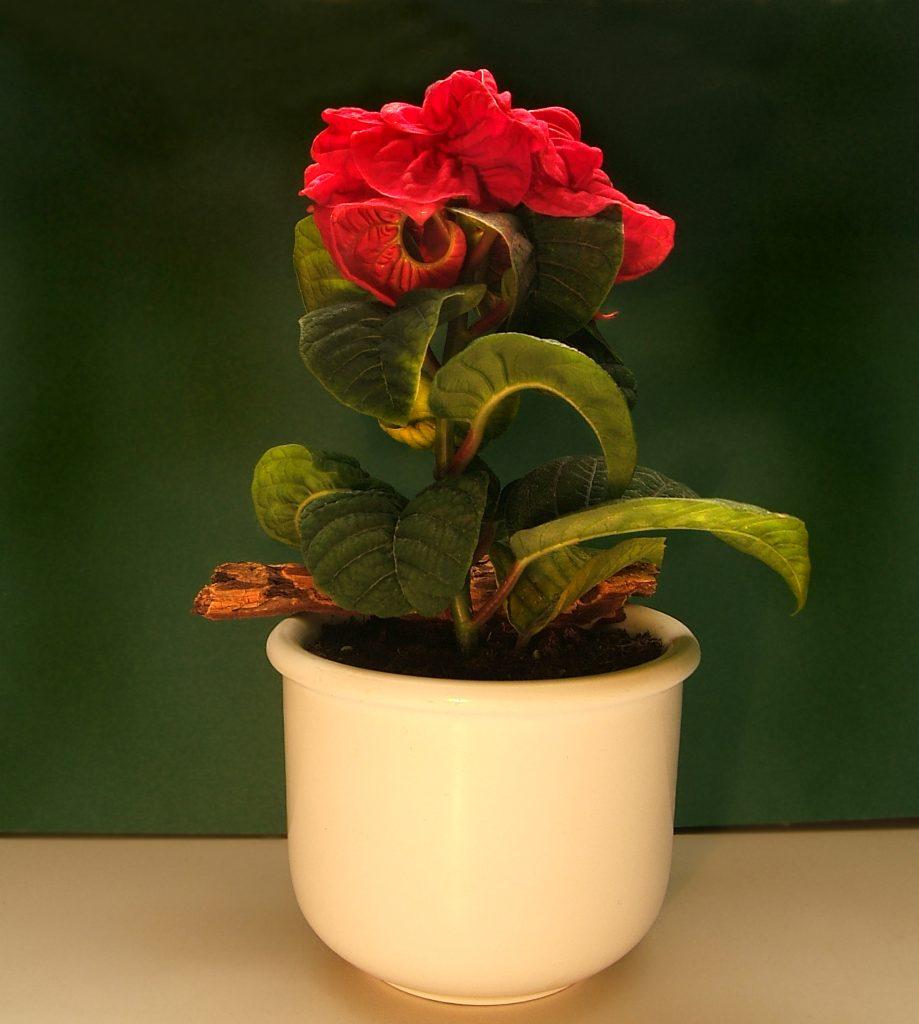
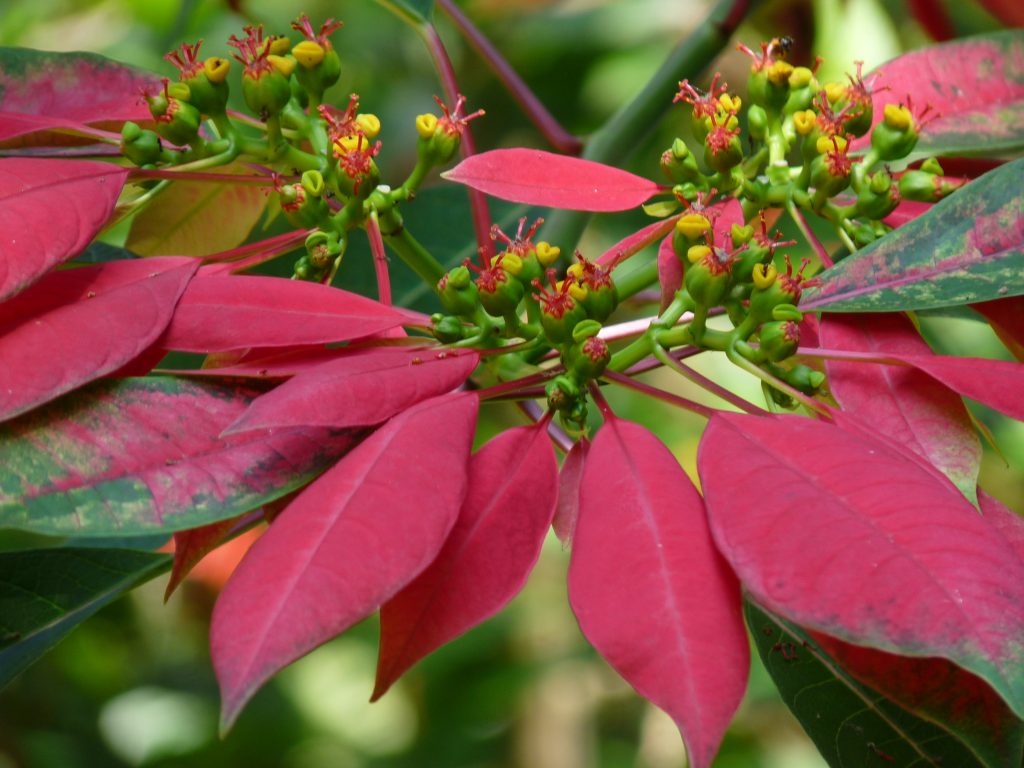
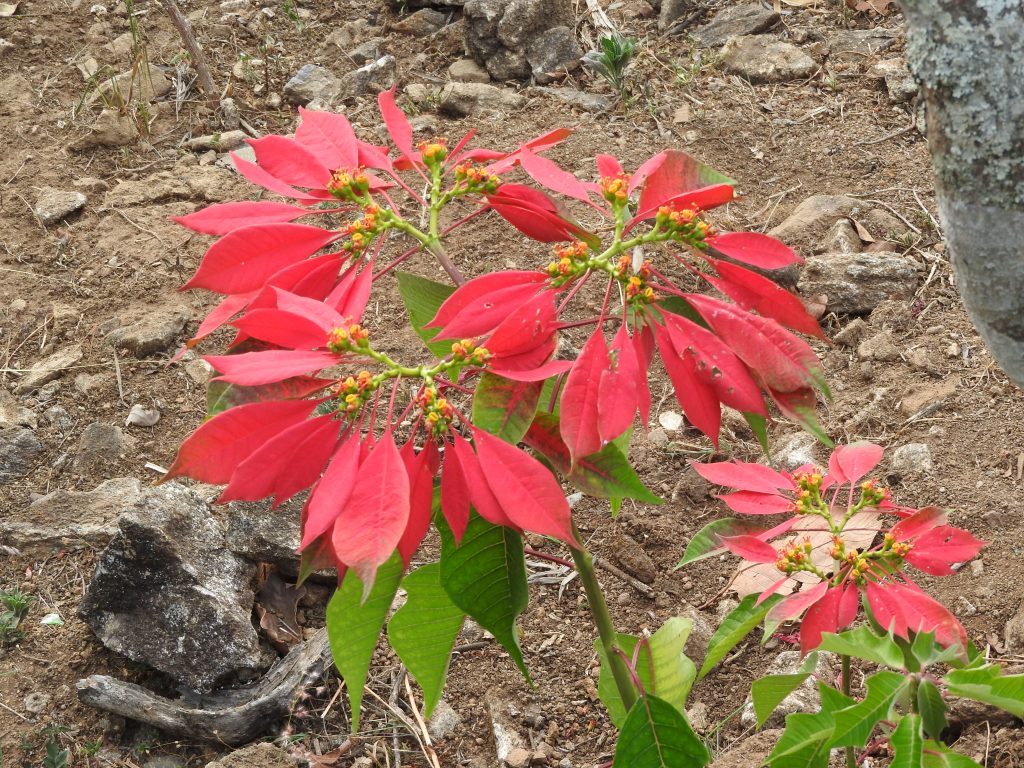
The red parts of a poinsettia are not flowers. They are bracts, modified leaves that change color when the days grow short. The true flowers are the small yellow clusters in the center, called cyathia. A plant with fresh, tight yellow cyathia still has most of its color ahead of it. A plant whose cyathia are already dropping pollen is near the end of its display.
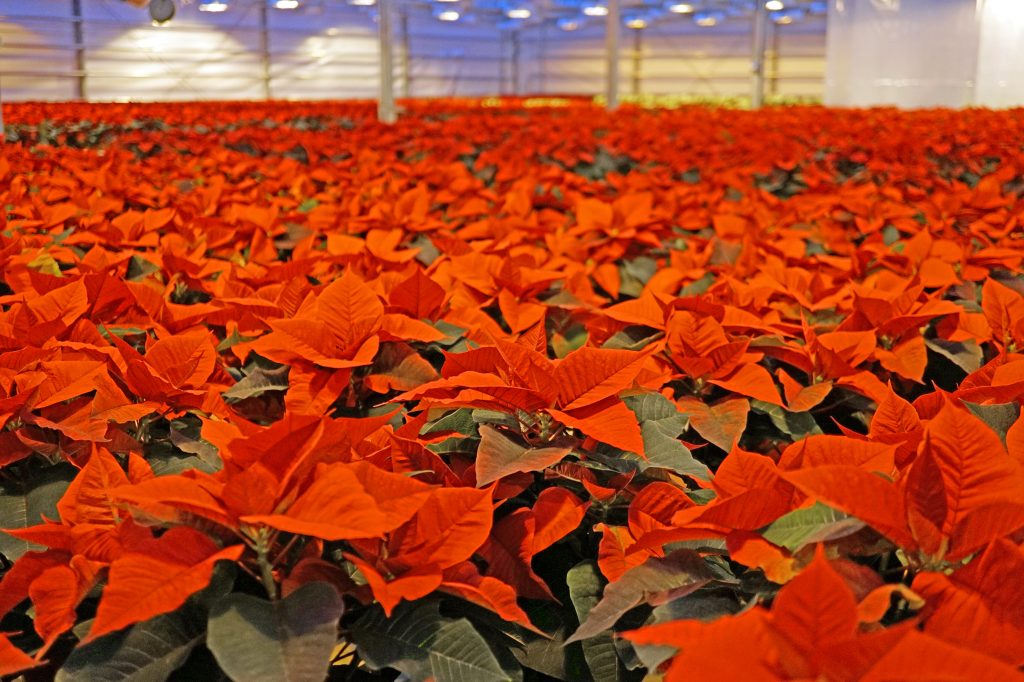
Bracts come in red, pink, white, cream, salmon and bicolored forms, and growers keep breeding new colors. Red is still the most popular by far. More than 70 million poinsettias are sold in the United States each year, which makes it the best selling potted plant in the country.
The plant is named after Joel Roberts Poinsett, the first United States minister to Mexico, who sent cuttings home in 1828. The poinsettia is a short day plant, which means it needs long nights to set its color. That one fact explains both why it blooms in December and how to make it bloom again.
How to Choose a Healthy Poinsettia
A healthy plant starts at the store, and most problems begin there. Pick a plant with dark green foliage all the way down the stem to the soil. Bare lower stems mean the plant has already been stressed, usually by cold or by a dry pot, and it will drop leaves at home.
Check the bracts next. They should be fully colored with no green edges. Bracts with green edges were picked too early and may never color fully. Check the small yellow flowers in the center. They should be barely open, with little or no yellow pollen showing. A plant shedding pollen is past its peak.
Look at the whole plant for signs of trouble. Leaves should be firm and green, with no wilting, yellow edges or brown spots. Stems should be unbroken and free of dark, mushy spots. Turn a few leaves over and look at the undersides for tiny white insects, which are whiteflies, the most common poinsettia pest. Lift the plant and look at the drainage holes if you can: roots should be tan or white, not dark brown, which points to root rot.
Buy the poinsettia last on your shopping trip, and ask for a sleeve or a bag to protect it on the way home. Cold air is the fastest way to damage a poinsettia, and even a short walk to a cold car can cause leaf drop within days. Never leave a poinsettia in a cold car, and never leave it sitting by a drafty door.
Poinsettia Care: Light
Light is the first care rule, and it is the one most people get wrong. Give your poinsettia at least six hours of bright indirect light every day. A south, east or west facing window is ideal. The plant needs enough light to keep its leaves and its color, but direct sun through glass may fade the bracts over time, so a sheer curtain between the plant and a south window is a good idea.
Do not let the leaves touch a cold windowpane. Glass gets cold on winter nights, and a leaf pressed against it can be damaged by the cold. Keep the plant a few inches back from the glass.
Low light is one of the main causes of leaf drop. A poinsettia left in a dark corner will shed its lower leaves within a week or two. If the plant must sit in a darker spot for a party or a photo, move it back to its bright window the next morning. A plant can spend a few weeks in a dark place and survive, but it will not stay colorful there.
That six hour figure is for everyday care. The reblooming schedule in the fall asks for more: bright light through the day while the plant gets its long nights. The two numbers are for two different jobs, and the reblooming light is explained separately in the reblooming section below.
Poinsettia Care: Watering
Watering is where most poinsettias are killed, and the mistake is almost always too much water, not too little. Check the soil surface every day with your finger. Water only when the surface feels dry. When you water, water thoroughly, until water runs out of the drainage holes at the bottom.
Remove the decorative foil or plastic wrap around the pot, or poke holes in the bottom of it, so water can drain out. Water the plant in the sink and let it drain fully before you put it back in its saucer or basket. Never let the pot stand in water. Standing water rots the roots, and root rot is the most common fatal problem for this plant.
Overwatering is the main cause of most poinsettia problems. Wet soil starves the roots of air, and the roots rot. The plant wilts, the leaves yellow from the bottom up, and the plant dies even though the soil is wet. If your plant wilts and the soil is dry, water it and it will usually recover within a few hours. If it wilts and the soil is wet, stop watering, let the soil dry, and hope the roots recover.
A poinsettia in a small pot dries out faster than one in a large pot, so check small plants more often. A plant near a heating vent also dries out faster. The finger test is more reliable than any schedule: if the surface is dry, water; if it is damp, wait.
Poinsettia Care: Temperature and Drafts
Poinsettias are tropical plants, and cold is their worst enemy. Keep your plant between 60 and 70 degrees Fahrenheit during the day. At night, temperatures in the mid 50s to low 60s are fine. Sources differ slightly on the floor: Clemson and Maryland Extension say never let the plant fall below 50 degrees, and at 50 degrees and below the plant suffers chilling injury, the leaves turn black or drop, and the damage cannot be undone. Colorado State Extension sets the floor higher, at 55 degrees, and notes that growth stops below 55 degrees. The safe rule is to keep the plant above 55 degrees. A frost or a freeze kills the plant outright.
Keep the plant away from cold drafts, including doors that open to the outside, drafty windows and air conditioning vents. Keep it away from heat too: radiators, fireplaces, heating vents and the top of a television all dry the plant out and scorch the leaves. A spot a few feet from a sunny window, away from both drafts and heat sources, is ideal.
The trip home is the most dangerous moment for cold damage. A plant carried through freezing air for even a few minutes can lose leaves in the days that follow. That is why the store sleeve matters, and why the plant should be the last thing you buy and the first thing you carry inside.
A poinsettia can survive in a dark place, such as a closet or a room with little light, for about three weeks if it must, but it needs water only when the soil is dry and no fertilizer during that time. It will not stay colorful in the dark, so this is only a short term fix, not a care plan.
Poinsettia Care: Humidity and Feeding
Poinsettias prefer humid air, and most heated homes in winter are dry. Low humidity causes leaf drop, especially at the bottom of the plant. You can raise the humidity around your plant by setting the pot on a tray of pebbles with water in it, making sure the pot sits on the pebbles and not in the water. A pebble tray raises the humidity only slightly, right around the plant, so do not expect it to fix a very dry room. A small humidifier in the room is more effective, and grouping several plants together raises the humidity around them all.
Do not feed your poinsettia while it is in bloom. The plant does not need fertilizer during the holidays, and feeding it then does nothing for the color. If you decide to keep the plant after Christmas, start feeding once new growth resumes in late winter. Use a balanced houseplant fertilizer, such as 10-10-10, every two to three weeks through spring and summer. Stop feeding in the fall, when the plant needs to rest and prepare for its dark period.
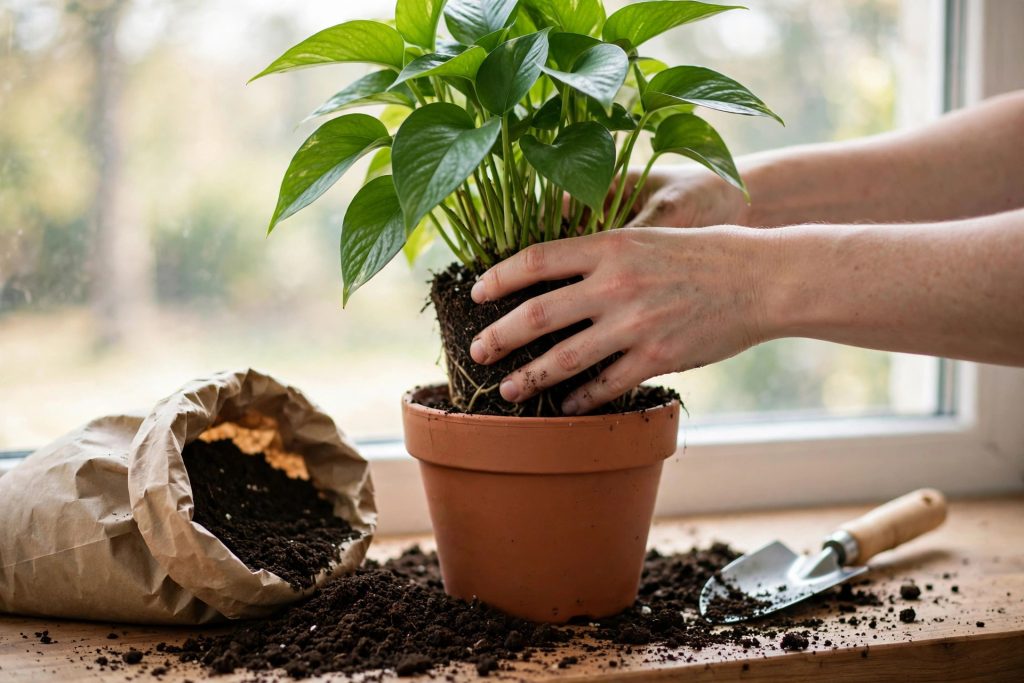
If the plant has been in the same pot for a year, it may need repotting in spring. Move it into a pot 2 to 4 inches wider, using fresh soilless potting mix. Poinsettias like a light, well drained mix, and they do not like to sit in wet soil.
What to Do After Christmas
When the holidays end you have two choices: compost the plant, or keep it alive. There is no shame in composting. Most people treat the poinsettia as a seasonal flower, and that is fine. Keeping it alive takes a year of care and a strict dark schedule in the fall, and it is a fun project if you like a challenge.
If you keep the plant, treat it the same as before through the winter: bright light, water only when dry, temperatures between 60 and 70 degrees. In March or April, cut the stems back. Clemson Extension advises cutting back to about 8 inches. Iowa State Extension advises 4 to 6 inches. The University of Georgia Forsyth County fact sheet says about 10 inches. Any of these works. The point is to leave short, sturdy stems with a few nodes, so the plant branches out instead of growing tall and leggy.
In May, repot the plant into a pot 2 to 4 inches wider, using fresh soilless potting mix. The old mix is exhausted and often compacted, and fresh mix gives the roots air and room to grow. After repotting, the plant will push out new green leaves. This is the sign that it has settled in and is growing again.
There is another way to rest the plant, from Illinois Extension. In spring, cut the stems back, then keep the plant in a cool, dry place for about a month and water it only enough to keep the stems from shriveling. After the rest, bring it back into bright light, resume normal watering, and repot it into fresh mix. The plant will push out new growth and grow through the summer as usual. This rest method suits a plant that has finished blooming and looks tired, and it is a good alternative if you do not want to keep watering a bare stem all spring.
Once the last frost has passed and the nights stay above 50 to 60 degrees, the plant can go outside. Harden it off first: set it in a shady spot for a week or two, then move it into more sun. Indoors, a sudden move to full sun scorches the leaves. Outdoors, give it 6 to 8 hours of sun a day, water it when the soil surface dries, and pinch the growing tips through the summer to keep it bushy. Stop pinching after September 1, because the new growth after that date is what will carry the fall color.
Bring the plant back indoors in mid September, when the nights fall to 55 to 60 degrees. A frost will kill it, so do not wait for cold weather to force the move. Check the leaves before you bring it in, and wash off any insects you find.
How to Make a Poinsettia Rebloom
Reblooming is the part most people want to know, and it is also the part most people get wrong. A poinsettia is a short day plant, which means it only sets color when the nights are long. In fall, the plant needs 14 hours of total darkness every night for 8 to 10 weeks. Without that dark period, the bracts stay green.
Start the dark treatment in early October. Clemson Extension says the first week of October. The University of Georgia says October 1. Illinois Extension says the end of September. Any of these dates works if the darkness is strict. From then on, give the plant 14 hours of complete darkness every night, and bright light during the day. The University of New Hampshire Extension schedule is 14 hours of darkness and 10 hours of light, while other Extension sources give 6 to 8 hours of bright light in the day. Either way, the daytime hours must be bright light, not dim room light: a plant kept in a dim room during the day will not color well, however strict the darkness is at night.
A common schedule is to put the plant in a dark closet, a spare room, or under a large box at 5:00 PM and bring it back into the light at 7:00 or 8:00 AM. That gives 14 to 15 hours of darkness. The darkness must be total. Even a small amount of light, from a lamp, a hallway light, or a streetlight through a window, can delay the color or stop it altogether. If you use a box, make sure no light leaks in around the edges.
Night temperatures matter too. Keep the nights in the low 60s while the plant is in its dark period. Nights much warmer than 70 to 75 degrees can delay flowering, so a cool room is better than a warm one.
If you want color by December 18, the University of New Hampshire Extension advises starting the dark treatment on October 9. That is 8 to 10 weeks before the color shows. Once the bracts are fully colored, the dark treatment is no longer needed, and the plant can go back to its normal bright spot.
Be honest with yourself about the result. A home rebloom rarely matches greenhouse quality. The color may be less even, the plant may be taller and leggier, and some plants never rebloom at all. That is normal. The University of Maryland Extension says reblooming at home is possible but difficult, and some plants simply will not do it. If yours does, you have done well. If it does not, you have still kept a tropical plant alive for a year, which is a success on its own.
If your plant does not color, check the darkness first. A hallway light left on, a lamp in the next room shining under a door, or a streetlight through a window can all be enough to stop the color. Check the night temperature too: nights much warmer than 70 to 75 degrees can delay flowering. If both are right, be patient and keep the schedule going for the full 8 to 10 weeks. Some plants color late. If the plant still shows no color after ten weeks, the plant may be one that will not rebloom at home, and you can either keep it as a green houseplant or compost it and start fresh next year
Can a Poinsettia Grow Outdoors?
Yes, but only where it never freezes. Poinsettias are hardy in USDA zones 9 to 11, which covers southern Florida, southern Texas, southern California, Hawaii and Puerto Rico. In those places a poinsettia planted outdoors can grow into a shrub 10 feet tall and 8 feet wide, and it will color up on its own when the days shorten in fall.
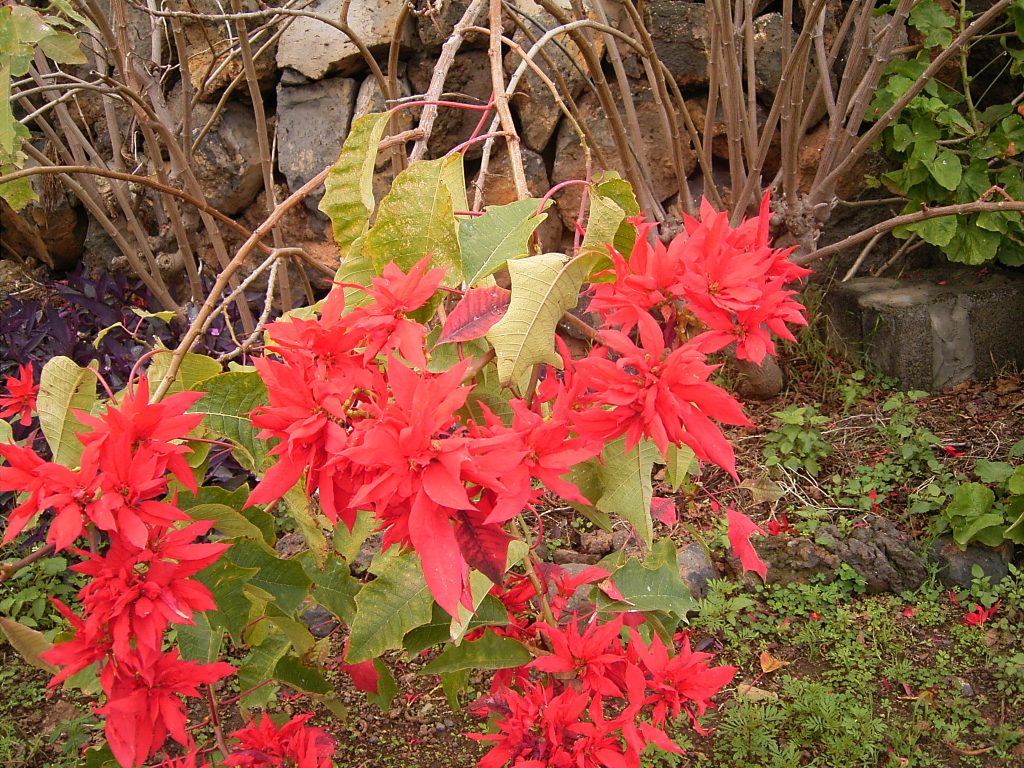
In colder zones, a poinsettia can go outdoors only for the summer. Put it out after the last frost, when the nights stay above 50 to 60 degrees, and bring it back inside in mid September, before the nights turn cold. Outdoors it needs 4 to 5 hours of sun a day. A plant that spends the summer outside usually grows stronger and bushier than one kept indoors all year, which is one reason the summer move is worth doing.
A frost kills a poinsettia. If a cold night is forecast and the plant is still outside, bring it in or cover it. Do not plant a poinsettia in the ground anywhere colder than zone 9, because the first hard freeze will kill it.
Growing Poinsettias in Bangladesh
Bangladesh suits a poinsettia better than a cold climate does, because the plant is tropical and it never faces a hard freeze in most of the country. The care still differs from the indoor guide above, because the risks change: heat, heavy rain and waterlogged soil replace cold drafts as the main dangers.
Give the plant bright light, but keep it out of the harsh midday sun. Morning sun suits it best, and bright shade under a tree or on a shaded veranda works well through the hot months. Strong midday sun can scorch the leaves and fade the bracts, so a spot that is bright in the morning and shaded by noon is ideal.
The monsoon is the biggest risk. Poinsettias rot in wet soil, so the pot must drain freely: use a light, free-draining mix, make sure the pot has drainage holes, and never let it stand in water. In heavy rain, move the pot under cover or raise it off the ground so water runs away from it. Root rot from Pythium and Rhizoctonia, the same fungi named in the problems section below, thrives in waterlogged soil, and a plant that sits wet for days in the monsoon rarely recovers.
Outdoor humidity in much of Bangladesh is generally sufficient, but indoor air-conditioned rooms may still become dry. Check the room conditions before adding extra humidity. In the dry winter months the indoor humidity advice applies. Winter itself is mild: the plant can stay by a window or outdoors through the cool season in most of the country, but the same 50 degree floor applies, so on the coldest winter nights in the north, bring the plant inside if a cold night is forecast, and do not let its leaves touch cold glass.
Reblooming works the same way in Bangladesh: the short days of late autumn still trigger color, but streetlights and bright indoor lights at night can stop it, so the 14 hour darkness rule in the reblooming section applies exactly. A plant kept on a veranda under a streetlight will stay green.
Poinsettia Problems and Fixes
Leaf drop is the most common complaint, and it has several causes. Dry soil, overwatering, cold drafts, low light and low humidity can all make leaves fall. Check the soil first: if it is dry, water the plant. If it is wet, stop watering and let it dry out. Then check the spot: move the plant away from drafts and heat, and give it more light. A plant that drops a few lower leaves in winter is normal. A plant that drops most of its leaves in a week is stressed, and the cause is usually water or cold.
Yellow leaves usually mean overwatering. The lower leaves yellow first, then drop. If the soil is wet and the plant is wilting, the roots are rotting, and the plant may not recover. Let the soil dry out completely, then water lightly and only when the surface is dry. If the plant keeps declining, check the roots: healthy roots are tan or white, rotted roots are dark brown and mushy.
Wilting has two causes. If the soil is dry, the plant is thirsty, and watering will usually revive it within a few hours. If the soil is wet and the plant still wilts, the roots are damaged, usually by root rot. Root rot is caused by fungi such as Pythium and Rhizoctonia, which thrive in wet soil. There is no home cure for advanced root rot. Prevention is the only fix: water only when dry, and never let the pot sit in water.
Blackened leaves mean cold damage. A leaf that turns black after a cold night will not recover. Remove the damaged leaves and move the plant to a warmer spot. The plant may regrow from healthy stems if the cold damage was brief.
Whiteflies are the most common pest. They are tiny white insects that fly up in a cloud when you touch the plant, and they feed on the undersides of the leaves. Their life cycle is only two to three weeks, which makes them hard to control, because new adults keep appearing. Check new plants before you buy them, and isolate an infested plant from your other houseplants. A small infestation can be tolerated. A heavy infestation, with sticky honeydew on the leaves and a cloud of insects, is usually best handled by discarding the plant, because the pest will spread to everything nearby.
Mealybugs, scales and spider mites also attack poinsettias. Mealybugs look like small white cotton balls in the leaf joints. Scales look like small brown bumps on the stems. Spider mites make fine webbing and cause speckled, dusty leaves. All three are easier to prevent than to cure, which is another reason to inspect a plant carefully before you bring it home.
Poinsettia Diseases: Symptoms and Treatment
Most poinsettia diseases are root and stem rots that start in wet soil. A healthy plant in a free-draining mix rarely gets sick. The four below are the ones a home grower is most likely to meet.
Root rot, from Pythium and Rhizoctonia, is the most common. The symptoms are a plant that wilts even though the soil is wet, lower leaves that yellow and drop, and roots that are dark brown and mushy instead of tan or white. There is no home cure for advanced root rot. Prevention is the only fix: water only when the soil surface is dry, use a free-draining mix, and never let the pot stand in water. Discard a plant whose roots are mostly rotted, so the fungi do not spread to your other plants.
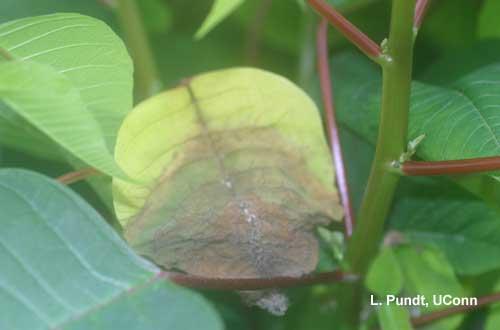
Botrytis gray mold, from Botrytis cinerea, is the most destructive disease of poinsettia, according to Texas A and M Extension. The symptoms are tan-brown spots on leaves, stems and bracts, with gray fuzzy spores in damp, still air. Remove the spotted leaves and bracts at once, give the plant air circulation and space, reduce the humidity, and do not wet the leaves when you water. Keep the plant out of a crowded, damp corner.
Bacterial canker shows as water-soaked streaks on the stems and spots on the leaves, followed by leaf drop, and a badly infected plant dies. Destroy infected plants, do not water from above, and disinfect your tools after handling a sick plant.
Powdery mildew shows as dusty white patches on leaves, stems or bracts, with yellow spots on the upper leaf surface. Improve the air flow, avoid wetting the foliage, and remove the affected leaves early.
If more than one disease sign appears at once, or the whole plant collapses in a few days, discard it. A sick poinsettia is rarely worth treating with chemicals at home, and it can pass the problem to nearby plants.
Are Poinsettias Toxic to Humans and Pets?
Poinsettias are not deadly, despite the old story that they are, but calling them completely harmless would be wrong. For people, the risk is low: a study of 22,793 poinsettia exposure cases reported to poison centers found no fatalities, less than 5 percent of the people exposed needed any medical treatment, and less than 8 percent had any stomach upset at all. Eating the leaves can still cause mild stomach upset, vomiting or diarrhea, so the plant should not be eaten, and it should be kept out of the reach of small children.
The milky sap in the stems can irritate the skin and the eyes, and people with a latex allergy can react to it, so wear gloves when you prune the plant and wash your hands after handling it.
For pets, the plant is mildly toxic. Colorado State Extension advises keeping poinsettias out of the reach of cats and dogs, because eating the leaves can cause vomiting and diarrhea. North Carolina State Extension rates ingestion as generally low severity in pets and children, but the safe choice is the same: put the plant where pets cannot chew on it, and watch for vomiting or diarrhea if a pet does eat some leaves. If a pet eats a large amount, call your veterinarian.
Final Thoughts
Poinsettia care comes down to three rules: bright indirect light, water only when the soil is dry, and no cold. Follow those and the red color lasts for weeks. Keep the plant for a year, give it its long dark nights in the fall, and it may turn red again next Christmas. If it does not, you have still kept a tropical plant alive for a year, which is a success on its own.
Frequently Asked Questions
How often should I water my poinsettia?
Water only when the soil surface feels dry, which is usually every few days in a warm room and less often in a cool one. Check the surface with your finger every day. When it is dry, water thoroughly until water runs out of the drainage holes, then let the pot drain fully and empty the saucer. Never let the pot stand in water, and never water on a fixed schedule without checking the soil first.
How long do poinsettias last?
The red color lasts for weeks, and with good care it can last for months. The plant itself can live for several years if you keep it after Christmas, prune it in spring, and give it a dark period in the fall. Many people throw the plant away after the holidays, but a poinsettia that is watered correctly and kept out of cold drafts can stay alive for years.
Why is my poinsettia losing leaves?
Leaf drop is the most common poinsettia problem, and the cause is usually water or cold. Check the soil: if it is dry, water the plant. If it is wet, stop watering until it dries out. Then check the spot: move the plant away from cold drafts, heating vents and doors, and give it at least six hours of bright indirect light a day. Low humidity also causes leaf drop, so a pebble tray or a humidifier can help. A few lower leaves dropping in winter is normal. Most of the leaves dropping in a week means the plant is stressed.
Can I keep my poinsettia after Christmas?
Yes. Keep watering and giving it bright light through the winter, cut the stems back in March or April, repot it in May, and put it outside for the summer after the last frost. Bring it back indoors in mid September, then give it 14 hours of total darkness every night for 8 to 10 weeks starting in early October. If the dark treatment is strict, the bracts will turn red again in December.
Are poinsettias toxic to cats and dogs?
Poinsettias are mildly toxic to cats and dogs, not deadly. Eating the leaves can cause vomiting and diarrhea, and the milky sap can irritate the skin and mouth. Keep the plant out of reach of pets, and call your veterinarian if a pet eats a large amount. For people, the plant is generally low in toxicity, though eating the leaves can cause mild stomach upset.
How do I get my poinsettia to
turn red again?
Give it 14 hours of total darkness every night for 8 to 10 weeks, starting in early October, and bright light during the day. The daytime light must be bright, not dim. Put the plant in a dark closet or under a box at 5:00 PM and bring it back into the light at 7:00 or 8:00 AM. The darkness must be total: even a small light leak can delay the color or stop it. Once the bracts are colored, no more darkness is needed. Be patient: home rebloom rarely matches greenhouse quality, and some plants never rebloom at all.

References
- Clemson University Cooperative Extension Service, Home and Garden Information Center, “Poinsettia” (HGIC 1561)
- Iowa State University Extension and Outreach, “Guide to Selection and Care of Poinsettias”
- University of Maryland Extension, “Poinsettias”
- University of New Hampshire Extension, “Poinsettias: Care and Reflowering”
- NC State Extension Gardener Plant Toolbox, “Euphorbia pulcherrima” (Poinsettia)
- University of Georgia Extension, “Care of Holiday and Gift Plants” (Circular 951)
- University of Georgia Extension, Forsyth County, “Maintaining Holiday Plants After the Holidays”
- Colorado State University Extension, “Poinsettia care to get your plant through the holiday season”
- NC State Extension, Clay County Center, “How to Care for Poinsettias: A Guide to Keeping Your Holiday Plant Healthy”
- University of Georgia Extension, Lincoln County, “Holiday Plant Care”
- University of Illinois Extension, “Caring for Poinsettias”
- University of California Agriculture and Natural Resources, UC Master Gardeners of Humboldt and Del Norte Counties, “Poinsettias”
- Connecticut Agricultural Experiment Station, “Poinsettias: Disease Prevention and Control”. https://portal.ct.gov/-/media/CAES/DOCUMENTS/Publications/Fact_Sheets/Plant_Pathology_and_Ecology/POINSETTIASDISEASEPREVENTIONANDCONTROLpdf.pdf . Supports: primary poinsettia diseases, Rhizoctonia stem rot and Pythium root rot symptoms and control, Botrytis leaf, stem and bract infections, Thielaviopsis root rot, bacterial stem and soft rots.
- Texas A and M AgriLife Extension, “Common Diseases of Poinsettias”. https://aggie-horticulture.tamu.edu/ornamental/the-texas-poinsettia-producers-guide/poinsettia-diseases-control/common-diseases-of-poinsettias/ . Supports: Botrytis gray mold as the most destructive disease of poinsettia, tan-brown spots and gray spores, powdery mildew white growth, root rot symptoms and controls.

Thesis Link : https://saulibrary.edu.bd/daatj/public/uploads/BAU200601_19-Pp_5.pdf
- Poinsettia Care: How to Keep It Alive and Rebloom It - November 29, 2026
- 10 Best Cold Frames for Extending the Season - November 29, 2026
- Apple Tree Diseases – How to Identify and Treat Them - November 28, 2026