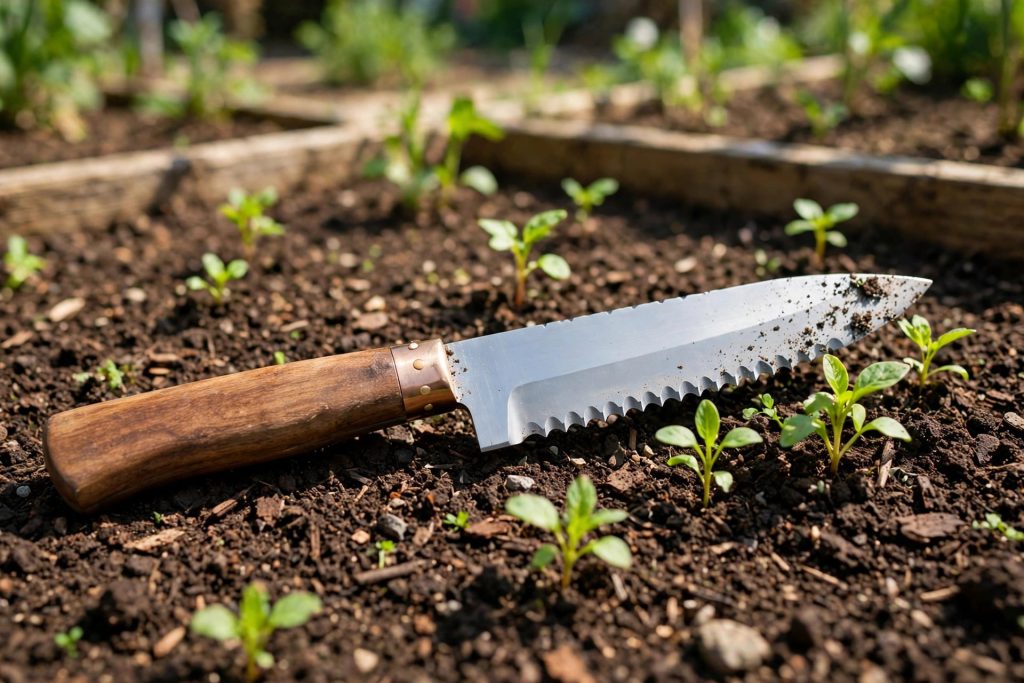
A hori hori looks simple. One concave blade, one straight edge, one serrated edge, and a set of depth marks down the middle. In practice, the best hori hori knife replaces a trowel, a weeder, a small root saw and a bulb planter in a single belt tool, which is why so many gardeners end up carrying one on every round of the beds.
The differences that matter are not cosmetic. Blade steel decides how often you sharpen and whether the edge rusts in a damp shed. Tang construction decides whether the blade stays tight when you pry a root ball out of clay. Handle shape decides whether your hand still feels fine after an hour of planting bulbs. This guide compares ten current models on those points, using manufacturer specifications and owner feedback. We did not hands-on test these knives, and the scores below are editorial scores built from verified specs and reported owner experience, not lab results.
Table of Contents
- Quick Recommendation
- Comparison Table
- How We Chose
- The 10 Best Hori Hori Knives
- How to Choose a Hori Hori Knife
- How to Use and Care for a Hori Hori
- Final Choice
- References
- Frequently Asked Questions
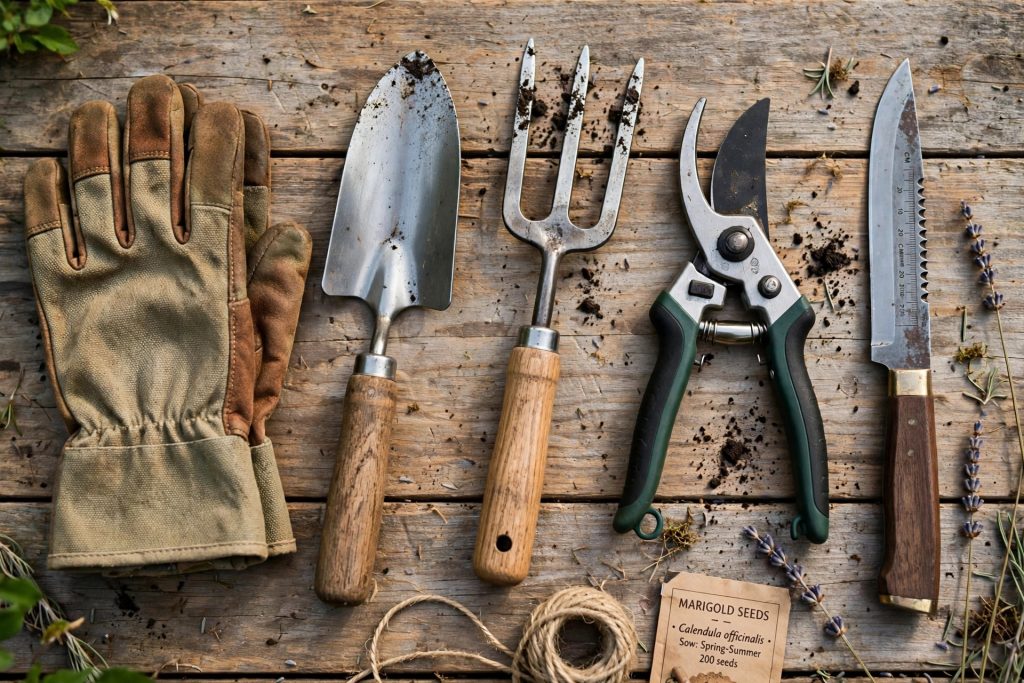
This soil knife is one tool in a wider kit, and our complete garden hand tools guide covers the hand tools a gardener reaches for most.
Quick Recommendation
- Best overall: Nisaku NJP650. The original Japanese pattern, a 7.25 inch stainless blade, clear depth marks and a light, balanced feel for everyday planting and weeding.
- Best for heavy prying: Barebones Hori Hori Ultimate. Full tang 4CR13 steel, a walnut handle and a flat pommel for tapping stakes, built for rocky soil and root work.
- Best for professional daily use: A.M. Leonard Deluxe Soil Knife. A 6 inch stainless blade, a high visibility orange handle and a lifetime warranty when bought direct from A.M. Leonard.
- Best comfort pick: Fiskars Hori Hori Garden Knife. A 7 inch blade with a forked weeding tip and a SoftGrip handle, plus a hard sheath and a lifetime warranty.
- Best value with a complete kit: Truly Garden Hori Hori. Full tang stainless, a leather sheath and a diamond sharpening rod in the box.
Comparison Table
| Product | Blade | Key spec | Best for | Price (USD, checked Oct 2026) | Our rating |
|---|---|---|---|---|---|
| Nisaku NJP650 | 7.25 in stainless | Wood handle, depth marks, faux leather sheath | Overall planting and weeding | About $22 | 9.4 |
| Barebones Hori Hori Ultimate | 6.75 in 4CR13 stainless | Full tang, walnut handle, pommel | Heavy prying and roots | $59.95 tool only, $84.95 with sheath | 9.2 |
| A.M. Leonard Deluxe Soil Knife | 6 in stainless | Orange handle, lifetime warranty bought direct | Professional daily use | Not verified, see maker page | 9.1 |
| Truly Garden Hori Hori | 7 in stainless | Full tang, leather sheath, diamond rod | Complete kit and gifting | About $30 to $32 | 9.0 |
| Fiskars Hori Hori Garden Knife | 7 in stainless | Forked tip, SoftGrip, hard sheath | Comfort and weeding | $34.99 MSRP | 8.8 |
| Black Iron Hori Hori | 7 in stainless | Full tang, leather sheath, stone | Tough soil on a budget kit | Not verified, see listing | 8.7 |
| DeWit Serrated Farmer Dagger | Forged boron steel, length not published | Ash handle, lifetime guarantee | Heirloom edge retention | $79.99 | 8.6 |
| gonicc Professional Hori Hori | 7 in 440 stainless | Handguard, leather sheath, stone | Guarded grip and value | About $20 | 8.5 |
| WORKPRO Hori Hori | 7 in stainless | TPR handle, Oxford sheath | Low cost everyday use | About CAD $20, US price varies | 8.4 |
| Corona CT15409 ComfortGEL | 6 in hardened stainless | ComfortGEL grip, depth marks | Light tasks and comfort | About $20 | 8.3 |
Prices were checked in October 2026 against manufacturer or retailer listings and change often; the maker’s product page always carries the current price. Where a price could not be verified, the table says so instead of guessing. As a rough guide, the old bands meant: $ under $25, $$ $25 to $60, $$$ over $60.
How We Chose
We started from models a US gardener can actually buy from the maker or a major retailer, then verified blade length, steel, handle, sheath and warranty claims against manufacturer or retailer specification pages at writing time in October 2026. Where listings disagreed, we printed the conservative figure and flagged the disagreement in that product section instead of printing the larger number.
Scores are editorial scores. They combine verified specifications with patterns in owner feedback, such as handle comfort over long sessions, sheath quality, and reports of bending or loosening. We did not hands-on test any of these knives.
Scoring system
| Factor | Weight |
|---|---|
| Blade steel and edge quality | 30% |
| Strength and tang construction | 25% |
| Handle comfort and control | 20% |
| Sheath and extras | 15% |
| Value and warranty | 10% |
A high score needs more than a sharp edge. A knife that cuts well but ships with no sheath, or a blade that owners report bending in clay, loses points even if its steel grade looks good on paper. That balance is what separates the best hori hori knife options from the rest of the field.
The 10 Best Hori Hori Knives
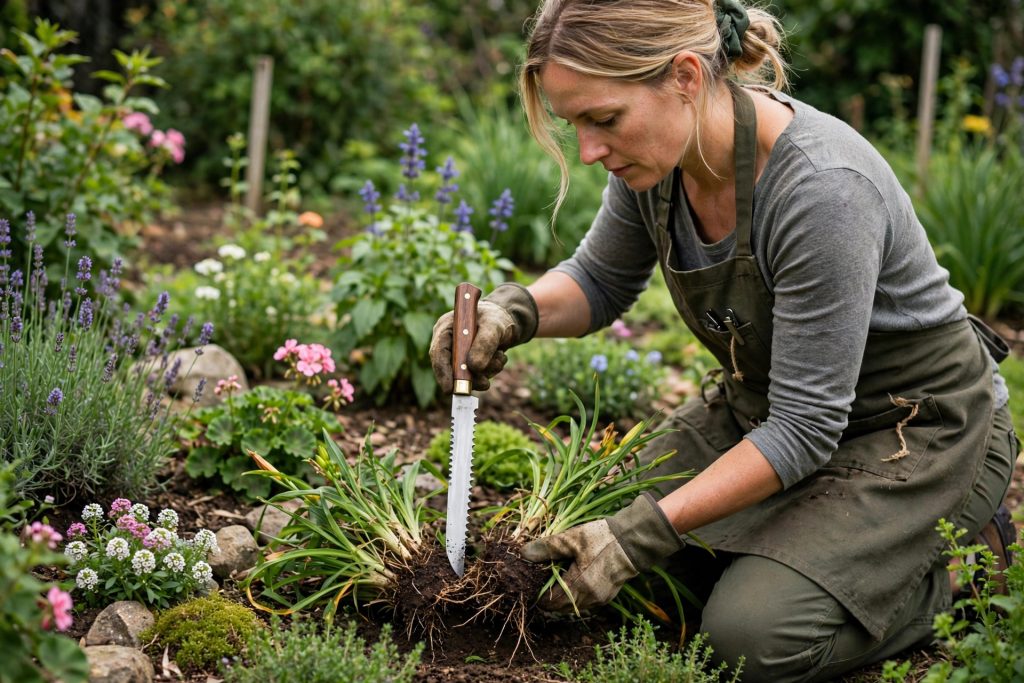
1. Nisaku NJP650 The Original Hori Hori
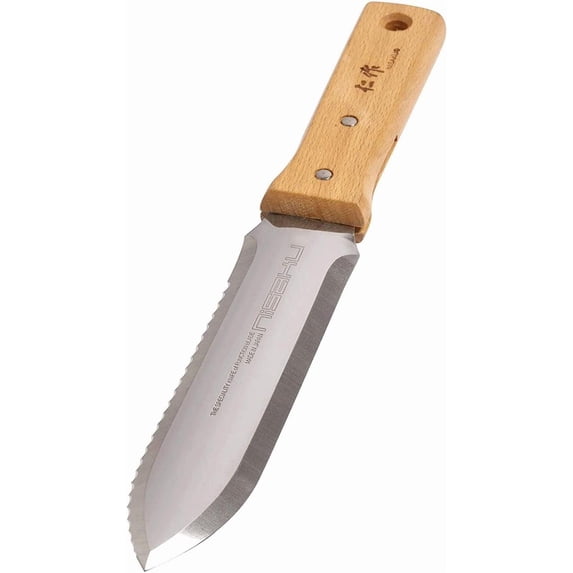
The Nisaku is the pattern most other hori hori knives copy. Its 7.25 inch concave blade is Japanese stainless steel, with a straight edge on one side and a serrated edge on the other, and inch and millimetre depth marks for bulb and seed planting. The wood handle is about 5.25 inches long. Maker and retailer listings put the weight at about 10 ounces, although one Amazon specification table lists 6.4 ounces for the item weight, so treat the exact figure as unsettled and the handling as light either way. It ships with a faux leather sheath.
In daily work this is the knife for transplanting seedlings, dividing perennials and popping taproot weeds without swapping tools. The serrated side saws small roots cleanly, and the concave face scoops soil like a narrow trowel.
Real-world limitation: the handle is not a full tang design, a point noted in independent reviews, so it is not the pick for repeated heavy prying in rocky ground. The wood handle also needs occasional drying and care in a damp shed.
Who should buy: most home gardeners who want one proven, light and accurate soil knife for planting, weeding and dividing. For most readers, this is the best hori hori knife to start with.
Score breakdown (editorial score, not a lab test): Blade 9.8 x 30%, Strength 8.6 x 25%, Handle 9.6 x 20%, Sheath and extras 9.4 x 15%, Value and warranty 9.9 x 10% = 9.4.
Spec source: Nisaku manufacturer listing, checked October 2026. Owner feedback: The Gadgeteer hands-on review.
2. Barebones Hori Hori Ultimate
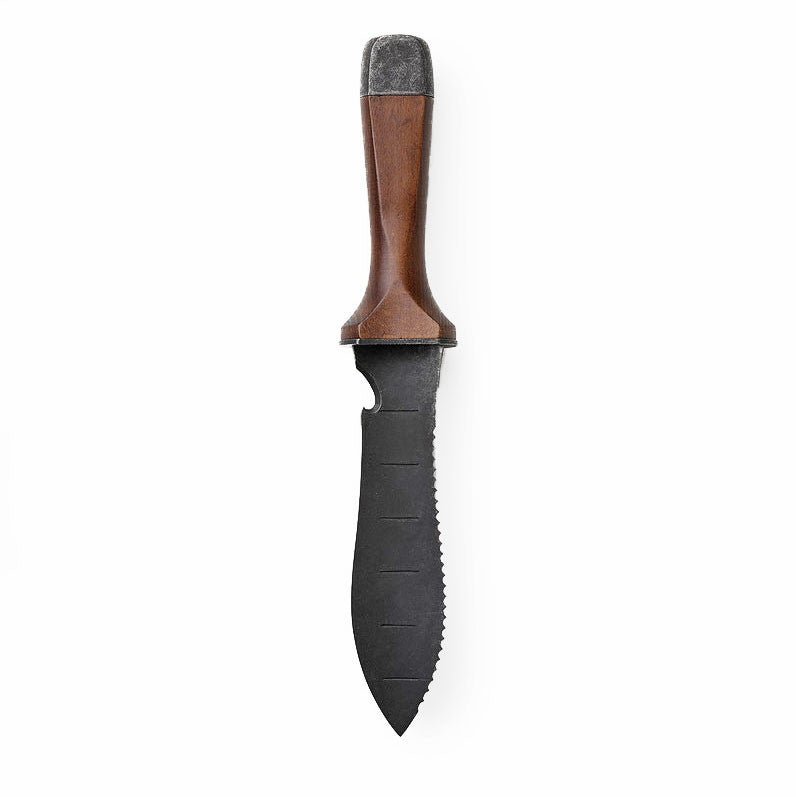
Barebones builds the heaviest duty knife in this list. The blade is heat treated 4CR13 stainless steel, 6.75 inches long, with a through tang running into a walnut handle, a flat pommel base for tapping stakes, a twine cutter that doubles as a bottle opener, and 1 inch depth markings on the concave blade. Retail listings disagree on total weight and overall length, with figures from about 0.8 lb for the tool alone to higher packaged weights, so the safe description is that owners consistently report noticeable heft compared with the Nisaku.
That heft is the point. For prying stones, chopping through matted roots and working compacted beds, the full tang and pommel give you options a lighter knife does not.
Real-world limitation: the weight and size can feel bulky for small hands and for delicate work around seedlings. Walnut needs a wipe of oil now and then to stay in good condition, and sheath inclusion varies by listing, so check whether the sheath is in the box before you buy.
Who should buy: gardeners in rocky or clay soil who pry and chop as much as they plant, and who prefer a tool with real weight behind it.
Score breakdown (editorial score, not a lab test): Blade 9.4 x 30%, Strength 10 x 25%, Handle 8.6 x 20%, Sheath and extras 8.6 x 15%, Value and warranty 8.8 x 10% = 9.2.
Spec source: Barebones specifications via Eartheasy, checked October 2026.
3. A.M. Leonard Deluxe Soil Knife
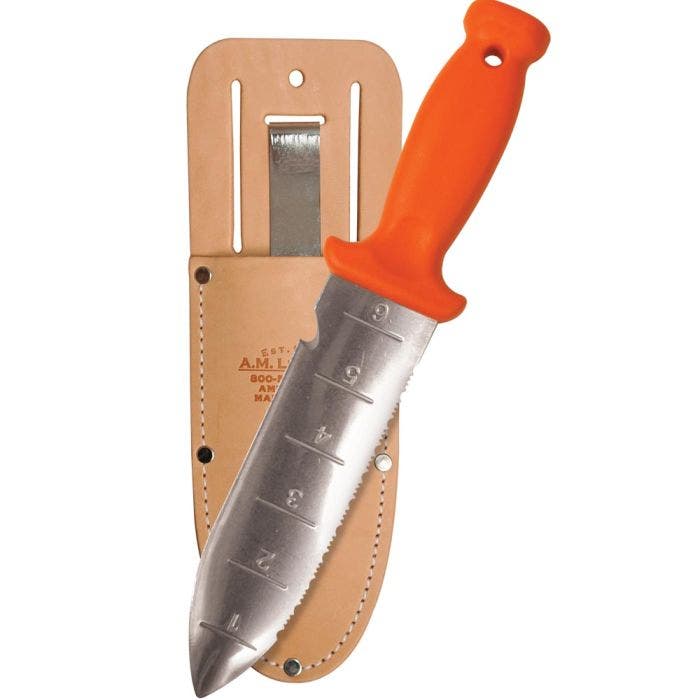
A.M. Leonard sells this as a professional soil knife rather than a gift item, and the specification reflects that. The blade is 6 inches of stainless steel with a deep serrated edge and a tapered slicing edge, depth gauge markings, a spear point and a twine cutting notch. The maker states the blade withstands 300 lb of pressure. The bright orange composite handle is easy to find when you set the tool down in a bed, and the knife carries a lifetime warranty when purchased directly from A.M. Leonard. Weight is listed at about 0.5 lb in one retailer review; the maker does not publish an official weight, so treat that figure as unverified. The sheath is sold separately on the maker listing, although combo listings with a leather sheath exist.
The shorter blade gives control in crowded borders and containers, and the serration is notably aggressive for dividing and root cutting.
Real-world limitation: independent reviewers with small hands have found the handle proportions awkward, and buying the sheath separately raises the real cost of a complete belt setup.
Who should buy: landscapers, nursery workers and serious home gardeners who use a soil knife daily and value the direct purchase lifetime warranty.
Score breakdown (editorial score, not a lab test): Blade 9.6 x 30%, Strength 9.6 x 25%, Handle 8.8 x 20%, Sheath and extras 7.2 x 15%, Value and warranty 10 x 10% = 9.1.
Spec source: A.M. Leonard brand information via Fine Gardening, checked October 2026.
4. Truly Garden Hori Hori
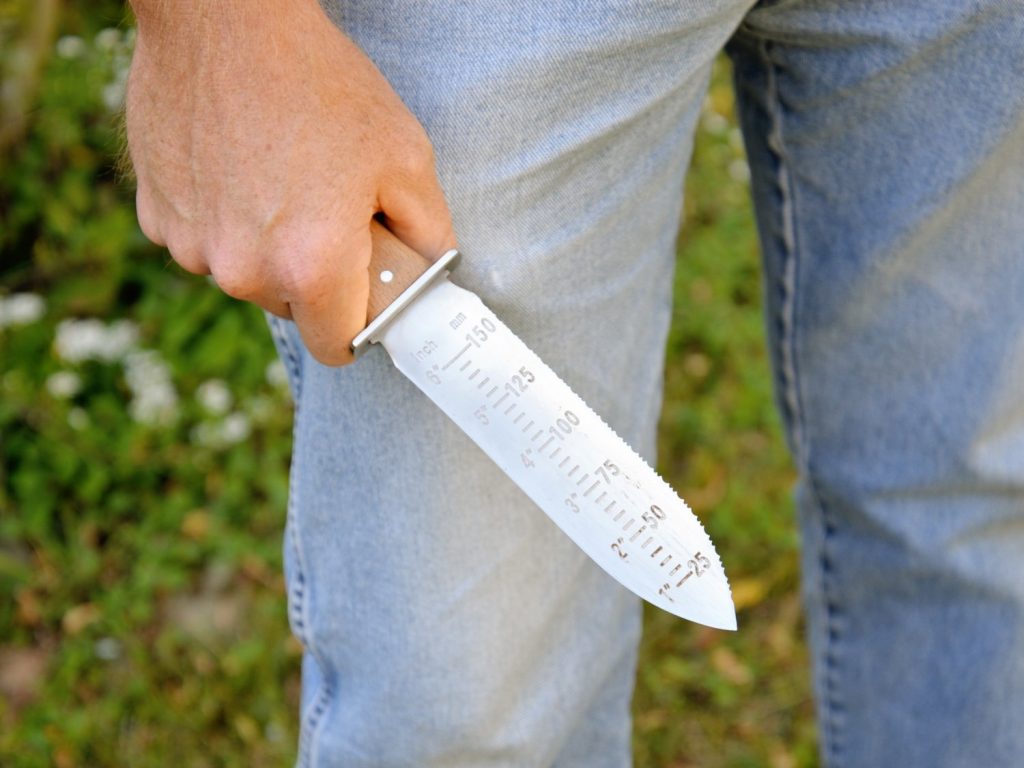
Truly Garden packages a traditional knife as a complete, ready to gift kit. The 7 inch blade is stainless steel on a full tang (review sources list the grade as 420; the maker states stainless steel), about 0.125 inch thick, with smooth and serrated edges and a 6 inch and 150 mm combination depth gauge. The beechwood handle is triple riveted, a steel hand guard sits at the base, and the box includes a heavy leather sheath and a diamond sharpening rod. Bob Vila and Gear Patrol testing summaries put the weight at about 10.1 ounces. One retailer feature list gives 18 ounces, which appears to describe a packaged weight, so we use the roughly 10 ounce figure for the tool itself. A 5 year warranty is listed by several sources.
The sharpening rod matters more than it sounds. A serrated edge dulls in gritty soil, and the rod lets you maintain both edges without buying a separate sharpener.
Real-world limitation: the squared hardwood handle is not shaped for long comfort, and several reviewers note hand fatigue on long sessions. The new leather sheath is stiff at first.
Who should buy: buyers who want the knife, a proper leather sheath and a way to sharpen it in one purchase, including as a gift.
Score breakdown (editorial score, not a lab test): Blade 9.0 x 30%, Strength 9.4 x 25%, Handle 8.0 x 20%, Sheath and extras 10 x 15%, Value and warranty 8.6 x 10% = 9.0.
Spec source: Bob Vila Truly Garden hands-on review, checked October 2026.
5. Fiskars Hori Hori Garden Knife
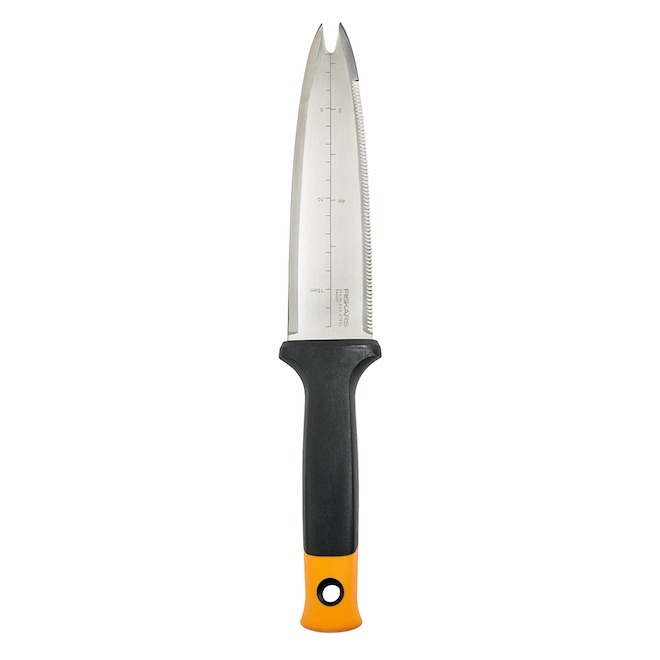
Fiskars model 340130-1001 takes a different approach to the tip and the handle. The 7 inch blade is stainless steel with a precision ground edge, carries a serrated edge for sawing thick growth and a forked tip that helps lever weeds out by the root. Depth measurements are printed for planting, the handle is a cushioned SoftGrip composite about 5.5 inches long, and the kit includes a hard plastic sheath with a belt loop. RONA specifications list the weight at 0.9 lb and the warranty as a full lifetime warranty.
For weeding, the forked tip is a genuine difference, not a styling detail. It gets under dandelion and dock crowns in a way a plain pointed tip does not.
Real-world limitation: owner feedback is mostly strong, but there are isolated reports of handle failure in retailer reviews, and the stainless blade still benefits from a quick dry after wet use. Gardeners who want a traditional wood handle will not find it here.
Who should buy: gardeners who weed a lot, want a comfortable grip for long sessions, and prefer a hard sheath that will not rot or tear.
Score breakdown (editorial score, not a lab test): Blade 8.6 x 30%, Strength 8.4 x 25%, Handle 9.6 x 20%, Sheath and extras 9.0 x 15%, Value and warranty 8.8 x 10% = 8.8.
Spec source: RONA Fiskars 340130-1001 specifications, checked October 2026.
6. Black Iron Hori Hori
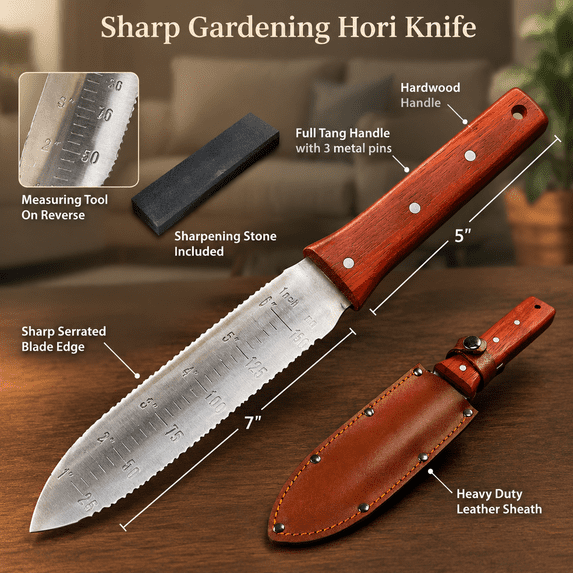
Black Iron sells a heavy, simple knife with a useful accessory bundle. The blade is 7 inches of stainless steel with a beveled straight edge and a serrated edge, inch markers, a full tang held with multiple pins, and a hardwood handle about 5.25 inches long, for a total length of about 12.25 inches. It ships with a leather sheath and a sharpening stone. Weight listings conflict, from about 11 ounces in one specification summary to 15.2 ounces in another review summary, so expect a heavy knife and check the current listing if weight matters to you. The maker does not publish a specific steel grade beyond stainless steel.
Out of the box, reviewers note this knife arrives sharper than several rivals, which helps on roots and stems from day one.
Real-world limitation: that weight tires the hand during hours of light weeding, and the squared handle is less comfortable for smaller hands. There is no finger guard.
Who should buy: gardeners in tough, root filled soil who want a strong full tang knife with a sheath and stone included, without paying premium brand prices.
Score breakdown (editorial score, not a lab test): Blade 8.6 x 30%, Strength 9.4 x 25%, Handle 8.0 x 20%, Sheath and extras 9.4 x 15%, Value and warranty 7.6 x 10% = 8.7.
Spec source: Black Iron manufacturer listing, checked October 2026.
7. DeWit Serrated Farmer Dagger
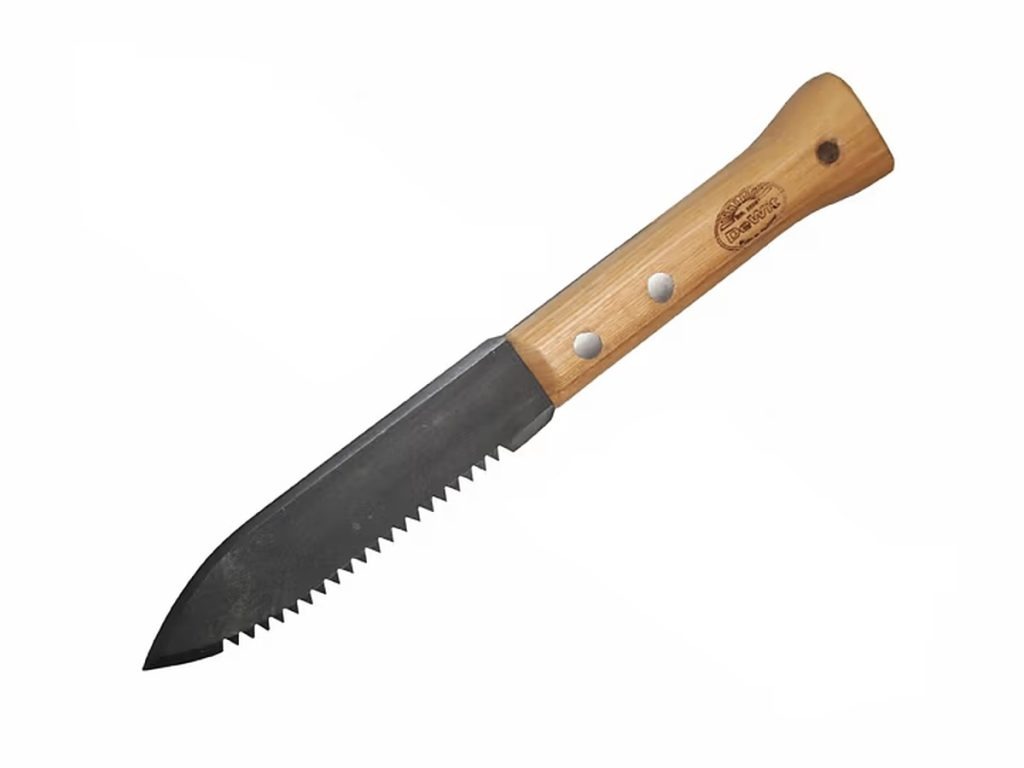
DeWit forges its tools in the Netherlands from Swedish boron steel, and its serrated farmer dagger is the hori hori style entry for gardeners who prioritise edge retention over stainless convenience. The forged blade has a pointed tip and a serrated edge for digging, dividing perennials, cutting sod and planting bulbs. The forged blade is set into an ash hardwood handle in DeWit’s traditional style; the maker does not publish a tang specification for this model, and DeWit tools carry a lifetime guarantee against manufacturing defects. Where a specification such as exact blade length was not published in the sources checked, we mark it as Not published rather than guessing.
Boron steel holds an edge through gritty work that dulls softer stainless quickly. That is the reason to choose this knife, and also the reason it needs more care.
Real-world limitation: forged boron and carbon style steels can rust if left wet, unlike the stainless models above. Wipe it dry and oil it lightly after use, and store it indoors.
Who should buy: experienced gardeners who sharpen their own tools, value a forged heirloom build, and will keep up the simple oil and dry routine.
Score breakdown (editorial score, not a lab test): Blade 9.8 x 30%, Strength 8.6 x 25%, Handle 8.6 x 20%, Sheath and extras 6.4 x 15%, Value and warranty 8.2 x 10% = 8.6.
Spec source: Wasco Nursery DeWit Serrated Farmer Dagger, checked October 2026.
8. gonicc Professional Hori Hori
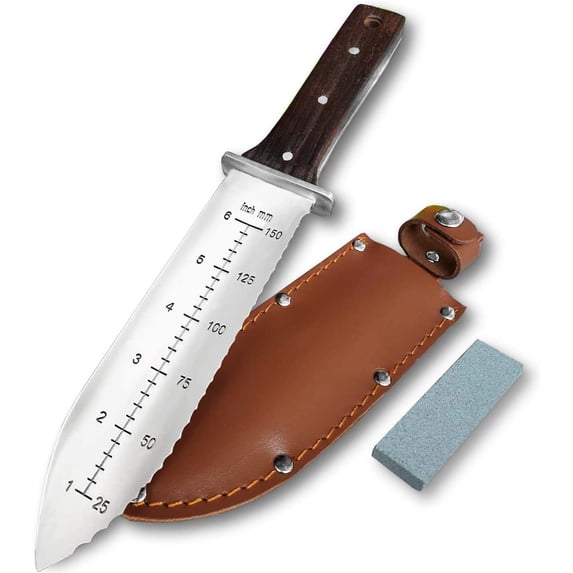
The gonicc professional model focuses on grip safety. Its blade is high polished 440 stainless steel with straight and serrated edges and a depth scale, the hardwood handle is about 5 inches long, and a protective handguard sits between hand and blade to stop your hand sliding forward when you push into firm soil. It ships with a leather sheath and a sharpening stone. Some bundles also include bonsai scissors under the GPPS-1012 pack name, so check the exact bundle listing before you buy. The blade is 7 inches per the maker’s listing; weight and tang construction were not published in the sources checked for this article.
440 stainless is a step up in edge holding from basic stainless grades, and the polish helps the blade clean easily after clay work.
Real-world limitation: the bundle naming is confusing, and the lack of a published weight and tang specification makes a like for like comparison harder than with the major brands above.
Who should buy: gardeners who push hard into compacted soil and want a handguard, a leather sheath and a stone in a value priced package.
Score breakdown (editorial score, not a lab test): Blade 9.0 x 30%, Strength 7.2 x 25%, Handle 9.2 x 20%, Sheath and extras 9.4 x 15%, Value and warranty 7.6 x 10% = 8.5.
Spec source: gonicc retailer listing, checked October 2026.
9. WORKPRO Hori Hori Garden Knife
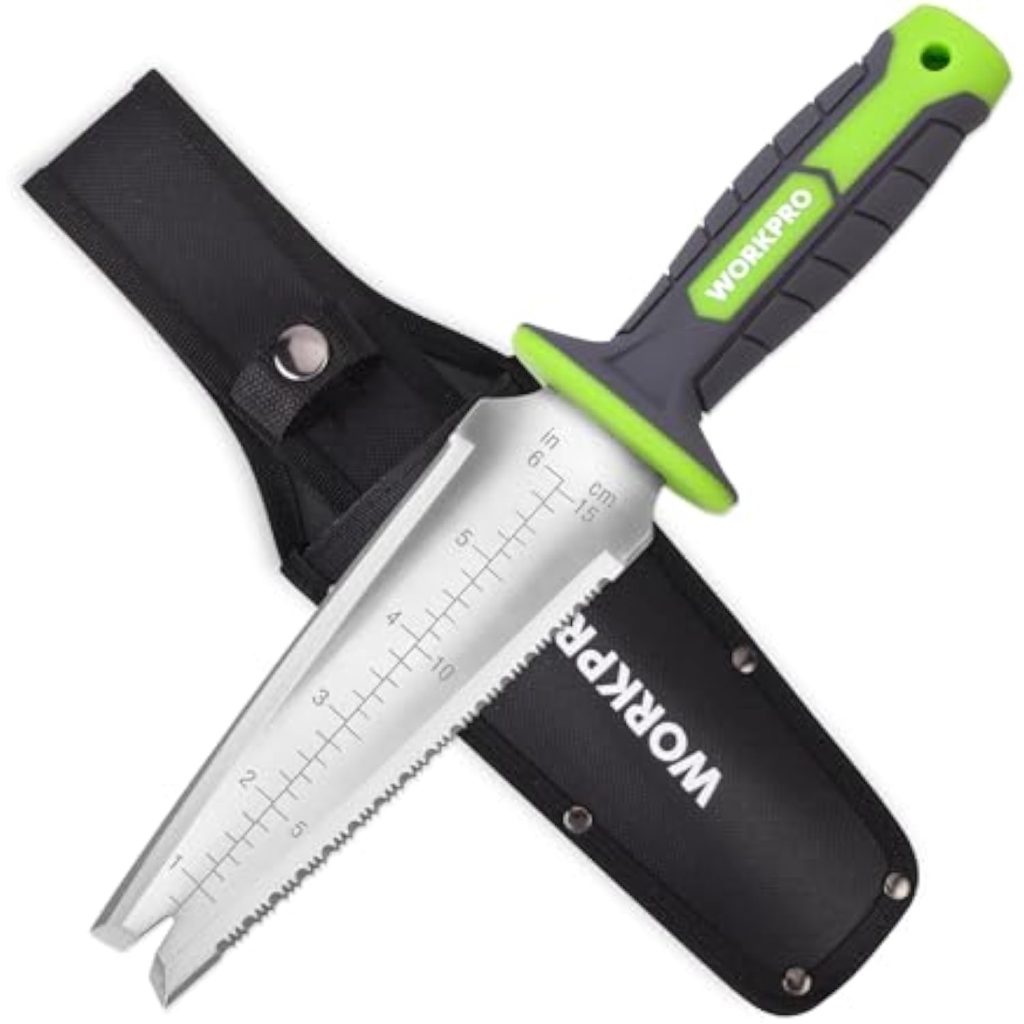
WORKPRO model W155003 is the straightforward low cost option. The stainless blade is 7 inches, double edged with a sharp side and a serrated side, with 6 inch measuring markings in inches and millimetres. The ergonomic TPR handle is non slip, has a hanging hole, and the knife ships with an Oxford cloth sheath with belt loops. Amazon Canada specifications list the item weight at 245 grams and the ASIN as B0BNHW7QN6.
Nothing here is exotic, and that is the appeal. It covers digging, weeding, root cutting and depth measured planting for a fraction of the premium models.
Real-world limitation: the Oxford sheath and TPR handle are practical rather than long life heirloom materials, and the maker does not publish a steel grade or a lifetime warranty in the sources checked.
Who should buy: beginners, allotment gardeners and anyone who wants a second hori hori for a shed or allotment bag without worrying about losing an expensive tool.
Score breakdown (editorial score, not a lab test): Blade 8.2 x 30%, Strength 7.8 x 25%, Handle 8.8 x 20%, Sheath and extras 8.2 x 15%, Value and warranty 9.6 x 10% = 8.4.
Spec source: WORKPRO W155003 retailer listing, checked October 2026.
10. Corona CT15409 Hori Hori Garden Knife
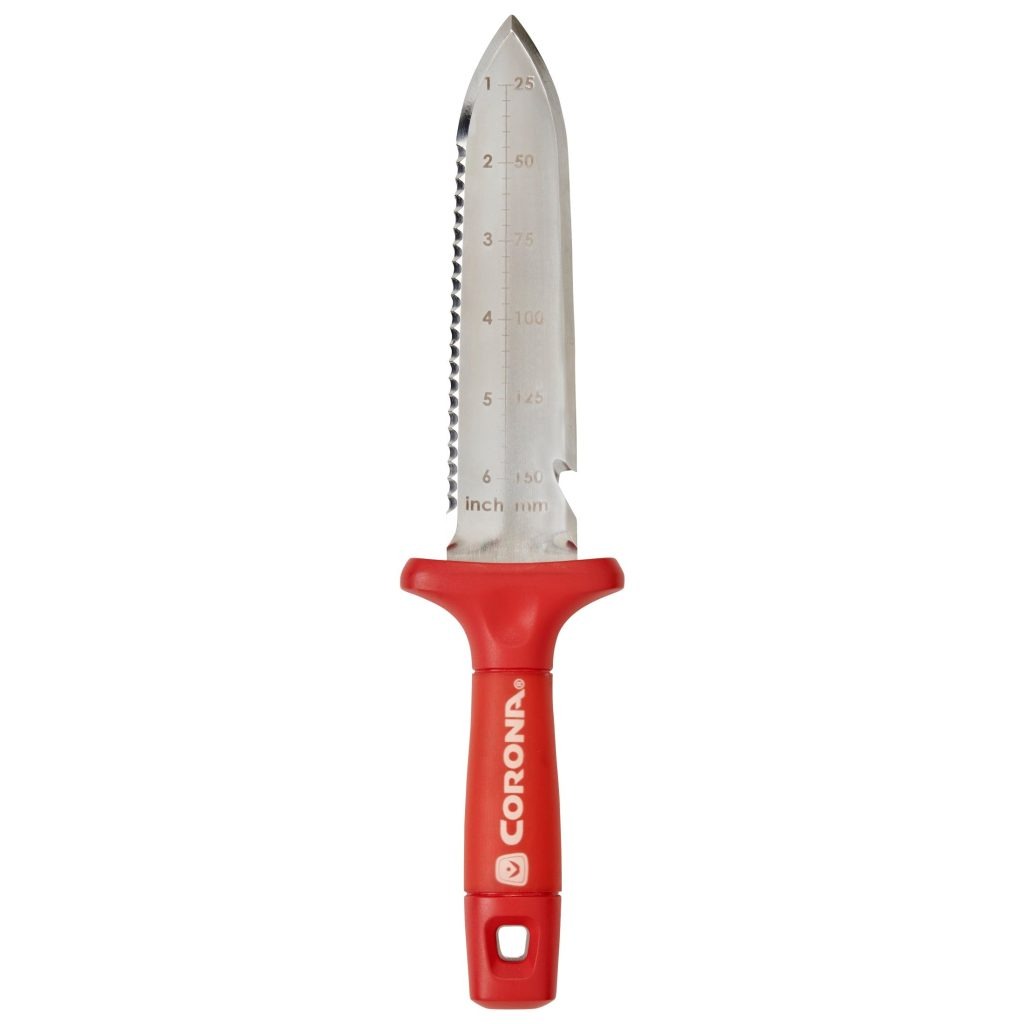
Corona takes the comfort route with its CT15409. The hardened stainless blade is 6 inches, with a serrated edge for root separation, depth markings for planting, and an anti blister ComfortGEL grip with a flanged base that protects the hand from slipping toward the blade. It is a light, approachable knife for beds, borders and containers.
For short, regular sessions, the gel grip is easy on the palm, and the shorter blade is less intimidating for new gardeners than a full 7.25 inch blade.
Real-world limitation: at least one long term user report describes the blade bending after a few weeks of use, so this is not the model for heavy prying in rocky or compacted soil. Treat it as a light to medium duty knife. No sheath is included per the maker’s catalogue, so budget for separate storage.
Who should buy: gardeners who mainly transplant, weed and divide in worked beds, and who put handle comfort ahead of prying strength.
Score breakdown (editorial score, not a lab test): Blade 8.2 x 30%, Strength 7.6 x 25%, Handle 9.6 x 20%, Sheath and extras 7.0 x 15%, Value and warranty 9.2 x 10% = 8.3.
Spec source: Corona Tools catalogue, CT15409, checked October 2026.
How to Choose a Hori Hori Knife
What Makes the Best Hori Hori Knife
Start with steel and tang, not with the sheath. Stainless steel suits most US gardeners because it resists rust in damp sheds and coastal air. Forged boron or higher carbon steel holds an edge longer but needs drying and oiling. A full tang, where the steel runs the full length of the handle, is the safer choice if you pry roots or work clay. A partial tang knife is lighter and fine for planting and light weeding in loose soil.
Blade length is a trade off. A 7 to 7.25 inch blade digs deeper holes for bulbs and larger transplants. A 6 inch blade is easier to control in containers and crowded borders. Check that the depth marks are etched or stamped, not just printed, because printed marks wear off in soil.
Handle fit is personal. Wood handles feel traditional and can be sanded or oiled, but they vary in shape and can be squared and tiring, as several models above show. Shaped composite and gel grips are usually kinder for long sessions and for gardeners with arthritis or smaller hands, provided the handle is long enough to fill your palm. A handguard or flanged base is worth having if you push the knife straight down into firm ground.
Finally, buy the sheath with the knife if you can. A hori hori is a real knife. A leather sheath looks traditional and lasts well if kept dry, a hard plastic sheath tolerates wet sheds better, and a cloth sheath is the budget option. Never carry the bare blade loose in a tote.
If you are building a first garden kit rather than buying tools one by one, our garden tool sets guide compares ready-made sets for beginners.

How to Use and Care for a Hori Hori
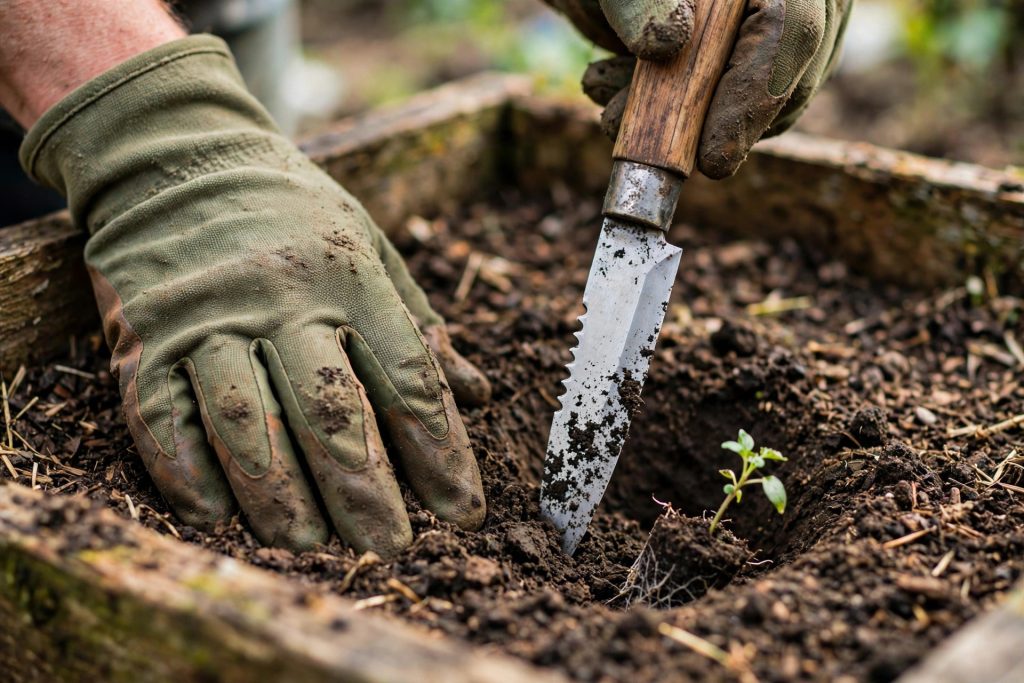
Use the straight edge for clean slicing, opening bags, trimming roots and cutting stems at the soil line. Use the serrated edge as a small saw for fibrous roots and thick stems, with short back and forth strokes rather than force. Use the concave face to scoop soil for seedlings and bulbs, and read the depth marks before you backfill, not after.
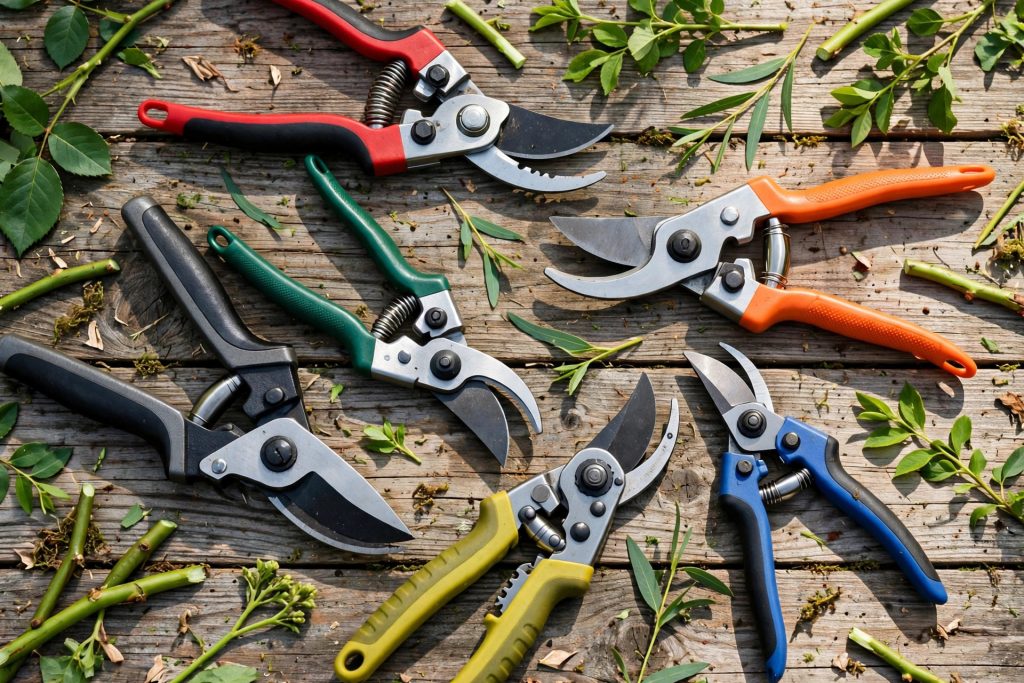
For thicker live stems, a dedicated cutting tool does cleaner work, and our pruning shears guide covers that choice.
For weeds with a taproot, push the blade down beside the root, lever gently, and lift from below the crown. For dividing perennials, work the serrated edge through the crown in sections instead of trying to split the whole clump in one cut.
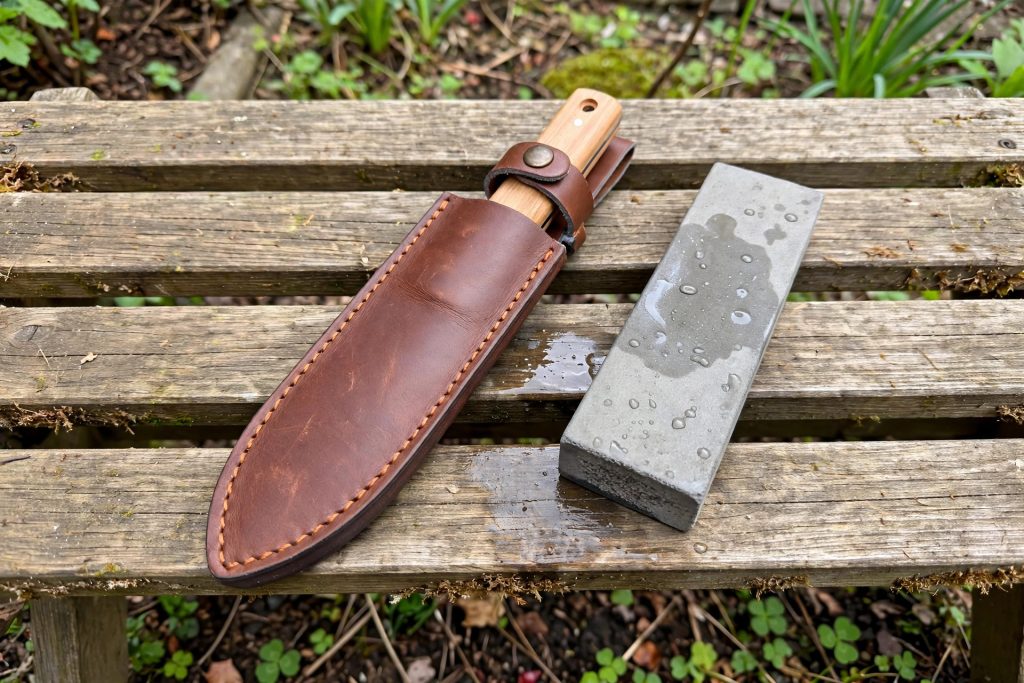
Clean the blade after each session. Knock off soil, wash if needed, dry fully, and store it in its sheath indoors. Sharpen the straight edge with a stone or rod as needed, and use a narrow rod for the serrations. Oil wood handles occasionally, and give boron or carbon style blades a light oil coat before storage. Keep the knife out of reach of children, and always re-sheath it before you walk across the garden.
Final Choice
For most gardeners, buy the Nisaku NJP650 first. It is light, accurate, proven over decades, and it does the core hori hori jobs, planting, weeding, dividing and root cutting, without extra weight or cost. If your soil is rocky and you pry hard, step up to the Barebones Ultimate for its full tang and pommel. If you use a soil knife every workday, the A.M. Leonard Deluxe, bought direct for its lifetime warranty, is the professional choice. Gardeners who want everything in one box should pick the Truly Garden kit, and gardeners who weed for hours should try the Fiskars forked tip and SoftGrip handle first. Whichever route you take, the best hori hori knife is the one that matches your soil, your hands and the jobs you do most.
References
- NISAKU NJP650 The Original Hori Hori Namibagata Japanese Stainless Steel Weeding Knife, 7.25-Inch Blade – supports the Nisaku blade length, steel, handle and depth mark claims.
- Bob Vila, Testing the Truly Garden Hori Hori Knife – supports the Truly Garden blade, full tang, guard, sheath and diamond rod claims.
- RONA, Fiskars 7-in Forged Steel Multipurpose Garden Hand Tool – supports the Fiskars blade, handle, weight and lifetime warranty specifications.
- Gear Patrol, The Best Hori Hori Garden Knives – supports the Barebones and Truly Garden blade, weight and handle specifications.
- Gardener’s Path, 5 of the Best Hori Hori Knives – supports general hori hori design, uses and buying considerations.
Frequently Asked Questions
What is a hori hori knife used for?
A hori hori is a Japanese soil knife used for digging planting holes, transplanting seedlings, weeding taproot weeds, dividing perennials, cutting roots and twine, and planting bulbs at a measured depth. Its concave blade works as a narrow trowel, one edge slices and the other saws.
What size hori hori knife is best?
A 7 to 7.25 inch blade suits most garden planting and bulb work. A 6 inch blade gives more control in containers and crowded borders. Choose the size by your main job, deeper digging favours the longer blade, close work favours the shorter one. Size aside, the best hori hori knife for you is the one you will carry and use every day.
Is stainless steel or carbon steel better for a hori hori?
Stainless steel is better for most gardeners because it resists rust and needs little care. Forged boron or higher carbon steel can hold an edge longer in gritty soil, but it must be dried and oiled to prevent rust. Pick stainless for low maintenance, forged steel for edge retention if you will maintain it.
Does a hori hori need a full tang?
A full tang is strongly recommended if you pry roots, work clay or lever stones, because the steel runs through the whole handle and is less likely to loosen. A partial tang knife is lighter and acceptable for planting and light weeding in loose, worked soil.
Can a hori hori replace a trowel?
For most planting, transplanting and bulb work, yes. The concave blade scoops soil like a narrow trowel and the depth marks help with consistent planting. A wide trowel still moves more soil for larger holes, and a fork or spade is better for turning whole beds.
How do you sharpen and store a hori hori knife?
Sharpen the straight edge with a whetstone or sharpening rod, and use a narrow diamond rod for the serrated edge. Clean and dry the blade after use, store it in its sheath indoors and out of reach of children, and oil wood handles and non stainless blades occasionally.

Thesis Link : https://saulibrary.edu.bd/daatj/public/uploads/BAU200601_19-Pp_5.pdf
- 10 Best Hori Hori Knives for Digging, Weeding and Planting - October 23, 2026
- How to Kill Crabgrass and Keep It From Coming Back - October 22, 2026
- Lawn Fertilizer Schedule by Grass Type - October 21, 2026