
Crabgrass has a way of making a good lawn look tired by late summer. The light green patches spread low and wide, the edges by the driveway turn thin, and by September those finger-like seed heads are everywhere. If you are reading this in October, the most useful truth comes first: in most northern and central states, the crabgrass in your lawn right now is already dying. It is a summer annual. First frost ends it.
That does not mean October is a wasted month. It is actually the month that decides next summer. The plants that set seed this fall leave thousands of seeds in the soil. The thin patches they exploited stay thin unless you repair them. And the spring pre-emergent that actually prevents crabgrass only works if you time it by soil temperature, not by a calendar date you picked in winter.
If you want to know how to get rid of crabgrass and keep it from coming back, work in that order. Confirm the identification. Stop the seed where plants are still green. Repair the openings. Then set the spring plan. Southern and warm-season lawns are the exception in fall: where crabgrass is still actively growing, the post-emergent guidance in Step 3 still applies, with the label cautions stated there.
Quick Checklist: What to Do Now
Use this short version if you are standing in the yard today.
- Confirm it is crabgrass before you treat anything. Check the low, spreading habit, the light green color, and the finger-like seed heads.
- Do not spray dying fall plants in the North. Once frost has browned them, a post-emergent does nothing useful.
- Where plants are still green and making seed heads, mow and bag instead of mulching the clippings back, and hand-pull small patches while the soil is moist.
- Repair thin patches now on cool-season lawns. Rake out dead crabgrass, overseed, and keep the seedbed moist.
- Feed the existing turf in fall, following a soil test where you have one, so the lawn closes up before winter.
- Mark the spring trigger, not a spring date. Pre-emergent goes down before soil holds about 55 degrees F for several days in a row.
How to Identify Crabgrass
Crabgrass is a warm-season summer annual in the genus Digitaria. Two species cover most home lawns. Smooth crabgrass, Digitaria ischaemum, is smaller and mostly hairless. Large crabgrass, also called hairy crabgrass, Digitaria sanguinalis, is bigger, with dense hairs on the leaves and sheaths. University of Minnesota Extension notes that both turn reddish purple on older leaves and sheaths, and both root at the stem nodes where they touch soil. That rooting habit is why a single plant can cover so much ground. Good crabgrass identification is the whole game at this stage, because the look-alikes, especially Bermuda grass and quackgrass, are perennials that need completely different handling.
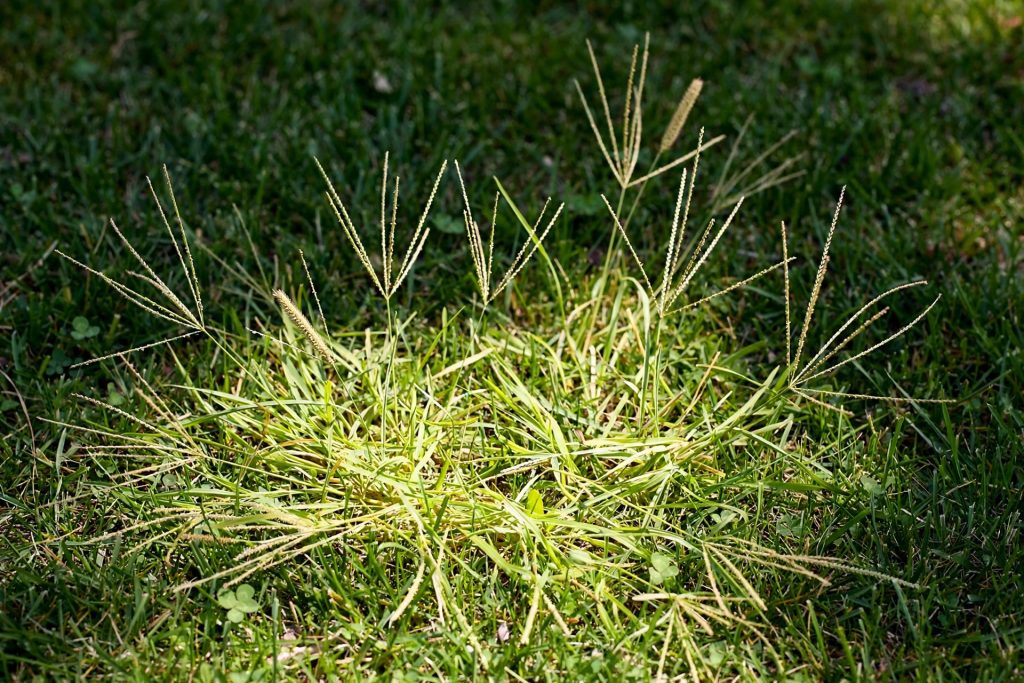
Look for four signs together, not just one. The color is lighter green than the turf around it. The growth habit is prostrate: stems creep sideways instead of growing upright. The seed heads, when present, split into two to six finger-like spikes at the top of the stem, each about 2 to 6 inches long. And the patch is worst in the places crabgrass loves: thin turf, hot edges beside driveways and sidewalks, compacted soil, and areas mowed short or watered lightly and often.
| Trait | Smooth crabgrass | Large or hairy crabgrass |
|---|---|---|
| Hairs | Mostly smooth, a few small hairs possible on young blades | Dense hairs on leaves and sheaths |
| Size | Smaller, typically up to about 1 foot across a mature plant | Larger, plants can spread up to about 3 feet |
| Base and older leaves | Often turn reddish purple with age | Often turn reddish purple with age |
| Seed heads | Finger-like spikes, 2 to 6 inches long | Finger-like spikes, 2 to 6 inches long |
Two common look-alikes are worth separating before you treat. Goosegrass grows flatter, with a pale, silvery center and tougher stems. Dallisgrass is a perennial: it comes back from the same crowns each year, has coarser seed heads, and pulls up with deep roots attached. Crabgrass, by contrast, returns only from seed. If the plant you pull roots at the nodes, spreads like a mat, and shows hair at the base, you are almost certainly looking at crabgrass.
The Crabgrass Year
| Season | What crabgrass is doing | What the homeowner should do |
|---|---|---|
| Spring | Seeds germinate when soil holds about 55 to 60 degrees F for 7 to 10 days | Put pre-emergent down before that 55 degree trigger, and water it in |
| Early summer | Young plants tiller and spread into thin areas | Hand-pull small patches, spot-treat young plants only if needed |
| Late summer | Plants make finger-like seed heads and drop seed | Mow and bag where seed heads are present, keep mowing height up |
| Fall | Plants die with first frost in most of the country | Clean up, overseed thin patches, feed existing turf, plan spring timing |
| Winter | Only the seed remains, viable in soil for several years | Leave the lawn alone, note the worst patches for spring |
One plant is not the problem. The seed bank is. Iowa State University Extension notes that a single crabgrass plant can produce thousands of seeds, and Minnesota Extension puts the upper end at up to 150,000 seeds per plant in a single season. That seed does not all sprout next spring. It stays viable in the soil for years, which is why crabgrass is a multi-year project and why the repair step in this guide matters as much as any spray.
Step by Step: Kill It and Close the Door
Work through these six steps in order. Steps 1, 2, 4 and 5 are the fall steps for most readers. Step 3 is for active summer growth, or for southern lawns where plants are still green now. Step 6 is next spring.
Step 1: Confirm It Is Crabgrass Before Treating Anything
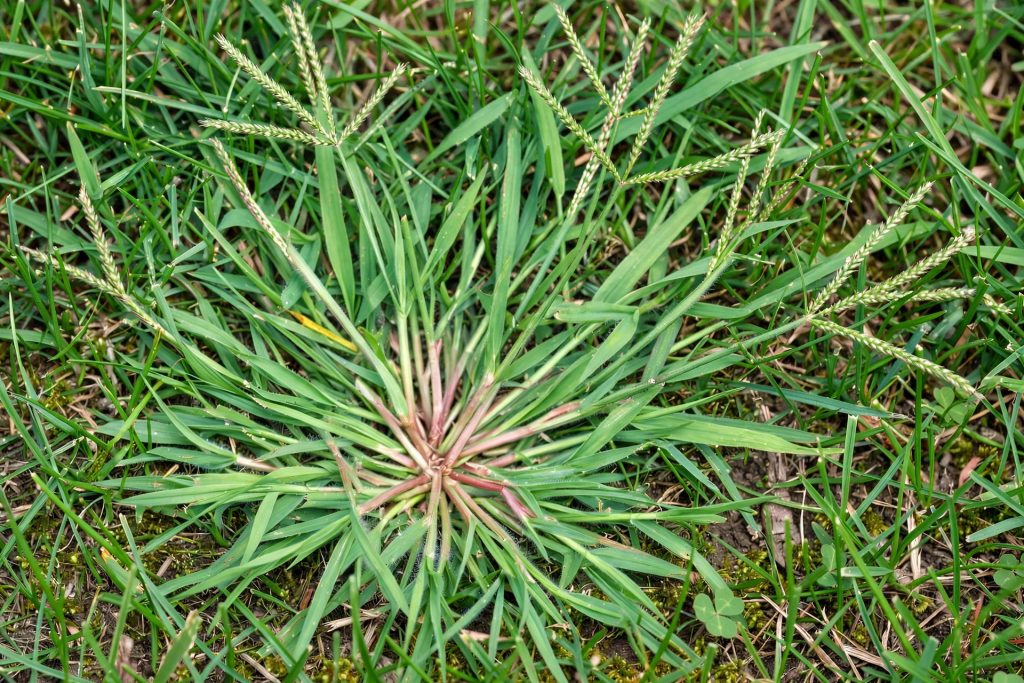
Kneel at the edge of a patch and pull one plant gently. Crabgrass stems spread sideways and root at the nodes, so a mature plant lifts as a low mat with several rooted points, not as a single upright clump. Check for hairs at the base to separate smooth from large crabgrass, look for the finger-like seed heads, and note the light green color against your turf. Photograph the patch if you plan to compare next spring. That ten-minute check is what keeps you from spraying a perennial weed, or a thin-lawn problem, with a crabgrass product that was never going to fix it.
If the patch in front of you might be Bermuda grass rather than crabgrass, work through the side-by-side comparison in our earlier crabgrass guide before you treat anything.

Step 2: Hand-Pull Small Patches While the Soil Is Moist
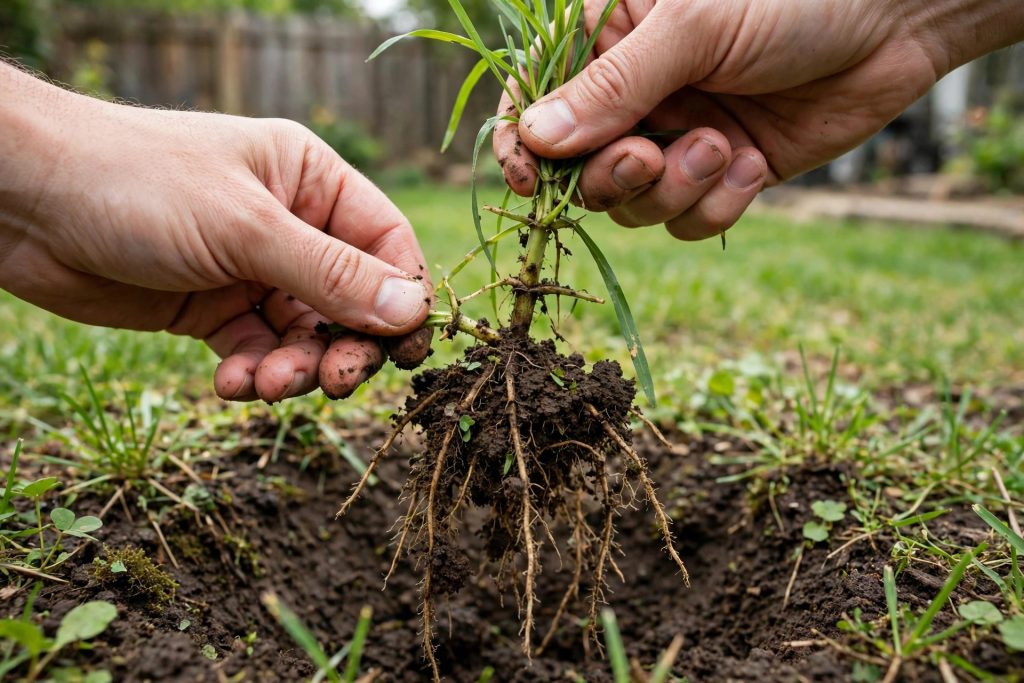
For a handful of patches, pulling beats spraying. Water the area first, or work the morning after rain, when the soil releases roots cleanly. Grip the plant at its base, work your fingers under the rooted nodes, and lift the whole mat. Shake the soil back into the hole, firm the surrounding turf down, and drop the plant in the trash, not the compost, if it carries seed heads. Iowa State notes the honest limit of this method: it is labor intensive, it does not stop new seed already in the soil from germinating, and one missed plant can still set thousands of seeds. Pulling works when the infestation is small and you are persistent about the seed heads.
Step 3: For Active Summer Infestations, Spot-Treat Young Plants Only
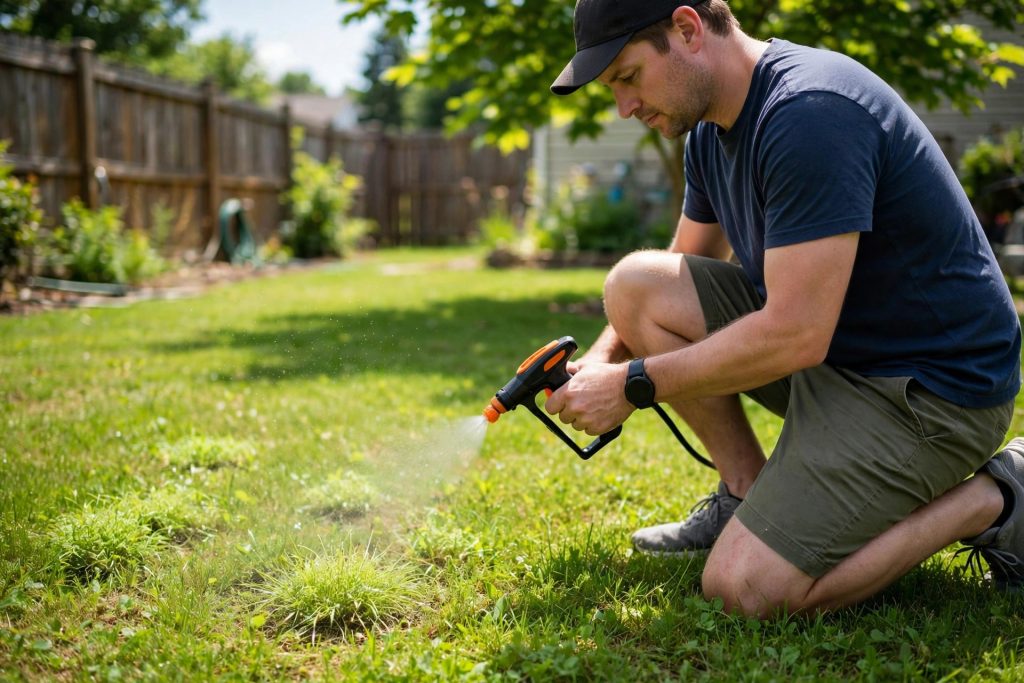
Post-emergent products work on plants that are up and growing, and extension guidance is consistent that they work best while plants are young and small. By mid to late summer, large, heavily tillered plants are much harder to control, and a single application often disappoints. South Dakota State University Extension names quinclorac as an option for established plants and gives specific rules: apply in daytime temperatures about 45 to 85 degrees F with adequate soil moisture, expect reduced control if rain or irrigation falls within 24 hours, and note that it works best on plants with fewer than 2 tillers or more than 4 tillers. Plants with 5 or more tillers may need a second application. Applications must be at least 14 days apart, with no more than 2 per year. Do not mow for 2 days before or after, and do not apply to newly seeded areas until the lawn is well established, roughly 4 to 6 weeks after emergence or after the third mowing. Clippings from the first 3 mowings after application should not be used as mulch or compost in gardens.
The product label tells the same story from the other side. On the Drive XLR8 label, crabgrass in the 2 to 4 tiller stage may not be completely controlled in a single pass and needs a sequential application, and optimum control comes before the second tiller or as the weeds mature, applied with a methylated seed oil adjuvant. That weak middle stage is exactly why one casual spray at the wrong growth stage so often disappoints.
Read that paragraph as a label warning, not a recipe. Always follow the product label for your grass type. Label safety differs by turf species, and warm-season lawns such as St. Augustine and centipedegrass are a known sensitive case in homeowner guidance. If the label does not list your grass, do not use the product on it. When in doubt, frame the choice this way: check the label for your grass type first, then check the tiller stage and the weather, then spot-treat instead of blanketing the whole lawn.
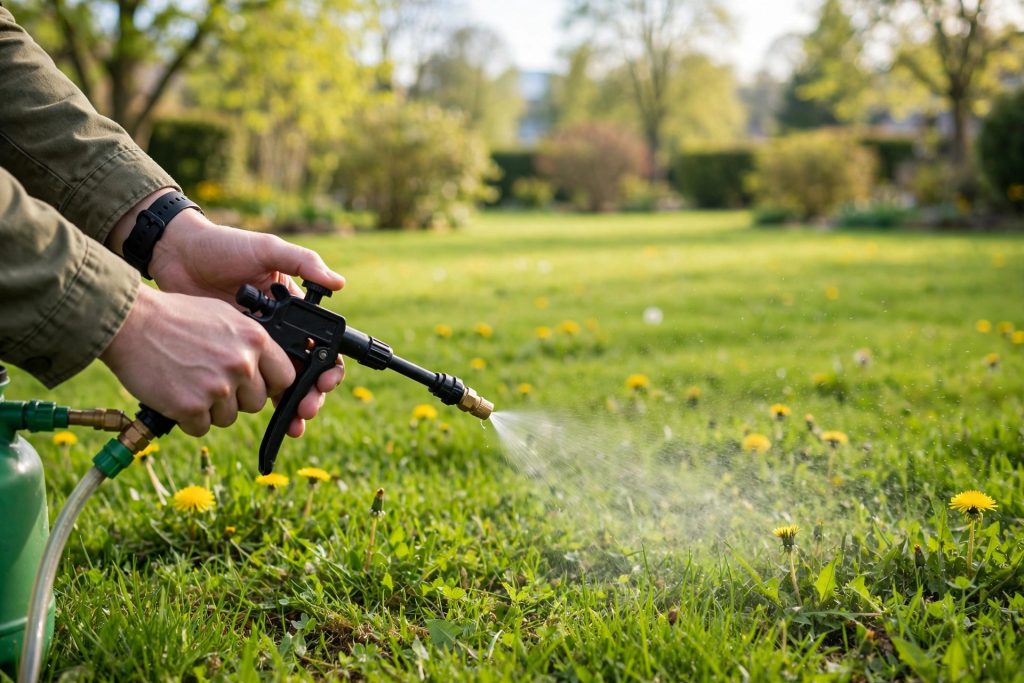
Step 4: Stop the Seed Rain: Mow and Bag Where Seed Heads Are Present
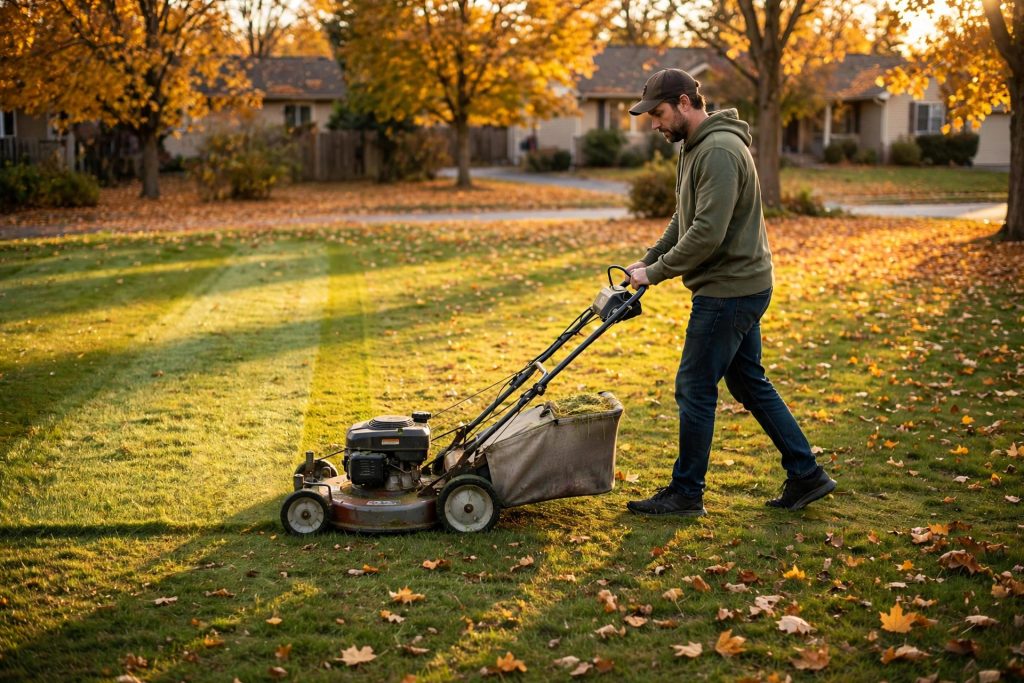
If seed heads are standing, your mower setting matters more than any bottle. Mulching those clippings returns the seed to exactly the thin soil where it germinates best. For the last mowings over infested patches, bag the clippings and dispose of them with household trash where local rules allow, not in a home compost pile that never gets hot enough to kill seed. Keep the mowing height up while you do it. Iowa State recommends maintaining turf at 3 to 4 inches, and Minnesota notes that raising height to at least 3 inches shades the soil and reduces germination. A short cut in seed season does two harms at once: it stresses the turf and it lets light reach the seed.
Step 5: Repair the Patch: Rake Out, Overseed, and Keep Moist
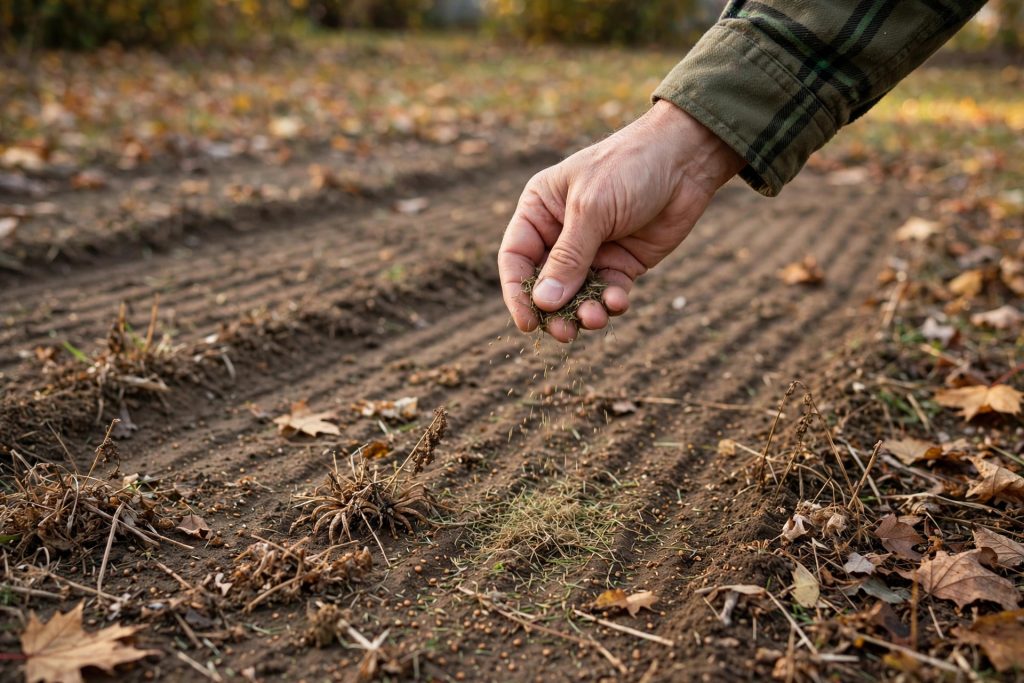
Crabgrass did not create the opening by itself. It used an opening that was already there. Rake out the dead crabgrass mat so seed can touch soil, loosen the top layer lightly, and spread grass seed suited to your region and light conditions. Press the seed into contact with the soil, then keep the top layer moist with light watering until germination. Fall is the prime window for cool-season lawns: soil is warm, weed pressure is falling, and seedlings get fall and spring growth before summer heat. That fall repair is the single most durable crabgrass control in this whole guide, because a dense stand next spring leaves far fewer lit, bare spots for crabgrass seed to use. Warm-season lawns should hold major overseeding for their spring and early summer window, apart from planned winter ryegrass overseeding where that practice fits.
Step 6: Next Spring, Put Pre-Emergent Down Before Soil Holds 55 Degrees
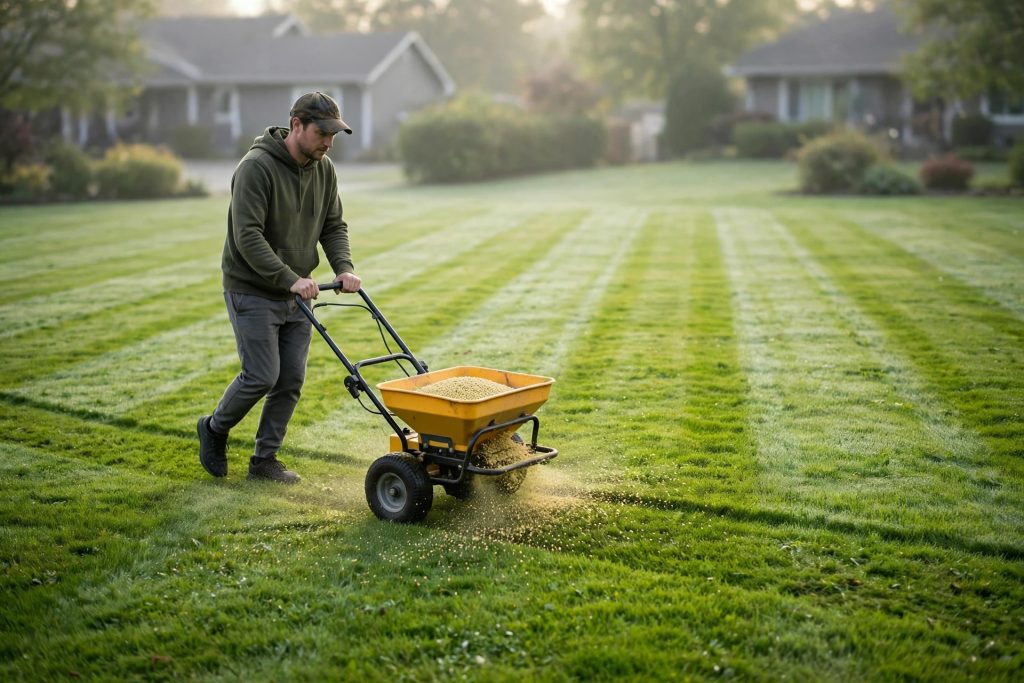
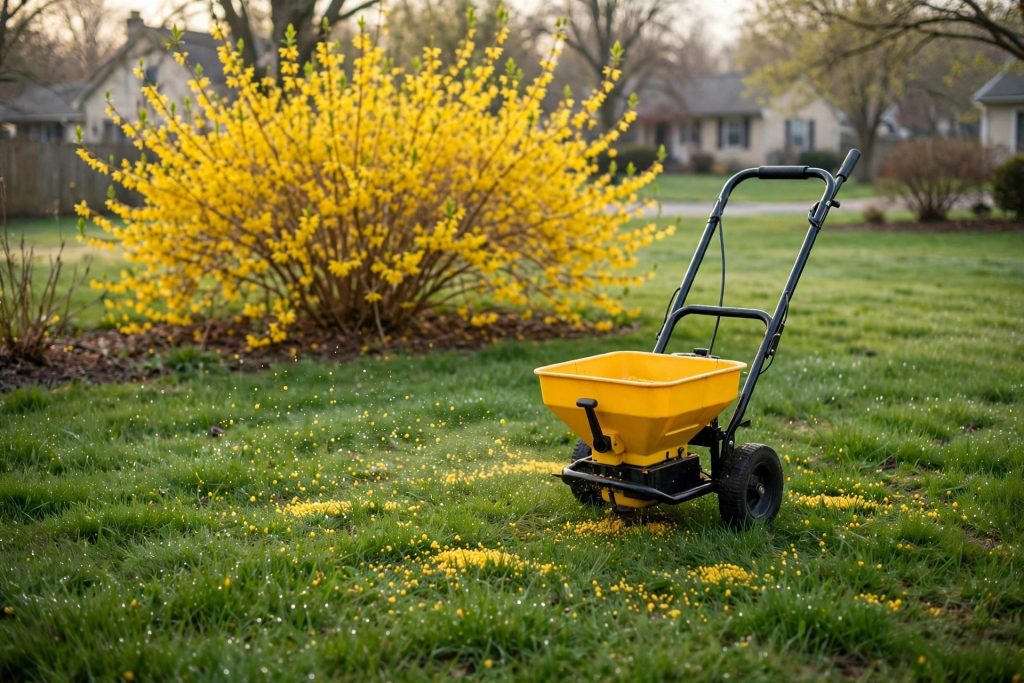
Pre-emergent herbicide prevents germination. It does not kill plants that are already up. That one fact sets the timing. Illinois and Minnesota extension guidance both anchor the application to soil temperature: apply before soil temperatures reach and hold about 55 degrees F. Forsythia bloom is a rough visual cue gardeners use, not a rule. A cheap soil thermometer, or your state extension soil temperature map, is more reliable than any calendar date, because a warm March and a cold March demand different weeks. Water the application in as the label directs, so the product moves into the germination zone instead of sitting on the surface.
Plan the seeding conflict now, in fall, so spring does not surprise you. Most pre-emergents also block desirable grass seed. Iowa State states the exception plainly: siduron is the pre-emergent that can be used when sowing grass seed in spring. If you know a thin area will need spring seeding, either repair it this fall instead, or plan on the siduron case and verify it on the label. Illinois Extension also advises against bundling pre-emergent with early spring fertilizer as a routine: separate the jobs and fertilize later in spring, following your soil test.
Pre-Emergent vs Post-Emergent: The Difference That Decides Everything
| Question | Pre-emergent | Post-emergent |
|---|---|---|
| When is it applied? | Spring, before germination, before soil holds about 55 degrees F | Summer, on plants already up, best while young and small. |
| What does it control? | Seeds as they germinate, not existing plants | Existing plants, not the seed still in the soil. |
| Effect on grass seed | Blocks most desirable seed too, siduron is the stated exception | Quinclorac and similar products must wait until new lawns are well established. |
| Biggest timing mistake | Applying after germination has started | Spraying large, mature, heavily tillered plants once and expecting full control. |
| Fall use for crabgrass | Not the fall tool for crabgrass, save it for spring | No use on frost-killed plants in the North, limited use where plants stay green in the South. |
If you remember one row, make it the first. A product applied in the wrong window is not a weak product. It is the right chemistry asked to do a job it cannot do.
Keeping It From Coming Back
The long-term fix is cultural, and it is where crabgrass prevention is actually won. All three extension sources used for this guide agree on it: maintain a thick, healthy lawn, and crabgrass struggles to find light and space.
Mow at 3 to 4 inches for most cool-season lawns, and never scalp the edges crabgrass loves. The taller canopy shades soil and cuts germination. Fertilize existing turf in fall, guided by a soil test, because fall feeding builds density where it counts before winter. Iowa State makes that fall feeding point directly, and it pairs with fall overseeding of thin spots.
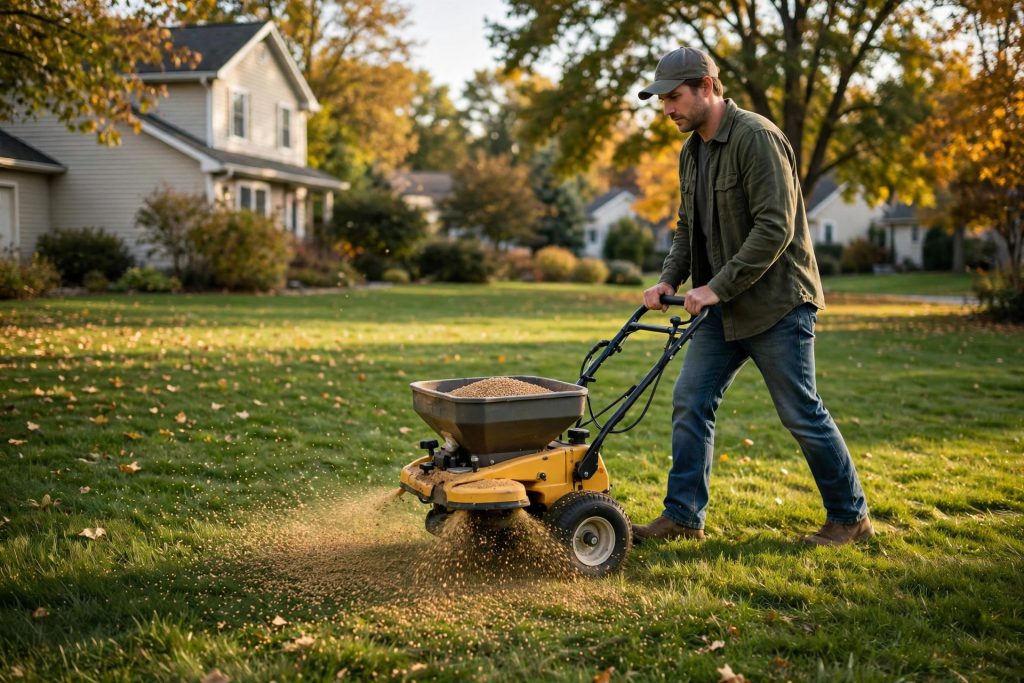
Water deeply and less often, rather than lightly every day. Light, frequent watering keeps the surface moist for crabgrass seed and keeps turf roots shallow. Core-aerate compacted hot spots beside drives and walks, topdress where the soil is thin, and manage thatch so water and seed reach soil. None of this is dramatic. That is the point. Crabgrass is an opportunist. Remove the opportunity, season after season, and the pressure falls even though seed remains in the soil.
What NOT to Do in October
Do not spray post-emergent on frost-killed crabgrass. The plant is dead, the chemistry has no living target, and the money is gone.
Do not put pre-emergent down in fall to get ahead on crabgrass. Crabgrass germinates in spring. A fall application aimed at crabgrass will have largely dissipated by the germination window it was meant to cover. Fall pre-emergent has other, separate targets in some programs, but crabgrass prevention is a spring job timed at 55 degrees.
Do not seed straight after a spring pre-emergent and expect both to work. Apart from the siduron exception, the product that stops crabgrass seed also stops your grass seed. Choose the window deliberately: fall seeding, or spring prevention, or the labeled siduron case.
Do not mow short to tidy up before winter on a crabgrass lawn. The thin, lit soil you leave behind is next spring’s germination bed.
Common Mistakes
Treating by calendar instead of soil temperature is the first. A fixed April date is early in a cold spring and late in a warm one. The 55 degree soil trigger travels with the weather.
Mowing too short is the second, and it compounds all year. Short turf lets light reach the soil surface, heats the germination zone, and thins the stand crabgrass needs to invade.
Light, frequent watering is the third. It trains shallow roots in your turf and a permanently damp surface for weed seed.
Spraying mature mid-summer plants once is the fourth. Extension guidance expects weak control on large, tillered plants, and the quinclorac rules on tiller stage, repeat timing, and mowing gaps exist precisely because one casual pass is not the labeled method.
Skipping the repair is the fifth and most expensive. Killing this year’s plants without overseeding the patches leaves the same openings, slightly larger, for next year’s seed, which is already in your soil in the thousands.
Final Thoughts
How to get rid of crabgrass is really two jobs with two different clocks. This fall, the job is seed and soil: confirm the weed, bag the seed heads where plants are still green, pull the small patches, and overseed the thin ground so your own grass, not next year’s crabgrass, owns those spots. Next spring, the job is timing: pre-emergent down before soil holds 55 degrees, watered in, with the seeding conflict planned instead of discovered.
Do both, and the second year is visibly easier. The seed bank is still there, seeds stay viable for several years, so do not expect a clean finish in one season. Expect less pressure, fewer patches, and a lawn thick enough that crabgrass has to fight for every inch. That is what keeping it from coming back actually looks like.
About the author: This guide was written by Sayed Zahur Ahmed, founder and editor of Agribloom. He holds an MSc in Plant Pathology from Bangladesh Agricultural University and ran his own plant nursery from 2007 to 2024, so the weed and turf advice here grows out of daily nursery work as well as research. Every timing and product claim in this guide was checked against the university Extension sources listed in the References below before publication, and the guide is reviewed again when that guidance changes.
References
- University of Minnesota Extension, Crabgrass: Supports the two species (smooth Digitaria ischaemum and large Digitaria sanguinalis), light green color and reddish purple older leaves, seed heads 2 to 6 inches, up to 150,000 seeds per plant, germination at about 55 degrees F, pre-emergent before about 55 degrees, post-emergent best on young plants, and mowing height at least 3 inches. Checked live on 2026-10-22.
- Iowa State University Extension, How to Control Crabgrass: Supports thousands of seeds per plant, fall fertilization of existing turf, seeding thin spots, mowing at 3 to 4 inches, germination beginning at 55 degrees F soil temperature, the siduron exception for spring seeding, post-emergent best at the 3 to 5 leaf stage, and hand pulling limits. Checked live on 2026-10-22.
- South Dakota State University Extension, Late-Season Crabgrass Control: Supports the quinclorac rules used in Step 3: daytime temperatures 45 to 85 degrees F, adequate soil moisture, rain or irrigation within 24 hours reducing control, best results under 2 tillers or over 4 tillers, second application for 5 or more tillers at least 14 days apart with no more than 2 per year, no mowing for 2 days before or after, waiting 4 to 6 weeks or until after the third mowing on new seedings, and not using the first 3 mowings of clippings as mulch or compost. Checked live on 2026-10-22.
- University of Illinois Extension, Managing Crabgrass in Lawns: Supports germination at soil temperatures above 55 to 60 degrees F for 7 to 10 consecutive days continuing to about 95 degrees, invasion of thin and compacted areas, the seeding conflict and siduron exception, separating pre-emergent from early spring fertilizer, and cultural control through dense turf, aeration and overseeding. From the 2026-10-21 advance brief, sources checked 2026-10-21.
Frequently Asked Questions
When does crabgrass germinate?
Crabgrass germinates in spring when soil temperatures reach and hold about 55 to 60 degrees F for 7 to 10 consecutive days, and germination can continue until soils reach about 95 degrees F. That soil temperature trigger, not a fixed calendar date, is what should time your spring pre-emergent application.
Will crabgrass die in winter?
Yes. Crabgrass is a summer annual. The plants die with the first frost in most of the United States. What survives the winter is the seed those plants dropped, which stays viable in the soil for several years. Winter kills the plant, not the problem, which is why fall seed control and spring prevention matter.
What kills crabgrass without killing the lawn?
For small patches, hand pulling while the soil is moist kills the plant without any risk to turf. For larger active infestations in summer, a selective post-emergent labeled for your exact grass type can kill crabgrass while sparing labeled turf, with quinclorac the option extension guidance names for established plants. Label safety differs by species, and sensitive warm-season grasses are the key caution, so the label for your grass decides, not the front of the bottle.
When should I put down pre-emergent for crabgrass?
In spring, before crabgrass germinates, which means before soil temperatures hold about 55 degrees F. Apply too late and early seeds have already sprouted. Apply far too early and the product can dissipate before late germination ends. Use a soil thermometer or your extension soil temperature map, water the application in as the label directs, and treat forsythia bloom only as a rough visual cue.
Can I seed after applying pre-emergent?
Usually not in the same spring window. Most pre-emergent herbicides block desirable grass seed as well as crabgrass seed. Iowa State Extension names siduron as the exception that controls crabgrass without stopping turfgrass seed germination. For most lawns the cleaner plan is to seed thin areas in fall, when pre-emergent from spring has broken down, and reserve spring for prevention.
Why does crabgrass keep coming back every year?
Three reasons work together. One plant can leave thousands of seeds, and those seeds stay viable in the soil for several years. The lawn still has thin, hot, compacted or short-mowed areas where seed can germinate in light. And prevention, if it is used at all, is often timed by calendar instead of the 55 degree soil trigger. Thickening the turf in fall and timing pre-emergent by soil temperature attack the first two reasons directly.

Thesis Link : https://saulibrary.edu.bd/daatj/public/uploads/BAU200601_19-Pp_5.pdf
- 10 Best Hori Hori Knives for Digging, Weeding and Planting - October 23, 2026
- How to Kill Crabgrass and Keep It From Coming Back - October 22, 2026
- Lawn Fertilizer Schedule by Grass Type - October 21, 2026