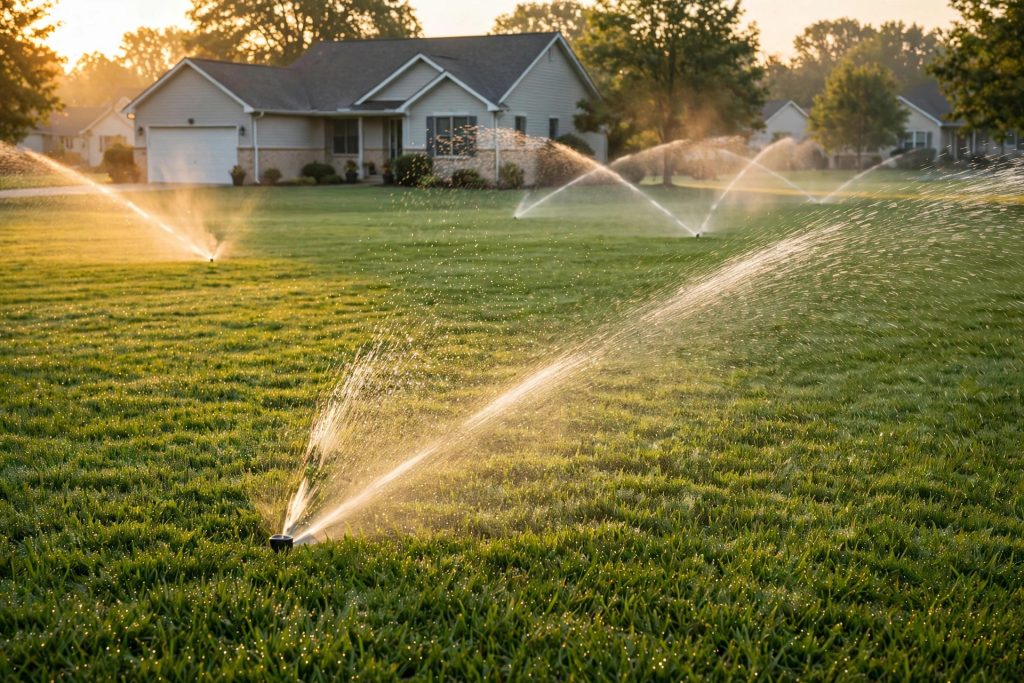

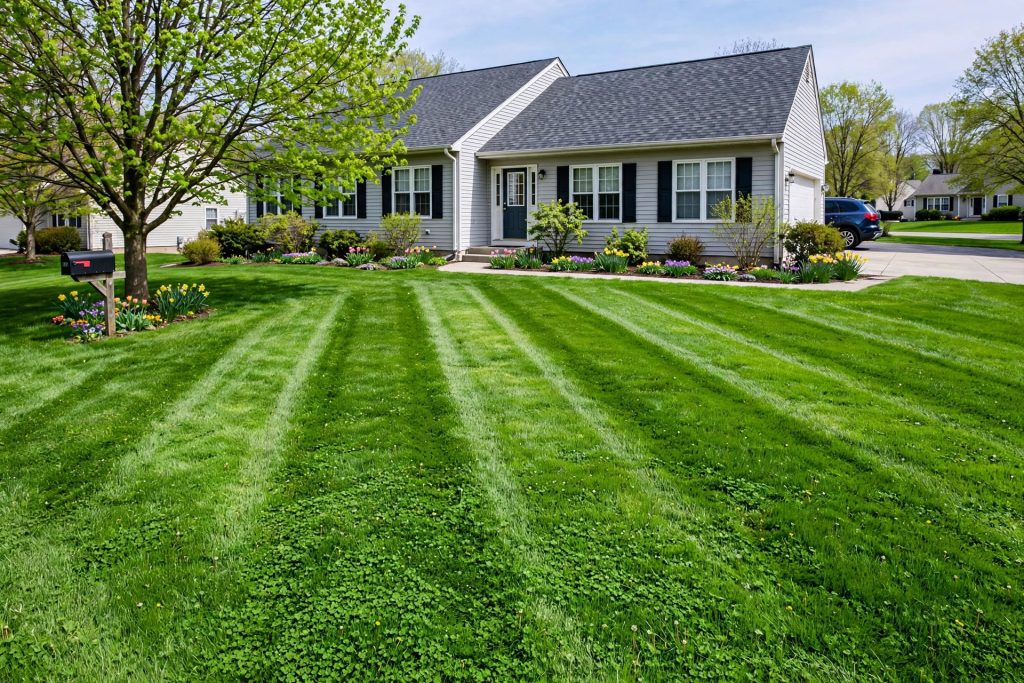
A large lawn changes the watering problem completely. On a small yard, almost any sprinkler finishes the job in one or two moves. On a quarter acre or more, a weak sprinkler turns watering into an all morning relay: drag the hose, wait, drag it again, and still find dry crescents along the edges and a swamp in the middle. The edges fade first, then the thin spots invite weeds, and by August the lawn looks patchy no matter how often you water.
The best lawn sprinkler for a big yard is the one that covers the most ground evenly per placement, at the water pressure your house actually delivers. That is how this guide judges all ten picks: coverage area, throw distance, pressure needs, and how even the pattern stays from the head to the outer edge. A headline coverage number means little if your pressure cannot drive it, or if half the water lands in the first ten feet.
Below are the ten sprinklers we would shortlist for large US lawns in 2026: two traveling sprinklers that water while you do something else, two impact sprinklers built for distance, a quiet gear drive, four oscillating models for clean rectangular coverage, and one low pressure wobbler that solves the problem most guides ignore.
A note on how we picked: Agribloom is written by a plant pathologist (BSc Agriculture, MSc in Plant Pathology). We compared manufacturer and major retailer specifications for coverage, throw, pressure range and pattern control, and cross checked them against owner feedback on the same listings. We did not hands on test these sprinklers, and we will not pretend otherwise. Where listings conflict, we print the smaller figure and say so. No prices: just verified specifications and honest trade offs.
Every model was scored out of 100 against five factors:
| Factor | Weight | What we checked |
|---|---|---|
| Coverage | 30% | Claimed area checked against pressure, and flagged where listings disagree |
| Water efficiency | 25% | Pattern uniformity, overspray control and adjustment range |
| Durability | 20% | Body material, drive type and warranty terms |
| Ease of use | 15% | Setup, adjustments and moving or storing the unit |
| Value | 10% | Price against the coverage and build on offer |
Scores use manufacturer specifications and patterns in verified owner feedback. We did not bench test these sprinklers, and no score here comes from hands-on testing.
Quick Picks: All 10 Sprinklers Compared
| Product | Best For | Type | Max Coverage | Our Verdict |
|---|---|---|---|---|
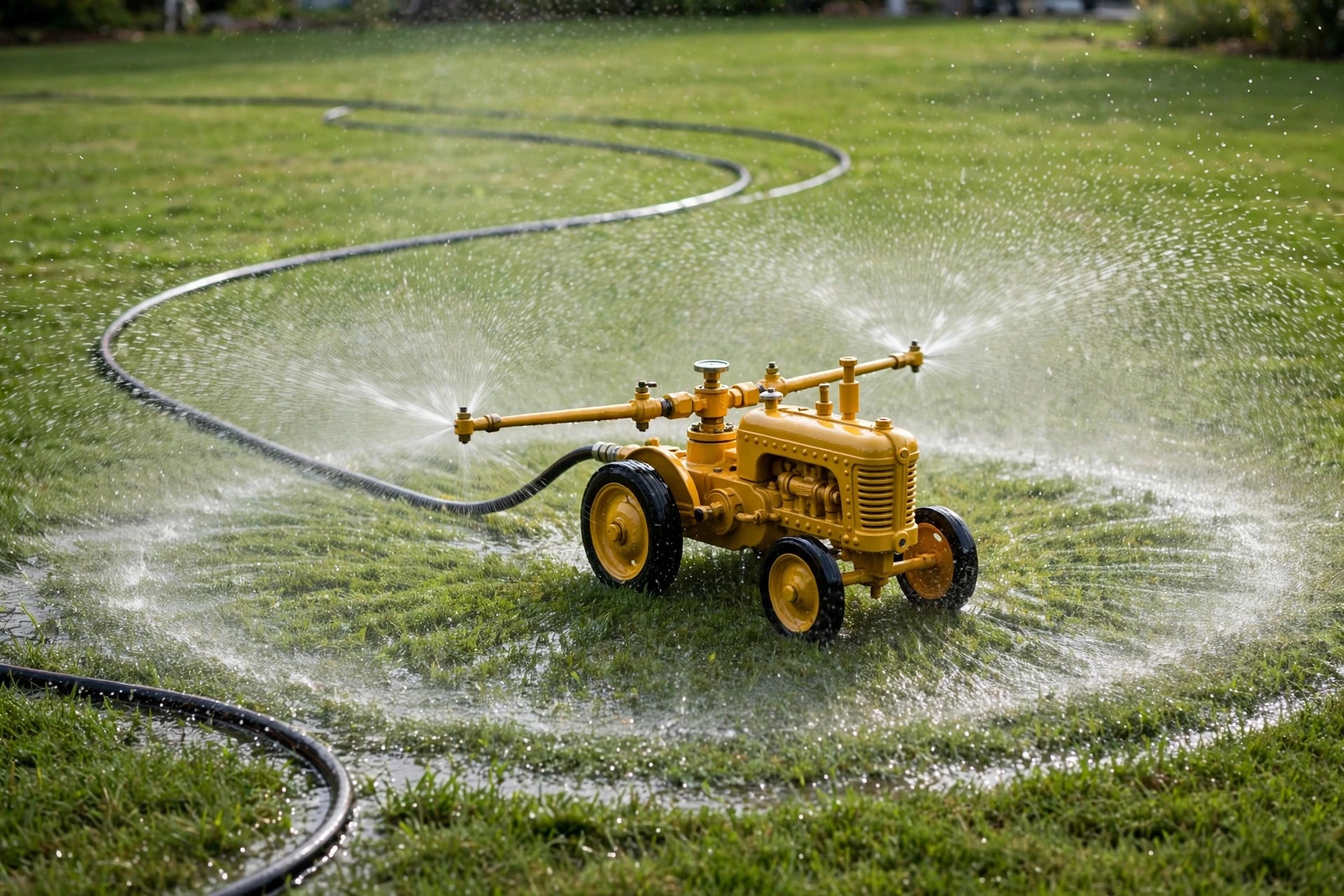 Nelson Rain Train Traveling Sprinkler | Large open lawns, unattended watering | Traveling | Up to 13,500 sq ft per run | Excellent |
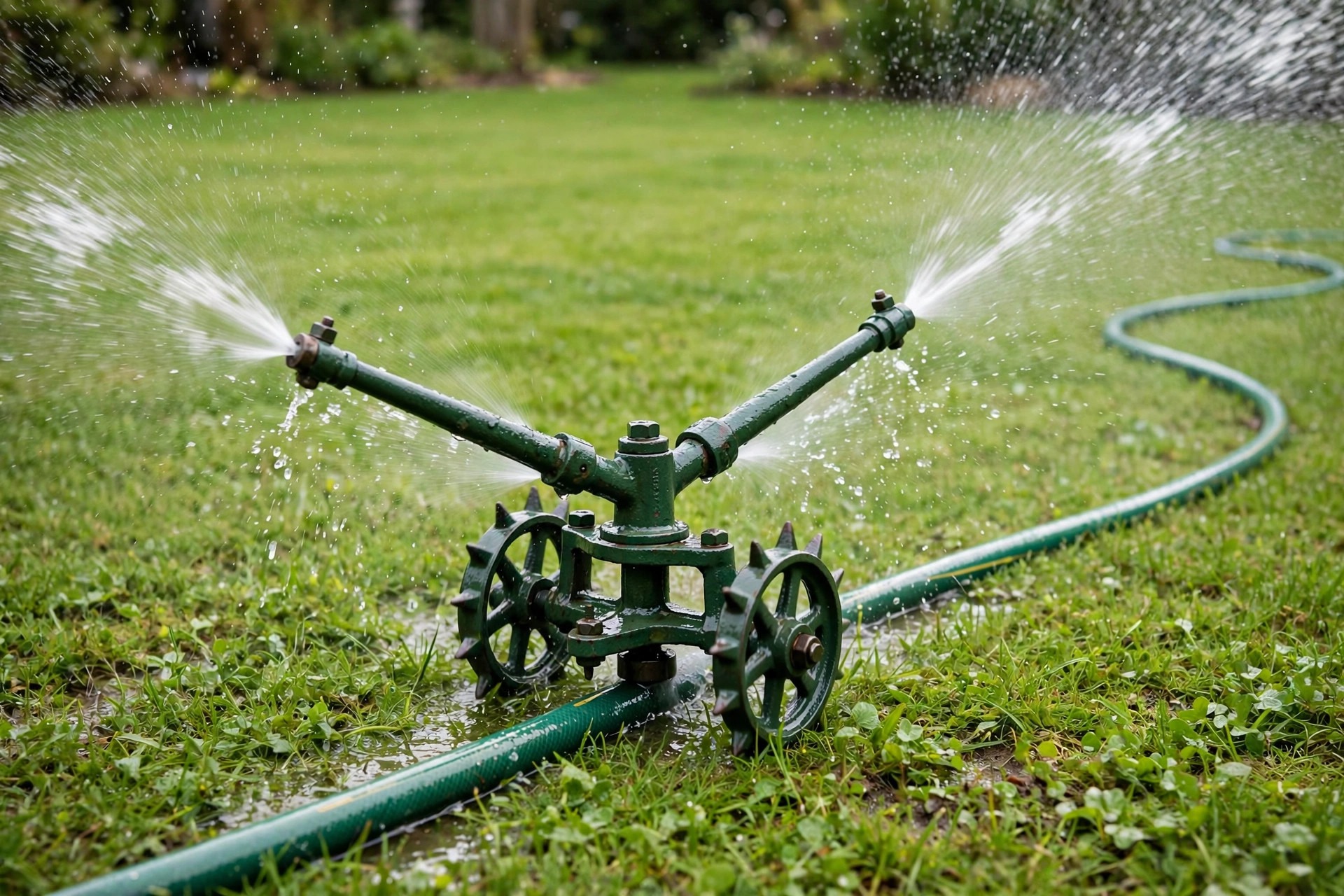 Orbit Traveling Sprinkler (58322) | Same job, easier to find in stores | Traveling | Up to 13,500 sq ft per run | Excellent |
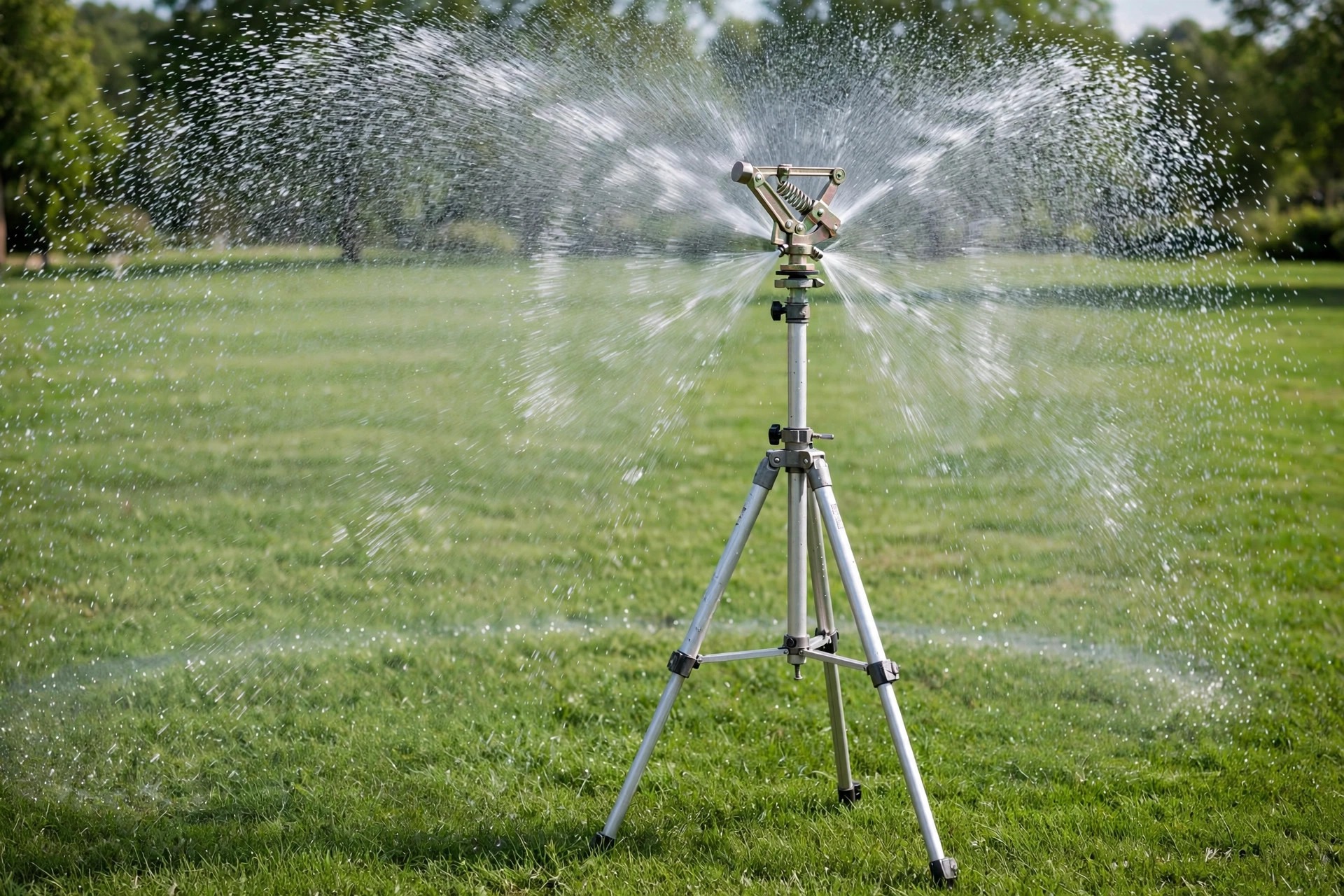 Orbit Zinc Impact Sprinkler on Tripod (56667N) | Biggest single fixed circle | Impact, tripod | Up to 5,670 sq ft full circle | Very good |
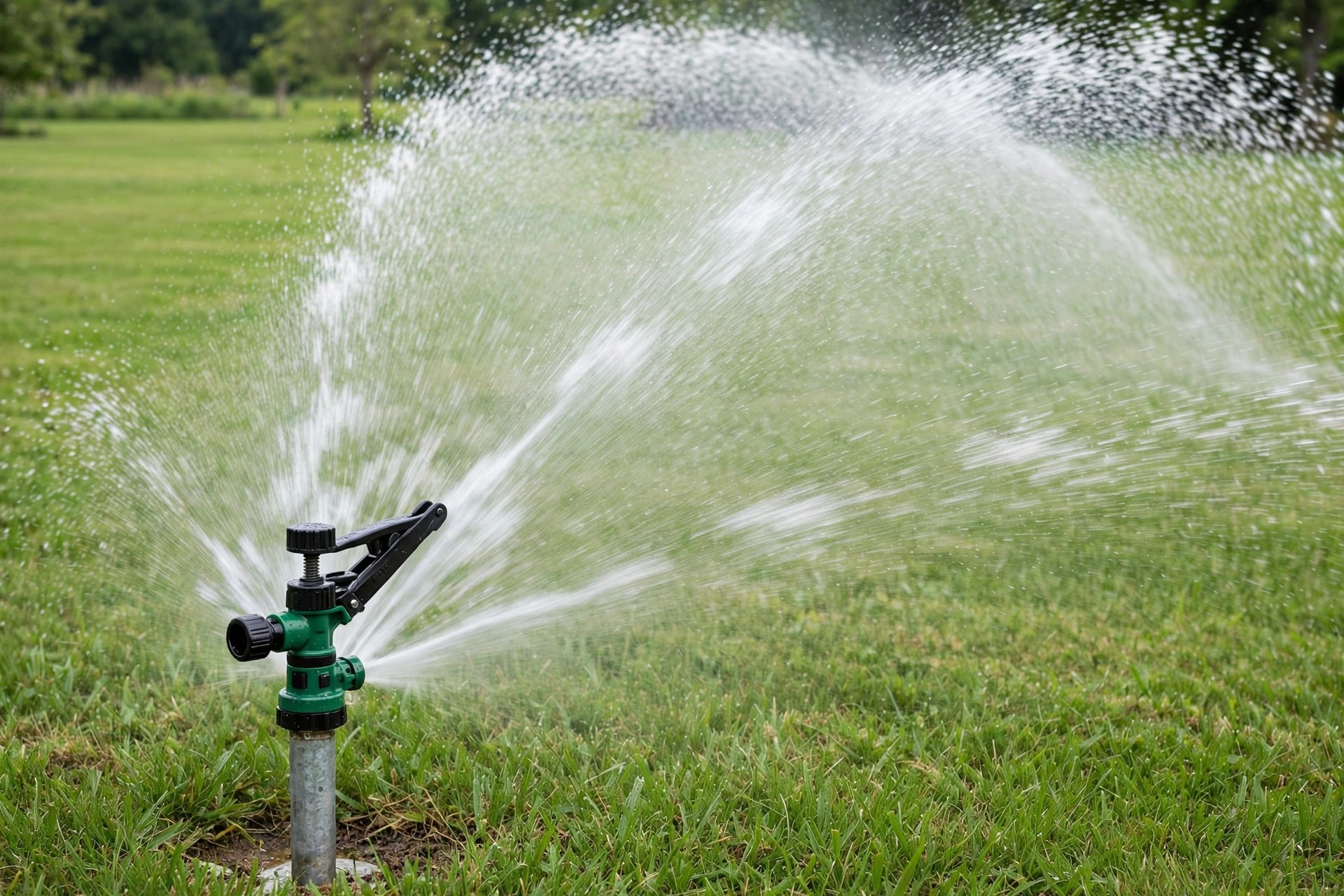 Rain Bird P5RLSP Impact Sprinkler on Spike | Dirty or well water, large lawns | Impact, spike | Up to 5,281 sq ft full circle | Very good |
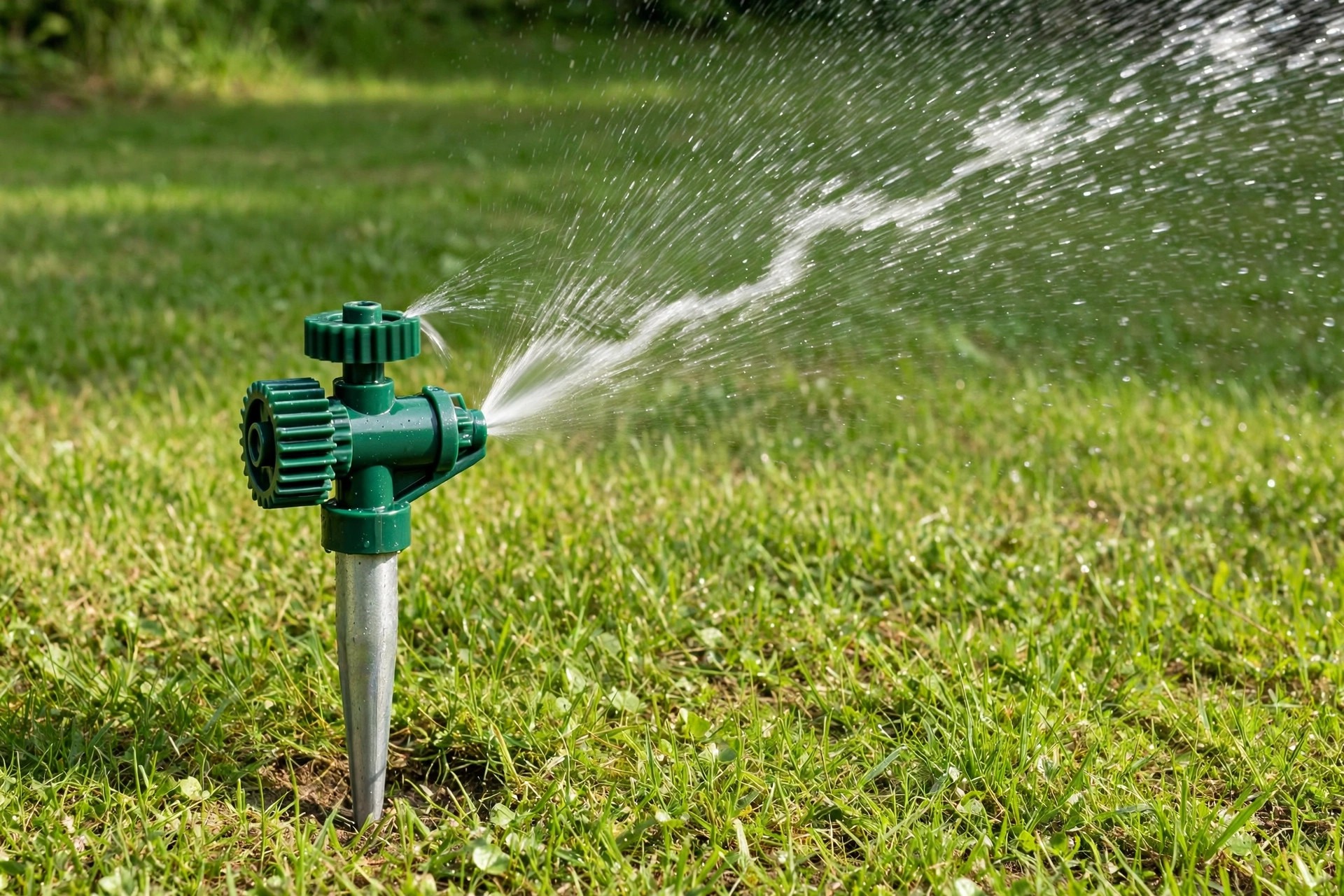 Orbit H2O-6 Gear Drive Sprinkler on Spike (56565) | Quiet watering, chaining two heads | Gear drive | Up to about 5,024 sq ft full circle | Good |
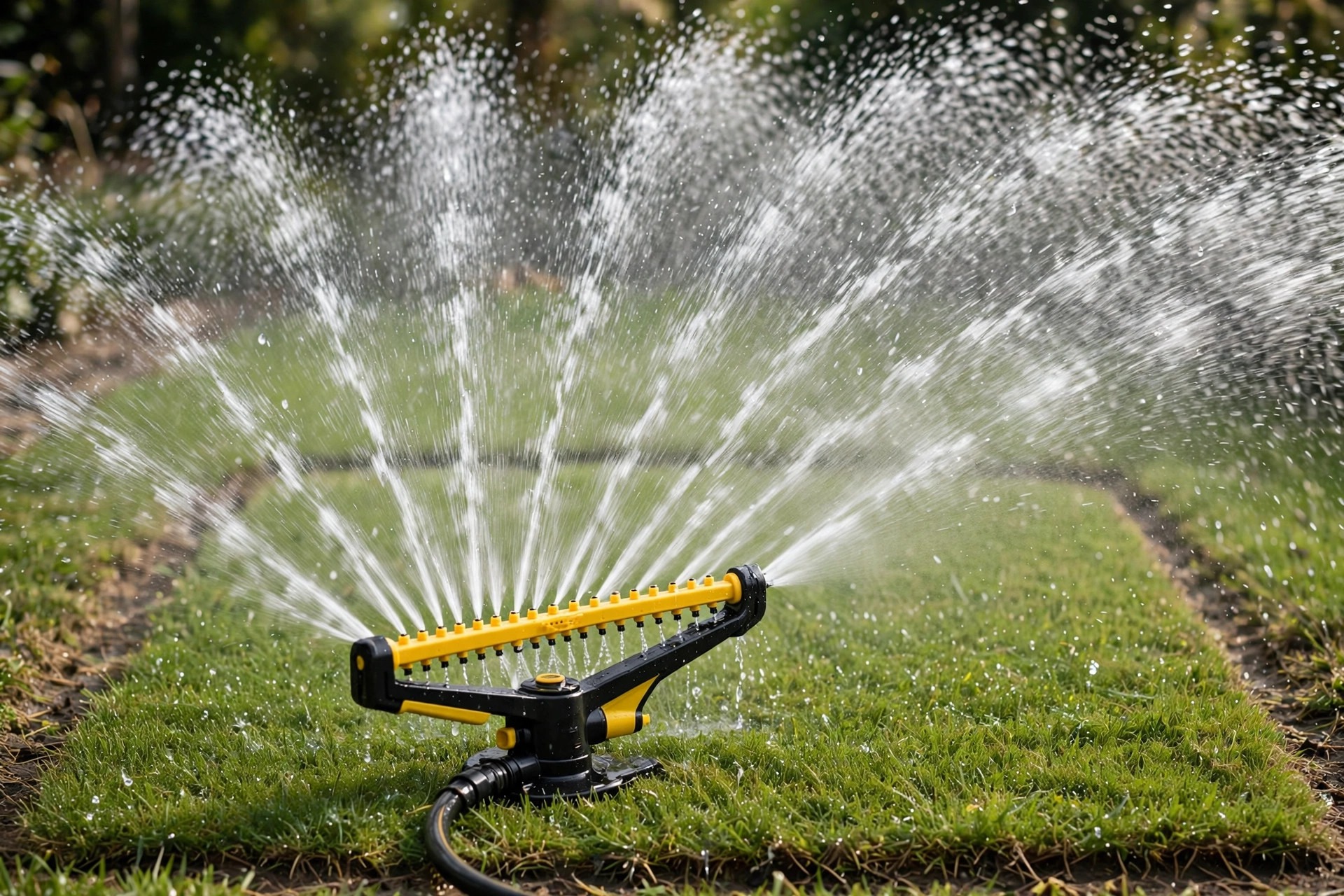 Melnor XT Turbo Oscillating Sprinkler | Rectangular sections, precise edges | Oscillating | Up to 4,500 sq ft | Very good |
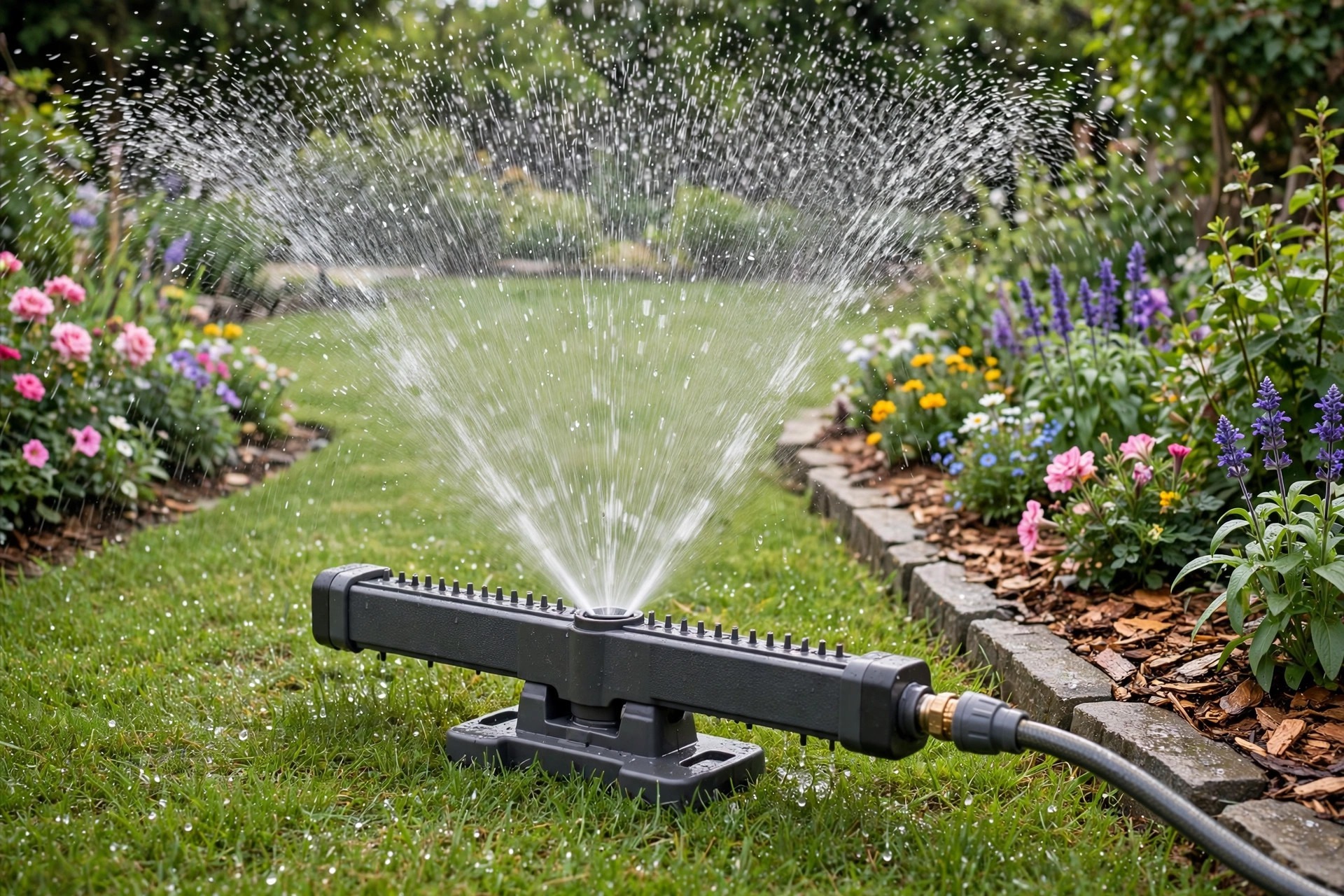 Eden Turbo Oscillating Sprinkler (94112) | Gentle watering near beds | Oscillating | Up to 4,499 sq ft at 40 PSI | Good |
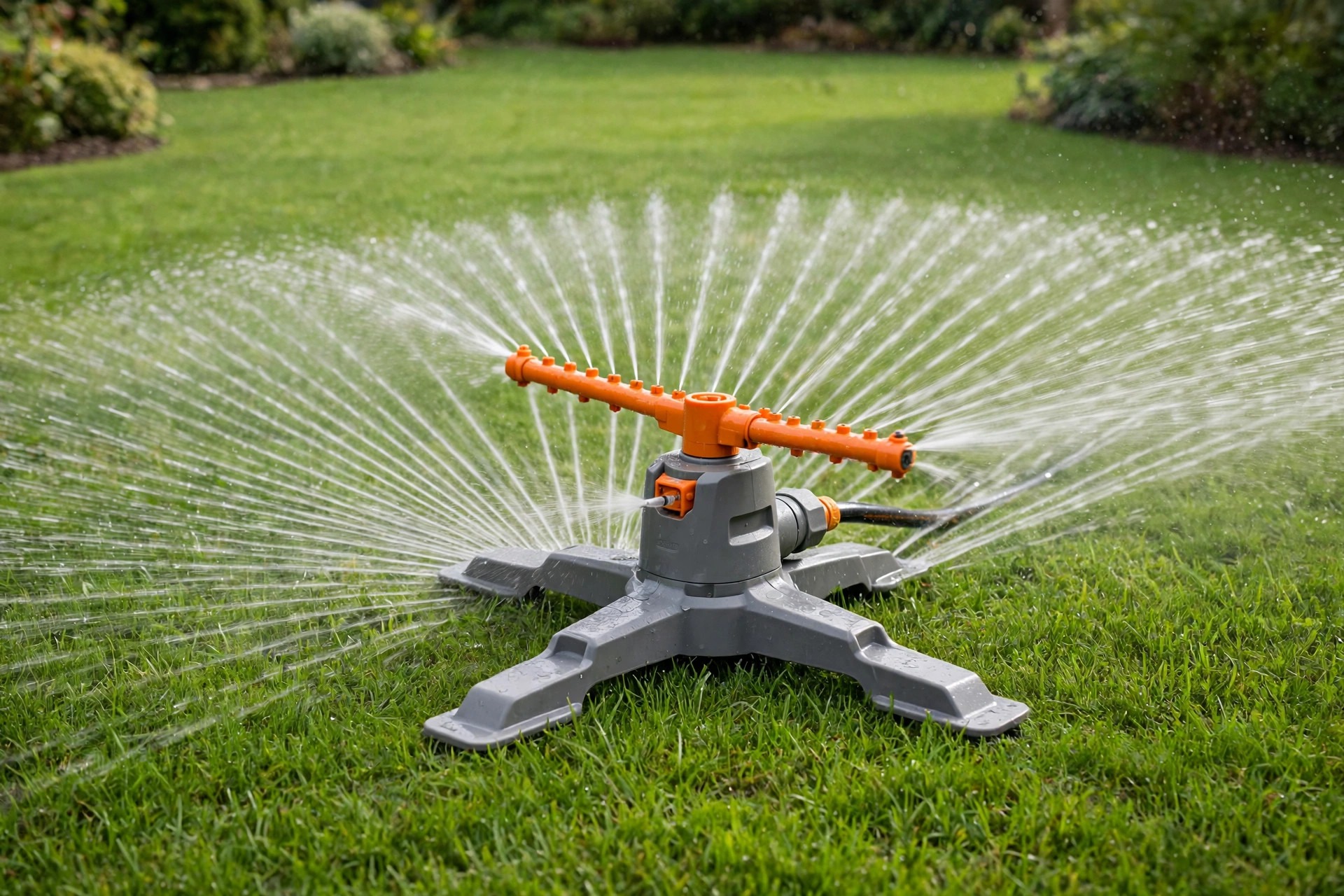 Gardena AquaZoom L Oscillating Sprinkler | Most precise rectangular coverage | Oscillating | About 300 to 3,770 sq ft | Very good |
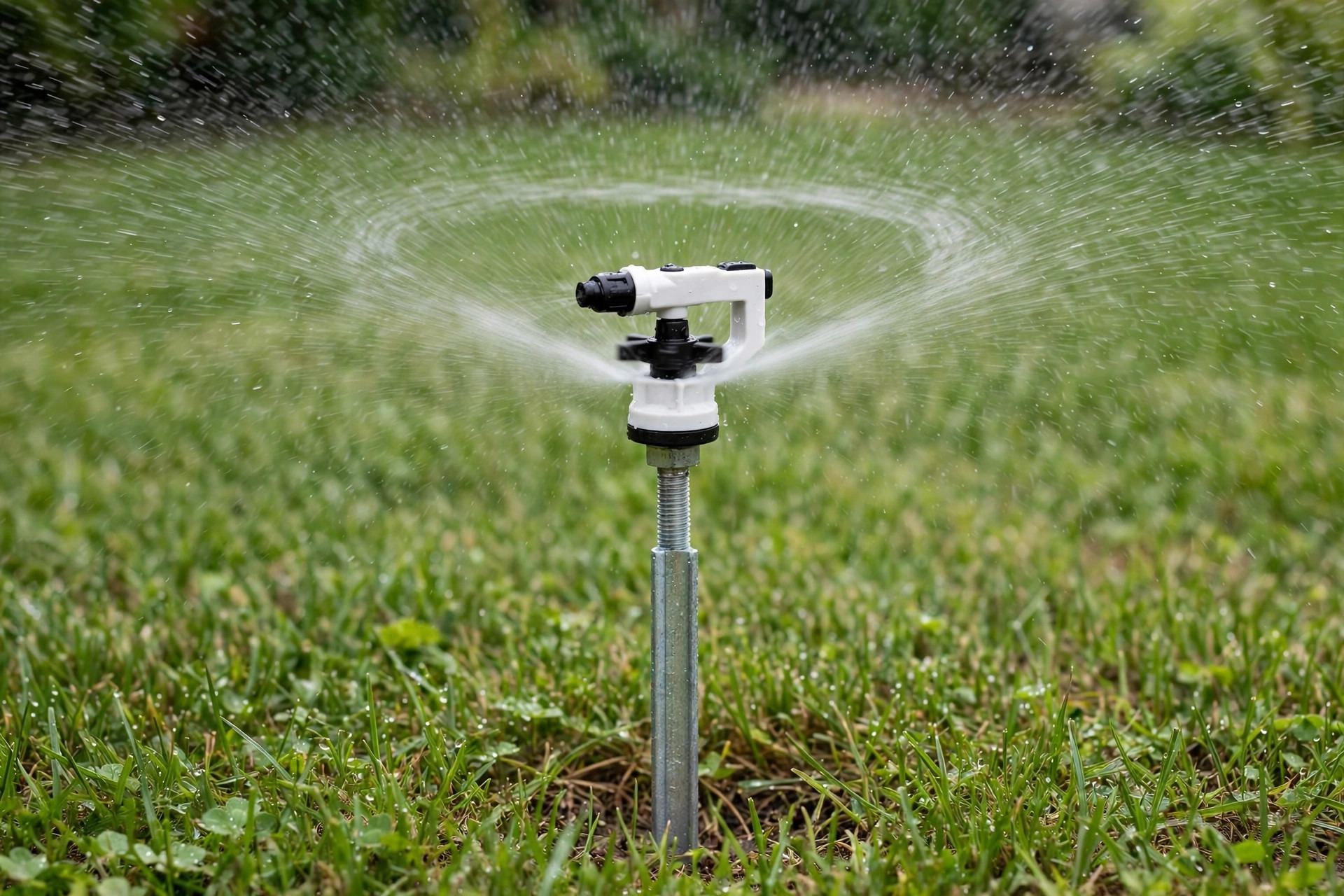 Senninger Xcel Wobbler (head, on riser or sled) | Low water pressure homes | Wobbler, rotary | About 2,400 sq ft per placement | Very good |
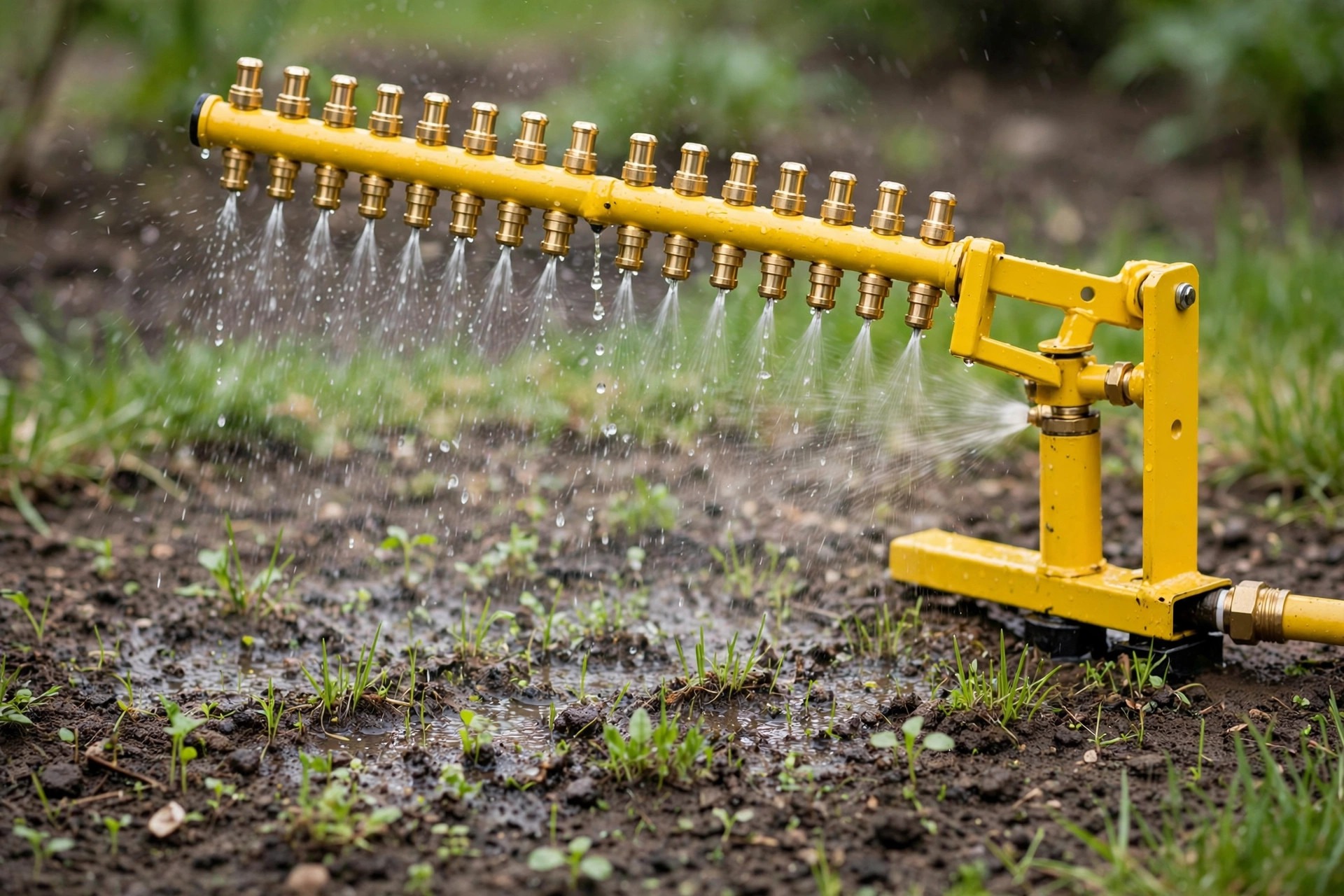 Dramm ColorStorm Oscillating Sprinkler | New grass seed, build quality | Oscillating | Up to 3,036 sq ft | Good |
Quick Recommendation: Which Sprinkler Should You Buy?
- Largest open lawns, set and forget: Nelson Rain Train, it walks the hose line and covers up to 13,500 sq ft per run
- Best value in a traveling sprinkler: Orbit 58322 Traveling Sprinkler
- Tall grass and garden edges: Orbit Zinc Impact Sprinkler on Tripod, the head sits above the canopy
- Lowest cost per covered foot: Rain Bird P5RLSP impact sprinkler on a spike
- Quiet streets and close neighbors: Orbit H2O-6 gear drive, no impact clicking
- Precise rectangles without overspray: Melnor XT Turbo or Gardena AquaZoom L
- Weak well or low pressure lines: Senninger Xcel Wobbler, happy at 10 to 25 PSI
- New seed and overseeded areas: Dramm ColorStorm, the softest pattern in this roundup
These picks come from the scoring system below, applied to manufacturer specifications and verified owner feedback.
Our verdict weighs verified coverage and throw, the pressure the head needs to reach those numbers, pattern evenness, and build quality from the specifications and owner feedback.
Short answer first: the best lawn sprinkler for most large, open lawns is a traveling sprinkler, the Nelson at pick 1 or the Orbit at pick 2. If your lawn is one big rectangle, start with the oscillating picks. If your pressure is weak, skip straight to pick 9.
Best Sprinkler for Large Lawn: What Changes at Scale
Three numbers decide whether a sprinkler suits a large lawn, and only one of them is the coverage figure on the box.
Coverage per placement. Every move of the hose costs you time and leaves an overlap error. A sprinkler that honestly covers 5,000 sq ft per placement finishes a half acre in four or five moves. One that covers 1,500 sq ft takes fourteen moves, and in practice it never gets moved that often, so parts of the lawn quietly go thirsty.
Throw at your pressure. Coverage claims are measured at strong pressure in still air. A head rated at 80 feet of throw on 60 PSI may manage half that on a house delivering 35 PSI at the spigot, especially at the end of a long, thin hose. Match the head to your pressure before you match it to your lawn size, and treat every headline figure as a best case.
Evenness. Grass does not care about the average depth of water across the lawn. It cares about the depth where it stands. A pattern that drops twice as much water near the head as at the edge gives you a green donut and a brown rim. Even patterns, sensible overlap between placements, and a simple catch can check, covered later in this guide, matter more than raw distance.
Shape matters too. Round and open lawns suit traveling, impact and gear drive heads that throw a circle. Rectangular lawns suit oscillating heads that lay a rectangle and keep water off the driveway. Most large properties need one of each: a distance head for the open ground and an oscillating head for the neat sections near the house.
Oscillating vs Impact Sprinkler, Traveling Sprinkler and Gear Drive: Which Type Covers Ground Fastest?
The oscillating vs impact sprinkler question is really a question about lawn shape, and the other types exist because neither answer fits every yard.
An impact sprinkler throws a single strong stream in a circle, with the familiar ticking rotation. The droplets are large, so wind pushes them around less, and the throw is long: 40 to 90 feet across in this guide. The trade offs are noise, a pattern that is heavier at mid range than close in, and a stream strong enough to wash loose soil on bare patches.
An oscillating sprinkler sweeps a fan of small jets back and forth in a rectangle. The pattern is gentle and even, the edges are straight, and the area adjusts in width and length. The limits are throw and pressure: most cover 3,000 to 4,500 sq ft per placement, and weak pressure shrinks the rectangle fast.
A traveling sprinkler is a rotary head on wheels that pulls itself along the hose you lay out. Coverage per run is the largest in this guide, up to 13,500 sq ft, because the head moves through the lawn instead of throwing further. It is slow, and it needs an open path without sharp hose bends.
A gear drive sprinkler rotates a stream with quiet internal gears instead of an impact arm. It gives impact style distance with far less noise and several pattern choices, at the cost of more moving parts and a firm minimum pressure to keep rotating.
A wobbler head spins off center and throws a soft, rain like pattern at very low pressure. It covers a modest circle per placement, but it covers it evenly on pressure that would stall every other type here.
Our honest rule for large lawns: traveling for open ground, impact or gear drive for the far corners, oscillating for rectangles and seed, and a wobbler when pressure is the real problem.
The 10 Best Lawn Sprinklers for Large Lawns in 2026
Short on time? Take the Nelson Rain Train for open ground, the Orbit tripod impact for one huge fixed circle, and the Dramm ColorStorm when new seed is down. The full notes explain where each head earns its place and where it falls short.
1. Nelson Rain Train Traveling Sprinkler: Cast Iron, Up to 13,500 Sq Ft Per Run
Coverage: up to 13,500 sq ft per run | Throw: 15 to 55 ft spray diameter | Travel: up to 200 ft | Build: cast iron body, about 19 lb
If one sprinkler had to water a large, open lawn alone, this is the best lawn sprinkler for the job. The Rain Train follows the hose path you lay out, spraying a circle 15 to 55 ft across as it goes, for up to 13,500 sq ft along 200 ft of hose. Three speeds control the dose: high moves faster and lays less water, low crawls and soaks, and neutral parks it as a stationary head. A shut off ramp placed on the hose stops it where you choose, so it can run early in the morning without supervision.
The cast iron body is the point. It is heavy enough to track steadily, shrugs off years of outdoor storage abuse, and owners routinely report very long service lives on retailer listings. Evenness is good by design: a moving head cannot leave the fixed donut pattern a stationary impact head can.
Best for: Large, open, fairly level lawns you want watered unattended. Skip if: Your hose path needs sharp turns, your lawn is steep, or your yard is small enough that setting the track takes longer than the watering.
Pros: largest coverage per setup in this guide; three speeds plus automatic shut off; cast iron durability; adjustable spray arms.
Cons: heavy to carry between zones; sharp hose bends and steep slopes can derail it; slow by nature, a full run takes hours.
See the full specifications and price on the Nelson Rain Train product page.
Check the current price on Amazon
2. Orbit Traveling Sprinkler (58322): The Same Big Run, Easier to Find
Coverage: up to 13,500 sq ft per run | Throw: 15 to 55 ft spray diameter | Travel: up to 200 ft | Pressure: one major listing rates 10 to 100 PSI
The Orbit traveling sprinkler does the same job as the Nelson with nearly identical headline numbers: 13,500 sq ft along 200 ft of hose, spray diameter adjustable from 15 to 55 ft, cast iron body, spiked rear wheels for traction on wet grass. Its speed figures are published plainly: in high gear it travels about 37 ft per hour and applies about a quarter inch of water; in low gear about 21 ft per hour and about half an inch. That makes planning easy: a low gear run over a dry lawn delivers a real soaking, not a cosmetic wetting. Retailer listings also note a six year warranty.
Choose between this and the Nelson on availability, local support and which one your nearest store stocks. Both are the best lawn sprinkler pattern for a big open lawn: set the path, set the ramp, walk away.
Best for: Large open lawns, owners who want published speed and application rates. Skip if: Your lawn has tight curves, terraces or many obstacles in the hose path.
Pros: same class leading coverage; clear speed and application rate data; spiked wheels grip wet grass; widely stocked.
Cons: same traveling limits as any hose track sprinkler; cast iron weight; plastic parts alongside the iron body.
See the full specifications and price on the Orbit traveling sprinkler product page.
Check the current price on Amazon
3. Orbit Zinc Impact Sprinkler on Tripod (56667N): The Biggest Fixed Circle Here
Coverage: up to 5,670 sq ft full circle | Throw: up to 85 ft diameter, radius adjustable 20 to 42 ft | Base: tripod, height adjusts from 16 to 37.5 in
An honest flag first: listings for this sprinkler conflict. The detailed feature list states up to 85 ft diameter and 5,670 sq ft, while a comparison table on the same retail channel claims 90 ft and 6,360 sq ft. We use the smaller, conservative figures, and even at those figures this is the largest fixed circle in the guide. The zinc impact head adjusts from a partial wedge to a full 360 degrees, a deflector shield and diffuser screw trim the distance and break up the stream, and an anti backsplash arm keeps the pattern pointing where you set it. The tripod lifts the head up to about 37.5 in, so the stream clears tall grass and garden plants instead of shredding the nearest foliage.
Elevation is its real advantage on large lawns: from tripod height the throw carries, and one placement in the middle of open ground covers ground that takes an oscillating head two moves.
Pros: biggest fixed circle here; height clears obstacles; all metal head; partial to full circle adjustment.
Cons: conflicting coverage claims between listings; tripod is bulky to store and move; impact noise.
Pick it if you have one big open area watered from a single central placement, and you are watering over tall plantings. Skip it if your site is windy and exposed, where a high, long stream drifts, or your pressure is weak.
See the full specifications and price on the tripod impact sprinkler product page.
Check the current price on Amazon
4. Rain Bird P5RLSP Impact Sprinkler on Spike: Built for Dirty Water
Coverage: up to 5,281 sq ft full circle | Throw: 25 to 41 ft radius | Pressure: up to 55 PSI listed | Flow: up to 4.1 GPM listed
Rain Bird publishes this head like an irrigation company, with a comparison table instead of adjectives: 5,281 sq ft of coverage, a 25 to 41 ft radius, full circle or 20 to 340 degree part circle, on a heavy duty 8 in step stake. The design detail that matters for country properties is the straight through water flow, which Rain Bird rates for superior performance in dirty water. If you water from a well, pond or canal fed line that clogs fine nozzles and sealed drives, an impact head that passes grit is not a luxury.
The spike base makes it the quickest distance head here to move: push it in, set the arc, open the tap. For a metal version of the same idea, the same brand sells a brass impact on a spike with a 20 to 41 ft radius.
Best for: Large lawns on well or dirty water, and anyone who moves the sprinkler often. Skip if: You want a silent head, or your lawn is mostly rectangles where a circular pattern wastes water on paths.
Strengths and trade offs: its specs are verified and plainly published, it handles gritty water, it is fast to reposition, and its arc and distance are adjustable. On the other side, the body is polymer, not metal, the pattern is circular only, and it makes the classic impact ticking noise.
See the full specifications and price on the Rain Bird impact sprinkler product page.
Check the current price on Amazon
5. Orbit H2O-6 Gear Drive Sprinkler on Spike (56565): Quiet, With Six Patterns
Coverage: up to about 5,024 sq ft full circle | Throw: 26 to 80 ft diameter | Pressure: 20 to 60 PSI | Patterns: six, with a four position diffuser
The gear drive is the civilized distance head. Instead of an impact arm slapping the stream around, internal gears rotate it with a whisper quiet motion your neighbours will not hear at 6 am. The H2O-6 offers six spray patterns, from a small circle to shower and flat settings, plus a diffuser that changes droplet size, and the spike version adjusts from part circle to full 360 degrees. Its flow through base matters on a large lawn: you can run a second head in series on the same hose and cover two circles at once, as long as your flow supports it.
That makes it a strong best lawn sprinkler candidate for big suburban lots where an impact head’s noise carries between houses.
Pros: very quiet; six patterns plus diffuser control; flow through base for chaining; long 80 ft maximum throw.
Cons: needs its rated pressure to rotate reliably; plastic build; more internal parts than an impact head.
Pick it if you have large lawns near neighbours, and you want two head setups on one hose. Skip it if your pressure sits below its 20 PSI floor, where gear drives rotate slowly or stall.
See the full specifications and price on the Orbit gear drive sprinkler product page.
Check the current price on Amazon
6. Melnor XT Turbo Oscillating Sprinkler: The Control Freak for Rectangles
Coverage: up to 4,500 sq ft | Nozzles: 20 precision nozzles | Controls: width, range, zoom and flow | Warranty: limited lifetime, per the maker
Among oscillating heads, the XT Turbo gives you the most say over where water lands. TwinTouch controls set width and range independently, and a zoom control shrinks the whole pattern down to a small patch, which is genuinely useful on a newly seeded corner of a large lawn. The drive is designed to resist dirt, a real point for well water users, and metal base versions add stability. Melnor backs it with a limited lifetime warranty.
One honesty note: the 4,500 sq ft figure assumes strong pressure. An independent product review measured about 2,000 sq ft at roughly 25 PSI. That is not a defect, it is physics, and it applies to every oscillating head in this guide. Budget your moves at the coverage your pressure delivers, not the box figure.
Best for: Rectangular sections of a large lawn, driveways and paths to keep dry, well water homes. Skip if: Your lawn is one big open circle, where you will move it all morning.
Strengths and trade offs: it has the best pattern control in this guide, its zoom suits seed patches, the drive is dirt resistant, and it has lifetime warranty backing. On the other side, its headline coverage needs good pressure, it is rectangle only, and the drive parts are plastic.
See the full specifications and price on the Melnor XT Turbo product page.
Check the current price on Amazon
7. Gardena AquaZoom L Oscillating Sprinkler: Precision Over Raw Size
Coverage: about 300 to 3,770 sq ft (28 to 350 sq m) | Range: about 23 to 69 ft (7 to 21 m) | Width: up to about 56 ft (17 m) | Warranty: 5 years after registration
Gardena publishes this sprinkler in metric, and the converted figures put it below the Melnor on raw area. What it returns is precision. Sliders set range, width and flow separately, it can water one side only, and its soft nozzles and rust free metal filter are made to be cleaned in seconds rather than replaced. The maker designs the pattern for even watering without puddles, and owner feedback on major listings consistently praises how uniform the rectangle looks in practice: no dry stripes between jets.
For the neat, rectangular heart of a large lawn, the part guests see from the patio, that evenness is worth more than a few hundred extra square feet per move. It is the best lawn sprinkler here for a formal rectangle.
Pros: precise, genuinely even rectangle; one sided watering option; easy cleaning filter and nozzles; frost and UV resistant build.
Cons: smaller maximum area than the Melnor; metric first documentation; premium positioning.
Pick it if you have a formal rectangular lawn where evenness beats area, and you are a gardener who maintains their tools. Skip it if you want the largest possible area per placement, or in store support in a small US town.
See the full specifications and price on the Gardena AquaZoom L product page.
Check the current price on Amazon
8. Eden Turbo Oscillating Sprinkler (94112): Gentle, Sealed and Adjustable
Coverage: up to 4,499 sq ft at 40 PSI | Nozzles: 18 clog resistant nozzles | Controls: range, width and flow | Warranty: 2 years, per the manual
The Eden Turbo matches the Melnor on headline area, 4,499 sq ft tested at 40 PSI, and makes its case on gentleness and sealing. The turbo drive motor is sealed, which the maker credits for smooth operation across pressure changes and a longer gear life, and a flow control knob lets you soften the whole pattern from the head instead of walking back to the tap. Width switches turn outer nozzles off for narrow strips, and the large base keeps it planted.
That flow knob is why it earns a place on large properties with mixed planting: the same head that covers an open rectangle can be turned down to water the bed edge without blasting mulch across the path.
Best for: Large lawns edged with beds, and gentle watering at adjustable flow. Skip if: You want a metal body, or a lifetime warranty.
Pros: strong coverage for an oscillating head; sealed drive; flow control at the head; stable, large base.
Cons: mostly plastic build; shorter warranty than the Melnor; coverage still depends on pressure.
See the full specifications and price on the Eden turbo oscillating sprinkler product page.
Check the current price on Amazon
9. Senninger Xcel Wobbler: The Sprinkler for Low Water Pressure
Coverage: about 2,400 sq ft per placement at the widest setting | Throw: about 32 to 55.5 ft diameter, by nozzle | Pressure: 10 to 25 PSI | Flow: about 0.78 to 6.97 GPM, by nozzle
Every other head in this guide wants pressure. The Xcel Wobbler was designed for the opposite problem. Senninger’s off center rotary action spreads water in an instant, uniform, rain like pattern at just 10 to 25 PSI, pressures where impact heads dribble and gear drives stall. Depending on nozzle, it throws a circle roughly 32 to 55.5 ft across with very even distribution and, in the mid angle version, a low trajectory that resists wind drift.
The honest catch: this is a sprinkler head, not a hose end toy. It has a half inch or three quarter inch male pipe thread and belongs on a riser, a stake or a weighted sled base, which irrigation suppliers sell for exactly this use. Budget ten minutes of setup once, and after that it moves like any other head. For a low pressure home, it is not just the best sprinkler for low water pressure in this guide, it is close to the only honest answer.
Pros: works at 10 to 25 PSI; very uniform pattern; low wind drift in mid angle form; simple, one moving part design.
Cons: head only, needs a riser or sled and a hose adapter; modest area per placement; sold through irrigation channels, not big box shelves.
Pick it if you have wells, long hose runs, or rural pressure, or if your other sprinklers underperform. Skip it if you want plug and play from the box with no riser or adapter.
See the full specifications and price on the Senninger Xcel Wobbler product page.
Check the current price on Amazon
10. Dramm ColorStorm Oscillating Sprinkler: The Sprinkler for New Grass Seed
Coverage: up to 3,036 sq ft (66 by 46 ft) | Nozzles: 18 brass jets | Pressure: 30 to 90 PSI | Build: heavy duty zinc and brass, about 2.4 lb
On paper this is the smallest coverage in the guide, and for established grass that would end the discussion. For seed, the ranking flips. The ColorStorm lays a soft, even, rain like pattern from 18 brass jets, with a dial and tabs to shrink the area and soften the flow, so water lands on seed without washing it into puddles and lines. Brass jets resist the clogging and wear that open up plastic nozzles over time, the metal body does not skate around on the hose, and retailers list a lifetime guarantee from the maker.
Germination is where large lawn renovations succeed or fail, and a gentle head you can leave on a seeded section, moving it on a timer, protects the whole overseeding investment. Once the lawn is established, it stays on as the quality oscillating head for smaller sections.
Best for: New grass seed, overseeding, and buyers who keep tools for decades. Skip if: Covering maximum area per move is your first priority, or your pressure runs under 30 PSI.
Strengths and trade offs: it has a gentle, even pattern that suits seed, brass jets and a metal build, adjustable area and flow, and a lifetime guarantee is listed. On the other side, it has the smallest coverage here, it needs 30 PSI to reach its figures, and you will move it more often on open ground.
See the full specifications and price on the Dramm ColorStorm product page.
Check the current price on Amazon
How to Choose Lawn Sprinkler Coverage That Matches Your Yard
Knowing how to choose lawn sprinkler coverage starts with three quick measurements, and none of them needs more than a tape, a pressure gauge and a bucket.

- Measure the lawn, not the lot. Pace or tape the actual grass area in sq ft, then divide by honest per placement coverage at your pressure. If the answer is more than six or seven moves, you need a traveling head, a tripod impact, or a two head setup, not more patience.
- Check pressure and flow at the spigot. A simple gauge tells you static pressure; a bucket and a timer tell you gallons per minute. Long, narrow hoses eat both. A 5/8 in hose preserves far more pressure at 100 ft than a half inch hose, and on large lawns the hose upgrade often beats the sprinkler upgrade.
- Match shape to head. Circles for open ground, rectangles for sections near the house, a traveling path for the long back lawn. Then overlap placements by about a third, because every pattern thins at its edge.
- Plan the water, not just the gear. Lawns generally need about an inch of water a week including rain, given deeply once or twice a week rather than a daily sprinkle, a point the extension guidance in our References repeats. A sprinkler that applies water faster than your soil absorbs it just moves the problem to the driveway, so on clay or slopes, run shorter cycles and repeat.
Water and feeding work as a pair on a large lawn: deep, even watering is what carries nutrients into the root zone instead of leaving them stranded on dry thatch.
Sprinkler for Low Water Pressure: What Actually Works
Low pressure is the hidden reason many large lawn sprinklers disappoint, so it deserves plain rules instead of shopping advice.
First, separate pressure from flow. Pressure pushes the throw; flow feeds the head. A house can show decent pressure on a gauge and still starve a sprinkler through a long, thin hose or a partly clogged filter washer. Clean the washer, straighten the hose, and test again before you buy anything.
Second, pick heads that were designed for low pressure. The wobbler at pick 9 works at 10 to 25 PSI because its pattern does not depend on a long, fast stream. Oscillating heads keep working as pressure falls, but the rectangle shrinks, so plan more moves. Impact and gear drive heads suffer first: rotation slows, the near circle floods, and the far edge dries.
Third, water one zone at a time. Two heads on one weak line usually deliver less total good coverage than one head moved once. The exception is a matched pair of low flow heads on a healthy line, tested with cans before you trust it.
A Sprinkler for New Grass Seed: Gentle Water, Little and Often
A sprinkler for new grass seed has a different job from every other section of this guide. Established grass wants a deep inch once or twice a week. Seed wants the surface kept lightly moist until it sprouts, which on a sunny week can mean two or three short waterings a day, with a pattern gentle enough not to move the seed.
That is why the seed picks here are the soft pattern heads: the ColorStorm at pick 10 for its rain like fall and adjustable area, the Eden at pick 8 for flow control at the head, and the Melnor at pick 6 zoomed down to the seeded patch. Keep the impact and traveling heads off fresh seed: their streams and wheels disturb exactly the surface you just prepared. Once seedlings are up and rooted, stretch the interval and deepen each watering week by week until you reach the normal deep and infrequent rhythm.
Seed choice matters as much as the sprinkler at this stage, because the right blend for your sun and soil germinates evenly instead of in patches.
Check Any Sprinkler With Catch Cans Before You Trust It
Manufacturers measure coverage in still air at strong pressure. Your lawn lives in neither. Ten minutes with a few straight sided cans or a rain gauge tells you what a head really does in your yard: set the cans across the pattern, run the sprinkler for a fixed time, and compare depths. Even output across the cans means the pattern is honest. A can near the head holding twice the water of the edge can means overlap your placements more, or accept the donut and move on to a better pattern.
The same test gives you your application rate, so you know how long to run for half an inch. EPA WaterSense guidance suggests exactly this can method, and the University of Georgia extension guidance in our References uses the same approach to reach the one inch a week target, watered in the early morning when evaporation and wind loss are lowest. On a large lawn, run this test once per head and write the result on the shed wall. It ends guesswork for the whole season.
Watering sits inside a bigger yearly rhythm of feeding, seeding and aeration, and the month matters as much as the method.
Choosing the sprinkler is only half of it. How long you run it matters just as much.
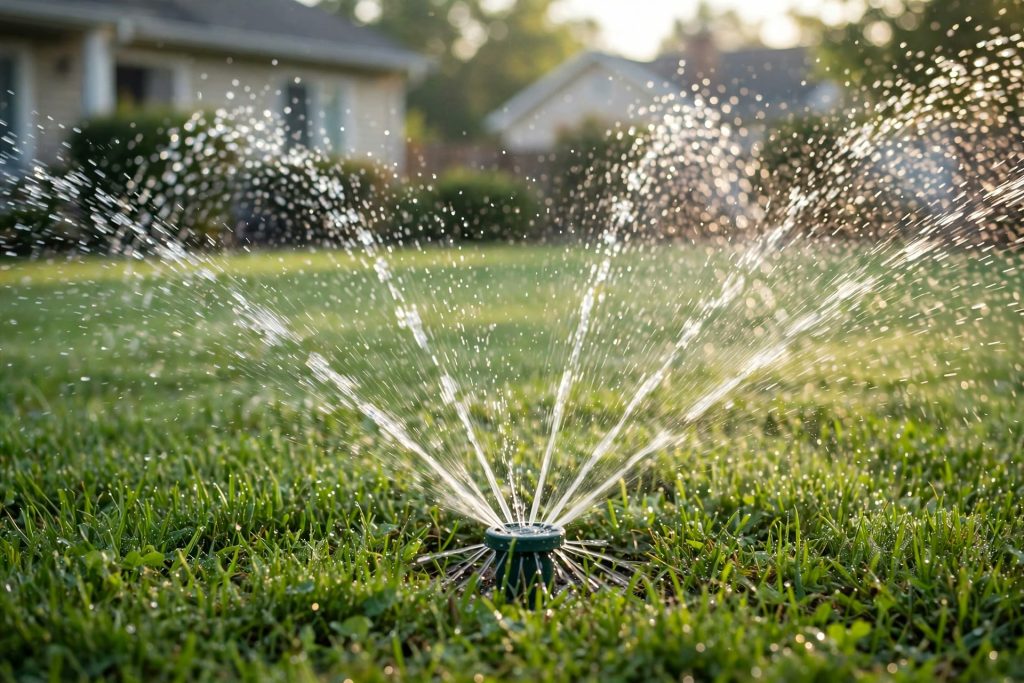
Mistakes That Leave Large Lawns Patchy
- Trusting the box coverage. Headline figures assume strong pressure and no wind. Test with cans and plan moves on your real number.
- Watering a little every day. Shallow, frequent watering trains shallow roots and invites disease. Water deeply, then let the surface dry.
- Midday watering in summer. Heat and wind can steal a large share of the water before it reaches the roots. Early morning is the efficient window.
- Never overlapping placements. Every pattern is thin at the edge. Overlapping by about a third is what makes separate placements read as one even watering.
- Ignoring the hose. A kinked, narrow or over long hose can cost more throw than the difference between two sprinklers. Fix the supply before blaming the head.
Final Thoughts on Finding the Best Lawn Sprinkler
For a large lawn, the best lawn sprinkler is rarely the one with the longest throw on the box. It is the one whose honest coverage, at your pressure, on your lawn shape, lets you water the whole yard evenly in a number of moves you will actually make. For open ground, that is a traveling sprinkler: the Nelson Rain Train first, the Orbit a step behind it on the shelf. For one huge fixed circle, take the Orbit tripod impact, and for dirty water the Rain Bird spike. Rectangles belong to the oscillating heads, with the Melnor for control, the Gardena for precision, the Eden for gentle flow, and the Dramm when seed is down. And if pressure has quietly sabotaged every sprinkler you have owned, the Senninger wobbler is the fix that addresses the cause instead of the symptom.
Measure your pressure, test with cans, and overlap your placements. Do those three ordinary things and a large lawn stops being an all morning chore and becomes one calm pass of deep, even water.
References
- University of Georgia Cooperative Extension, CAES Field Report, Easily Water Lawns Wisely This Summer: one inch of water a week, deep and infrequent watering, rain gauge testing of application rate, and early morning timing.
- Mississippi State University Extension Service, Understanding Water Requirements for a Healthy Lawn: one to one and a half inches a week for actively growing lawns, thorough less frequent applications, and moistening soil three to four inches deep.
- US EPA WaterSense, Watering Tips: the tuna can test for sprinkler output, watering at the right time, and avoiding overwatering and runoff.
- GARDENA, Oscillating Sprinkler AquaZoom L: official specifications for area coverage, spray range and width, and warranty.
- Senninger Irrigation, Xcel-Wobbler Sprinkler: official low pressure performance data, flows, pressures and coverage diameters for the Wobbler range.
Final Choice: The Sprinklers We Would Buy
For a big open lawn with decent pressure, the Nelson Rain Train is the one we would buy first. Nothing else in this roundup waters 13,500 sq ft while you are somewhere else, and the cast iron build is the reason owners keep them for decades.
On a budget, the Orbit 58322 gives most of that traveling coverage for less money, and the Rain Bird P5RLSP is the cheapest honest way to water real ground with a single spike sprinkler.
For shaped lawns, rectangles and borders, skip the travelers and pick an oscillator: the Melnor XT Turbo for its adjustments, the Gardena AquaZoom L for precision, and the Dramm ColorStorm when the grass is new seed that needs a soft touch.
Frequently Asked Questions
What is the best lawn sprinkler for a large lawn?
For most large, open lawns, a traveling sprinkler: the Nelson Rain Train or the Orbit 58322. Each covers up to 13,500 sq ft per run along 200 ft of hose, waters evenly because the head moves, and shuts off by itself. For rectangular lawns, an oscillating head such as the Melnor XT Turbo is the better fit.
How long should I run a sprinkler to water one inch?
It depends on the head, so measure it. Set straight sided cans in the pattern, run the sprinkler for 30 minutes, and measure the depth collected. If you collect a quarter inch in 30 minutes, one inch takes about two hours in that position. Extension guidance targets about one inch a week including rainfall, applied deeply once or twice a week.
Is an oscillating or impact sprinkler better for a large lawn?
Neither is better everywhere. Impact sprinklers throw further, up to 85 ft across in this guide, and suit big open circles, but they are louder and less even close in. Oscillating sprinklers cover less per placement, usually 3,000 to 4,500 sq ft, but lay a gentle, even rectangle that keeps water off paths and suits seed. Large properties often use both.
What is the best sprinkler for low water pressure?
The Senninger Xcel Wobbler. It is designed to work at 10 to 25 PSI, far below the floor of impact and gear drive heads, and still throws an even circle about 32 to 55.5 ft across depending on nozzle. It is sold as a head for a riser or sled base, so allow for a simple adapter setup.
Which sprinkler should I use on new grass seed?
A gentle oscillating sprinkler that will not wash seed around: the Dramm ColorStorm for its soft, rain like pattern and brass jets, or the Eden Turbo or Melnor XT Turbo with the flow turned down. Keep the surface lightly moist with short, frequent waterings until germination, then deepen and space the waterings as roots grow.
Can I run two sprinklers on one hose for a large lawn?
Sometimes. Gear drive heads such as the Orbit H2O-6 have a flow through base made for running heads in series, but both heads share your pressure and flow, so each throws less. Test with catch cans at both heads. On a low pressure supply, one head moved once almost always beats two starved heads.

Thesis Link : https://saulibrary.edu.bd/daatj/public/uploads/BAU200601_19-Pp_5.pdf
- 10 Best Mosquito Traps for Yards - November 22, 2026
- 10 Best Insecticidal Soaps - November 22, 2026
- 10 Best Wildflower Seed Mixes for Pollinators - November 21, 2026