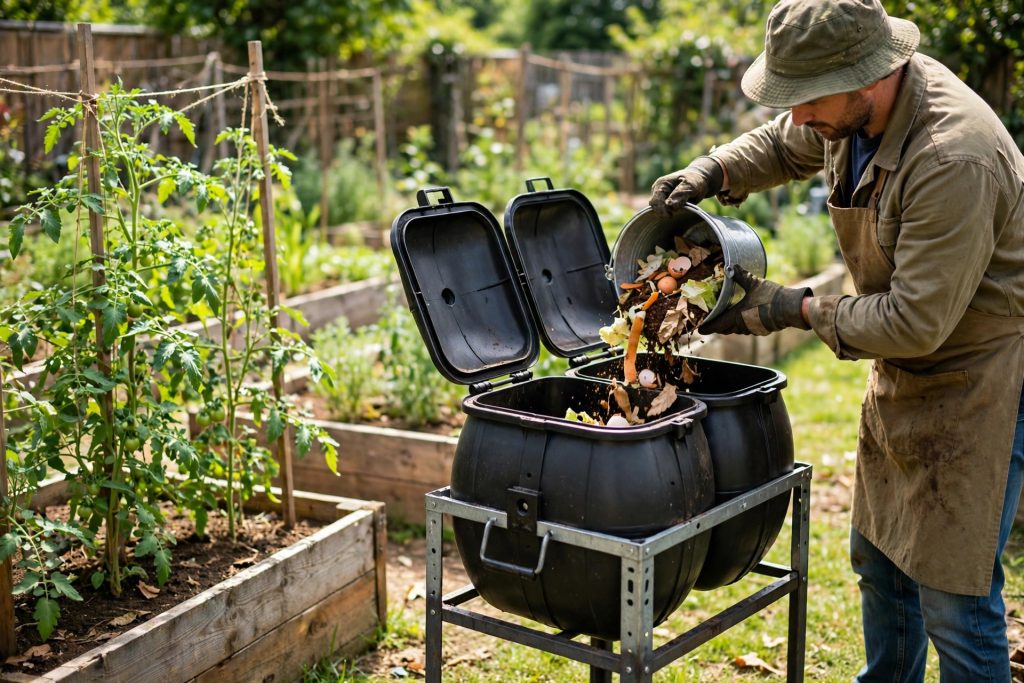

The best compost bin for beginners is the one you will actually use: easy to fill, easy to turn, and big enough for the scraps your household makes. A good bin turns kitchen peelings and dry leaves into dark, crumbly compost for your beds, and it does it without smell, flies, or a weekly wrestling match with a pitchfork. A bad one sits half full in a corner while you wonder why nothing is happening.
This guide compares 10 compost bins for beginners, nine tumblers and one stationary bin, using verified manufacturer specifications and owner feedback. We did not test these bins hands on. Every capacity, dimension, and warranty figure below comes from the maker’s own manual or official page, or from a major retailer listing where no official page exists, and conflicts between sources are flagged rather than smoothed over.
Quick Recommendation
Short on time? Start here.
- Best overall for most beginners: FCMP Outdoor IM4000. Two chambers, 37 gallons, recycled plastic body, and the most recommended beginner tumbler in this guide. Fill one side while the other cures.
- Best value: VIVOSUN 43 Gallon Tumbling Composter. The largest dual-chamber tumbler in this list for its size class, with 360 degree turning and a simple two-chamber flow.
- Easiest turning: RSI Maze 48-Gallon Geared Tumbler. A geared crank handle with a ratchet lock turns a full drum with very little effort.
- Best for cold climates: Jora JK270. The only insulated tumbler here, so it keeps working when other bins slow down in winter.
- Best stationary bin: Algreen Soil Saver Classic. 94 gallons, a 20-year warranty, and the simplest assembly in this list, for gardeners with room and patience.
- Best small patio pick: Good Ideas Compost Wizard Jr. 52 gallons in a single chamber, arrives assembled, and rolls on a wheeled base.
If you only buy one thing from this guide, buy a dual-chamber tumbler. The two-chamber design is the single feature that most helps a beginner, because it stops the classic first-timer error: adding fresh scraps to a batch that was almost finished, and resetting the clock every time.
Compare the 10 Best Compost Bins for Beginners
| Product | Capacity | Type | Best For | Our Rating |
|---|---|---|---|---|
| FCMP Outdoor IM4000 | 37 gallons | Dual-chamber tumbler | Most beginners | 9.4 |
| VIVOSUN Tumbling Composter | 43 gallons | Dual-chamber tumbler | Best value | 9.2 |
| Miracle-Gro Large Dual Chamber | 55.4 gallons | Dual-chamber tumbler | Brand-name buyers | 9.0 |
| RSI Maze 48-Gallon (MCT-D180) | 48 gallons | Geared dual-chamber tumbler | Easiest turning | 9.3 |
| Jora Compost Tumbler JK270 | 70 gallons | Insulated dual-chamber tumbler | Cold climates | 9.1 |
| Envirocycle Composter | 35 gallons | Single-chamber tumbler | Compost tea, no assembly | 8.8 |
| Good Ideas Compost Wizard Dueling Tumbler | 50 gallons | Dual-chamber tumbler | Dual batch plus tea | 8.9 |
| Algreen Soil Saver Classic | 94 gallons | Stationary bin | Large gardens | 8.7 |
| Tumbleweed Compost Tumbler 110L | 29 gallons | Single-chamber tumbler | Small patios | 8.4 |
| Good Ideas Compost Wizard Jr. | 52 gallons | Single-chamber tumbler | Simple small patio | 8.6 |
Ratings are editorial scores from our scoring system in How We Chose, based on verified specifications and owner feedback, not on hands-on testing. A higher score means a better fit for a beginner, not a laboratory result.
How to Choose the Best Compost Bin for Beginners
Tumbler or stationary bin?
A tumbler is a drum on a stand that you spin to mix the contents. It is the easier choice for most beginners because turning takes seconds, the drum keeps rodents out, and the finished compost drops out at a comfortable height.
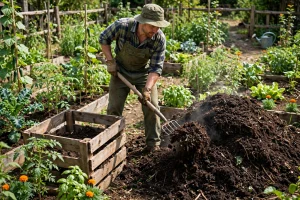
A stationary bin sits on the ground, holds more, costs less per gallon, and lets worms enter from the soil, but you turn it with a fork, which is real work. Nine of the ten bins in this guide are tumblers for exactly that reason. The one stationary bin, the Algreen Soil Saver, earns its place on capacity and patience: if you have a big garden and do not mind turning with a fork, it holds more than any tumbler here.
What size do you need?
Match the bin to the waste you actually make. A household that cooks most days and has a small vegetable garden fills a 37 to 55 gallon dual-chamber tumbler comfortably. A small patio with a few pots and a countertop caddy does fine with a 29 to 35 gallon single chamber. A large garden with beds to feed all season wants the 94 gallon stationary bin, or two tumblers running side by side.
One honest limit applies to every tumbler in this list: a hot compost pile needs about one cubic yard, 27 cubic feet, to hold its own heat, according to Washington State University Extension. The largest bin here is 12.5 cubic feet. Tumblers finish compost by frequent turning and, in the Jora’s case, insulation, not by sheer mass, so expect weeks to months rather than days.
Indoor vs outdoor compost bin
Every bin in this guide is an outdoor bin. A tumbler needs sun, air, and room to spin, and a stationary bin needs contact with the ground. If you live in a flat with no outdoor space, none of these ten is the right tool. Collect scraps in a sealed kitchen caddy, then compost outdoors, or use a worm bin or bokashi bucket indoors instead. Our worm composter roundup covers the indoor option. What these bins do solve is the outdoor part: a closed drum keeps the pile tidy, keeps animals out, and keeps the smell in, which is what makes composting possible in a small yard or a shared garden.
Best odorless compost bin: what actually controls smell
No bin is odorless on its own. Smell comes from the mix, not the container. A wet, airless pile of food scraps smells; the same scraps layered with dry leaves, shredded paper, or straw, and turned for air, smell like damp earth. That is why the best compost bin for beginners is an enclosed one with adjustable air vents and a habit attached: cover every addition of food scraps with browns, keep the mix as damp as a wrung-out sponge, and turn it every two to three days.
The enclosed drum helps by keeping the mix contained and the vents working, but the browns and the turning do the real work. Meat, dairy, and grease do not belong in a home bin at all, with the single exception of the Jora JK270, whose maker says it accepts them.
Best budget compost bin: where to save and where not to
The cheapest way into composting is a stationary bin or a single-chamber tumbler, and both appear in this list. Do not save money by buying a bin so small that you outgrow it in a month, or a drum with no vents, because poor airflow is the fastest route to a smelly, stalled pile. The better saving is the dual-chamber design: it costs more up front, but it produces finished compost while you keep filling the other side, so you buy compost less often. The VIVOSUN 43 gallon is the value pick in this guide for exactly that reason.
The 10 Best Compost Bins for Beginners
1. FCMP Outdoor IM4000 Dual Chamber Tumbling Composter
Best overall for most beginners. Our rating: 9.4 out of 10.
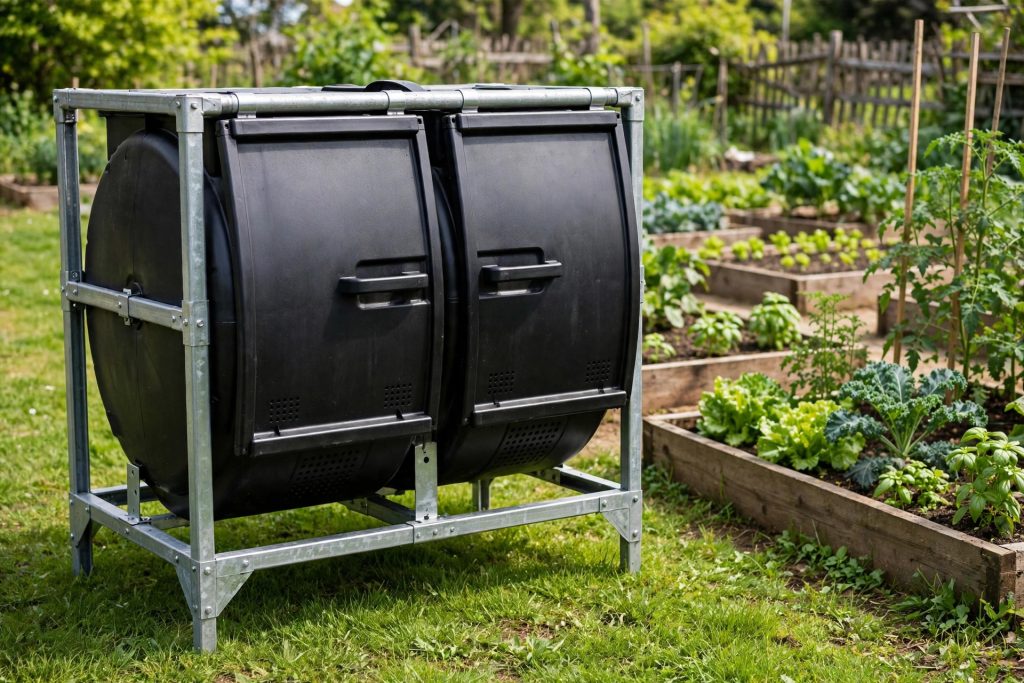
The IM4000 is the long-time default beginner tumbler, and it earns that place on the strength of one design choice: two chambers. Fill the first side with kitchen scraps and browns, and when it is full, leave it alone to cure while you start filling the second side. That is the whole secret of continuous composting, and it is the feature beginners miss most when they buy a single-chamber drum.
The maker’s manual lists 37 gallons total capacity (5 cubic feet) in a body of 100 percent post-consumer recycled polypropylene, BPA-free and UV-inhibited, on a corrosion-resistant galvanized steel frame. Dimensions are 30 by 28 by 36 inches, and the unit weighs 28 pounds. Deep aeration fins and adjustable air vents keep oxygen moving, and the large sliding doors make loading and emptying straightforward. The manual says to turn the drum 5 to 6 times every 2 to 3 days. Warranty is 1 year on manufacturer defects.
Keep in mind: some listings quote this same model at 43 gallons. The maker’s own manual and most US listings say 37 gallons, so this guide uses 37 and flags the higher figure rather than printing it. Assembly involves many small screws and nuts, which owners mention as the one fiddly job. Once it is together, though, this is the bin most beginners should start with.
Best for: first-time composters with a small to medium garden who want a proven two-chamber flow.
Specifications: 37 gallons, 2 chambers, recycled polypropylene body, galvanized steel frame, 30 x 28 x 36 inches, 28 lb, 1-year warranty. Manufacturer details: FCMP Outdoor, fcmponline.com.
2. VIVOSUN Outdoor Tumbling Composter, 43 Gallon
Best value dual-chamber. Our rating: 9.2 out of 10.
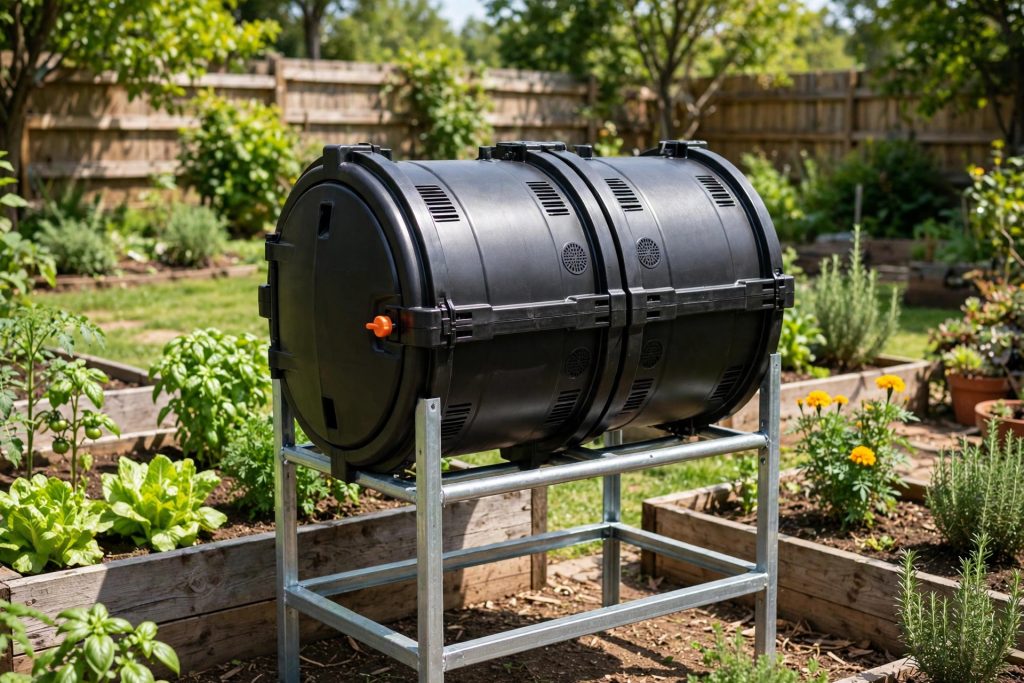
The VIVOSUN 43 gallon is the value case in this list: the largest dual-chamber capacity here in its size class, at a lower cost band than the brand-name dual-chamber tumblers, with the same fill-one-side-while-the-other-cures flow that makes two chambers worth having. The drum is high-quality PP plastic on a galvanized steel frame, 26.25 by 23.6 by 36.5 inches, and weighs 21.7 pounds.
Turning is the full 360 degree spin, and the maker’s manual says to rotate 5 to 10 times every 2 to 3 days. Deep fins on eight panels break up clumps and pull air through the mix as the drum turns, and the manual says compost is typically ready in 4 to 8 weeks in warm weather. Do not confuse this model with the separate 37 gallon VIVOSUN dual, which is two 18.5 gallon chambers.
Pros: largest dual-chamber capacity in its class; simple two-chamber flow; light enough to spin easily when full.
Cons: warranty is not published by the maker, so buyers have no stated warranty to fall back on; the maker’s own website did not surface a product page, so verification rests on the maker’s manual.
Specifications: 43 gallons, 2 chambers, PP plastic body, galvanized steel frame, 26.25 x 23.6 x 36.5 inches, 21.7 lb, warranty not published. Manufacturer details: maker’s instruction manual for model B08346W5S6.
3. Miracle-Gro Large Dual Chamber Compost Tumbler
Best brand-name pick. Our rating: 9.0 out of 10.
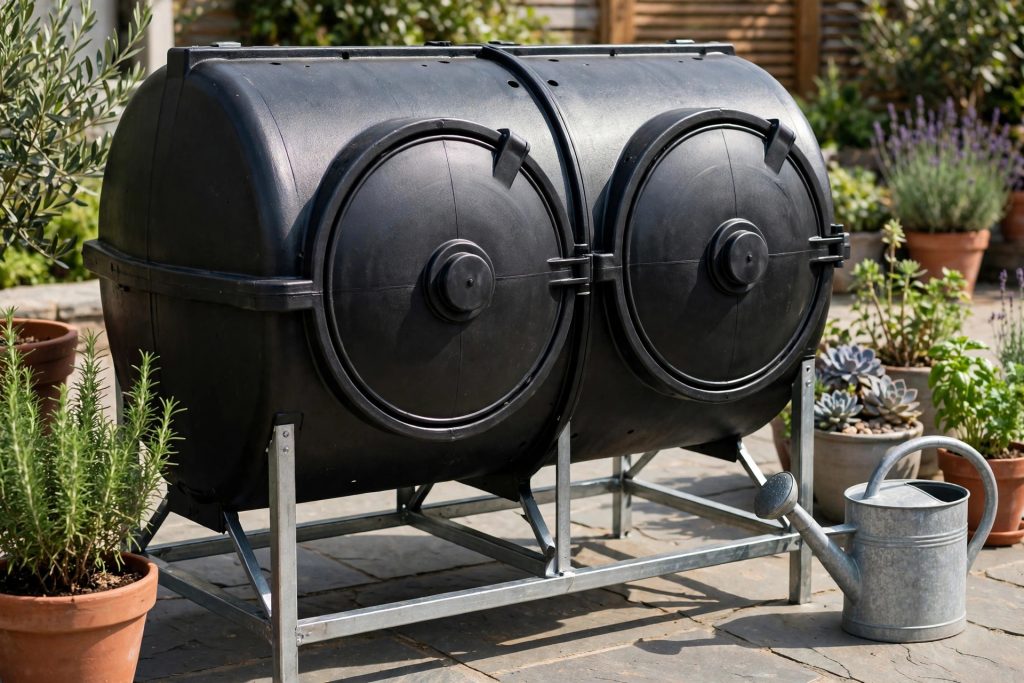
Buyers who want a familiar brand name on the box will find it here. The Miracle-Gro Large Dual Chamber Compost Tumbler, made by DF Omer under the Miracle-Gro licence, holds 55.4 gallons in total, two chambers of 27.7 gallons (105 litres) each, which makes it the largest dual-chamber tumbler in this guide. The body is BPA-free, food-grade, UV-protected plastic on a galvanized steel base, with internal mixing rods and fins and two sliding doors with tight seals to keep pests out.
The maker’s manual is unusually specific, which beginners should appreciate. Do not load more than 35 pounds per chamber. Turn every other day or so. A properly mixed batch can reach about 140 degrees Fahrenheit in about five days, and the minimum starting quantity is 1 cubic foot. The manual also gives a practical fill figure of about 48.5 gallons rather than the full 55.4, because a drum needs air space to tumble properly. Warranty is 2 years. Dimensions are not published by the maker, and this guide does not reuse the smaller 37 gallon model’s dimensions, which circulate online attached to this model by mistake.
Who should buy it: gardeners who want the biggest dual-chamber tumbler here, a known brand, and a manual that actually tells them how much to load and how often to turn.
Watch out for: check the model before buying. The standard Miracle-Gro Dual Chamber is two 18.5 gallon chambers, 37 gallons total, a different and smaller bin.
Specifications: 55.4 gallons total (2 x 27.7 gallons), 2 chambers, BPA-free food-grade UV-protected plastic, galvanized steel base, dimensions not published, 2-year warranty. Manufacturer details: DF Omer manual for the 210L model.
4. RSI Maze 48-Gallon Two-Compartment Compost Tumbler
Easiest turning. Our rating: 9.3 out of 10.
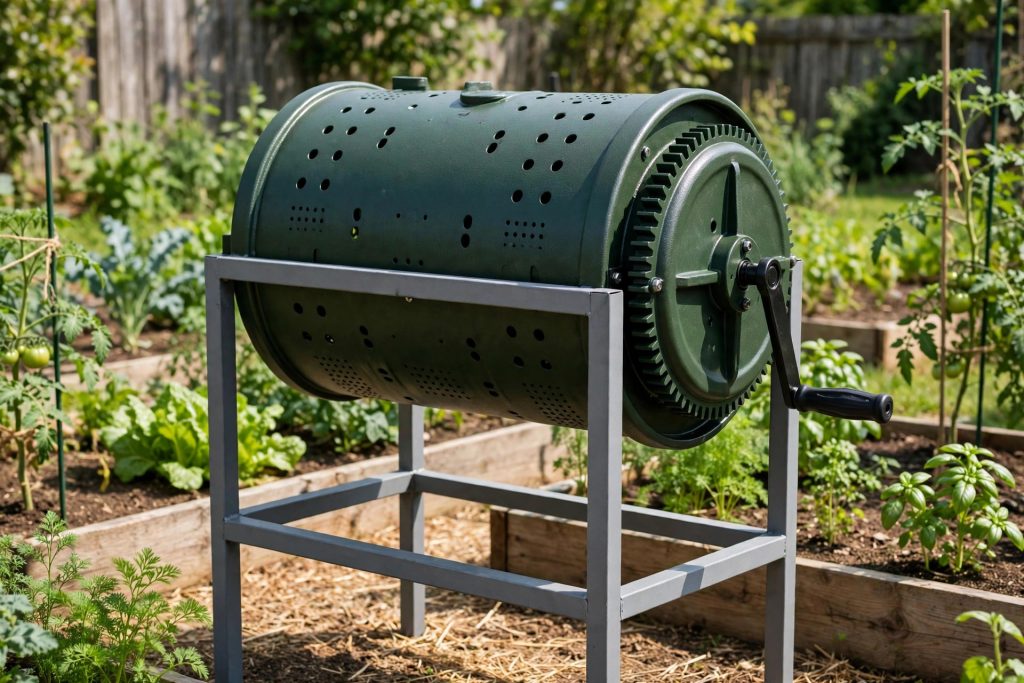
The Maze 48 gallon answers the question every beginner asks after the first month: how hard is this to turn when it is full? The answer here is: barely any effort at all. A geared crank handle with a ratchet lock spins the drum, and testers in Bob Vila’s 2026 tested roundup turned a loaded drum with one finger. For older gardeners, or anyone with a bad back or weak grip, that handle is the difference between a bin that gets turned and a bin that gets ignored.
The drum holds 48 gallons (180 litres) across two compartments, with a removable internal divider, so it can also run as one 48 gallon chamber. The barrel is UV-protected reinforced plastic, and the frame is powder-coated zinc-coated steel with an open-front design. Dimensions are 43 by 36 by 25 inches, and it weighs 26 pounds. Multiple adjustable air vents and large sliding doors cover the basics, and the warranty is 3 years. Assembly takes about 2 hours according to the maker’s manual, so set aside an afternoon.
The honest limit: the crank and the gearing are the point of this bin, and they are also its most complex parts. Keep the mechanism clean and dry, and do not force the handle if the drum is jammed with a heavy, wet load. Do not confuse it with the larger Maze 245L, a 65 gallon model with a different warranty.
Specifications: 48 gallons, 2 chambers with removable divider, UV-protected reinforced plastic barrel, powder-coated zinc-coated steel frame, 43 x 36 x 25 inches, 26 lb, 3-year warranty. Manufacturer details: Maze Products 180L manual, model MCT-D180.
5. Jora Compost Tumbler JK270
Best insulated tumbler, best for cold climates. Our rating: 9.1 out of 10.
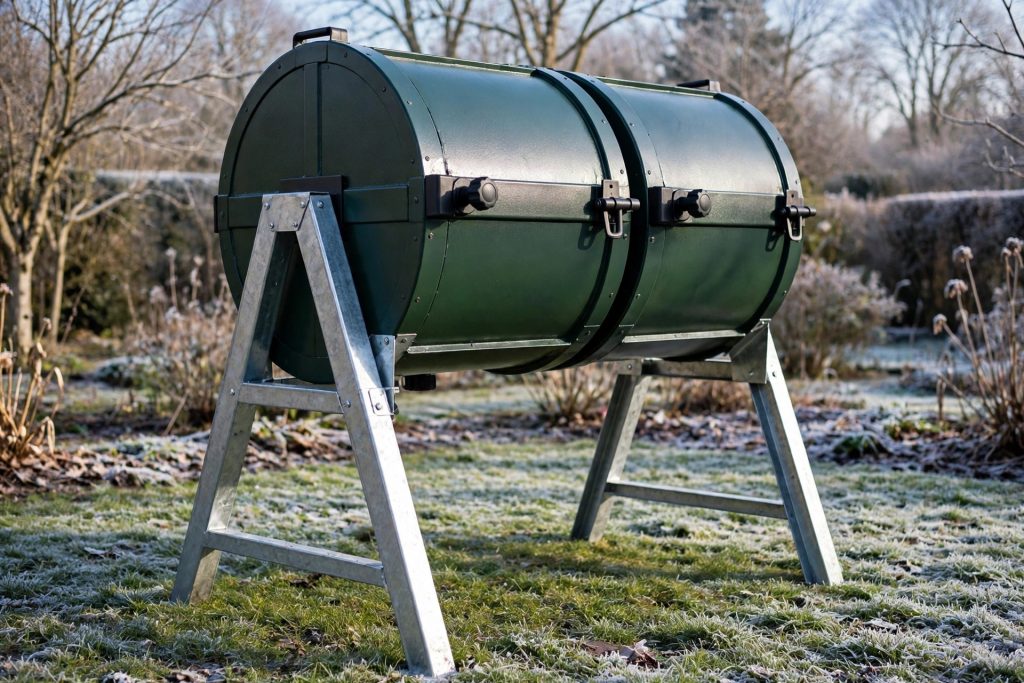
The Jora JK270 is the only insulated tumbler in this list, and that single fact defines it. Its galvanized, powder-coated steel panels are lined with about 2.16 inches of HDPE polyethylene foam insulation, so the drum holds microbial heat through cold weather when uninsulated bins slow to a crawl. If you garden where winters are long and your compost pile usually stalls from November to March, this is the bin built for you.
Capacity is 9.5 cubic feet, 70 gallons total, across two chambers on a central axle, and the maker suggests adding 6 to 8 gallons of new material per week. The drum stands 44.5 by 28 by 50 inches on a galvanized steel A-frame, off the ground and fully enclosed, which makes it rodent-resistant. It weighs 86 pounds, by far the heaviest bin here. Warranty is a 2-year manufacturer’s warranty. Unusually, the maker says this tumbler accepts meat, fish, and cooked food, where most tumblers exclude them.
The trade-off is assembly. It takes two people and is the hardest build in this list, so do not plan to put it together alone on a weeknight. It is also not currently listed on Amazon US, so buy direct from the maker’s site or an authorised retailer such as Eartheasy.
Specifications: 70 gallons (9.5 cubic feet), 2 chambers, insulated galvanized steel panels with HDPE foam lining, galvanized steel A-frame stand, 44.5 x 28 x 50 inches, 86 lb, 2-year warranty. Manufacturer details: Joraform official US site, joracomposters.com.
6. Envirocycle Composter
Best compost tea, no assembly required. Our rating: 8.8 out of 10.
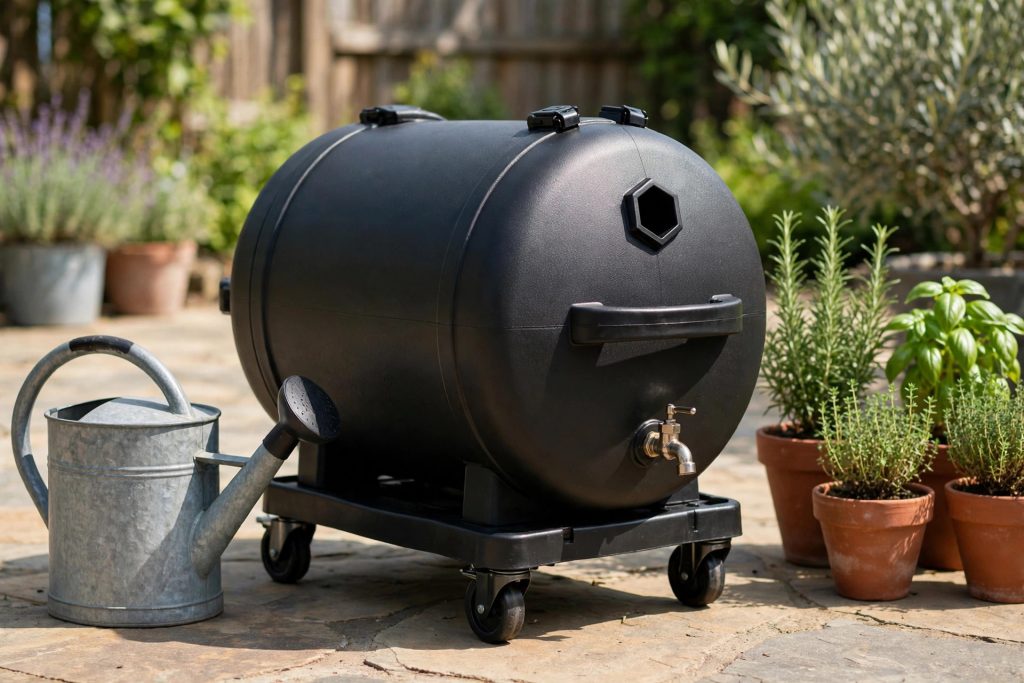
What the Envirocycle does differently is simple: it arrives fully assembled, and it makes compost tea. The drum rolls on a base with eight rollers, so turning is a gentle push rather than a lift, and the base collects the liquid that drains from the pile, which you draw off and dilute to water your plants. For a beginner who wants the extra reward of liquid feed for containers and herbs, that tea collector is a genuine perk, not a gimmick.
The drum holds 35 gallons and is a single chamber, made from BPA-free, food-safe, post-consumer recycled plastic, UV and antioxidant protected. Dimensions are 25.4 by 21.5 by 27.7 inches. There is no metal frame, because the drum does not need one: it spins on its roller base. Warranty is a 5-year limited warranty, the longest tumbler warranty in this guide.
Two honest notes. First, older listings quote this drum at 52 to 53 gallons. The most recently updated source says 35 gallons, so this guide uses 35 and flags the older figure. Second, the maker states plainly that this composter is not animal-proof, so it suits a fenced yard or a patio rather than a garden with determined raccoons.
Best for: patios and small gardens where you want liquid compost tea and zero assembly.
Not ideal for: rural gardens with heavy animal pressure, or households that need two chambers to keep a batch curing while they keep adding scraps.
Specifications: 35 gallons, 1 chamber, BPA-free food-safe recycled plastic, roller base with 8 rollers, 25.4 x 21.5 x 27.7 inches, 5-year limited warranty. Manufacturer details: Envirocycle official site, envirocycle.com.
7. Good Ideas Compost Wizard Dueling Tumbler CW-2X-BLK
Best dual batch plus tea collector. Our rating: 8.9 out of 10.
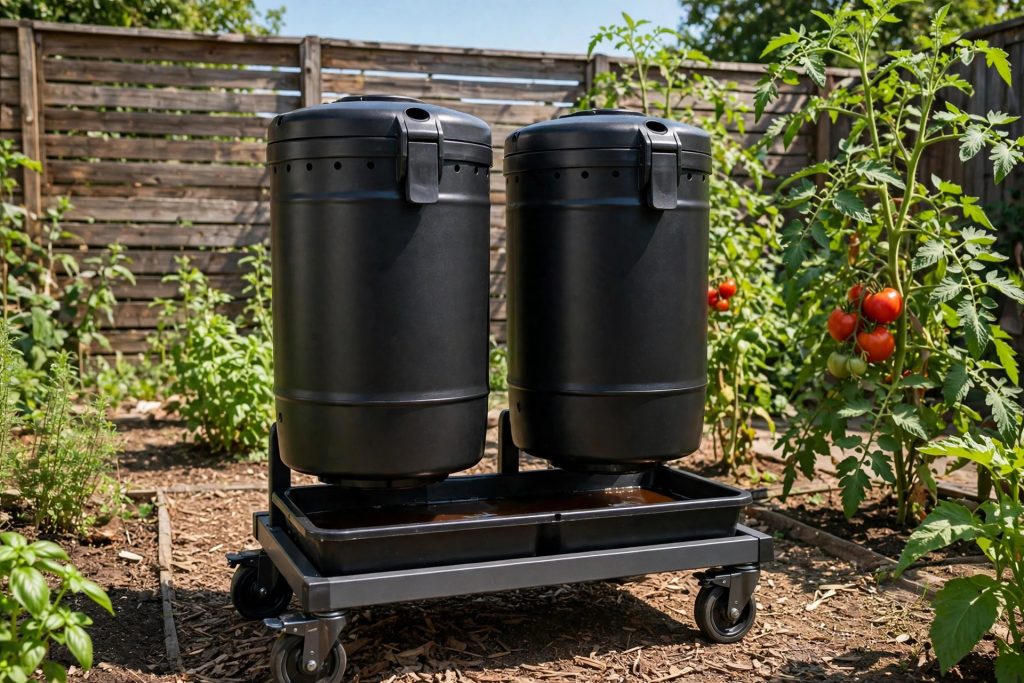
The Dueling Tumbler combines the two features beginners ask for most: two chambers, so one batch cures while the other fills, and a tea collector, so the liquid feed is not wasted. It holds 50 gallons in total, two 25 gallon chambers, or 7 cubic feet, and the wheeled compost-tea collecting base beneath holds up to 5 gallons. The body is recycled polyethylene, BPA-free and FDA approved for contact with edibles, made in the USA. Dimensions are 30 by 22 by 25 inches, and it weighs 33 pounds.
It arrives fully assembled, which matters more than it sounds: several tumblers in this guide take an hour or two to build, and this one is ready the day it arrives. The maker says to fill each chamber one half to three quarters full, two thirds is recommended, and to turn at least once a week. The 8 inch twist-off lids are wide enough for bulky material and keep pets and children out. Warranty is a 1-year limited warranty.
Pros: two independent chambers plus a 5 gallon tea base; arrives assembled; wide lids for bulky scraps.
Cons: at 50 gallons total it holds less than the Miracle-Gro Large, so a large garden may still want a second bin; Amazon stock fluctuates, so check Tractor Supply or Northern Tool if the listing is empty.
Specifications: 50 gallons total (2 x 25 gallons, 7 cubic feet), 2 chambers, recycled polyethylene, BPA-free, FDA approved, made in the USA, 30 x 22 x 25 inches, 33 lb, 1-year limited warranty. Manufacturer details: Good Ideas usage guide, model CW-2X-BLK.
8. Algreen Soil Saver Classic Compost Bin
Best stationary bin. Our rating: 8.7 out of 10.
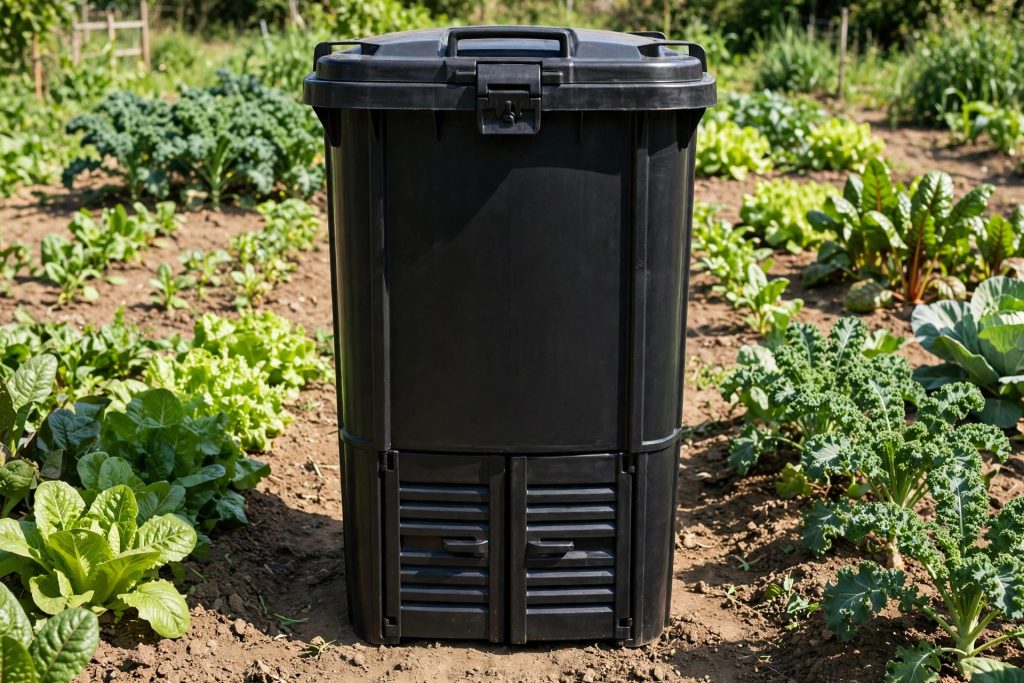
The Algreen Soil Saver is the slow and steady option in this list, and the only stationary bin. It holds 94 gallons, 12 cubic feet, which is more than any tumbler here, and it works the old-fashioned way: load fresh material at the top, let it break down, and pull finished compost out through two sliding doors at the base. The open bottom lets worms and soil organisms enter from the ground, which is something no tumbler can offer.
The body is 100 percent recycled plastic, BPA-free and recyclable, made in Canada, and there is no metal frame to assemble: four wall panels bolt together, which the research found to be the easiest assembly in this list. Dimensions are 27 by 27 by 32 inches, and it weighs 27.5 pounds. The locking self-watering lid keeps animals out while letting air in. Warranty is a 20-year manufacturer’s warranty, by far the longest in this guide.
Who should buy it: gardeners with a large garden and a permanent corner for a bin, who want maximum capacity, minimum assembly, and a bin that will last decades.
The honest limit: there is no crank and no spin. You turn this bin with a fork, and you need to, or the centre goes airless and stalls. If you want turning without effort, buy a tumbler instead.
Specifications: 94 gallons (12 cubic feet), 1 chamber, stationary, 100 percent recycled plastic, BPA-free, 27 x 27 x 32 inches, 27.5 lb, 20-year warranty. Manufacturer details: Algreen Products official site, algreenproducts.com.
9. Tumbleweed Compost Tumbler 110L
Best compact single-chamber tumbler. Our rating: 8.4 out of 10.
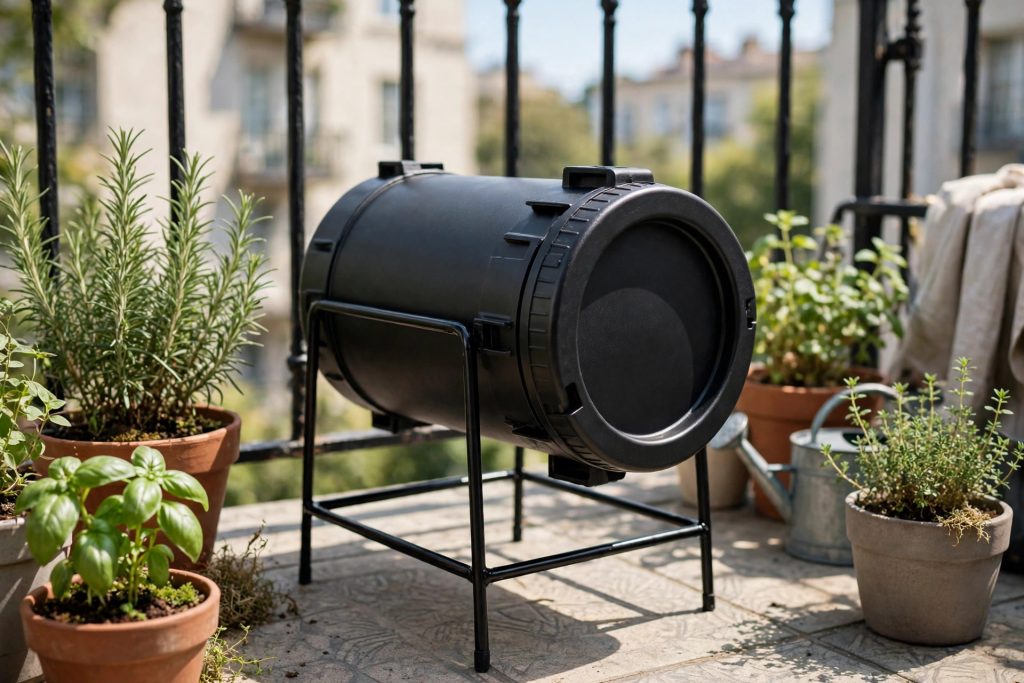
The Tumbleweed 110L is the smallest tumbler in this guide at 29 gallons, and that is exactly its point. It fits a small patio, a courtyard, or a balcony garden where a 50 gallon drum would dominate the space. The drum is 100 percent recycled plastic, 100 percent UV protected, on a powder-coated steel frame, with a stainless steel breaker bar inside that aerates the contents with every turn. It weighs 20 pounds. The maker and retailer guidance says to turn every few days, with mulch in about 4 weeks and rich compost in about 6 weeks.
Availability warning: Tumbleweed is an Australian brand, and in the US it is sold through Amazon marketplace import, where stock is inconsistent. Check availability before you set your heart on it, and have a backup pick ready. Dimensions and warranty are not published in the sources checked, so this guide does not print them.
Best for: small patios and courtyard gardens where space is the deciding factor and the household makes modest amounts of scraps.
Specifications: 29 gallons (110 litres), 1 chamber, 100 percent recycled plastic, UV protected, powder-coated steel frame, stainless steel breaker bar, 20 lb, dimensions not published, warranty not published. Manufacturer details: Tumbleweed use-and-care manual, model TBWD-110.
10. Good Ideas Compost Wizard Jr. EZCJR-BLK
Best small-patio single tumbler. Our rating: 8.6 out of 10.
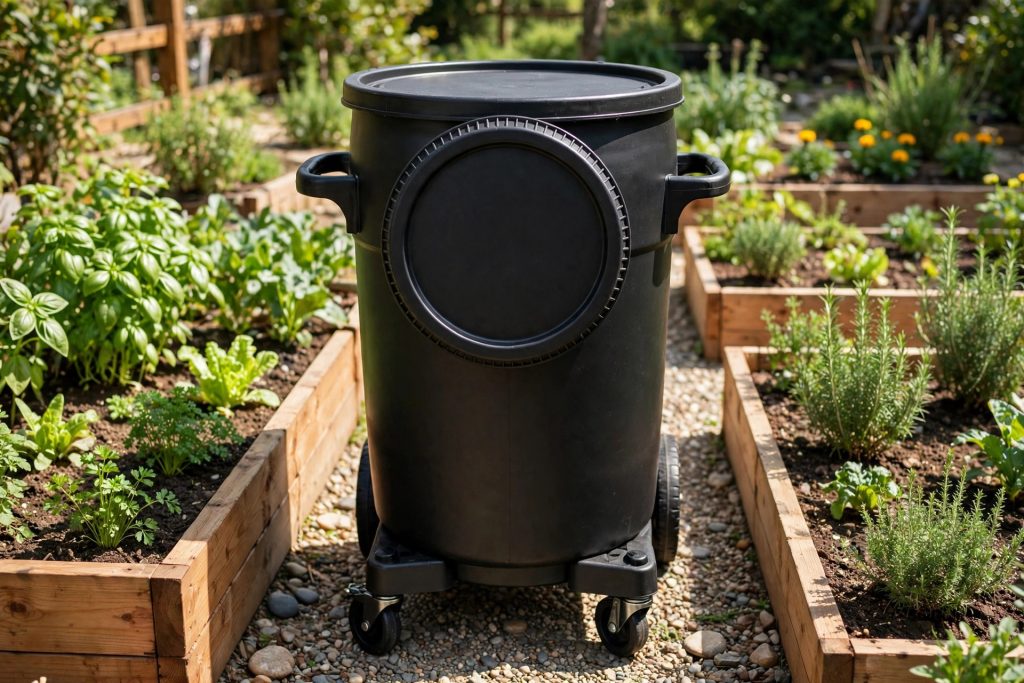
The Compost Wizard Jr. is the simple answer for a beginner with a small patio: one chamber, no assembly, and a wheeled base so you roll it instead of carrying it. It holds 7 cubic feet, 52 gallons, in a single barrel of 100 percent recycled polyethylene, BPA-free and FDA approved for contact with edibles, made in the USA. Dimensions are 30 by 22 by 23.5 inches, and it weighs 27 pounds.
The 12 inch twist-off lid is wide enough for large ingredients and keeps pets and children out, and the side handles give a solid grip for turning. The maker says to turn at least once a week and after each addition, with fresh compost in as little as 30 to 45 days. One warning from the research: a retailer lists this model at 45 gallons, which is an error. Seven cubic feet converts to 52.4 gallons, so 52 gallons is the correct figure. Warranty is not published.
Why beginners like it: there is nothing to assemble, nothing to figure out, and the wheeled base means the bin moves to where the work is, rather than the other way around.
Watch out for: a single chamber means you must stop adding once it is full and wait for the batch to finish. If your household makes scraps every day, a dual-chamber bin such as the FCMP IM4000 or the VIVOSUN 43 gallon will suit you better.
Specifications: 52 gallons (7 cubic feet), 1 chamber, 100 percent recycled polyethylene, BPA-free, FDA approved, made in the USA, 30 x 22 x 23.5 inches, 27 lb, warranty not published. Manufacturer details: Good Ideas maker listing, model EZCJR-BLK.
How We Chose These Compost Bins
We scored each bin on six factors, weighted by what matters most to a beginner. Ratings are editorial, from verified manufacturer specifications and owner feedback. We did not test these bins hands on, and no score comes from laboratory measurement.
| Factor | Weight | What we looked for |
|---|---|---|
| Ease of use and turning | 25% | How little effort turning takes, how wide the doors are, whether it arrives assembled |
| Capacity and batch flow | 20% | Total gallons, and whether two chambers let one batch cure while the other fills |
| Build quality and materials | 20% | Recycled and BPA-free plastics, UV protection, frame strength, warranty length |
| Speed to finished compost | 15% | Maker-stated finishing times and the turning routine that drives them |
| Value | 10% | Capacity and features for the bin’s size class, without publishing prices |
| Pest and weather resistance | 10% | Enclosed design, tight seals, rodent resistance, insulation for cold weather |
A note on what we left out: the Lifetime 60058 tumbler was on our first shortlist, but our checks found it effectively no longer buyable, with a major retailer marking it discontinued and no live offer on Amazon, so we removed it rather than recommend a bin beginners cannot buy. The Good Ideas Compost Wizard Jr. took its place.
How to Start Composting in Your New Bin
- Pick the spot first. Level ground, easy to reach with a kitchen caddy, with sun for warmth and room to spin the drum. A tumbler needs clearance all round; a stationary bin needs bare soil underneath.
- Start with browns. Lay a few inches of dry leaves, straw, or shredded paper in the drum. Browns are the carbon that balances wet kitchen scraps.
- Add greens in layers. Kitchen scraps, coffee grounds, and fresh grass clippings go in thin layers, each covered with browns. Aim for roughly two to three parts browns to one part greens by volume.
- Wet it like a wrung-out sponge. The mix should feel damp, not dripping. Dry piles stall; soaked piles smell.
- Turn it every two to three days. This is the habit that makes a tumbler work. Oklahoma State University Extension found that turning twice a week produced higher temperatures and faster decomposition than turning once a week or once every other week. Stop adding to a chamber when it is about two thirds full, and let that batch cure while you fill the other side.
Beginner Mistakes That Stall a Compost Bin
- Adding fresh scraps to a nearly finished batch. In a single-chamber bin, this resets the clock. Use a dual-chamber bin, or stop adding and wait.
- Too many greens, not enough browns. A bin full of food scraps turns wet and smelly. Keep a bag of dry leaves beside the bin and cover every addition.
- Never turning it. Microbes need oxygen. A drum that never spins becomes an airless, smelly box. Turn every two to three days, or at least once a week.
- Filling the drum to the brim. A tumbler needs air space to mix. Fill to about two thirds, as the makers of the Dueling Tumbler and the Miracle-Gro both advise.
- Composting the wrong things. Meat, dairy, grease, and pet waste do not belong in a home bin. The Jora JK270 is the one exception in this list, and only because its maker says so.
- Giving up in winter. Cold slows composting, but it does not have to stop it. Keep feeding browns, keep turning, and consider the insulated Jora if your winters are long.
Final Choice
For most beginners, the FCMP Outdoor IM4000 is the right first compost bin: two chambers, a proven design, recycled materials, and a size that fits a normal household. If turning effort is your main worry, the geared RSI Maze 48 gallon is the easiest drum to spin. If your garden is large and you want the biggest capacity with the longest warranty, the Algreen Soil Saver Classic at 94 gallons with a 20-year warranty is the patient choice. And if you only have a small patio, the Good Ideas Compost Wizard Jr. gets you composting with no assembly at all.
Whichever bin you choose, the bin is the smaller half of the job. The bigger half is the habit: browns over every addition, a turn every two to three days, and the patience to let a full chamber cure. Get those three right, and any bin in this list will make good compost.
If you are starting from scratch, see our step-by-step guide to making compost at home.
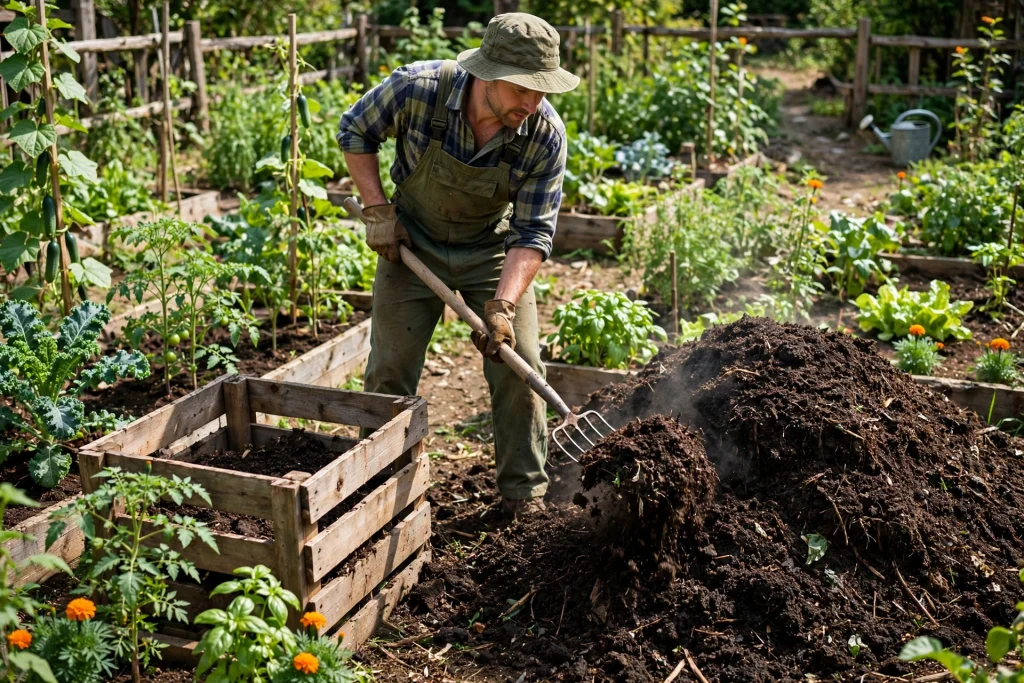
If you are deciding between compost and manure for your beds, see our comparison of the two.
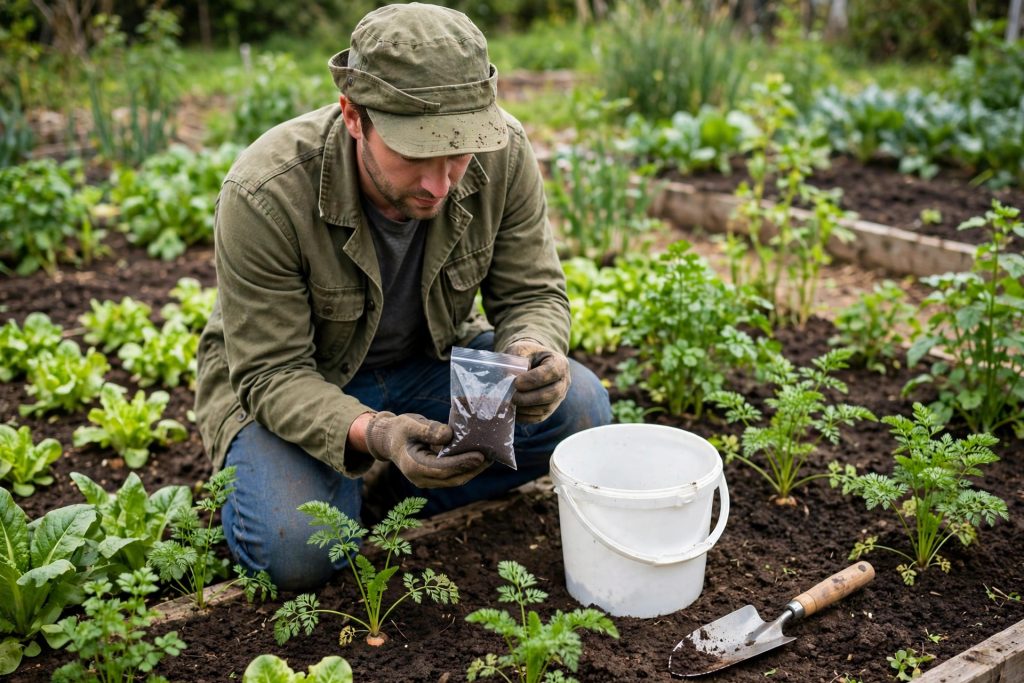
Before you feed your beds, see how to test your garden soil step by step.
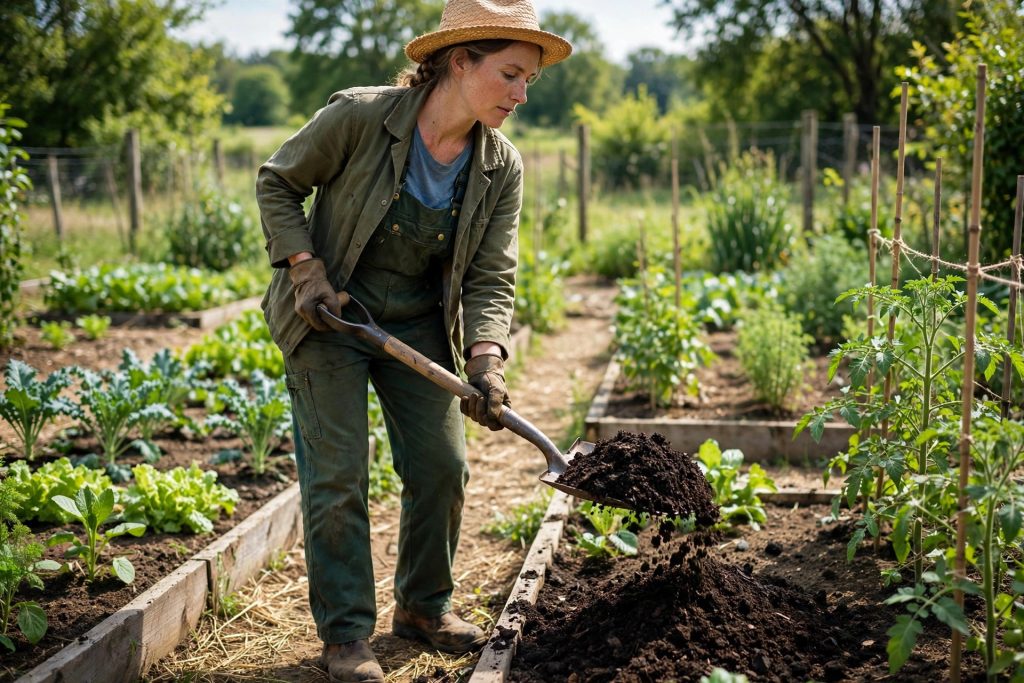
Healthy compost is only half the story: see the natural ways to build soil fertility.

References
- Cornell Waste Management Institute, Composting: The Green (and Brown) Alternative: choosing a compost unit, balancing greens and browns, and the one cubic yard minimum for a self-insulating pile. https://cwmi.css.cornell.edu/greenandbrown.pdf
- US Environmental Protection Agency, Composting at Home: a well kept pile reaching 130 to 160 degrees Fahrenheit, curing for at least four weeks, finished in about three to five months. https://www.epa.gov/recycle/composting-home
- Oklahoma State University Extension, Compost Turning: The Key to Quick Composting: turn actively decomposing material every 3 to 4 days, and turn when the temperature drops below 104 degrees Fahrenheit. https://extension.okstate.edu/fact-sheets/compost-turning-the-key-to-quick-composting
- North Carolina State Extension, Composting 101: two parts browns to one part greens, pile 3 to 5 feet high, turning weekly, finished compost dark and crumbly. https://extensiongardener.ces.ncsu.edu/news/composting-101/
- Washington State University Extension, PNW Gardeners Handbook, Chapter 6: Composting: a hot compost pile needs about one cubic yard, 3 feet by 3 feet by 3 feet, to hold heat. https://extension.wsu.edu/pnw-gardeners-handbook/chapter-6-composting/
Frequently Asked Questions
What is the best compost bin for a beginner?
The FCMP Outdoor IM4000 is the best compost bin for most beginners: two chambers so one batch cures while the other fills, 37 gallons, recycled plastic body, and a turning routine the maker’s manual spells out. If turning effort worries you, the geared RSI Maze 48 gallon is the easiest to spin, and if you want the lowest fuss, the Good Ideas Compost Wizard Jr. arrives fully assembled.
Are compost tumblers better than stationary bins?
For most beginners, yes. A tumbler turns in seconds, keeps rodents out, and finishes compost faster because turning is easy. A stationary bin holds more, costs less per gallon, and lets worms enter from the ground, but you turn it with a fork. Choose a tumbler for ease, a stationary bin like the Algreen Soil Saver for maximum capacity and patience.
How often should I turn my compost bin?
Turn a tumbler 5 to 10 times every 2 to 3 days, following the maker’s manual for your model. Oklahoma State University Extension found that turning twice a week produced higher temperatures and faster decomposition than turning once a week or once every other week, and advises turning when the pile temperature drops below 104 degrees Fahrenheit.
What size compost bin do I need?
A 37 to 55 gallon dual-chamber tumbler suits a household that cooks most days and keeps a small vegetable garden. A 29 to 35 gallon single chamber suits a small patio with a few pots. A large garden that needs compost all season wants the 94 gallon stationary bin, or two tumblers running side by side.
Will a compost bin smell?
A well kept bin smells like damp earth, not garbage. Smell comes from a wet, airless mix, not from the bin itself. Cover every addition of food scraps with dry browns, keep the mix as damp as a wrung-out sponge, and turn it every two to three days. Leave meat, dairy, and grease out of a home bin.
How long until my first finished compost?
In warm weather, a well kept tumbler can finish in 4 to 8 weeks, as the VIVOSUN manual states, while typical home compost takes 3 to 6 months depending on materials and turning. The EPA puts a well kept pile at about 3 to 5 months, and a pile left alone can take a year. Regular turning is the fastest way to shorten that time.

Thesis Link : https://saulibrary.edu.bd/daatj/public/uploads/BAU200601_19-Pp_5.pdf
- How to Grow Tomatoes from Seed: A Step by Step Guide for Beginners - November 6, 2026
- Best Compost Bins for Beginners: 10 Picks for Easy First Compost - November 6, 2026
- Best Seed Storage and Organizers: 10 Picks for Every Collection - November 5, 2026