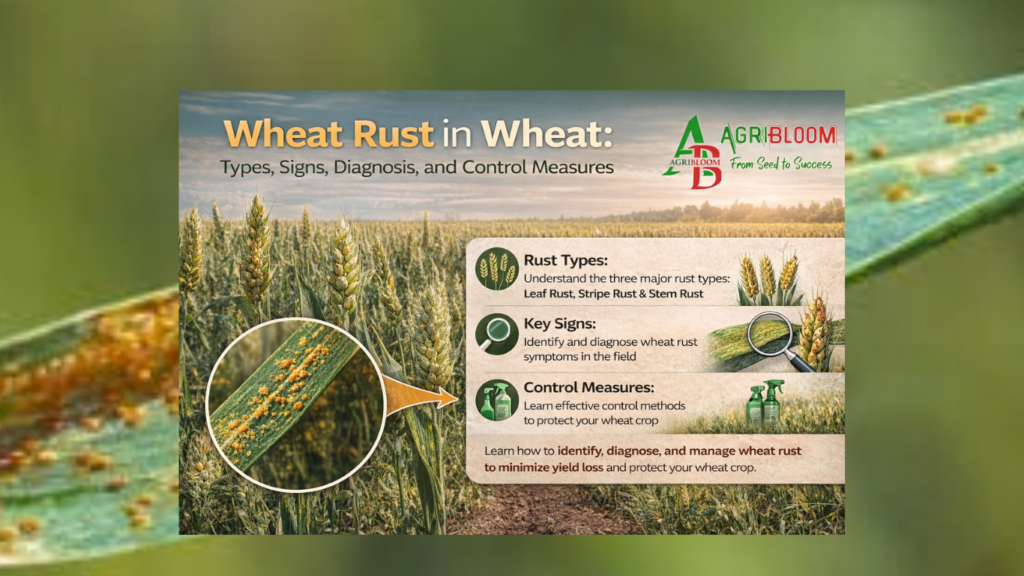

Wheat Rust in Wheat: Types, Signs, Diagnosis, and Control Measures
It is a cool morning in May, and the wheat crop looks strong from a distance. The stand is even, the canopy is full, and the field still holds the promise of a very good season. Then you bend down, turn over a leaf, and find a dusty orange stain on your fingers. That is often how wheat rust diseases begins in real life. Not with dramatic collapse, but with a few small pustules that are easy to miss until the disease is already moving.
Wheat rust is one of the most important wheat diseases in the United States because it spreads quickly, travels long distances on wind currents, and can reduce yield fast when it reaches the upper canopy at the wrong time. In the 2024 wheat disease loss estimates, diseases reduced harvested wheat bushels by 8.3 percent across participating U.S. states, and stripe rust alone accounted for an estimated 36.96 million bushels of loss in the United States.
This guide explains wheat rust disease in practical language for growers, scouts, agronomists, consultants, and farm managers. It covers the major wheat rust types, the symptoms that matter in the field, and the control strategies most likely to protect yield.
What Is Wheat Rust Disease
Wheat rust is not a single disease. It is a group of fungal diseases caused by Puccinia species that infect living wheat tissue and spread by airborne spores. The three rusts that matter most in wheat production are leaf rust, stripe rust, and stem rust. Nebraska Extension identifies these as the three primary rust diseases of wheat.
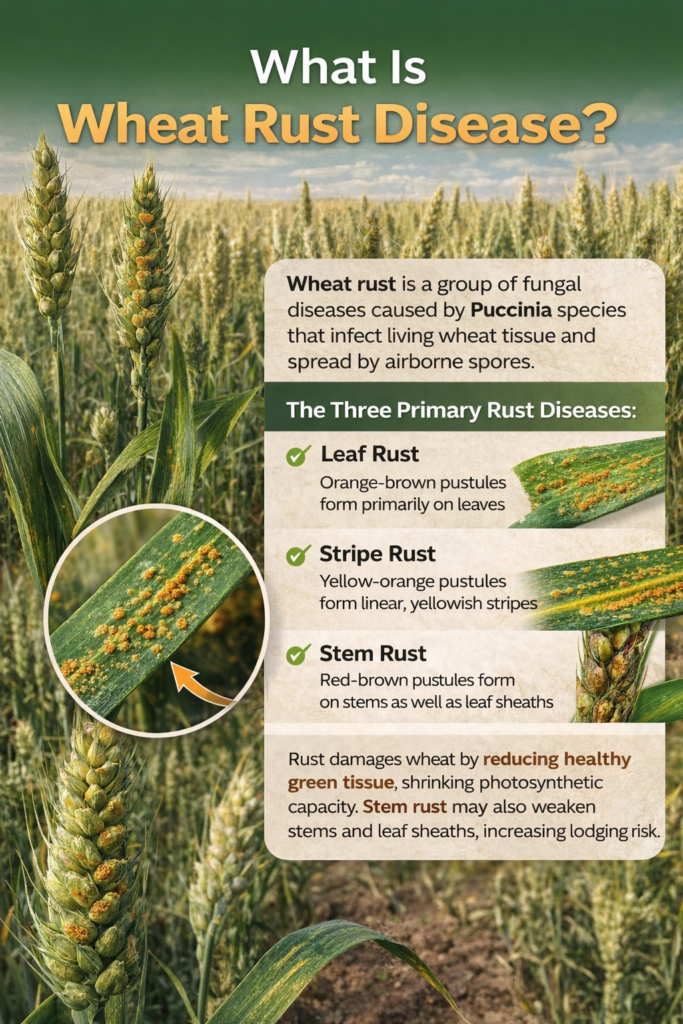
Rust damages wheat by reducing healthy green tissue. When pustules cover leaves, the crop loses photosynthetic capacity during the period when it should be filling grain. Stem rust can be even more serious because it may also weaken stems and leaf sheaths, increasing lodging risk.
Why Wheat Rust Matters
Rust matters because the disease can build quietly, then spread fast when temperature and moisture line up. It also matters because the timing of infection often decides how costly the outbreak becomes. Infection low in the canopy late in the season may have limited economic effect. Infection reaching the flag leaf or upper canopy before grain fill is a much more serious problem. Nebraska Extension and Kansas State both emphasize that crop stage is central to treatment decisions.
In the United States, large connected wheat growing regions also make rust movement easier. Spores can travel from southern areas into central and northern production zones as the season advances. USDA cereal rust bulletins and extension updates continue to track this movement because it has real management value for growers.
The Main Types of Wheat Rust Diseases
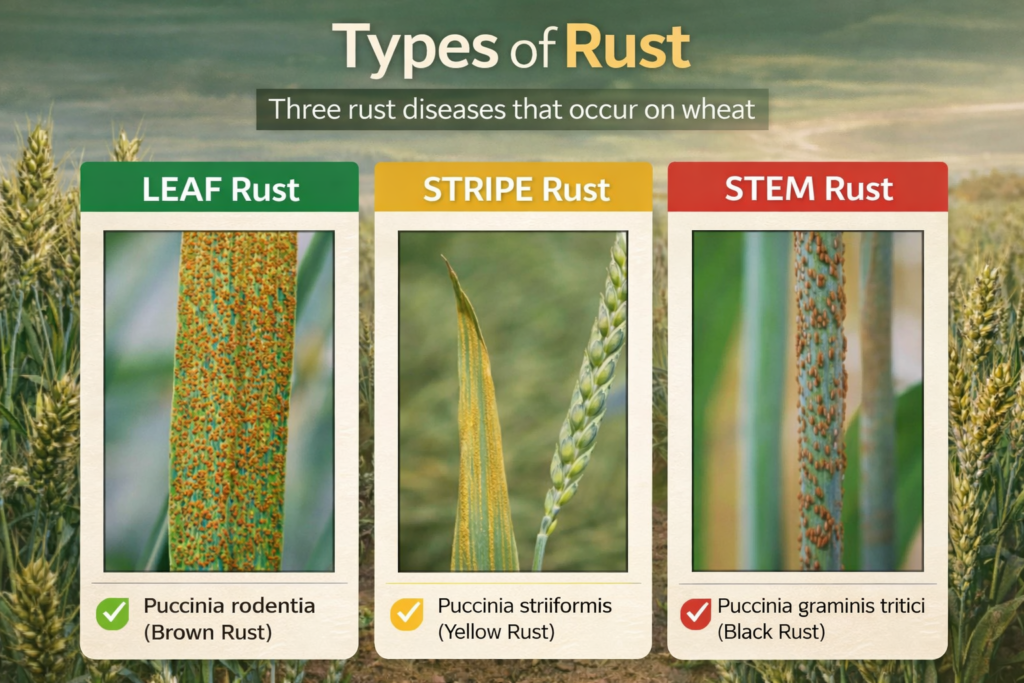
1. Leaf Rust
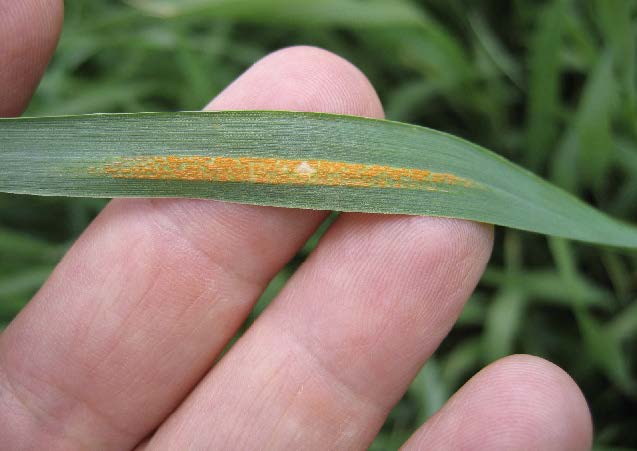
Leaf rust, also called brown rust, is caused by Puccinia triticina. It usually appears first on leaves, often beginning lower in the canopy before moving upward. The pustules are orange brown and scattered across the leaf surface rather than arranged in rows. That scattered look is one of the quickest clues for field identification.
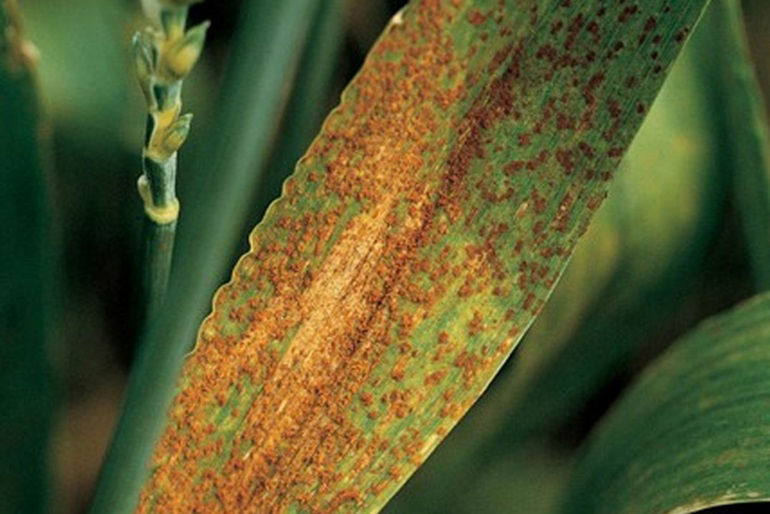
Leaf rust is favored by humidity and moderate temperatures. When it reaches the upper canopy early enough, it can reduce grain fill by cutting healthy leaf area during a critical yield building period.
Puccinia triticina: The Fungus Behind Wheat Leaf Rust
At first glance, Puccinia triticina may sound like a technical name that belongs only in lab reports and plant pathology textbooks. In the field, though, its impact is easy to recognize. This is the fungus responsible for wheat leaf rust, a disease that shows up as rusty orange brown pustules on leaves and can quietly reduce yield when it reaches the upper canopy at the wrong time. USDA ARS describes leaf rust as the most common rust disease of wheat, and Crop Protection Network notes that it occurs across the United States and Canada, with severe losses possible in epidemic years.
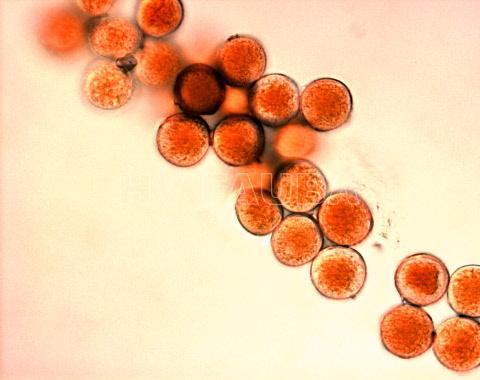
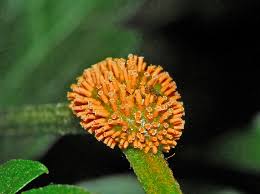
What makes Puccinia triticina important is not just that it infects wheat, but how efficiently it spreads. It is an obligate parasite, which means it needs living host tissue to survive and keep producing infectious spores. As long as infected leaf tissue remains alive, the fungus can continue making urediniospores, and those spores can travel long distances on the wind. USDA ARS notes that this ability to move over hundreds of kilometres is one reason leaf rust epidemics can develop over very large areas.
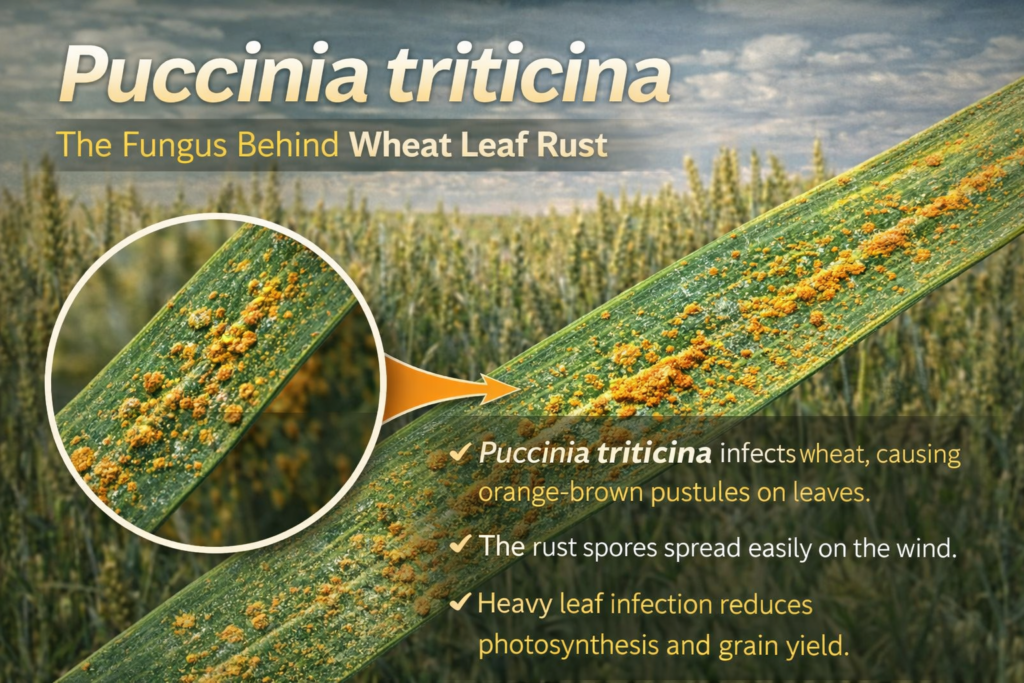
In practical terms, farmers usually meet Puccinia triticina through symptoms, not through its Latin name. The disease normally begins on leaves, often lower in the canopy first, then moves upward as conditions remain favorable. The pustules are usually orange brown, small, and scattered rather than lined up in stripes. That scattered pattern is one of the quickest ways to separate leaf rust from stripe rust during scouting. Crop Protection Network also points out that the pustules rupture the leaf surface but usually do not create the obvious tear marks that are more typical of stem rust.
Weather has a major role in whether this fungus stays minor or becomes costly. USDA ARS reports that leaf rust is most important where dews are frequent from jointing through flowering and temperatures stay mild, around 15 to 25 degrees Celsius. Under those conditions, infection can build quickly enough to reach the upper leaves before grain fill is complete. When that happens, the crop loses photosynthetic area during one of its most important yield forming stages.
That timing is exactly why Puccinia triticina matters economically. Nebraska Extension explains that leaf rust becomes most damaging when the upper leaves are severely rusted before flowering. Heavy infection causes those leaves to lose function early, shortens the grain filling period, and can lead to smaller kernels. In other words, leaf rust is not just a leaf spot that looks bad from close range. It is a disease that can interfere directly with how the crop finishes.
Another reason this fungus deserves attention is that it is not static. Populations of Puccinia triticina vary over time, and USDA ARS monitoring continues to identify different races in U.S. samples. In a recent national report, USDA ARS documented 49 races of P. triticina from 2023 collections across multiple wheat growing regions. That kind of variation matters because it affects how well resistance genes hold up in commercial varieties and why breeders and pathologists continue to monitor the pathogen closely.
So what is the simplest way to understand Puccinia triticina? It is the leaf rust fungus of wheat, built to survive on living tissue, spread efficiently by windborne spores, and take yield when weather and crop stage favor disease development. Knowing its name is useful. Knowing how it behaves in the field is even more useful. Once you understand that it prefers mild, moist conditions and becomes costly when it climbs into the upper canopy early, management decisions start to make much more sense.
References
- USDA ARS. Wheat leaf rust.
- Crop Protection Network. Leaf Rust of Wheat.
- Nebraska Extension. Rust Diseases of Wheat.
- USDA ARS. Wheat leaf rust caused by Puccinia triticina.
- USDA ARS. Wheat Leaf Rust in the United States in 2023 Report.
2. Stripe Rust
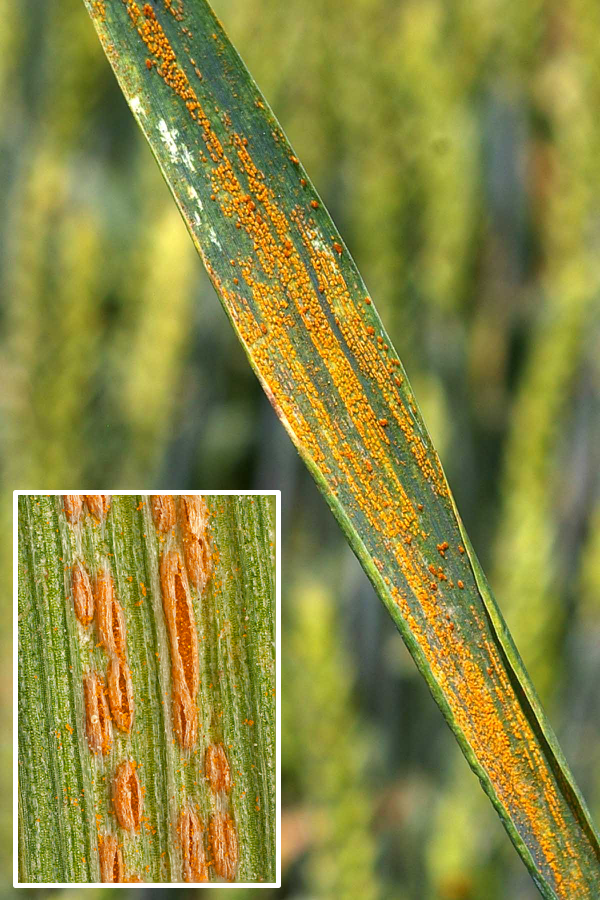
Stripe rust, also called yellow rust, is caused by Puccinia striiformis f. sp. tritici. It is known for yellow to yellow orange pustules arranged in narrow stripes along the leaf veins. Once symptoms are fully developed, this lined up pattern makes stripe rust the easiest rust to recognize visually.
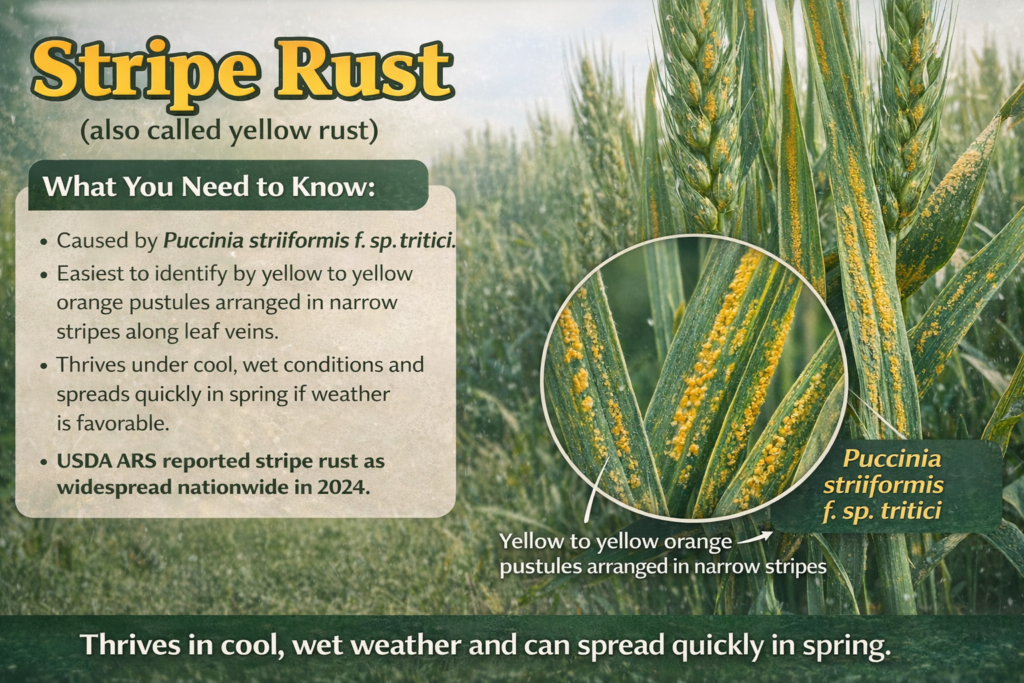
Stripe rust tends to thrive under cool, wet conditions. It can move quickly in spring when weather stays favorable. USDA ARS reported stripe rust as widespread nationwide in 2024, showing how extensive the disease can become in an active year.
Puccinia striiformis f. sp. tritici
Puccinia striiformis f. sp. tritici is the fungus that causes stripe rust in wheat, a disease many growers know as yellow rust. It is one of the most serious wheat pathogens because it can build fast in cool, wet weather and damage the crop before the field looks obviously sick from a distance. USDA ARS describes stripe rust as a major wheat disease in temperate production areas, and Crop Protection Network notes that severe outbreaks can reduce yield dramatically when conditions stay favorable.
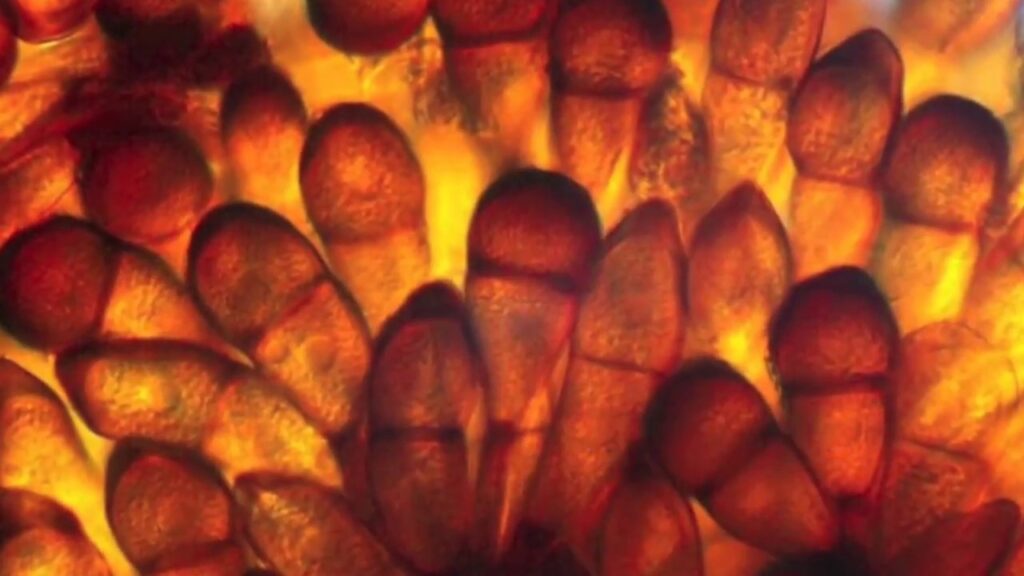
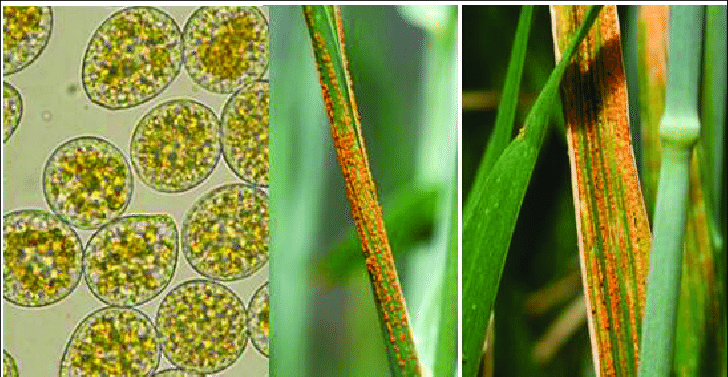
What makes this fungus easy to recognize in the field is its pattern. Unlike leaf rust, which appears more scattered, stripe rust usually forms yellow to yellow orange pustules that line up in narrow rows along the leaf veins. Early infections may begin as pale yellow flecks, but on susceptible wheat those spots soon develop into the classic striped look that gives the disease its name. That visual pattern is often the fastest way to separate Puccinia striiformis f. sp. tritici from the other wheat rust fungi during scouting.
This pathogen is especially important because it prefers the kind of weather that often feels harmless at first. University of Minnesota Extension reports that stripe rust develops best around 50 to 64 degrees Fahrenheit with intermittent rain or dew, while USDA sources describe it as a disease of cool, moist growing conditions. That combination allows the fungus to colonize leaves aggressively and keep producing spores while the crop is still in a yield sensitive stage.
Its effect on yield comes from timing as much as severity. Stripe rust attacks the leaf area the plant depends on to fill grain. When the disease reaches the upper canopy early, the crop loses photosynthetic capacity at exactly the stage when it should be building kernel weight. Utah State University notes that severe infections can completely colonize leaves and rob the plant of energy that would otherwise support grain production. Crop Protection Network adds that stripe rust can also affect heads and cause major losses in susceptible wheat under favorable conditions.
Another reason Puccinia striiformis f. sp. tritici deserves attention is that it does not stay biologically static. USDA ARS research has long emphasized that stripe rust populations change in virulence and population structure over time, which is why resistance that works well today may not remain equally dependable in the future. That ongoing shift is one reason breeders, plant pathologists, and extension specialists continue to monitor the disease so closely.
In simple terms, Puccinia striiformis f. sp. tritici is the stripe rust fungus of wheat, built for cool weather, efficient spread, and quick damage when crop stage and weather line up in its favor. Knowing its scientific name matters less than recognizing its behavior. If you understand that it likes cool moisture, starts as yellow flecks, and soon forms neat stripes on the leaves, you are already much closer to making the right field decision.
References
- USDA ARS. Wheat stripe rust.
- Crop Protection Network. An Overview of Stripe Rust of Wheat.
- Utah State University Extension. Wheat Stripe Rust.
- Crop Protection Network. Stripe Rust of Wheat.
- University of Minnesota Extension. Stripe Rust of Wheat.
- USDA ARS. Epidemiology and control of stripe rust on wheat.
3. Stem Rust
Stem rust, often called black rust, is caused by Puccinia graminis f. sp. tritici. It often appears on stems and leaf sheaths as well as leaves. The pustules are usually longer and more elongated than leaf rust pustules, and they may tear the outer plant tissue as they break through. Later in the season, the lesions darken as black spore masses develop.
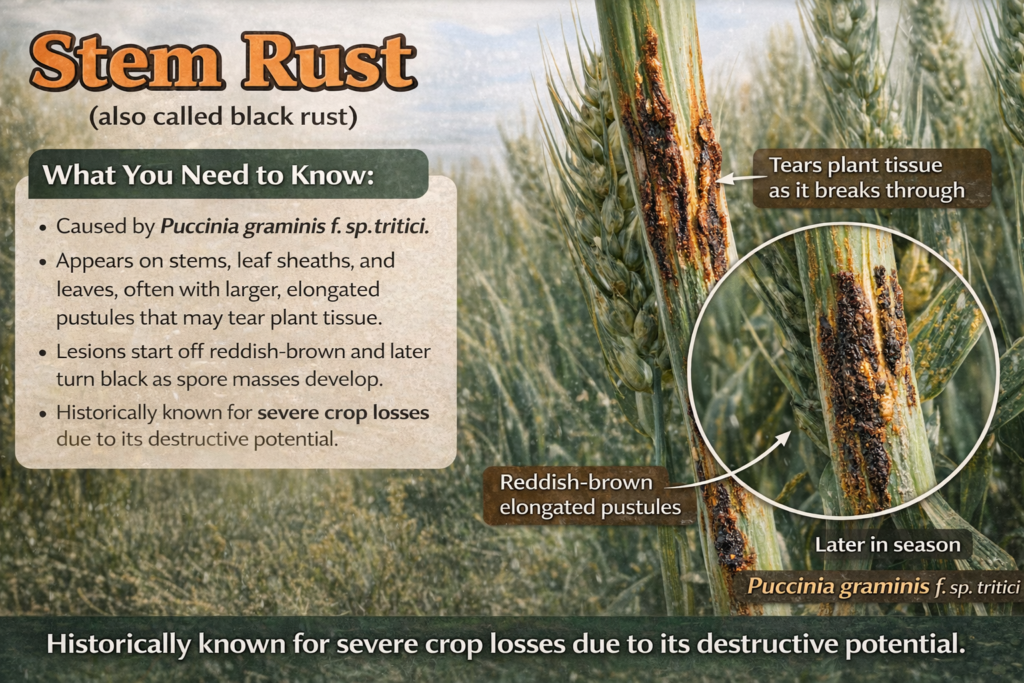
Stem rust is less common than leaf rust or stripe rust in many central Plains situations, but it remains important because of its destructive potential and its long history of severe crop losses.
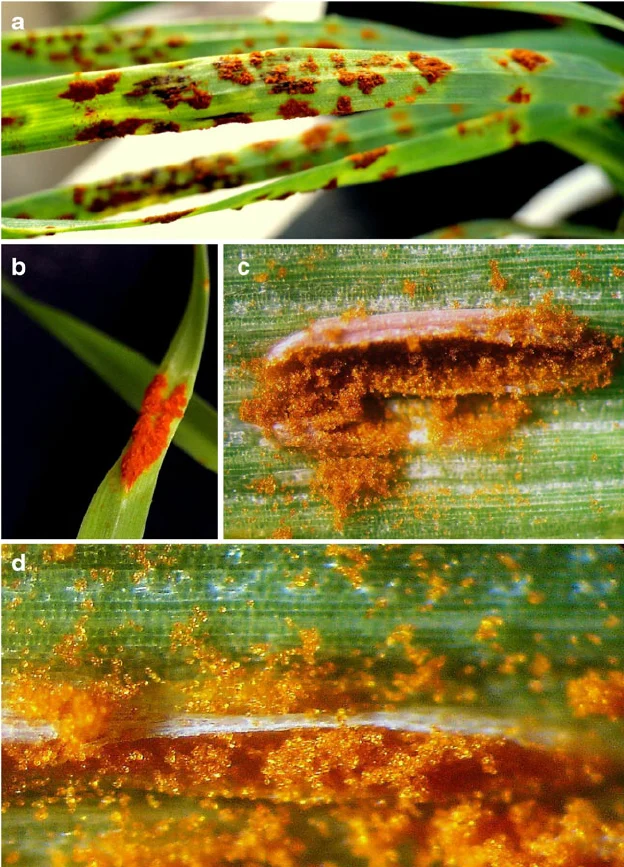
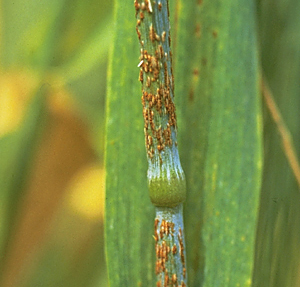
Puccinia graminis f. sp. tritici
Puccinia graminis f. sp. tritici is the fungus behind wheat stem rust, a disease many growers know as black rust. It has one of the longest and most serious histories among wheat diseases because, when conditions favor it, the pathogen can damage leaves, leaf sheaths, stems, and sometimes even heads. USDA ARS describes stem rust as historically one of the most important wheat diseases worldwide, and USDA APHIS still treats black stem rust as a major biosecurity concern in cereal production.
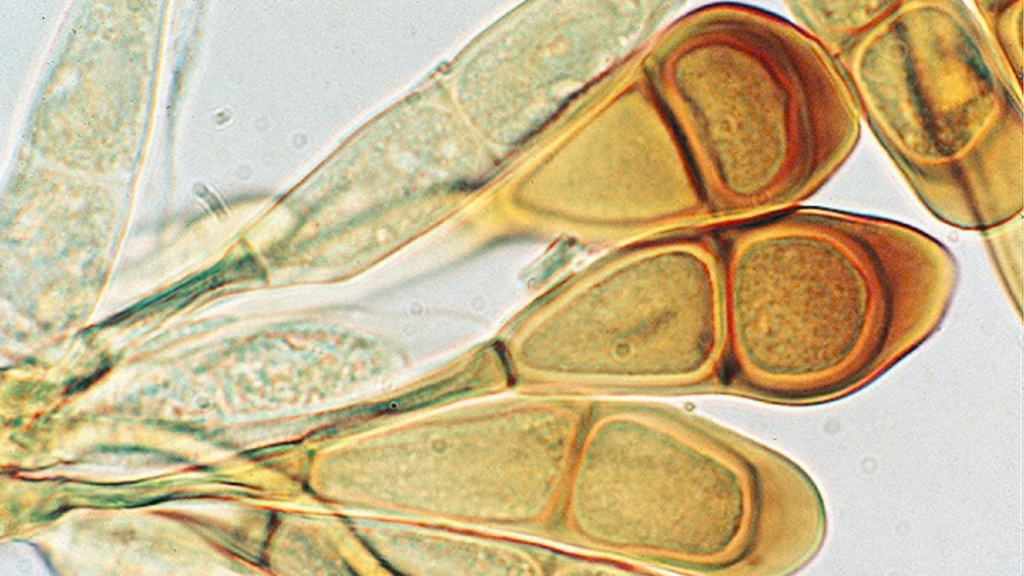
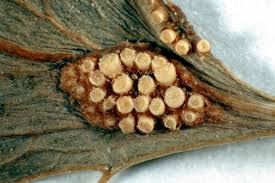
What makes this fungus different from the other wheat rust pathogens is where it shows up and how destructive it can look. In the field, stem rust usually produces elongated reddish brown pustules on stems and leaf sheaths, not just on leaf blades. As the disease matures, those pustules darken and form black spore masses, which is why the disease became widely known as black rust. APHIS notes that infected hosts show reddish brown lesions on stems, while Kansas State describes the lesions as oval to elongated and often severe enough to tear the outer plant tissue.
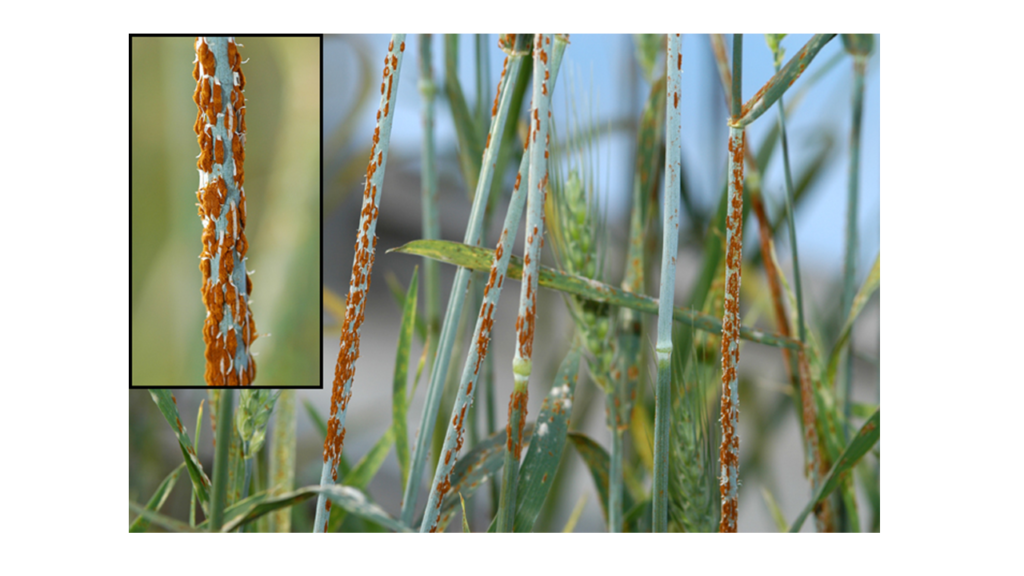
That tearing matters because it signals more than a cosmetic infection. Stem rust can weaken the plant structure itself. When lesions build on stems and sheaths, the crop is not only losing healthy tissue for photosynthesis, it is also becoming more vulnerable to lodging and harvest problems. Crop Protection Network explains that stem rust is considered especially damaging because it affects structural parts of the plant and can reduce yield heavily in susceptible wheat when epidemics develop.
Another reason Puccinia graminis f. sp. tritici stands out is its biology. USDA APHIS explains that black stem rust alternates between cereal crops and barberry to complete its life cycle. That is why barberry has mattered so much in stem rust history and regulation. From the 1920s through the 1970s, USDA carried out a major wild barberry eradication effort in the northern United States to reduce black stem rust pressure, and APHIS still regulates barberry movement into protected areas today.
This fungus also remains important because it keeps evolving. USDA ARS identifies wheat stem rust as an ongoing threat partly because virulent strains such as Ug99 have shown the ability to overcome resistance genes that once looked dependable. In a recent USDA ARS project summary, researchers reported multiple races of P. graminis f. sp. tritici in U.S. samples, which is a reminder that stem rust management depends on continued surveillance, breeding, and resistance screening rather than on old assumptions.
In practical farming terms, the value of knowing Puccinia graminis f. sp. tritici is not in memorizing the Latin name. It is in recognizing the warning signs early. If rust pustules are long, darkening with age, and clearly active on stems or sheaths, the problem is more serious than a few scattered leaf lesions. Stem rust has a history of turning strong looking wheat into weak, damaged crops when weather, host susceptibility, and timing come together. That is why extension and federal sources continue to treat it with unusual seriousness compared with many other foliar diseases.
In simple terms, Puccinia graminis f. sp. tritici is the stem rust fungus of wheat. It is aggressive, historically important, biologically complex, and still relevant today because it can attack the crop where yield and standability are both at risk. Understanding that makes field identification much more meaningful, especially when the first lesions start showing up below the heads and along the stems rather than only on the leaves.
References
- USDA ARS. Wheat Stem Rust.
- USDA APHIS. Black Stem Rust and Barberry.
- Crop Protection Network. Stem Rust of Wheat.
- Kansas State University Research and Extension. Identification and Management of Stem Rust on Wheat and Barley.
- USDA ARS. Stem rust caused by Puccinia graminis f. sp. tritici is an emerging threat to wheat production.
Wheat Rust Symptoms and How to Tell the Rusts Apart
In the field, most good identification comes down to three simple checks.
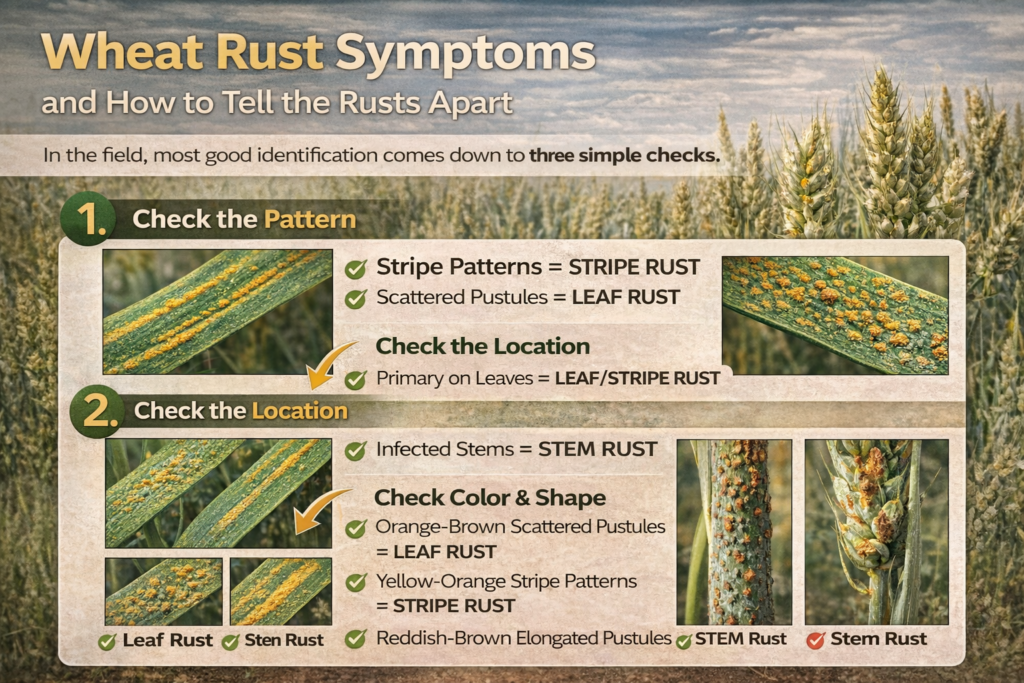
First, check the pattern.
If the pustules are lined up in stripes, think stripe rust.
If they are scattered, leaf rust becomes more likely.
Second, check the location.
If the disease is mostly on leaves, leaf rust or stripe rust is more likely.
If stems and leaf sheaths are clearly involved, stem rust should move to the top of the list.
Third, check the color and shape.
Orange brown scattered pustules usually suggest leaf rust.
Yellow orange pustules in rows suggest stripe rust.
Elongated reddish brown pustules that later darken suggest stem rust.
This simple method is close to how crop scouts actually work in the field. It will not replace a diagnostic lab in difficult cases, but it solves most practical identification problems early enough to improve management.
A Fast Field Check Before You Spray
When you find rust like lesions, pause before making a fungicide decision and use this quick thumb test:
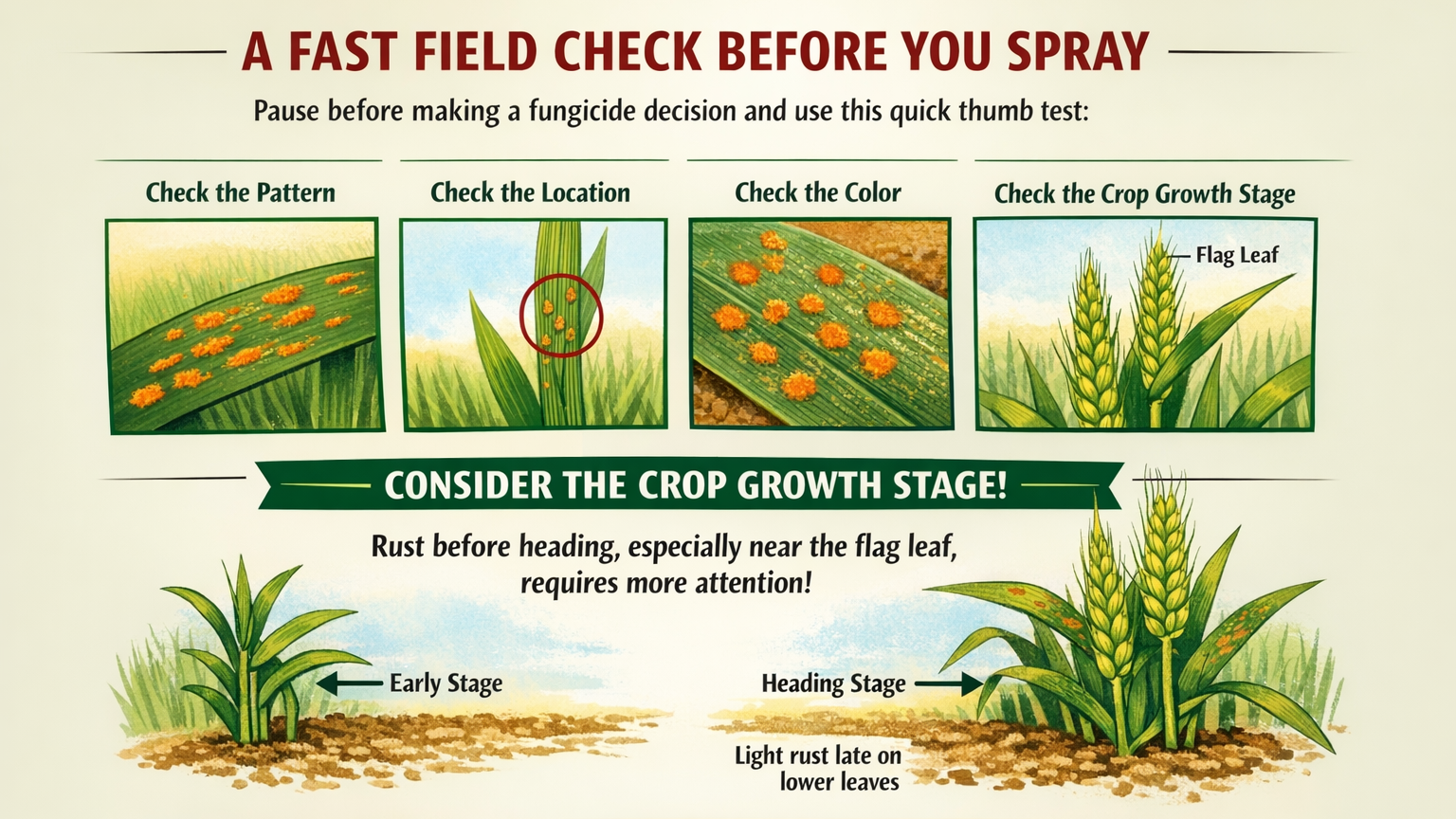
- Check the pattern
- Check the location
- Check the color
- Check the crop growth stage
That last point is critical. Growth stage often determines whether treatment still has a realistic chance to pay. Rust found before heading, especially near the flag leaf, deserves more attention than light disease appearing late on lower leaves. Nebraska Extension specifically recommends tying fungicide decisions to crop stage, cultivar susceptibility, weather, and rust risk.
Effective Wheat Rust Control Strategies
The strongest wheat rust programs are not built on one tactic. They are built on integrated management.
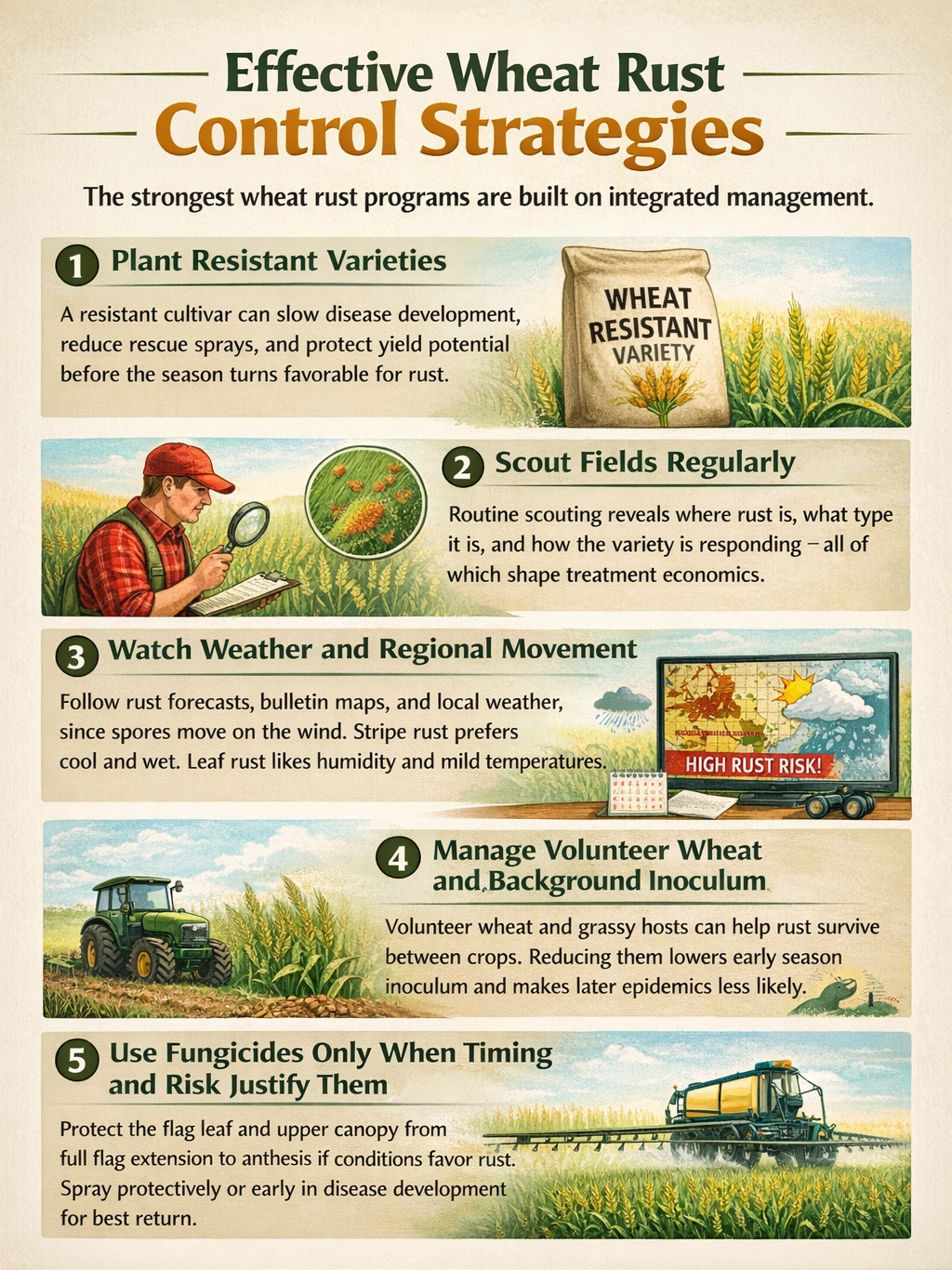
1. Plant resistant varieties
Resistance is one of the most reliable tools available. A resistant cultivar can slow disease development, reduce the need for rescue sprays, and protect yield potential before the season turns favorable for rust. Extension guidance consistently places variety selection at the center of wheat rust management.
2. Scout fields regularly
Rust spreads quickly when weather turns favorable, which is why routine scouting matters. Good scouts do not only ask whether rust is present. They also ask where it is in the canopy, what type it is, and how the variety is responding. Those details shape the economics of treatment.
3. Watch weather and regional movement
Stripe rust tends to increase under cool, wet conditions, while leaf rust is favored by humidity and moderate temperatures. Regional rust tracking also matters because spores can move long distances on the wind. Following bulletins and rust maps helps growers know whether local pressure is building before it becomes obvious in the field.
4. Manage volunteer wheat and background inoculum
Volunteer wheat and certain grassy hosts can help rust survive between crops. Nebraska Extension and other disease resources note that reducing volunteer wheat can lower early season inoculum and make later epidemics less likely.
5. Use fungicides only when timing and risk justify them
Fungicides can be a strong tool, but they work best when used protectively or very early in disease development. Crop Protection Network and Kansas State both emphasize that the best return usually comes from protecting the flag leaf and upper canopy during the period from full flag leaf extension to anthesis, depending on label restrictions.
Wheat Rust Chemical Control
Fungicides are most valuable when three things line up: a susceptible variety, active disease risk, and enough yield potential left in the crop to protect.
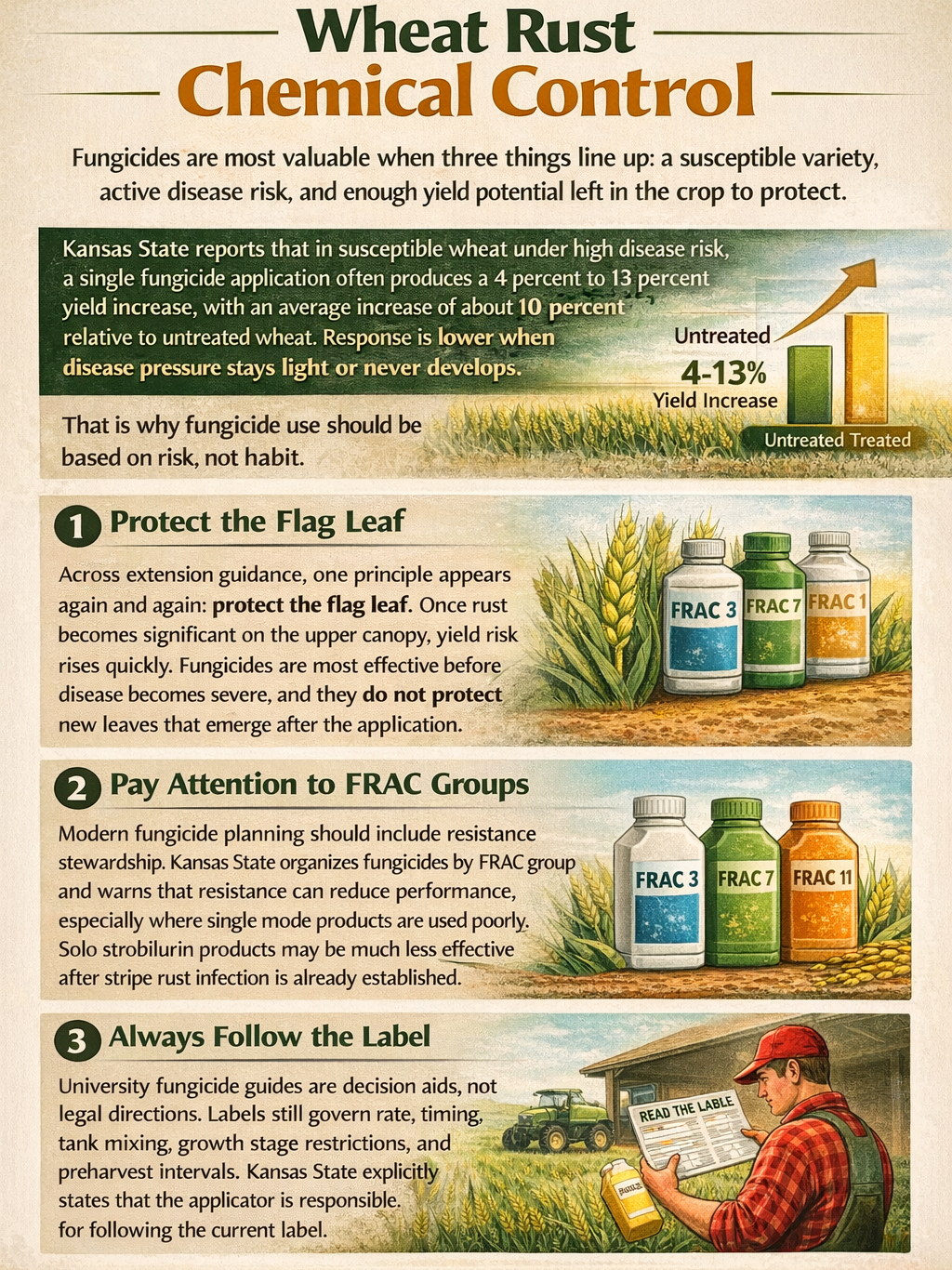
Kansas State reports that in susceptible wheat under high disease risk, a single fungicide application often produces a 4 percent to 13 percent yield increase, with an average increase of about 10 percent relative to untreated wheat. Response is lower when disease pressure stays light or never develops.
That is why fungicide use should be based on risk, not habit.
Protect the flag leaf
Across extension guidance, one principle appears again and again: protect the flag leaf. Once rust becomes significant on the upper canopy, yield risk rises quickly. Fungicides are most effective before disease becomes severe, and they do not protect new leaves that emerge after the application.
Pay attention to FRAC groups
Modern fungicide planning should include resistance stewardship. Kansas State organizes fungicides by FRAC group and warns that resistance can reduce performance, especially where single mode products are used poorly. Solo strobilurin products may be much less effective after stripe rust infection is already established.
Always follow the label
University fungicide guides are decision aids, not legal directions. Labels still govern rate, timing, tank mixing, growth stage restrictions, and preharvest intervals. Kansas State explicitly states that the applicator is responsible for following the current label.
The Stem Rust Exception: Why Barberry Still Matters
Stem rust has an added layer of importance because of its relationship with barberry. USDA APHIS explains that black stem rust alternates between cereal grains and barberry to complete its life cycle and that barberry movement is still regulated into protected areas. That is one reason stem rust is discussed not only as a field disease, but also as a broader biosecurity issue.
Where to Track Wheat Rust in the United States
When growers ask where rust is right now, the best answer is to use live surveillance tools rather than rumor.
Useful sources include USDA ARS cereal rust bulletins, state extension alerts, and Crop Protection Network disease resources. These tools help answer a more practical question than simple presence or absence: is rust active close enough, early enough, and strongly enough to matter in my fields.
Wheat Rust Disease Summary Table
| Rust type | Causal pathogen | Where it appears first | Main visual clue | Pustule color | Typical pattern | Why it matters |
|---|---|---|---|---|---|---|
| Leaf rust | Puccinia triticina | Usually starts on lower leaves and then moves upward | Small pustules on leaves with a dusty rust look | Orange brown | Scattered, not lined up | Reduces healthy leaf area and can lower grain fill if it reaches upper leaves early |
| Stripe rust | Puccinia striiformis f. sp. tritici | Mostly on leaves, often visible on upper leaf surfaces in cool wet conditions | Yellow rust pustules forming clear rows along veins | Yellow to yellow orange | Striped or lined up | Can spread very quickly in cool moist weather and damage yield if it reaches the upper canopy |
| Stem rust | Puccinia graminis f. sp. tritici | Often on stems and leaf sheaths, sometimes also on leaves and heads | Longer raised lesions that may tear plant tissue | Reddish brown at first, later black | Elongated and more aggressive looking | Can weaken stems, reduce yield, and increase lodging risk |
Quick Field Identification Table
| What to check | Leaf rust | Stripe rust | Stem rust |
|---|---|---|---|
| Pattern | Scattered | Lined up in stripes | Elongated lesions, not neat stripes |
| Location | Mostly leaves | Mostly leaves | Stems and sheaths, sometimes leaves |
| Color | Orange brown | Yellow orange | Reddish brown turning black |
| Tissue damage | Usually lighter surface rupture | Mostly pustules along veins | More obvious tearing of outer tissue |
| Weather that favors it | Humid with moderate temperatures | Cool and wet conditions | Warm conditions can support spread depending on environment |
Management Summary Table
| Management point | Best practical takeaway |
|---|---|
| Identification | Confirm the rust type before making treatment decisions |
| Scouting | Check pattern, location, color, and crop growth stage |
| Highest risk timing | When rust moves toward the flag leaf and upper canopy before grain fill |
| Variety choice | Resistant varieties reduce risk and often reduce the need for rescue sprays |
| Fungicide timing | Most useful when applied protectively or very early, especially around flag leaf to flowering |
| Fungicide stewardship | Rotate FRAC groups and avoid repeating the same mode of action unnecessarily |
| Cultural control | Manage volunteer wheat, monitor local rust movement, and avoid overly favorable canopy conditions |
| Stem rust special note | Barberry matters because it is part of the stem rust life cycle |
Final Takeaway
Wheat rust can spread fast, but it does not have to catch a farm off guard.
The best outcomes usually come from early scouting, correct identification, good awareness of crop stage, strong variety choices, and fungicide use only when disease pressure and timing support a return. That is what effective rust management looks like in practice.
If the disease is confined to lower leaves late in the season, treatment may not do much. If the variety is susceptible, rust is moving toward the flag leaf, weather favors disease, and the crop is still in a yield sensitive window, the decision becomes more urgent.
Good rust management is not about panic. It is about seeing the disease early, naming it correctly, and protecting yield before the crop loses the leaves that matter most.
To explore more information on diseases affecting various crops and fruit plants, please visit our website.
References
- Crop Protection Network. Wheat Disease Loss Estimates from the United States and Canada 2024.
- Nebraska Extension. Rust Diseases of Wheat.
- New Mexico State University Extension. Leaf, Stem, and Stripe Rust Diseases of Wheat.
- Kansas State University Research and Extension. Foliar Fungicide Efficacy Ratings for Wheat Disease Management 2025.
- USDA ARS. Final Cereal Rust Bulletin for 2024.
- Crop Protection Network. Leaf Rust of Wheat.
- Crop Protection Network. Stripe Rust of Wheat.
- Crop Protection Network. Fungicide Efficacy for Control of Wheat Diseases.
- USDA APHIS. Black Stem Rust and Barberry.
FAQ for Wheat Rust Diseases
What causes wheat rust disease?
Wheat rust is caused by fungal pathogens in the Puccinia group. The three most important species affecting wheat are Puccinia triticina, Puccinia striiformis f. sp. tritici, and Puccinia graminis f. sp. tritici.
What are the symptoms of wheat rust?
Symptoms depend on the rust type. Leaf rust usually causes orange brown scattered pustules on leaves. Stripe rust causes yellow orange pustules arranged in stripes. Stem rust causes elongated reddish brown pustules on stems, sheaths, and sometimes leaves, later turning darker.
How do you tell leaf rust, stripe rust, and stem rust apart?
The quickest way is to compare pattern, location, and color. Stripe rust lines up in stripes. Leaf rust is scattered on leaves. Stem rust often involves stems and leaf sheaths and produces longer lesions.
When should wheat rust be treated?
Treatment decisions depend on variety susceptibility, crop stage, disease location in the canopy, weather, and regional risk. Fungicides are most likely to pay when rust threatens the flag leaf or upper canopy during the yield sensitive period from flag leaf to flowering.
Can wheat recover from rust?
Wheat can tolerate light infection, especially late in the season, but established rust still reduces healthy leaf area. Fungicides can protect remaining healthy tissue, though they cannot restore leaf area already damaged.
What is the best control strategy for wheat rust?
The best strategy is integrated management: resistant varieties, regular scouting, volunteer wheat control, awareness of weather and rust movement, and timely fungicide use only when justified.

Thesis Link : https://saulibrary.edu.bd/daatj/public/uploads/BAU200601_19-Pp_5.pdf
- 10 Best Loppers for Thick Branches - October 14, 2026
- Fall Lawn Care Checklist – 9 Jobs Before Winter - October 14, 2026
- 10 Best Garden Tool Sets for Beginners - October 13, 2026