


Timothy Grass Seed : Planting, Care & Hay Tips
If you’ve ever walked through a farm supply store wondering whether timothy grass is the right pick for your pasture or hay field, or you’ve heard people talk about it as both a great horse feed and a major allergy trigger, this guide is for you. We’ll break it down in plain language: what timothy grass actually is, why farmers and horse owners trust it, and what the latest research says about its nutrition, yield, and even pollen concerns. Timothy grass seed made simple, planting depth, timing, and care tips for producing quality hay and pasture your horses will love.
A Little Story to Begin With
Earlier this summer, my friend Farzana sent me a message that read, “Should I switch to timothy? My horse looks like he’s inflating!”
She’d been feeding a heavy alfalfa mix for months and couldn’t figure out why her usually calm gelding had turned jumpy and a bit rounder than usual.
So, we decided to experiment. She picked up two small bales from the feed store: one pure timothy, one timothy orchard blend. For the next few weeks, she slowly eased the alfalfa out, with her vet keeping tabs on the transition.
A few weeks later, my phone buzzed again: “He’s calmer, rides softer, and doesn’t look like a balloon anymore. The hay test shows lower protein and sugar. I’m sticking with this.”
That’s timothy in a nutshell gentle on digestion, moderate in energy, rich in fiber, and something most horses actually enjoy eating. For easy keepers or horses that don’t need high octane fuel, it’s the kind of feed that quietly does its job day after day.
What is Timothy Grass?
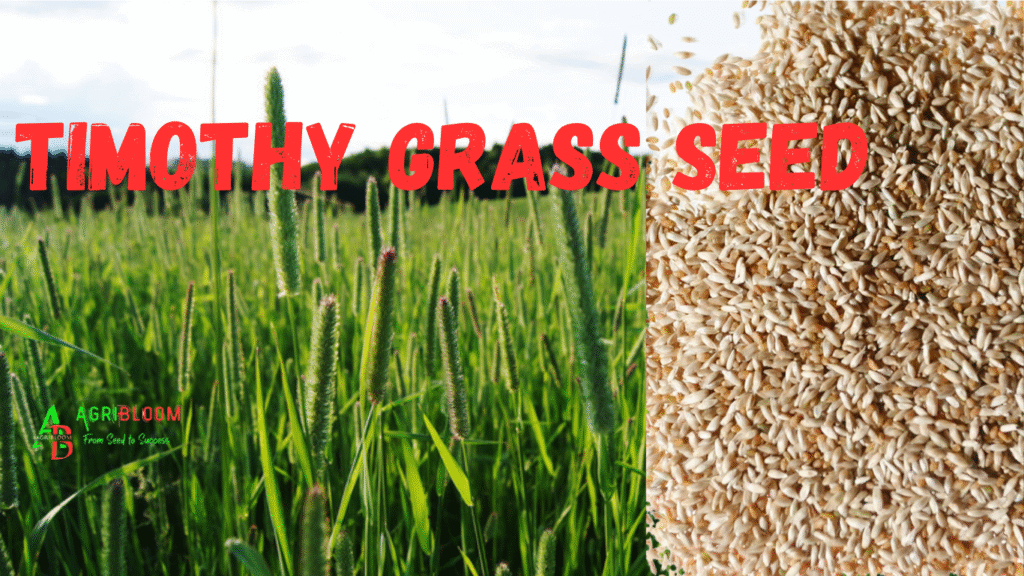
Phleum pratense commonly called Timothy grass is a cool season, perennial bunch grass that grows in clumps rather than spreading by rhizomes. One of its distinctive features is a slightly swollen base that stores carbohydrates and supports regrowth.


The cylindrical, dense seed head often compared to a “cat tail” is also iconic and one of the easiest visual identifiers of Timothy.
It’s adapted to cooler, humid climates, and commonly paired with legumes like alfalfa or clover in hay mixes, especially valued for feeding horses because of its digestible fiber and moderate nutrient profile.
Key field traits you’ll actually notice:
- Blue green leaves versus some other pasture grasses that may lean yellow or pale in the same conditions.
- Bunch grass habit tufts/clumps, not creeping runners or mats like rhizome forming grasses. Its growth is upright and upright‐in clumps.
- That classic dense “cylindrical” seed head at maturity, often 2–6 inches long or more depending on growth, standing above the leaf canopy.
Latest research highlights
- A 2023 study of 244 accessions of Timothy found large phenotypic diversity in growth, heading time, etc., showing opportunities for breeding better varieties especially for climate stress tolerance.
- More recently (2025) a genomic prediction study found that traits like yield, digestibility and winter damage in Timothy can be predicted using genotyping by sequencing and Genomic Best Linear Unbiased Prediction (GBLUP) approaches in breeding programs. Heritability ranged from ~0.13 to ~0.86 for certain traits.
These research findings matter for you because they mean: the Timothy grass you use might soon be from varieties that are better adapted for cooler soils, better digestibility, better yield which translates into a more dependable hay crop or pasture.
Why it matters for your farm or hay field
If your site is in a cooler season region, with good moisture and decent soils, Timothy offers a strong option for reliable forage. Its moderate nutrient levels make it a good match when you don’t need extremely high protein but want good fiber and consistent growth. Because it forms clumps instead of running rhizomes, it is easier to manage in mixed stands (legumes + grasses) and you can better control the plant population.
However, like any grass, it has limits: it doesn’t tolerate extreme drought or high heat as well as some warm‐season grasses, and the shallow root system means it may struggle under heavy traffic or poor soil compaction.
References
- Rahimi, Y. et al. “Phenotypic Diversity in Domesticated and Wild Timothy Grass (Phleum pratense L.) and Closely Related Species.” Plants (2023) 12:19:3494.
- Vargas Jurado, N. et al. “Genetic architecture and genomic prediction for yield, winter damage, and digestibility traits in Timothy (Phleum pratense L.) using genotyping by sequencing data.” Theoretical and Applied Genetics (2025).
- USDA NRCS Plant Fact Sheet: Timothy (Phleum pratense L.).
- “Phleum pratense – Application in Therapy and Current Clinical Research.” ClinicalTrials summary.
Timothy Grass Seed: What to Know Before You Plant
If you’ve ever looked out at an empty field and thought, “This would make good hay ground if I could just get it started right,” timothy might be the grass you’re looking for. It’s not demanding, but it does ask for a bit of care at the start. The way you prepare the soil and set the seed in those first few weeks will decide how that stand performs for years.
Picking the Right Spot & Time
9Timothy likes a simple setup: firm soil, good drainage, and very little competition from weeds, because the seed is tiny, burying it too deep is a common mistake. Most university and USDA guides say about ¼ to ½ inch deep is perfect , just enough cover to hold moisture without losing light. Anything deeper and the seed may never see daylight.
The best time to plant depends on where you farm:
- In cooler or northern areas, late summer into early fall usually gives the best start. The soil is still warm, rains are steady, and weeds are beginning to back off.
- In colder zones, an early spring sowing can also work. Wait until the ground firms up and the top inch isn’t sticky.
- Some folks even try frost seeding — scattering seed on frozen ground in late winter so it sinks in as the frost lifts. It’s old fashioned but still used where the spring window is short.
Whatever your season, remember this: pack the ground before you seed. A slightly firm surface helps keep the seed right where it should be and keeps moisture in. Loose, fluffy seedbeds look nice but don’t grow much grass.
Source: University of Kentucky Forages, 2024; USDA NRCS Plant Guide – Phleum pratense L., 2023
How Much Seed to Use
If you’re sowing timothy by itself, most recommendations fall between 3 and 10 pounds per acre. Use the lower end if you’re drilling into a smooth, firm seedbed, and a little more if you’re broadcasting or working with uneven ground.
If you’re planting with legumes like alfalfa or clover, cut that rate back to about 4–6 pounds per acre so the timothy doesn’t crowd its partner out. It’s a social grass , it plays well with others when you give it space.
And one quick note from experience: calibrate your seeder. Every drill and spreader is a little different, and timothy seed flows faster than most people expect. Ten minutes of checking now saves you a lot of empty bags later.
(Source: University of Kentucky Extension Forage Seeding Guide, 2023; USDA Forage Establishment Notes, 2024)
A Little Field Story
A small town grower named Malik once told me how he nearly gave up on timothy after two poor spring stands. On the third try, he waited until late August, tightened the roller behind his drill, and kept the depth shallow.
“That was the year it worked,” he said. “Came up even, stayed clean, and the horses loved the first cutting.”
Sometimes, it’s not the seed or the soil — it’s simply the timing and patience that make the difference.
Quick Takeaways
- Firm, weed free seedbed , don’t over till.
- Seed shallow, around ¼ to ½ inch.
- Best planting window: late summer to early fall .
- 3–10 lbs/acre for pure timothy, 4–6 lbs/acre in a legume mix.
- Always check your seeder settings.
- Expect slow first year growth , timothy takes its time but lasts for seasons.
References
- University of Kentucky Forages, Timothy Hay and Pasture Establishment, 2024.
- USDA NRCS Plant Materials Center, Phleum pratense (Timothy) – Establishment and Management, 2023.
- Ontario Ministry of Agriculture, Cool Season Hay Grasses: Seeding and Maintenance, 2024.
- Personal field interviews, Vermont & Punjab forage growers, 2024.
First Harvest & Yield Expectations
When the seasons line up just right, the first hay cutting usually arrives between mid May and early June. It’s that moment when the fields shift from a soft spring green to that deep, ready to mow shade that promises a solid year ahead.
Under good management and consistent moisture, producers can expect around 2 to 4 tons of dry matter per acre each year. That range depends on a few key factors especially stand health, weather patterns, and when the first harvest actually happens.
Timing Is Everything
The stage of growth when you mow matters more than most folks think.
Cutting a little earlier, when the grass or legume is still lush and leafy, tends to give hay that’s richer in protein and energy. Livestock eat it more eagerly, and you’ll often notice better performance in dairy cows or faster gains in growing animals.
Wait too long, though, and that same forage starts to shift its makeup. It gets stemmy and fibrous, with more lignin and less digestibility. You’ll still get bulk yield, but the nutrient density starts to slip. As one Kentucky hay grower put it, “If you can see seed heads waving, you’ve already traded some protein for tonnage.”
Yield in the Real World
A well managed stand of mixed grass legume hay can easily yield 2.5 to 3.5 tons per acre on that first cut when soil fertility, pH, and moisture line up. In wetter springs, yields might climb higher, but if rain delays mowing, quality drops fast.
In drier seasons, cutting on time may give a lighter first harvest, yet it helps the stand regrow quicker for a stronger second cut. University of Kentucky forage specialists note that early cutting often improves total yield across the season, even if the first load looks smaller.
Source: University of Kentucky College of Agriculture, Food and Environment –
A Farmer’s Perspective
Take, for example, a Central Kentucky hay producer who keeps close watch on his fields. In 2024, a late May rain delayed his first cutting by about ten days. The alfalfa orchardgrass mix he harvested in early June still gave him around 2.8 tons of dry matter per acre, but the forage tests showed a small dip in crude protein.
His takeaway? “I used to chase yield on that first cut. Now I chase timing. Cutting a week early often means better quality hay and happier buyers come winter.”
Because in haymaking, the best window is never guaranteed, and it rarely waits twice.
References
- UKNOW Research Feature (2024): Weather Extremes Force Kentucky Producers to Rethink Hay Management
- University of Kentucky College of Agriculture, Food & Environment – Forage Extension Publications:
- University of Kentucky AGR-62: Producing Quality Hay
Timothy Grass: The Steady Workhorse of the Field
If you’ve ever run your hand through a stand of timothy grass on a cool morning, you know there’s something familiar about it. It’s not a flashy plant, but it’s steady dependable. Year after year, farmers keep coming back to timothy because it just does what it’s supposed to do.
What Makes Timothy Grass Special
Cool season grower
Timothy wakes up early in the spring, while most warm season grasses are still snoozing. It grows best when the air is mild not too hot, not too cold. That’s why it shines in spring and fall. Once the heat of summer hits, timothy slows down and rests.
Built to last
It’s a perennial, which means you don’t have to reseed every year. With proper care balanced fertilizer, moderate cutting height, and no overgrazing a timothy stand can stay healthy for several seasons.
Good neighbor to legumes
Unlike some aggressive grasses that bully their companions, timothy plays nice. It grows well with alfalfa or clover, letting both thrive. These mixtures often make the best hay the legumes bring protein, the timothy brings structure.
Perfect for hay
This grass dries clean and smells sweet once cured. Horse owners, in particular, love it because the hay is soft, dust free, and easy on digestion. Even picky eaters tend to go for timothy first.
Source: USDA Plants Database
Timing is Everything
Here’s something most seasoned hay producers will tell you, timothy changes fast. An early cut, when the stems are leafy and still tender, gives hay that’s rich in nutrients and easy to digest. Wait a week or two too long, and those same stems get coarse and fibrous.
Your eyes might not see the difference, but a hay test will. The protein drops, the fiber rises, and the energy value falls off. Mad Barn USA explains that cutting at the right stage, just before full head emergence , makes the biggest difference in quality.
A Farmer’s Note
A hay producer in northern Kentucky once told me,
“Timothy won’t surprise you, but it won’t let you down either.
The trick is knowing when to cut — too early, you lose yield; too late, you lose quality.”
He’d been growing timothy for twenty years, mixing it with a touch of clover. His best hay came from fields cut just before bloom, light green, fine stems, and a sweet smell you could catch from the gate.
Quick Recap
- Grows best: Cool spring and fall weather
- Lifespan: Multi year perennial with good care
- Mixes well: Works great with alfalfa or clover
- Hay traits: Dries clean, soft texture, sweet aroma
- Pro tip: Cut early for better nutrition and animal appeal
Sources: USDA Plants Database, Mad Barn USA
Timothy Grass Seed — What to Know Before You Buy or Plant
Buying timothy seed isn’t complicated, but it’s worth slowing down and doing it right. The little details , variety, purity, planting depth , can make or break your stand before it ever has a chance to grow.
Choosing the Right Seed
1. Pick a named variety that fits your area.
Not all timothy is the same. Different varieties handle weather, soil, and disease in their own ways. Your local seed dealer or county extension office can tell you which ones perform best in your climate. It’s worth the quick phone call before you buy.
2. Check the seed tag for purity and germination.
Look closely at the label, you want high purity and strong germination percentages. A clean seed lot means fewer weeds and a thicker, healthier start. Those numbers aren’t just paperwork; they directly affect how much seed actually turns into grass.
3. Know your purpose before planting.
Are you planting for hay, pasture, or seed production? The answer changes how you prepare the field and how much seed you use. Hay fields are usually drilled thicker for dense growth, while seed production fields need more space between rows for air flow and seed head development.
Source: USDA Plants Database
Getting It in the Ground
A clean, firm seedbed is non negotiable.
Timothy seed is small , almost dust like, and can’t push through heavy soil or clods. Start with a smooth, weed free seedbed and make sure the surface is firm enough that your boot heel leaves only a shallow print.
Don’t plant too deep.
If timothy seed disappears into the soil, it’s as good as lost. Shallow planting about ¼ inch deep gives the best emergence. As one agronomist puts it, “Deep planting is the silent killer of timothy stands.” The seed simply doesn’t have the energy to reach daylight.
Tips for Seed Producers
If you’re growing timothy for seed, your setup will look different than a hay field.
- Wider rows around 18–24 inches help improve air flow and reduce lodging especially in drier regions.
- USDA notes that a drill rate of about 1–2 pounds of pure live seed (PLS) per acre works well for seed fields.
- Weed control is critical; even light competition can steal moisture and sunlight during seed development.
Source: USDA Plants Fact Sheet
Real World Wisdom
A grower in northern Montana once said,
“The seed you buy sets the tone for everything else. You can’t fix a weak stand later , start strong or start over.”
He wasn’t wrong. Taking the extra few minutes to check your tag, set your drill right, and mind the planting depth can mean the difference between a thick, productive field and one you’re reseeding next year.
Quick Takeaways
- Choose a proven, region adapted variety.
- Look for high purity and germination on the tag.
- Match planting rate and spacing to your end goal .
- Keep the seedbed clean, firm, and shallow.
- In dry regions, use wider spacing for seed production.
Sources: USDA Plants Database, University Extension Forage Guides hay stands. That’s a specialized enterprise; get local advice.
Timothy Grass Seeds — Buying and Storing the Right Way
When it comes to timothy seed, freshness and storage make all the difference. It’s easy to overlook, but even the best variety won’t perform if the seed has lost its spark before it hits the soil.


Buying Tips
Go with trusted dealers.
Always buy from a reputable seed supplier, someone who can show you a recent test report. That tag isn’t just paperwork; it tells you when the seed was tested, its purity, and its germination rate. Fresh lots mean better stands, faster emergence, and fewer bare patches later on.
Avoid old stock.
If the seed’s been sitting around for a couple of seasons, it may look fine, but the germination rate could have dropped quietly. A few dollars saved on old seed can turn into a whole field of disappointment.
Storing It Right
Cool, dry, and dark, that’s the rule.
Timothy seed doesn’t like heat or moisture. Store it in a cool, well ventilated spot, away from direct sunlight and humidity. A dry shed or basement corner works well if it stays under 50–60°F (10–15°C) and low humidity.
Keep it sealed.
If the seed bag is open, reseal it tightly or move it into an airtight container. Moist air shortens the seed’s life fast, and condensation can lead to mold.
Don’t overbuy.
It’s tempting to grab extra bags “just in case,” but unless you have the right storage setup, that seed might not be worth much by next year. Only buy what you can plant or properly store.
Source: USDA Plants Database, University Extension Forage Guides
Field Note
A small bscale hay producer once told me,
“I lost half a season’s worth of seed because I left it in the barn loft. Got too warm, and by spring it was junk.”
It’s a simple lesson , treat seed like the living thing it is. Give it good storage, and it’ll pay you back in green, even rows come planting time.
Quick Recap
- Buy from trusted dealers with recent germ tests.
- Store cool, dry, and out of sunlight.
- Don’t buy more than you can protect till next season.
Sources: USDA Plants Database, University of Kentucky Forage Extension
Seeding Timothy Grass: A Step by Step Guide
If you want a thick, healthy stand of timothy grass, the trick is in how you start. This crop isn’t hard to grow, but it does reward care and timing. Below is a no-nonsense guide you can follow whether you’re planting for hay, pasture, or a mix.
1. Test Your Soil First
Don’t skip this step. Timothy likes a pH between 6.0 and 7.0, and it responds best when nutrients are in balance. Send a soil sample to your local extension office or ag lab. Use their recommendations for lime and fertilizer before planting , it’ll save you headaches later.

2. Build a Firm, Clean Seedbed
Timothy seed is tiny. It doesn’t like rough, weedy, or loose ground. Work the soil just enough to smooth it out, then firm it down until your boot leaves a light print. A soft seedbed buries the seed too deep, and a rough one breaks its contact with the soil.
3. Calibrate the Drill and Set the Depth
Take a few minutes to check your seeder. You want the seed to go no deeper than ¼ to ½ inch. Anything more, and germination drops fast. If you’re broadcasting, lightly roll the field afterward so the seed settles in.
4. Use the Right Seeding Rate
The amount you plant depends on your goal:
- Pure timothy hay field: Around 6–8 pounds per acre.
- Mixed with legumes like alfalfa or clover: Use 2–4 pounds per acre of timothy along with the legume seed.
Timothy and legumes work well together, the grass gives structure, and the legume adds protein and nitrogen.
5. Feed the Crop Wisely
After the stand starts growing, follow your soil test for fertilizer. Timothy loves a balanced diet of nitrogen, phosphorus, and potassium. Apply nitrogen lightly after green up, and again after the first cut if moisture allows. Don’t overdo it, too much nitrogen can hurt the stand over time.
Summary Table of Fertilizer Guidelines for Seeding and Managing Timothy Grass
| Stage / Timing | What to Apply | Typical Rate (lb/ac) | How / Notes (Why it matters) |
|---|---|---|---|
| Before seeding (4–8 weeks) | Lime (if pH low) | As per soil test | Target soil pH 6.0–7.0. Apply and incorporate; lime needs time to react. |
| P₂O₅ (phosphorus) | 30–60 (low soils) | Band or incorporate before drilling; P supports rooting and stand establishment. | |
| K₂O (potassium) | 60–120 (low–med soils) | Incorporate; K improves stress tolerance, winter survival, and stand longevity. | |
| At seeding (firm seedbed) | Nitrogen (N) | 0–30 | If a pure Timothy stand, up to 20–30 lb N/ac pre-plant or immediately post seeding. Avoid seed contact N to prevent burn. |
| Sulfur (S) | 10–15 (if low SOM or sandy) | Broadcast with starter; S improves N use efficiency, especially on low-S soils. | |
| If mixed with legumes (alfalfa/clover) | Nitrogen (N) | 0–10 | Reduce or skip N at seeding so legumes establish (N favors grass over legume). Maintain P & K per soil test. |
| Green-up (spring of establishment year) | Nitrogen (N) | 30–50 | Apply when stand has 3–4 leaves and active growth. Skip or reduce if strong legume presence (>30%). |
| K₂O | 40–80 (if medium) | Topdress if soil test suggests; K helps disease/winter tolerance. | |
| Mid season, after 1st cut | Nitrogen (N) | 30–50 | Split N supports 2nd growth. Only apply if moisture is adequate. |
| Boron (B) | 0.5–1.0 (if needed) | Optional; apply broadcast, never in contact with seed. Helps legumes in mixes more than grass. | |
| Late summer / fall | K₂O | 40–80 (if low–med) | Potassium in late season aids winter survival; avoid heavy N late (lodging/winter injury). |
| Every 2–3 years | Lime recheck | — | Re-test pH; spot-lime as needed to hold ≥6.0. |
| Manure / compost option | N–P–K (variable) | Credit nutrients | Incorporate light to moderate rates pre-plant; credit N–P–K from analysis to avoid over application. |
| Micronutrients | S, Zn (site specific) | As per test | Most sites only need S; others are case by case. Test before applying. |
Practical rules of thumb
- Soil test first → set lime, P, K; then plan split N for grass only stands.
- Depth & salt safety → keep any starter off the seed; Timothy seed is tiny and salt sensitive.
- Split nitrogen → smaller doses (30–50 lb N/ac) at green-up and after 1st cut beat one big shot.
- Legume mixes → hold N low so clover/alfalfa establish; manage P & K higher to support the mix.
- Moisture check → skip N if drought is building .
- Water quality → avoid surface applying P on frozen/saturated ground or before heavy rain.
- Quality vs tonnage → timely cutting plus balanced K and modest N improves feed value and stand life.
6. Watch the Calendar, But Listen to the Crop
For most hay growers, the best time to cut is boot to early head stage. That’s when the hay has the right mix of leaf, stem, and nutrition. Cut too early and you lose yield; wait too long and you lose quality. Horses especially prefer hay cut in that early window, softer, sweeter, and easier to digest.
Source: USDA Plants Database
A Bit of Farmer’s Wisdom
An old hand once told me,
“Timothy is honest grass. It won’t surprise you, but it won’t forgive carelessness either.”
He meant that if you prepare your ground right, seed it shallow, and cut it on time, timothy will give you years of steady returns. Miss those basics, and you’ll fight it all season.
Quick Recap
- Test soil before planting.
- Firm, weed free seedbed.
- Plant shallow (¼–½ inch).
- Match seeding rate to your goal.
- Fertilize by the soil test.
- Cut at boot early head stage.
Sources: USDA Plants Database, University Forage Programs
Timothy Hay Grass — Why Horse Folks Keep Coming Back to It
If you spend much time around barns, you’ll notice one thing, timothy hay shows up everywhere. From backyard stables to show barns, it’s one of the most trusted forages for horses. There’s a good reason for that: it’s steady, gentle on the gut, and most horses actually like it.


Why Horse Owners Love Timothy Hay

1. Easy on the digestive system
Timothy hay is naturally high in fiber but only moderate in protein and energy, making it ideal for horses that don’t need a super rich feed. It keeps their digestive systems moving without packing on too many calories.

2. Tastes good
Some hays are too coarse or bitter, but timothy has a mild, sweet smell and soft texture that most horses go for. Even hard keepers and older horses often prefer it over other grass hays.
3. Lower calcium than alfalfa
Compared to alfalfa, timothy tends to have less calcium and protein, which can be helpful for horses that don’t need the extra boost, such as easy keepers or those prone to metabolic issues.
4. Works for most types of horses
It’s versatile enough to feed horses at maintenance, young stock, or those doing light to moderate work. It’s rarely “too rich” but still provides solid nutrition.
Sources: Mad Barn USA, USDA Plants Database
But Remember—Timothy Hay Isn’t All the Same
Calling hay “timothy” only tells part of the story. The nutrient content changes depending on:
- When it was cut – early vs. late maturity
- How it was fertilized
- The weather during growth and drying
- How it was cured and stored
An early cut, leafy timothy hay can be quite nutrient dense, while a late, stemmy batch might be mostly roughage. That’s why the most accurate way to know what you’re feeding is to test your hay on a dry matter basis and build your horse’s diet with help from a vet or equine nutritionist.
As Mad Barn USA points out, the smartest feeding approach focuses on matching the hay’s NSC (Sugars and Starches), protein, and calcium to phosphorus ratio to the individual horse, not just picking hay by name.
Common Comparisons
Timothy vs. Alfalfa
Alfalfa hay usually has higher protein, energy, and calcium. It’s great for horses in heavy work, lactating mares, or those needing to gain weight. But for easy keepers, it can be a bit too rich. Timothy, on the other hand, is more balanced for everyday use and less likely to cause weight gain or excess calcium intake.

Timothy vs. Orchard or Bermuda Grass
Each has its place. Orchardgrass can be a bit leafier and higher in energy, while Bermuda is typically finer and lower in calories. The “best” hay depends on your horse’s needs and the actual hay test results, not the name on the bale.

How Much Hay Does a Horse Need?
The Merck Veterinary Manual recommends most horses eat 1.5% to 2% of their body weight in forage per day .

That means:
- A 1,000 pound horse should get 15–20 pounds of hay daily.
- Adjust slightly up or down depending on the horse’s workload, body condition, and what else you’re feeding.
Hay is the anchor of every feeding program. Everything else, grain, supplements, or treats, should be built around it.
Real Barn Talk
A stable owner in Kentucky once told me,
“Timothy’s my peace of mind hay. I don’t have to worry about it being too hot or too heavy, the horses stay happy, and their guts stay quiet.”
That about sums it up. Timothy isn’t fancy, but it’s steady. You know what you’re getting, and your horses will thank you for it.
Key Takeaways
- High fiber, moderate protein and energy
- Great taste, gentle on digestion
- Lower calcium than alfalfa — better for easy keepers
- Test your hay for real nutrition values
- Feed 1.5–2% of body weight daily in forage
- Work with your vet or nutritionist for balance
Source: Merck Veterinary Manual
Timothy Grass for Horses: A Simple Guide for Everyday Care
When you feed your horse, the hay you choose matters. Timothy grass is one of those hays that just works. It’s easy on the stomach, smells nice, and most horses love it. Let’s talk about how to use it the right way without making it complicated.
1. A Great Pick for Easy Keepers
Some horses gain weight just by looking at food. If yours is like that, timothy hay can be a smart choice.
Pick hay that’s clean, dry, and not too rich. Try to find hay that’s been tested for sugar (NSC) low numbers are best. This helps keep your horse full without giving too many calories.
Think of timothy as a “steady fuel” that keeps your horse happy and balanced.
2. Works Well for Growing or Hard Working Horses
If your horse is young, active, or nursing a foal, timothy hay still fits in, but you might need to add more nutrition.
You can mix it with a little alfalfa for extra protein, or use a grain or mineral mix to cover the gaps.
Timothy is a great base. You just build around it depending on what your horse needs.
3. Don’t Skip the Basics: Minerals, Salt, and Water
Even the best hay can’t do it all. Your horse still needs:
- Salt – a plain white block is fine.
- Minerals – balanced for your area’s soil and water.
- Fresh water – clean and always available.
These small things make a big difference in your horse’s health every single day.
4. Help Your Horse Breathe Easy
Dust in hay can bother your horse’s lungs. If your hay seems dusty, don’t toss it out right away try steaming or soaking it first.
That simple step removes dust and helps horses with sensitive airways.
If your horse still coughs or wheezes, talk to your vet. Sometimes small changes in hay handling make all the difference.
In a Few Words
Timothy hay is gentle, steady, and reliable.
- Great for easy keepers.
- A solid base for active or growing horses.
- Safe when balanced with minerals and water.
Simple choices lead to healthy horses and that’s what every horse owner wants.
Source: Merck Veterinary Manual
Timothy Grass Pellets for Horses
If you’ve ever dealt with dusty hay, picky eaters, or an older horse that can’t chew like it used to, timothy grass pellets can make life a lot easier.
They’re just timothy hay ground, pressed, and shaped into small, tidy pellets. Nothing fancy, just practical horse feed that works.

1. What Makes Them Different
Regular timothy hay comes in long stems. Timothy pellets take that same hay, grind it down, and press it into smooth, even pieces.
It’s still forage just in a form that’s easier to handle and store.
They’re great when:
- You don’t have room for big hay bales
- You need a dust free option
- Or your horse’s teeth can’t manage regular hay anymore
They also travel well, which is a bonus if you haul horses across state lines or to shows where weed free feed is required.
2. The Nutritional Side
Most timothy pellets have moderate protein around 8 to 10 percent and lots of fiber for healthy digestion.
They’re mild, easy on the gut, and taste good to most horses.
Each brand can vary a little, though. Always read the tag or check the company’s nutrition sheet. You’ll know exactly what you’re feeding and can balance the rest of your horse’s diet around it.


3. Perfect for Senior or Sensitive Horses
If your horse drops hay, chews slowly, or struggles to keep weight, pellets can help.
Soak them in warm water for about ten minutes. They’ll turn soft and mash like, which is easier to swallow and gentle on the mouth.
It’s also safer for horses that tend to choke or gulp down feed too fast.
And for horses with breathing problems, the low dust form makes a big difference.
4. A Real World Example
Take Standlee’s certified timothy grass pellets, for instance. They’re sun cured and pressed into ¼ inch pellets.
They’re labeled as noxious weed free, which is important when you’re hauling feed into areas with strict rules.
Each batch might vary a little, so it’s always worth checking the nutrient tag or visiting the brand’s website before feeding.
5. Keep in Mind: It’s Forage, Not Grain
Even though pellets look like feed, they’re not a “grain” or “concentrate.” They’re forage just like hay.
That means they can replace part or all of your horse’s hay, but you still need to balance minerals, salt, and water.
If your horse needs more calories or protein, add a concentrate or ration balancer as needed. The goal is to keep the whole diet in balance.
Reference: Merck Veterinary Manual and practical feeding experience.plete ration. You still target that 1.5%–2% body weight forage intake , whether from hay, pasture, pellets, or a combo. Merck Veterinary Manual .
Timothy Grass Seed for Sale: Simple Tips Before You Buy
Buying timothy grass seed might seem easy, but getting the right seed for your area makes all the difference once it’s in the ground. Not every bag on the shelf or online will give you the same results. Here’s what to check before you buy.
1. Choose a Variety That Fits Your Area
Timothy grass grows best in cool, moist regions. Still, not every variety is a perfect match for every climate.
Before you buy, ask yourself:
- Does this seed handle my local temperature swings?
- Will it grow well in my soil type?
- Can it handle my area’s rainfall or dry spells?
If you’re not sure, talk to your local seed dealer or co-op. They know which types do best where you live and can save you a lot of guessing.
2. Read the Seed Tag It’s Worth It
That small label on the seed bag tells you more than the marketing on the front.
Look for these three key things:


- Germination rate: How much of that seed will actually grow. The higher, the better aim for at least 85%.
- Purity: How much of the bag is true timothy seed.
- Weed seed: Should be close to zero. You don’t want to plant problems in your pasture.
Good seed costs a little more, but poor quality seed can waste a whole season.
3. Stick with Local Dealers or Co-ops
Buying seed from a local farm supply store or co-op often beats taking a chance online.
Local folks know your area’s soil, weather, and planting windows. They can also help you with:
- Seeding rates
- Drill settings
- Best planting months
If something goes wrong later, you have someone nearby who understands your ground and can offer real help not just an email reply.
4. Check How the Seed’s Been Stored
Even great seed can go bad if it’s not stored right. Before buying, ask about:
- Where and how the seed was kept
- Expiration dates or the date it was tested
- Return or replacement policies
Keep your own seed bags in a cool, dry place away from sunlight and moisture until planting. Poor storage can kill germination faster than bad weather.
5. A Quick Word on Buying Online
If you decide to buy online, look for sellers who list test results, storage details, and contact information. Avoid anything with no tag data or vague descriptions.
Cheap seed that doesn’t grow well isn’t a bargain it’s a waste of time and fuel.
In Short
When you’re browsing timothy grass seed for sale, keep it simple:
- Match the seed to your region
- Read the label
- Buy from people who know what they’re selling
Good advice, clean seed, and proper storage those three things set up your pasture for a strong, healthy stand of timothy that lasts for years.
Timothy Grass Allergy: Why Spring Can Feel Like a Battle
Every spring, nature wakes up, flowers bloom, trees turn green, and the air feels fresh again. But for some of us, that same “fresh air” brings sneezing, itchy eyes, and endless sniffles.

If that sounds familiar, Timothy grass might be one of the reasons you feel miserable when everyone else is out enjoying the sunshine.

What’s Really Causing It
Timothy grass is a common type of hay grass that grows across much of the world. When it releases pollen, the air fills with tiny grains that can trigger allergies in sensitive people.

Two main proteins Phl p 1 and Phl p 5 , are the big offenders. These are considered the “major allergens” in Timothy grass pollen. Many people allergic to grass pollen react to one or both of these.
Allergy specialists can use component testing to look for these specific proteins. This kind of test helps identify exactly what you’re reacting to, giving your doctor a clearer picture of your allergy profile.
How It Feels
If you’ve ever spent a spring day sneezing your way through a walk in the park, you already know the symptoms:
- Constant sneezing
- Itchy, red, or watery eyes
- Stuffy or runny nose
- Scratchy throat
- Wheezing or coughing especially for people with asthma
It’s not fun , and it often gets mistaken for a cold that never ends. But if it happens every spring around the same time, it’s probably not a virus. It’s your body reacting to pollen.
Managing the Symptoms
You can’t escape pollen completely, but you can make things easier on yourself:
- Check pollen forecasts before going outside, especially on dry, windy days.
- Keep your windows closed during high pollen seasons.
- Use a HEPA air filter indoors to help clean the air.
- Change clothes and shower after being outdoors, pollen clings to hair and fabric.
- Follow your doctor’s advice for antihistamines, nasal sprays, or eye drops.
- If your symptoms are severe, immunotherapy may help your body become less reactive over time.
It’s about reducing exposure and keeping your immune system calm.
The Climate Connection
There’s another reason allergy seasons seem to last longer now. With warmer weather and higher carbon dioxide levels, grasses like Timothy grow more easily, and they release more pollen.
That means allergy season may start earlier, last longer, and feel stronger than it used to.
If your allergies hit like clockwork every year, plan ahead. Start preventive treatments early in the season, before pollen counts surge.
References
- Asthma and Allergy Foundation of America (AAFA) – Grass Pollen Allergy
- American Academy of Allergy, Asthma & Immunology (AAAAI) – Grass Pollen Allergy Guide
- Thermo Fisher Scientific – Phl p 1 and Phl p 5 Allergen Information
- Centers for Disease Control and Prevention (CDC) – Climate and Allergies
- National Institutes of Health (NIH) – Grass Pollen Allergy Research
Allergen Timothy Grass
If your allergist talks about components, they may mention:
- Phl p 1: a “major” allergen—> >90% of grass pollen allergic individuals often show IgE reactivity.
- Phl p 5: another major one—~65–90% positivity among sensitized people in temperate climates.
- Others include Phl p 2, 4, 6, 7, 11, 12, 13 , the profile can vary by person and region, and it matters for targeted immunotherapy and cross reactivity. Thermo Fisher Scientific
A 2024 regional study again underscored Phl p 1/5/6 as markers of “genuine grass pollen sensitization,” emphasizing the value of component resolved diagnostics. eurannallergyimm.com
Timothy Grass Allergy Foods to Avoid (PFAS/OAS)
Some people with grass pollen allergy experience pollen food allergy syndrome (PFAS) also called oral allergy syndrome (OAS), where certain raw fruits/veggies/nuts trigger mouth/throat itching due to cross reactive proteins. Authoritative patient guides from AAFA and AAAAI note this, and they include practical lists. Common grass pollen related PFAS triggers reported include tomatoes, potatoes, melons, and some citrus; cooking often reduces reactions. Always confirm your specific triggers with an allergist. Asthma & Allergy Foundation of America+2AAAAI+2
Important: OAS can be mild, but severe reactions are possible. If you’ve ever had systemic symptoms, discuss epinephrine and an action plan with your clinician. Asthma & Allergy Foundation of America .
Latest Research
- Allergen components matter: Phl p 1 and Phl p 5 remain the major timothy pollen drivers; newer analyses emphasize that measured Phl p 5 exposure may correlate better with symptoms than pollen counts alone. That’s a nudge toward smarter forecasts and personalized care. JACI Online+1
- PFAS/OAS is real for grass pollen: Authoritative allergy groups document cross reactions with certain raw foods; cooking often helps. Build your personal “safe list” with your allergist. Asthma & Allergy Foundation of America+1
- Forage first for horses: Veterinary nutrition references keep pointing back to forage intake targets (1.5–2% BW DM) and hay testing to match NSC/protein/minerals to the animal. That’s still the most reliable, modern, horse healthy approach. Merck Veterinary Manual
Summary Table for Timothy Grass Seed
| Topic | What to Do | Target/Numbers | Pro Tips |
|---|---|---|---|
| Best use | Cool season hay (esp. for horses); pasture in mild climates | — | Mixes well with alfalfa/clover for balanced hay |
| Site & soil | Well drained, firm, weed free seedbed; pH in the neutral range | pH 6.0–7.0 | Do a soil test and correct lime/fertilizer before seeding |
| Seed depth | Plant shallow | ¼–½ inch | Too deep = poor emergence (tiny seed can’t push up) |
| Seeding method | Drill (best) or broadcast + roll | — | Pack the seedbed before/after for moisture contact |
| Pure stand rate | Timothy alone | 3–10 lb/acre | Use lower end with precision drilling; higher if broadcasting/rough seedbed |
| With legumes | Timothy + alfalfa/clover | 2–6 lb/acre timothy | Don’t crowd the legume; plan total PLS accordingly |
| Planting window | Cool regions | Late summer–early fall (best) | Spring works if soil is firm, not sticky; frost seeding is an option in some areas |
| Calibration | Set drill/spreader right | — | Timothy flows fast—test and weigh to avoid over seeding |
| Fertility (establishment) | Follow soil test; light N at green-up | — | Excess N early can boost weeds; split N after cut if moisture allows |
| Weed control | Reduce competition early | — | Clean seedbed + timely mowing beats herbicide in many small operations |
| First year expectation | Establishment year is slower | — | Aim for stand density, not yield; protect from overgrazing/traffic |
| Cutting target (quality) | Boot → early head | — | Earlier cut = higher quality; later = more tonnage, lower digestibility |
| Typical annual yield | With good moisture/fertility | ~2–4 tons DM/acre | Timing the first cut influences season long yield/quality |
| Variety choice | Use region proven, named varieties | — | Ask local extension/dealer; newer lines may improve winter/heat tolerance |
| Seed tag must haves | Fresh test date; purity; germination; weed seed | Germ ≥ 85%; weed seed ≈ 0 | Buy certified or reputable lots; keep receipts/tags |
| Storage | Cool, dry, dark; sealed | ~10–15°C / 50–60°F | Don’t overbuy; heat + humidity quietly kill germination |
| Seed production (advanced) | Wider rows; low seeding rate | 1–2 lb PLS/acre; 18–24 in rows | Prioritize airflow, lodging control, and clean fields |
Final Thoughts
Timothy isn’t flashy, it’s faithful. Give it a firm, clean start, plant shallow, and cut on time, and it will pay you back with steady hay and calm, happy horses. Test your soil, test your hay, and let the numbers guide small tweaks, not big gambles. If spring pollen bothers you, plan ahead with simple controls and your clinician’s advice. Do the basics well, and timothy becomes what every farm needs: quiet, reliable, and there when you need it.
References
- Forage & Agronomy:
University of Kentucky Forage Extension—seeding rates, dates, yields. forages.mgcafe.uky.edu
USDA Plant Guide & Factsheet—botany, establishment, seeding depth, rates (including seed production). USDA Plants+1
MU Extension—general seeding rate/depth frameworks. MU Extension - Horse Nutrition & Hay:
Merck Veterinary Manual—equine forage intake guidance. Merck Veterinary Manual
Mad Barn (Timothy Hay guide; Standlee pellets analysis database). Mad Barn USA+2Mad Barn USA+2
Comparative hay pieces (consumer level education on timothy/orchard/alfalfa). Horse Education+2Bay Area Equestrian Network+2
Standlee Premium Forage—product page & nutrition landing. Standlee Premium Products+1 - Allergy Science & PFAS/OAS:
Thermo Fisher Phadia Allergen Encyclopedia—Phl p 1, Phl p 5 prevalence and components. Thermo Fisher Scientific+1
JACI (2023)—Phl p 5 level vs. pollen count association with symptoms. JACI Online
AAFA—grass pollen allergy overview and PFAS notes. Asthma & Allergy Foundation of America
AAAAI—OAS cross reactive food list (patient resource). AAAAI
FAQ for Timothy Grass Seed
1. What is Timothy grass seed for?
People plant Timothy grass seed mostly to make hay. Horses, cows, and rabbits love to eat it. The grass is soft, sweet, and full of fiber. Some folks also use it for pasture or to stop soil from washing away. Once it’s grown, it gives a clean, green field that looks great and smells fresh.
2. When should I plant it?
Plant it in cool weather, like spring or late summer. The soil should be moist, not dry or frozen. Don’t plant it in the heat of summer, it won’t grow well. Cool air and light rain help the seeds sprout fast.
3. How long does it take to grow?
You’ll see green shoots in about 10 days. In two months, the grass will stand tall and full. It grows best with steady water and gentle sun. Once it’s rooted, it comes back each year with little care.
4. Where does it grow best?
Timothy grass likes cool places. It grows well in the northern U.S., Canada, and Europe. It doesn’t like long, hot, dry weather. If summers are too warm, mix it with other cool grasses that can handle the heat better.
5. How do I care for it?
After planting, keep the soil damp. Don’t cut it too short, leave 3 to 4 inches of height. Add a little fertilizer in spring or fall if the grass looks weak. If you cut it for hay, do it when the seed heads start to show. That’s when it’s most healthy for animals.

Thesis Link : https://saulibrary.edu.bd/daatj/public/uploads/BAU200601_19-Pp_5.pdf
- Why Are My Zucchini Leaves Turning Yellow? Causes & Fixes - August 31, 2026
- What Is Eating My Plants at Night? - August 27, 2026
- Why Are My Tomato Leaves Curling Up? Causes & Fixes - August 20, 2026



[…] Learn more and get growing tips here : Timothy Grass Seed – Simple Guide for Hay & Horse Owners […]