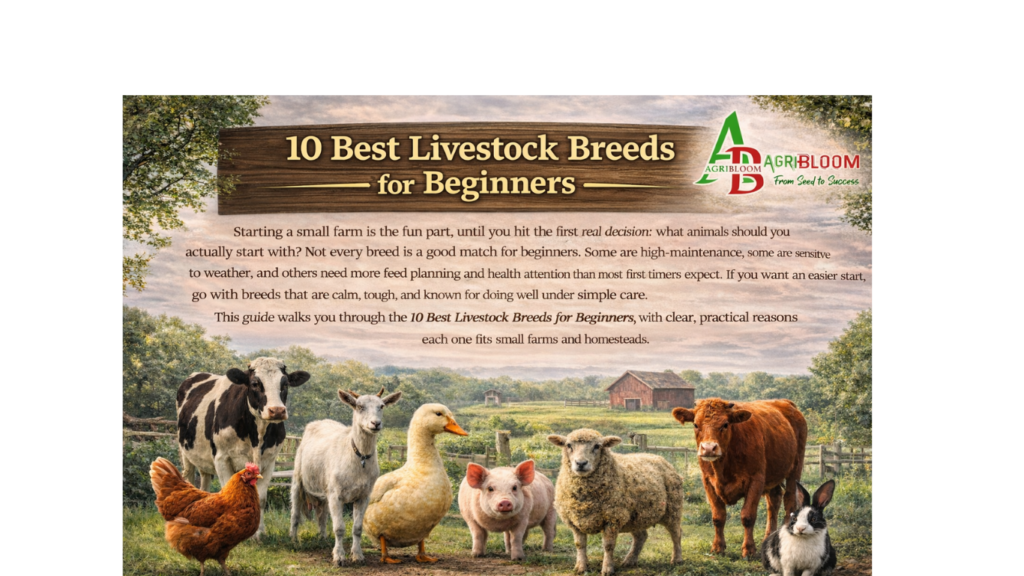

10 Best Livestock Breeds for Beginners
Starting a small farm is the fun part, until you hit the first real decision: what animals should you actually start with? Not every breed is a good match for beginners. Some are high-maintenance, some are sensitive to weather, and others need more feed planning and health attention than most first-timers expect. If you want an easier start, go with breeds that are calm, tough, and known for doing well under simple care. This guide walks you through the 10 Best Livestock Breeds for Beginners, with clear, practical reasons each one fits small farms and homesteads.
1. Buff Orpington Chickens
A Buff Orpington hen with golden feathers standing calmly in a small farmyard. Docile dual purpose chicken that suits beginner backyard keepers.
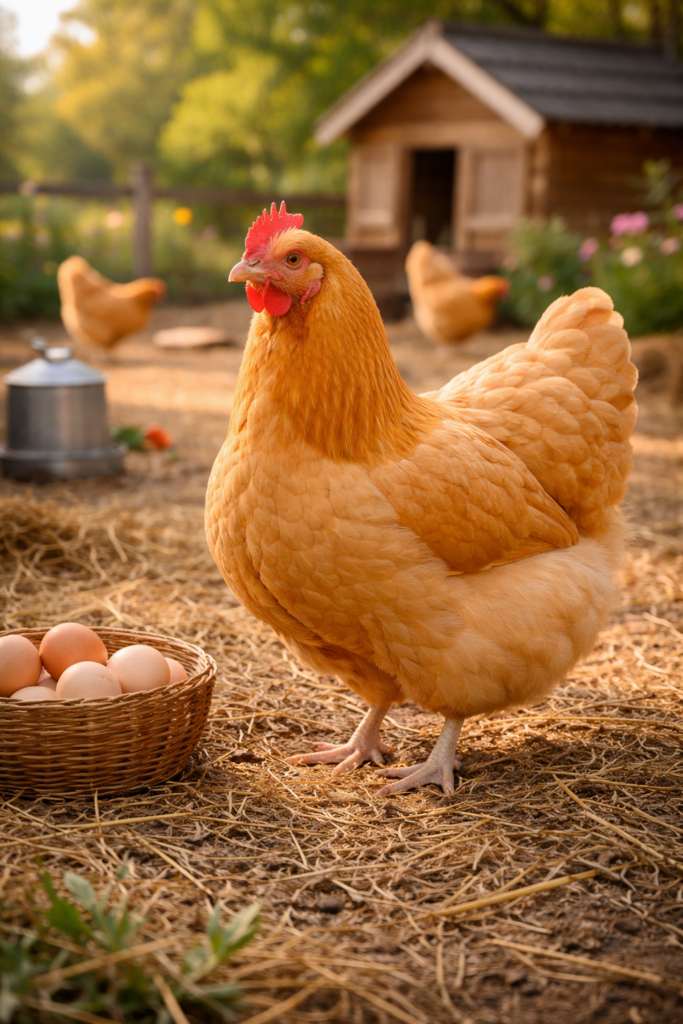
If you are just getting started with poultry, Buff Orpington chickens are a smart first pick because they are steady birds that fit real beginner routines. They are widely described as calm and people friendly, which makes day to day tasks like refilling feeders, collecting eggs, and doing quick health checks feel manageable instead of stressful.
Buff Orpingtons are also a true dual purpose breed, so they work well for families who want eggs and also want the option of raising a heavier bird for the table. Many hens start laying at around 22 to 26 weeks, which is roughly six months, although timing can shift with daylight, season, and diet. Under typical backyard conditions, annual production is often estimated in the range of 200 to 280 eggs per hen.
Why beginners do well with Buff Orpingtons
• Calm temperament: A calmer bird is easier to handle, easier to inspect, and less likely to panic in a small coop setting.
• Reliable egg output: They are commonly listed as a breed that can reach around 200 to 280 eggs per year with steady care.
• Useful size: They are often recommended as a practical dual purpose option for small farms that want eggs plus meat potential.
• Heritage background: The Buff variety was accepted by the American Poultry Association in 1902, which is one reason the breed has stayed popular for so long.
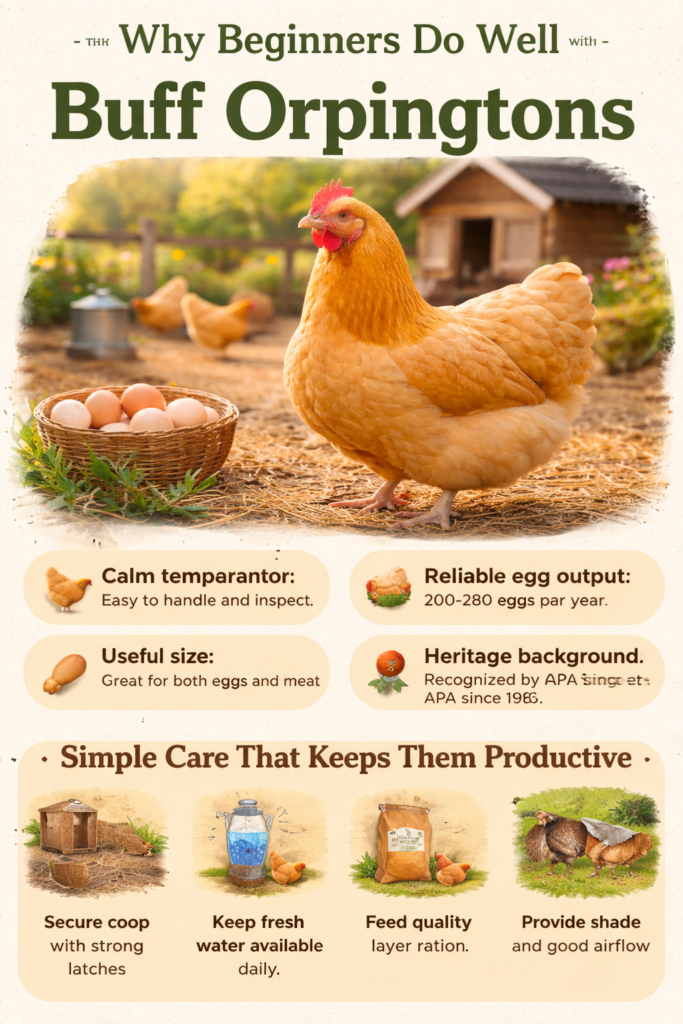
Simple care that keeps them productive
Most beginner problems come from housing and consistency, not the breed itself.
• Use a secure coop with strong latches and a covered run to reduce predator losses.
• Keep clean water available every day and refresh it often in warm weather.
• Feed a quality layer ration once hens are close to laying and keep extra calcium available if needed.
• Give shade and good airflow in summer since heavy feathering can make heat harder to handle.
If you want a chicken that is forgiving while you learn and still gives solid results, Buff Orpingtons are one of the easiest breeds to start with.
References
- The Livestock Conservancy and Lafeber, American Poultry Association recognition dates including Buff in 1902.
- University of New Hampshire Extension, yearly egg production estimates listing Buff Orpington at 200 to 280 eggs per year.
- Tractor Supply breed guide, beginner suitability and egg production range.
- Chicken and Chicks Info, typical start of lay around 22 to 26 weeks.
2. Nigerian Dwarf Goats – Small Dairy Goat
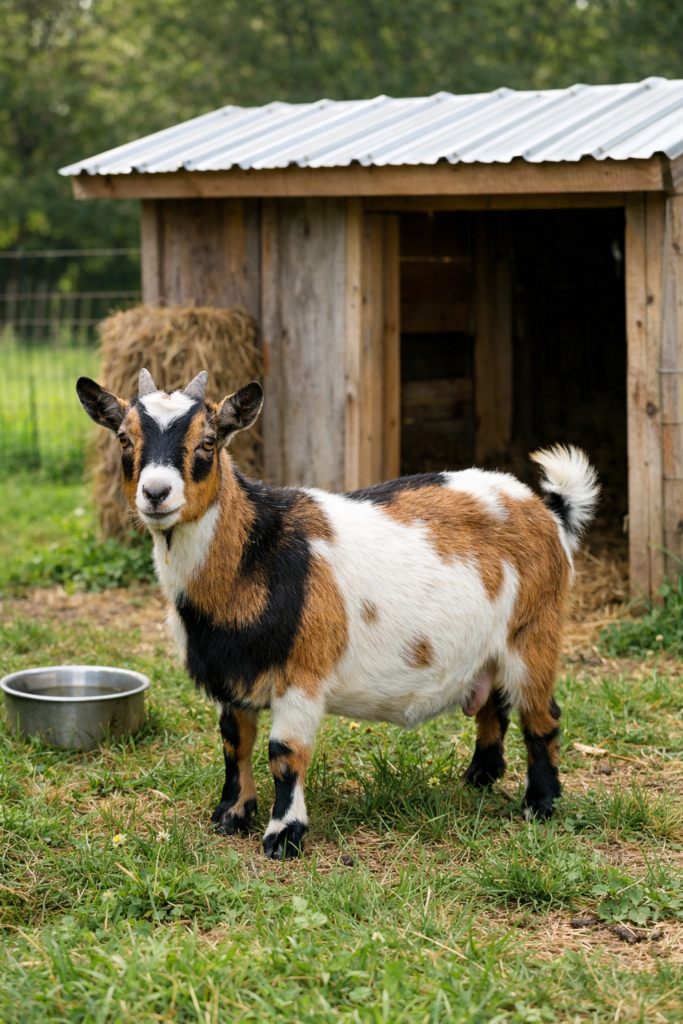
Nigerian Dwarf doe standing in a small pasture beside a simple shelter. Small dairy goat breed suited for beginners.
If you have a bit of yard or pasture and you want a dairy animal without the size and feed demands of a full sized goat, Nigerian Dwarf goats are a strong beginner option. They are compact, but they are not fragile. Breed standards list does in the range of about 17 to 19 inches and bucks about 19 to 20 inches, with an ideal weight often described around 75 pounds.
What makes this breed especially appealing to first time keepers is milk quality. Nigerian Dwarf milk is well known for higher butterfat than many standard dairy goats. Mississippi State University Extension notes milk fat greater than 6 percent and commonly cited in the 6 to 10 percent range, which is one reason the milk is popular for cheese and other small batch dairy projects. Guinness World Records also references the American Dairy Goat Association figures showing average butterfat around 6.1 to 6.5 percent, with the potential to rise higher during lactation.
In terms of volume, they are not a commercial high output breed, but they can be surprisingly productive for their size. Mississippi State University Extension notes that they can produce around a half gallon per day in suitable conditions. For many homesteads, that is a practical amount because it fits daily use without creating excess you cannot store or process.
Why beginners do well with Nigerian Dwarf goats
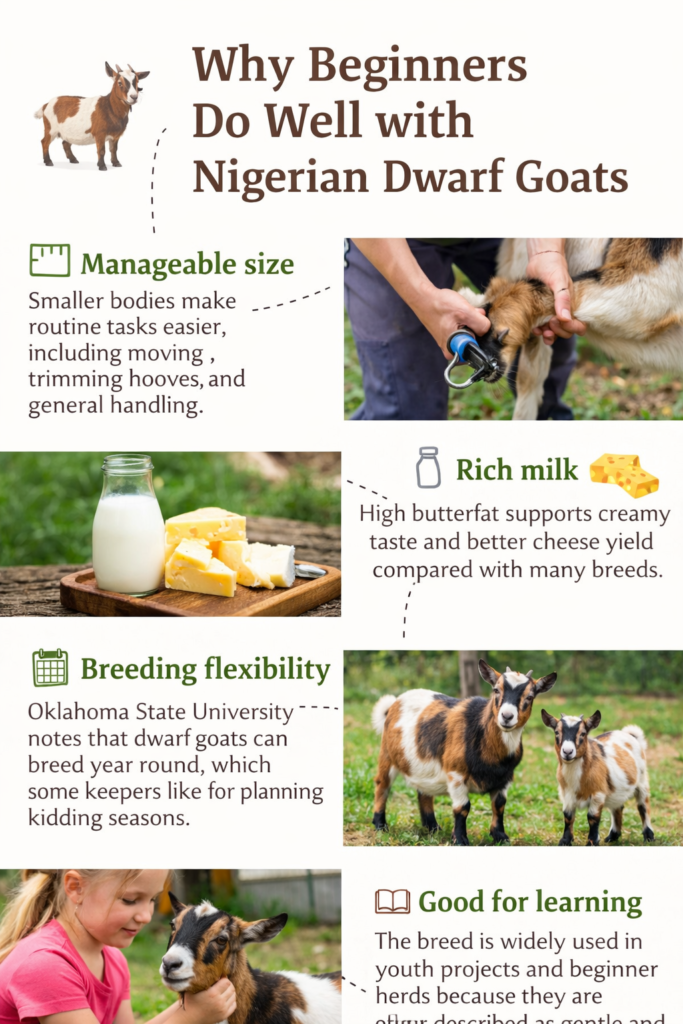
• Manageable size: Smaller bodies make routine tasks easier, including moving, trimming hooves, and general handling.
• Rich milk: High butterfat supports creamy taste and better cheese yield compared with many breeds.
• Breeding flexibility: Oklahoma State University notes that dwarf goats can breed year round, which some keepers like for planning kidding seasons.
• Good for learning: The breed is widely used in youth projects and beginner herds because they are often described as gentle and easy to handle.
Simple care notes that matter on a small farm
Nigerian Dwarfs stay easiest when management stays simple and consistent.
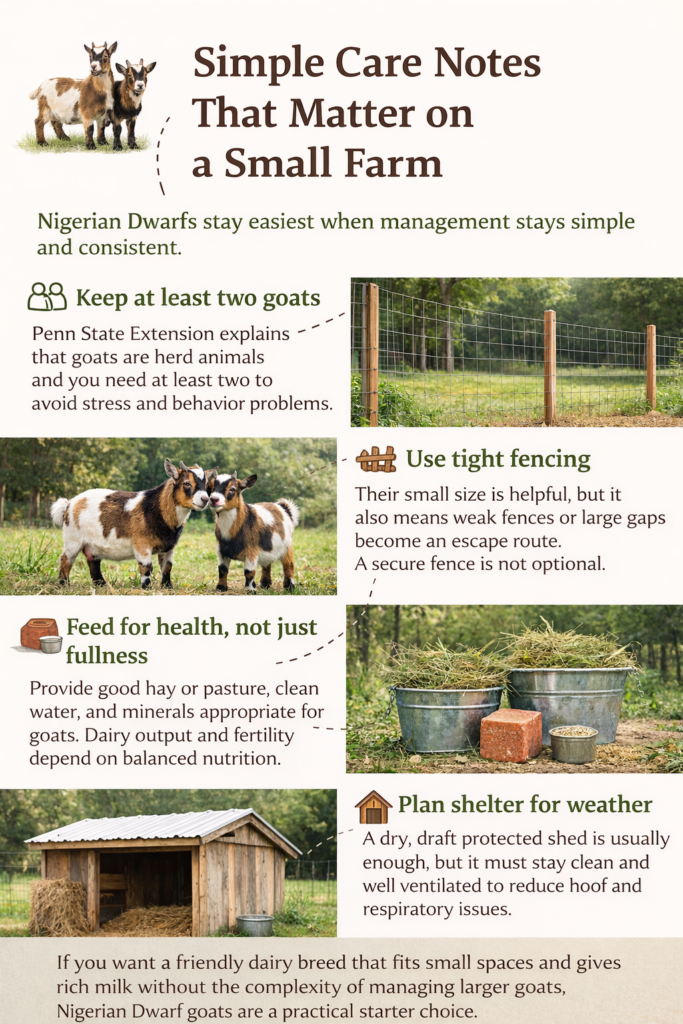
- Keep at least two goats. Penn State Extension explains that goats are herd animals and you need at least two to avoid stress and behavior problems.
- Use tight fencing. Their small size is helpful, but it also means weak fences or large gaps become an escape route. A secure fence is not optional.
- Feed for health, not just fullness. Provide good hay or pasture, clean water, and minerals appropriate for goats. Dairy output and fertility depend on balanced nutrition.
- Plan shelter for weather. A dry, draft protected shed is usually enough, but it must stay clean and well ventilated to reduce hoof and respiratory issues.
If you want a friendly dairy breed that fits small spaces and gives rich milk without the complexity of managing larger goats, Nigerian Dwarf goats are a practical starter choice.
References
- Extension.org, Nigerian Dwarf goat breed notes including butterfat range and breeding maturity details.
- Oklahoma State University, Nigerian Dwarf goat breed profile with height and ideal weight details.
- Mississippi State University Extension Service, Dairy Goat Breeds PDF with Nigerian Dwarf standards, milk fat, and milk yield notes.
- Penn State Extension, goat production and management noting goats are herd animals and beginners should keep at least two.
- Guinness World Records citing American Dairy Goat Association butterfat averages for Nigerian Dwarf milk.
3. Katahdin Sheep – Hair Sheep for Meat
Katahdin ewe with a short shedding coat grazing on pasture near a simple shelter. Easy care hair sheep for beginner meat production.
If you are interested in sheep but you do not want the extra work that comes with wool, Katahdin sheep are a practical place to start. Katahdins are hair sheep. They grow a hair coat and shed naturally, so routine shearing is not part of the program for most flocks. The Katahdin Hair Sheep International guide also notes that they do not require shearing, crutching, or tail docking, which can remove several stressful tasks from a beginner’s checklist.

Katahdins were developed in the United States and selected for easy care traits, including shedding, moderate size, and adaptability. That history matters because it explains why the breed fits small farms so well. The selection goals were not built around show wool or specialized barns. They were built around pasture based management and practical productivity.
Why Katahdins work well for beginners
Katahdins tend to support early success because they reduce labor and still deliver solid results.
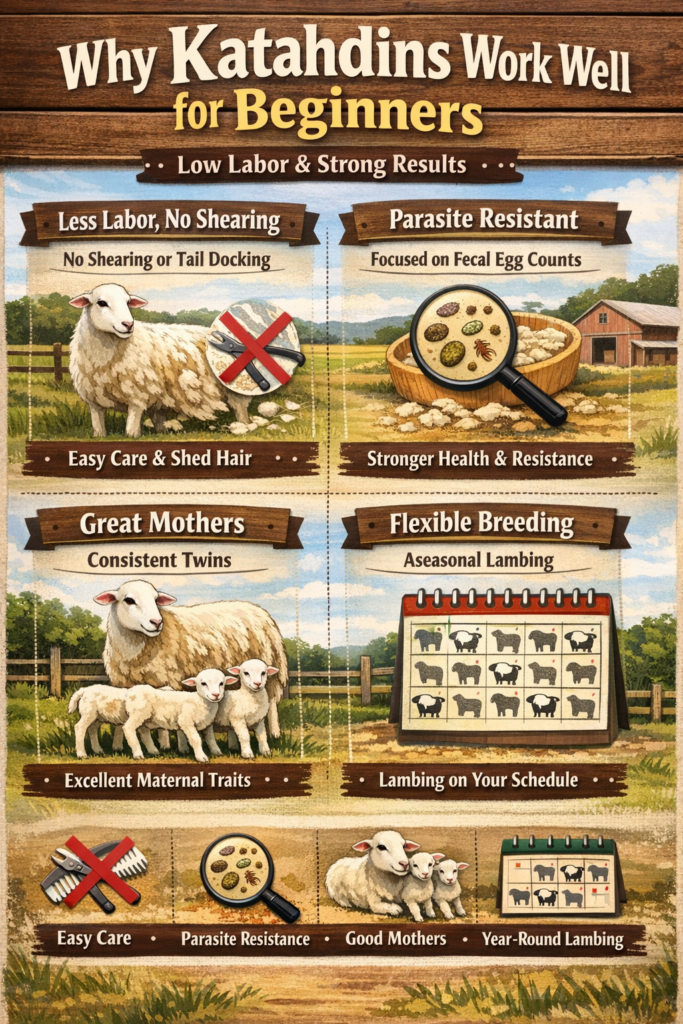
• Less labor from the start: They shed and typically do not need shearing or tail docking, which simplifies seasonal work.
• Parasite focused selection: The Katahdin NSIP buyer guide describes parasite resistance as a heritable trait that can be measured using fecal egg counts, helping producers select animals with stronger parasite protection.
• Strong maternal performance: The KHSI guide describes Katahdins as a maternal breed that consistently twins in many spring lambing systems.
• Flexible breeding planning: The same KHSI guide notes Katahdins as a good choice for aseasonal breeding, which can help small farms plan lambing around feed and markets.
What to expect on pasture
Many beginners want sheep that grow well without complicated feeding. Katahdin lambs are commonly managed on pasture and can finish with simple supplementation when needed, depending on forage quality and target weight. The key is not the breed alone. It is matching stocking rate to your grass, keeping minerals available, and staying consistent with parasite monitoring.
A simple routine that works well for new keepers includes the following.
- Good pasture or clean hay as the base diet
- Clean water every day
- Basic shelter for wind and heavy rain
- Fencing that holds sheep reliably
- Regular checks for body condition and parasite pressure
Dorper comparison for beginners
If you are comparing hair sheep options, Dorper sheep are another popular meat breed that can shed a light mixed coat, and they are often described as fast growing and easy to care for. Research also notes the cost saving benefit of Dorper shedding in production systems. Many small farms choose between Dorper and Katahdin based on local climate, breeder availability, and market preference.
If your goal is freezer lamb or local meat sales with fewer labor heavy tasks, Katahdins earn their reputation as an easy care breed. Their shedding coat, maternal focus, and selection for parasite resistance make them one of the strongest beginner sheep choices.
References
- MorningChores Dorper overview describing light shedding coat and growth traits.
- Katahdin Hair Sheep International, A Guide to Katahdin Hair Sheep 2020 Edition (shedding coat, no shearing, no tail docking, consistent twinning, aseasonal breeding, parasite resistance focus).
- Katahdin Hair Sheep International, history page (breed developed in the United States and origin at Piel Farm in Maine).
- Katahdin Sheep NSIP Buyer’s Guide 2025 (parasite resistance as a heritable trait and selection using fecal egg counts).
- Cornell Small Farms, upgrading hair sheep and shedding ability in Dorper lines.
- Frontiers in Veterinary Science 2024 paper referencing Dorper automatic shedding and production cost savings.
4. Dexter Cattle – Miniature Dual Purpose Cattle
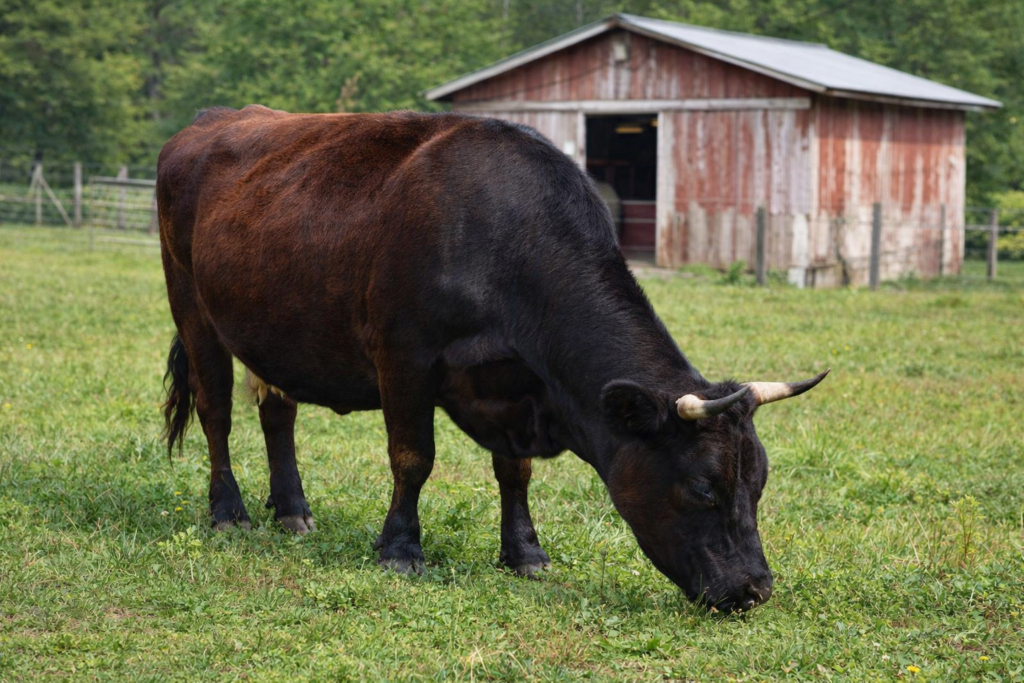
Dexter cow grazing on a small pasture near a simple barn. Small framed dual purpose cattle suited for beginner homesteads.
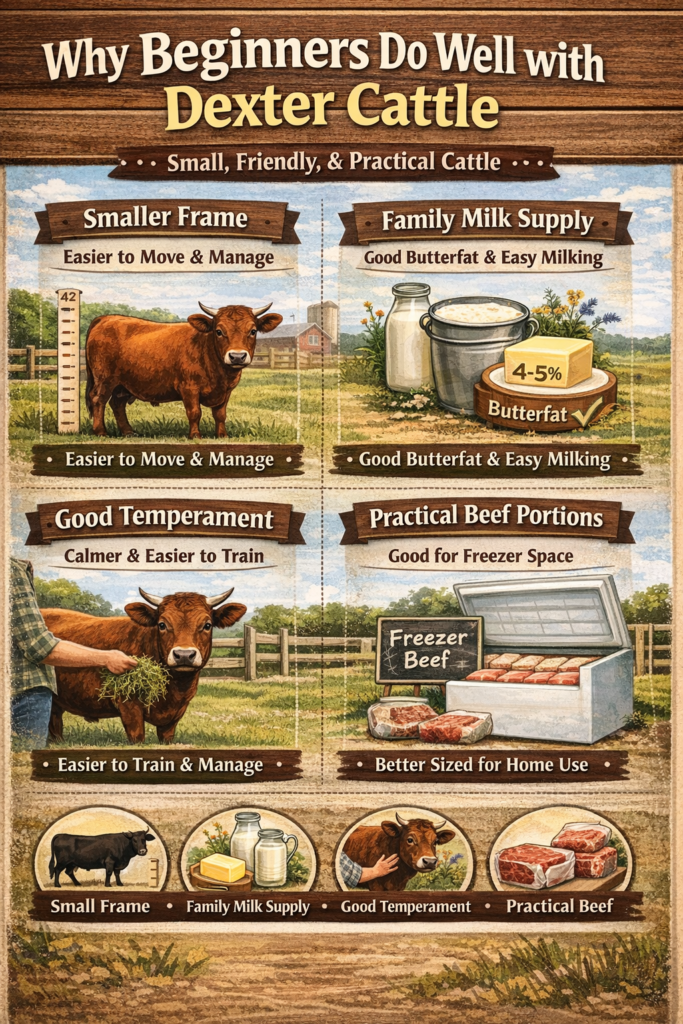
Raising cattle can feel like a big leap for a first time farmer, but Dexter cattle make the learning curve easier on smaller land. They are one of the smallest cattle breeds commonly kept for home milk and beef. The American Dexter Cattle Association notes that mature cows typically fall in the 36 to 42 inch range when measured at the hip, with bulls usually a bit taller. The Livestock Conservancy also describes Dexters as about 40 inches tall and roughly 700 to 900 pounds, which helps explain why many beginners find them less intimidating to handle than larger breeds.
Dexters are valued because they can support a household in more than one way. They are widely described as a dual purpose breed, meaning they can provide milk and also finish into practical beef. Oklahoma State University lists average daily milk yield at about 1.5 to 2.5 gallons with butterfat in the 4 to 5 percent range. That level of production is often enough for a family without creating the pressure of managing very high volume milk.
Why beginners do well with Dexter cattle
• Smaller frame: A smaller animal is usually easier to move, catch, and manage safely with basic facilities.
• Useful milk output: Many Dexters produce a family sized amount of milk, with butterfat commonly noted around 4 to 5 percent.
• Good temperament potential: Many Dexter breeders describe the breed as tractable and easier to train than larger cattle, which helps beginners build calm handling habits early.
• Practical beef for home use: Because they are smaller, the freezer portions can fit a family better than very large carcasses, especially for first timers learning processing and storage.
Real world management notes for a small acreage
Dexters still need solid basics. A small cow is not a simple pet.
- Start with clear goals. Decide whether you want a family milk cow, beef, or both.
- Plan safe handling from day one. A stanchion, a small pen, and calm routine handling matter more than fancy equipment.
- Feed for body condition. On good pasture many Dexters do well, but milk production and breeding results depend on consistent forage quality.
- Think ahead for calving. Smaller breeds are often chosen for calving ease, and some sources note fewer complications compared with larger cattle, but you still need observation and a relationship with a local veterinarian.
If you want the cattle experience without needing large acreage, Dexter cattle are a strong beginner option. Their size, family scale milk output, and multipurpose value can make cattle ownership more realistic for new homesteaders.
References
- University of Minnesota Extension, guidance on selecting sires for calving ease and recording calving traits.
- American Dexter Cattle Association, breed height ranges for cows and bulls.
- The Livestock Conservancy, Dexter cattle size and usefulness as a multipurpose breed.
- Oklahoma State University, Dexter cattle productivity including milk yield and butterfat.
- Texas Dexter Cattle, notes describing Dexters as tractable and easily trained.
- Mother Earth News, family scale milk yield and dressing percentage context for beef.
- Farmers Weekly, discussion of calving problems being uncommon and related ease of calving in Dexters.
5. KuneKune Pigs – Small Grazing Pig Breed
KuneKune pig grazing on green pasture near a simple shelter. Small docile pig breed suited for beginner homesteads.
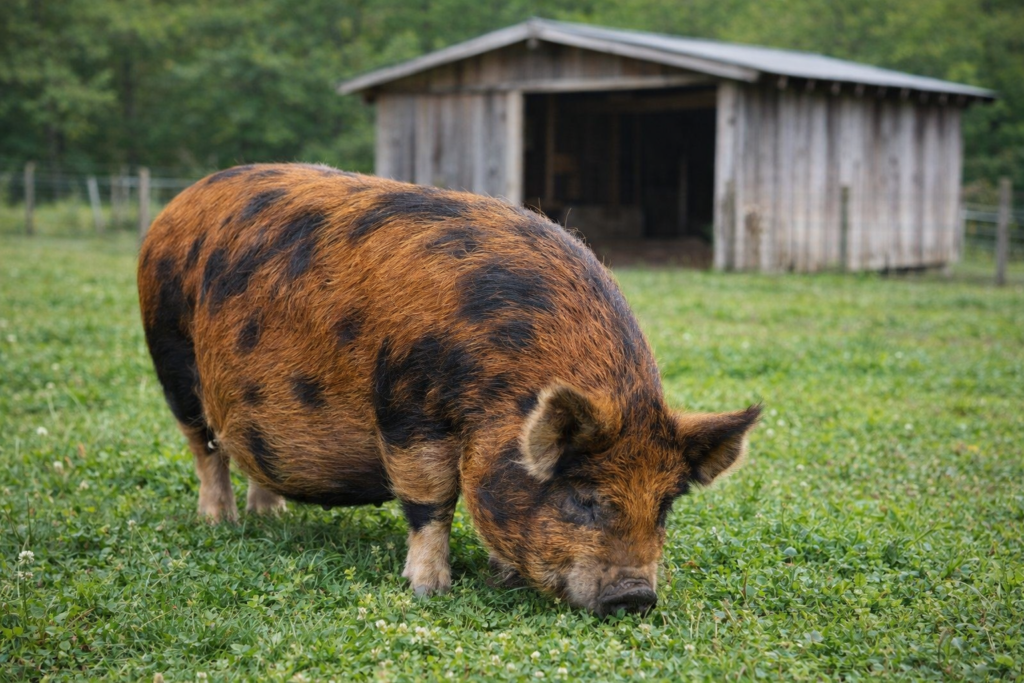
Pigs are smart and productive, but many commercial types get so large that they can feel intimidating for a first time keeper. KuneKune pigs are different. They are a smaller heritage breed from New Zealand and they are widely valued for a calm, sociable nature. Even their name reflects their shape, because KuneKune is a Maori word meaning fat and round.
For beginners, size matters because it affects handling, housing, and daily routines. The American KuneKune Pig Society publishes weight guidance showing that KuneKunes are typically far lighter than standard commercial hogs. That smaller frame can make routine care, transport planning, and safe handling more realistic on a small farm.
One reason KuneKunes have become popular with homesteaders is how well they fit pasture based systems. They are natural grazers, and access to good grass can reduce how much they feel driven to root. The American KuneKune Pig Society explains that providing ample grazing opportunities and using rotational grazing can significantly reduce rooting, especially when pasture is managed to avoid bare patches. Many small farmers like this because it can mean less damage to lawns and less churned up ground compared with heavier rooting pig types, although any pig can still root if bored, hungry, or kept on thin pasture.
KuneKune sows also have a reputation for being steady mothers. A practical expectation for beginners is a moderate litter size that is easier to manage than very large commercial litters. One detailed breeding guide notes a typical litter size commonly falls around five to eight piglets, while also acknowledging that real world numbers can vary. This fits small farms that want home raised pork, a few feeder pigs, or occasional piglets to sell without turning the operation into a full time farrowing system.
What makes KuneKunes beginner friendly in everyday life
Many beginner wins come from simple things that are easier with this breed.
• They tend to be people oriented and calmer, which helps with basic handling and pen checks.
• They graze well when pasture is available, which can support simpler feeding plans in summer.
• Their rooting can often be reduced with good grass cover and pasture rotation, which helps protect the ground.
• Typical litter sizes are often described as moderate, which can be easier for beginners to supervise.
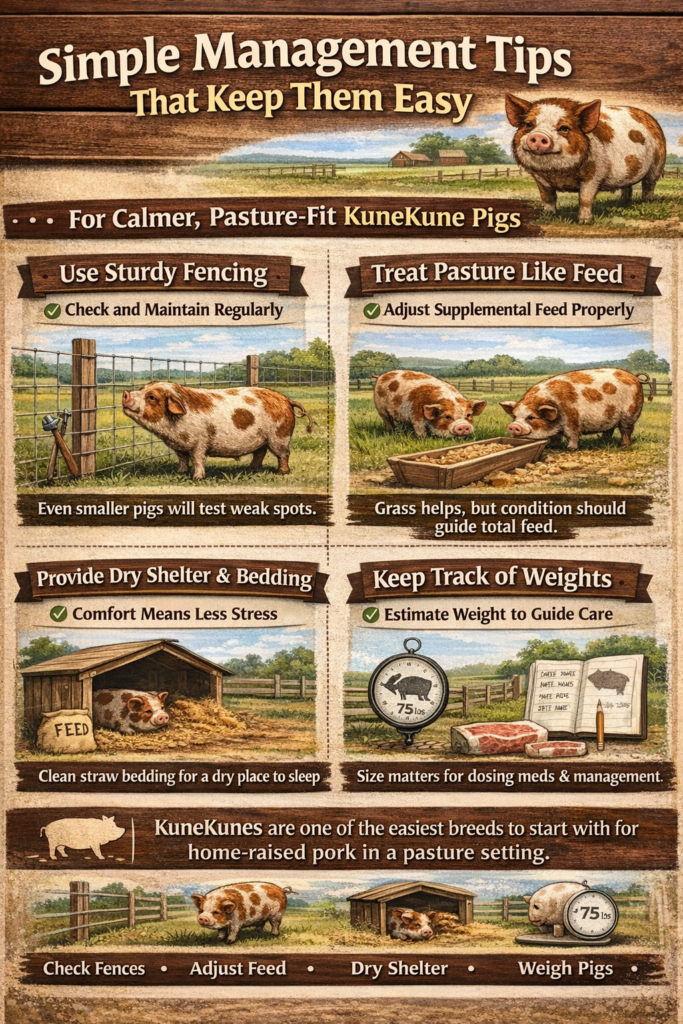
Simple management tips that keep them easy
- Use sturdy fencing and check it regularly. Even smaller pigs will test weak spots.
- Treat pasture like a feed source, not a magic solution. Grass helps, but body condition should guide how much supplemental feed you provide.
- Provide a dry shelter with bedding. Comfort reduces stress and helps growth.
- Keep weights in mind for health decisions. Reliable weight estimates matter for medication dosing and general management.
If your goal is home raised pork with a calmer, smaller pig that fits pasture living, KuneKunes are one of the easiest breeds to start with. They still require good fencing and consistent care, but they often feel more manageable for first time pig keepers than large commercial hogs.
References
- Halbert Farm, pasture based overview describing KuneKunes as grazers with reduced rooting impact compared with traditional pigs.
- American KuneKune Pig Society, KuneKune weight guidance and why weighing matters.
- American KuneKune Pig Society, guidance on grazing and reducing rooting behavior through pasture management.
- American KuneKune Pig Society, origin and history, including Maori meaning fat and round and notes on docile nature.
- Auckland Council, explanation of the Maori meaning of KuneKune and description of placid, sociable temperament.
- Carlisle Acres, KuneKune pregnancy guide with typical litter size range.
- Wikipedia, overview noting New Zealand origin and docile, friendly nature.
6. New Zealand Rabbits – Meat Rabbit Breed
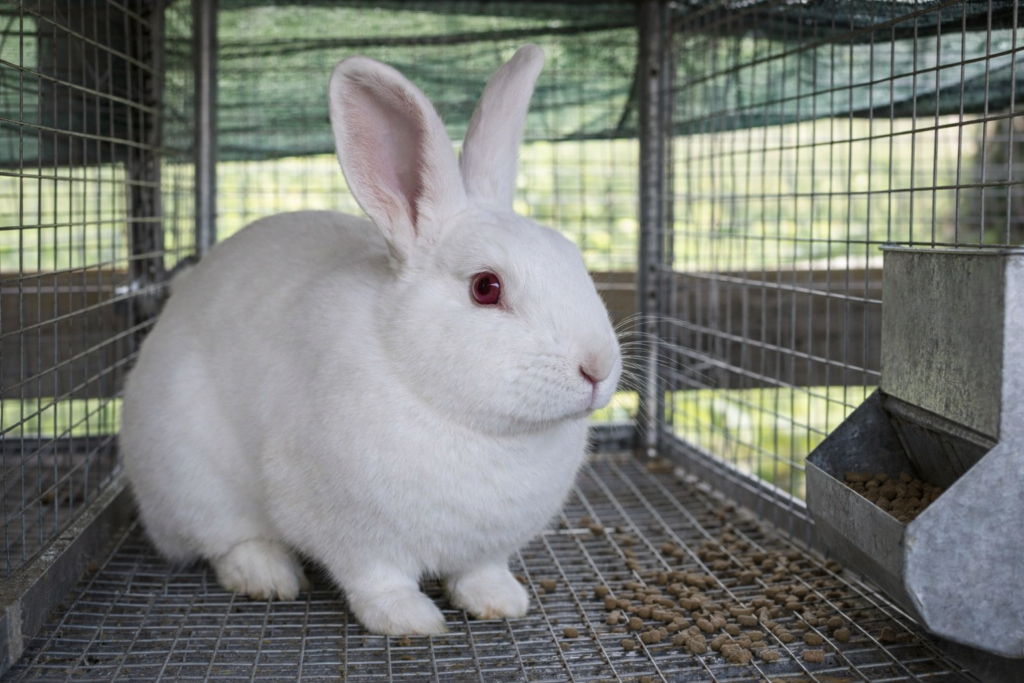
New Zealand White meat rabbit sitting in a clean wire hutch with shade and good airflow. Beginner friendly rabbit breed for home meat production.
If your space is limited and you want livestock that can produce quickly, meat rabbits are worth a serious look. They are quiet, they can be raised in a compact setup, and they can fit into backyard routines without needing pasture or a barn. For beginners, the New Zealand rabbit is one of the most practical starting breeds because it was developed for meat production and fast growth. The American Rabbit Breeders Association notes that the New Zealand breed was originally developed in the United States and recognized in 1916, with a maximum weight of twelve pounds.
In many small farm systems, New Zealand Whites are treated as a reliable meat breed because they grow into a uniform fryer. Cornell Cooperative Extension also lists the white New Zealand and the Californian as top meat breeds in New York because they produce rapid growth and a more uniform fryer that can be ready for sale at eight weeks. Cornell also notes that some producers crossbreed these two breeds to get vigorous hybrid offspring.
Why New Zealand rabbits are beginner friendly
New keepers usually succeed faster when the animal is predictable. New Zealand rabbits tend to fit that goal.
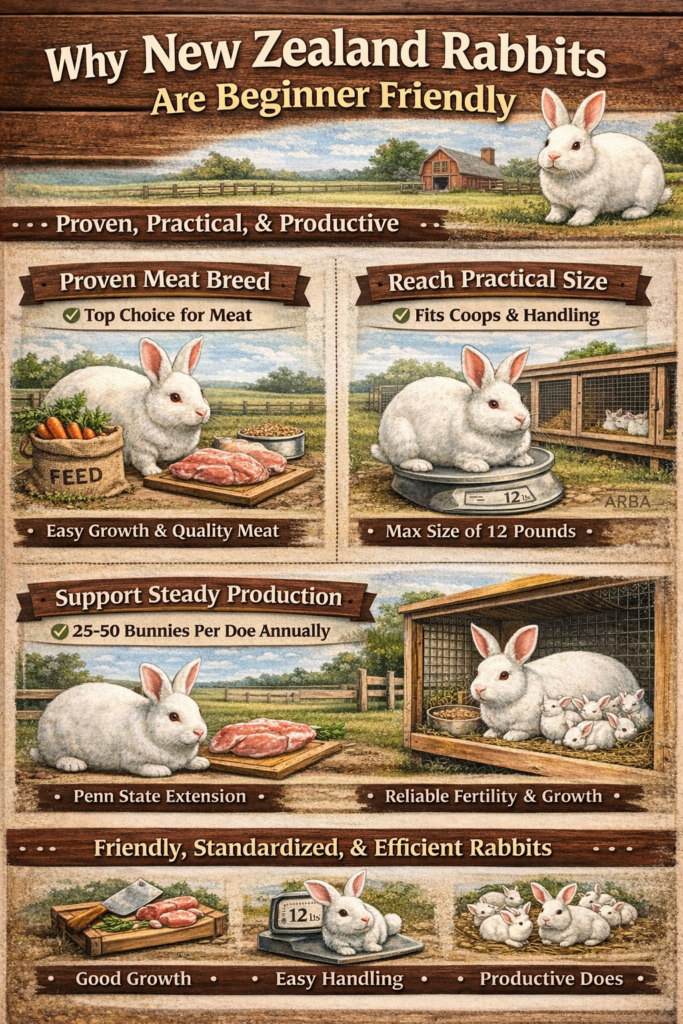
• They are a proven meat breed. Penn State Extension describes medium weight New Zealand Whites as a best choice for meat production.
• They reach practical size without needing much space. ARBA notes a maximum weight of twelve pounds, which helps new keepers plan cage size and handling routines.
• They support steady production. Cornell explains that each productive doe can be expected to kindle twenty five to fifty bunnies a year when managed well.
What beginners should know about breeding and litter expectations
A common beginner mistake is assuming rabbits will take care of everything on their own. Breeding still needs planning. Cornell’s fact sheet is clear that output depends on management, and it gives realistic productivity expectations for a doe over a year. It also includes a simple budgeting example that uses five litters per year with about seven kits for sale per litter, which is a practical planning number for beginners.
Housing and daily care that protects health
Rabbits are easy to start, but they are not tolerant of poor housing. Cornell notes that rabbits do not tolerate extremes of temperature or moldy feeds, and that the rabbitry must have adequate cooling, heating, and ventilation. This is where beginners win or lose.
Good basics that keep New Zealand rabbits productive
• Provide a clean hutch or wire cage that stays dry and allows airflow.
• Feed commercial rabbit pellets as the simplest complete approach, and add good hay for fiber if it stays fresh and mold free.
• Keep fresh water available at all times, especially in warm weather. Cornell notes that a doe and her litter may require about a full gallon per day in warm conditions.
• Keep sanitation consistent. Cornell recommends sanitizing cages and nest boxes after use to reduce disease spread.
If you want a fast moving beginner project that teaches real livestock skills, New Zealand rabbits are a strong choice. They fit small spaces, they are widely used for meat production, and extension guidance is easy to find, which makes learning and improving much easier.
References
- American Rabbit Breeders Association, New Zealand breed overview, developed in the United States, recognized in 1916, maximum weight twelve pounds.
- Cornell Small Farms Program, Department of Animal Science, Livestock Fact Sheet, Raising Meat Rabbits revised 2005.
- Penn State Extension, Rabbit Production, noting New Zealand White as a best meat breed in the medium weight class.
7. Khaki Campbell Ducks – Prolific Egg Laying Ducks
Khaki Campbell duck standing beside a shallow water tub in a backyard run. Quiet duck breed known for strong egg production.
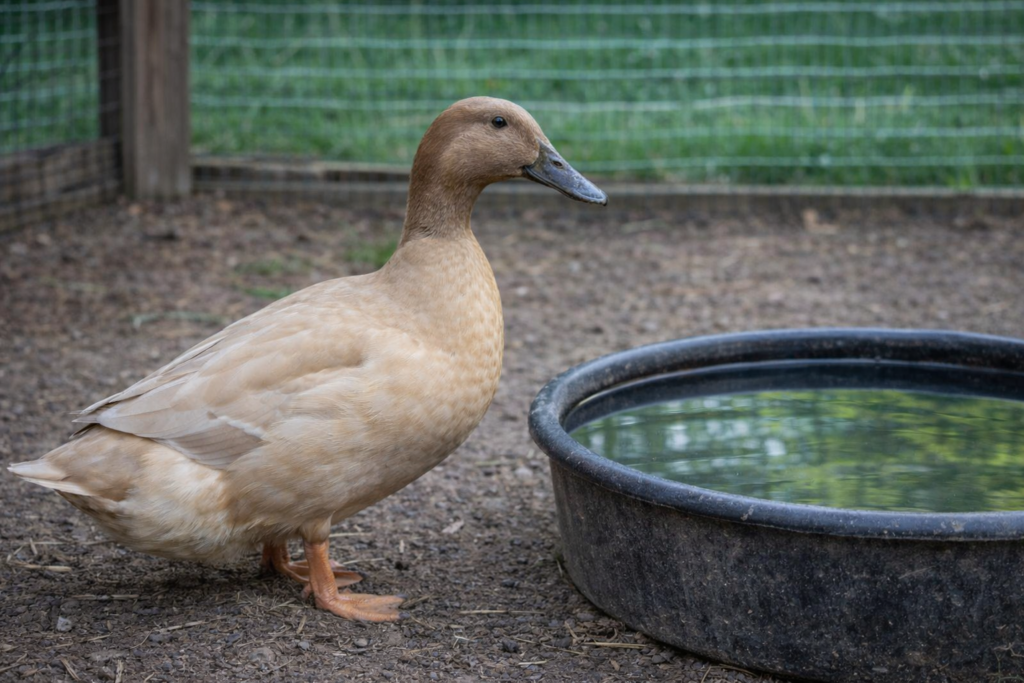
If you want eggs but you do not want the noise or rooster issues that sometimes come with chickens, Khaki Campbell ducks are worth a serious look. This breed is widely recognized for very high egg production. The Livestock Conservancy notes that Campbells often lay their first eggs at about five to seven months and can average roughly 250 to 340 eggs per year. For a beginner, that kind of steady output can make your flock feel useful quickly, especially if you bake often or sell extra eggs locally.
Khaki Campbells are also practical because they are active foragers. Oklahoma State University describes them as excellent foragers and extremely hardy, and notes that they can produce a large number of eggs without requiring special care or artificial lighting. That does not mean you can ignore nutrition, but it does mean the breed tends to perform well under simple, consistent management.
Why Khaki Campbells are a good beginner duck
Many new keepers succeed with this breed because the daily routine stays straightforward.
• Strong egg numbers: Often listed at 250 to 340 eggs per year in heritage breed references.
• Early start of lay: Many begin laying around five to seven months.
• Hardy and adaptable: Described as extremely hardy and comfortable on land and in water.
• Practical adult size: Adults commonly average about four to five pounds.
Simple setup that keeps them healthy and laying
You do not need a full pond to keep ducks successfully. A shallow tub or small pool that they can splash in and rinse their bills is usually enough for cleanliness and comfort. Provide shade in warm weather and wind protection in winter, since ducks handle cold better when they can stay dry and out of drafts. Good feed matters too. Consistent layer or all flock feed, clean water, and basic sanitation are what keep egg production stable.
One important planning note for beginners is reproduction. Many duck breeds are not reliable sitters, and Khaki Campbells are commonly kept for laying rather than brooding. If you want ducklings, you may need an incubator or a broody hen to hatch eggs.
If you want a friendly duck that can produce eggs at a level that competes with top chicken layers, Khaki Campbell ducks are one of the best beginner options, especially for small farms and backyard setups.
References
- The Happy Chicken Coop, laying age range and egg size notes.
- The Livestock Conservancy, Khaki Campbell Duck breed profile, laying age and annual egg range.
- Oklahoma State University, Khaki Campbell Ducks breed page, adult weight range, hardiness, foraging ability, and strong egg production without special care.
8. Coturnix Quail- Small Game Birds for Eggs and Meat
Coturnix quail in a secure wire pen with clean bedding, a shallow waterer, and good airflow. Small egg laying bird for beginner backyard keepers.
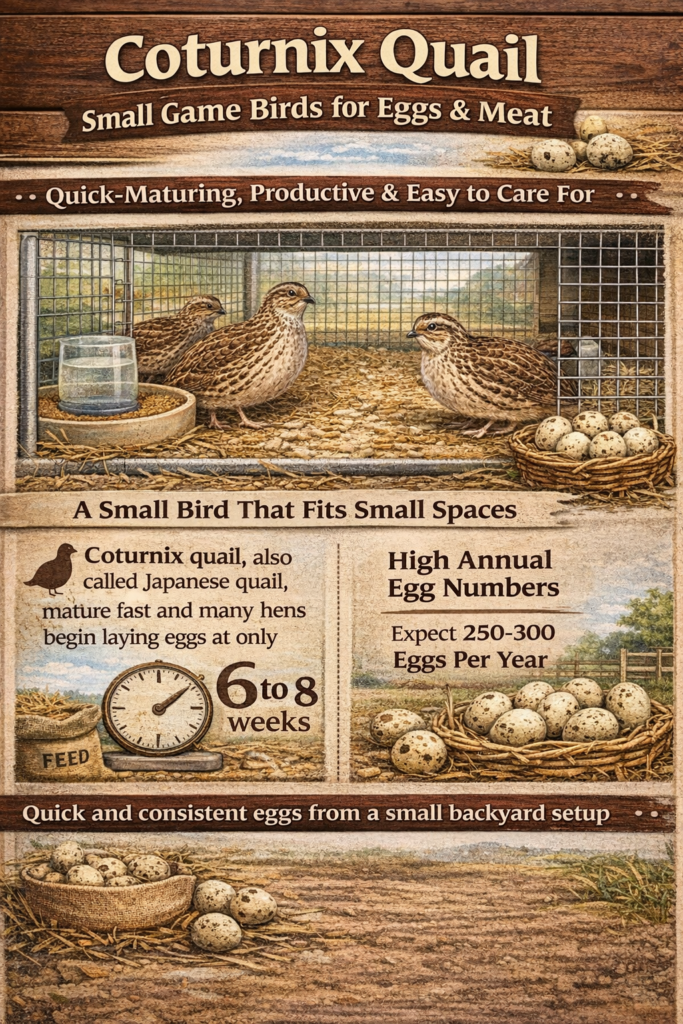
If you want livestock that fits in a very small space, Coturnix quail, also called Japanese quail, can be one of the quickest ways to get eggs and learn basic animal care. They mature fast and many hens begin laying at about 6 to 8 weeks when feed, light, and stress levels are managed well. That early start is a big reason quail work so well for beginners who want results without waiting months.
Coturnix hens are also known for impressive production. Research literature commonly describes Japanese quail as early maturing birds with high annual egg numbers, often cited around 250 to 270 eggs per year, and many keepers aim for roughly 250 to 300 eggs per year under strong management. In a small backyard setup, that can mean a consistent supply of eggs from a small group, especially once the birds settle into routine.
Why Coturnix quail suit beginners with limited space
Coturnix quail are not a pet bird in the cuddly sense, but they are straightforward to manage when the setup is right.
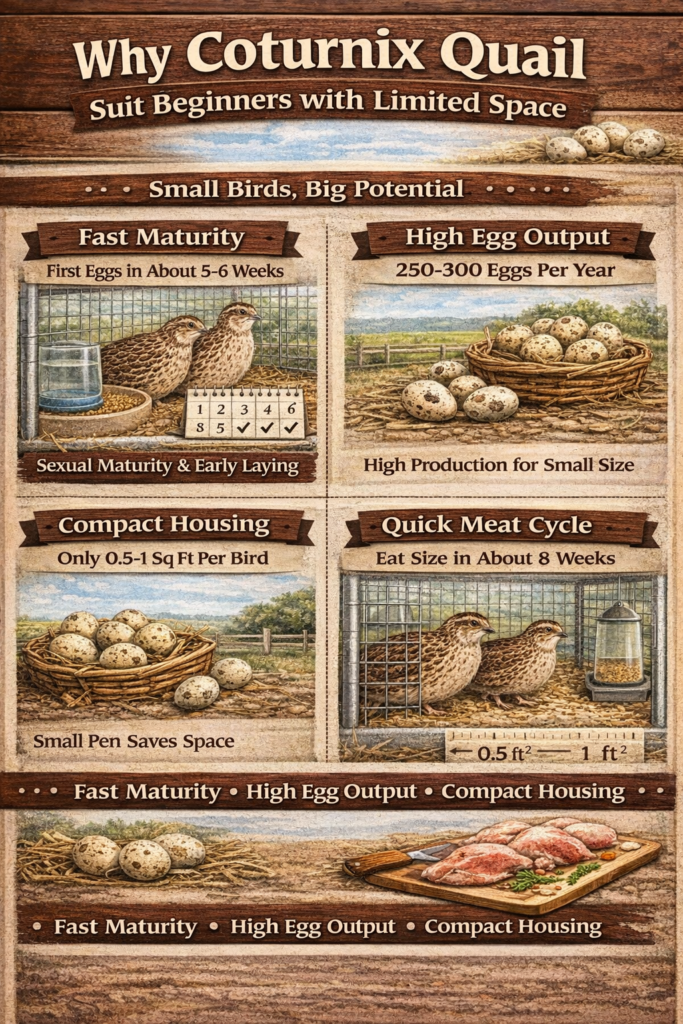
• Fast maturity: Studies describe sexual maturity and first lay in about five to six weeks in good conditions.
• High egg output: High production ranges such as 250 to 300 eggs per year are commonly reported for Coturnix types.
• Compact housing: Many practical husbandry guides recommend about 0.5 to 1 square foot of floor space per adult bird in cage style setups, with enough height to prevent head injuries.
• Quick meat cycle: Many growers process for meat around 8 weeks depending on strain and target size, which makes quail a fast learning project.
Setup tips that keep them calm and productive
Most quail problems come from overcrowding, poor ventilation, or inconsistent light and feed. A few basics prevent most issues.
- Prioritize airflow and dryness. Quail do best in a sheltered, well ventilated space that stays dry.
- Avoid crowding. Space is not just comfort, it reduces stress and feather picking. Many keepers use the 0.5 to 1 square foot guideline as a minimum.
- Use secure wire and a solid lid. Quail can flush upward when startled, so secure tops and safe head clearance help prevent injuries.
- Feed for production. A higher protein game bird feed is commonly used for growth and laying, and consistency matters more than fancy add ons.
Lifespan and flock planning
Coturnix quail are productive early, then gradually slow down. Many keepers plan to rotate in younger hens over time. In backyard settings, people often report an average lifespan around 2 to 3 years, while maximum longevity records for Japanese quail can reach 6 years in reference databases.
If you want a small, fast moving livestock option that produces quickly and teaches real management skills, Coturnix quail are a strong choice for beginners, especially when space is tight.
References
- 5 Acres and a Dream, practical lifespan expectation around 2 to 3 years and laying decline over time.
- ScienceDirect, Japanese quail early maturity and egg production figures including laying after about 35 days and around 250 to 270 eggs per year.
- Semanticscholar PDF, production performance noting start of lay around 35 to 42 days and 250 to 300 eggs per year.
- Slightly Rednecked, practical space guidance of about 0.5 to 1 square foot per adult bird and recommended cage height range.
- Forget Me Not Quail Farm, common laying start window of about 6 to 8 weeks.
- AnAge, Human Ageing Genomic Resources, maximum longevity record for Coturnix japonica.
9. Italian Honey Bees – Gentle Bees for Beginners
Italian honey bees on a frame during a calm hive inspection. Beginner friendly honey bee type known for gentle behavior and strong honey production.
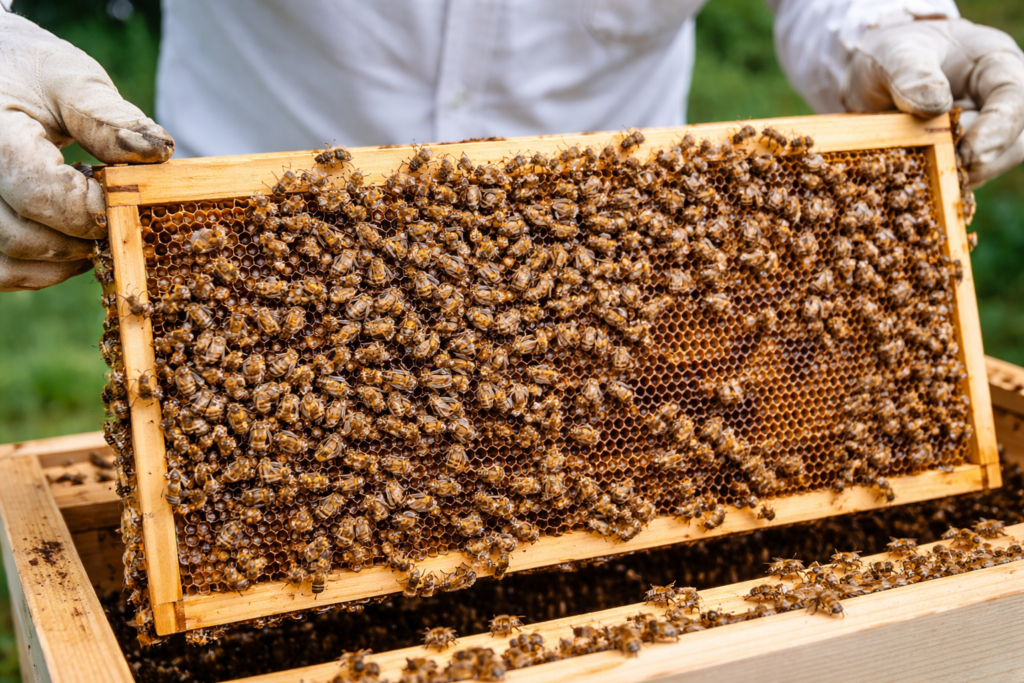
Not every beginner farm animal has hooves or feathers. A beehive can be one of the most rewarding starter livestock projects because bees work largely on their own once the hive is established. You are not feeding them twice a day like goats or checking water buckets every morning like poultry. Instead, your job is management. You learn how to inspect, prevent problems early, and harvest only what the colony can spare.
For first time beekeepers, Italian honey bees, also known as Apis mellifera ligustica, are a common starting point because they are widely described as gentle and manageable. North Carolina State Extension notes that Italian honey bees show a gentle temperament and are excellent honey producers, which is a big reason they are popular in North America. When you are learning how to use a smoker, remove frames, and spot brood patterns, that calmer behavior matters.
Italian bees are also known for building strong colonies through steady brood rearing. A larger workforce often helps a new beekeeper because the colony can recover from small mistakes, such as a clumsy inspection or missing an early feeding window in spring. The tradeoff is that bigger colonies can consume more stores. Some beekeeping references note that Italian bees are known for needing more overwinter stores, so beginners should be cautious about taking too much honey late in the season. Colorado State University Extension also emphasizes leaving substantial honey stores for winter survival, reinforcing the idea that harvest decisions must be conservative.
Why Italian honey bees are beginner friendly
• Gentle temperament: Easier inspections and fewer defensive surprises while you learn.
• Strong honey production potential: Often described as excellent honey producers in extension materials.
• Robust colony buildup: Helpful for new keepers who are still learning seasonal timing.
• Garden and orchard benefits: A healthy hive supports pollination for fruit trees and crops, which is often as valuable as the honey itself.
Beginner notes that protect your first hive
Italian bees are not zero effort livestock. They still need responsible management.
- Do not over harvest. In colder climates, Oklahoma State University Extension notes recommendations to leave about 60 to 70 pounds of honey per hive for winter survival.
- Plan for mite management. North Carolina State Extension notes Italian bees are susceptible to parasitic mites, so monitoring and control are part of beginner success.
- Learn locally. Joining a local beekeeping association often helps more than reading alone, because nectar flows and wintering needs vary by region.
If you want to add pollination plus honey to your homestead with a bee type that is widely regarded as calmer and productive, Italian honey bees are a practical first choice. Just keep the focus on good seasonal management, especially winter stores and mite control.
References
- Penn State Extension overview highlighting the importance of honey bees for crop pollination.
- North Carolina State Extension, comparison of Russian and Italian honey bees, noting gentle temperament, popularity, and strong honey production, plus mite susceptibility.
- Oklahoma State University Extension, honey harvest methods and guidance to leave about 60 to 70 pounds of honey per hive in colder climates.
- Colorado State University Extension, overwintering strategies emphasizing the need to leave substantial honey stores for winter survival.
- Tri City Beekeepers PDF chapter on honey stores noting Italian bees are known for requiring more overwinter stores.
- BeeBuilt overwintering article discussing Italian brood clusters and faster consumption of honey stores in colder climates.
10. Great Pyrenees – Livestock Guardian Dog
Great Pyrenees livestock guardian dog resting calmly beside a flock of sheep in pasture. Large calm guardian breed used to protect beginner farm animals.
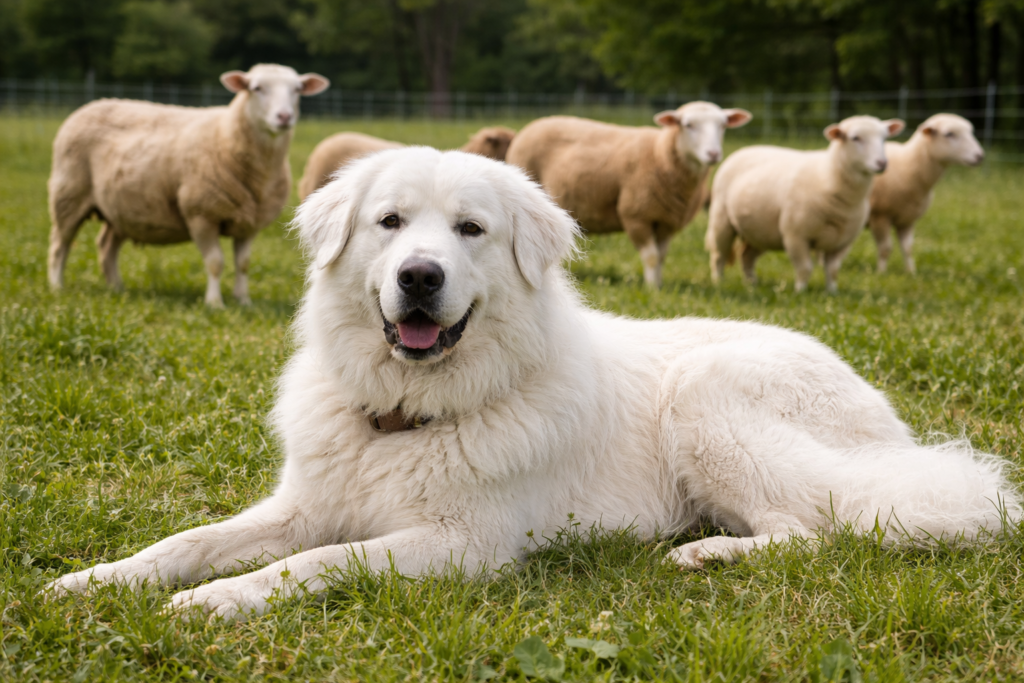
A guardian dog is not livestock in the strict sense, but on many small farms it becomes the difference between keeping animals safely and losing them to predators. If you plan to raise chickens, goats, or sheep, a Great Pyrenees can be one of the most practical long term tools you add to your setup. This breed was developed to deter predators such as wolves and protect flocks, and today it is still described as a mellow companion and a vigilant guardian.
What makes the Great Pyrenees especially beginner friendly is the combination of size, patience, and instinct. The Great Pyrenees Club of America describes the breed as very large, typically 25 to 32 inches at the shoulder and about 85 to 140 pounds. The same guide explains that the breed is naturally nocturnal and has an unusual mix of intolerance toward predators paired with patience and kindness toward stock. That natural mindset is exactly what many new livestock owners need, because it supports protection without requiring you to build a complicated system from day one.
Why beginners do well with a Great Pyrenees guardian
• Strong guardian instinct: The breed has a long history of flock protection and is still used for that role today.
• Night watch behavior: The Great Pyrenees Club of America notes the breed is nocturnal by nature, which matches the time when many threats appear.
• Trustworthy with stock when mature: The same guide notes that young dogs need supervision and that it often takes about 18 months for a pup to become a reliable livestock guardian dog.
• Family farm fit: Many farms use Great Pyrenees as working guardians while still valuing them as steady dogs around people when socialized correctly.
What good training looks like in real life
A Great Pyrenees does not become a finished guardian automatically. The foundation is bonding and repetition, not harsh correction.
Start early and bond the puppy to the animals you want protected. A University of California Agriculture and Natural Resources guide explains that bonding should begin around 8 to 10 weeks of age, and that early bonding with livestock improves the chances the dog stays with the stock.
Practical beginner routine that works well
- Keep the pup with calm livestock in a secure pen and supervise daily.
- Correct chasing immediately and redirect to calm behavior.
- Build habits with consistency, same chores, same schedule, same boundaries.
- Use safe fencing, because Great Pyrenees can expand their territory if allowed. The Great Pyrenees Club of America notes they may increase territory and may even protect stock in neighboring pastures, which is useful only when boundaries are clear.
Important care notes before you buy
• Plan for veterinary care, parasite prevention, and nutrition like any working dog.
• Expect barking, especially at night, because guarding includes warning behavior.
• Treat the dog as part of your livestock system, not just a backyard pet, because the job is protection and consistency.
For a new livestock owner, a Great Pyrenees can reduce losses, lower stress, and give you the confidence to expand your flock or herd safely. When you pair the dog with good fencing, early bonding, and steady supervision through adolescence, you gain a reliable partner that protects your animals as your farm grows.
References
- University of California Agriculture and Natural Resources, Bonding and Training your Livestock Guardian Dog Puppy, bonding start around 8 to 10 weeks and improved tendency to stay with livestock.
- Great Pyrenees Club of America, Livestock Guardian Dogs guide, size range, weight range, nocturnal behavior, working traits, territory notes, and typical maturity around 18 months.
- American Kennel Club, Great Pyrenees overview, history as a working dog bred to deter predators, modern description as mellow companion and vigilant guardian.
Tips for Beginner Livestock Farmers
Picking beginner friendly breeds is a great start, but your daily habits are what determine whether livestock stays healthy, productive, and easy to manage. The good news is that small farms do not need complicated systems. They need clear goals, steady routines, and a few smart safeguards.
1. Define your goals before you buy animals
A simple plan prevents expensive mistakes. Decide what you want most, such as eggs, milk, meat, fiber, pest control, or just homestead enjoyment. Extension resources on farm planning recommend setting goals and using them to guide your management choices.
When your goals are clear, breed choice becomes easier. For example, a family focused on milk might lean toward small dairy goats, while someone focused on eggs may choose high producing poultry.
2. Start small and build skills first
Beginners usually do better with one or two species at a time. This gives you room to learn feeding routines, housing, cleaning, and basic health checks without feeling stretched. Many extension programs designed for beginners focus on practical care and simple systems first, then expansion later.
A helpful rule is this: add one new species only after your current animals feel easy to manage for several months.
3. Match livestock to your space and your time
Your land and schedule should decide your animal list, not the other way around.
• Small yards often fit poultry, rabbits, and quail.
• A few acres of pasture can support goats, sheep, or a small framed cow if forage and fencing are adequate.
• Larger livestock usually need stronger fencing, better handling areas, and more winter feed storage.
Before animals arrive, make sure shelter and fencing are ready. New keepers often lose time and money trying to fix housing after animals are already on the property.
4. Understand livestock breeding meaning and plan responsibly
People use the term breeding loosely, so it helps to define it clearly.
Livestock breeding definition: selecting and mating animals to improve traits such as health, growth, temperament, and production.
That is the practical livestock breeding meaning for a small farm too. Even if you never breed animals, you still benefit from buying stock from breeders who select for calm behavior, strong mothering, and disease resistance.
If you do choose breeding later, keep records from day one. Dates, weights, health notes, births, and parentage help you improve your herd and avoid repeating problems.
If you want formal support, some regions run programs that guide genetics and management. For example, Kerala’s Special Livestock Breeding Programme is built around improving growth and performance through structured feeding and management.
5. Make livestock breeding and nutrition a daily priority
On small farms, nutrition is the quiet difference between animals that thrive and animals that struggle. Iowa State Extension describes biosecurity and animal health as a practical routine, and nutrition is part of that routine because well fed animals resist stress and disease better.
A few beginner friendly nutrition habits:
• Keep clean water available all day, every day.
• Use species appropriate complete feeds when you are learning.
• Provide minerals designed for the species you keep. For goats, copper matters, and extension guidance explains copper’s role in health and immune function.
6. Stay ahead of health problems with biosecurity basics
You do not need to be a veterinarian, but you do need prevention habits. Biosecurity is about reducing how disease enters and spreads. University and USDA programs emphasize prevention as the easiest approach for small flocks and small farms.
Practical actions that work:
• Quarantine new animals before mixing them with your main group.
• Keep pens clean and dry.
• Control visitor access to animal areas when possible.
• Know who to call when animals are sick. USDA’s Defend the Flock program points people to veterinarians, extension, and state resources for reporting sick birds.
7. Build predator protection into your routine
Predators are not only a rural problem. Colorado State University Extension notes that backyard chickens attract many predators including domestic dogs, owls, and hawks, and you should expect predation pressure. Oklahoma State University also recommends locked housing at night as a minimum, especially for free range birds.
Beginner friendly predator protection habits:
• Lock poultry into secure housing at night.
• Cover outside runs to reduce aerial attacks.
• Use good latches and check them regularly.
• Consider a livestock guardian dog later if predators are persistent. Oklahoma State University notes guardian dogs can be effective protection for free range birds.
8. Use training centres and local support instead of guessing
Most beginners improve faster when they learn from people who manage animals every day.
In the United States and Europe, extension offices, local farm groups, and agricultural colleges often offer workshops and practical guides for small scale livestock owners.
If you are looking for an example of a formal government training resource, Karnataka’s Animal Husbandry and Veterinary Services department lists the State Livestock Breeding and Training Centre and the Livestock Breeding Farm Hesaraghatta as training and breeding facilities.
9. Decide early whether you will breed or not
Breeding can be rewarding, but it adds complexity. You may need extra space, separate pens, and a plan for males. If you are not ready, start with females only, or keep animals that do not require breeding to produce, such as laying hens or egg laying ducks.
If you do breed, keep it simple at first. Start with one breeding goal, keep records, and learn from each season.
10. Enjoy the process and track small wins
Small farms teach you by experience. Celebrate the first steady week of egg production, the first healthy kidding season, or the first jar of honey. Those wins happen when you do the basics consistently, not when you chase complicated techniques.
With these habits and your list of the 10 best livestock breeds for beginners, you can build a farm that feels manageable and rewarding from the start.
Quick Summary Table – 10 Best Livestock Breeds for Beginners
| Number | Breed | Best for | Space fit | Key beginner advantage | Main watch outs |
|---|---|---|---|---|---|
| 1 | Buff Orpington Chickens | Eggs plus meat | Small backyard | Calm temperament and steady laying | Predator proof coop and summer airflow |
| 2 | Nigerian Dwarf Goats | Family dairy | Small pasture or yard | Small size with rich milk | Need at least two goats and strong fencing |
| 3 | Katahdin Sheep | Meat on pasture | Pasture | No shearing, often easier seasonal chores | Parasite monitoring and solid fencing |
| 4 | Dexter Cattle | Milk plus beef on small land | Pasture | Smaller cattle size with family scale milk | Safe handling setup and winter feed planning |
| 5 | KuneKune Pigs | Pasture raised pork | Pasture with shelter | Smaller pig, often calmer, pasture friendly | Strong fencing, weight tracking, avoid overfeeding |
| 6 | New Zealand Rabbits | Fast home meat | Very small space | Efficient growth, compact housing | Heat management, ventilation, sanitation |
| 7 | Khaki Campbell Ducks | High egg output | Small yard | Excellent laying and foraging | Water access, muddy areas, predator safety |
| 8 | Coturnix Quail | Eggs plus small meat | Patio, shed, small yard | Very fast maturity and compact setup | Overcrowding stress, secure lids, temperature control |
| 9 | Italian Honey Bees | Honey plus pollination | Very small footprint | Gentle reputation and strong colonies | Mite management and winter stores planning |
| 10 | Great Pyrenees | Predator protection | Pasture farms | Strong guarding instinct and steady temperament | Fencing, barking, supervision until mature |
Final Thought
The fastest way to enjoy early wins is to choose animals that match your space, your schedule, and your goals, then manage them with simple routines you can repeat every day. The breeds in this guide were picked because they tend to be calmer, hardier, and more forgiving while you learn. If you keep housing secure, nutrition consistent, and health checks regular, these animals can turn “first year stress” into a steady rhythm. That is what makes the 10 Best Livestock Breeds for Beginners such a strong foundation for a small farm or homestead.
References
- Kerala Animal Husbandry Department, Special Livestock Breeding Programme module description and features.reeds for beginners, you’re well-equipped to start your own farming adventure. Each of these breeds offers a gentle introduction to animal husbandry, and they can turn your hobby farm dream into a rewarding reality.
- University of Maine Cooperative Extension, writing a plan and setting goals for grazing and livestock management.
- Oklahoma State University Extension, goal setting for farm and ranch families.
- North Carolina State University Extension, beginner focused small scale livestock class series.
- University of Maryland Extension, beginning farmer livestock manual.
- Iowa State University Extension, farm biosecurity overview and principles.
- Extension.org, goat nutrition and copper importance.
- Mississippi State University Extension, goat minerals and why balanced minerals matter.
- University of Maine Cooperative Extension, sheep and goat biosecurity and quarantine principles.
- UConn Extension, developing a biosecurity plan for livestock and poultry operations.
- USDA APHIS, Defend the Flock biosecurity resources and reporting guidance.
- Oklahoma State University Extension, protecting small poultry flocks from predators and using locked housing at night.
- Colorado State University Extension, chickens and predators and common predator risks.
- University of Maryland Extension, predator control for poultry and run coverage advice.
- Karnataka Animal Husbandry and Veterinary Services, listing of State Livestock Breeding and Training Centre and Livestock Breeding Farm Hesaraghatta.
FAQs – 10 Best Livestock Breeds for Beginners
1. What is livestock breeding in simple words
Livestock breeding is choosing which animals reproduce so the next generation has better traits, such as calmer temperament, stronger health, faster growth, or higher egg and milk production.
2. Which livestock is easiest for complete beginners
For most beginners with limited space, chickens, rabbits, and quail are often easiest because they need less land and their daily routines are simple. If you have pasture, Nigerian Dwarf goats and Katahdin sheep are common beginner picks.
3. How many animals should I start with
Start with a small number you can manage daily. A typical beginner start might be 6 to 10 hens, or 2 goats, or 3 to 5 rabbits. Herd animals, like goats, should not be kept alone.
4. Do I need breeding males on a small farm
Not at first. Many beginners do better starting without breeding males because it reduces management, housing needs, and safety risks. You can add breeding later once your routine is stable and you have enough space.
5. What is the biggest mistake new livestock owners make
Buying animals before housing and fencing are ready. The second most common mistake is underestimating nutrition, especially minerals and clean water. Setup first, then animals.

Thesis Link : https://saulibrary.edu.bd/daatj/public/uploads/BAU200601_19-Pp_5.pdf
- Why Are My Zucchini Leaves Turning Yellow? Causes & Fixes - August 31, 2026
- What Is Eating My Plants at Night? - August 27, 2026
- Why Are My Tomato Leaves Curling Up? Causes & Fixes - August 20, 2026