
Ornamental Grasses: The Ultimate Landscaping Guide
There’s something quietly charming about ornamental grasses. They sway with the slightest breeze, add gentle texture to empty corners, and ask for almost nothing in return. It’s no surprise that gardeners and landscapers have been leaning toward these plants more than ever. They fit into almost any style modern, rustic, coastal, or cottage and they manage to look good through all four seasons.
This guide takes you on an easy, practical walk through the world of ornamental grasses. We’ll look at tall varieties that can stand in as living fences, smaller types that make perfect edging plants, and a mix of options that add color, movement, and softness to the landscape. You’ll also find simple tips for planting, caring for, and designing with them , no complicated gardening jargon, just straightforward advice you can actually use.
Why Ornamental Grasses Belong in Every Landscape
Ornamental grasses are tough, beautiful, and easy to live with. They earn their keep in small gardens, big yards, and commercial sites alike. Here’s a clear, no‑nonsense guide to what they do well and how to use them.

1) Low care, high reward
Once established, many ornamental grasses handle heat and short dry spells with little fuss. They don’t ask for much fertilizer or water, and most stay remarkably pest‑ and disease‑free. In other words: fewer inputs, less work.
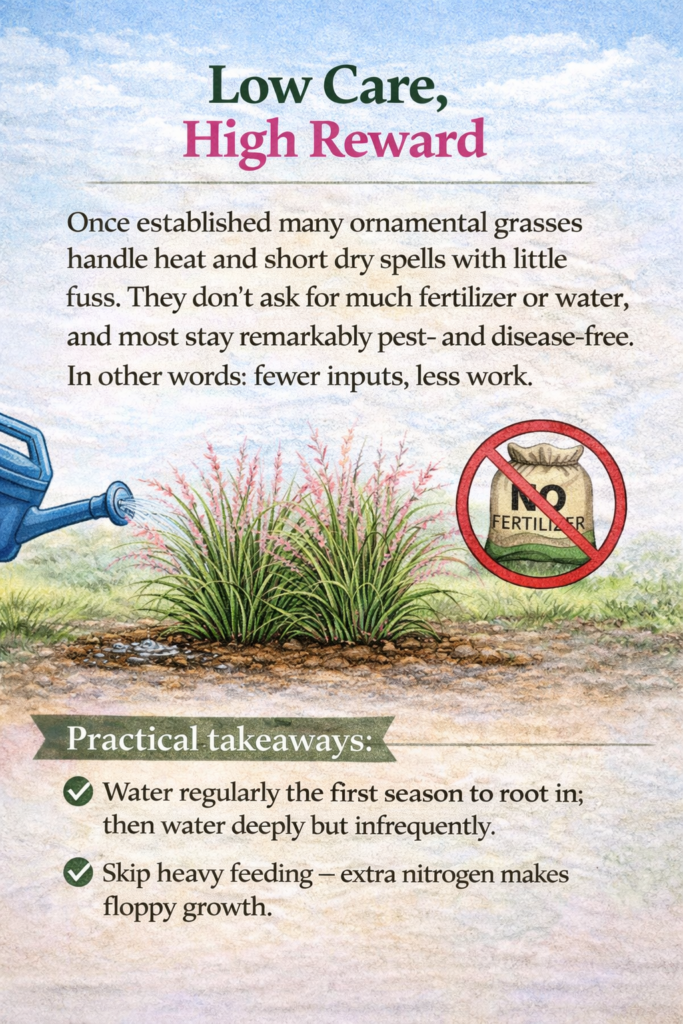
Practical takeaways
- Water regularly the first season to root in; then water deeply but infrequently.
- Skip heavy feeding extra nitrogen makes floppy growth.
2) Four seasons of interest
Grasses bring fresh foliage in spring, airy plumes in summer, rich color in fall, and strong structure in winter. Many look great standing through snow, where their tan seed heads and stems add shape and sparkle.
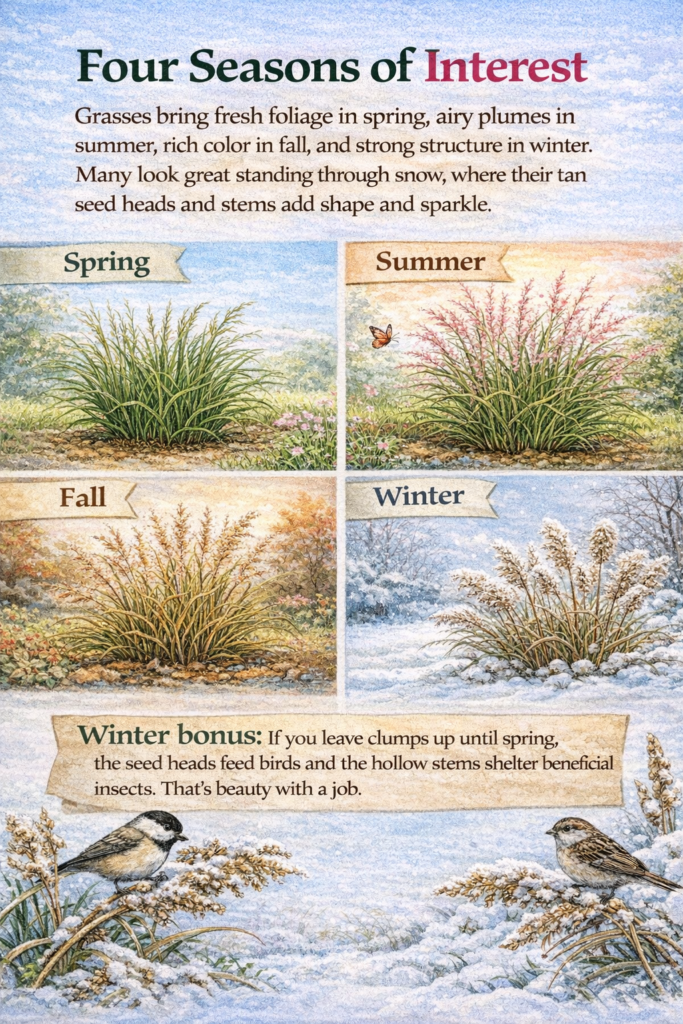
Winter bonus: If you leave clumps up until spring, the seed heads feed birds and the hollow stems shelter beneficial insects. That’s beauty with a job.
3) Movement and sound
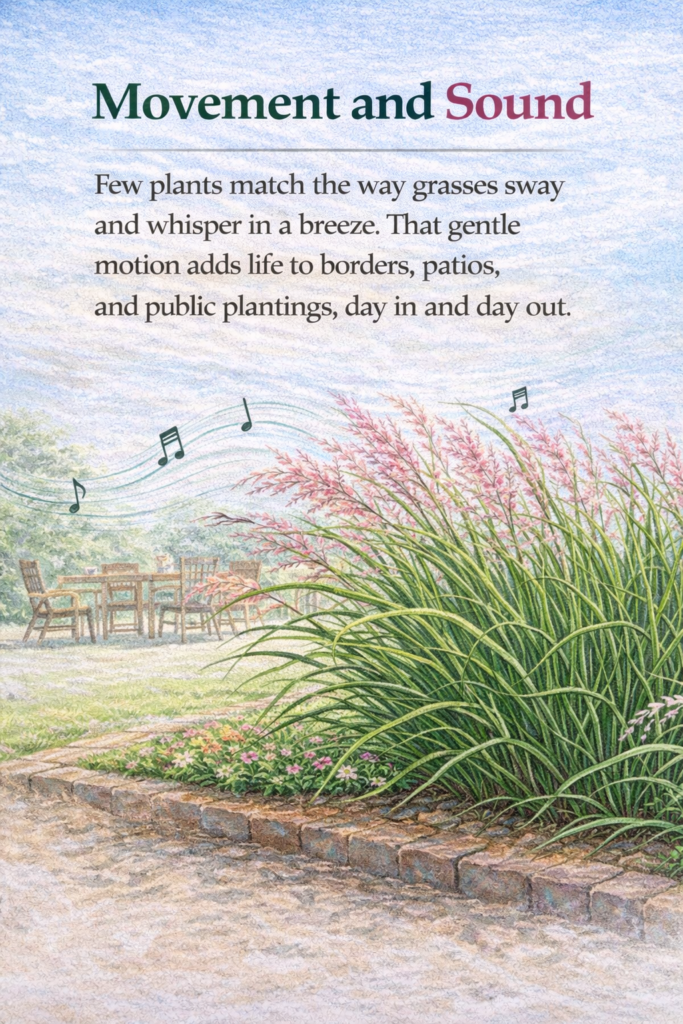
Few plants match the way grasses sway and whisper in a breeze. That gentle motion adds life to borders, patios, and public plantings, day in and day out.
4) Sizes and shapes for every spot
From small mounds to towering screens, there’s a grass for every role:
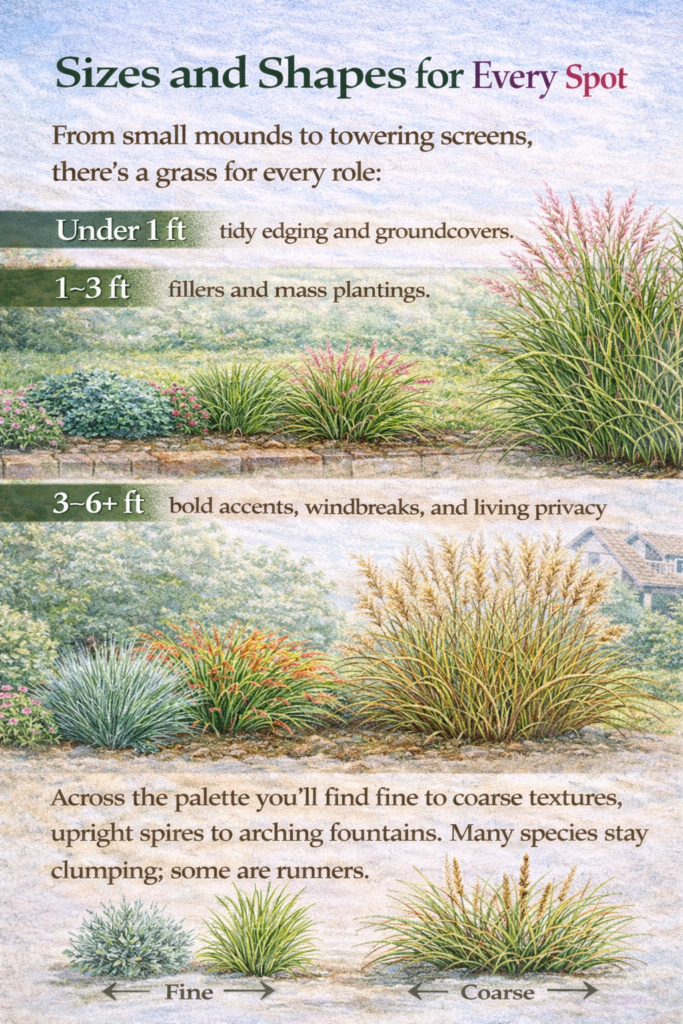
- Under 1 ft: tidy edging and groundcovers.
- 1–3 ft: fillers and mass plantings.
- 3–6+ ft: bold accents, windbreaks, and living privacy.
Across the palette you’ll find fine to coarse textures, upright spires to arching fountains. Many species stay clumping; some are runners .
5) Friendly to wildlife
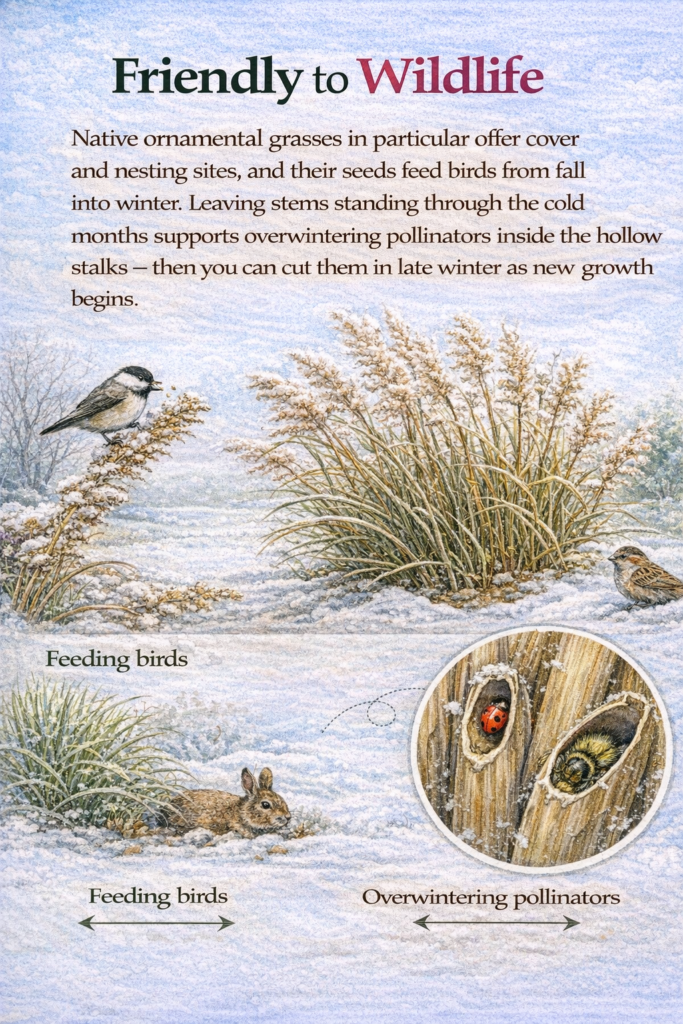
Native ornamental grasses in particular offer cover and nesting sites, and their seeds feed birds from fall into winter. Leaving stems standing through the cold months supports overwintering pollinators inside the hollow stalks then you can cut them in late winter as new growth begins.
6) Deer usually pass them by
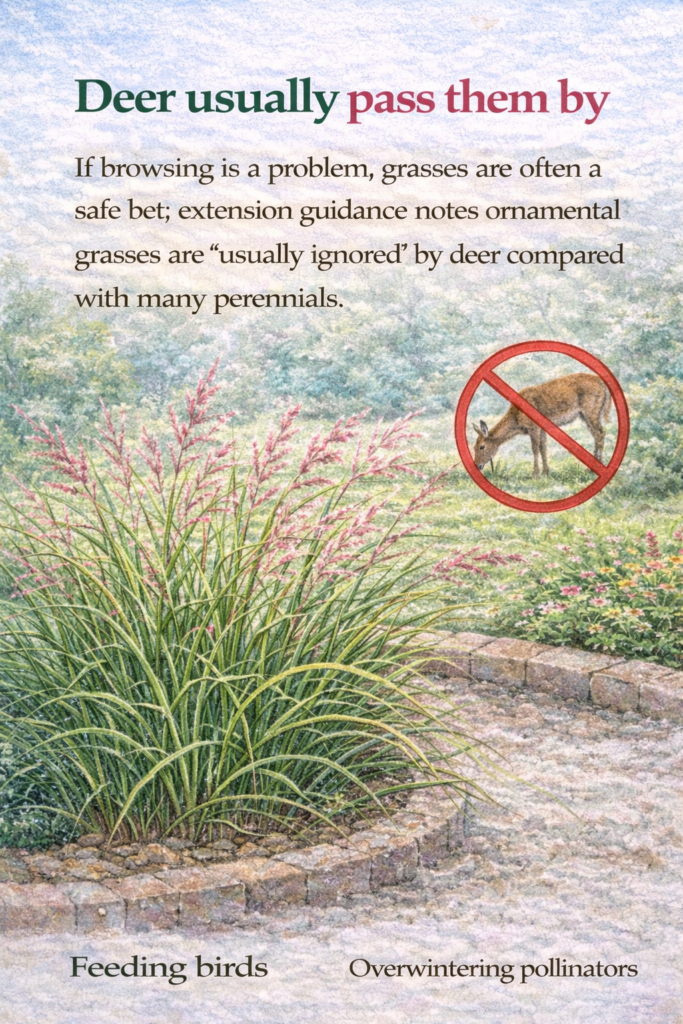
If browsing is a problem, grasses are often a safe bet; extension guidance notes ornamental grasses are “usually ignored” by deer compared with many perennials.
Quick design ideas
- Repeat one grass in drifts to tie a bed together.
- Mix textures: pair fine blades like fescues with bold foliage perennials.
- Backlighting: place clumps where the low evening sun can light up the plumes.
Starter list by job
Always choose species and cultivars suited to your region; favor natives when you can.
- Edging / low mounds (to ~1 ft): Festuca glauca – blue fescue.
- Flowing, part‑shade accent (1–2 ft): Hakonechloa macra – Japanese forest grass.
- Upright, neat accent (3–5 ft): Calamagrostis × acutiflora ‘Karl Foerster’.
- Prairie look, wildlife value (2–4 ft): Schizachyrium scoparium -little bluestem.
- Tough verticals / screens (4–6 ft): Panicum virgatum switchgrass, including ‘Northwind’ or ‘Heavy Metal’.
These categories reflect widely used, reliable roles for each plant group.
A Simple, One Page Care Guide for Ornamental Grasses
Ornamental grasses add movement, texture, and year round interest to gardens of every style from prairie inspired plantings to sleek modern landscapes. Whether you’re growing cool season clumps or dramatic warm season giants, caring for these grasses doesn’t have to be complicated. Here’s a practical, step by step guide you can follow all season long.
Planting: Start Them Off Right


- Cool season grasses such as fescue and tufted hairgrass are best planted in spring or fall when temperatures are moderate.
- Warm season grasses like switchgrass, big bluestem, and panicum need spring planting so they can establish before summer heat.
- Choose a sunny spot and loosen the soil well most grasses appreciate good drainage.
Water & Feeding: Less Fuss, Better Growth

- Keep newly planted grasses evenly moist during their first season. After that, water only during extended dry periods.
- If growth looks weak in spring, give a light feeding of a balanced or low nitrogen fertilizer. Too much nitrogen makes grasses floppy and weak.
Cutback: When to Trim

- Leave ornamental grasses standing through winter. Their seed heads feed birds, and their dried forms add structure to a dormant garden.
- Cut back late winter into early spring just before fresh new growth appears.
- Evergreen grasses like carex and liriope shouldn’t be cut to the ground simply trim away tired or winter burned blades.
Dividing: Keep Clumps Healthy

- Divide grasses every few years or when the center dies out and forms a “donut.”
- Spring is generally the best time to divide, especially for warm season species.
- This keeps plants vigorous and also gives you more clumps to spread around or share.
Smart Choices & a Friendly Warning
Not every ornamental grass behaves well in every region. Some, like Miscanthus sinensis or pampas grass, can become invasive in parts of the U.S.
Before planting:
- Check your state’s invasive species list
- Ask your local Extension office
- Look for native alternatives or sterile cultivars if available
Tall Ornamental Grasses
If you want height, architecture, or a natural privacy screen, tall ornamental grasses are unbeatable. They sway above eye level, soften boundaries, and create a calm, enveloping feel. Here are reliable tall selections each with its own personality.
Miscanthus
Elegant, arching grasses that reach 5–10 ft depending on cultivar.


- Features: Narrow leaves, beautiful late summer plumes, strong winter presence
- Popular types:
- ‘Zebrinus’ — green blades banded with yellow stripes, 6–8 ft
- ‘Gracillimus’ fine textured green foliage, airy coppery plumes
- Best for: Focal points, tall screens, sunny borders
- Note: Check regional restrictions; some areas list miscanthus as invasive.
Pampas Grass (Cortaderia selloana)
A dramatic, tropical looking grass known for huge white or pink plumes.


- Height: 8–12 ft in warm climates
- Best for: Mild regions (zones 7+), large landscapes, bold statements
- Caution: Not hardy in cold climates; can be invasive in some areas.
If you love the look but live in a colder region, the next plant is your friend.
Ravennagrass (Hardy Pampas)
A cold tolerant stand in for pampas grass.

- Height: 8–12 ft
- Features: Large, fluffy plumes in late summer; excellent for screening
- Hardiness: Thrives in zones 5–8 and performs well in full sun
- Best for: Northern gardeners wanting pampas like drama without winter loss
Switchgrass (Panicum virgatum)
One of the most versatile native grasses—upright, durable, and beautiful through all seasons.

- Height: Many cultivars 5–6 ft at maturity
- Standouts:
- ‘Northwind’ — strong upright habit
- ‘Heavy Metal’ — blue green metallic leaves
- ‘Shenandoah’ — red tinted foliage in late summer
- Benefits: Native, wildlife friendly, hardy from zones 4–9
- Use for: Privacy, fall color, winter interest, native plantings
Big Bluestem (Andropogon gerardii)
A signature prairie giant with incredible color shifts.

- Height: 4–7 ft
- Seasonal color: Blue green in summer → copper, burgundy, or purple in fall
- Notable cultivar: ‘Blackhawks’ deep purple foliage that darkens to near black
- Hardiness: Down to zone 3; very drought tolerant
- Best for: Meadow gardens, naturalistic designs, big open spaces
Feather Reed Grass (‘Karl Foerster’)
A tall, narrow grass known for strong vertical lines and early plumes.

Bonus: Variegated cousin ‘Overdam’ adds soft white striping. Just ensure you place tall varieties where they won’t shade out sun loving neighbors, and be mindful of their late season size when planning your garden’s layout.
Height: 4–6 ft
Flowers: Wheat like spikes that emerge in early summer, turning golden
Strengths: Stays upright through rain and winter; tolerates clay soils
Uses: Rows for screening, architectural accents, behind shorter perennials
Medium and Low Ornamental Grasses for Home Gardens
Ornamental grasses have a way of making a garden feel alive. They sway in the breeze, bring soft texture, and fill spaces that flowers alone can’t handle. If you’re looking for grasses that don’t grow too tall, you’re in luck many of the most useful landscape grasses fall under 4 feet. Below is an easy, down to earth look at some great options.
Medium Ornamental Grasses (2–4 Feet Tall)
These grasses are the “just right” size for most yards. They hold their own without blocking windows or overwhelming smaller beds.
Fountain Grass (Pennisetum alopecuroides)
Fountain grass forms rounded clumps about 2–3 feet high. Its arching leaves and bottlebrush plumes give a soft, flowing look in late summer.


- ‘Hameln’ is a favorite it stays around 2 feet and blooms heavily.
- It grows well in zones 5–9.
If you love the dramatic look of purple fountain grass, keep in mind it isn’t winter hardy in most places. The hardy varieties of fountain grass offer a similar feel without needing to replant each year.
Little Bluestem (Schizachyrium scoparium)
This native grass earns its place in any sunny garden.

- Grows about 2–3 feet tall
- Blue green in summer
- Turns copper, orange, and deep red in fall
It thrives in dry soil and poor conditions, which makes it great for low maintenance landscapes. Some newer varieties have extra purple tones that deepen as the weather cools.
Pink Muhly Grass (Muhlenbergia capillaris)
Few plants stop people in their tracks like pink muhly grass.


- Reaches 2–3 feet tall
- Forms a rounded mound
- Sends up a pink, cloud like haze in fall
In warmer regions it’s a perennial; in colder places it’s treated as an annual. Planting several together really shows off the airy pink plumes.
Blue Oat Grass (Helictotrichon sempervirens)
Think of this as a more polished version of blue fescue.

- Around 2–3 feet tall
- Neat, rounded shape
- Blue gray leaves that look good year round
It prefers sun and well drained soil. The thin stems and oat like seeds add a little height without looking messy.
Japanese Blood Grass (Imperata cylindrica ‘Rubra’ / ‘Red Baron’)
A compact grass, usually 1–2 feet tall, with green bases and bright red tips that deepen through the season.


It adds instant color contrast, but be aware that in warmer climates it may spread more aggressively. In cooler climates it behaves as a tidy clump.
Where Medium Grasses Work Best
Use them in the middle of garden beds, mixed with shrubs and flowering perennials.
They also shine in large pots fountain grass, for example, makes a great center plant in a patio container.
Low Growing Ornamental Grasses (Under 2 Feet)
Short grasses are useful anywhere you need soft edges or ground level texture. They stay small but add a surprising amount of character.
Blue Fescue (Festuca glauca)

One of the smallest ornamental grasses, usually 6–10 inches tall.
It forms tidy blue mounds that look good even when nothing else is blooming.
It loves sun, handles drought, and only needs a quick clean up in spring.
Japanese Forest Grass (Hakonechloa macra ‘Aureola’)
If you have shade, this is a rare grass that actually likes it.

- About 12–15 inches tall
- Gently arching gold and green leaves
- Slowly spreads into graceful mounds
It brightens dark corners and drapes beautifully over the edge of pots. It does best in partial shade with even moisture.
Sweet Flag (Acorus) & Lilyturf (Liriope)
These aren’t true grasses, but they look like them and fill the same role.

- Dwarf sweet flag grows 8–10 inches and loves damp, shady spots.
- Liriope forms 12–18 inch clumps and even produces purple flower spikes late in summer.
They hold up well as edging plants and groundcovers.
Tufted Hairgrass (Deschampsia cespitosa)
A cool season grass with low, fine textured foliage and tall, airy flower stalks.
The base stays around a foot tall, but the delicate golden plumes can reach two feet or more.

It tolerates part shade and moisture, making it great for woodland edges or rain gardens.
How to Use Low Grasses
Plant them in groups so they don’t get lost.
They’re perfect for lining walkways, softening the base of a wall, or filling the front of a border.
Their fine texture also contrasts nicely with big leaf plants like hostas, coral bells, or succulents.
Ornamental Grasses That Can Grow in Shade
Simple advice for gardeners working with low light spaces
Many gardeners wonder whether ornamental grasses can grow in shade. Since most grasses naturally come from sunny open fields, it’s true that the majority prefer bright conditions. But there are several grasses and grass like plants that tolerate shade surprisingly well. If you have a north facing area, tree covered corner, or a spot that only gets morning sun, you still have options.
Below are some reliable choices that handle partial shade or dappled light without losing their charm.
Japanese Forest Grass (Hakonechloa)
Japanese forest grass is one of the best plants for shaded gardens.

- It loves dappled shade or morning sun with afternoon shade.
- The golden and variegated forms, like ‘Aureola’ and ‘All Gold’, brighten dark areas in a gentle, natural way.
- In richer soil with steady moisture, it grows into soft, flowing mounds.
In deep shade it grows more slowly and leans toward chartreuse rather than bright gold, but it still adds graceful movement. Plant it under trees, beside shaded paths, or along north facing walls where other grasses might struggle.
Northern Sea Oats (Chasmanthium latifolium)
Northern sea oats is a native grass that does well in partial shade and even tolerates full sun.

- Grows around 2–3 feet tall
- Known for its flattened hanging seed heads that sway like tiny ornaments
- Foliage has a broad, bamboo like look and turns a warm bronze in fall
This grass can self seed, so removing the seed heads in autumn helps keep it in check. It’s a great choice for woodland edges, shady borders, and spots with medium light where many other grasses fade.
Tufted Hairgrass (Deschampsia cespitosa)
Tufted hairgrass naturally grows in meadows and light woodlands, so it handles shade better than most fine textured grasses.

- Prefers cooler conditions, moist soil, and filtered light
- Delicate golden plumes rise above low mounds of green foliage
- Ideal for morning sun and afternoon shade
It’s a soft, airy option when you want a light touch instead of a solid mass of foliage.
Sedges (Carex)
Although sedges aren’t technically grasses, they fill the same design role and often outperform ornamental grasses in shade.
Great varieties for shade include:

- Carex morrowii types like ‘Ice Dance’ and ‘Silver Sceptre’, which have arching variegated leaves
- Carex pensylvanica, sometimes used as a low maintenance, shade tolerant lawn alternative
Some larger sedges can reach 2–3 feet tall, giving the look of ornamental grasses while thriving in low light areas. If your garden is too shady for traditional grasses, sedges are often the best solution.
Switchgrass and Other Tall Grasses
Most tall grasses prefer full sun, but a few can adapt to light shade:
- Switchgrass (Panicum): Performs reasonably well with 4–5 hours of sun, although it may bloom less and lean a little
- Feather reed grass (Calamagrostis): Usually seen in sunny areas, but can manage light shade
- Miscanthus: Needs mostly sun, yet may tolerate a small amount of afternoon shade
In shade, these grasses won’t reach their full size or flower as heavily, so use them only where the light is at least moderate.
Tips for Growing Grasses in Shade
- Expect slower growth. Shade naturally reduces vigor.
- Keep soil moist. Shadowed areas often dry unevenly, and shade tolerant grasses appreciate steady moisture.
- Use containers when needed. If a spot is very dark, growing grasses in pots lets you shift them toward brighter light when they need a boost.
- Mix with classic shade plants. Pair grasses or sedges with hostas, heucheras, ferns, and woodland perennials for balanced texture.
Ornamental Grass Landscaping Ideas and Simple Design Tips
Easy ways to use grasses for movement, color, and year round interest.

Ornamental grasses bring something special to a landscape that few other plants can offer soft movement, natural texture, and colors that shift beautifully with the seasons. They work in almost every garden style, from clean modern layouts to relaxed cottage plantings. If you want to make your yard feel more alive, grasses are one of the easiest tools to use.
Here are some simple and practical ideas for designing with ornamental grasses.
Use Tall Grasses for Natural Privacy
If you want a softer alternative to a fence, tall grasses make wonderful living screens.
- Miscanthus, giant Miscanthus, and switchgrass can grow into dense clumps that reach 5–8 feet.
- Feather reed grass ‘Karl Foerster’ creates a narrow vertical hedge like effect, perfect for lining patios or hiding an unattractive view.
The beauty of using grasses for privacy is that the barrier moves gently with the wind and never feels harsh or heavy. Even in winter the dried stems give some screening until you cut them back in early spring.
Create Focal Points with Distinctive Grasses
One well placed clump of ornamental grass can instantly become a feature in your yard.
Think of:
- A mature pampas grass in bloom
- A bold clump of Japanese blood grass beside a boulder
- Purple fountain grass in a summer bed adding deep burgundy color
Grasses with unusual shapes or strong color naturally draw the eye. Even medium sized grasses like fountain grass or little bluestem can become standout accents when they turn brilliant shades in fall.
Use Mass Plantings for Big Texture
Planting many of the same grass together creates a sweeping, cohesive look.
Large drifts of prairie dropseed, pink muhly grass, or blue fescue can act as a soft “carpet” that unifies a whole section of the garden.

On a smaller property, even lining a walkway with a series of low grasses blue fescue, Carex sedges, dwarf fountain grass adds rhythm and flow.
Just be sure to check whether the grass spreads by seeds or runners so you know how far to contain it.
Mix Grasses with Flowering Perennials
Grasses are some of the best companions for flowers because their fine texture highlights bolder blooms.
A few tried and true combinations include:

- Switchgrass with coneflowers or blazing star
- Dwarf fountain grass with black eyed Susans, salvias, or sedums
- Feather reed grass with asters or ornamental alliums
As summer flowers fade, the grasses take over with fall color and seed heads. This keeps your beds looking lively long after the main bloom season ends.
Add Grasses to Containers for Easy Height and Drama
Many grasses grow beautifully in pots. They work especially well in the classic “thriller, filler, spiller” approach to container design.
For example:
- Purple fountain grass makes an excellent tall “thriller.”
- Blue fescue or Carex varieties work as fillers.
- Trailing plants like ivy or petunias complete the look.
In cooler climates, treat tender grasses as annuals in containers, or move hardy types to sheltered areas for winter.
Soften Water Features and Strengthen Slopes
Grasses fit naturally around ponds, streams, and water gardens.
Choices like Northern sea oats, sweet flag, and pink muhly give a relaxed, flowing look and can tolerate moisture.
On sunny slopes, grasses like switchgrass or little bluestem help hold soil with their fibrous roots. They’re an appealing, low maintenance alternative to turf in awkward areas.
Combine Different Heights and Textures for a Layered Look
Designers often mix multiple grasses to create depth and movement.
A simple layered setup might include:
- Tall miscanthus at the back
- Mid sized switchgrass or fountain grass in the center
- Low blue fescue or sedges at the front
Mix grasses with upright shapes, arching forms, and different colors blue, burgundy, gold to build a dynamic planting that looks interesting even without flowers.
Think in Terms of All Four Seasons
One of the biggest advantages of ornamental grasses is their year round impact.
- In summer they add fullness.
- In fall they color beautifully and produce plumes.
- In winter they create sculptural silhouettes, especially with frost or snow.
Plant a few where you can see them from your home windows. Backlighting or simple garden lighting can turn dried winter grasses into glowing focal points.
Many gardeners now leave grasses standing through winter for wildlife habitat and cut them back only in early spring. It’s low maintenance and visually rewarding.
Final Tips for Successful Grass Design
- Give each plant the space it needs at full size.
- Group plants in odd numbers for a natural look.
- Mix grasses with shrubs, flowers, and even stones or wood for contrast.
Ornamental grasses are forgiving, adaptable, and endlessly useful. Whether you want a sweeping meadow feel or just a simple accent by the patio, grasses can bring life and movement to any outdoor space.
How to Plant and Care for Ornamental Grasses
A simple, practical guide for beginners and seasoned gardeners
One of the biggest reasons ornamental grasses are loved by home gardeners and landscape designers is that they’re genuinely easy to grow. They don’t demand much, they adapt to a wide range of conditions, and once they’re settled in, they return year after year with very little fuss. Still, a few smart planting habits will help your grasses thrive from the start.
Here’s a straightforward guide to planting and caring for ornamental grasses.
Best Time to Plant
Spring and early fall are the safest planting seasons.
- Spring: Grasses are waking up, and the soil is warming ideal for root growth.
- Early fall: Soil stays warm, air temperatures cool down, and roots can establish before winter.
If you plant in fall, aim to get them in the ground 4–6 weeks before freezing weather. Summer planting is possible, but you must water more often until they settle.
Choosing the Right Spot
Like most plants, ornamental grasses need the right conditions to shine.
- Sunlight: Most grasses prefer full sun at least 6 hours daily. Too much shade leads to floppy, thin growth.
- Drainage: Nearly all ornamental grasses hate soggy soil. If your yard has heavy clay, mix in compost or plant on a small mound so excess water drains away.
- Exceptions: A few grass like plants such as sedges or tufted hairgrass tolerate moist soil or partial shade.
Matching the grass species to your space saves time and prevents disappointment.
Preparing the Soil
Ornamental grasses aren’t picky about soil fertility. In fact, too much fertilizer makes them weak and prone to flopping.
Before planting, simply:
- Loosen the soil.
- Mix in a bit of compost.
That’s usually enough. Most grasses prefer soils that are neutral to slightly acidic, but they’re not demanding.
Planting and Spacing
Plant grasses at the same depth they were growing in their nursery pot don’t bury the crown.
Spacing is important because grasses grow larger than most people expect:
- Many need 2–4 feet of space at maturity.
- Plan for the plant’s full grown width, not its first year size.
It often takes about three years for a grass to reach full size. Be patient year one may look sparse, but year two and three bring impressive growth.
Watering Guidelines
Water well after planting and keep the soil consistently moist until the plant establishes.
After the first full growing season:
- Most ornamental grasses become very drought tolerant.
- Water deeply but infrequently during long dry spells.
Container grown grasses will need more attention, especially in hot weather. Pots dry out faster than garden beds, so daily watering might be necessary during summer heat.
Mulching
A light layer of mulch about 2–3 inches helps retain moisture and reduces weeds.
Keep mulch a small distance away from the crown of the plant so moisture doesn’t cause rot.
Mulch is especially helpful for cool season grasses and for winter protection in colder regions.
Fertilizing
Most ornamental grasses grow best with little to no fertilizer.
Too much nitrogen leads to tall, soft blades that flop over.
If your soil is extremely poor, a light, slow release fertilizer in spring is fine.
Otherwise, a yearly top dressing of compost is plenty.
Cutting Back – Pruning
Resist the urge to cut grasses down in fall. Leave them standing through winter they add beauty, protect the plant’s crown, and help wildlife.
Cut back in late winter or very early spring, before new shoots appear.
- Small grasses: trim to about 3 inches
- Larger grasses: cut back to 6–8 inches
Many gardeners tie the clump with twine first, then cut below the tie so clean up is easy.
Evergreen grasses and sedges should not be cut to the ground; simply remove dead tips or rake lightly.
Dividing and Rejuvenating Clumps
Over time, clumping grasses can develop dead centers or become less vigorous.
Signs it’s time to divide:
- A hollow or dead center
- Weak or sparse growth
- Overcrowding
Divide every 3–5 years for fast growers, and every 5–10 years for slow ones.
The best time to divide is early spring, just as growth begins.
Dig up the clump, cut it into sections with a sharp spade, and replant the healthiest parts.
Running grasses might not need division but may need control simply remove stray shoots to keep them contained.
Staking
Most grasses don’t need staking.
Flopping usually means:
- Too much shade
- Too much fertilizer
- Too rich soil
- Heavy rain or wind
If you must support a large grass, use a loose ring support or a discreet twine wrap around the middle of the clump. Choosing sturdy cultivars avoids this issue altogether.
Pests and Disease
One of the joys of growing ornamental grasses is how trouble free they are.
- Deer and rabbits generally ignore them.
- Insects rarely cause serious problems.
- Fungal issues are uncommon with good spacing and airflow.
If rust or leaf spot appears, simply trim affected leaves and improve airflow.
Winter Care and Hardiness
Hardiness varies by species. Some grasses tolerate bitter winters; others must be treated as annuals in colder areas.
Hardy grasses survive winter outdoors with little help. Leaving the foliage standing gives extra insulation, especially in snowy climates.
Tender varieties like purple fountain grass can be overwintered indoors, but many gardeners simply replant them each spring.
Growing Ornamental Grasses from Seed
Starting grasses from seed is affordable and satisfying great for large projects like meadows.


Tips for seed starting:
- Many seeds need light to germinate, so don’t bury them deeply.
- Keep the seed trays moist and warm around 65–75°F / 18–24°C.
- Start indoors 4–6 weeks before the last frost, or use winter sowing outdoors.
Keep in mind: Named cultivars rarely grow true from seed. If you want an exact variety, division is the best method.
Ornamental Grasses – Summary Table
| Category | Key Points | Examples / Notes |
|---|---|---|
| Why They’re Valuable | Low maintenance, drought tolerant, four season interest, movement/sound, wildlife friendly, deer resistant | Great for modern, cottage, rustic, prairie, coastal, and naturalistic gardens |
| Design Uses | Privacy screens, focal points, mass plantings, containers, slopes, water features, layered plantings | Pair with perennials (coneflower, salvia, sedum), shrubs, and stones/wood |
| Care Basics | Plant in spring/fall; full sun preferred; good drainage; water regularly first year; avoid heavy fertilizer; cut back in late winter; divide every 3–5 yrs | Evergreen grasses are not cut to the ground—only tidy |
| Tall Grasses (5–12 ft) | Best for privacy, architecture, large landscapes | Miscanthus, Pampas grass (warm climates), Ravennagrass (cold hardy), Panicum (switchgrass), Big bluestem, Feather reed grass (‘Karl Foerster’) |
| Medium Grasses (2–4 ft) | Best for mixed borders, containers, general landscaping | Fountain grass (‘Hameln’), Little bluestem, Pink muhly, Blue oat grass, Japanese blood grass |
| Low Grasses (<2 ft) | Great for edging, walkways, front borders, groundcovers | Blue fescue, Hakonechloa (shade), Sweet flag, Liriope, Tufted hairgrass |
| Shade Tolerant Options | Prefer part shade or dappled light | Hakonechloa, Northern sea oats, Tufted hairgrass, Carex sedges; some switchgrass & feather reed grass tolerate light shade |
| Planting Tips | Plant at pot depth; loosen soil; space for mature size; mulch lightly | Too much shade or nitrogen = floppy growth |
| Watering | Keep moist first season; drought tolerant when established | Pots need more frequent watering |
| Fertilizing | Minimal fertilizer needed; compost preferred | Excess nitrogen weakens structure |
| Pruning / Cutback | Cut down in late winter; leave standing in winter for wildlife and structure | Small grasses: cut to ~3″; large: 6–8″ |
| Dividing | Divide when center dies, growth weakens, or clump enlarges | Best in early spring |
| Pests & Diseases | Few issues; generally deer/rabbit resistant; good airflow prevents fungi | Trim affected leaves if rust/spot appears |
| Winter Care | Most hardy types overwinter naturally; leave foliage standing for protection | Tender grasses (e.g., purple fountain grass) often treated as annuals |
| Growing From Seed | Many seeds need light exposure; inexpensive for meadows | Cultivars don’t grow true—use division to clone |
| Invasiveness Warning | Some species spread aggressively in certain regions | Miscanthus, Pampas grass—check local invasive lists |
Final Thoughts
Ornamental grasses do a lot of quiet work in a landscape. They fill gaps, soften hard lines, catch the light, and keep the garden interesting long after many flowers are gone. Once they’re established, they ask for very little: the right spot, a bit of water in their first year, a yearly cut back, and the occasional division.
If you choose varieties suited to your climate and site, they’ll reward you with movement, color, and structure in every season. Whether you’re planting a single clump by the patio or turning a sunny corner into a mini meadow, grasses can turn an ordinary space into something that feels calm, natural, and alive.
References
- University of Minnesota Extension – Ornamental Grasses for Minnesota Landscapes
- NC State Extension – Ornamental Grasses: Selection, Planting & Care
- Penn State Extension – Using Ornamental Grasses in the Landscape
- University of Illinois Extension – Perennial Grasses for the Home Landscape
- Clemson Cooperative Extension – Ornamental Grasses: Landscape Factsheets
- Missouri Botanical Garden Plant Finder – Profiles for Panicum, Miscanthus, Pennisetum, Hakonechloa, etc.
- Chicago Botanic Garden – Recommended Ornamental Grasses
- Royal Horticultural Society (RHS) – Grass and Grass like Plants: Growing Advice
- Lady Bird Johnson Wildflower Center – Native Grass Database
- USDA NRCS Plant Database – Grass Species Profiles
- State Invasive Species Councils / Databases
Frequently Asked Questions About Ornamental Grasses
1. Do I have to cut back ornamental grasses every year?
Yes, most deciduous ornamental grasses should be cut back once a year. Leave them standing through winter for structure and wildlife, then trim them down in late winter or very early spring before new growth emerges. Evergreen grasses and sedges are the exception—those are usually just tidied up, not cut to the ground.
2. Are ornamental grasses invasive?
Some can be, depending on where you live. A few species, such as certain Miscanthus or pampas grass, are considered invasive in parts of the world. Always check your local invasive species list or extension service before planting, and favor native or well behaved cultivars when possible.
3. Can I grow ornamental grasses in pots?
Yes. Many grasses do very well in containers and are often used as “thrillers” in mixed pots. Use a well draining potting mix, choose a container large enough for the root system, and water more frequently than you would in the ground. Tender grasses may be treated as annuals in pots in cold climates.
4. How much sun do ornamental grasses need?
Most ornamental grasses prefer full sun about 6 or more hours of direct light per day. In too much shade, they often become floppy and sparse. However, some grass like plants and a few grasses such as Japanese forest grass, sedges, and tufted hairgrass can handle partial shade or dappled light.
5. Do ornamental grasses need fertilizer?
In most average garden soils, they don’t need much, if any, fertilizer. Too much nitrogen can cause tall, weak growth that flops over. A light layer of compost in spring is usually enough. If your soil is very poor and plants look weak, use a gentle, slow release fertilizer at a low rate rather than heavy feeding.

Thesis Link : https://saulibrary.edu.bd/daatj/public/uploads/BAU200601_19-Pp_5.pdf
- Why Are My Zucchini Leaves Turning Yellow? Causes & Fixes - August 31, 2026
- What Is Eating My Plants at Night? - August 27, 2026
- Why Are My Tomato Leaves Curling Up? Causes & Fixes - August 20, 2026