


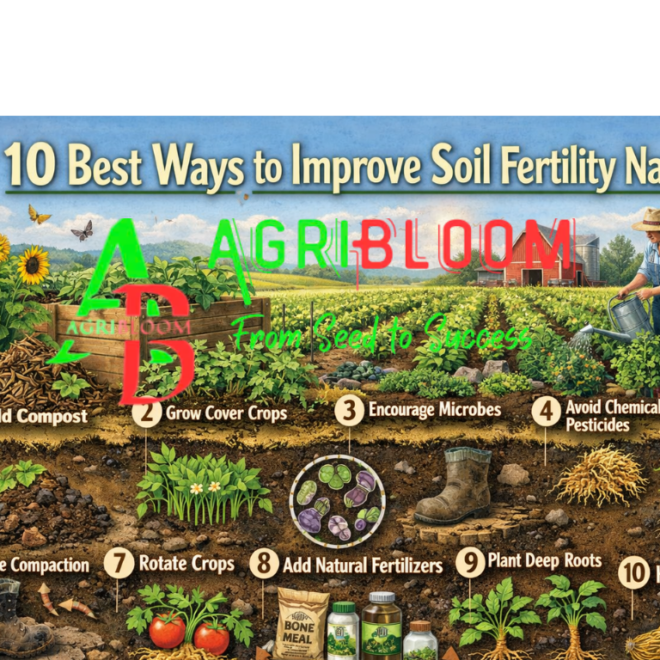

10 Natural Ways to Improve Soil Fertility for Healthy Crops
Rich, living soil sits at the heart of every thriving garden bed and every productive organic field. Soil Fertility shapes how efficiently plants take up nutrients, hold onto moisture during dry spells, and stay resilient when disease pressure rises. For home gardeners, organic farmers, and agricultural students, learning to build naturally fertile soil is not a quick trick. It is a long view that pays back with steadier harvests, healthier plants, and a more balanced growing system.
In this article, you will find practical approaches grounded in field experience and supported by well known soil science guidance. The focus is on improving soil naturally, using methods that work with biology and organic matter rather than depending on synthetic inputs.
Why Natural Soil Improvement Matters
Soil is easy to ignore until something goes wrong. Plants look tired, water runs off instead of soaking in, and the ground turns hard like it has forgotten how to breathe. Natural soil improvement is about bringing that life back, not by forcing growth with quick inputs, but by rebuilding the system that makes soil fertile in the first place.
The urgency is real. The Food and Agriculture Organization of the United Nations reports that around one third of the world’s soils are already moderately to highly degraded. When soil health declines at that scale, it affects crop yields, water cycles, biodiversity, and long term food security.
Strong root development
Healthy soil has a crumbly structure that gives roots space to explore. When roots can spread easily, plants become steadier and better at finding nutrients and moisture. Compacted soil does the opposite. It restricts roots, limits oxygen, and makes plants more vulnerable in heat and dry spells.
Better water retention
Naturally improved soil holds water like a well-made sponge. Organic matter, such as composted plant material, helps the soil absorb rainfall and keep it available for later. That matters during drought, and it also matters during heavy rain because soil that absorbs water reduces runoff and erosion.
Higher microbial activity
A fertile garden bed is full of microscopic helpers. Bacteria, fungi, and other organisms break down organic material and cycle nutrients into forms plants can use. These communities also support soil structure. When microbial life is active, the soil tends to become darker, softer, and easier to work with over time.
Long term sustainability
Natural soil improvement is slow in the best way. It builds resilience year after year. Instead of constantly correcting problems, you create conditions where the soil does more of the work for you. That is why soil restoration is such an important response to global degradation. The FAO highlights that soil degradation reduces the capacity of soils to provide the goods and services we depend on.
If you want healthier plants, start by caring for what the plants are standing on. Soil improvement is not only about bigger harvests. It is about restoring a living foundation that supports water, food, and ecosystems long into the future.
The following section outlines ten effective ways to improve soil fertility
1. Add organic compost regularly
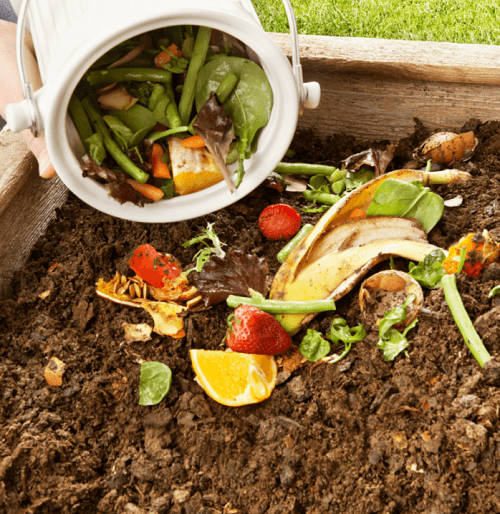
If you could do only one thing to improve soil naturally, make it compost. A few handfuls worked into the top layer each season can change how your soil feels, smells, and performs. Compost is not a quick chemical hit. It is a steady builder that supports the living side of soil while improving the physical structure plants depend on.
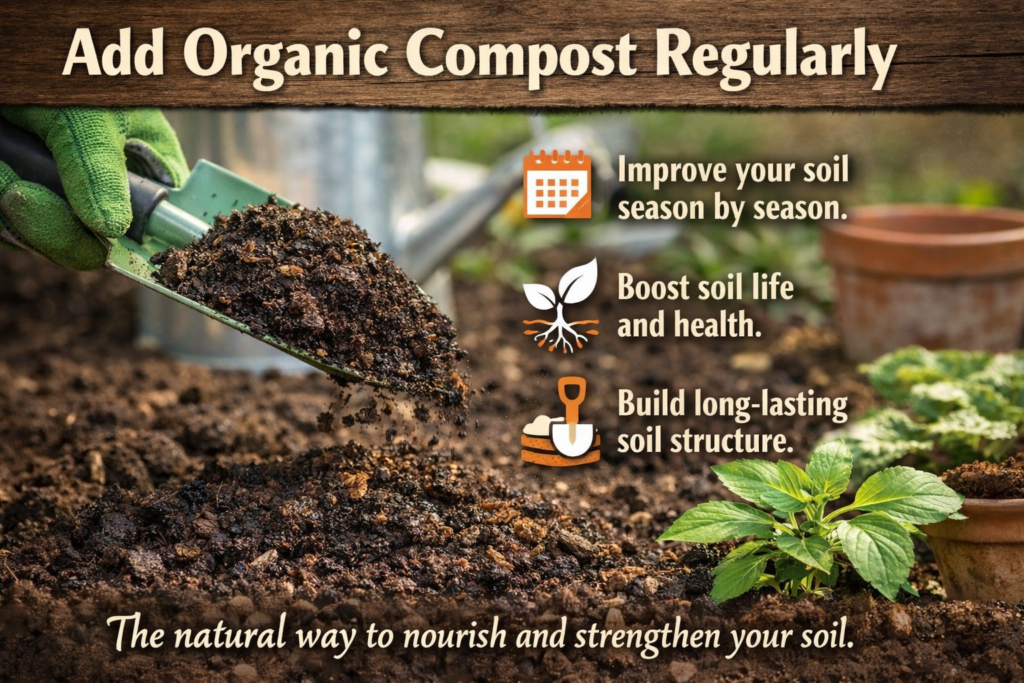
Why compost works so well
It improves drainage and aeration
Compost helps soil form stable crumbs instead of hard clods. In heavy clay, those crumbs create space for air and roots. In sandy beds, compost helps hold particles together so water does not disappear too fast. University of Missouri Extension notes that compost can bind soil particles, improving aeration, root penetration, and water infiltration.
It feeds soil life and supports nutrient cycling
Compost adds organic matter that microbes use as food. As microbial activity rises, nutrients move through the soil system more efficiently. UC Agriculture and Natural Resources explains that compost applications can increase microbial activity and diversity, which supports nutrient cycling and can improve soil structure.
It provides nutrients in a slower, steadier way
Rather than pushing plants to grow fast and weak, compost releases nutrients gradually as it breaks down. This makes it easier to maintain fertility without stressing beneficial organisms. The US Environmental Protection Agency summarizes compost benefits across agriculture and landscaping, including improved soil health and water related benefits that come from better soil function.
It helps soil hold moisture
When soil has more organic matter, it generally holds water better and absorbs rainfall more effectively. A USDA ARS composting publication notes that compost can enhance rainfall penetration and reduce runoff and erosion, which is part of why it helps with moisture management in the field and garden.
A simple routine that works in most gardens
Use finished compost, dark and crumbly with an earthy smell. Spread a thin layer over the soil surface and lightly mix it into the top few inches, or leave it as a top dressing around plants. Repeat seasonally instead of doing one huge application once a year. Consistency beats volume.
If you are just starting composting at home, a small backyard compost bin can make the process easier and more manageable.
Recommended compost bin
Practical compost materials you already have
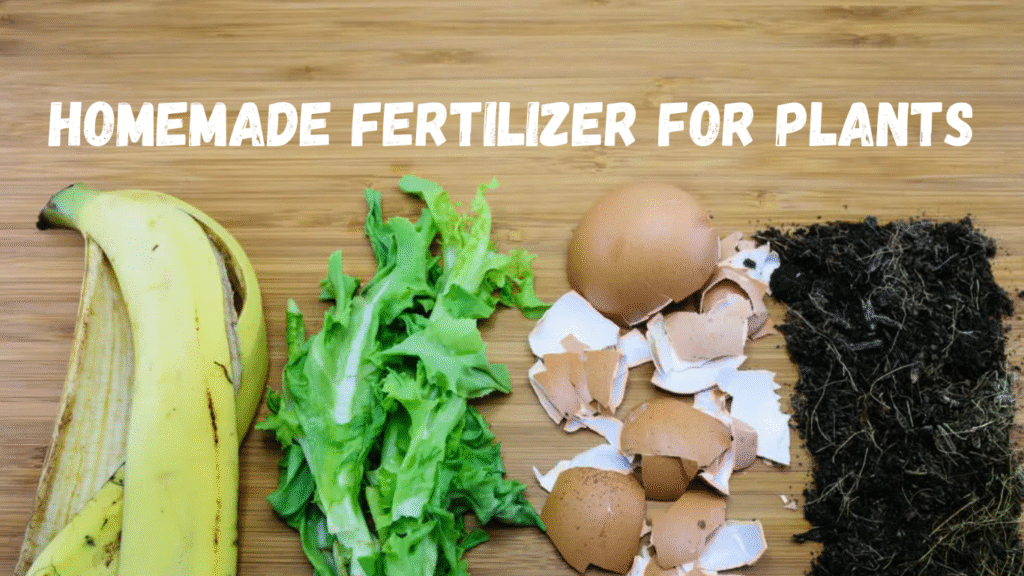
Kitchen scraps, dry leaves, and grass clippings are a strong starting mix. Leaves provide carbon rich material. Fresh green clippings and many kitchen scraps provide nitrogen rich material. Aim for balance so the pile breaks down cleanly and does not turn slimy. Skip meat, fish, oily foods, and pet waste unless you are using a composting method designed to handle them safely.
References
- US EPA, Benefits of Using Compost, overview of soil health and water benefits and compost feedstocks.
- US EPA, Environmental Value of Applying Compost, details on water absorption and retention benefits from improved soil health.
- USDA Agricultural Research Service, Composting publication, notes compost improves rainfall penetration and supports beneficial microbes.
- University of Missouri Extension, Making and Using Compost, explains improved aeration, infiltration, root penetration, and retention effects.
- UC Agriculture and Natural Resources, Compost Solution Center, summarizes microbial activity and nutrient cycling benefits. clippings make excellent compost materials.

2. Practice crop rotation
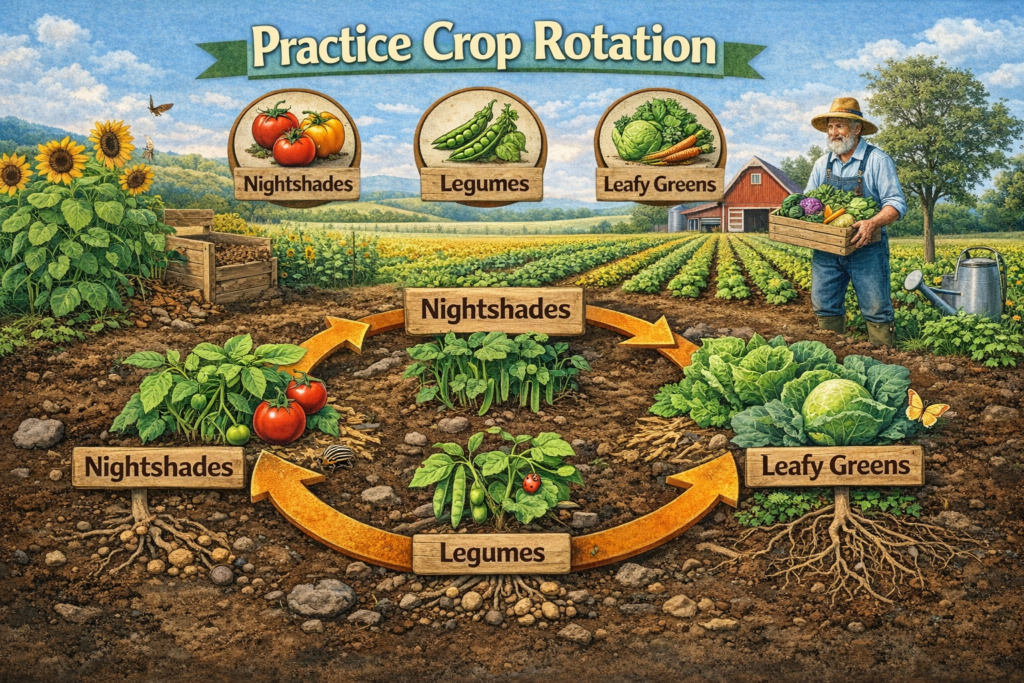
Planting the same crop in the same spot year after year is an easy way to drain specific nutrients and invite recurring pest and disease problems. Crop rotation is the simple fix. You plan a sequence so different plant families take turns using the space. Over time, that rotation can improve nutrient balance and disrupt pest cycles that depend on a predictable host.
Why it helps soil stay fertile
It reduces nutrient depletion
Different crops have different nutrient demands and rooting habits. Rotating them spreads the workload across the soil profile instead of repeatedly pulling the same nutrients from the same depth. USDA research summaries note that rotations can improve soil nutrient levels and support productivity.
It lowers pest and disease pressure
Many pests and soil borne diseases build up when their favorite crop shows up in the same place every season. Switching crops makes it harder for those populations to carry over and multiply. Extension guidance describes crop rotation as a preventive practice to minimize pest problems.
It supports better soil structure
When you mix shallow rooted crops with deeper rooted ones, you encourage more varied pore spaces and better tilth. FAO also highlights crop rotation benefits for soil structure and overall soil fertility.
Rotation examples that gardeners and growers use
Legumes add nitrogen for the next crop
Legumes such as beans, peas, clover, and alfalfa can contribute nitrogen to the rotation through biological nitrogen fixation, which can reduce nitrogen needs for the following crop under the right conditions.
Root crops help loosen tight ground
Carrots, radishes, beets, and similar crops create channels as they grow. Those channels can help water movement and make it easier for the next crop to root.
Leafy greens and cover crops build organic matter
Fast growing greens leave residues that break down quickly. Many growers also rotate in cover crops or green manures to keep living roots in the soil and protect the surface. This approach is commonly recommended in extension programs focused on soil health.
A practical way to start, even in a small garden
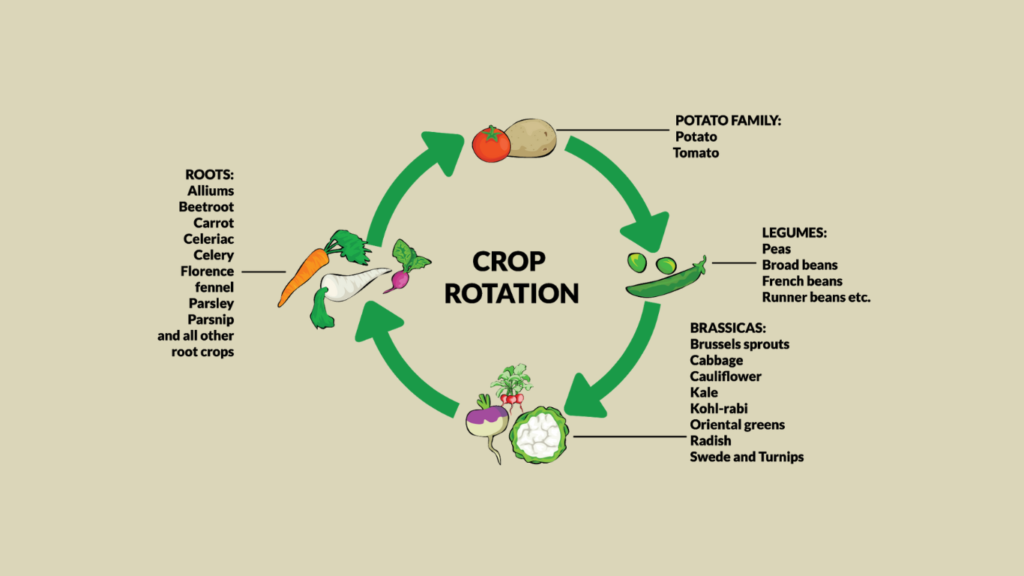
Use plant families, not just crop names. For example, rotate nightshades, legumes, brassicas, and cucurbits through different beds each season. If you only have one bed, rotate by section and keep notes. A three or four year loop is often more effective than switching crops randomly each season. To make rotation easier, many gardeners use a simple garden planner or rotation journal to track plant families year to year.
See recommended garden planner here
References
- USDA Economic Research Service, overview of crop rotation benefits including improved soil nutrient levels and breaking pest cycles.
- FAO, crop planning and management guidance noting crop rotation benefits for soil structure, fertility, and pest control.
- NC State Extension, soil management chapter describing crop rotation as critical for tilth, fertility, organic matter, and pest prevention.
- University of Missouri Extension, nitrogen replacement value of legumes in rotation and their ability to add nitrogen for subsequent crops.

3. Perform a soil test before fertilizing
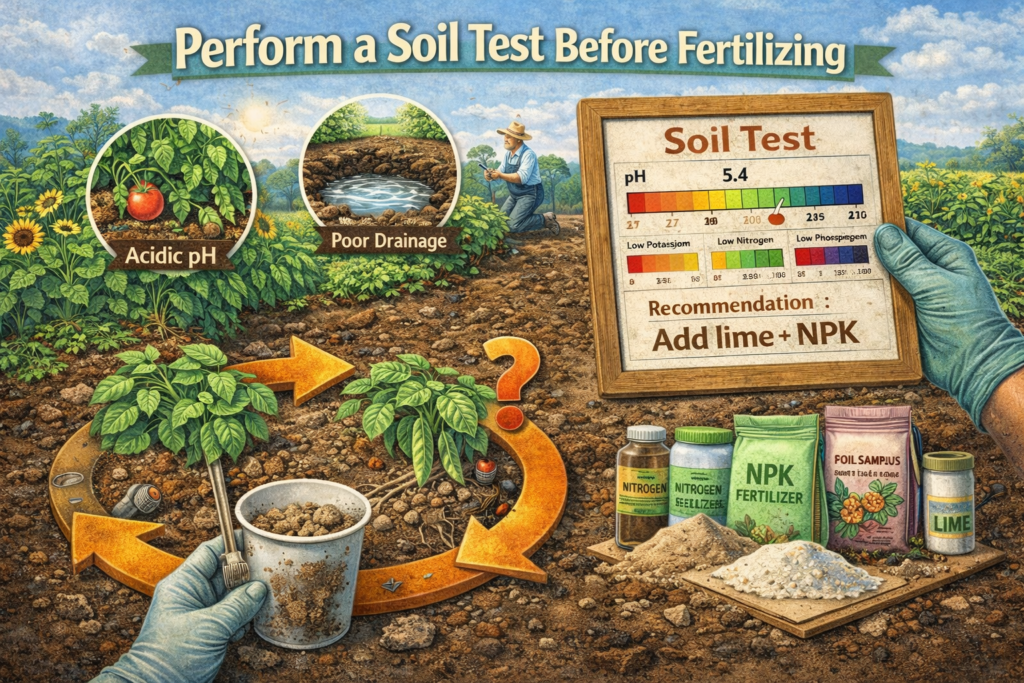
Fertilizer decisions are easiest to get wrong when they are based on guesswork. Plants can look weak for many reasons, including the wrong pH, poor drainage, or one nutrient blocking another. A soil test gives you a clear starting point so you add what the soil actually needs, not what you assume it needs.
What a soil test tells you
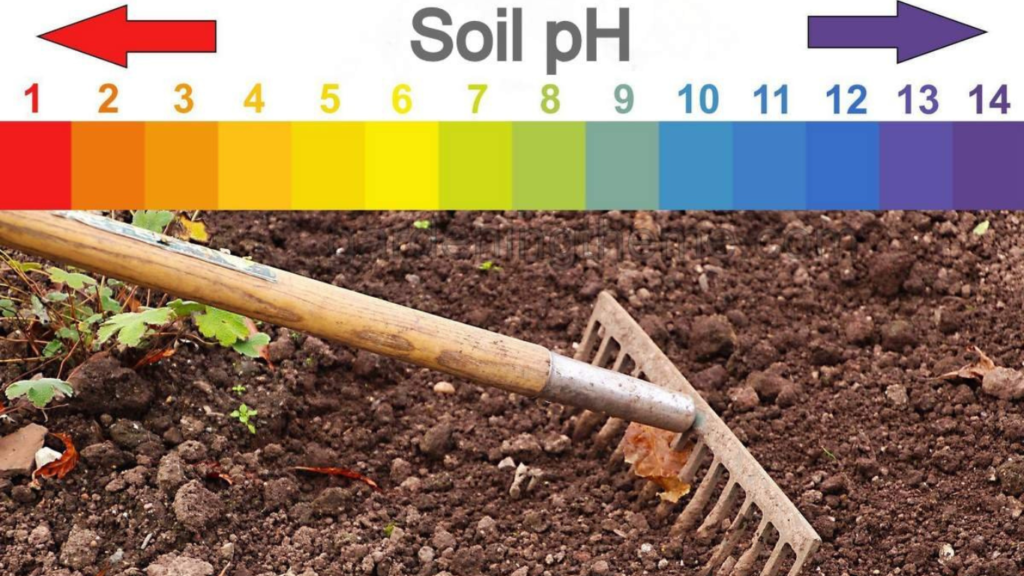
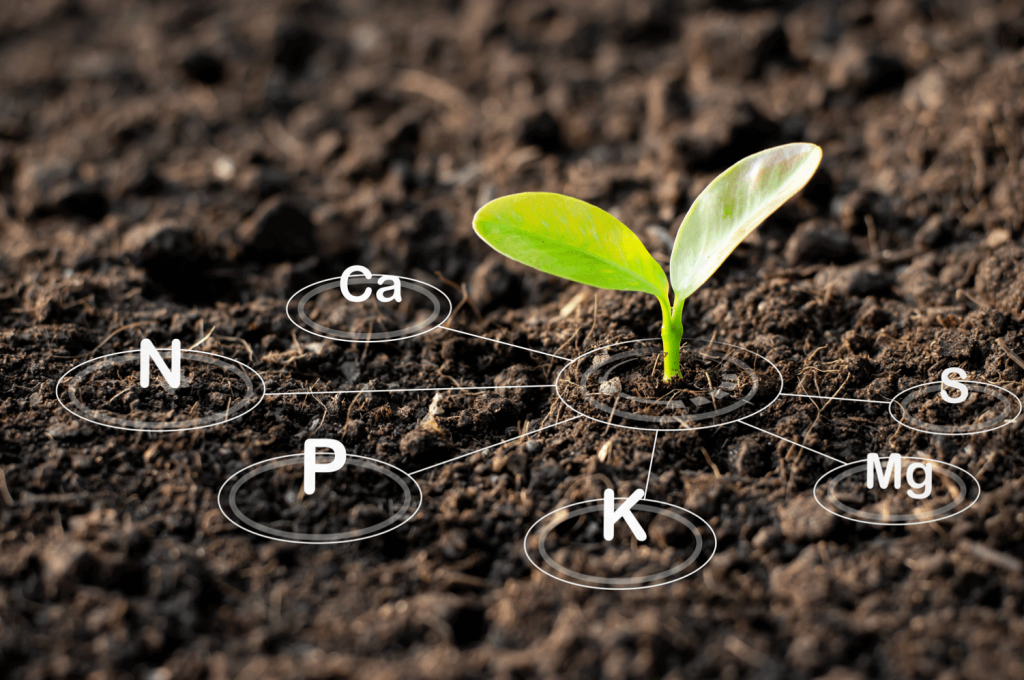
A standard lab test typically reports soil pH and key nutrients, then provides a recommendation for lime and fertilizer rates suited to local crops and conditions. Land grant and extension publications describe soil testing as the foundation for making lime and fertilizer decisions because it measures nutrient availability and guides practical corrections.
Why testing first protects your soil
Over applying nutrients can create long term problems. Excess phosphorus and other nutrients can accumulate, and the “fix” is often to stop applying amendments until levels drop, which can take time. UMass guidance on over fertilized soils specifically recommends pausing fertilizer and even compost until a soil test indicates it is appropriate.
USDA NRCS nutrient management guidance also emphasizes testing so you can match the right fertilizer and the right quantity to crop needs, reducing unnecessary applications and environmental impacts.
The cost saving angle is real
Research and on farm programs have repeatedly shown that better testing and interpretation can reduce fertilizer use without sacrificing performance in many cases. For example, USDA ARS reported work where a more accurate soil test approach reduced fertilizer use by roughly 30 to 50 percent in evaluated systems.
Separately, UC Agriculture and Natural Resources describes on farm demonstration trials where soil testing helped growers cut fertilizer use by about 30 percent.
The exact number will vary by crop, soil type, and what you were doing before, but the direction is consistent: testing helps avoid waste.
Where to get testing done
Most local extension services and state soil testing labs offer affordable testing with recommendations calibrated for your region. Extension documents also explain that recommendations can differ by state because they are built from local field research and interpretation standards.
If you prefer to get a quick baseline at home before sending samples to a lab, a reliable home soil test kit can be helpful for checking pH and major nutrients.
View recommended home soil test kit
For more detailed readings, some growers use digital soil testers to monitor pH and moisture levels during the season.
See digital soil tester options
A simple way to use the results
- Correct pH first if needed, since pH affects nutrient availability.
- Apply only the nutrients you are short on, at the suggested rate.
- Retest on a sensible schedule, commonly every couple of years or sooner if you make major changes.
References
- USDA Agricultural Research Service, report on improved soil testing tools reducing fertilizer use by about 30 to 50 percent.
- USDA NRCS, nutrient management guidance emphasizing soil testing to choose correct fertilizer and quantity.
- UC Agriculture and Natural Resources, on farm trials showing soil testing can reduce fertilizer use by about 30 percent.
- UMass Amherst Soil and Plant Nutrient Testing Laboratory, guidance on managing over fertilized soils and testing before applying amendments.
4. Use mulching to protect the soil
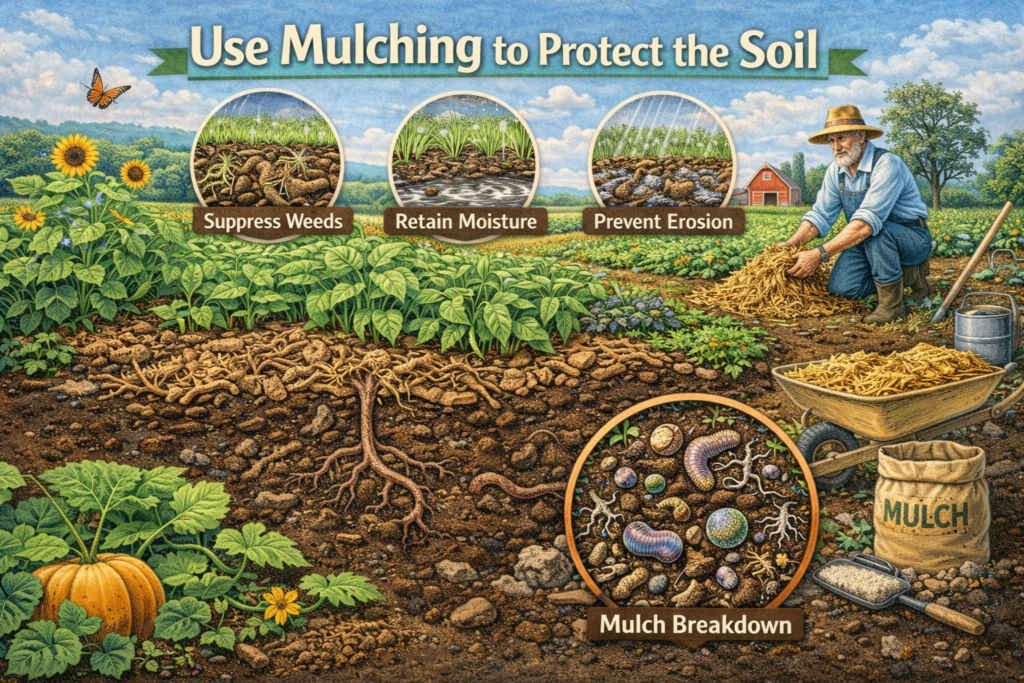
Mulch is one of the simplest ways to care for soil without constantly fighting weeds and watering every day. Think of it as a cover that shields the ground from sun, wind, and heavy rain. At the same time, organic mulch slowly breaks down and becomes food for the organisms that keep soil healthy.
What mulch does for your garden
It holds moisture where roots can reach it
A mulch layer reduces evaporation from the soil surface, so the water you apply stays in the ground longer. This matters most during hot weather and in raised beds that dry out quickly.
It protects against erosion and surface damage
Bare soil is easy to wash away or compact when rain hits hard. Mulch softens the impact and helps keep soil in place. FAO describes mulching as a soil conservation strategy that protects soil during storms and heavy rainfall.
It keeps weeds from taking over
Mulch blocks light, which makes it harder for many weed seeds to sprout. You still may see a few persistent weeds, but the pressure drops a lot when the soil stays covered.
It supports microbes as it breaks down
Organic mulches become a steady food source for soil life. Extension guidance notes that organic mulches decompose over time and feed earthworms and soil microbes.
Organic mulch options that work well
• Straw
• Wood chips
• Dry leaves
Each has a place. Straw is popular in vegetable beds because it is light and easy to move. Wood chips last longer and work well around trees, shrubs, and pathways. Leaves are free and effective once shredded or lightly chopped so they do not mat into a thick layer.
How mulching improves nutrient use
Mulch helps fertilizer work smarter, not stronger. When soil stays evenly moist and temperatures are less extreme, roots are under less stress and microbes stay active. That combination can improve how efficiently plants take up nutrients, especially in sandy soils that leach quickly or clay soils that crust over. USDA notes mulch benefits that include conserving water and moderating temperature extremes, both of which support steadier plant growth.
A practical way to apply it
Aim for a consistent layer that covers the soil but does not smother plants. For garden beds, keep mulch a little away from stems to reduce rot risk. If you are using straw or similar materials for erosion control, NRCS practice guidance often targets high ground cover to protect soil.
References
- USDA, Mulch and soil health overview, moisture conservation, erosion protection, weed suppression, and temperature moderation.
- FAO, Mulching to control soil erosion, notes erosion reduction, weed reduction, increased moisture, microbial action, and fertility.
- FAO, Mulching in organic agriculture, explains how decomposition increases organic matter and supports erosion prevention through improved structure.
- South Dakota State University Extension, Organic garden mulches to conserve moisture and prevent weeds, discusses moisture retention and erosion prevention.
- Oregon State University Extension, Gardening with mulches, explains organic mulch decomposition and benefits for soil organisms.
- USDA NRCS, Conservation Practice Standard Mulching Code 484, technical guidance on mulch use and protective ground cover.
5. Grow Cover Crops
If you want healthier soil without relying heavily on synthetic inputs, cover crops are one of the simplest tools you can add to your routine. Farmers and gardeners often plant species such as clover, cereal rye, and vetch during the off season or between main crops. These plants are not grown for harvest. Instead, they work like a living soil upgrade, protecting the ground and feeding it at the same time.
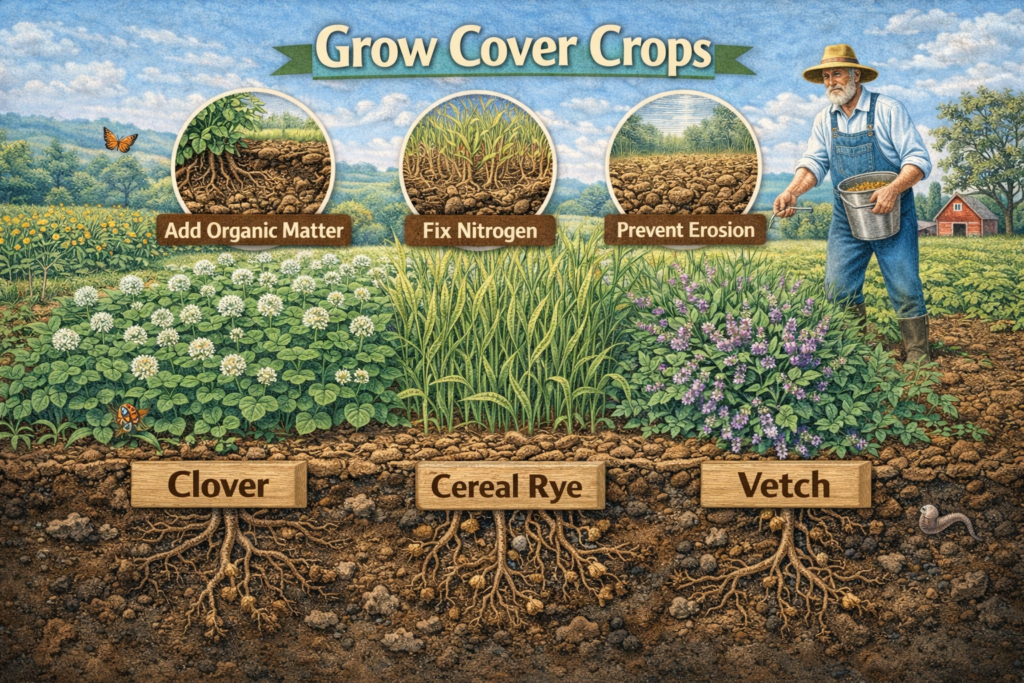
Cover crops are widely used in organic and regenerative systems because they support long term soil health while also solving practical problems like erosion and nutrient loss. The USDA describes cover crops as a conservation practice that can reduce erosion, maintain or increase soil organic matter, improve soil structure, and even supply nitrogen for the next crop when legumes are used.
Why cover crops matter
Leaving soil bare is like leaving food uncovered in a kitchen. Wind and rain can carry the best topsoil away, and nutrients can wash below the root zone before your next planting. Cover crops keep the surface protected and active.
SARE, a leading U.S. sustainable agriculture program, notes that cover crops can reduce erosion, increase organic matter, and improve nutrient cycling by taking up nutrients that might otherwise leach away.
Practical advantages of growing cover crops
Here are the biggest reasons people plant them, especially in fall, winter, or early spring.
- Prevent erosion
A thick stand of rye or clover acts like a shield against heavy rain and wind. Research and field surveys summarized by SARE show cover crops can significantly cut erosion while improving water infiltration. - Add organic matter
As cover crops grow and later decompose, they contribute plant material that becomes soil organic matter. This improves soil tilth, structure, and the ability to hold water and nutrients over time. USDA and SARE both highlight building organic matter as a key benefit of cover crop use. - Increase nitrogen naturally
Legumes such as vetch and many clovers can capture nitrogen from the air with the help of beneficial root bacteria. Mississippi State Extension explains that legume cover crops convert atmospheric nitrogen into soil nitrogen, reducing the need for fertilizer, and reports common nitrogen contributions that can range widely depending on growth and species.
A broader scientific review also notes that legumes can build soil nitrogen and provide a credit to the following crop, with outcomes depending on biomass and management.
How to choose between clover, rye, and vetch
Clover
A great choice when your main goal is nitrogen and pollinator support. It can fit well in gardens and smaller farms.
Rye
One of the best options for erosion control and weed suppression because it grows fast and produces lots of biomass.
Vetch
A strong nitrogen fixer that also provides good ground cover, often used in mixes.
Many growers combine grasses and legumes to get multiple benefits at once. Farmers.gov highlights that mixes such as rye with clover or vetch can pair weed control from grasses with nitrogen production from legumes.
ATTRA also describes common mixes like rye plus clover or vetch, where the legume contributes nitrogen and the rye adds high biomass that supports soil biology.
References
- USDA NRCS, Cover Crop Management and Practice Standard information.
- USDA, Cover Crops and Crop Rotation overview.
- SARE, Cover crops resources and soil fertility guidance.
- SARE, Cover crops ecosystem services and erosion reduction summary.
- Mississippi State University Extension, Cover crops benefits and nitrogen fixation notes.
- ATTRA, Overview of cover crops and green manures.
- Peer reviewed soil health review on cover crop impacts.

6. Encourage Beneficial Soil Microorganisms
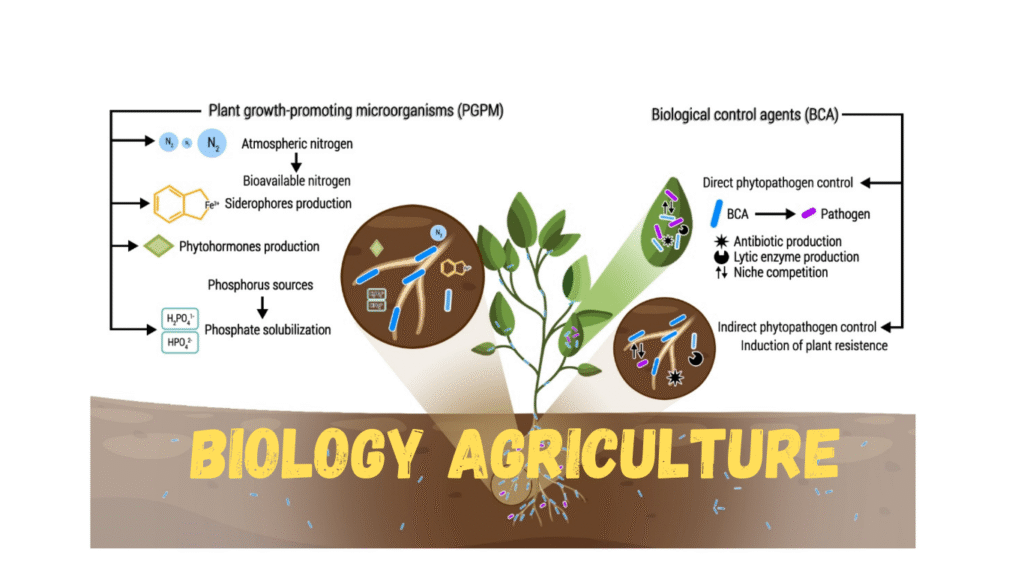
If your soil could talk, it would probably ask for food, water, and peace and quiet. That is because healthy soil is packed with living organisms. Bacteria, fungi, and other microbes are the quiet crew that keeps nutrients moving and organic matter turning into plant friendly fertility. When soil life is thriving, plants tend to grow with fewer struggles and better consistency.
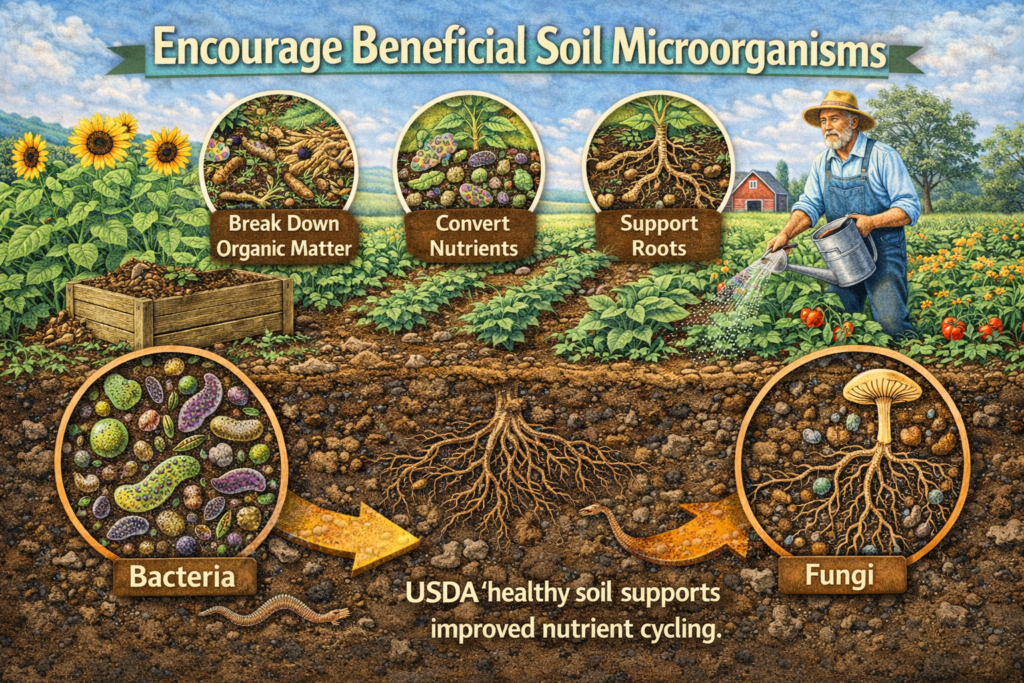
The USDA highlights that soil health management can lead to more diverse soil organisms and improved nutrient storage and cycling, which is exactly what growers want when they are building long term productivity.
What microbes do in the soil
Microorganisms handle jobs that are easy to overlook until they are missing.
They help by:
• Breaking down crop residues and compost into stable organic matter
• Converting nutrients into forms roots can absorb
• Supporting soil structure by helping particles bind into aggregates
• Working in the root zone where plants exchange sugars for support
FAO notes that soil biodiversity drives nutrient cycling and regulates soil organic matter dynamics, which directly supports sustainable agriculture.
How to support soil microbes without overcomplicating it
Most of the work is about creating a steady, low stress environment. Here are three practical habits that make a real difference.
1. Avoid routine chemical pesticide use when it is not necessary
Many farms and gardens can reduce disruption to soil biology by using a more targeted approach. That usually means scouting first, treating only when pressure is high, and choosing the least disruptive option that still does the job. Research summaries from agronomy focused sources emphasize how soil biology influences nutrient availability and why protecting the root zone community matters.
Simple approach:
• Monitor pests regularly before spraying
• Rotate methods, not just products
• Spot treat when possible instead of blanket treatment
2. Add compost and use biochar with a plan
Compost is a reliable microbial food source. It supplies carbon, nutrients, and a range of organic compounds that help support a diverse soil community. FAO materials describe the central role of decomposers in transforming dead organic material into soil organic matter.
Biochar can help too, especially when it is used carefully. Extension resources explain biochar as a soil amendment that can improve soil fertility and health, and newer research continues to examine how it shapes microbial communities.
Practical tip: Mix biochar into compost first or let it soak with compost tea before application. This helps it support biology instead of temporarily tying up nutrients.
3. Maintain proper moisture, not too dry and not waterlogged
Microbes need water to stay active, but they also need oxygen. Very dry soil slows biological activity. Waterlogged soil can push the system toward conditions that limit the helpful organisms you want. The USDA notes that healthy soils absorb and retain more water and are less susceptible to runoff, which supports overall soil function.
Good moisture habits:
• Use mulch to reduce evaporation
• Improve infiltration with organic matter
• Avoid compaction so water can move into the soil, not across it
Why this matters for long term Soil Fertility
When microbial life is strong, nutrient cycling becomes more efficient and organic matter builds more steadily. Over time, that usually means better structure, steadier yields, and fewer fertility surprises. In short, soil biology is not an extra. It is the engine behind long term Soil Fertility.
References
- USDA NRCS, Soil Health overview
- USDA NRCS, Soil Biology Primer
- FAO Soils Portal, Soil biodiversity and nutrient cycling
- FAO report on soil microorganisms and nutrient cycling
- Michigan State University Extension, Biochar as a soil amendment
- Springer study on biochar and soil bacterial community shifts
- Recent meta analysis on biochar plus microorganisms and soil function
- Agronomy article on soil biology and nutrient availability.
7. Reduce Soil Compaction
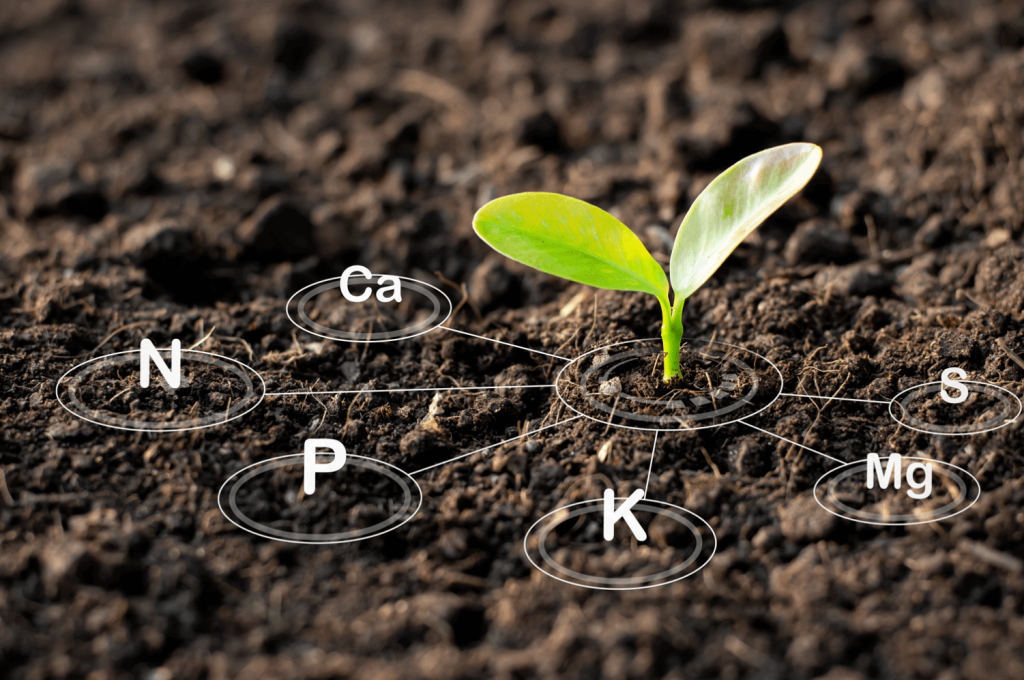
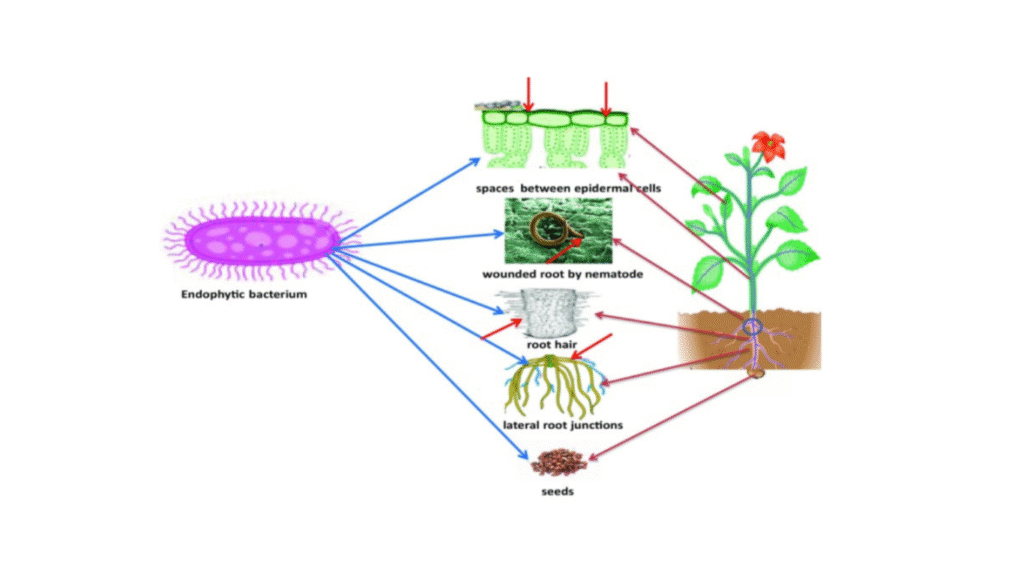
Soil can look fine on the surface and still struggle underneath. Compaction happens when soil particles are pressed tightly together, reducing the pore space that normally holds air and water. The result is simple but serious: roots cannot push through easily, water infiltrates more slowly, and plants have a harder time accessing nutrients even when the soil contains them. USDA guidance notes that compaction restricts rooting depth and reduces the uptake of water and nutrients by plants.
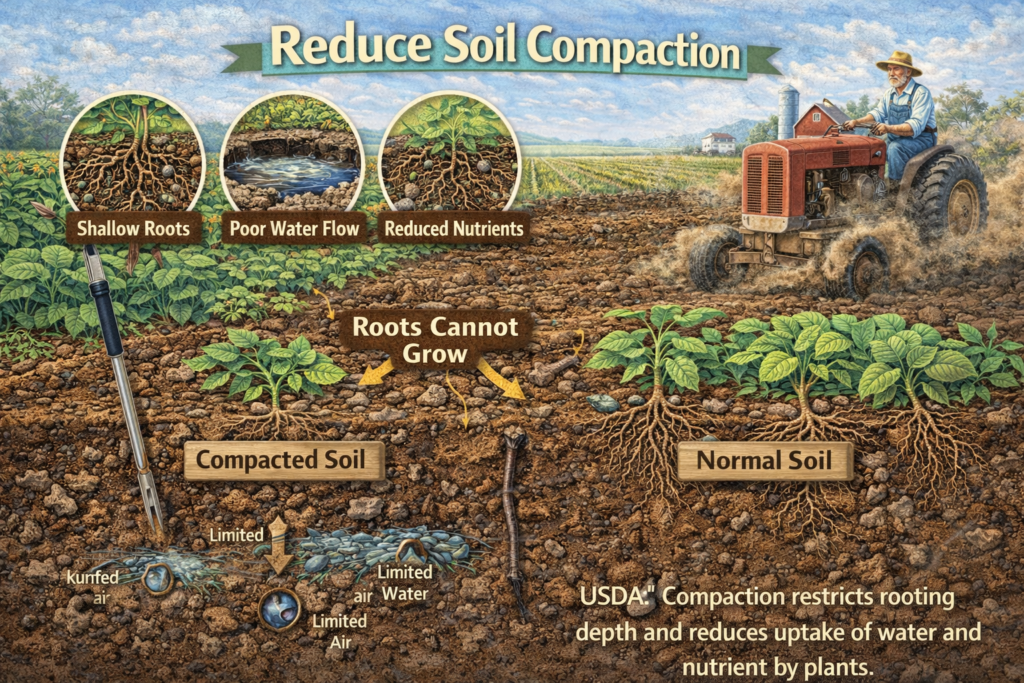
Why compacted soil weakens plant growth
When soil pores collapse, several things happen at once. Water runs off instead of soaking in, oxygen becomes limited, and root systems stay shallow. Research also links compaction with reduced water infiltration and poorer gas exchange, which further limits plant performance.
Practical solutions that work
Avoid heavy loads on wet soil
The fastest way to compact soil is to drive or repeatedly walk on it when it is wet. NRCS materials describe compaction as increased bulk density and decreased porosity caused by heavy loads, especially when soil is too wet.
If you must work the area, use the same paths consistently so the growing area stays protected.
Use raised beds and protect them from traffic
Raised beds are useful because they let you garden in looser soil and keep foot traffic in walkways. University extension guidance specifically advises keeping foot traffic and equipment out of raised beds to prevent compaction.
Add organic matter to rebuild structure
Organic matter helps soil form stable aggregates, which improves infiltration and reduces compaction risk. SARE explains that increasing soil organic matter improves aggregation, supports better soil water relationships, and reduces compaction.
NRCS also notes that improved soil structure increases water infiltration and reduces runoff.
What to expect when compaction improves
As soil becomes looser and better structured, roots extend deeper, water soaks in more evenly, and plants become steadier during heat and dry spells. In practical terms, loose soil supports a stronger plant system because roots can explore more space for moisture and nutrients.
References
- USDA NRCS, Soil Quality Resource Concerns: Compaction, effects on rooting depth and nutrient and water uptake.
- USDA NRCS, Job Sheet on soil compaction definition and impacts on infiltration and root growth.
- SARE, Soil organic matter benefits including improved aggregation and reduced compaction.
8. Apply Natural Soil Fertilizers
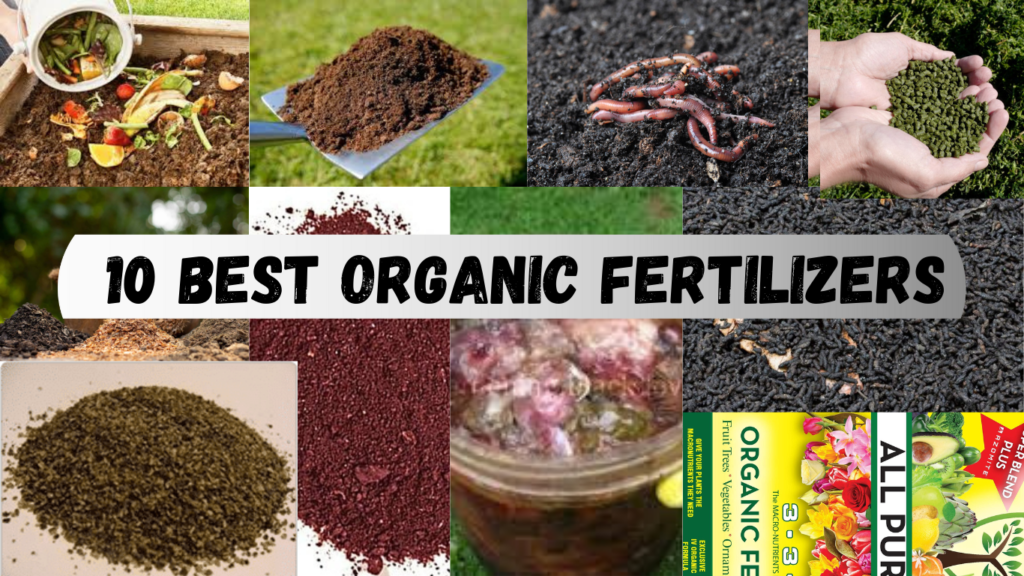
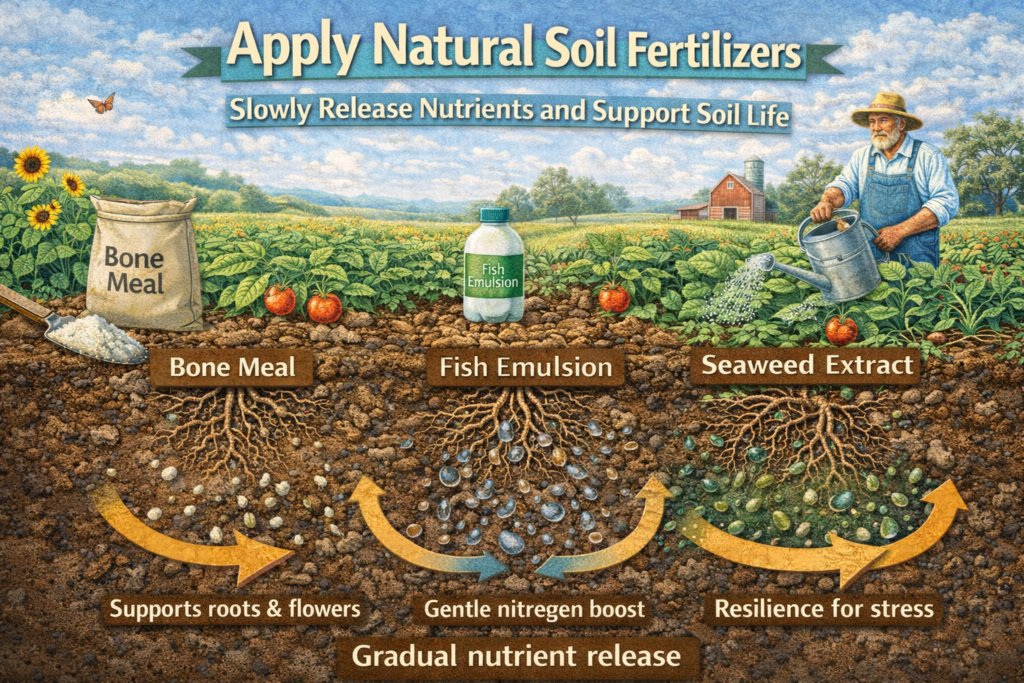
If you want healthier plants without weakening the soil, natural fertilizers are a solid place to start. Inputs such as bone meal, fish emulsion, and seaweed extracts can improve nutrient balance while still supporting the organisms that keep soil working. The key difference is pace. Many natural fertilizers release nutrients gradually through the action of soil life, rather than delivering a sudden spike.
Why slow feeding matters
Soil fertility is more than adding nutrients. It is also about keeping structure stable and biology active. When nutrients become available steadily, plants can use them more efficiently and the risk of loss through runoff or leaching is often reduced.
Three natural options worth knowing
- Bone meal
Often used as a phosphorus and calcium source, bone meal is most useful when a soil test shows phosphorus is low. Organic fertilizers commonly need microbial activity to convert nutrients into forms plants can absorb, so results are usually gradual rather than instant. - Fish emulsion
This is a popular choice for gentle nitrogen support, especially for leafy growth. Some extension guidance notes that fish emulsion can also feed soil microorganisms, helping build a stronger soil food web over time. - Seaweed extract
Seaweed products are often used as biostimulants. Reviews describe benefits for plant performance, stress tolerance, and potential positive effects on soil health and microbial communities.
A practical best practice
Use natural fertilizers as part of a bigger soil building plan. Start with compost or other organic matter, apply fertilizers in modest amounts, and adjust based on plant response or soil testing. This approach protects soil life and supports long term structure and fertility.
References
- USDA NRCS guidance on organic and natural mineral based fertilizers releasing nutrients gradually through soil organisms.
- Colorado State University Extension GardenNotes on organic fertilizers, microbial conversion, and examples including seaweed.
- University of Illinois Extension on fish emulsion and supporting soil microorganisms.
9. Learn from Agricultural Research and Trusted Sources
When it comes to soil health, the internet can be noisy. One week a product is trending, the next week it is forgotten. If you want advice that holds up in real gardens and real farms, it helps to lean on research based sources that test what they publish.
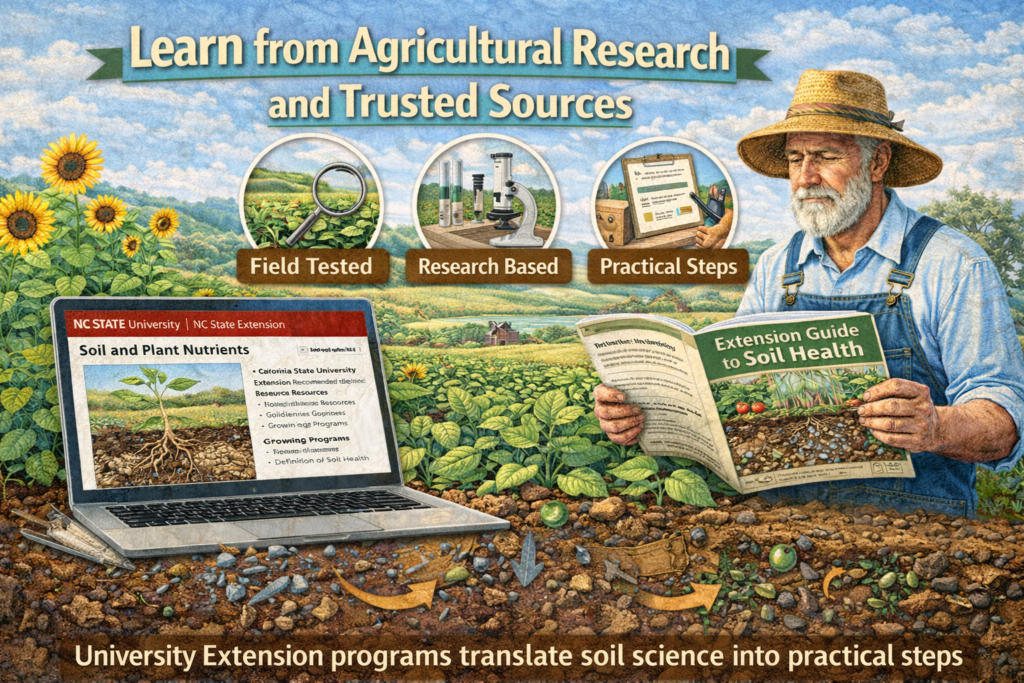
A dependable starting point is university extension services. These programs translate soil science into practical steps you can actually apply, such as how to read a soil test, how texture affects drainage, and how organic matter supports fertility. NC State Extension’s soil and plant nutrients guide is a good example of this kind of clear, field tested information.
Why research sources matter for better soil decisions
They explain the basics that drive everything else
Many soil problems come back to one topic: texture. Texture is the mix of sand, silt, and clay, and it influences how water moves, how much air roots get, and how easy soil is to work. FAO’s training materials describe texture as a key factor in water and air holding capacity and how water enters and moves through soil.
Cornell’s soil texture fact sheet also emphasizes that texture is determined by the percentage of sand, silt, and clay, and it connects texture directly to field management decisions.
They reduce guesswork
Instead of relying on tips that may only work in one climate or one type of soil, extension guides and public agencies push you toward measurement and observation. That usually means soil testing, learning your soil texture, and choosing amendments based on what your soil actually needs.
A fun reminder that soil balance matters
Even word puzzles sometimes point toward good soil science. A recent New York Times crossword clue for “fertile soil” was answered with “loam.”
Loam is often used as a shorthand for a balanced soil texture because it blends sand, silt, and clay in a way that supports both drainage and moisture holding capacity.
Takeaway
If you want reliable results, build your soil strategy on trusted references first, then adjust based on your local conditions. Research sources will not replace hands on experience, but they will keep you from wasting time on myths and shortcuts that do not match how soil really works.
References
- NC State Extension Gardener Handbook, Soils and Plant Nutrients.
- FAO training material, Soil Texture definition and impacts.
- University of California Agriculture and Natural Resources, soil texture description including loam.
- NYT crossword clue reference showing “fertile soil” answer as loam
10. Focus on Long Term Soil Health, Not Quick Fixes
Real soil fertility is not something you “add” once and forget. It is something you build slowly, season after season, by improving soil structure, organic matter, and the living community beneath your plants. USDA NRCS defines soil health as the continued capacity of soil to function as a vital living ecosystem that sustains plants, animals, and humans.
Quick chemical fixes can sometimes deliver fast growth, but they do not always improve the foundation. In many cases, long term progress comes from supporting the soil system so it can feed plants more consistently over time.
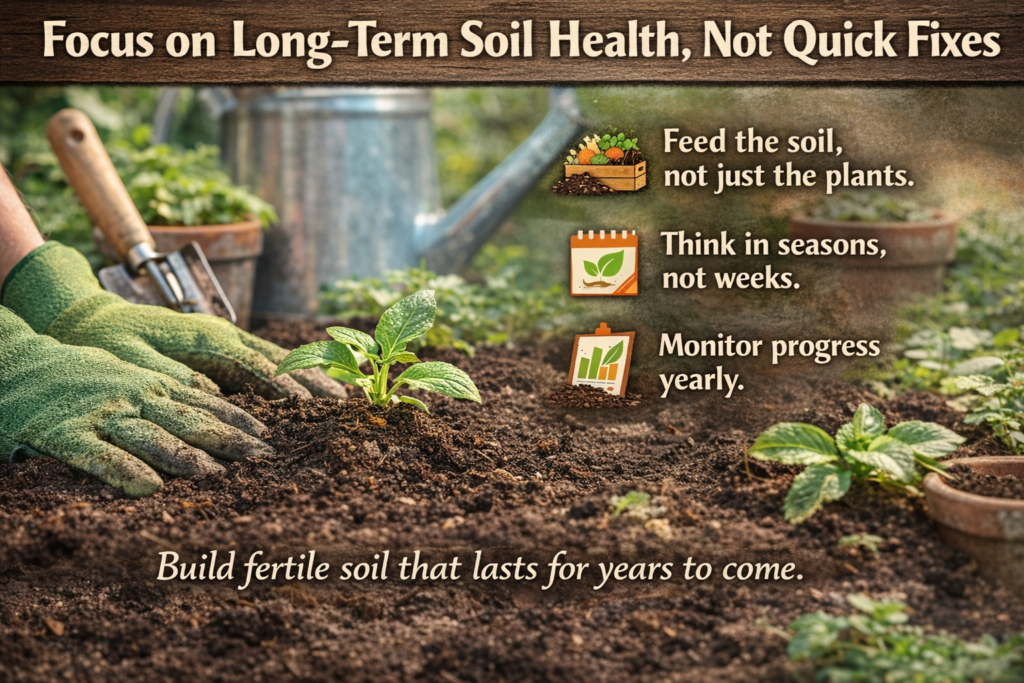
Feed the soil, not just the plants
Think beyond nutrients alone. Soil organic matter affects structure, porosity, water infiltration, moisture holding capacity, biological activity, and nutrient availability.
That means practices like composting, keeping soil covered, and maintaining living roots often pay off more than repeated short term inputs.
Think in seasons, not weeks
Healthy soil changes gradually. A good approach is to set seasonal goals such as improving water infiltration, reducing compaction, increasing organic matter, or keeping beds covered during off seasons. Farmers.gov frames soil health as working with the land to improve water infiltration, nutrient cycling, and resilience over time.
Protect microbes and structure
Soil organisms drive nutrient cycling and help maintain soil function. Research reviews note that pesticides can have off target effects on soil organisms, including soil microbiota, which play a key role in ecosystem functioning.
This does not mean never using inputs, but it does support a careful approach: use the least disruptive option that solves the problem, and rely more on prevention through good soil management.
Monitor progress yearly
If you want long term improvement, measure it. A yearly check of soil pH, organic matter trend, and key nutrients helps you avoid over application and shows whether your changes are working. Regular soil testing is commonly recommended to guide fertilizer and lime decisions rather than guessing.
References
- USDA NRCS, Soil Health, definition and core soil functions.
- FAO, The importance of soil organic matter, how organic matter supports structure, water, biology, and nutrients.
- Farmers.gov, Soil Health principles and benefits for infiltration, cycling, and resilience.
- FEMS Microbiology Ecology, review on pesticide impacts and off target effects on soil microbiota.
Summary Table of the 10 Best Ways to Improve Soil Fertility Naturally
| No. | Method | What it improves most | Best for | Simple action you can start today | When you will notice results |
|---|---|---|---|---|---|
| 1 | Add organic compost regularly | Organic matter, structure, microbial activity | Almost all soils | Apply a thin layer of finished compost each season | 4 to 12 weeks, stronger over 1 year |
| 2 | Practice crop rotation | Nutrient balance, pest and disease reduction | Vegetable beds and farms | Rotate by plant family each season | 1 to 2 seasons |
| 3 | Perform a soil test before fertilizing | Accuracy in pH and nutrient management | Anyone using amendments | Test soil and correct pH first | Immediate clarity, changes in 1 to 3 months |
| 4 | Use mulching to protect the soil | Moisture retention, weed control, erosion protection | Gardens, orchards, raised beds | Mulch the soil surface and keep it off stems | 1 to 4 weeks |
| 5 | Grow cover crops | Erosion control, organic matter, nitrogen support | Off season beds and fields | Plant clover, rye, or vetch after harvest | Next season |
| 6 | Encourage beneficial soil microorganisms | Nutrient cycling, soil resilience | All soils, especially tired soils | Add compost, keep moisture steady, avoid unnecessary chemicals | 4 to 12 weeks |
| 7 | Reduce soil compaction | Root growth, infiltration, oxygen availability | Clay soils, high traffic areas | Stop walking on beds, add organic matter, use permanent paths | 1 to 2 seasons |
| 8 | Apply natural soil fertilizers | Slow nutrient release, soil friendly fertility | Targeted deficiencies | Use bone meal, fish emulsion, seaweed extract based on need | 2 to 8 weeks |
| 9 | Learn from trusted research sources | Better decisions, fewer mistakes | Beginners to advanced growers | Follow university extension and agency guidance | Immediate improvement in choices |
| 10 | Focus on long term soil health | Stable fertility, structure, biology | Everyone | Track soil progress yearly and build habits season by season | 6 to 24 months |
Final Thoughts
Improving Soil Fertility naturally is not only eco-friendly but also cost-effective and sustainable. By focusing on organic matter, biodiversity, and informed practices, you create resilient soil that supports healthy crops for years to come. Whether you’re a home gardener or an agricultural student, these methods help build truly fertile land—naturally.
FAQs of 10 Best Ways to Improve Soil Fertility Naturally
1. How long does it take to improve soil fertility naturally
Some benefits show up quickly, especially better moisture control after you add mulch or compost. The deeper wins, like stronger soil structure, higher organic matter, and more active biology, usually build across multiple growing seasons. USDA NRCS explains that many soil health benefits become more noticeable over the next few years as biological activity increases and living roots are present for more of the year.
2. Is compost enough, or do I still need fertilizer
Compost is an excellent soil builder, but it is not always a complete fertility program. It improves structure and supports soil organisms, yet specific nutrients may still be low depending on your soil and what you grow. University of Missouri Extension notes that compost is best viewed as a soil amendment rather than a fertilizer, and additional fertilization may be needed for strong yields. A soil test helps you decide when targeted nutrients are necessary and when they are not.
3. What is the quickest natural method for better soil moisture retention
Mulching is often the fastest change you can make. A mulch layer reduces soil evaporation and helps the ground stay cooler and more evenly moist. Research reviews and extension resources describe mulch as a practical moisture saving tool because it protects the surface and slows evaporation. Organic matter also improves water holding capacity, but that benefit usually increases gradually as soil organic matter builds. USDA NRCS soil health guidance highlights how organic matter supports water storage in soil.

Thesis Link : https://saulibrary.edu.bd/daatj/public/uploads/BAU200601_19-Pp_5.pdf
- 10 Best Loppers for Thick Branches - October 14, 2026
- Fall Lawn Care Checklist – 9 Jobs Before Winter - October 14, 2026
- 10 Best Garden Tool Sets for Beginners - October 13, 2026





[…] 10 Best Ways to Improve Soil Fertility Naturally […]