
Best Soil Test Kit – Lab, DIY, and Budget Options Compared
Testing your soil before buying fertilizer can save you from a lot of wasted effort. Many lawn and garden problems are not caused by a lack of fertilizer. Sometimes the soil already has enough nutrients, but the pH is too low or too high. In other cases, poor organic matter, compacted soil, or an imbalance of phosphorus and potassium may be holding your plants back.
This is why choosing the best soil test kit is an important first step for any homeowner, gardener, or lawn care beginner. A reliable soil test helps you see what is happening below the surface before you spend money on lime, compost, grass seed, fertilizer, or other soil amendments.
In this guide, I will explain which soil testing kits are worth considering, what type of kit works best for lawns, how home test kits compare with lab testing, and what you should look for before choosing one.
The information in this article is written from an agriculture focused point of view and is based on university extension recommendations, current product details, and practical lawn and garden needs. I have not personally tested every product listed in a lab setting. For that reason, the recommendations are based on research, accuracy, ease of use, value, and how useful each kit is for everyday homeowners and gardeners.
Which Soil Test Kit Should You Buy?
For most homeowners, a mail in lab kit is the better choice because it gives a fuller picture of your soil than a simple probe or color strip. A proper lab based test can usually check soil pH, major nutrients, and in some cases organic matter or other minerals that affect plant growth.
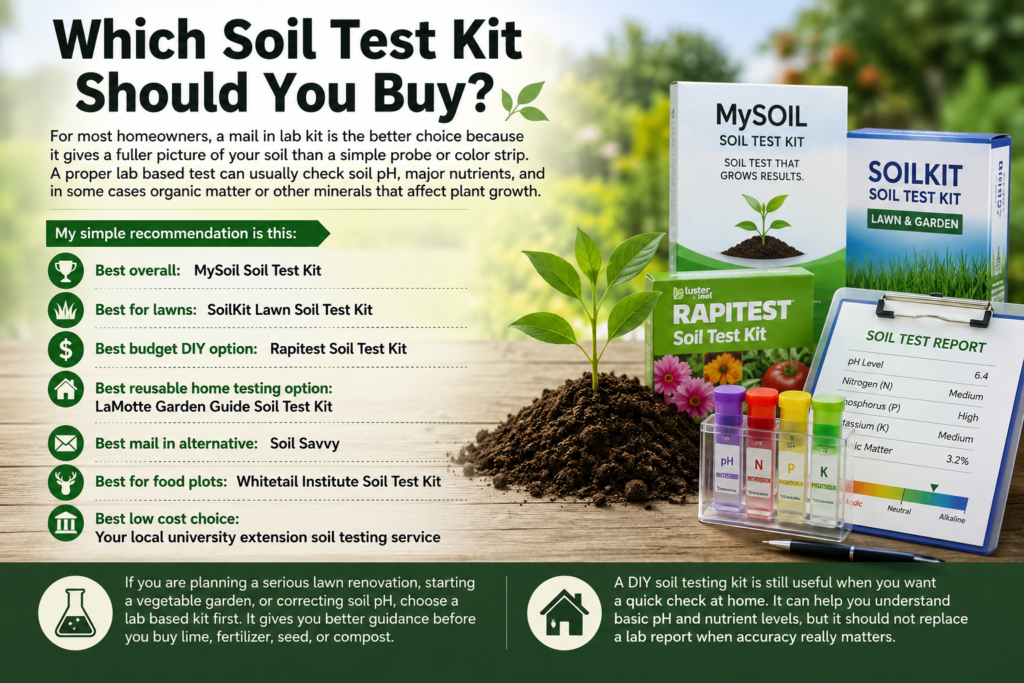
My simple recommendation is this:
- Best overall: MySoil Soil Test Kit
- Best for lawns: SoilKit Lawn Soil Test Kit
- Best budget DIY option: Rapitest Soil Test Kit
- Best reusable home testing option: LaMotte Garden Guide Soil Test Kit
- Best mail in alternative: Soil Savvy
- Best for food plots: Whitetail Institute Soil Test Kit
- Best low cost choice: Your local university extension soil testing service
If you are planning a serious lawn renovation, starting a vegetable garden, or correcting soil pH, choose a lab based kit first. It gives you better guidance before you buy lime, fertilizer, seed, or compost.
A DIY soil testing kit is still useful when you want a quick check at home. It can help you understand basic pH and nutrient levels, but it should not replace a lab report when accuracy really matters.
Why You Should Test Soil Before Using Fertilizer
It is easy to blame poor growth on a lack of fertilizer. A lawn turns yellow, tomato plants stay small, or flowers stop blooming, and the first reaction is often to feed them more. But soil does not always work that way. Sometimes the nutrients are already there, but the plants cannot use them properly.
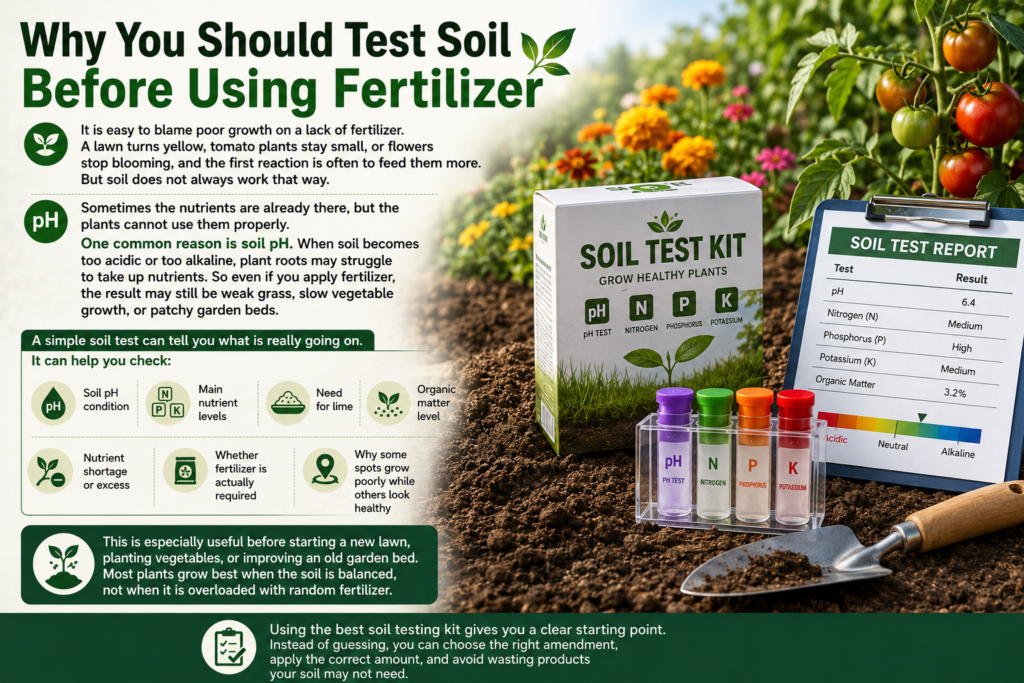
One common reason is soil pH. When soil becomes too acidic or too alkaline, plant roots may struggle to take up nutrients. So even if you apply fertilizer, the result may still be weak grass, slow vegetable growth, or patchy garden beds.
A simple soil test can tell you what is really going on. It can help you check:
- Soil pH condition
- Main nutrient levels
- Need for lime
- Organic matter level
- Nutrient shortage or excess
- Whether fertilizer is actually required
- Why some spots grow poorly while others look healthy
This is especially useful before starting a new lawn, planting vegetables, or improving an old garden bed. Most plants grow best when the soil is balanced, not when it is overloaded with random fertilizer.
Using the best soil testing kit gives you a clear starting point. Instead of guessing, you can choose the right amendment, apply the correct amount, and avoid wasting products your soil may not need.
Compare Soil Test Kit Costs Before Choosing One
The price of a soil test kit depends on how much information you want from the test. A small handheld tester may only give you a quick pH or moisture reading. A mail in lab test usually costs more, but it can give you a clearer report about nutrients, soil balance, and what your lawn or garden actually needs.
Here is a practical cost guide for homeowners:
| Type of Soil Test | Common Price Range | Good For |
|---|---|---|
| Probe style tester | 10 to 25 dollars | Fast moisture and rough pH checks |
| Capsule or color test kit | 15 to 30 dollars | Basic pH, nitrogen, phosphorus, and potassium testing |
| Mail in lab test kit | 30 to 45 dollars | More dependable lawn and garden soil reports |
| Local extension soil test | Free to 20 dollars or more | Affordable professional testing |
| Advanced soil test | 40 dollars or more | Lead, salinity, trace elements, or special concerns |
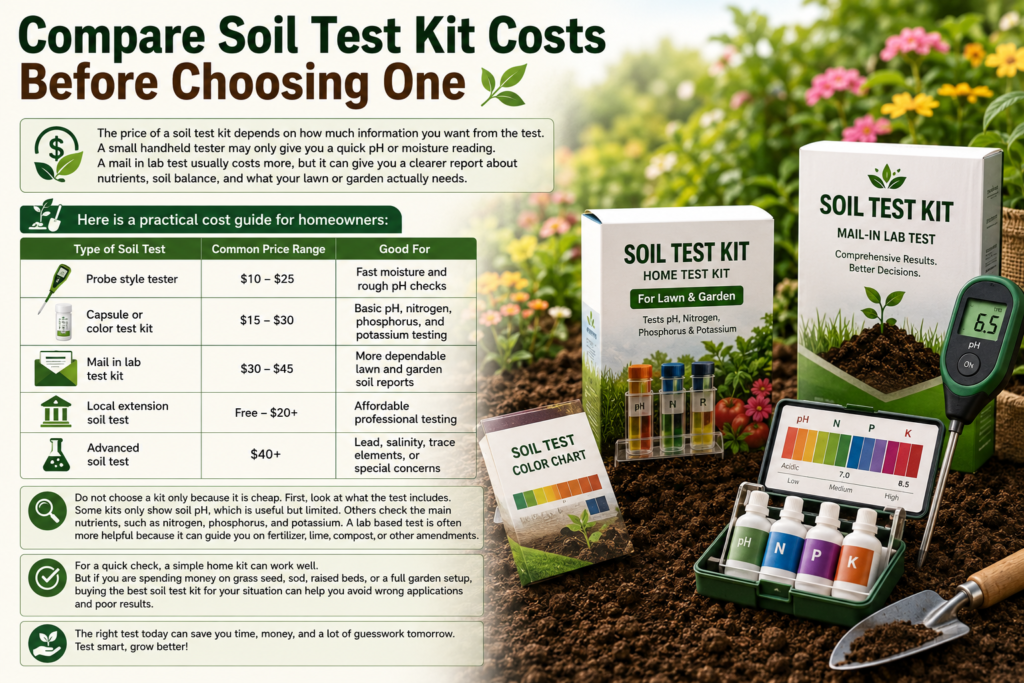
Do not choose a kit only because it is cheap. First, look at what the test includes. Some kits only show soil pH, which is useful but limited. Others check the main nutrients, such as nitrogen, phosphorus, and potassium. A lab based test is often more helpful because it can guide you on fertilizer, lime, compost, or other amendments.
For a quick check, a simple home kit can work well. But if you are spending money on grass seed, sod, raised beds, or a full garden setup, buying the best soil test kit for your situation can help you avoid wrong applications and poor results.
Types of Soil Test Kits
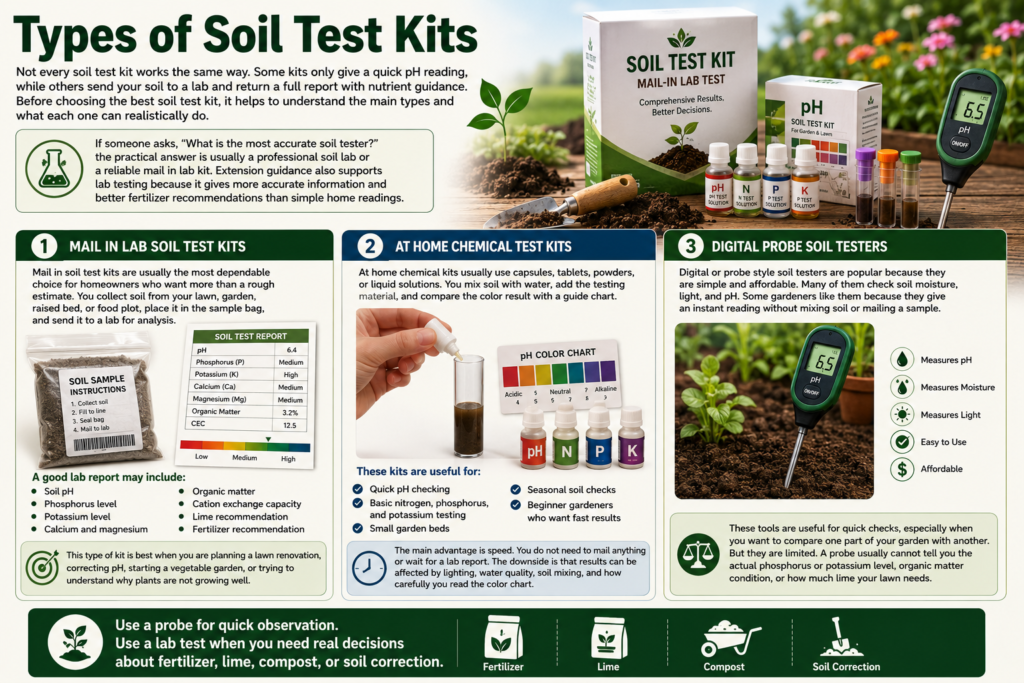
Not every soil test kit works the same way. Some kits only give a quick pH reading, while others send your soil to a lab and return a full report with nutrient guidance. Before choosing the best soil test kit, it helps to understand the main types and what each one can realistically do.
1. Mail In Lab Soil Test Kits
Mail in soil test kits are usually the most dependable choice for homeowners who want more than a rough estimate. You collect soil from your lawn, garden, raised bed, or food plot, place it in the sample bag, and send it to a lab for analysis.
A good lab report may include:
- Soil pH
- Phosphorus level
- Potassium level
- Calcium and magnesium
- Organic matter
- Cation exchange capacity
- Lime recommendation
- Fertilizer recommendation
This type of kit is best when you are planning a lawn renovation, correcting pH, starting a vegetable garden, or trying to understand why plants are not growing well.
If someone asks, “What is the most accurate soil tester?” the practical answer is usually a professional soil lab or a reliable mail in lab kit. Extension guidance also supports lab testing because it gives more accurate information and better fertilizer recommendations than simple home readings.
2. At Home Chemical Test Kits
At home chemical kits usually use capsules, tablets, powders, or liquid solutions. You mix soil with water, add the testing material, and compare the color result with a guide chart.
These kits are useful for:
- Quick pH checking
- Basic nitrogen, phosphorus, and potassium testing
- Small garden beds
- Seasonal soil checks
- Beginner gardeners who want fast results
The main advantage is speed. You do not need to mail anything or wait for a lab report. The downside is that results can be affected by lighting, water quality, soil mixing, and how carefully you read the color chart.
A chemical kit can be helpful, but it is better for general guidance than serious fertilizer planning.
3. Digital Probe Soil Testers
Digital or probe style soil testers are popular because they are simple and affordable. Many of them check soil moisture, light, and pH. Some gardeners like them because they give an instant reading without mixing soil or mailing a sample.
These tools are useful for quick checks, especially when you want to compare one part of your garden with another. But they are limited. A probe usually cannot tell you the actual phosphorus or potassium level, organic matter condition, or how much lime your lawn needs.
Use a probe for quick observation. Use a lab test when you need real decisions about fertilizer, lime, compost, or soil correction.
Best Soil Test Kit Options for Homeowners
Below are practical options for different types of users. These picks are based on product purpose, ease of use, test depth, lawn and garden value, and how useful the results are for homeowners.
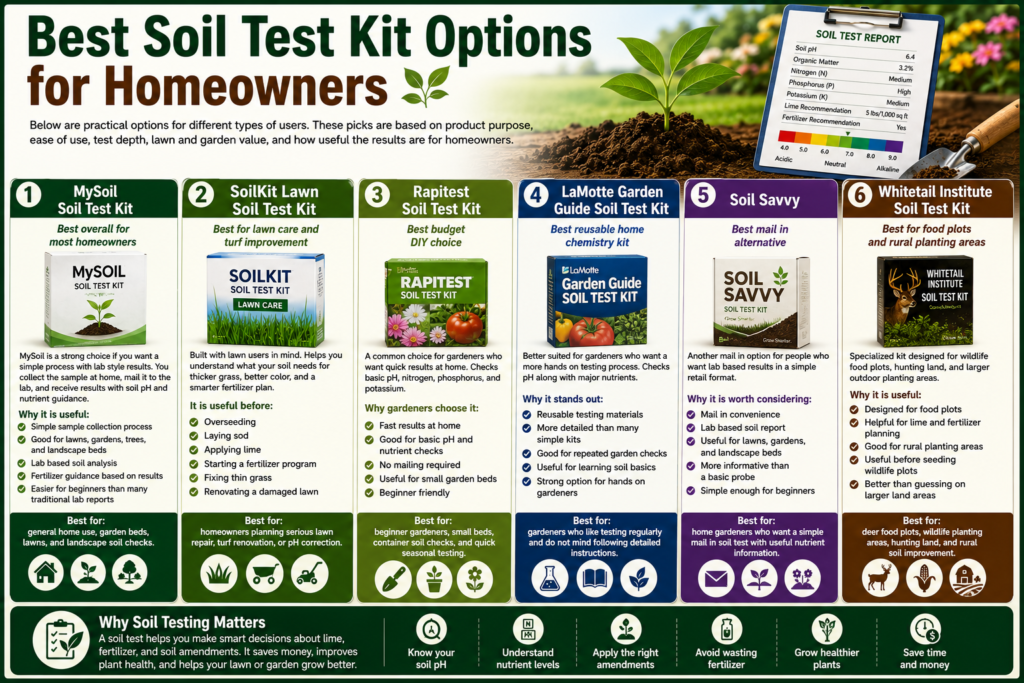
1. MySoil Soil Test Kit
Best overall for most homeowners
MySoil is a strong choice if you want a simple process with lab style results. You collect the sample at home, mail it to the lab, and receive results with soil pH and nutrient guidance.
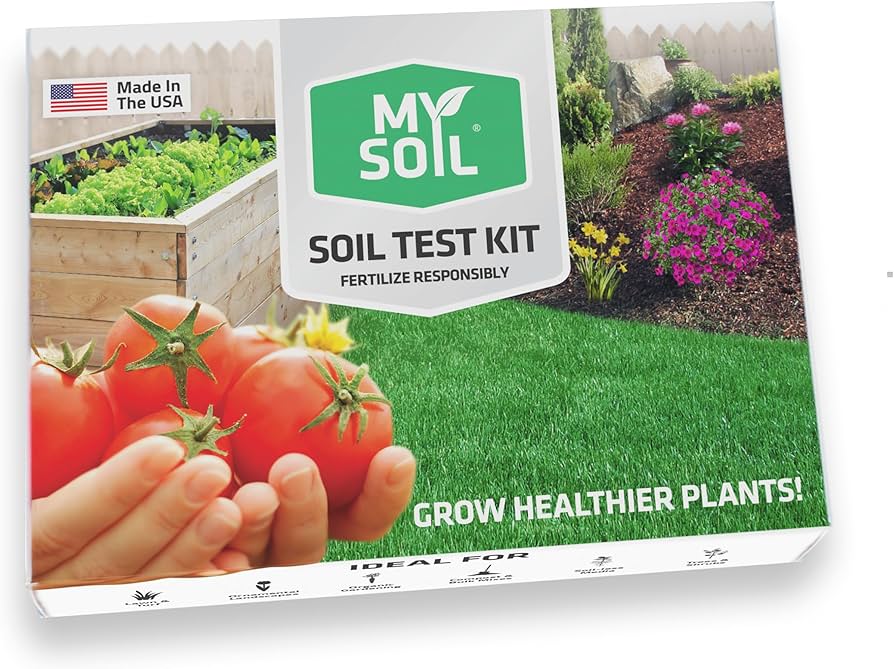
This kit is a good fit for homeowners who do not want to deal with complicated soil lab forms but still want more useful information than a basic pH meter can provide.
Why it is useful:
- Simple sample collection process
- Good for lawns, gardens, trees, and landscape beds
- Lab based soil analysis
- Fertilizer guidance based on results
- Easier for beginners than many traditional lab reports
This can be the best home soil test kit for people who want one kit for general lawn and garden use. It is especially helpful for new homeowners, raised bed gardeners, and anyone trying to correct weak plant growth without guessing.
Best for: general home use, garden beds, lawns, and landscape soil checks.
2. SoilKit Lawn Soil Test Kit
Best for lawn care and turf improvement
SoilKit is built with lawn users in mind. If your main goal is thicker grass, better color, or a smarter fertilizer plan, this type of lawn focused test is worth considering.
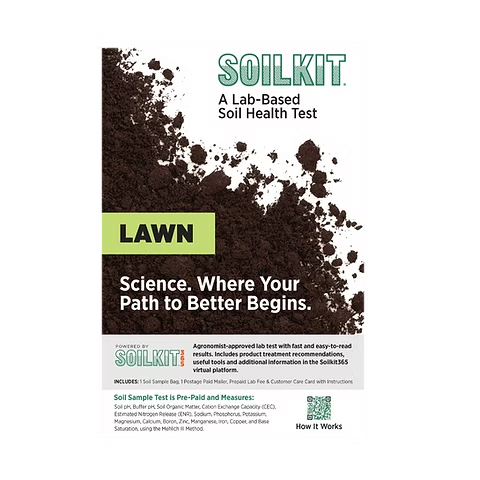
It is useful before:
- Overseeding
- Laying sod
- Applying lime
- Starting a fertilizer program
- Fixing thin grass
- Renovating a damaged lawn
A lawn soil test should do more than show pH. It should help you understand whether your soil needs lime, phosphorus, potassium, or a different fertilizer approach. Extension sources also stress that soil testing can prevent unnecessary fertilizer use and help guide proper amendments.
SoilKit is a strong option if you are looking for the best soil test kit for lawns because it focuses on turf needs rather than general garden curiosity.
Best for: homeowners planning serious lawn repair, turf renovation, or pH correction.
3. Rapitest Soil Test Kit
Best budget DIY choice
Rapitest is a common choice for gardeners who want quick results at home. It usually checks basic pH, nitrogen, phosphorus, and potassium. It does not replace a full lab report, but it can give a useful first look at soil condition.
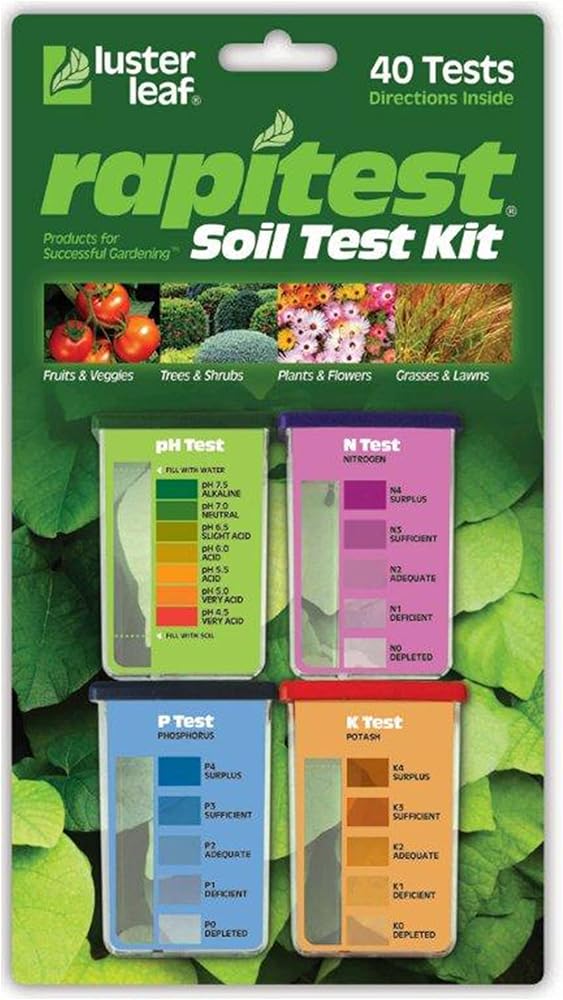
Why gardeners choose it:
- Fast results at home
- Good for basic pH and nutrient checks
- No mailing required
- Useful for small garden beds
- Beginner friendly
This kit may be the best at home soil test kit if you only need a quick check before planting flowers, vegetables, or a small lawn patch.
Best for: beginner gardeners, small beds, container soil checks, and quick seasonal testing.
4. LaMotte Garden Guide Soil Test Kit
Best reusable home chemistry kit
LaMotte is better suited for gardeners who want a more hands on testing process. It is often used by serious gardeners, educators, and people who prefer a reusable kit instead of a very basic one time test.
This type of kit usually checks pH along with major nutrients such as nitrogen, phosphorus, and potassium. The process takes more care than using a probe, but it can teach you more about your soil.
Why it stands out:
- Reusable testing materials
- More detailed than many simple kits
- Good for repeated garden checks
- Useful for learning soil basics
- Strong option for hands on gardeners
If your main goal is checking acidity, this can also work as a useful best soil ph test kit option for home gardeners.
Best for: gardeners who like testing regularly and do not mind following detailed instructions.
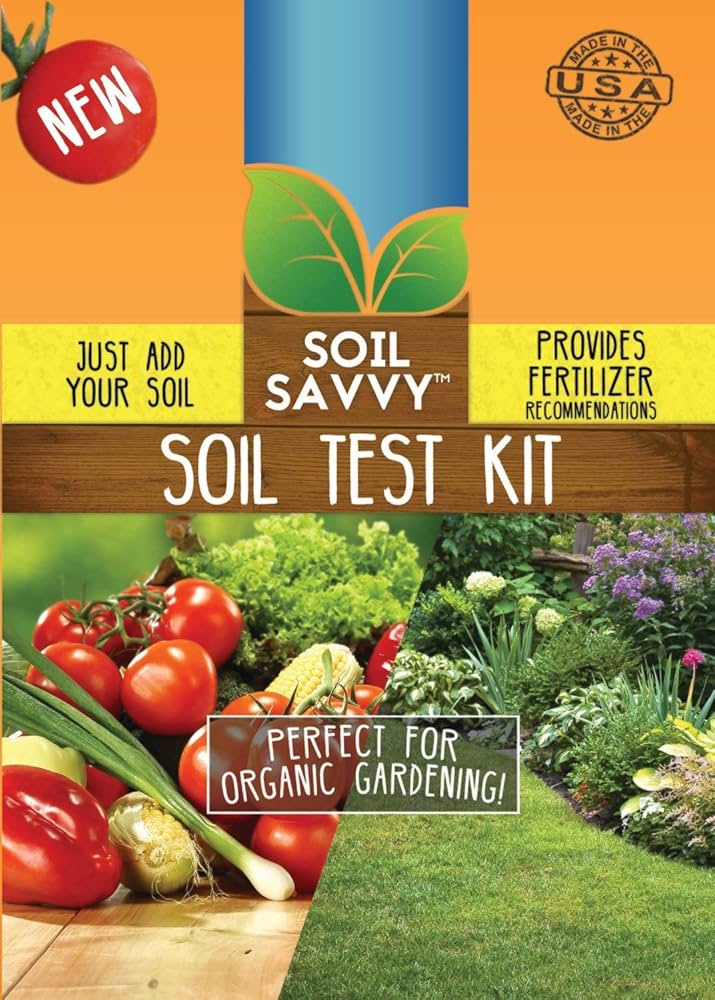
5. Soil Savvy
Best mail in alternative
Soil Savvy is another mail in option for people who want lab based results in a simple retail format. It is useful for homeowners who want to compare another lab kit beside MySoil or SoilKit.
Why it is worth considering:
- Mail in convenience
- Lab based soil report
- Useful for lawns, gardens, and landscape beds
- More informative than a basic probe
- Simple enough for beginners
Soil Savvy can be a good choice when you want a professional style report but still want the convenience of buying a ready made kit.
Best for: home gardeners who want a simple mail in soil test with useful nutrient information.
6. Whitetail Institute Soil Test Kit
Best for food plots and rural planting areas
Whitetail Institute Soil Test Kit is more specialized than the others. It is mainly designed for wildlife food plots, hunting land, and larger outdoor planting areas where lime and fertilizer decisions can affect a large space.
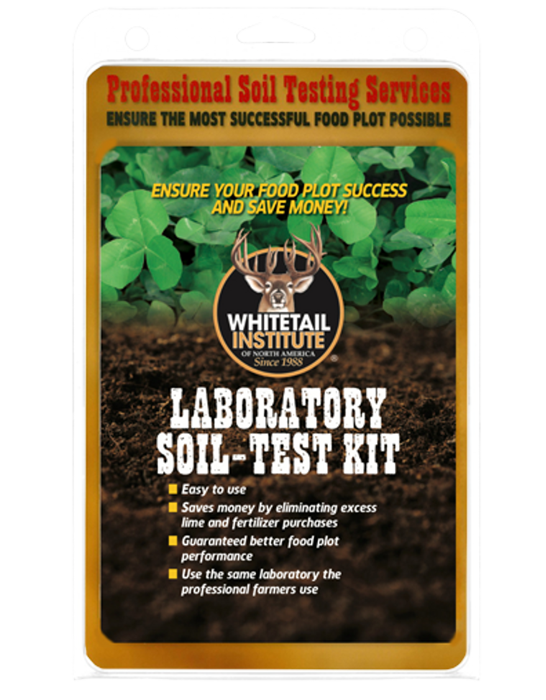
This type of kit helps landowners understand how much amendment may be needed before planting food plot seed. For larger plots, guessing can waste both money and time.
Why it is useful:
- Designed for food plots
- Helpful for lime and fertilizer planning
- Good for rural planting areas
- Useful before seeding wildlife plots
- Better than guessing on larger land areas
This is not the first choice for a small backyard vegetable bed, but it makes sense for land managers and food plot users.
Best for: deer food plots, wildlife planting areas, hunting land, and rural soil improvement.
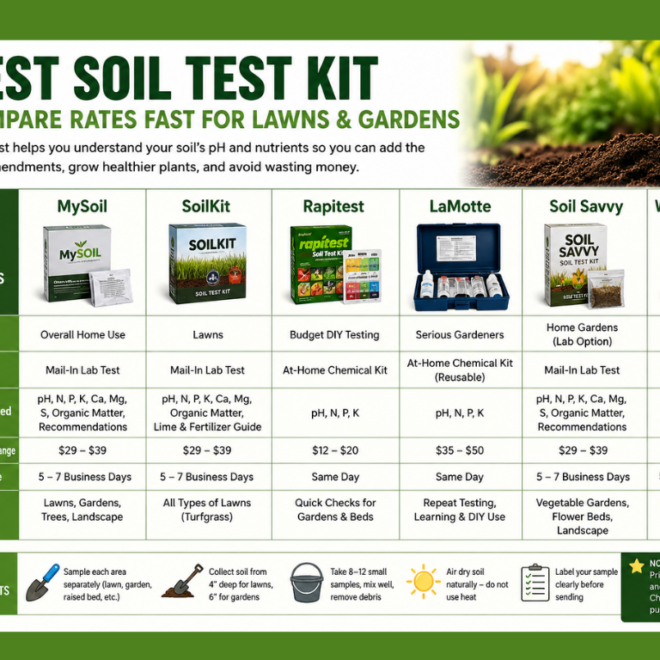
Soil Test Kit Comparison Table
| Soil Test Option | Best For | Main Benefit | Limitation |
|---|---|---|---|
| Local Extension Soil Test | Low-cost professional testing | Often affordable and locally relevant | Process varies by state |
| Mail-In Lab Kit | Accuracy and recommendations | Better guidance than DIY kits | Costs more and requires mailing |
| MySoil | General lawn and garden use | Easy report and fertilizer guidance | May cost more than extension testing |
| SoilKit | Lawn care and turf repair | Lawn-focused recommendations | Less useful for casual garden checks |
| Rapitest | Budget DIY testing | Fast and affordable | Less detailed than lab testing |
| LaMotte | Reusable home testing | Good for hands-on gardeners | Requires careful testing |
| Soil Savvy | Mail-in alternative | Convenient lab-style report | May not be locally tailored |
| Whitetail Institute | Food plots | Useful for rural planting areas | Not ideal for small home gardens |
| Probe Meter | Moisture and quick checks | Instant and reusable | Not enough for fertilizer planning |
Which Type Should You Choose?
- Choose a mail in lab kit if you want the most reliable result and clear recommendations.
- Choose an at home chemical kit if you want a fast basic answer for pH and main nutrients.
- Choose a probe meter if you only need a quick moisture or rough pH check.
For lawn renovation, vegetable gardening, or pH correction, the best soil test kit is usually a lab based option. For quick seasonal checks, a home chemical kit can still be useful.
References
- University extension and gardening sources recommend soil testing before applying fertilizer or lime because soil pH and nutrient levels affect plant growth and amendment needs.
- Soil testing every few years is commonly recommended for established lawns and gardens, especially when starting a new lawn or garden area.
- Lime should be applied only after checking soil pH, because adding lime to the wrong soil can create new nutrient problems.
Best Soil Test Kit for Lawns
A good lawn soil test should tell you more than whether the soil is acidic or alkaline. For lawn care, the goal is not just to get a number. The goal is to understand what your grass actually needs before you apply fertilizer, lime, seed, or compost.
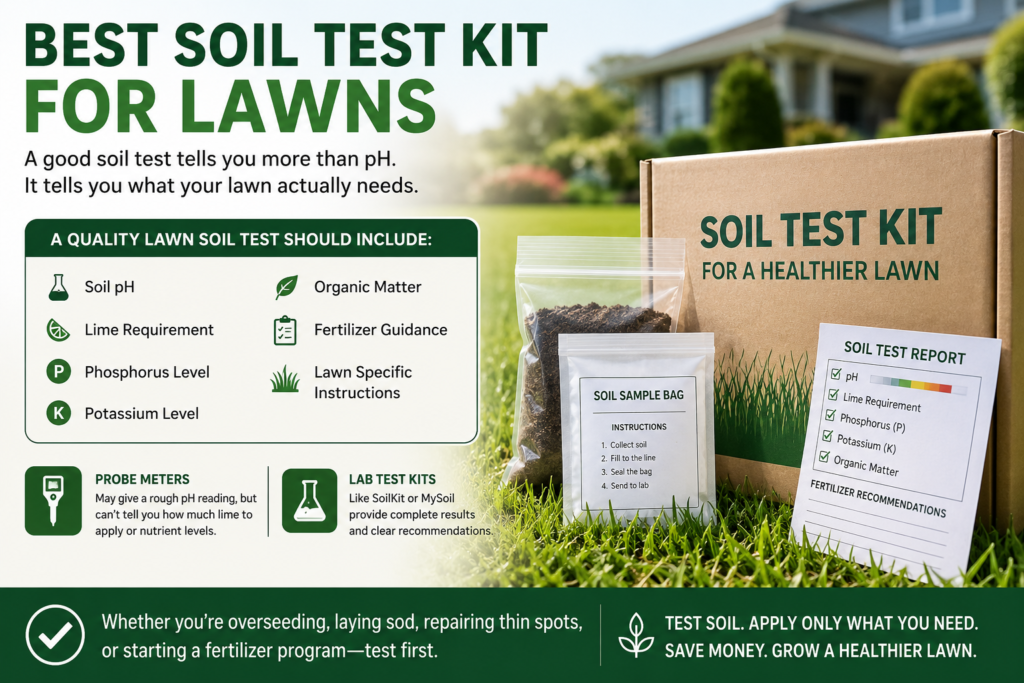
For lawns, look for a kit that can show:
- Soil pH
- Lime requirement
- Phosphorus level
- Potassium level
- Organic matter, if included
- Fertilizer guidance
- Lawn specific instructions
A simple probe meter may give you a rough pH reading, but it usually cannot explain how much lime to apply or whether your lawn already has enough phosphorus and potassium. That is why a lab based option such as SoilKit or MySoil is usually more helpful for serious lawn care.
If you are planning to overseed, lay sod, repair thin grass, or start a full lawn fertilizer program, test the soil first. Soil testing helps prevent unnecessary fertilizer use and gives you a better starting point for long term lawn health. University extension based guidance also supports testing soil before applying lime because lime changes pH and should only be used when the soil actually needs it.
For homeowners searching for the best soil test kit for lawn improvement, a mail in lab kit is usually the safer choice before spending money on seed, sod, or fertilizer.
Best Soil Test Kit for Gardens
Garden soil changes faster than many people realize. Vegetables remove nutrients during the growing season. Compost can improve organic matter, but repeated use of manure, fertilizer, or amendments can also build up certain nutrients over time.
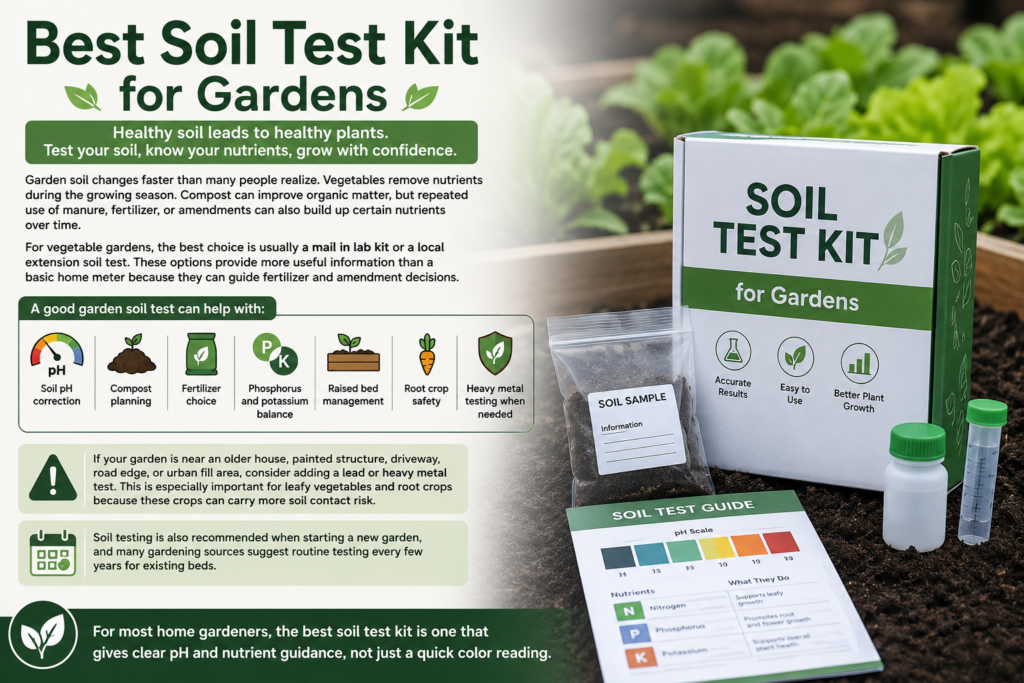
For vegetable gardens, the best choice is usually a mail in lab kit or a local extension soil test. These options provide more useful information than a basic home meter because they can guide fertilizer and amendment decisions.
A good garden soil test can help with:
- Soil pH correction
- Compost planning
- Fertilizer choice
- Phosphorus and potassium balance
- Raised bed management
- Root crop safety
- Heavy metal testing when needed
If your garden is near an older house, painted structure, driveway, road edge, or urban fill area, consider adding a lead or heavy metal test. This is especially important for leafy vegetables and root crops because these crops can carry more soil contact risk. Soil testing is also recommended when starting a new garden, and many gardening sources suggest routine testing every few years for existing beds.
For most home gardeners, the best soil test kit is one that gives clear pH and nutrient guidance, not just a quick color reading.
What Is the Most Accurate Soil Tester?
For homeowners, the most accurate soil tester is usually a professional laboratory soil test. A lab test uses controlled testing methods and gives more dependable information than most handheld probes.
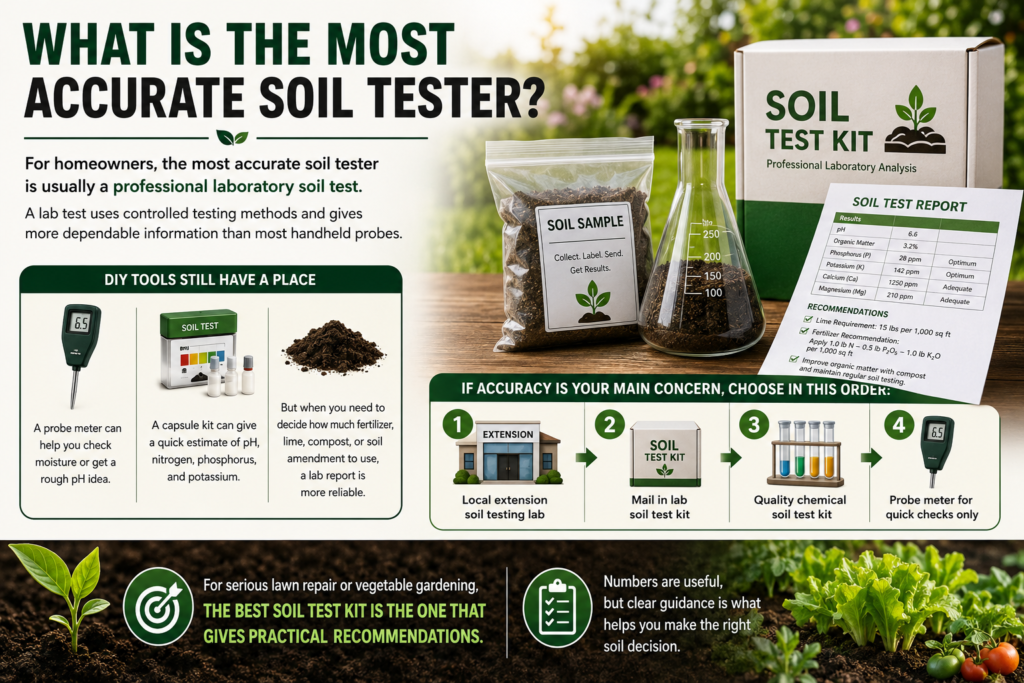
DIY tools still have a place. A probe meter can help you check moisture or get a rough pH idea. A capsule kit can give a quick estimate of pH, nitrogen, phosphorus, and potassium. But when you need to decide how much fertilizer, lime, compost, or soil amendment to use, a lab report is more reliable.
If accuracy is your main concern, choose in this order:
- Local extension soil testing lab
- Mail in lab soil test kit
- Quality chemical soil test kit
- Probe meter for quick checks only
For serious lawn repair or vegetable gardening, the best soil test kit is the one that gives practical recommendations. Numbers are useful, but clear guidance is what helps you make the right soil decision.
How to Test Your Soil the Right Way
A soil test is one of the easiest ways to understand what is happening under your grass, flowers, or vegetables. It can show whether your soil is too acidic, low in key nutrients, or already rich enough that you do not need extra fertilizer.
The important part is the sample. A lab can only test what you send. If the sample is taken from the wrong spot, mixed with debris, or collected from just one corner of the yard, the report may not reflect your real soil condition.
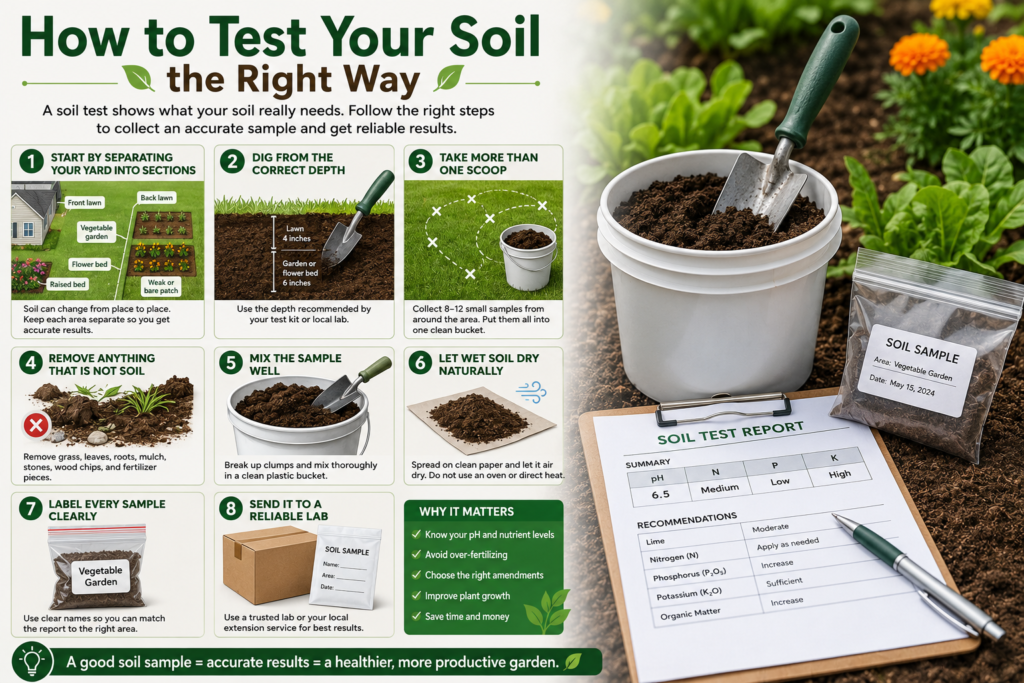
Here is a simple way to collect a better soil sample.
Start by Separating Your Yard Into Sections
Do not treat the whole yard as one area. Soil can change from place to place, even within the same property.
Keep different areas separate, such as:
- Front lawn
- Back lawn
- Vegetable garden
- Flower bed
- Raised bed
- Weak or bare patch
This is important because each area may need something different. A vegetable bed may need compost or nutrients, while the lawn may only need a pH adjustment. If you mix them together, the final result becomes less useful.
Dig From the Correct Depth
The depth depends on what you are testing.
- For a lawn, take soil from about 4 inches below the surface.
- For a vegetable garden or flower bed, take soil from about 6 inches below the surface.
Use the depth recommended by your test kit or local lab if they provide one. Some labs have specific instructions, and those should come first.
Take More Than One Scoop
A single scoop of soil does not tell the full story. It may come from a spot that is wetter, drier, richer, or poorer than the rest of the area.
Walk around the section you are testing and collect small amounts from several places. For most home lawns or garden beds, 8 to 12 small samples from the same section is a good starting point.
Put them all into one clean bucket. This gives you a mixed sample that better represents the whole area.
Remove Anything That Is Not Soil
Before mixing, pick out anything that does not belong in the sample.
Remove grass, leaves, roots, mulch, stones, wood chips, and fertilizer pieces. These materials can affect the test and may give you a result that does not match the actual soil.
You want plain soil from the root zone, not surface material.
Mix the Sample Well
Break up any clumps and mix the soil thoroughly in a clean plastic bucket. Avoid using a bucket that has held fertilizer, chemicals, paint, or compost.
Once mixed, take the amount required by your soil lab or kit. Most tests only need a small amount, but it is best to follow the exact instructions on the sample bag.
Let Wet Soil Dry Naturally
If the soil is damp or sticky, spread it on clean paper and let it dry at room temperature. Do not place it in an oven, microwave, or direct heat.
Natural air drying helps keep the sample stable. Heat can change some soil properties and may affect the result.
Label Every Sample Clearly
Good labeling saves confusion later.
Write simple names such as:
- Front lawn
- Vegetable garden
- Raised bed
- Flower bed by fence
- Bare patch near driveway
If you are sending more than one sample, use labels that you will still understand when the report comes back.
Send It to a Reliable Lab
For the most useful results, send the sample to a trusted soil testing lab. University extension labs and agricultural labs are commonly used because they often provide clear recommendations for lime, fertilizer, and soil improvement.
A good report can help you avoid over fertilizing, choose the right amendments, and improve plant growth based on actual soil needs.
Local Extension Soil Testing – A Smart Low Cost Choice
Many home gardeners go straight to store bought soil test kits. Those kits can be useful, but they are not always the best first choice. In many areas, your local university extension service or county extension office may offer soil testing that is affordable, practical, and better matched to your local growing conditions.
Extension soil testing is often designed for real lawns, gardens, farms, and landscapes in your state. That means the recommendations may be based on local soil types, common nutrient issues, regional pH patterns, and the plants people actually grow in your area.
Why Extension Soil Testing Is Worth Checking First
A soil test is not just about finding numbers on a report. The real value is knowing what to do next.
A good extension soil test can help you understand:
- Soil pH
- Nutrient levels
- Lime needs
- Fertilizer needs
- Salt issues in some areas
- Organic matter in some tests
- Crop or lawn based recommendations
The University of Minnesota Extension says sending a sample to a lab is the best way to understand your soil, and the results can help improve plant performance while saving time and money.
It May Cost Less Than a Retail Kit
Retail kits are easy to find, but they are not always the most cost effective option. Some university or extension soil labs offer basic soil testing at a reasonable price, especially for home lawns and gardens.
Costs vary by state and by test type, so it is always worth checking your local extension office before buying a branded kit. In some places, you may be able to pick up sample forms, boxes, or instructions through a county extension office. Penn State Extension notes that soil test kits are available through local Extension Offices, and the final report provides lime and nutrient recommendations for the intended crop.
Local Recommendations Can Be More Helpful
One major benefit of extension testing is that the advice is often tailored to your area. A general test kit may tell you that your soil is low in a nutrient, but it may not explain what that means for your region, your crop, or your lawn.
Extension labs often ask what you plan to grow. That might be turfgrass, vegetables, flowers, shrubs, or fruit crops. The recommendation can then be matched to that use.
Penn State Extension explains that soil testing helps determine soil fertility along with lime and fertilizer needs for crops. The University of Minnesota also says soil test results can include recommendations to improve plant performance.
Good for Lawns, Gardens, and Problem Areas
Extension soil testing is useful whether you are starting a new garden or trying to fix a weak lawn.
A soil test can help answer questions like:
- Why is my lawn thin?
- Does my garden need lime?
- Am I using too much fertilizer?
- Is the soil too acidic or too alkaline?
- Do my vegetables need more phosphorus or potassium?
Utah State University Extension says soil testing can show nutrient deficiencies and can also help diagnose problems linked to excess nutrients, salts, high pH, low organic matter, or poor drainage.
How to Find a Local Extension Soil Test
Before buying a retail soil kit, search online for local options. Try searches like:
- “soil testing extension service near me”
- “university soil test lab”
- “county extension soil test”
- “local soil testing for lawn and garden”
- “cooperative extension soil testing”
You can also search using your state name, such as “Ohio extension soil test” or “Texas soil testing lab.”
If you are not sure where to start, look for a university extension website, county extension office, or state soil testing laboratory. The University of Minnesota Soil Testing Laboratory, for example, provides testing services for the public as well as universities, private companies, and agencies.
What to Check Before Sending a Sample
Before mailing soil, read the lab instructions carefully. Each lab may have its own rules for sample depth, amount of soil, forms, payment, and packaging.
Check these details first:
- What type of test you need
- How deep to collect the sample
- How much soil to send
- Whether the soil should be dry
- What crop or lawn type to list
- How long results usually take
- Whether recommendations are included
Following the lab’s instructions helps you get a more useful report.
How Often Should You Test Soil?
For most lawns and gardens, testing every three to five years is enough. But some situations need more frequent testing.
Test more often if:
- You are building a new garden
- You recently added lots of compost
- Your lawn looks weak every year
- You are correcting soil pH
- You grow vegetables intensively
- You use manure or organic amendments
- You are starting a new raised bed
- You had poor plant growth last season
If you are applying lime, it is smart to retest after enough time has passed because pH correction does not happen overnight.
How to Choose the Best Soil Testing Kit
The best soil testing kit is not always the most expensive one. It depends on what you need to learn from your soil.
A homeowner trying to repair a thin lawn needs a different test than someone checking one small tomato bed. A gardener who wants a full fertilizer plan should not buy the same tool as someone who only wants a quick moisture reading.
Before buying, ask one simple question: What decision do I need this test to help me make?
Choose a Lab Soil Test Kit for Accuracy
A mail in lab kit is usually the better choice when you want detailed results and a clear next step. These kits are helpful when you are trying to improve a lawn, grow vegetables, correct soil pH, or avoid wasting money on the wrong fertilizer.
A lab based option is a good fit if you want:
- Accurate nutrient results
- Soil pH information
- Fertilizer guidance
- Lime recommendations
- A clearer action plan
- Better information before lawn repair or garden planting
For example, MySoil says its kit includes mail in lab testing, online results, and personalized fertilizer recommendations. SoilKit also describes its product as a soil analysis kit that gives nutrient information, product recommendations, suggestions, and tool tips.
This type of kit is best when you do not just want numbers. You want to know what to do after the test.
Choose a DIY Chemical Kit for Quick Basic Testing
A chemical soil test kit can be useful when you want fast results at home. These kits usually test basic soil pH and major nutrients such as nitrogen, phosphorus, and potassium.
A DIY chemical kit may be enough if:
- You want a quick check
- You only need basic pH and NPK results
- You have a small garden
- You are testing casually
- You do not want to mail a sample
- You are comfortable comparing color charts
RapiTest, for example, is commonly sold as a simple kit for checking pH, nitrogen, phosphorus, and potassium. The test process usually involves mixing soil with water, adding a capsule, shaking, and comparing the color result.
This option is not usually as detailed as a lab report, but it can be practical for gardeners who only need a simple reading.
Choose a Probe Meter for Moisture and Quick Spot Checks
A soil probe meter is not the best choice for full nutrient testing. It is better for fast checks, especially moisture.
Choose a probe meter if:
- You mainly want to check soil moisture
- You want a rough pH trend
- You need to compare one spot with another
- You want instant readings
- You do not need fertilizer recommendations
Probe meters are convenient, but they should not replace a lab test when you are making important lawn, garden, or fertilizer decisions.
Match the Kit to Your Goal
There is no single best soil test kit for everyone. The right choice depends on how serious the problem is and what kind of answer you need.
For general home lawn and garden use, a mail in lab kit such as MySoil is a strong choice because it combines lab testing with easy to understand recommendations.
For lawn focused testing, SoilKit is worth considering, especially because it is built around soil analysis and practical treatment recommendations. The University of Florida IFAS Turfgrass Science Program also describes a UF IFAS branded SoilKit that gives results tailored to lawn and landscape needs.
For a low cost quick check, RapiTest can work well because it focuses on basic pH and NPK testing.
For people who want to learn more deeply about garden soil testing, LaMotte is a more hands on option. LaMotte says its Garden Guide Soil Test Kit measures nitrogen, phosphorus, potassium, and soil pH, and it is used for soil science education or garden analysis.
Common Soil Testing Mistakes to Avoid
Many soil test results are not useful because the sample was collected poorly. Even a good kit can give a weak result if the sample does not represent the area you are testing.
Avoid these mistakes:
- Taking soil from only one spot
- Mixing lawn soil with garden soil
- Testing right after fertilizing
- Including mulch, grass, leaves, or roots
- Using a dirty bucket
- Testing muddy soil without drying it properly
- Ignoring the kit instructions
- Buying fertilizer before reading the report
Good testing is not only about the product. It is also about how carefully you collect and prepare the soil.
My Practical Recommendation
For most homeowners, I would start with the local extension lab first. It is often a smart value because extension soil testing is usually designed around local soil conditions and local growing needs.
After that, I would choose based on the goal:
- General home use: MySoil
- Lawn repair: SoilKit
- Budget testing: RapiTest
- Hands on garden learning: LaMotte
- Quick moisture checks: Probe meter
- Lowest cost professional option: Local extension lab
Summary Table for Best Soil Test Kit
| Soil Test Option | Best For | What It Usually Checks | Main Benefit | Limitation | Best Recommendation |
|---|---|---|---|---|---|
| Local Extension Soil Test | Homeowners who want low cost professional testing | Soil pH, nutrients, lime needs, fertilizer guidance | Affordable and often based on local soil conditions | Availability, cost, and turnaround time vary by state | Best value choice for many homeowners |
| Mail In Lab Kit | Lawn repair, vegetable gardens, pH correction, serious soil improvement | Soil pH, phosphorus, potassium, calcium, magnesium, sometimes organic matter | More accurate than most home kits and gives clearer recommendations | Costs more than basic DIY kits and requires mailing | Best choice when accuracy matters |
| MySoil Soil Test Kit | General lawn and garden use | Lab based nutrient and pH analysis with fertilizer suggestions | Beginner friendly and easy to understand | May cost more than extension testing | Best overall retail option |
| SoilKit Lawn Soil Test Kit | Lawn care, turf improvement, overseeding, sod preparation | Lawn focused soil analysis and treatment guidance | Designed around turf needs | Less necessary for casual garden checks | Best for lawn projects |
| RapiTest Soil Test Kit | Quick budget testing at home | Basic pH, nitrogen, phosphorus, potassium | Fast, affordable, and no mailing needed | Less detailed than lab testing | Best low cost DIY option |
| LaMotte Garden Guide Soil Test Kit | Gardeners who want repeated hands on testing | pH, nitrogen, phosphorus, potassium | Reusable and educational | Takes more effort and careful reading | Best for serious DIY garden learning |
| Soil Savvy | Homeowners who want another mail in lab option | Lab based soil nutrient report | Convenient retail mail in test | May not be as locally tailored as extension testing | Best mail in alternative |
| Whitetail Institute Soil Test Kit | Food plots, wildlife plots, rural planting areas | Soil pH and amendment needs for plot planting | Useful for larger outdoor planting areas | Not ideal for small home gardens | Best for food plots |
| Probe Meter | Quick moisture checks and rough pH trends | Moisture, light, sometimes pH | Instant results and reusable | Does not give fertilizer or lime recommendations | Best for quick spot checks only |
Quick Decision Table
| Your Goal | Best Choice |
|---|---|
| I want the most accurate result | Local extension lab or mail in lab kit |
| I want the cheapest professional option | Local extension soil test |
| I am fixing a weak lawn | SoilKit or MySoil |
| I am starting a vegetable garden | Extension lab or mail in lab kit |
| I only need a fast basic check | RapiTest |
| I want to test often at home | LaMotte |
| I mainly check soil moisture | Probe meter |
| I manage food plots | Whitetail Institute |
| I need fertilizer recommendations | Lab based soil test |
| I only want rough pH information | Chemical kit or probe meter |
Recommended Soil Testing Tools and Garden Resources:
Final Verdict
The best soil test kit is not always the most expensive one. It is the one that gives you the right information for your goal. If you want accuracy, choose a lab kit. If you want speed, choose a DIY chemical kit. If you want the cheapest professional option, check your local extension service. If you are working on a lawn, do not rely only on a basic pH probe.
Healthy plants start with healthy soil. A soil test helps you understand what your lawn or garden actually needs, so you can stop guessing and start improving.Before you buy fertilizer this season, test your soil first. It may save money, reduce waste, and give your plants a much better start.
If this guide helped you, share it with another gardener or lawn owner. Also, leave a comment below and tell us which soil test kit you used and what your results showed.
References
- University of Minnesota Extension, Soil Testing for Lawns and Gardens
- Michigan State University Soil Test, Taking a Soil Sample
- Michigan State University Extension, Soil Testing Instructions
- University of Florida IFAS Turfgrass Science, SoilKit
- Penn State Agricultural Analytical Services Lab, Soil Fertility Testing
FAQs About Soil Test Kits
What is the most accurate soil tester?
A laboratory soil test is usually the most accurate soil tester for homeowners. Mail-in lab kits and university extension soil tests are more reliable than most cheap probe meters because they provide detailed nutrient and pH information.
What is the best soil test kit for lawns?
The best soil test kit for lawns is usually a lab-based kit such as SoilKit or MySoil. These kits are better for lawn fertilizer and lime recommendations than simple pH probes.
Is a home soil test kit accurate enough?
A home soil test kit can be accurate enough for basic pH and NPK checks. But if you need a full fertilizer plan, lime recommendation, or detailed nutrient analysis, a mail in lab kit is a better choice.
What is the best soil pH test kit?
For simple pH testing, a good chemical kit or digital meter can work. For the most reliable pH reading with amendment guidance, choose a lab-based soil test kit.
How often should I test my lawn soil?
Most lawns should be tested every three to five years. Test sooner if your grass is weak, you are applying lime, you are renovating the lawn, or you recently added major soil amendments.

Thesis Link : https://saulibrary.edu.bd/daatj/public/uploads/BAU200601_19-Pp_5.pdf
- 10 Farming Secrets Every Grower Should Know - October 4, 2026
- Best Weed Killer for Lawns – 10 Picks That Won’t Kill Grass - October 3, 2026
- Best Lawn Fertilizer – 10 Expert Picks That Actually Work - October 2, 2026