
A houseplant lives or dies by what is in its pot. Light and water get most of the attention, but the mix underneath decides whether roots breathe, whether water drains or sits, and whether the plant eats this month or slowly starves. Get the mix right and most houseplant problems get smaller. Get it wrong and even a perfect watering routine cannot save a plant sitting in a soggy, airless plug.
That is why the bag matters more than the brand name on it. This guide ranks the best potting soil indoor plants need, so you can pick a bag with confidence instead of guessing at the shelf. A good indoor mix is light, holds water without staying wet, lets air reach the roots, and feeds the plant for a few weeks or months before you need to start fertilising. A bad one compacts into a brick, stays wet for days, or dries into a hard lump that water runs straight past.
This guide compares 10 bagged potting soils for indoor plants, ranked on drainage, water behaviour, nutrient content, ingredient quality, ease of use and value.
Quick Recommendation
Short on time? Here is the whole guide in one paragraph. For most houseplants, buy FoxFarm Ocean Forest. It has the richest ingredient list in the lineup, a maker-published pH of 6.3 to 6.8, and it suits the widest range of plants, from pothos to monstera. If you are new to houseplants or you fight fungus gnats, Miracle-Gro Indoor Potting Mix is the easier buy: a coir-based mix made without compost or bark, which is exactly why it stays less prone to gnats.
If you want organic, Espoma Organic Potting Mix is the classic choice, with mycorrhizae in the blend, and Coast of Maine Bar Harbor Blend is the premium organic pick. If you tend to overwater, or you forget to water, Miracle-Gro Moisture Control holds up to 33 percent more water than basic potting soil and re-wets evenly. And if you want a peat-free bag, Rosy Soil is the only OMRI Listed peat-free mix in this lineup.
The 10 Best Potting Soils for Indoor Plants at a Glance
| Product | Best For | Type | Bag Sizes | Feed Lasts | Our Rating |
|---|---|---|---|---|---|
| FoxFarm Ocean Forest Potting Soil | Most houseplants | Organic ingredients, conventional | 12 qt, 1.5 cu ft, 3 cu ft, 27 cu ft, 55 cu ft tote | About 3 to 4 weeks | 9.3 out of 10 |
| Miracle-Gro Indoor Potting Mix | Beginners, gnat-prone homes | Conventional, coir-based | 6 qt, 16 qt | Up to 6 months | 9.2 out of 10 |
| Espoma Organic Potting Mix | Organic growers | Organic, with mycorrhizae | 4 qt, 8 qt, 16 qt, 1 cu ft, 2 cu ft | Feed monthly from 2 weeks after planting | 9.1 out of 10 |
| Miracle-Gro Moisture Control Potting Mix | Forgetful waterers | Conventional, AquaCoir | 8 qt, 16 qt, 25 qt, 1 cu ft, 2 cu ft | Up to 6 months | 9.0 out of 10 |
| Black Gold All Purpose Potting Mix | One bag for everything | Conventional, controlled-release feed | 8 qt, 16 qt, 1 cu ft, 1.5 cu ft, 2 cu ft, 60 cu ft tote | Up to 6 months | 8.9 out of 10 |
| FoxFarm Happy Frog Potting Soil | Hungry, fast-growing plants | Organic ingredients, mycorrhizae | 12 qt, 2 cu ft, 27 cu ft, 55 cu ft tote | Not published | 8.9 out of 10 |
| Burpee Organic Premium Potting Mix | Budget organic | OMRI Listed organic | 9 qt | Up to 3 months | 8.8 out of 10 |
| Coast of Maine Bar Harbor Blend Potting Soil | Premium organic | OMRI Listed organic | 8 qt, 16 qt, 1 cu ft, 2 cu ft | Not published | 8.8 out of 10 |
| Good Dirt Indoor Potting Mix | Root health, low mess | Organic ingredients, peat-based | 8 qt | Not published | 8.7 out of 10 |
| Rosy Soil Indoor Potting Mix | Peat-free growing | OMRI Listed, peat-free | 4 qt, 8 qt, 16 qt, 32 qt | Not published | 8.6 out of 10 |
Price Comparison: What Each Bag Costs
Prices below were found online on 7 November 2026 from the stores named, and they change often, so check the current price before you buy. They are retailer prices, not Amazon prices. Cost per quart is the bag price divided by the quarts in the bag, so a big bag can be the cheapest per quart even when its sticker price is the highest. By cost per quart, Black Gold and FoxFarm Ocean Forest are the cheapest in this lineup, while Rosy Soil and Good Dirt are the priciest.
| Product | Bag Size | Price | Cost per Quart | Where Found |
|---|---|---|---|---|
| FoxFarm Ocean Forest | 1.5 cu ft (38.6 qt) | $24.85 | $0.64 | Growers House |
| Miracle-Gro Indoor Potting Mix | 6 qt | $5.99 | $1.00 | Stine Home + Yard |
| Espoma Organic Potting Mix | 8 qt | $7.99 | $1.00 | Greenhouse Megastore |
| Miracle-Gro Moisture Control | 8 qt | $6.99 | $0.87 | Tractor Supply |
| Black Gold All Purpose | 16 qt | $9.99 | $0.62 | Ace Hardware |
| FoxFarm Happy Frog | 12 qt | $8.65 | $0.72 | Monster Gardens |
| Burpee Organic Premium | 9 qt | $20.69 | $2.30 | ShopAbunda |
| Coast of Maine Bar Harbor Blend | 16 qt | $12.99 | $0.81 | coastofmaine.com (maker store) |
| Good Dirt Indoor | 8 qt | $23.00 | $2.88 | getgooddirt.com (maker store) |
| Rosy Soil Indoor | 8 qt | $29.99 | $3.75 | rosysoil.com (maker store) |
A note on the ratings before the details: they are editorial scores from verified specifications and owner feedback, not lab measurements and not hands-on test results. A 9.3 does not mean a mix beat a 9.0 in a side-by-side trial. It means the mix’s published specs, ingredient quality and owner reports line up better for most indoor plants. The right bag for your home still depends on your plants, your watering habits and your light.
How to Choose Potting Soil for Indoor Plants
The bag that suits a fern will drown a succulent, and the mix that suits a succulent will starve a monstera. Choosing well means matching three things: how the mix holds water, what it feeds, and what your plant actually is. Everything else on the label is secondary.
Potting Soil vs Garden Soil: Why the Bag Matters
Garden soil has no place in an indoor pot. In the ground, worms, roots and weather keep soil open. In a pot, the same soil packs down, holds water for days, and squeezes the air out of the root zone. Roots need air as much as they need water, and a compacted pot gives them neither.
There is also what garden soil carries with it. University of Massachusetts Extension warns that unpasteurised garden soil can bring weed seeds, insects and disease organisms into a container, and that it becomes compacted and saturated, limiting the air space roots need. Penn State Extension makes the same point for repotting: garden soil in indoor containers can lead to disease and pest problems, and a good-quality soilless potting mix is the right fill. So the first rule is simple. Indoors, use a bagged potting mix, never soil dug from the yard.
What Is the Best Potting Mix for Houseplants?
The best potting mix for houseplants is a soilless blend built from peat moss or coconut coir, perlite or vermiculite for air, and some organic matter or fertiliser for food. That combination is what the University of Minnesota Extension describes in its container guidance: peat moss, compost, perlite and vermiculite, light enough to drain, open enough to breathe, and able to hold moisture between waterings.
Check the bag for those ingredients before you check the brand. Peat moss or coir holds the water. Perlite, pumice or bark opens air spaces. Compost, worm castings or a slow-release fertiliser supplies the first weeks of food. A mix missing the air part will stay wet. A mix missing the food part will leave a hungry plant pale within a month. The mixes in this guide all clear that bar, and the differences between them are about degree, not kind.
Organic Potting Soil: What the Label Really Means
Organic on a bag can mean two different things, and the label does not always say which. Some mixes are made from organic ingredients, which is a recipe claim. Others are OMRI Listed, which means the Organic Materials Review Institute has reviewed the product against organic standards. Both are useful, but they are not the same claim.
In this lineup, three mixes carry a verified OMRI Listing: Burpee Organic Premium, Coast of Maine Bar Harbor Blend and Rosy Soil Indoor. Espoma Organic Potting Mix says “100% Natural and Organic Approved” on its maker page, but no OMRI record for that exact product was found, so this guide does not call it OMRI Listed. FoxFarm Ocean Forest and Happy Frog use organic ingredients and make no OMRI claim at all. If OMRI Listing matters to you, buy one of the three that has it. If you only want natural ingredients without the certification, the distinction matters less.
Best Potting Soil for Succulents and Cacti
Succulents and cacti want the opposite of what a fern wants. They need a mix that drains fast and dries out between waterings, because their roots rot in soil that stays damp. None of the 10 mixes in this guide is a dedicated cactus or succulent mix, and this guide does not pretend otherwise.
The honest answer is to start with a light, open mix from this list and amend it. Mix one part perlite or pumice into two parts of any of the 10 picks and you get a fast-draining blend most succulents will accept. Rosy Soil, with its biochar and pine bark fines, is the closest ready-made fit, and FoxFarm Ocean Forest drains well enough to amend easily. What you should not do is plant a succulent in a moisture-control mix straight from the bag. That is the one pairing in this guide that fights the plant.
Best Moisture Control Potting Mix: When It Helps
A moisture-control mix is built to absorb more water and release it slowly, so the pot stays evenly damp for longer. Miracle-Gro Moisture Control, the namesake of the category in this guide, claims to absorb up to 33 percent more water than basic potting soil, thanks to its AquaCoir formula of sphagnum peat moss, coir and a wetting agent.
That helps in two situations: you forget to water, or your home runs dry in winter heating. It hurts in one: you already water generously, or your plant is a succulent. A moisture-control mix plus an enthusiastic waterer is how root rot starts. If you are the forgetful type, it is a genuine help. If you water on a strict schedule and check the soil first, a standard mix gives you more control.
How to Choose Potting Soil in 60 Seconds
Stand in the aisle with a bag in each hand and run this check. First, read the ingredients: peat or coir, plus perlite, bark or pumice, plus compost or fertiliser. Second, check the feed claim: how long does the maker say it feeds, and does that match how often you are willing to fertilise? Third, think about your watering habit: heavy waterers need a fast-draining mix, forgetful waterers need a moisture-holding one. Fourth, check the bag size against your pots: a 6-quart bag fills one 12-inch container, so count your pots before you count your bags. Fifth, if organic certification matters, look for the OMRI Listed mark, not just the word organic. Five checks, one minute, and the wrong bag stays on the shelf.
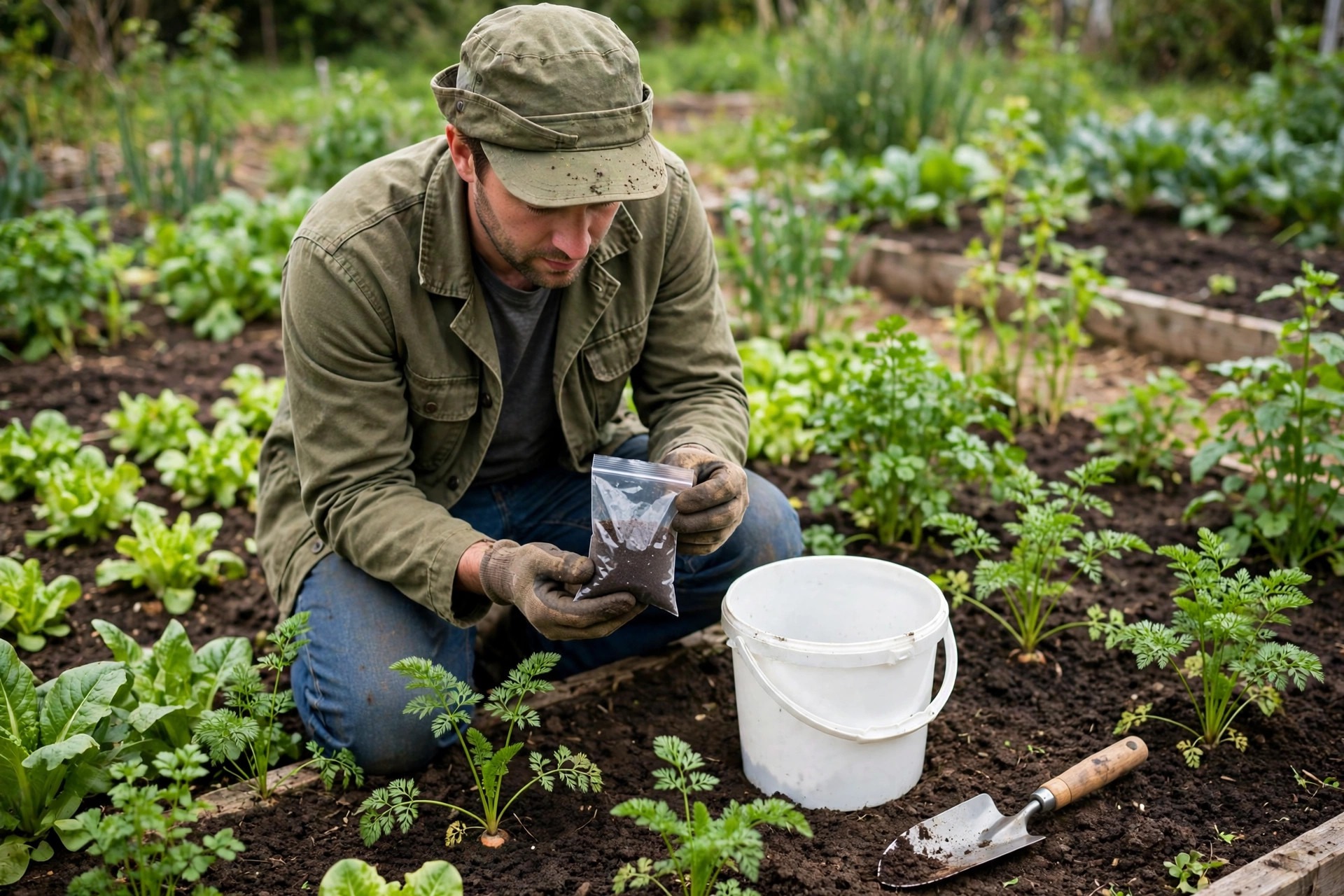
A soil test tells you what your garden beds need, and the same habit of checking before you feed applies to houseplants too.
1. FoxFarm Ocean Forest Potting Soil: Best Overall
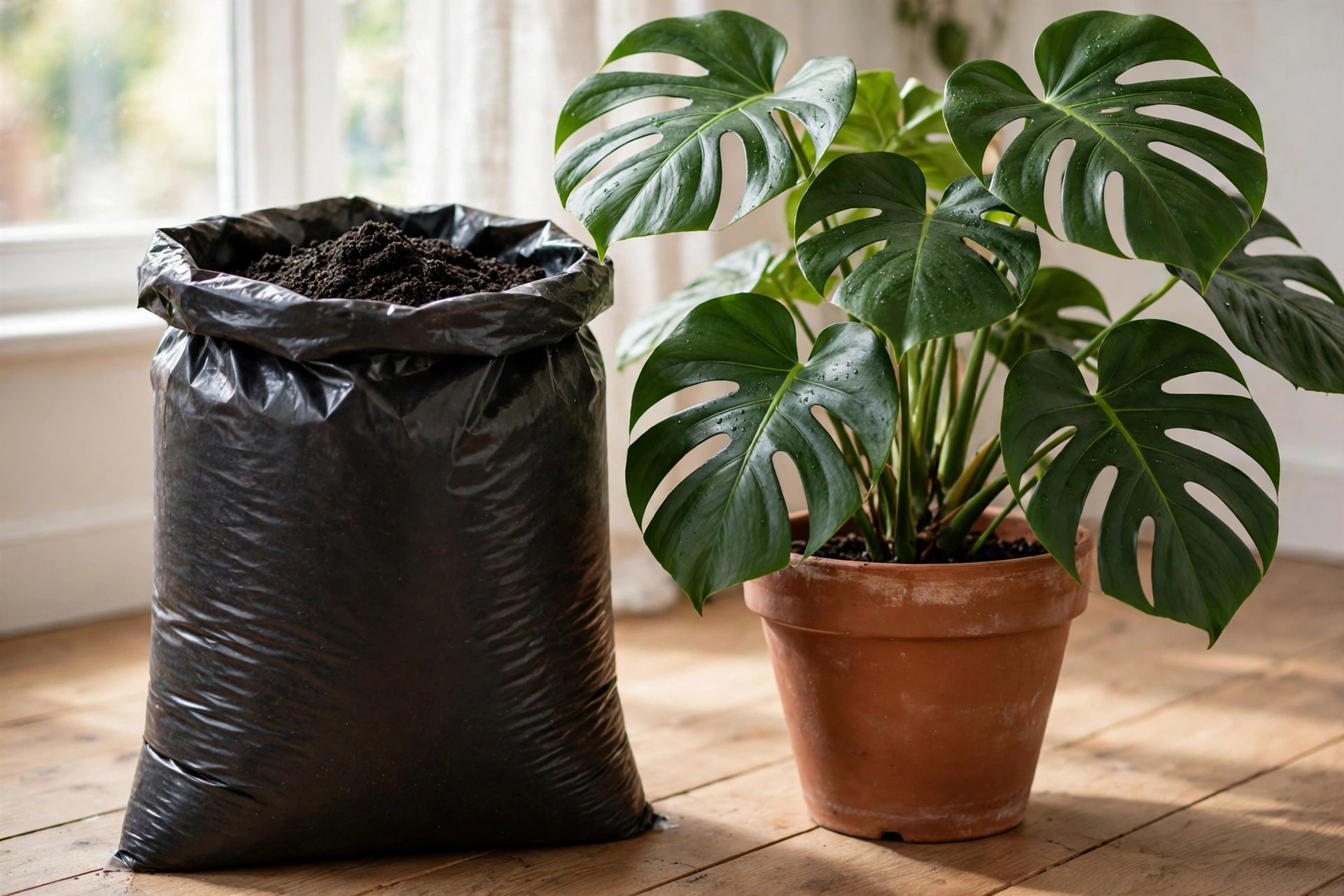
Ocean Forest tops this guide because its ingredient list reads like a recipe rather than a filler. Aged forest products, sphagnum peat moss, earthworm castings, bat guano, fish emulsion and crab meal, with sandy loam and perlite in the mix. That is the most complete blend of the 10, and it shows in the plants: strong early growth, dark green leaves, and a mix that stays open instead of compacting.
The maker publishes the numbers that matter. pH is adjusted to 6.3 to 6.8, the range most houseplants prefer, and the guaranteed analysis on the bag reads 0.30-0.45-0.05. FoxFarm says the blend feeds for about 3 to 4 weeks, and that no nitrogen fertiliser is needed at first. That short feed window is the honest trade for a rich organic mix: the food is real, but it runs out fast, so plan to start fertilising a month after repotting.
Bag sizes run from 12 quarts up to a 55 cubic foot tote, so the same mix works for one pothos or a whole indoor jungle. One correction worth making: a third-party site lists an NPK of 6-4-2 for Ocean Forest. That is wrong. The bag’s own analysis is 0.30-0.45-0.05, and this guide uses only that figure.
Best for: most houseplants, from pothos and philodendron to monstera and fiddle leaf fig. Not ideal for: succulents straight from the bag, or anyone who wants a mix that feeds for months without fertiliser. Real-world limitation: the feed runs out in about a month, and the mix is heavier than a peat-and-perlite blend, so large pots get weighty. Who should buy: the plant owner who wants one bag that works for nearly everything and does not mind feeding monthly.
Our rating: 9.3 out of 10.
2. Miracle-Gro Indoor Potting Mix: Best for Beginners
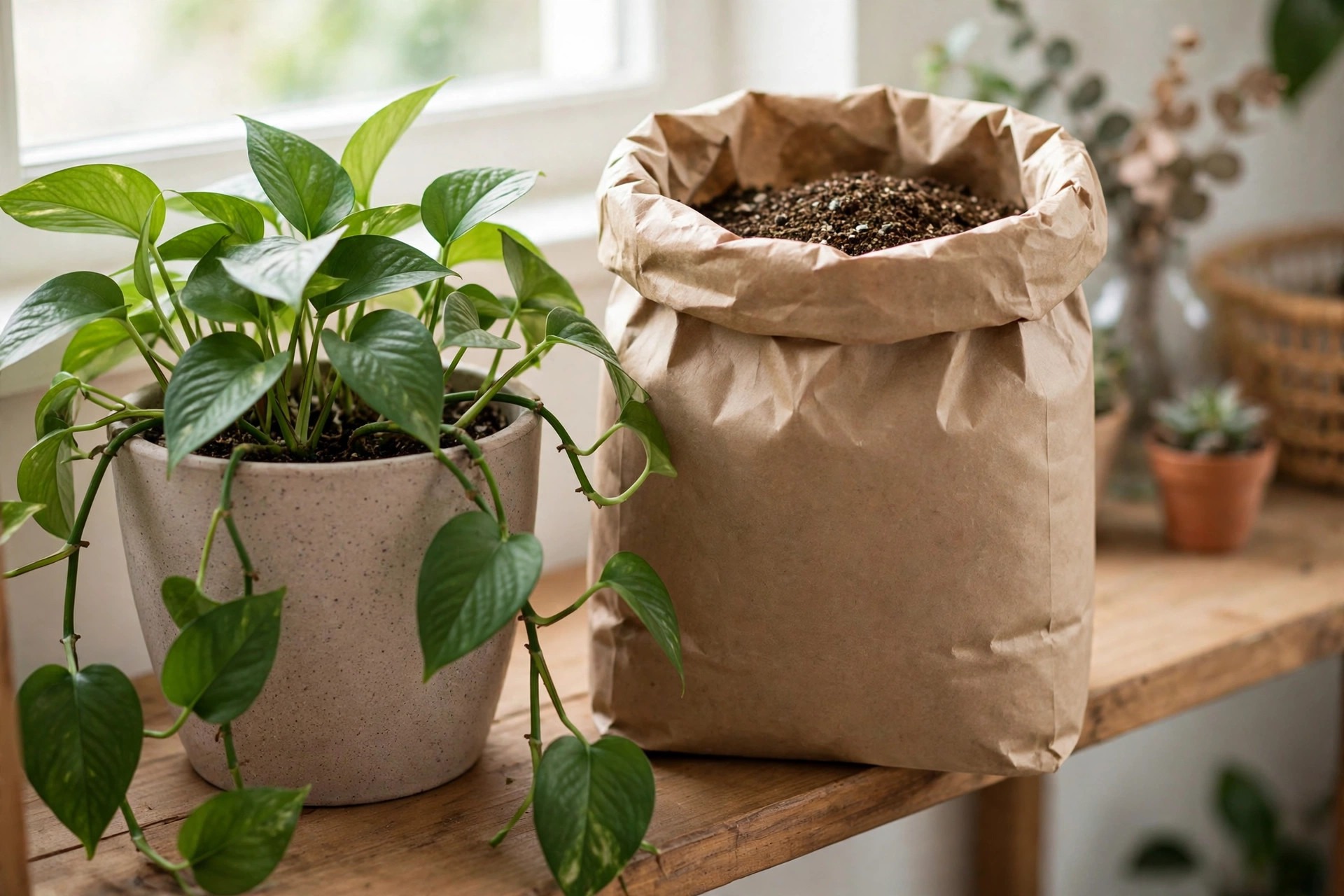
Miracle-Gro Indoor is the easiest recommendation in this guide to explain. It is built around coconut coir, and ScottsMiracle-Gro states that it contains no compost or bark, and says it is “designed to be less prone to gnats”. High-organic-matter mixes encourage fungus gnat development, and overwatering increases it (Colorado State University Extension, “Flies in the Home“). For a beginner whose first houseplant came with a cloud of tiny flies, that single design choice matters more than any nutrient claim.
The published numbers are straightforward. The maker lists an NPK of 0.25-0.13-0.19, and the mix feeds houseplants for up to 6 months, which is the longest feed claim in this lineup. Bag sizes are 6 quarts and 16 quarts, and the maker notes that one 16-quart bag fills one 12-inch container, which makes the maths easy when you are buying for a shelf of plants.
A note on ingredients, stated honestly: Scotts-supplied copy on retailer sites describes the blend as sphagnum peat moss, coir and perlite, but the maker page itself names coconut coir as the key ingredient and does not name perlite. This guide describes it as a coir-based mix and does not assert perlite from the maker page alone. The mix is conventional, not organic, and it is a different product from Miracle-Gro Organic Indoor Potting Mix, which is OMRI Listed. Do not confuse the two bags.
Quick verdict: the best first bag for a new plant owner. It is forgiving, widely stocked, feeds for up to 6 months, and its design, made to be less prone to gnats, takes the edge off the most common beginner complaint before it starts.
Our rating: 9.2 out of 10.
3. Espoma Organic Potting Mix: Best Organic
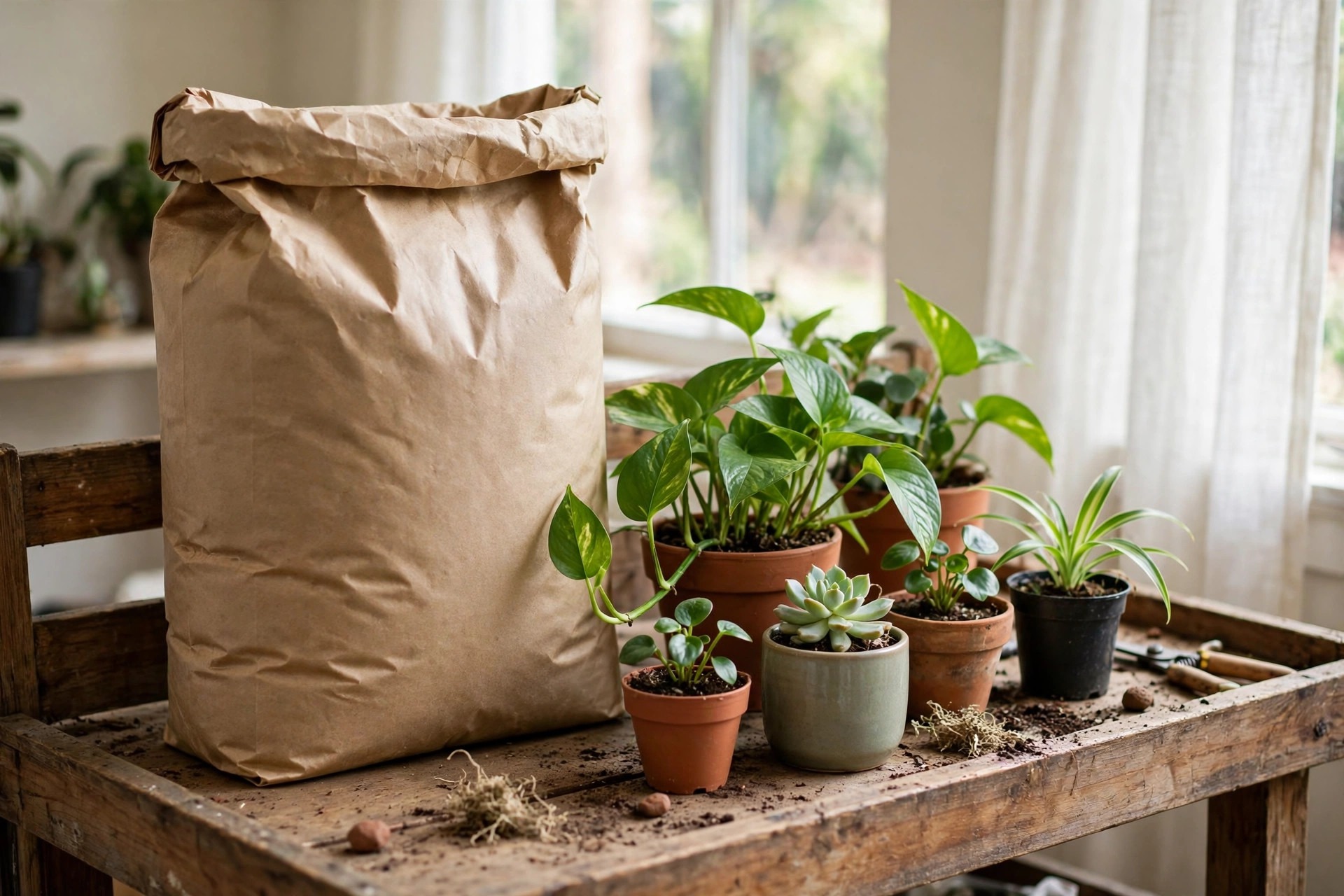
Espoma has sold organic garden products for decades, and this mix is the classic organic choice in the lineup. The ingredient list is long and specific: sphagnum peat moss at 35 to 45 percent, aged forest products, humus, composted rice hulls, perlite, limestone to adjust pH, earthworm castings, alfalfa meal, kelp meal, feather meal, yucca extract, and Myco-tone, the maker’s proprietary mycorrhizae blend, which helps roots take up water and nutrients.
The maker publishes no NPK for this mix and no pH number, only that limestone is added to adjust pH. Its feeding guidance is also different from the rest of the lineup: rather than a fixed duration, Espoma tells growers to feed at least monthly during the growing season with an Espoma organic plant food, starting two weeks after planting. That is honest guidance, and it means this mix suits a grower who already fertilises on a routine rather than one who wants a bag that feeds for half a year on its own.
One label point, stated plainly: the maker page says “100% Natural and Organic Approved”, but no OMRI record for this exact product was found. This guide does not call it OMRI Listed. If the OMRI mark is what you want, Burpee, Coast of Maine or Rosy Soil in this same guide carries it.
Best for: organic growers who already feed on a schedule, and anyone who wants mycorrhizae in the mix. Skip if: you want a set-and-forget feed claim, or you need an OMRI Listed bag. Real-world limitation: no published NPK and no fixed feed duration, so you are managing the feeding yourself from week two. Who should buy: the grower who treats fertiliser as a routine and wants a rich organic base to build on.
Our rating: 9.1 out of 10.
4. Miracle-Gro Moisture Control Potting Mix: Best Moisture Control
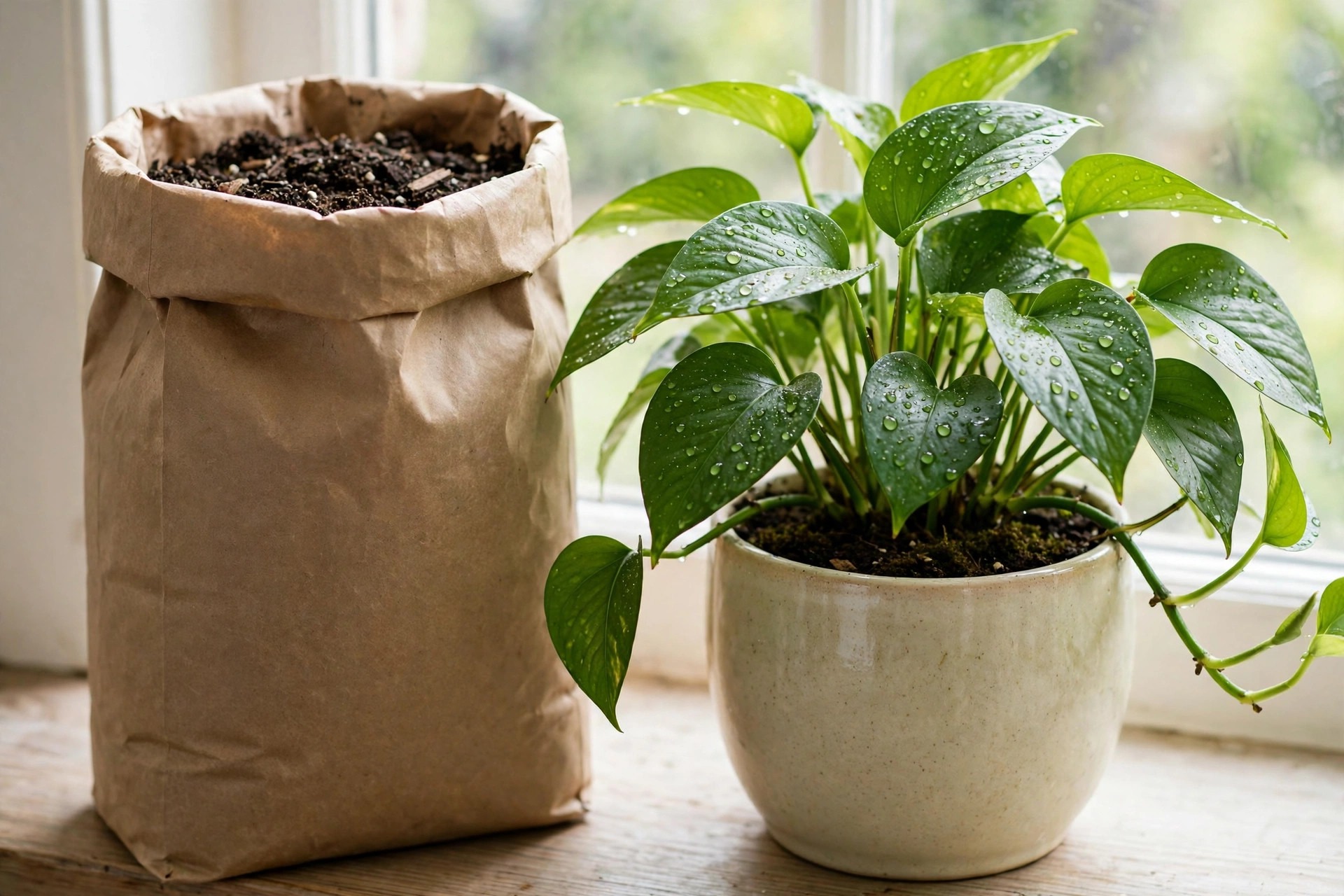
This is the mix for the person who forgets to water. The maker’s AquaCoir formula, sphagnum peat moss, coir and a wetting agent, is built to absorb up to 33 percent more water than basic potting soil, and to release it slowly so the pot stays evenly damp. In a dry, heated home in winter, that is a real help: the plant gets a steadier supply instead of swinging between soaked and bone dry.
It also feeds for up to 6 months, matching the longest feed claim in the lineup, and it comes in the widest range of small sizes, from 8 quarts to 2 cubic feet. For a shelf of mixed houseplants, one bag covers the lot.
Two honest notes. First, the maker publishes no NPK for the current bag. An older label record from 2015 lists 0.21-0.11-0.16, but that is a decade-old figure, so this guide records the NPK as not published and does not print the old number as current. Second, this mix is the wrong bag for a heavy waterer or for succulents. Moisture control plus generous watering is how root rot starts, and a cactus in this mix will sit wet long after it wants to be dry.
Quick verdict: the best safety net for forgetful watering, and a poor choice for anyone who already waters generously. Buy it for ferns, peace lilies and thirsty tropicals. Keep it away from succulents.
Our rating: 9.0 out of 10.
5. Black Gold All Purpose Potting Mix: Best All-Rounder
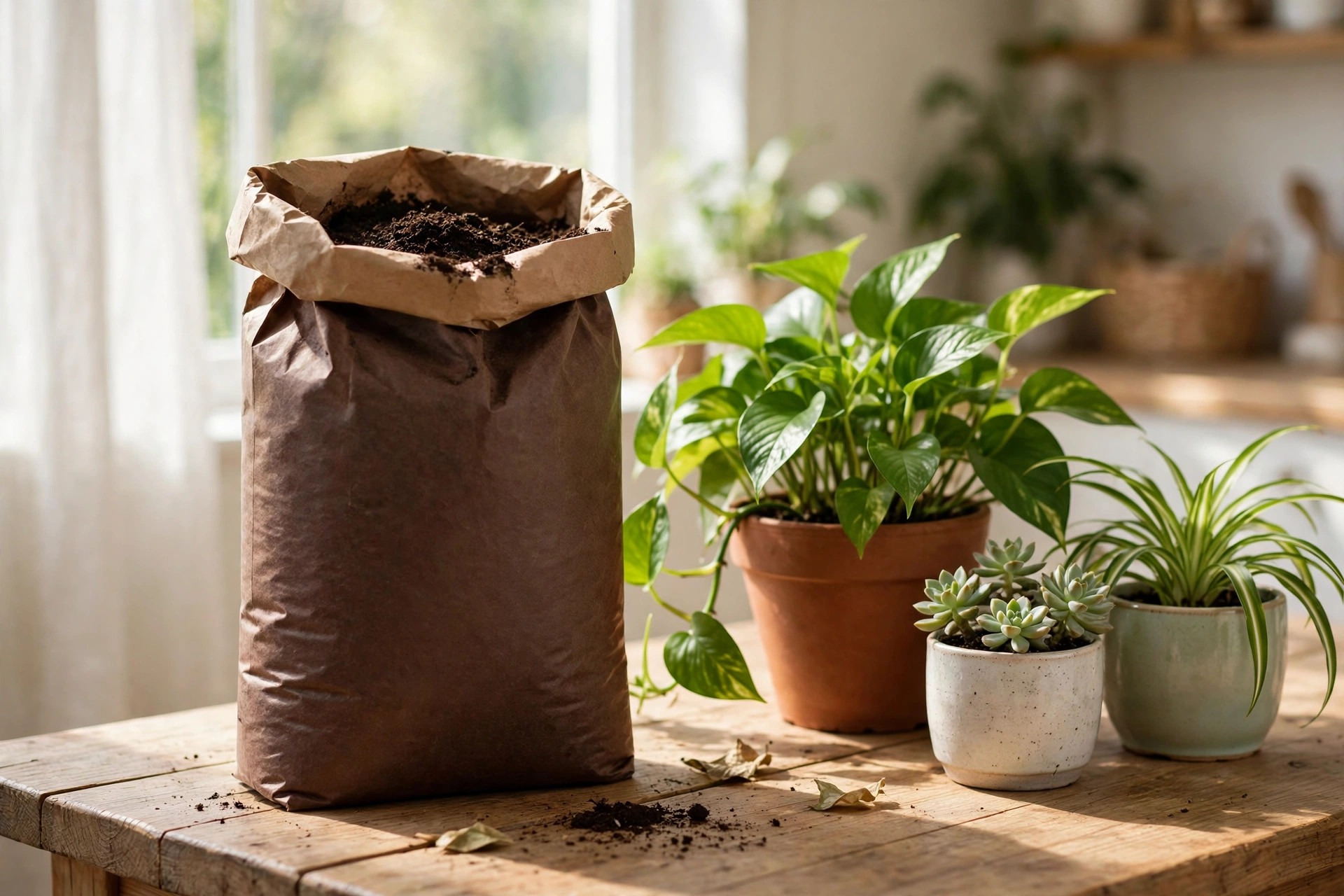
Black Gold All Purpose is the workhorse of the lineup. The maker blend is Canadian sphagnum peat moss, bark, compost, earthworm castings, forest humus and pumice, with MultiCote controlled-release fertiliser and a silicon-enriched additive the maker calls RESiLIENCE. The published NPK is 0.13-0.04-0.13, and the controlled-release feed lasts up to 6 months, which puts it beside Miracle-Gro’s two mixes for the longest feed in the guide.
It also comes in the widest size range here, from 8 quarts to a 60 cubic foot tote, so it suits a single repot and a whole greenhouse alike. The pumice is a genuine plus: it opens air spaces that do not collapse the way perlite can in a mix that stays damp, and it keeps the blend draining after months in the pot.
Watch the name on the bag. Black Gold sells two products with near-identical names and the same sizes. The All Purpose Potting Mix in this guide is 0.13-0.04-0.13, uses controlled-release fertiliser, and is NOT OMRI Listed. The Natural and Organic Potting Mix is 0.05-0.0-0.0 and IS OMRI Listed. They are different bags. Check the label before you buy, because the shelf will hold both.
Best for: anyone who wants one bag for every plant in the house, including outdoor containers in summer. Not ideal for: growers who need an OMRI Listed bag, or succulents that want a faster-draining mix. Real-world limitation: the bark and compost in the blend can hold gnats if the pot stays wet, and the mix is heavier than a peat-and-perlite bag. Who should buy: the owner with a mixed collection who wants a single reliable bag and a six-month feed.
Our rating: 8.9 out of 10.
6. FoxFarm Happy Frog Potting Soil: Best for Hungry Plants
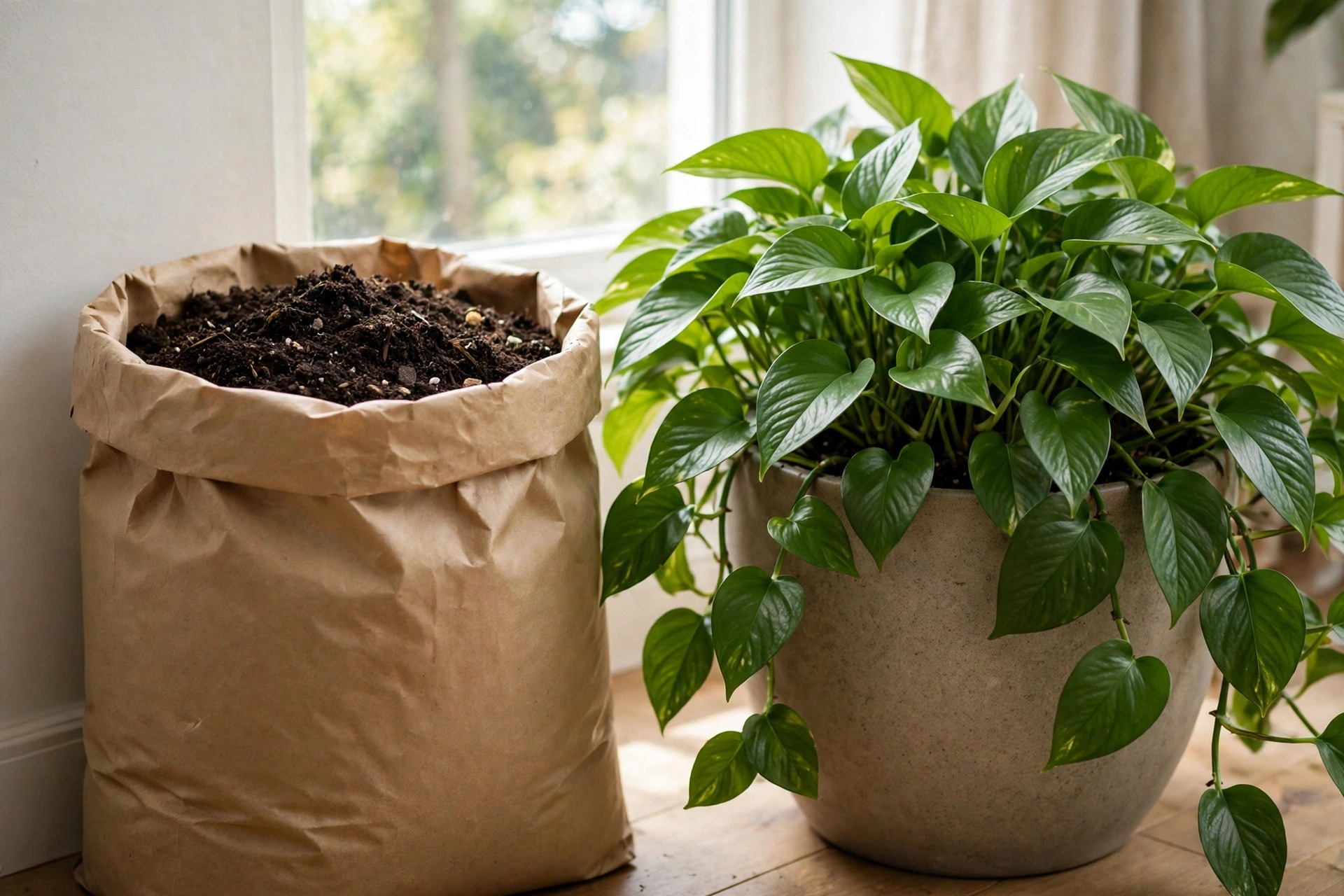
Happy Frog is Ocean Forest’s richer, hungrier sibling. The label lists 50 to 60 percent aged forest products, sphagnum peat moss, perlite, and fertiliser derived from earthworm castings, bat guano, oyster shell and dolomite lime, plus a custom blend of 15 mycorrhizal fungi species and 1.5 percent humic acids from Leonardite. That is the most microbe-forward recipe in the guide, and it suits plants that grow fast and eat hard: monstera, philodendron, fiddle leaf fig, anything pushing out a new leaf every week.
The guaranteed analysis on the maker label page reads 0.30-0.30-0.05, a touch more phosphorus than Ocean Forest. The maker says the pH is adjusted for optimal nutrient uptake but publishes no number. Retailer listings quote 6.3 to 6.8, the same range as Ocean Forest, but that figure is retailer-sourced, so this guide records Happy Frog’s pH as not published rather than repeating a number the maker never printed. The maker also publishes no feed duration for this mix, and recommends feeding with a FoxFarm fertiliser, so treat it as a rich base that needs a feeding routine, not a bag that feeds for months on its own.
Bag sizes run from 12 quarts to a 55 cubic foot tote. Like Ocean Forest, it makes no OMRI claim, so do not describe it as OMRI Listed.
Quick verdict: the richest food in the guide for plants that grow fast, with the most complete microbe list. The trade is that you manage the feeding yourself, and the mix is heavy in large pots. Buy it for hungry tropicals. Buy Ocean Forest instead if you want the same richness with a published pH and a stated feed window.
Our rating: 8.9 out of 10.
7. Burpee Organic Premium Potting Mix: Best Budget Organic
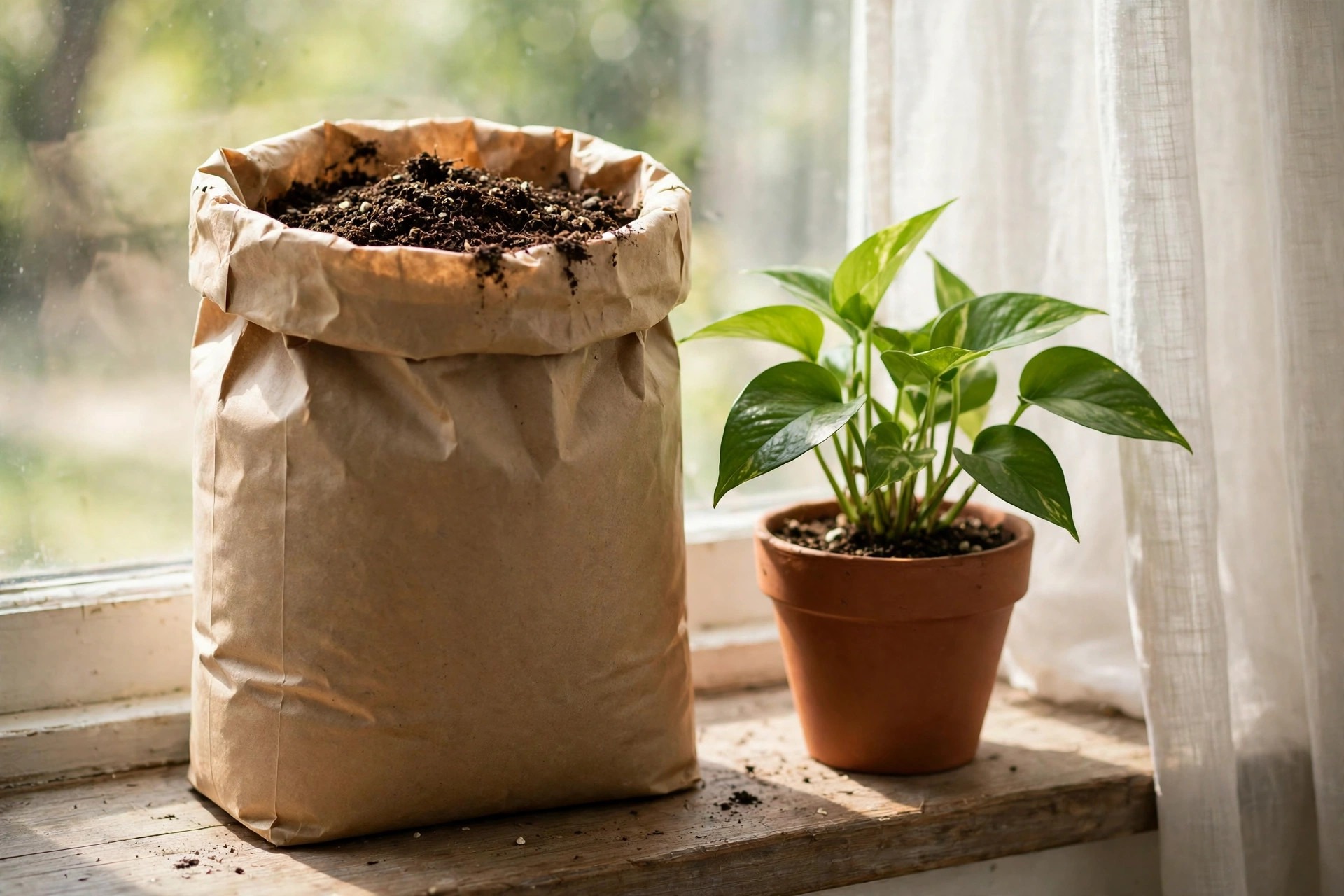
Burpee’s mix is the cheapest way into a verified organic bag in this guide. It is built on coconut coir with a slow-release plant food, feeds for up to 3 months, and carries a verified OMRI Listing: the OMRI record lists “Burpee Natural and Organic Premium Potting Mix 0.12-0.12-0.12”, listed in January 2024 and current until March 2027. That balanced 0.12-0.12-0.12 analysis is printed on the bag itself.
The bag is 9 quarts, which is the size Burpee itself sells, though a few retailer listings describe it as 8 quarts. This guide uses 9 quarts, the maker’s figure. One evidence note, stated honestly: no dedicated Burpee product page for this mix surfaced in research, so the specifications rest on Burpee’s own gardening guides, the bag text quoted in listings, and the OMRI record. That is the weakest maker-page evidence in the lineup, and the product-page build should re-check Burpee’s site before publishing any product page.
What you get for the money is a straightforward organic mix: coir base, slow-release food, three months of feeding, and an OMRI mark. What you do not get is a mycorrhizae blend, a published pH, or the deep ingredient list of the premium organic bags. For a beginner who wants organic on a budget, that is a fair trade.
Best for: first-time organic growers, and anyone who wants an OMRI Listed bag without the premium price. Skip if: you want mycorrhizae or a published pH on the label. Real-world limitation: the thinnest ingredient list in the organic group, and no dedicated maker product page to check. Who should buy: the budget buyer who wants the OMRI mark and a simple, reliable mix.
Our rating: 8.8 out of 10.
8. Coast of Maine Bar Harbor Blend Potting Soil: Best Premium Organic
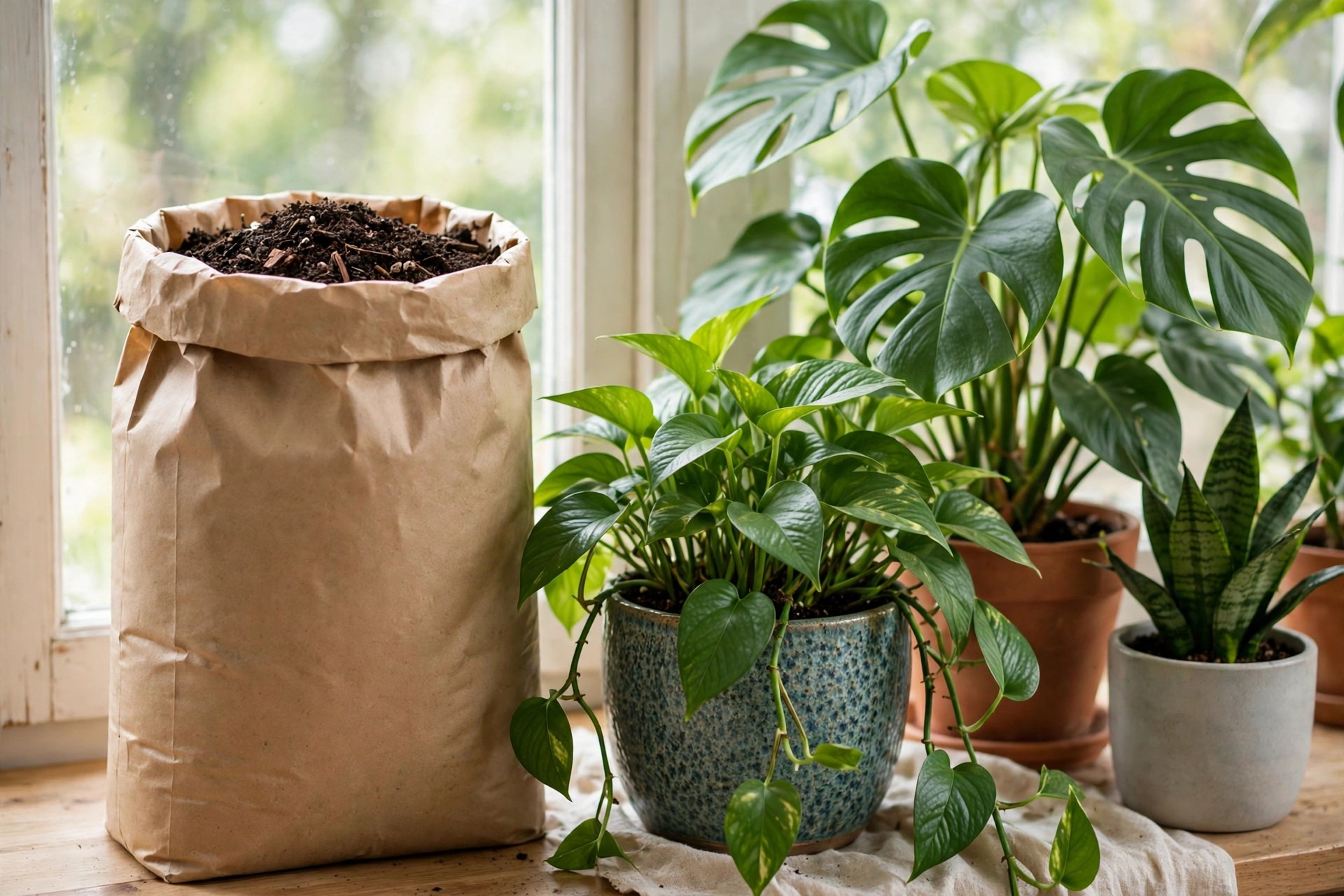
Bar Harbor Blend is the most distinctive recipe in the guide, and it comes from the coast it is named for. The maker blend is sphagnum peat moss, composted manure, perlite, aged bark, and fertiliser derived from kelp meal and lobster and crab shell meal. The maker’s fuller description adds salmon, blueberry and lobster composts, with calcium and chitin-rich lobster shells. That is a slow, steady food supply rather than a quick hit: the guaranteed analysis on the maker page reads 0.4-0.11-0.07, and the maker notes the nitrogen is water-insoluble and slowly available.
It is OMRI Listed, with the certificate linked from the maker product page, and it comes in 8-quart, 16-quart, 1 and 2 cubic foot bags. The maker publishes no feed duration and no pH number, which is the honest gap in an otherwise well-documented bag: the food is slow-release by design, so the feeding schedule is yours to manage, and the pH is left to the grower to check.
The character of this mix is its strength and its limit. The composted manure and shell meal give it a richness no peat-and-perlite bag can match, and plants that like steady feeding respond well. But it is a heavier, denser mix than the coir bags, and it costs more per quart than most of the lineup. Buy it for plants you feed slowly and watch closely. Buy Burpee instead if the budget matters more than the recipe.
Our rating: 8.8 out of 10.
9. Good Dirt Indoor Potting Mix: Best for Root Health
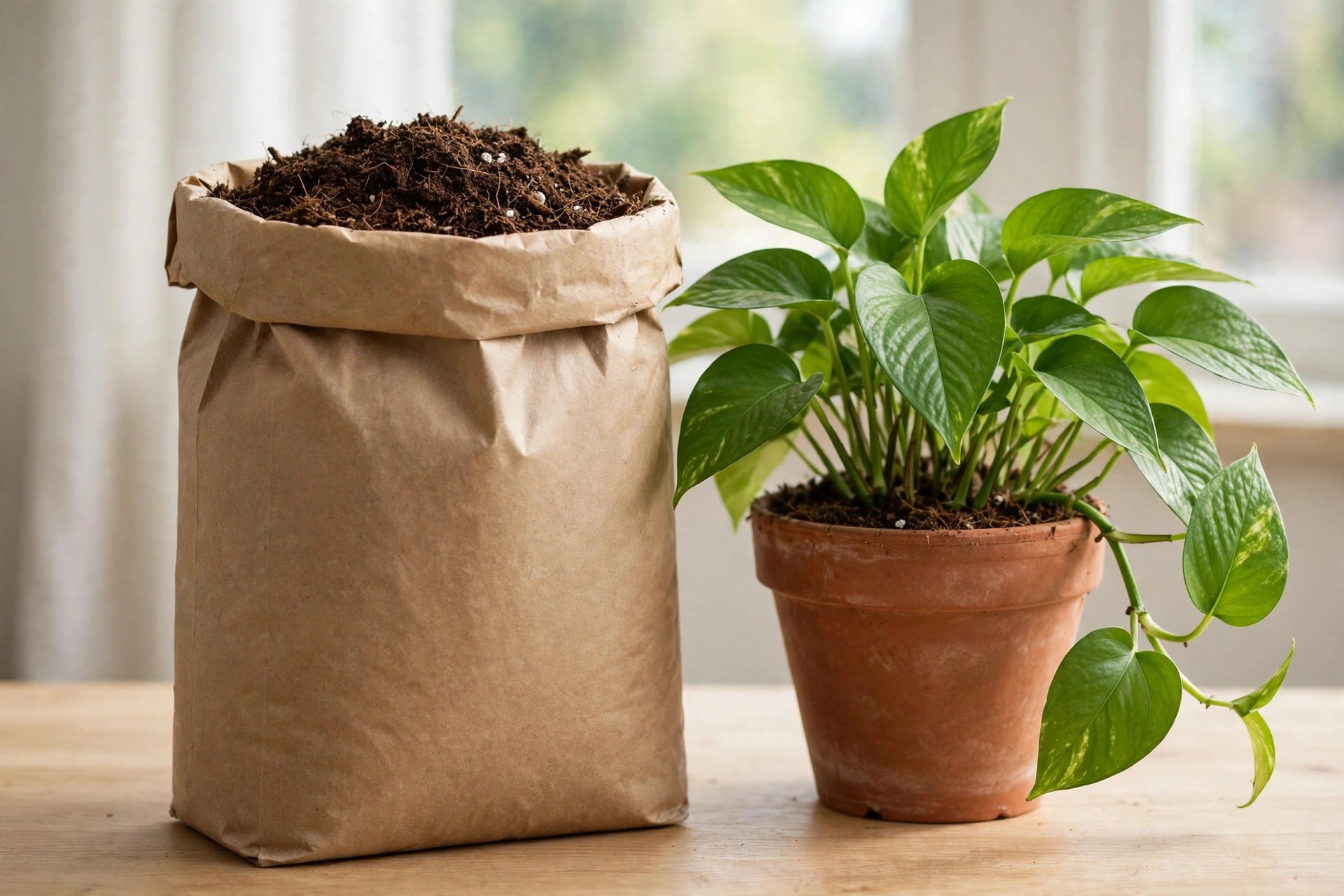
Good Dirt is the boutique pick of the lineup, and its ingredient list is the most unusual. The base is Veriflora Certified Canadian peat moss, plus BogBits, a proprietary recycled byproduct of sustainably harvested peat moss made of semi-petrified wood fibres, with less than 3 percent horticultural perlite in the Indoor mix only, an organic-based Plant Food booster from oilseed extract, and PlantBiotics. There is no bark, no animal byproducts and no nuts in the bag, and the maker describes the mix as 100 percent chemical-free, non-GMO and vegan.
The Indoor mix is deliberately different from the maker’s Outdoor mix, which has no perlite at all, so buy the Indoor bag by name. The maker publishes no NPK, no pH and no feed duration for this mix, which is the thinnest published data in the guide, and no OMRI claim appears on the maker’s pages, so this guide does not call it OMRI Listed. Bag size is 8 quarts according to a Sunset Magazine listing, because the maker pages do not state sizes; that figure should be re-verified at product-page build time.
What the mix does offer is a clean, low-mess indoor experience: the peat and BogBits hold water well, the small perlite content keeps air in the root zone, and the PlantBiotics are aimed at root health. Owner feedback consistently mentions the lack of dust and the absence of gnats, which fits a mix with no bark and no compost. It is among the priciest per quart in this lineup (see the price table above), and the least documented on paper.
Best for: indoor growers who want a clean, low-dust mix with no bark or animal products. Not ideal for: anyone who needs published NPK or a feed duration on the bag. Real-world limitation: the least published data in the guide, and the bag size is not stated by the maker. Who should buy: the plant owner who values a tidy, indoor-specific blend and is comfortable feeding on their own schedule.
Our rating: 8.7 out of 10.
10. Rosy Soil Indoor Potting Mix: Best Peat-Free
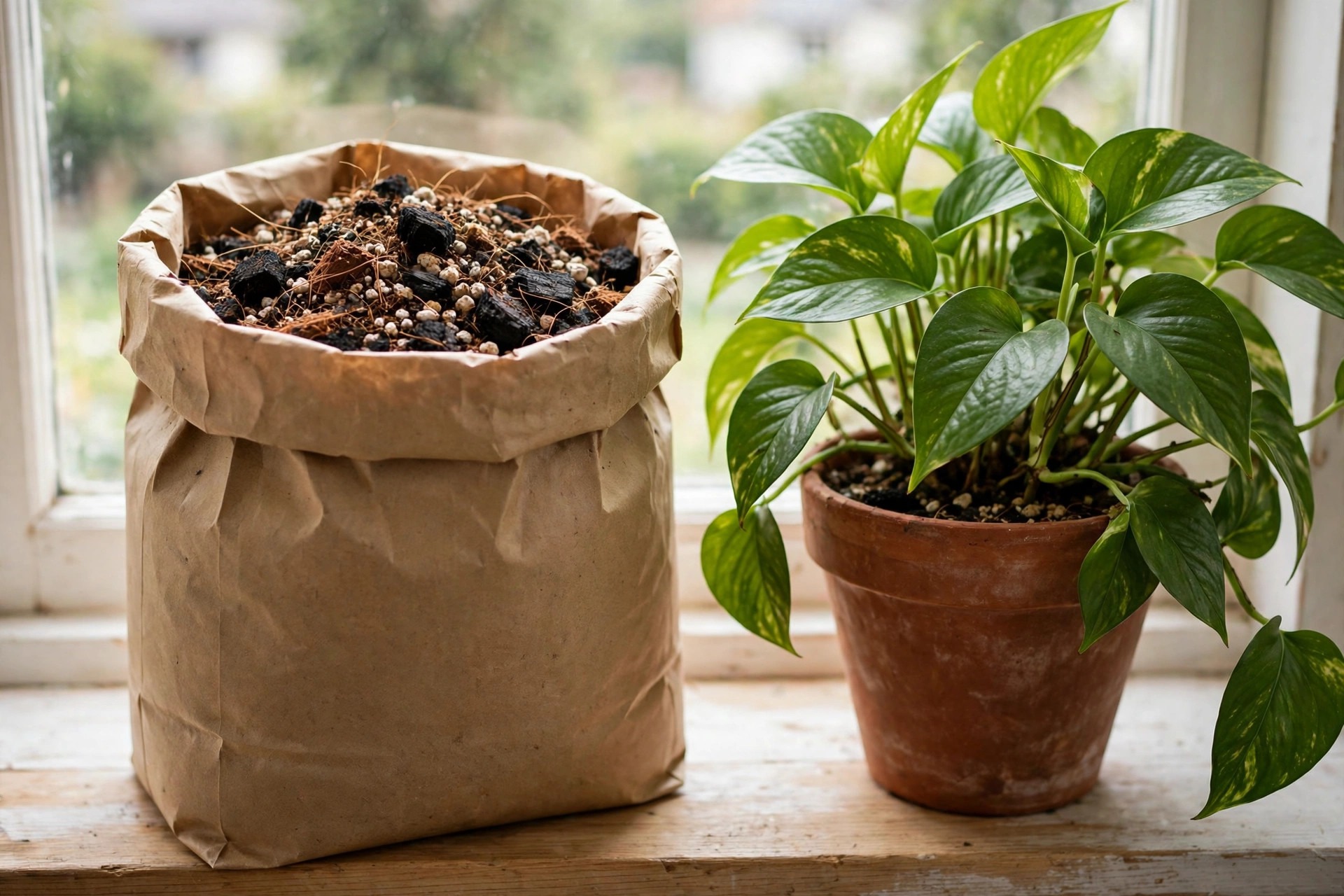
Rosy Soil is the only peat-free mix in this guide, and the only one that pairs peat-free with an OMRI Listing. The maker blend is biochar, pine bark fines, mycorrhizae, worm castings, compost and diatomaceous earth, with no peat at all. The maker product page carries the header “OMRI Listed, Peat-free, Made in USA, Plastic Neutral”, which is the clearest set of claims on any bag here.
Bag sizes are the best documented in the lineup: 4 quarts for 2 to 3 plants, 8 quarts for 4 to 6 plants, 16 quarts for 10 to 12 plants, and 32 quarts for 20 to 24 plants, all from the maker page. The maker publishes no NPK, no pH and no feed duration, and says the mix does not need replacing every year the way traditional mixes compact, which is a claim about structure rather than food. That means you still need a feeding routine, and the guide is honest about that: peat-free does not mean feed-free.
The biochar is the interesting ingredient. It holds water and nutrients in its pores and gives microbes a home, which is why the maker leans on it instead of peat. Pine bark fines open the air spaces, and the worm castings and compost supply the first food. For a grower who wants to step away from peat for environmental reasons, this is the most complete peat-free bag in the guide.
Quick verdict: the best peat-free choice, with the clearest labelling and the best size guide. The trade is the missing published NPK and feed duration, so feed on your own schedule. Buy it if peat-free matters to you. Buy FoxFarm Ocean Forest instead if you want the richest published specs and do not mind peat.
Our rating: 8.6 out of 10.
How We Chose
Every rating in this guide comes from the same scoring system, applied to each mix in the same order. The weights below sum to 100 percent, and they reflect what matters most in a pot indoors: whether roots can breathe, whether water behaves, and whether the plant gets fed.
| Factor | Weight | What we looked for |
|---|---|---|
| Drainage and aeration | 25% | Perlite, pumice, bark or biochar in the blend; a mix that stays open instead of compacting |
| Water holding and re-wetting | 20% | Peat or coir content; whether a dried-out mix takes water again instead of shedding it |
| Nutrient content and feed duration | 20% | Published NPK, feed duration on the bag, and whether the food is slow-release or quick |
| Ingredient quality and organic status | 15% | Named organic matter, mycorrhizae, worm castings; verified OMRI Listing where claimed |
| Ease of use | 10% | Dust, gnats, ready-to-use out of the bag, and clear bag-size guidance |
| Value | 10% | Bag sizes available and how widely stocked the mix is |
The ratings in this guide rest on three sources: manufacturer pages and labels for all 10 mixes, patterns in owner reviews, and guidance from university extension services. No grow trial was run, no lab test was done, and no side-by-side comparison was made. The scores compare what the makers publish and what owners report, not plants grown in these mixes.
What earns a high score
- Drainage and aeration (25%): a high score means perlite, pumice, bark or biochar in the blend and a mix that stays open instead of compacting, while a low score means the mix compacts and holds water.
- Water holding and re-wetting (20%): a high score means peat or coir holds water and a dried-out mix takes water again instead of shedding it, while a low score means it sheds water when dry.
- Nutrient content and feed duration (20%): a high score means published NPK and feed duration on the bag, with slow-release food, while a low score means no published NPK or feed duration and quick food.
- Ingredient quality and organic status (15%): a high score means named organic matter, mycorrhizae or worm castings, with any OMRI Listing verified where claimed, while a low score means unnamed ingredients and an unverified OMRI claim.
- Ease of use (10%): a high score means little dust, few gnats, ready to use out of the bag, and clear bag-size guidance, while a low score means dusty, gnat-prone and unclear bag-size guidance.
- Value (10%): a high score means bag sizes are available and the mix is widely stocked, while a low score means limited bag sizes and a mix that is hard to find.
Each rating reflects the six factors weighted as shown, so drainage (25%) and water behaviour (20%) matter most and value (10%) matters least.
A note on honesty, because it matters for a buying guide. No mix in this guide was hands-on tested by us. The ratings come from an analysis of manufacturer specifications, maker-published labels and owner feedback, not from growing plants in each bag. A rating of 9.3 means the published specs and owner reports line up best for most indoor plants. It does not mean the mix won a trial. If you grow one plant in one mix for a year, your experience is worth more than any score here.
The NPK numbers on a potting mix bag work the same way as the numbers on a fertiliser bag, and our label guide explains how to read them.
How to Repot a Houseplant in Fresh Mix
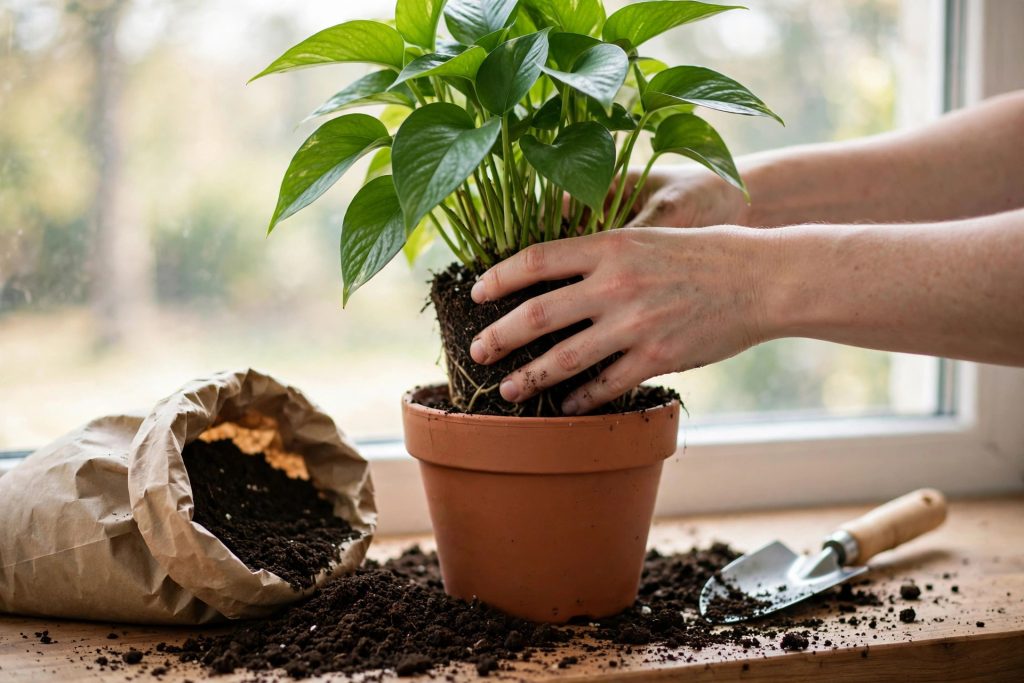
A good mix only helps if the repot itself is done right. Spring is the best window, when growth is starting again, and fast-growing plants may need a fresh pot every year while slow growers can wait two to three years. Clemson Extension gives the same rhythm: repot only while the plant is actively growing, in spring or summer, and choose a pot only 1 to 2 inches larger than the old one. A pot much bigger than the root ball holds wet mix the roots cannot reach, which is how rot starts.
Moisten the mix before you fill the pot. Penn State Extension stresses this for repotting: dry peat and coir resist water at first, so wet the mix in a bucket until it is damp right through, then fill. Set the plant at the same depth it grew before, firm the mix gently around the roots without packing it hard, and water thoroughly so the mix settles. Then leave it alone for a week before fertilising, because the fresh mix already carries food and the roots need time to settle.
Signs that a repot is due are easy to read: roots circling out of the drainage holes, a solid root mass when you slide the plant out, or a plant that wilts soon after watering even though the mix is damp. All three mean the roots have run out of room and fresh mix.
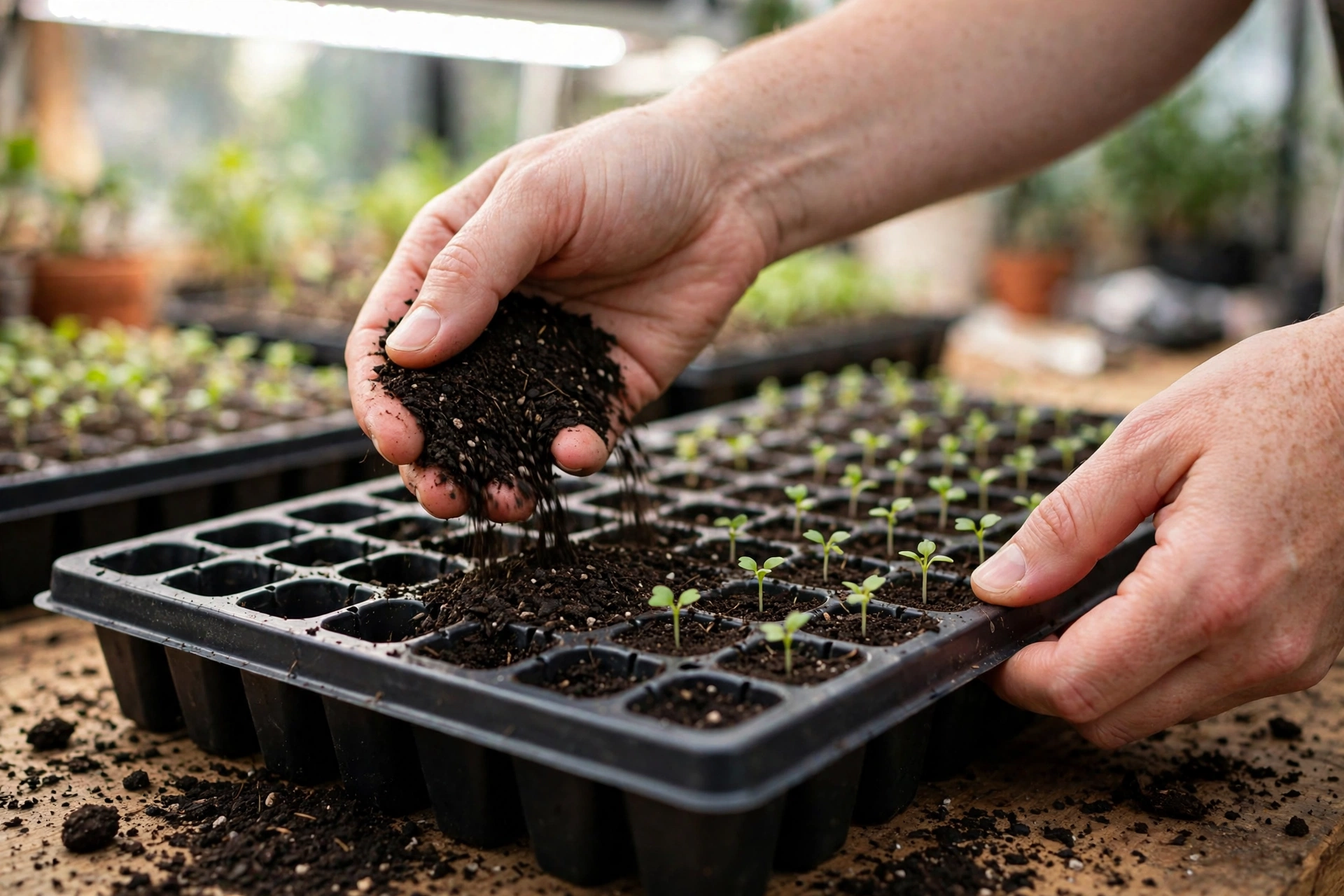
Seedlings started in a fine seed mix get potted up into a potting soil like the ones in this guide once they have true leaves.
Mistakes to Avoid With Indoor Potting Soil
The most common mistake is using garden soil indoors. It compacts, stays wet, and can carry pests and disease. The second is picking a moisture-control mix for a succulent, or a fast-draining mix for a fern, and then blaming the plant. Match the mix to the plant, not to the prettiest bag.
The third mistake is never feeding after repotting. The food in a bagged mix is finite. FoxFarm says Ocean Forest feeds for about 3 to 4 weeks. Burpee’s feed lasts up to 3 months. Miracle-Gro’s mixes claim up to 6 months. After that window, the plant is eating nothing unless you feed it. The University of Minnesota Extension says the same thing for containers in general: they need fertilising frequently through the season, with a slow-release fertiliser at planting and liquid feed at watering.
The fourth mistake is repotting into a pot far too big, which leaves wet mix the roots cannot dry out. The fifth is skipping the drainage hole. No mix, however good, can save a plant in a pot with nowhere for water to go. And the sixth is reusing last year’s open bag from a damp shed if it smells musty or has stayed wet. Fresh mix is cheap insurance against the fungi that attack roots in stale, soggy soil.
Final Choice
If you buy one bag from this guide, buy FoxFarm Ocean Forest for most houseplants, Miracle-Gro Indoor Potting Mix if you are new to the hobby or fighting gnats, and Espoma Organic Potting Mix if you want an organic base and already feed on a schedule. If you forget to water, Miracle-Gro Moisture Control is the safety net. If you want organic with the OMRI mark, Burpee is the budget pick, Coast of Maine is the premium pick, and Rosy Soil is the peat-free pick. And if you want one bag for the whole collection, Black Gold All Purpose is the workhorse.
Whichever bag you choose, the routine is the same: repot in spring, moisten the mix first, pick a pot only a little larger, and start feeding once the bag’s own food runs out. Do that, and the mix will do the rest.
For garden beds rather than pots, our soil fertility guide covers the natural ways to feed the soil itself.
Our final recommendation for indoor potting soil is FoxFarm Ocean Forest, with Miracle-Gro Indoor Potting Mix as a practical alternative for beginners.
References
- University of Massachusetts Amherst Extension, “Bagged Potting Mixes and Garden Soils for Home Gardeners”: garden soil compacts and saturates in containers and can carry weeds, insects and disease; potting mixes are soilless blends of peat moss, pine bark, coir, perlite and vermiculite. https://umass.edu/agriculture-food-environment/home-lawn-garden/fact-sheets/bagged-potting-mixes-garden-soils-for-home-gardeners
- Clemson University Home and Garden Information Center, “Indoor Plants: Transplanting and Repotting”: fast-growing plants may need repotting annually, slow growers every two to three years; repot in spring or summer while actively growing; choose a pot 1 to 2 inches larger. https://hgic.clemson.edu/factsheet/indoor-plants-transplanting-repotting/
- Penn State Extension, “Repotting Houseplants”: best time to repot is spring when seasonal growth starts; garden soil in indoor containers can lead to disease and pest problems; moisten the mix before repotting. https://extension.psu.edu/repotting-houseplants
- University of Minnesota Extension, “Starting your garden and containers off right”: potting mixes are soilless media of peat moss, compost, perlite and vermiculite; bags labelled garden soil or topsoil are too heavy for pots; containers need fertilising frequently through the season. https://extension.umn.edu/about/our-stories/news/starting-your-garden-and-containers-off-right
- University of Georgia Extension, “Gardening in Containers” (Circular 787): commercial potting mixtures are ideal for containers because they are soilless, often fortified with fertiliser, lime and a wetting agent; poorly drained mix leads to
- root problems and root-rotting fungi. https://fieldreport.caes.uga.edu/wp-content/uploads/2025/08/C-787_6.pdf
- Colorado State University Extension, “Flies in the Home”: high-organic-matter mixes encourage fungus gnat development, and overwatering increases it: https://extension.colostate.edu/resource/flies-in-the-home/
Frequently Asked Questions
What is the best potting soil for indoor plants?
FoxFarm Ocean Forest is the best overall pick in this guide, with the richest ingredient list and a maker-published pH of 6.3 to 6.8. Miracle-Gro Indoor Potting Mix is the best pick for beginners, because its coir-based, compost-free blend stays less prone to fungus gnats and feeds for up to 6 months.
Can I use garden soil for indoor plants?
No. Garden soil compacts in a pot, holds water for days, and can carry weed seeds, insects and disease. University of Massachusetts Extension and Penn State Extension both warn against it. Use a bagged soilless potting mix indoors, never soil dug from the yard.
How often should I repot a houseplant?
Most houseplants need repotting every 1 to 3 years. Fast-growing plants may need a fresh pot annually, while slow growers can wait two to three years. Spring is the best window, while the plant is actively growing. Signs a repot is due include roots coming out of the drainage holes and a plant that wilts soon after watering.
Do I need to feed plants in potting soil?
Yes, once the bag’s own food runs out. The starter feed in a bagged mix is finite: FoxFarm Ocean Forest feeds for about 3 to 4 weeks, Burpee’s mix for up to 3 months, and Miracle-Gro’s mixes for up to 6 months. After that window, feed on the maker’s schedule or with a balanced liquid fertiliser at watering.
What is the best potting soil for succulents?
Succulents need a fast-draining mix, and none of the 10 mixes in this guide is a dedicated cactus mix. The practical answer is to take a light, open mix such as FoxFarm Ocean Forest or Rosy Soil and add one part perlite or pumice to two parts mix. Do not plant a succulent in a moisture-control mix straight from the bag.
Is organic potting soil better for indoor plants?
It depends on what you want from the label. Organic mixes use natural ingredients and, where OMRI Listed, have been reviewed against organic standards. In this guide, Burpee Organic Premium, Coast of Maine Bar Harbor Blend and Rosy Soil are OMRI Listed. Espoma and Good Dirt use organic ingredients without a verified OMRI Listing. For plant health alone, a conventional mix with the right drainage and feed can perform just as well.

Thesis Link : https://saulibrary.edu.bd/daatj/public/uploads/BAU200601_19-Pp_5.pdf
- How to Transplant Tomato Seedlings Outdoors - November 8, 2026
- Best Potting Soils for Indoor Plants: 10 Picks That Keep Houseplants Happy - November 7, 2026
- How to Grow Peppers from Seed: A Step by Step Guide for Beginners - November 7, 2026