The best liquid fertilizer for fast growth is the one that gets nutrients to hungry roots in days, not weeks. A pale tomato plant, a lawn that will not green up, a houseplant that has stalled since spring: these are jobs for a liquid feed, because the nutrients are already dissolved and available the moment they reach the soil. Granular fertilizer has to dissolve first and work its way down to the roots, which takes time. A liquid feed skips that wait.
This guide compares 10 liquid fertilizers for fast growth, from a high-nitrogen all-purpose feed to gentle organic fish and seaweed blends, using verified manufacturer specifications and owner feedback. We did not test these products hands on. Every NPK figure, dilution rate, and coverage number below comes from the maker’s own page or label, or from a major retailer listing where no official page exists, and conflicts between sources are flagged rather than smoothed over. Two picks are water-soluble powders rather than ready-mixed liquids: they dissolve in water and are fed exactly like a liquid fertilizer, and each of their sections says so plainly.
Quick Recommendation
- Best overall for most gardens: Miracle-Gro Water Soluble All Purpose Plant Food 24-8-16. The strongest balanced feed here, for vegetables, flowers, containers, and houseplants, at a dilution the label spells out clearly.
- Best organic all-rounder: Neptune’s Harvest Fish and Seaweed Blend 2-3-1. OMRI Listed, gentle enough for seedlings and houseplants, and it feeds through the soil and the leaves.
- Best for leafy growth: FoxFarm Grow Big 6-4-4. Built for the vegetative stage, when tomatoes, peppers, and leafy greens are putting on size fast.
- Easiest lawn feeding: Simple Lawn Solutions 16-4-8. A ready-to-spray bottle that connects to a garden hose, with no measuring at all.
- Best value organic: Alaska Fish Fertilizer 5-1-1. One gallon of concentrate makes up to 128 gallons of diluted feed at the 2-tablespoon vegetable rate, at about $0.27 per gallon.
- Best for tomatoes and fruiting vegetables: AgroThrive Fruit and Flower 3-3-5. A higher-potassium organic feed aimed squarely at bloom and fruit set.
If you only buy one thing from this guide, buy a balanced all-purpose liquid and learn its dilution rate by heart. The fastest fertilizer is the one you actually use on schedule, every one to two weeks through the growing season, not the strongest bottle on the shelf.
Compare the 10 Best Liquid Fertilizers for Fast Growth
| Product | NPK | Form | Best For | Our Rating | Price |
|---|---|---|---|---|---|
| Miracle-Gro All Purpose Plant Food | 24-8-16 | Water-soluble powder | Most gardens | 9.3 | $6.99 (1.5 lb) |
| Neptune’s Harvest Fish and Seaweed Blend | 2-3-1 | Liquid concentrate | Organic all-round feeding | 9.2 | $24.95 (36 oz) |
| FoxFarm Grow Big Liquid Plant Food | 6-4-4 | Liquid concentrate | Leafy growth | 9.1 | $22.10 (1 qt) |
| Simple Lawn Solutions 16-4-8 Lawn Food | 16-4-8 | Ready-to-spray liquid | Lawns, easiest application | 9.1 | $24.99 (32 oz) |
| Alaska Fish Fertilizer | 5-1-1 | Liquid concentrate | Value organic feeding | 9.0 | $12.95 (1 qt) |
| AgroThrive Fruit and Flower | 3-3-5 | Liquid concentrate | Tomatoes and fruiting vegetables | 9.0 | $20.97 (32 oz) |
| Miracle-Gro Bloom Booster Flower Food | 15-30-15 | Water-soluble powder | Flowers and blooms | 8.9 | $11.49 (1.5 lb) |
| Espoma Organic Grow! Liquid Concentrate | 2-2-2 | Liquid concentrate | Gentle organic all-purpose | 8.8 | $12.99 (16 oz) |
| Espoma Organic Indoor! Liquid Plant Food | 2-2-2 | Liquid concentrate | Houseplants | 8.8 | $7.99 (8 oz) |
| FoxFarm Big Bloom Liquid Plant Food | 0-0.5-0.7 | Liquid concentrate | Gentle bloom supplement | 8.7 | $24.99 (1 qt) |
Ratings are editorial scores from our scoring system in How We Chose, based on verified specifications and owner feedback, not on hands-on testing. A higher score means a better fit for fast growth, not a laboratory result.
Prices are search-found prices from the sources named in each section, checked 6 November 2026. They are not Amazon prices, and they change. Check the live listing before you buy.
How to Choose the Best Liquid Fertilizer
Liquid vs granular fertilizer: what changes
A liquid fertilizer is already dissolved, so its nutrients are available to roots at once. Colour improvement is often visible within a week or two, while a granular fertilizer typically takes 7 to 14 days for visible results because the granules must dissolve and move into the root zone first. The trade is duration: a liquid feed lasts only 2 to 3 weeks per application, so it needs reapplying more often. Granular fertilizer feeds longer but responds slower. For a plant that is pale right now, liquid wins. For season-long background feeding, granular has the easier schedule. Many gardeners use both: granular at planting, liquid through the season when growth is fastest.
What the NPK numbers mean
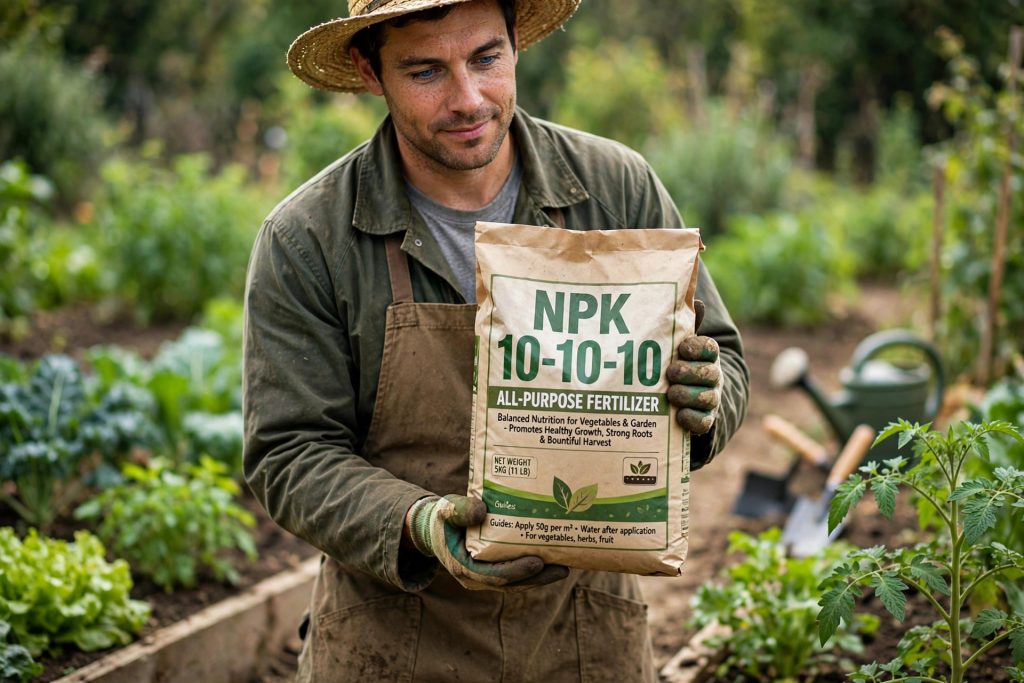
Every fertilizer label carries three numbers, such as 24-8-16. They are the percentages of nitrogen (N), phosphorus (P), and potassium (K) in the product, in that order. Nitrogen drives leafy green growth, phosphorus supports roots and flowering, potassium supports overall plant health and fruiting. A high first number, like 24-8-16 or 16-4-8, pushes green growth. A high middle number, like 15-30-15, pushes blooms. A low, balanced set of numbers, like 2-2-2, feeds gently and is harder to overdo. If you are unsure what your soil needs, test it first: the University of New Hampshire Extension recommends a soil test before planting, and notes that vegetables grow best at a pH of 6.5 to 6.8.
Best organic liquid fertilizer: what to look for
An organic liquid fertilizer is made from plant or animal materials, such as fish emulsion, seaweed, poultry manure, or soy protein, rather than from mined or synthesised mineral salts. Look for the OMRI Listed mark, which means the product is approved for organic growing. Organic liquids are usually lower in NPK numbers than synthetic ones, which is not a weakness: they feed more gently, add small amounts of organic matter, and are far more forgiving if you misjudge the dose. Five picks in this guide are organic, led by Neptune’s Harvest and Alaska Fish. For edible gardens, organic is the safer default, and it pairs well with compost, which builds the soil itself.
How to apply liquid fertilizer
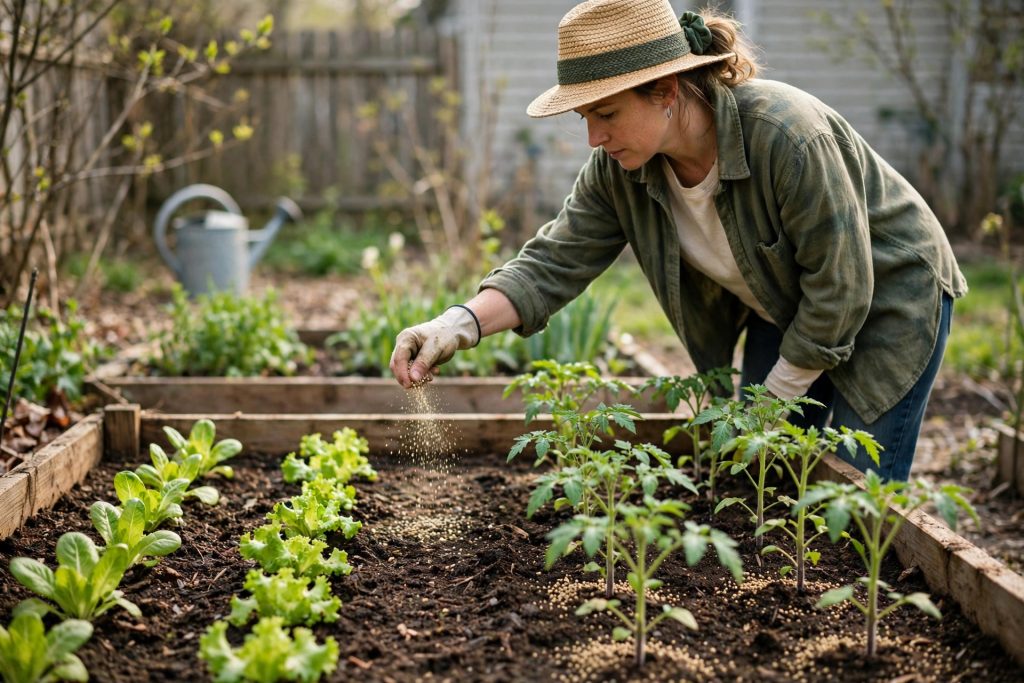
Most liquid fertilizers are diluted in water and poured at the base of the plant with a watering can, which is called a soil drench. Some also work as a foliar spray on the leaves, and lawn formulas often come in a hose-end sprayer bottle that mixes as you water. Always mix at the label rate, never stronger, and apply to soil that is already moist, then water lightly afterwards so the feed reaches the roots. Feed in the cooler part of the day, and never feed a plant that is heat-stressed or drought-stressed. Container plants need smaller, more frequent doses than plants in the ground, because nutrients wash out of pots with every watering: a diluted feed every 1 to 2 weeks during active growth is the usual rhythm, against roughly every 3 to 4 weeks for beds.
Best liquid fertilizer for vegetables
Vegetables are heavy feeders, and they respond to liquid fertilizer faster than almost any other garden plant. Start with a balanced feed at planting, then switch to a formula that matches the stage: a nitrogen-led feed like FoxFarm Grow Big while plants are growing leaves and stems, then a potassium-led feed like AgroThrive Fruit and Flower once tomatoes, peppers, and squash start to bloom and set fruit. Feed vegetables every 1 to 2 weeks in the growing season, and sidedress along the drip line, the circle under the outer leaves, rather than pouring feed against the stem. The University of New Hampshire Extension advises splitting quick-release fertilizer, half before planting and the rest 4 to 6 weeks later, rather than giving the whole season’s feed at once.
Best liquid fertilizer for indoor plants
Houseplants live in small pots with no soil reserves to draw on, so they depend on you entirely. Use a gentle, low-number feed made for indoor use, such as Espoma Indoor! at half a cap per quart of water, every 2 to 4 weeks while the plant is actively growing. Feed only when the soil is moist, never into dry mix, and skip feeding entirely in winter when growth stops. A weak feed given regularly beats a strong feed given rarely: houseplants are the easiest plants to burn, because excess salts have nowhere to go in a small pot.
Foliar feeding guide
Foliar feeding means spraying diluted fertilizer directly onto the leaves, where it is absorbed fast. It works best as a quick correction for a pale plant, not as a replacement for soil feeding. Spray at dusk or in the early morning, when dew is on the leaves and temperatures are moderate, so the spray stays liquid on the leaf as long as possible. Use only a soluble-grade fertilizer at a dilute 0.5 to 2 percent solution, and never spray in direct sun or heat, which dries the spray on the leaf and causes burn. University of Delaware Extension gives the same guidance: moderate temperatures, low wind, and dilute rates are what make foliar feeding safe.
The 10 Best Liquid Fertilizers for Fast Growth
1. Miracle-Gro Water Soluble All Purpose Plant Food 24-8-16
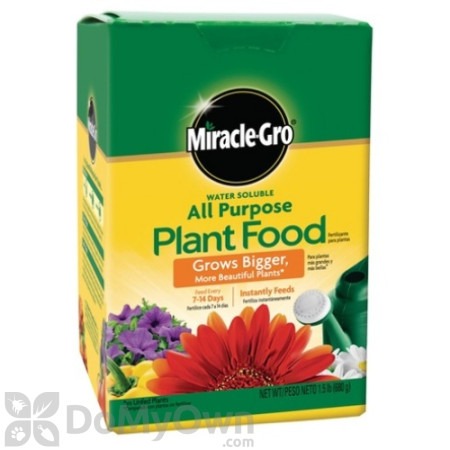
This is the strongest balanced feed in the guide, and the best liquid fertilizer for most gardens. The NPK is 24-8-16, high in nitrogen for fast green growth, with enough phosphorus and potassium to support flowers and fruit. It is a water-soluble powder, not a ready-mixed liquid: you dissolve it in water and feed exactly like a liquid fertilizer, either from a watering can or through a Miracle-Gro Garden Feeder on a hose. The label rate is 1 tablespoon per gallon outdoors, or 1.5 tablespoons per 1.5 gallons, every 7 to 14 days, and half a teaspoon per gallon indoors every 2 weeks. A 1.5 pound box feeds about 600 square feet, and a 3 pound box about 1,200 square feet. Sizes run from 8 ounces to 10 pounds.
Best for: vegetables, flowers, containers, houseplants, trees, and shrubs, all from one box. Not ideal for: gardeners who want a ready-to-pour liquid with no mixing, or an organic feed. Real-world limitation: the high nitrogen number makes it the easiest feed in this list to over-apply, so measure the tablespoon, do not estimate it, and never feed a dry plant. Who should buy: any gardener who wants the fastest visible green-up and is happy to mix a powder. Its rating is 9.3 out of 10.
Search-found price: $6.99 for the 1.5 lb box (Target, checked 6 Nov 2026; it was out of stock at check). That box feeds about 600 square feet, so one feeding of a 600 sq ft bed costs about $6.99.
What owners say: “Within a couple of feedings, the plants shot up with stronger stems, fuller foliage, and noticeably deeper green leaves.” (Home Depot reviewer)
2. Neptune’s Harvest Fish and Seaweed Blend Fertilizer 2-3-1
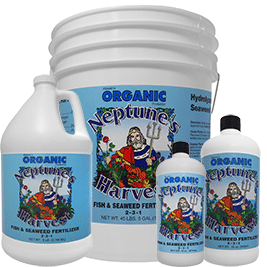
This is the organic pick that does the most jobs. The blend is hydrolysed fish and seaweed, Ascophyllum nodosum, at an NPK of 2-3-1, and it is OMRI Listed. Retailer listings describe the split as 75 percent fish and 25 percent seaweed. It feeds through the soil as a drench and through the leaves as a foliar spray, and the maker also lists seed soaking. Retailers also list drip-line application. The dilution is 1 ounce per gallon outdoors and 1 tablespoon per gallon for houseplants. Neptune’s Harvest website says feed every 1 to 2 weeks, while the printed label reproduced by retailers says every 2 to 3 weeks. Sizes run from 18 ounces to a 55 gallon drum. Coverage is dilution-dependent: label-based retailer figures put 1 quart at 5,445 square feet and 1 gallon at 21,780 square feet, while an Amazon listing gives about 2,000 square feet for the 36 ounce bottle, so treat coverage as a range and mix at the label rate.
Best for: vegetables, flowers, fruit, lawns, and houseplants, plus transplant support, when a gentle feed that will not burn is more important than a fast nitrogen hit. Real-world limitation: the NPK numbers are low, so a starving plant greens up more slowly than it would on a synthetic feed, and the fish smell lingers for a day after application. Who should buy: organic gardeners and anyone feeding seedlings, transplants, or containers where safety matters more than speed. Its rating is 9.2 out of 10.
Search-found price: $24.95 for 36 oz (Park Seed, checked 6 Nov 2026). At the outdoor rate of 1 ounce per gallon, the bottle makes about 36 gallons of feed, about $0.69 per gallon.
What owners say: “I didn’t use it last year and can definitely see a difference using it this year. Slight fishy smell but easy to get used to.” (customer review)
3. FoxFarm Grow Big Liquid Plant Food 6-4-4
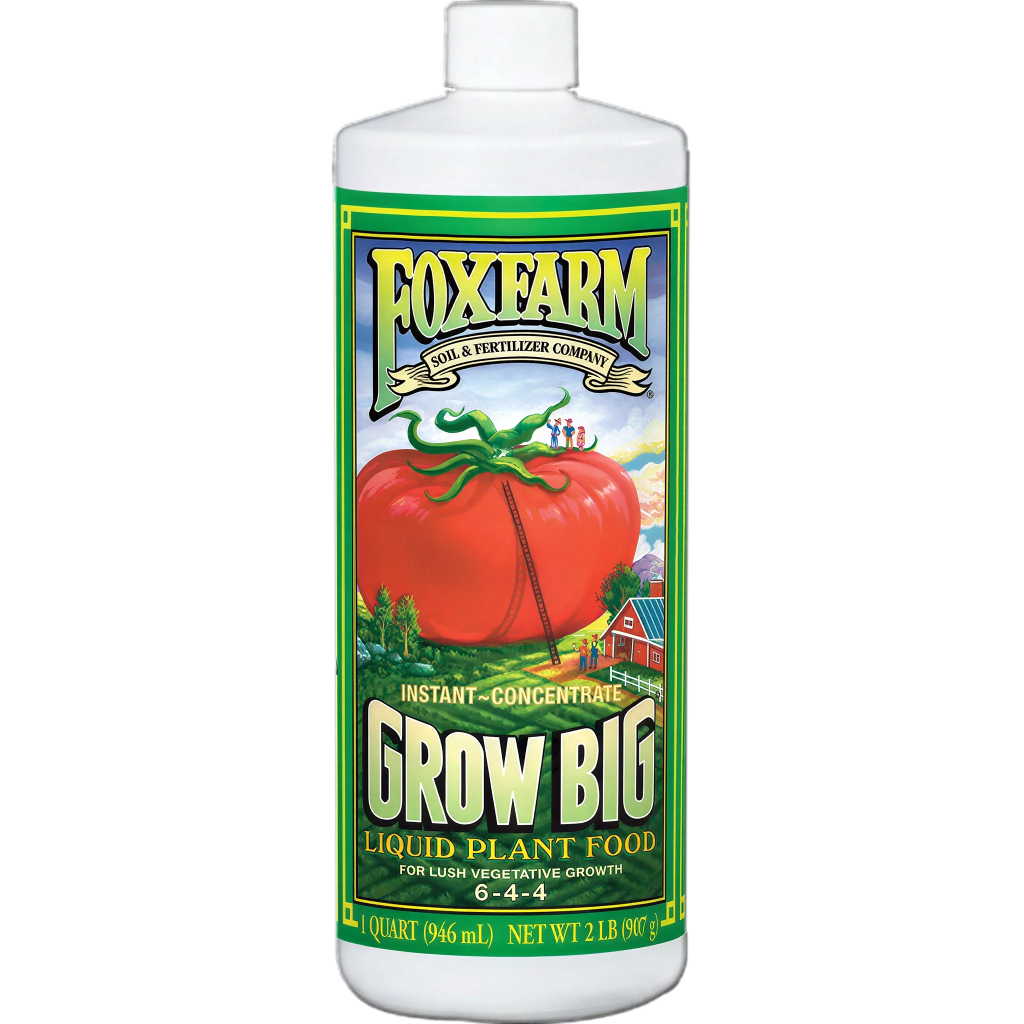
Grow Big is built for the vegetative stage, when plants are putting on leaves and stems as fast as they can. The NPK is 6-4-4, nitrogen-led but not extreme, and the maker describes it as organic-based, though it is not OMRI certified. It mixes at 2 to 3 teaspoons per gallon every other watering, or 4 teaspoons per gallon for heavy feeding, and it can also be sprayed on leaves at half a teaspoon per gallon or run through a hose-end sprayer filled with concentrate. Sizes run from a pint to 2.5 gallons on the maker’s site, with 5-gallon and larger commercial sizes listed by retailers.
What sets it apart is the way it fits a vegetable gardener’s calendar: feed Grow Big while tomatoes and peppers are growing tall, then switch to a bloom formula when flowers appear. That two-stage rhythm is how commercial growers feed, and it works just as well in a home garden. Watch out for: the low NPK numbers mean you feed more often than with a synthetic concentrate, and the bottle is a concentrate that must be measured, never poured neat. Who should buy: vegetable growers who want fast leafy growth and are willing to feed every other watering. Its rating is 9.1 out of 10.
Search-found price: $22.10 for 1 quart (Hydrobuilder, checked 6 Nov 2026). At the general rate of 2 to 3 teaspoons per gallon, a quart makes about 64 to 96 gallons of feed, about $0.23 to $0.35 per gallon.
What owners say: “This is basically my secret weapon. Plants that were barely hanging on? Revived.” (customer review)
4. Simple Lawn Solutions Advanced 16-4-8 Lawn Food
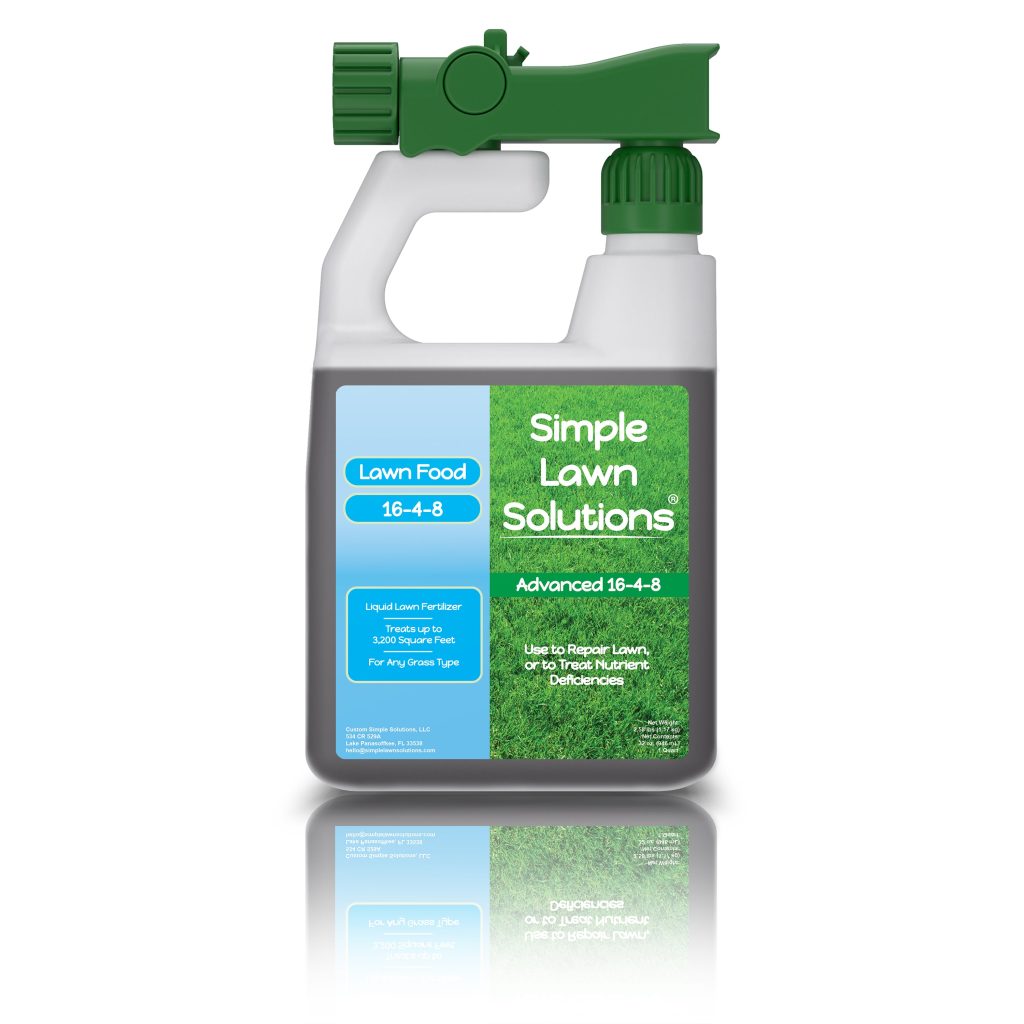
This is the only pick here that needs no measuring at all. The 32 ounce bottle has a built-in hose-end sprayer: connect a garden hose, turn the dial on, and walk at a medium pace. The NPK is 16-4-8, a balanced lawn formula infused with seaweed kelp and fish for nutrient uptake, and it suits all grass types, from Bermuda and St. Augustine to Kentucky bluegrass and tall fescue. The maker states the 32 ounce bottle covers 3,200 square feet, so plan on the maker’s figure and expect variation with walking speed. The maker says results can be seen in as little as 2 weeks. The maker states no reapplication interval; review-site guidance is about once a month during active growth. The maker’s instruction to apply before 10 am or after 3 pm is for tank-sprayer use, not for the ready-to-spray hose-end bottle. Water the lawn for 20 minutes within 24 hours of application.
Best for: any lawn that needs fast green-up with the least possible effort. Not ideal for: garden beds or containers, since this is a lawn formula, and for gardeners in Maryland, Michigan, New Jersey, New York, or Virginia, where its phosphorus content restricts use without a soil test. Real-world limitation: the maker advises against applying during drought, and it will not fix a lawn suffering from disease, pests, or weed infestation on its own. Who should buy: homeowners who want a greener lawn this weekend with no mixing and no measuring. Its rating is 9.1 out of 10.
Search-found price: $24.99 for the 32 oz hose-end bottle (Simple Lawn Solutions store, checked 6 Nov 2026). One bottle is one application on up to 3,200 square feet, about $24.99 per lawn feeding, or about $7.81 per 1,000 square feet.
What owners say: “Two days later, I really, really noticed a difference in my grass. It was softer and looked healthier. After a week, it looked so much better.” (St. Augustine lawn owner)
5. Alaska Fish Fertilizer 5-1-1
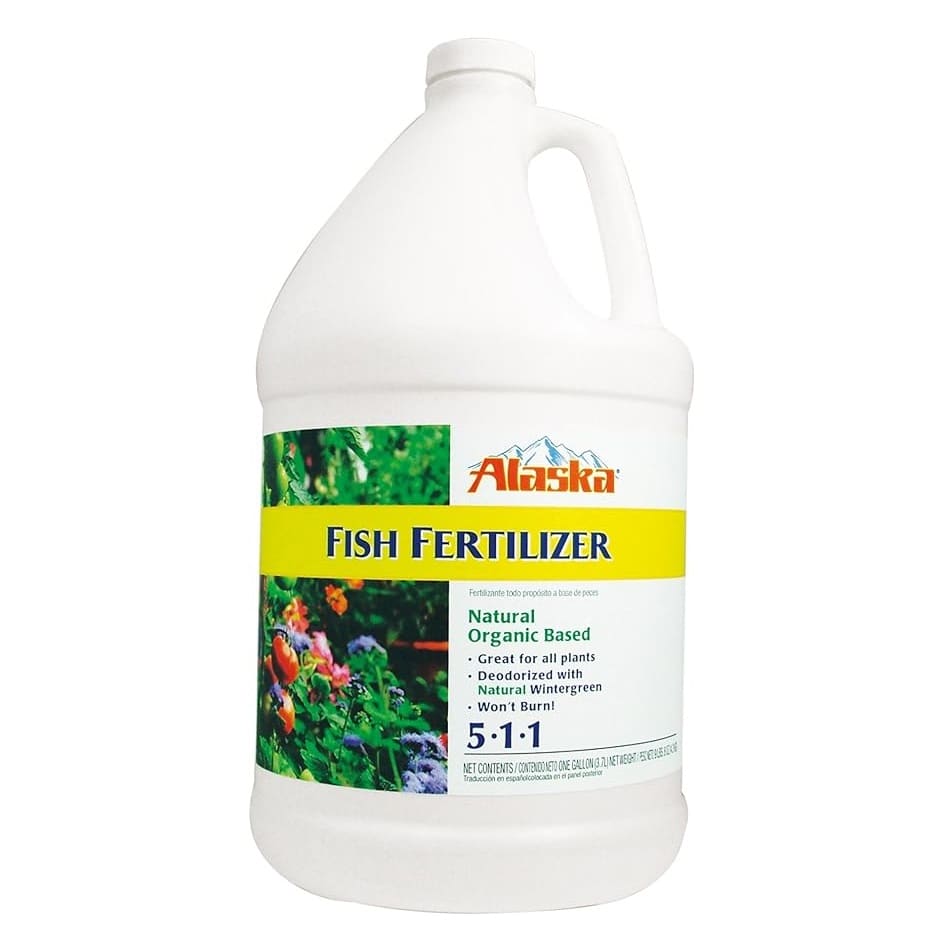
Alaska Fish is the cheapest way to feed a whole garden organically, and the oldest formula in this list. The NPK is 5-1-1, a nitrogen-led fish emulsion that is OMRI Listed and deodorised with natural wintergreen, though owners still report a strong fish smell. It is a soil drench, and it can also be applied with a garden hose-end sprayer. Dilute before use and pour at the base of the plant. The label rate is 2 tablespoons per gallon per 25 square feet for vegetables and bedding plants, 3 tablespoons per gallon for perennials, roses, and berries, and 1 to 2 teaspoons per quart for houseplants, reapplied every 3 weeks. One gallon makes up to 128 gallons of diluted feed at the 2-tablespoon vegetable rate (about 85 gallons at the 3-tablespoon rate), which is why it wins on value.
Best for: all plants, vegetables, roses, shrubs, trees, and houseplants, when you want one bottle that covers everything at a gentle strength. Real-world limitation: it is slow beside a synthetic feed, so a plant that is already pale will take longer to respond, and it feeds nitrogen first, so it will not push flowers on its own. Who should buy: gardeners with a lot of ground to cover who want an organic feed they can afford to use all season. Its rating is 9.0 out of 10.
Search-found price: $12.95 for 1 quart (Happy Hydro, checked 6 Nov 2026; 1 gallon $33.95). At the vegetable rate of 2 tablespoons per gallon, a quart makes about 32 gallons of feed, about $0.40 per gallon.
What owners say: “I use Alaska Fish Emulsion Fertilizer on everything growing in my yard. The results are phenomenal! My roses are blooming like nobody’s business.” (customer review)
6. AgroThrive Fruit and Flower Organic Liquid Fertilizer 3-3-5
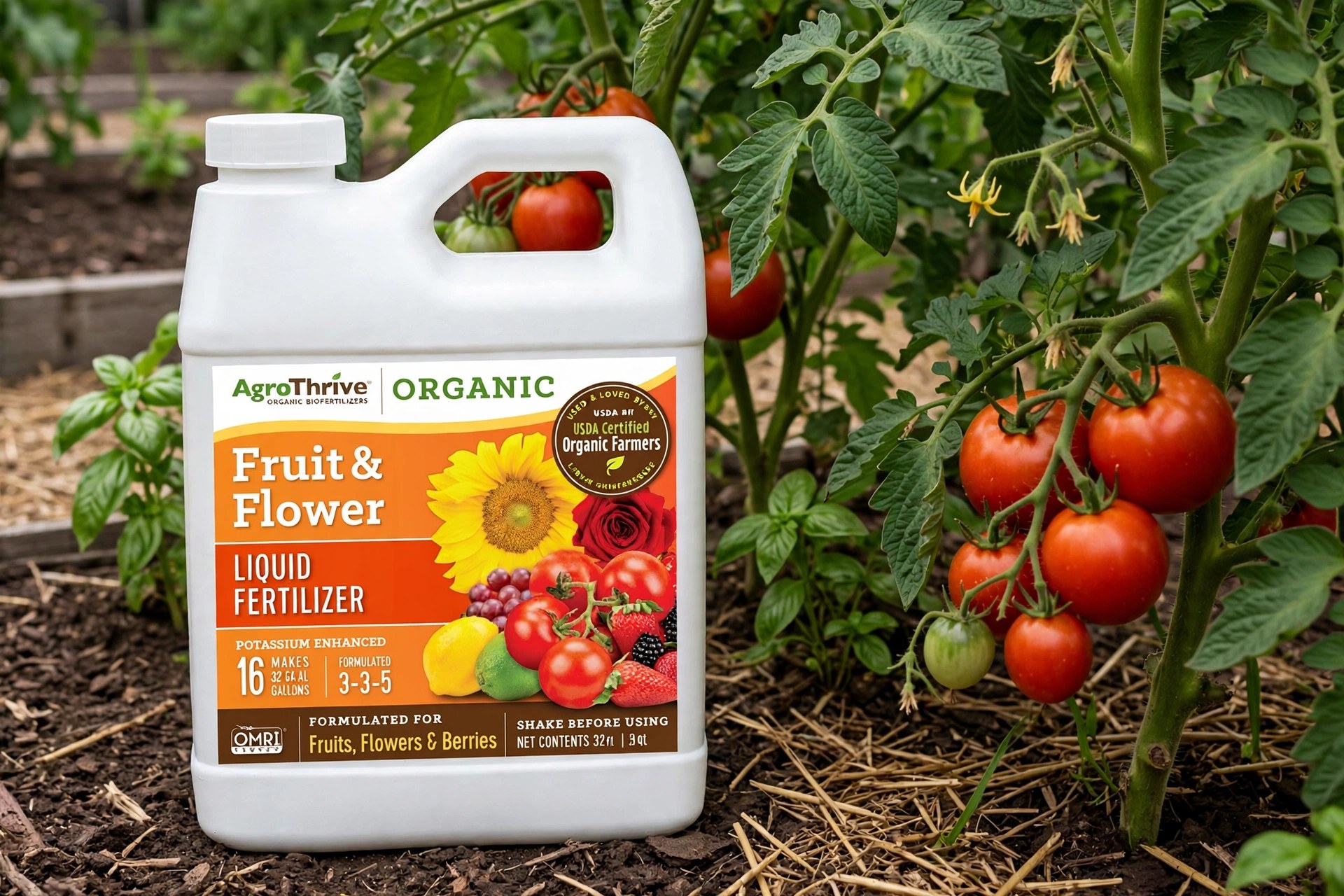
AgroThrive is the only pick here built specifically for fruiting plants. The NPK is 3-3-5, with the highest potassium number of any organic pick in the guide, aimed at bloom and fruit set rather than leafy growth. It is an organic liquid concentrate, applied as a soil drench from a watering can or bucket, through drip irrigation and injectors. It can also be used as a foliar feed (retailer guidance for seedlings; the maker lists foliar feeding as a general use). The dilution is 4 ounces per gallon for mature plants, 2 ounces per gallon for starter plants, and 1 ounce per gallon for seedlings. Mature plants feed every 1 to 2 weeks (the maker’s interval); some retailers suggest every 2 to 3 weeks for established fruiting plants. The maker says results can be seen in less than a week. Sizes run from 32 ounces to 2.5 gallons.
Use it the way the maker intends: start the season on a balanced feed, then switch to AgroThrive when the first flowers open on tomatoes, peppers, cucumbers, and squash. That switch is the difference between a plant that grows tall and a plant that sets fruit. Real-world limitation: it is a specialist, not an all-rounder, so it is the wrong bottle for a lawn or a leafy herb bed, and its low nitrogen number means it will not green up a starving plant quickly. Who should buy: vegetable growers whose main goal is more tomatoes, peppers, and fruit, not more leaves. Its rating is 9.0 out of 10.
Search-found price: $20.97 for 32 oz (AgroThrive store, checked 6 Nov 2026; 1 gallon $31.97). At the mature rate of 4 ounces per gallon, the bottle makes about 8 gallons of feed, about $2.62 per gallon.
What owners say: “My veggies were at a stand-still and this jump started them and they started flowering.” (AgroThrive reviewer)
7. Miracle-Gro Water Soluble Bloom Booster Flower Food 15-30-15
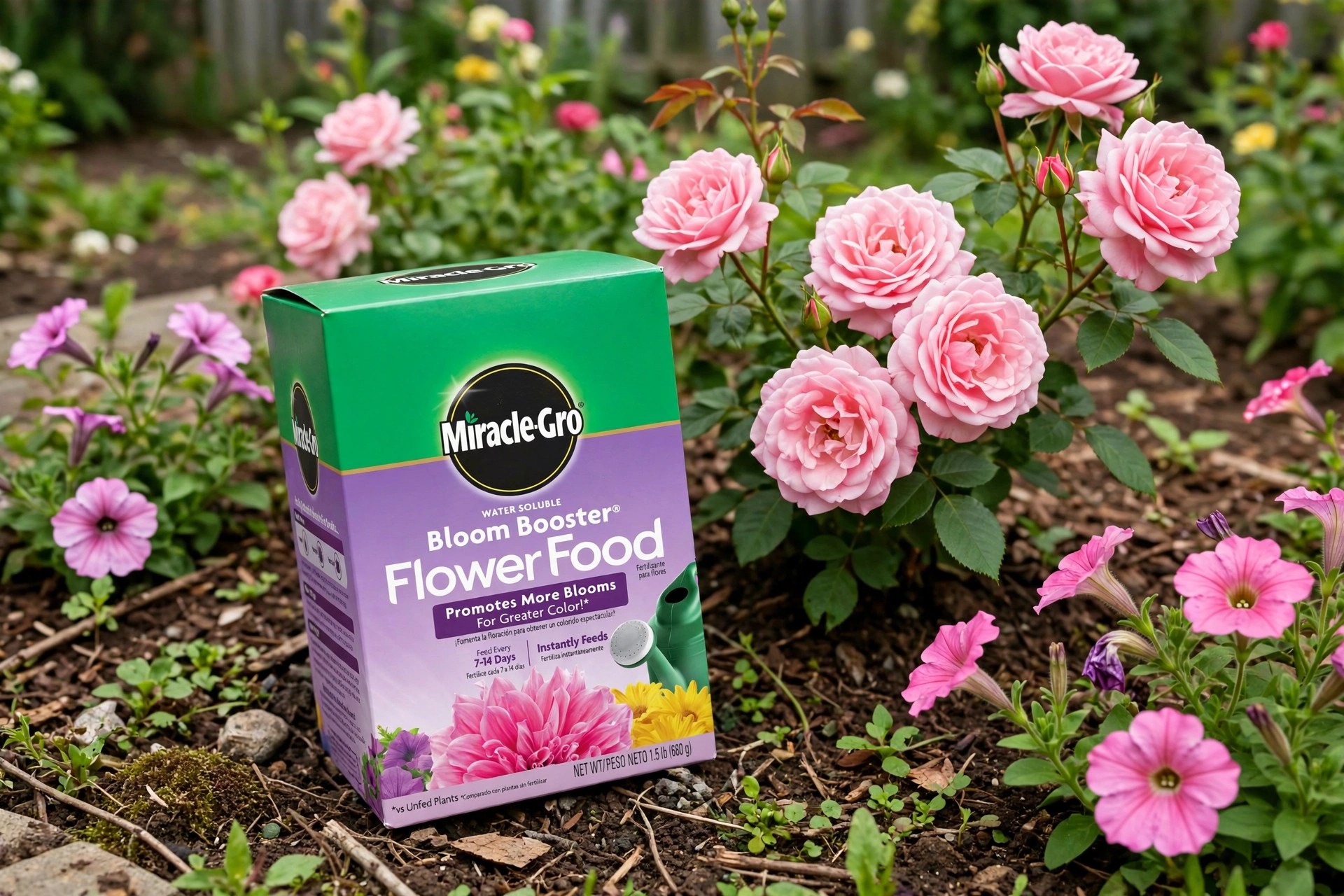
Bloom Booster is the flower specialist of the Miracle-Gro pair. The NPK is 15-30-15, with the middle number, phosphorus, doubled, which is the classic ratio for pushing blooms. Like its all-purpose sibling, it is a water-soluble powder you dissolve in water and feed like a liquid, from a watering can or a Garden Feeder on a hose. The label rate is 1 tablespoon per gallon outdoors, or half a teaspoon per gallon indoors, every 7 to 14 days. A 1.5 pound box feeds about 600 square feet, and a 5.5 pound box covers up to 2,200 square feet. It is sold in 1.5 lb and 5.5 lb sizes.
In our view, the results show fastest on annuals and container flowers, where a weekly feed keeps new buds opening all season. The maker claims only that it feeds instantly, so the visible part is the new flowers, not a sudden change in the old ones. You can use it on flowers, roses, vegetables, fruit, and houseplants, and in that order is roughly where it earns its keep. Real-world limitation: the high phosphorus suits flowers and fruit, but it is not the feed for a lawn or a leafy green. Use it for blooming plants and the NPK makes sense. Who should buy: anyone whose garden is mostly flowers and who wants to see more buds on the same plants, week after week. Its rating is 8.9 out of 10.
Search-found price: about $11.49 for the 1.5 lb box (ScottsMiracle-Gro site, checked 6 Nov 2026). The box feeds about 600 square feet, so one feeding of a 600 sq ft bed costs about $11.49.
What owners say: “I noticed such a difference on our outside flowers in a matter of days. This really helped them get more blooms.” (reviewer amandae1)
8. Espoma Organic Grow! Liquid Concentrate Plant Food 2-2-2
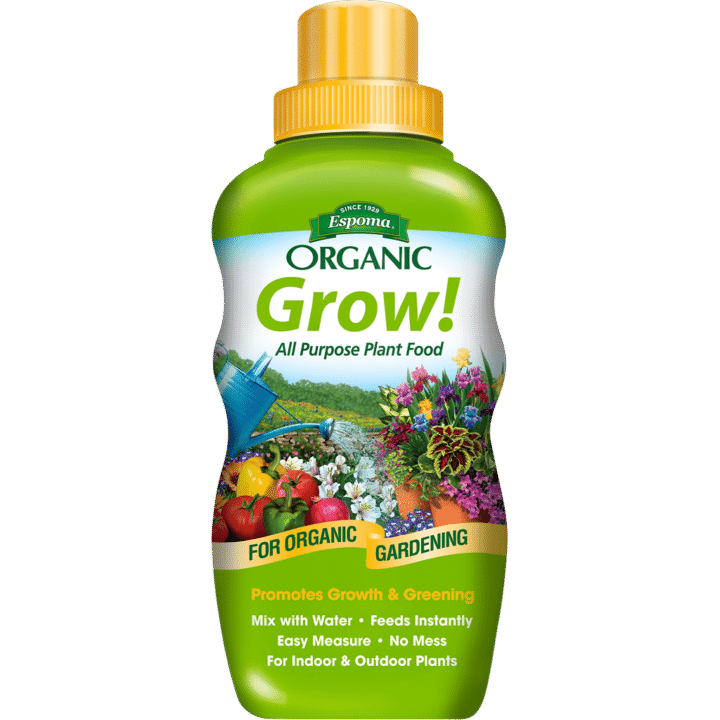
Espoma Grow! is the gentlest all-purpose feed in the guide, and the hardest to get wrong. The NPK is 2-2-2, fully balanced, made from hydrolysed poultry manure, soy protein, fish protein, bone meal, and kelp extract, with beneficial microbes in the mix. It is organic, and it feeds through a watering can as a soil drench at half a cap (2 teaspoons) per quart of water, repeated every 2 to 4 weeks through the growing season. It comes in a 16 ounce bottle. A 16 oz bottle makes up to 48 quarts of feed.
The low numbers are the point. A 2-2-2 feed will not burn seedlings, will not scorch container roots, and will not push soft, leggy growth that flops in the first wind. What it will do is keep everything fed steadily, which is what most mixed gardens actually need. Watch out for: it is too gentle for a rescue job. If a plant is already yellow and stalled, start with a stronger feed and switch to Espoma Grow! once it recovers. Who should buy: beginners, container gardeners, and anyone who has burned a plant before and never wants to do it again. Its rating is 8.8 out of 10.
Search-found price: $12.99 for 16 oz (Do it Best and Gertens, checked 6 Nov 2026). The bottle makes up to 48 quarts of feed, about $0.27 per quart.
What owners say: “Our plants have shown noticeable improvements in growth and overall health since we started using this product.” (PlantNative hands-on test)
9. Espoma Organic Indoor! Liquid Plant Food 2-2-2
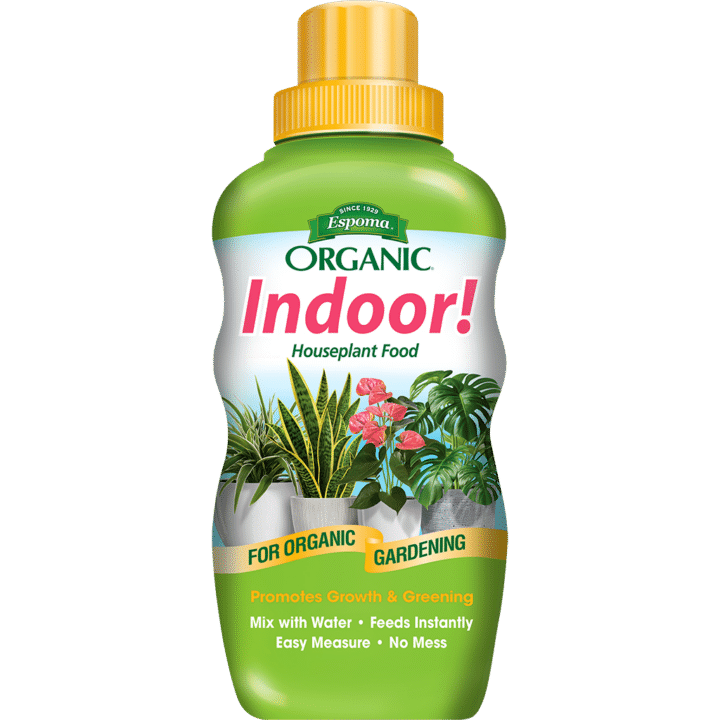
Indoor! is Espoma Grow!’s houseplant sibling, and the only pick here made specifically for plants that live indoors. The NPK is the same gentle 2-2-2, from the same organic ingredients, poultry manure, soy protein, fish protein, bone meal, and kelp, and it is approved for organic gardening (CDFA Organic Input Material). The dilution is half a cap, 2 teaspoons, per quart of water, fed as a thorough soil drench every 2 to 4 weeks during active growth. It comes in an 8 ounce concentrate bottle, also sold as a 2-pack by some retailers.
Houseplants are the easiest plants to burn, because excess salts have nowhere to go in a small pot, and this is the bottle that respects that. The maker names pothos, palms, fiddle-leaf fig, and monstera, and says it is for all houseplants. It also suits snake plant and ferns, and the low strength means a small measuring error stays harmless. Real-world limitation: it is strictly an indoor feed. It is too small and too gentle for garden beds, and feeding it in winter, when growth has stopped, only builds up salts in the pot. Who should buy: anyone with houseplants who wants one bottle, one dilution, and no guesswork. Its rating is 8.8 out of 10.
Search-found price: $7.99 for 8 oz (Gertens and Esbenshades, checked 6 Nov 2026). The bottle makes up to 24 quarts of feed, about $0.33 per quart.
What owners say: “It’s spring, plant feedings have begun, and my plants are very happy and green with new growth.” (customer review)
10. FoxFarm Big Bloom Liquid Plant Food 0-0.5-0.7
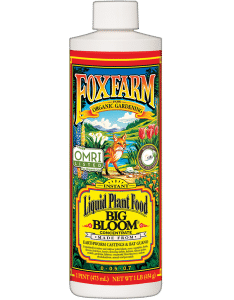
Big Bloom is the oddest bottle in the guide, and it needs explaining. The NPK is 0-0.5-0.7, almost no nitrogen, phosphorus, or potassium, and the formula is a blend of earthworm castings, bat guano, and kelp, in a liquid base. It is a bloom supplement, not a complete feed: it feeds the soil biology and the flowering process, but it does not replace a balanced fertilizer on its own. The general rate is 4 tablespoons per gallon, fed every 2 weeks, with 2 tablespoons per gallon for seedlings, and it can also be sprayed on leaves at 1 tablespoon per gallon. Sizes run from a pint to 2.5 gallons on the maker’s site, with 5-gallon and larger commercial sizes listed by retailers.
Think of it as a tonic, not a meal. Used with Grow Big, it covers the whole season: Grow Big for leaves, Big Bloom for flowers and fruit. Used alone, it will not feed a hungry plant. Who should buy: growers already using a base feed who want a gentle organic bloom supplement, especially for flowers and fruiting vegetables. Its rating is 8.7 out of 10.
Search-found price: $24.99 for 1 quart (Johnson’s Garden Centers, checked 6 Nov 2026). At the general rate of 4 tablespoons per gallon, a quart makes about 16 gallons of feed, about $1.56 per gallon.
What owners say: “Within two weeks, my plants looked noticeably healthier. My pothos and fiddle leaf fig grew faster, showing off lusher, greener leaves.” (ClaytonNotes test)
How We Chose These Liquid Fertilizers
We scored each product on six factors, weighted by what matters most for fast growth. Ratings are editorial, from verified manufacturer specifications and owner feedback. We did not test these products hands on, and no score comes from laboratory measurement.
| Factor | Weight | What we looked for |
|---|---|---|
| Feeding speed | 25% | How fast nutrients become available, and how soon growth responds |
| Ease of application | 20% | Measuring, mixing, hose-end or watering-can use, no special equipment |
| Versatility across plants | 20% | Vegetables, flowers, containers, lawns, and houseplants from one bottle |
| Organic credentials | 15% | OMRI listing, organic inputs, suitability for edible gardens |
| Value per feeding | 10% | Feedings per bottle at label rates, with the search-found price per feeding shown in each section |
| Safety margin against burn | 10% | Dilution guidance, burn warnings, gentleness on seedlings and containers |
A note on what we left out: Jack’s Classic All Purpose 20-20-20 was verified but dropped as a near-duplicate of the Miracle-Gro all-purpose slot and a powder, not a liquid. Schultz Liquid Plant Food 10-15-10 was dropped because its dilution conflicts between sources, with US sources saying 7 drops per quart and the Canadian maker site saying 7 drops per litre. GS Plant Foods Liquid Kelp was dropped because its NPK conflicts across sources and it is a biostimulant supplement, not a complete fertilizer. Dr. Earth Liquid Solution was dropped because no manufacturer page could be verified in this pass.
How to Apply Liquid Fertilizer Without Burning Plants
- Read the label first. The dilution rate is the whole job. A tablespoon per gallon and a teaspoon per gallon are very different feeds, and the label is the only authority.
- Water the soil before you feed. Apply liquid fertilizer to soil that is already moist, never to dry mix. Dry soil takes up salts fast and burns roots.
- Mix in a watering can, not in the bottle. Measure the concentrate into the can, add water, and stir. Never pour concentrate directly onto a plant.
- Pour at the base, not on the leaves. A soil drench puts nutrients at the roots. Foliar spraying is a separate technique with its own dilute rates, and it is not a substitute for soil feeding.
- Water lightly afterwards. A light watering after feeding washes the feed down to the roots and off the leaves, where dried salts cause burn.
- Feed in the cool of the day. Early morning or evening is best. Never feed in the heat of the afternoon, and never feed a plant that is already stressed by heat or drought.
- Wait, then repeat. A liquid feed lasts 2 to 3 weeks. Mark the date and feed again on schedule, rather than doubling the dose because the plant has not greened up yet.
If you suspect you have overfed, the signs are brown leaf tips and margins, wilting, and a whitish or brown crust on the soil surface. For containers, the fix is leaching: water heavily and let it drain away freely, washing the excess salts out of the pot. Washington State University Extension describes exactly these symptoms for fertilizer burn, and the same source warns that container plants are especially susceptible.
Mistakes That Waste Liquid Fertilizer
- Feeding dry soil. Fertilizer salts hit dry roots hard. Water first, feed second, every time.
- Doubling the dose for faster results. A stronger mix does not work faster. It burns roots, scorches leaves, and sets the plant back weeks.
- Feeding in the heat of the day. Midday sun dries spray on the leaf and stresses roots. Feed in the morning or the evening.
- Spraying leaves in direct sun. Foliar feeding belongs at dusk or in the early morning. Sun-dried spray is the fastest way to burn a leaf.
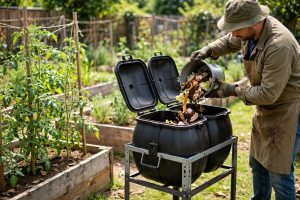
- Using liquid fertilizer instead of compost. Fertilizer supplies concentrated nutrients for a direct plant need. It does not add organic matter, build soil structure, or feed soil microbes. Compost does that work. Build the soil first with compost, then supplement with fertilizer.
- Feeding a plant that is not growing. A dormant houseplant in winter needs no feed at all. Fertilizer given to a plant that is not growing only builds up salts in the pot.
- Forgetting the second half of the season. Liquid fertilizer lasts 2 to 3 weeks per application. A single spring feed is not a feeding program. Feed every 1 to 2 weeks for containers and every 3 to 4 weeks for beds, all season long.
Final Choice
For most gardens, the Miracle-Gro All Purpose Plant Food 24-8-16 is the right first liquid fertilizer: the strongest balanced feed here, clear label rates, and it works on almost everything you grow. If you garden organically, Neptune’s Harvest Fish and Seaweed Blend 2-3-1 is the pick, gentle enough for seedlings and houseplants, and it feeds through leaves as well as roots. If your main crop is tomatoes and peppers, add AgroThrive Fruit and Flower 3-3-5 once the first flowers open. And if the job is a lawn, the Simple Lawn Solutions 16-4-8 bottle is the easiest feed you will ever apply: connect a hose and walk.
Whichever bottle you choose, the fertilizer is the smaller half of the job. The bigger half is the routine: the right dilution, moist soil, a cool time of day, and a repeat every one to two weeks while plants are growing. Get those four right, and any feed in this list will green up a pale garden in days.
References
- University of New Hampshire Extension, Fertilizing Vegetable Gardens: test soil before planting, vegetables grow best at pH 6.5 to 6.8, split quick-release fertilizer half before planting and the rest 4 to 6 weeks later, sidedress at the drip line. https://extension.unh.edu/resource/fertilizing-vegetable-gardens-fact-sheet
- University of Maryland Extension, Fertilizing Vegetables: nutrient needs and application guidance for vegetable gardens. https://extension.umd.edu/resource/fertilizing-vegetables/
- Michigan State University Extension, Fertilizer Basics for the Smart Gardener: how to read a fertilizer label and what the N-P-K numbers mean. https://www.canr.msu.edu/resources/fertilizer_basics_for_the_smart_gardener
- University of Delaware, Weekly Crop Update, foliar fertilizer guidance: spray at dusk or in the early morning, use a dilute 0.5 to 2 percent solution, avoid direct sun and heat. https://sites.udel.edu/weeklycropupdate/?p=8837
- Washington State University, Hortsense, Fertilizer burn: excess fertilizer salts damage roots, brown leaf tips and margins, scorched patches, container plants especially susceptible, leach by watering heavily. https://hortsense.cahnrs.wsu.edu/fact-sheet/common-cultural-fertilizer-burn/
Frequently Asked Questions
What is the best liquid fertilizer for fast growth?
The Miracle-Gro All Purpose Plant Food 24-8-16 is the best liquid fertilizer for most gardens: the strongest balanced feed in this guide, with clear label rates. It feeds instantly, and owners often report visible greening within about a week. For organic gardens, Neptune’s Harvest Fish and Seaweed Blend 2-3-1 is the best organic choice, and for lawns, Simple Lawn Solutions 16-4-8 is the easiest to apply.
How fast does liquid fertilizer work?
Colour improvement is often visible within a week or two, because the nutrients are already dissolved and available to roots at once. A granular fertilizer typically takes 7 to 14 days for visible results, since the granules must dissolve and move into the root zone first. A liquid feed lasts only 2 to 3 weeks per application, so it needs reapplying more often than a granular feed.
Can I use liquid fertilizer on indoor plants?
Yes. Use a gentle feed made for indoor use, such as Espoma Indoor! at half a cap per quart of water, every 2 to 4 weeks while the plant is actively growing. Always feed into moist soil, never into dry mix, and skip feeding entirely in winter when growth stops. Houseplants are the easiest plants to burn, because excess salts have nowhere to go in a small pot.
Is liquid fertilizer better than granular fertilizer?
It is faster and easier to control, but it does not last as long. Liquid fertilizer is best when a plant needs nutrients right now, and when you want to feed containers and houseplants on a regular schedule. Granular fertilizer is best for season-long background feeding with fewer applications. Many gardeners use both: granular at planting, liquid through the growing season.
Can liquid fertilizer burn plants?
Yes, if it is over-applied or applied to dry soil. Excess fertilizer salts damage roots and draw moisture out of plant tissue, causing brown leaf tips and margins, wilting, and scorched patches. Avoid it by following the label rate, feeding moist soil, and watering lightly afterwards. For containers, leach out excess salts by watering heavily and letting the pot drain freely.
Can I foliar feed vegetables?
Yes, as a quick correction, not as a replacement for soil feeding. Spray a dilute 0.5 to 2 percent solution at dusk or in the early morning, when temperatures are moderate and the spray stays liquid on the leaf. Never spray in direct sun or heat, and use only a soluble-grade fertilizer at the label’s foliar rate.

Thesis Link : https://saulibrary.edu.bd/daatj/public/uploads/BAU200601_19-Pp_5.pdf
- How to Grow Peppers from Seed: A Step by Step Guide for Beginners - November 7, 2026
- Best Liquid Fertilizers for Fast Growth: 10 Picks That Feed Fast - November 6, 2026
- How to Grow Tomatoes from Seed: A Step by Step Guide for Beginners - November 6, 2026