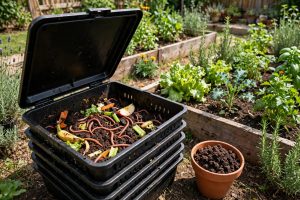
A vegetable bed without mulch works against you. The sun dries the top inch of soil by mid-morning, rain splashes soil onto low leaves, and every weed seed in the neighborhood treats bare ground as an invitation. A good mulch flips all three problems at once. It shades the soil, holds moisture where roots can reach it, and keeps fruit clean and off the dirt. The best mulch for vegetable garden beds does one more thing: it breaks down over the season and leaves the soil better than it found it.
That last point is what separates a vegetable garden mulch from a landscape mulch. In a vegetable bed, the mulch has to be easy to push aside when you transplant, easy to work into the soil at the end of the season, and safe to use around food. Fresh wood chips usually do not fit that job, and dyed mulches made from unknown recycled wood do not belong near food crops at all.
This roundup compares ten mulch products you can buy in the United States, using manufacturer specifications and owner feedback. Every bag size, coverage figure and material claim below comes from the maker’s own listing or a retailer page, and where sources disagree we say so instead of printing the bigger number. No mulch here was tested in our own garden. Scores are editorial, worked out from the scoring system in the How We Chose section.
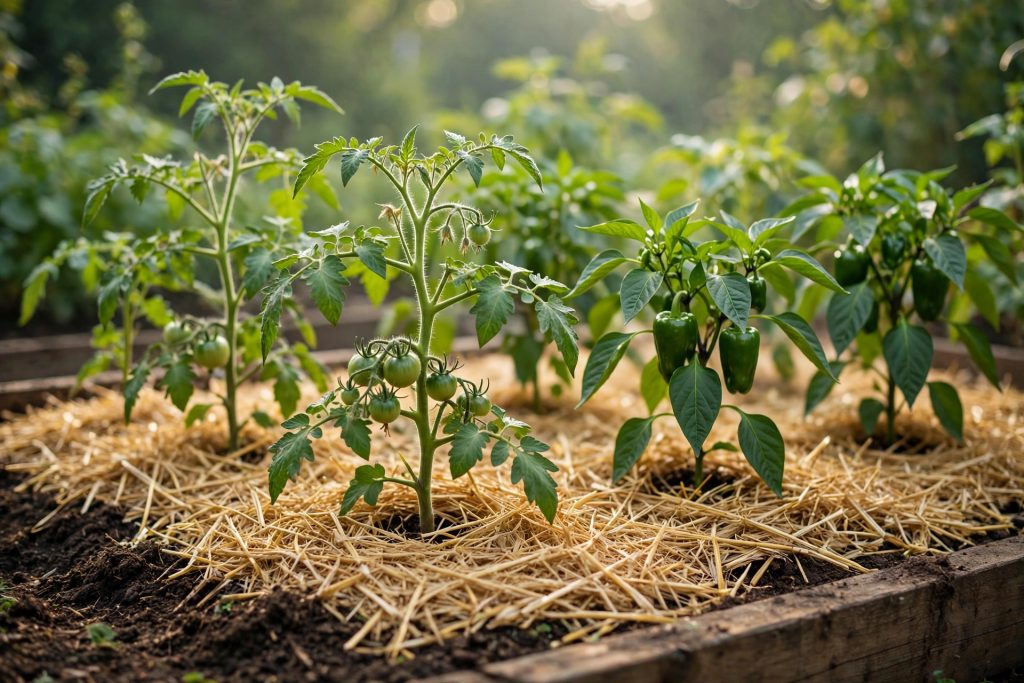
Quick Recommendation
Short on time? Here is the fast answer.
- Best overall: HealthiStraw GardenStraw. Cleaned wheat straw in a 3 cubic foot bale, made for vegetable beds, and it stays put once watered.
- Best value straw: EZ-Straw Seeding Mulch with Tack. A 2.5 cubic foot bale with a natural tackifier that holds the straw in place on windy beds and slopes.
- Best pine straw: Georgia Pine Straw Premium Longleaf Pine Straw Mulch in a Box. Longleaf needles that knit together, in a box that covers about 50 square feet at 3 inches deep.
- Best bark for paths and bed edges: Timberline Cedar Mulch. Slow to break down, smells good, and keeps its color, so it suits the edges and paths around vegetable beds.
- Best for tomatoes: Hull Farm Cocoa Bean Shell Mulch. A 1 to 2 inch layer feeds the soil as it breaks down, but keep it away from dogs: cocoa shells contain theobromine, the compound that makes chocolate toxic to dogs, and the ASPCA warns it can cause a rapid heart rate, tremors and seizures.
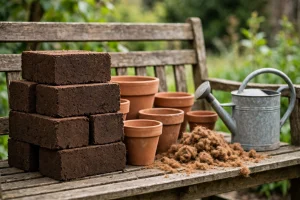
- Best for small beds and containers: Back to the Roots Organic Coconut Husk Mulch. A 10 pound block expands to 2 cubic feet, so it stores on a shelf and opens when you need it.
Best Mulches for Vegetable Gardens Compared
| Product | Type | Bag/Bale Size | Coverage | Best For | Our Rating |
|---|---|---|---|---|---|
| HealthiStraw GardenStraw | Wheat straw | 3 cu ft bale (20 lb) | Up to 100 sq ft at 2 to 3 in (maker claim) | Everyday vegetable beds | 9.6 |
| EZ-Straw Seeding Mulch with Tack | Processed straw with tackifier | 2.5 cu ft bale | Up to 500 sq ft at thin seeding depth (maker claim; see note) | Windy beds and slopes | 9.2 |
| Georgia Pine Straw Premium Longleaf Pine Straw Mulch in a Box | Longleaf pine straw | Box, about 15 lb | About 50 sq ft at 3 in | Slopes and acid-loving crops | 9.0 |
| Timberline Cedar Mulch | Cedar bark | 2 cu ft bag | About 8 sq ft at 3 in | Paths and bed edges | 8.8 |
| Scotts Earthgro Pine Bark Nuggets | Pine bark nuggets | 2 cu ft bag | About 8 sq ft at 3 in | Perennial beds and asparagus | 8.7 |
| Hull Farm Cocoa Bean Shell Mulch | Cocoa bean shells | 2 cu ft bag | About 12 sq ft at 2 in | Tomatoes and peppers | 8.6 |
| Back to the Roots Organic Coconut Husk Mulch | Coconut husk | 10 lb block, expands to 2 cu ft | About 8 sq ft at 3 in once expanded | Containers and small beds | 8.5 |
| FibreDust Coco Mulch | Shredded coconut husk | 11 lb bag | 2.2 to 2.5 cu ft, about 8 to 10 sq ft at 3 in | Raised beds and pots | 8.3 |
| Wyoming Hemp Company Hemp Guard | Industrial hemp | Bag size not published | Not published | Organic and low-waste gardens | 8.2 |
| Scotts Earthgro Mulch | Shredded hardwood | 1.5 cu ft bag | About 6 sq ft at 3 in | Budget beds and borders | 8.0 |
A note on straw coverage claims: straw bales are sold compressed and fluff up when opened, so do not compare a straw coverage number with a bark coverage number as if they measured the same thing. The table reports each maker’s own claim.
1. HealthiStraw GardenStraw
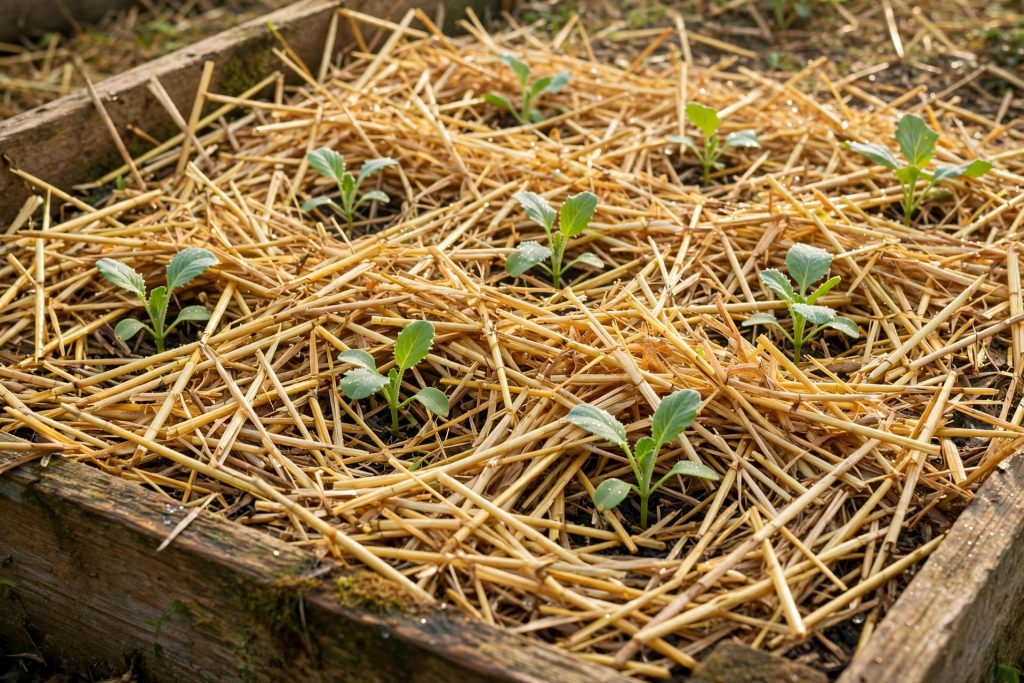
GardenStraw is 100 percent wheat straw, cleaned to remove dust, dirt and as many seeds as possible, packed into a 3 cubic foot bale that weighs 20 pounds. The maker notes that not all wheat seeds are removed, so a few may still sprout.
The straw is cut so the fibers interlock when watered, so it stays where you put it. The maker states one bale covers up to 100 square feet at a 2 to 3 inch layer, because the 3 cubic foot bale fluffs to about 25 to 30 cubic feet loose once opened. It goes down fast, it is easy to push aside for transplanting, and at season’s end it breaks down quickly and can be turned into the bed or added to compost.
Price and value: $25.99 for the 3 cubic foot bale at Greenhouse Megastore, about $0.26 per square foot at garden depth, the cheapest per square foot in this roundup.
Owner feedback: Greenhouse Megastore buyers rate it 4.34 out of 5 from 68 ratings, praising moisture retention and how the straw stays in place once watered. Some owners report wheat seeds sprouting, others report none.
Rating rationale: GardenStraw scores 9.6 because it leads on weed suppression and moisture retention as a thick, clean straw made for food beds, it is safe for vegetable beds with no dye or chemical treatment, and at about $0.26 per square foot it is also the best value in the roundup.
Real-world limitation: Straw breaks down within a single season, so a spring application will be thin by late summer and will need a top-up. It can shelter slugs in a wet year if piled thick against stems. Clean straw is not a guarantee against herbicide residue, so check with the supplier whether the straw was sprayed, especially with persistent herbicides, before using it around food crops.
Who should buy: Any vegetable gardener who wants the safest, simplest mulch for food beds, especially for raised beds, strawberries and squash.
2. EZ-Straw Seeding Mulch with Tack
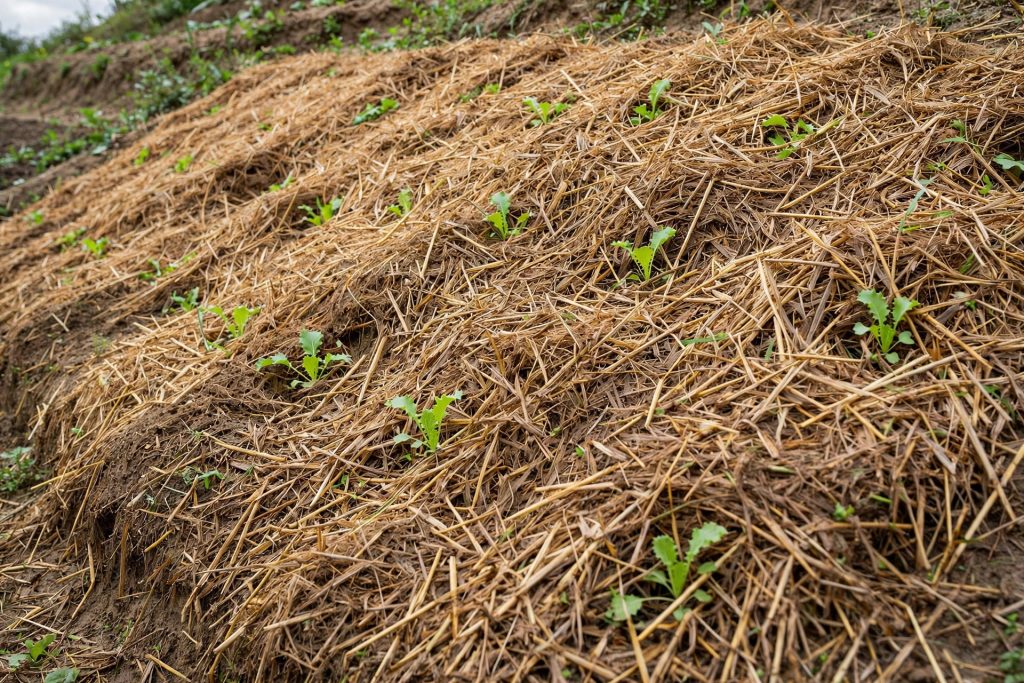
EZ-Straw adds a food-grade natural tackifier to processed straw. Once spread and watered, the tack helps the fibers bond into a light mat that resists wind and rain, which matters on slopes and windy sites. It is made by Rhino Seed and Landscape and sold as a 2.5 cubic foot bale.
The coverage figures need a warning: Home Depot states the bale covers up to 600 square feet, and a second listing for the same product states up to 500 square feet, and both numbers describe a thin seeding layer of about a quarter inch over new grass seed. Neither describes a 2 to 3 inch vegetable garden layer. We use the conservative 500 square foot figure, and only for the seeding depth the maker measured. For a vegetable bed at 2 to 3 inches deep, plan on one bale covering roughly a single 4 by 8 foot bed.
- Best for: Sloped beds, windy gardens, and anyone who has watched plain straw blow away.
- Real-world limitation: The listed coverage numbers are seeding-depth numbers, not garden-depth numbers, so first-time buyers often under-order. Spread the straw dry and water it after, not before, or it clumps.
- Who should buy: Gardeners on exposed or sloped ground, and anyone mulching a new bed before the plants have grown tall enough to shelter it.
Price and value: $16.97 for the 2.5 cubic foot bale at Home Depot, about $0.53 per square foot at garden depth, with one bale covering roughly a single 4 by 8 foot bed.
Owner feedback: Home Depot buyers rate it 4.6 out of 5 from 614 reviews. It is praised for grass seed on slopes, but vegetable gardeners report wheat seeds sprouting heavily, with one owner writing that they spend about an hour every morning pulling wheat sprouts.
Rating rationale: EZ-Straw scores 9.2 because the tackifier makes it the strongest option in the roundup for weed suppression and moisture retention on slopes and windy beds, but it loses points on safety for food beds because owners report wheat seeds sprouting in vegetable beds, and on value because at garden depth it covers only about one 4 by 8 foot bed per bale. The two facts sit together: the tackifier holds the mulch in place and smothers the weeds already in the bed, which is why it scores highest on weed suppression, while the wheat seeds inside the straw itself can sprout and need pulling.
3. Georgia Pine Straw Premium Longleaf Pine Straw Mulch in a Box
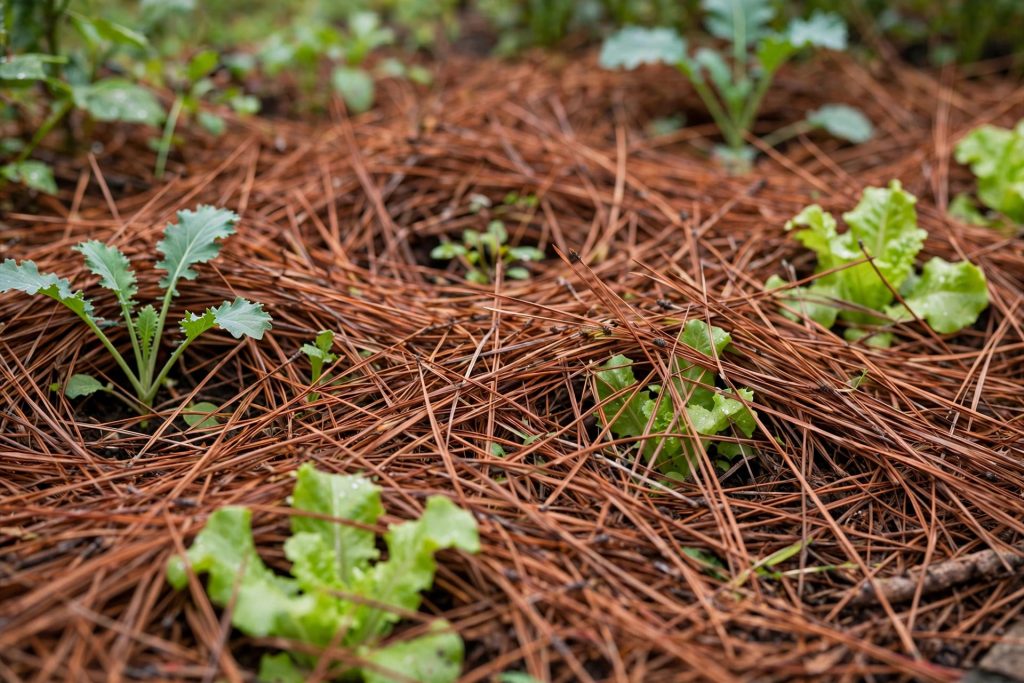
Pine straw is the mulch of the American Southeast, and this boxed version from Georgia Pine Straw is the easiest way for a gardener outside the region to get it. The box holds longleaf pine needles, the longest and springiest kind, sourced from Southeast Georgia pines and cleaned before packing. One box weighs about 15 pounds, measures 24 by 16 by 16 inches, and covers about 50 square feet at a 3 inch depth, according to the maker. The maker’s own page states 150 square feet per standard box, without naming a depth.
That figure is the same volume spread at about 1 inch deep, so 50 square feet at 3 inches is the honest garden-depth figure for the same box. The volume math: one standard box holds about 12.5 cubic feet fluffed. At 1 inch deep that covers about 150 square feet, and at 3 inches deep it covers about 50 square feet. The maker’s 150 square feet and the draft’s 50 square feet are the same box at different depths. That lines up with the general rule that a standard pine straw bale covers roughly 40 to 50 square feet at the same depth. Longleaf needles knit together as they settle, so the mulch stays put on slopes and lets water through easily while shading the soil. It breaks down slowly, so one spring application usually lasts the season. The needles are slightly acidic, but their effect on soil pH is minor, and extension guidance treats pine straw as suitable for ordinary vegetable beds. Pine straw is acidic when fresh, but once it breaks down it has little lasting effect on soil pH, so do not count on it to acidify your soil.
Price and value: $69 for the natural standard box at the maker’s own site (was $86.25), about $1.38 per square foot at garden depth. The maker’s headline figure of 150 square feet is at a much thinner depth.
Owner feedback: No independent owner feedback was found for this product, so the score below is editorial only.
Rating rationale: Georgia Pine Straw scores 9.0 because longleaf needles knit together for strong weed suppression and moisture retention, and they break down into useful organic matter for soil benefit, but it loses on value at about $1.38 per square foot at garden depth, and it suits perennial beds better than annual beds. The score rests on the maker’s published specifications, since no independent owner feedback was found.
Real-world limitation: Pine straw is fiddly to spread evenly around small seedlings, and it does not feed the soil as fast as straw or compost. Outside the Southeast, shipping costs more per square foot than a local straw bale.
Who should buy: Gardeners with sloped beds, anyone in the Southeast who can buy it locally, and growers of blueberries and other acid-loving crops.
4. Timberline Cedar Mulch
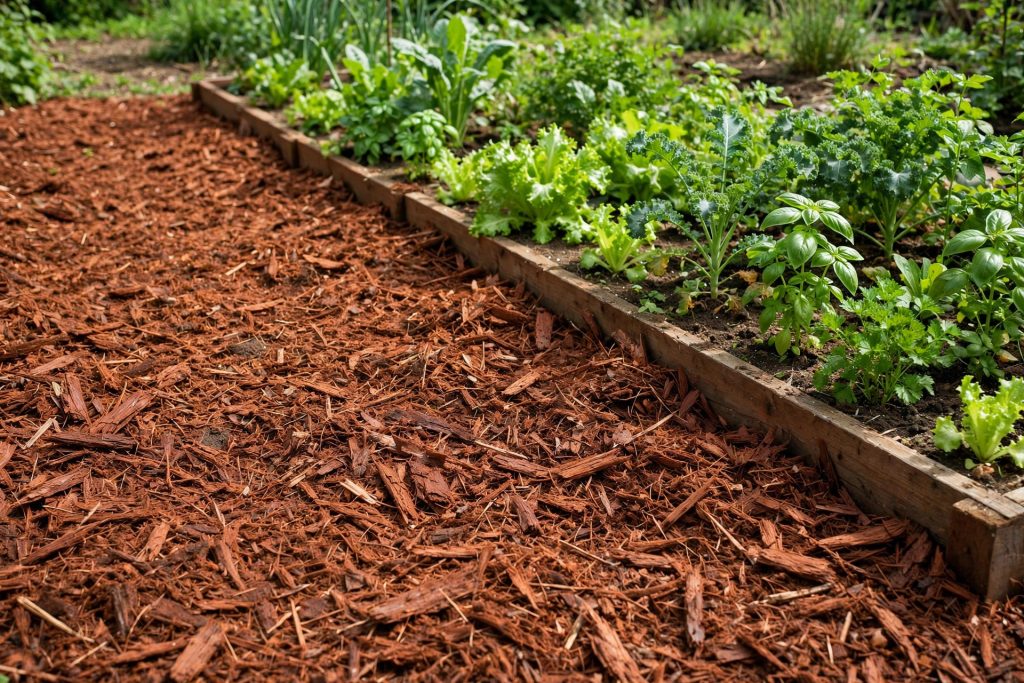
Cedar mulch is the long-distance runner of this list. It is a shredded cedar blend, sold in a standard 2 cubic foot bag, and it breaks down far more slowly than straw, leaves or cocoa shells. A 2 cubic foot bag covers about 8 square feet at a 3 inch depth, which is the standard volume math for any bagged bark. Cedar keeps its reddish-brown color longer than most bark mulches, it smells pleasant when fresh, and it is naturally resistant to insects.
That longevity is also why we recommend it for the edges and paths around vegetable beds rather than for the beds themselves: a vegetable bed needs a mulch that breaks down and feeds the soil within the season, and cedar holds its shape for two to three years. On paths between beds, though, it is excellent. It keeps feet dry, suppresses weeds, and needs no yearly replacement. The Timberline bag is Mulch and Soil Council certified.
Price and value: No current price was firmly verified. The last verified figures were about $3.50 to $4.50 a bag at big-box stores, and prices vary by store.
Owner feedback: Home Depot buyers rate it 4.2 out of 5 from 1,588 reviews. Owners note it is a cedar blend, not 100 percent cedar, and some report no cedar smell.
Rating rationale: Timberline Cedar scores 8.8 because it leads on ease of application and weed suppression as a long-lasting mulch that holds its color and needs no yearly replacement, but it loses on soil benefit because it breaks down too slowly to feed an annual vegetable bed within the season, and on safety for food beds because the bag is a cedar blend, not pure cedar.
Real-world limitation: Cedar is the wrong mulch inside an annual vegetable bed. It lasts too long and is slow to feed the soil. Keep it on paths and borders, not between your tomato plants.
Who should buy: Gardeners who want tidy, long-lasting paths and bed edges around the vegetable garden, and anyone mulching perennial plantings next to the vegetable beds.
5. Scotts Earthgro Pine Bark Nuggets
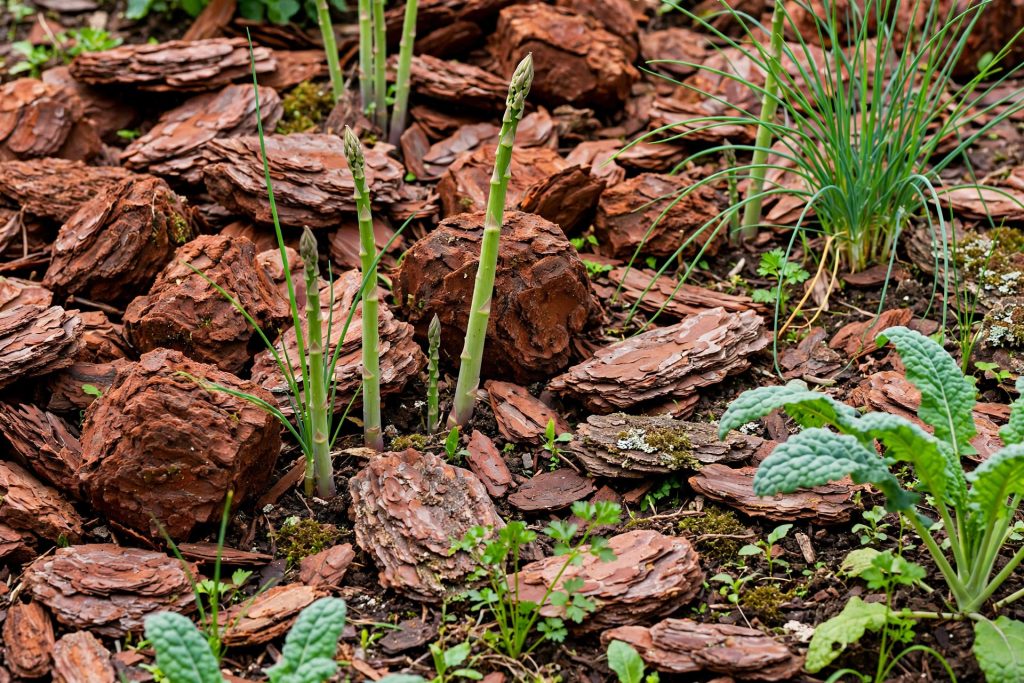
Pine bark nuggets are the chunky cousin of shredded bark. The pieces are large, reddish-brown, and they hold their shape through rain and watering instead of matting down. Scotts sells them as Earthgro Pine Bark Nuggets in a 2 cubic foot bag, and like every 2 cubic foot bag of bark, one bag covers about 8 square feet at a 3 inch depth. Big pieces mean big air gaps, so water passes through freely and the mulch layer breathes.
That is good for plants that hate wet feet, and it is why nuggets work well around asparagus, rhubarb and other perennial vegetables that stay in the same bed for years. The trade-off is that nuggets are a poor fit for annual vegetable beds. They are hard to push aside for transplanting, awkward to work into the soil at season’s end, and seedlings struggle to push through a layer of 2 to 3 inch chunks. Iowa State Extension puts bark mulches around trees, shrubs, roses and perennial beds for exactly this reason.
- Best for: Asparagus beds, rhubarb, perennial herbs, and the permanent plantings at the edge of the vegetable garden.
- Real-world limitation: The large pieces can float away on a slope in a heavy rain, and they are not comfortable to kneel on, which matters in a bed you work in every week.
- Who should buy: Gardeners with perennial vegetable beds, and anyone who wants a mulch that stays put for two or more seasons without topping up.
Price and value: No current price was verified. Price guides put pine bark nuggets at about $5 to $8 a bag, and a July 2026 store sign showed $5.27.
Owner feedback: No independent owner feedback was found for this product, so the score below is editorial only.
Rating rationale: Earthgro Pine Bark Nuggets scores 8.7 because the nuggets suppress weeds and hold moisture well and last two to three years, but it loses on soil benefit and ease of application inside an annual bed because the pieces are hard to plant through and break down too slowly to feed the soil in one season. The score rests on the maker’s published specifications, since no independent owner feedback was found.
6. Hull Farm Cocoa Bean Shell Mulch
Warning for dog owners: cocoa shell mulch is toxic to dogs. It contains theobromine, the same compound that makes chocolate toxic to dogs, and its chocolate smell attracts them to eat it. The ASPCA warns that eating it can cause a rapid heart rate, tremors and seizures, and very large amounts can be fatal. Do not use this mulch anywhere a dog can reach it. If your dog eats cocoa shell mulch, call your vet or the ASPCA Animal Poison Control Center at (888) 426-4435 at once.
That risk is about dogs eating the mulch, not about the garden: cocoa shell mulch feeds the soil as it breaks down, with an NPK of 2.5-1-3, and it is safe for the plants themselves. Keep it in beds dogs cannot reach, and it works as a normal mulch.
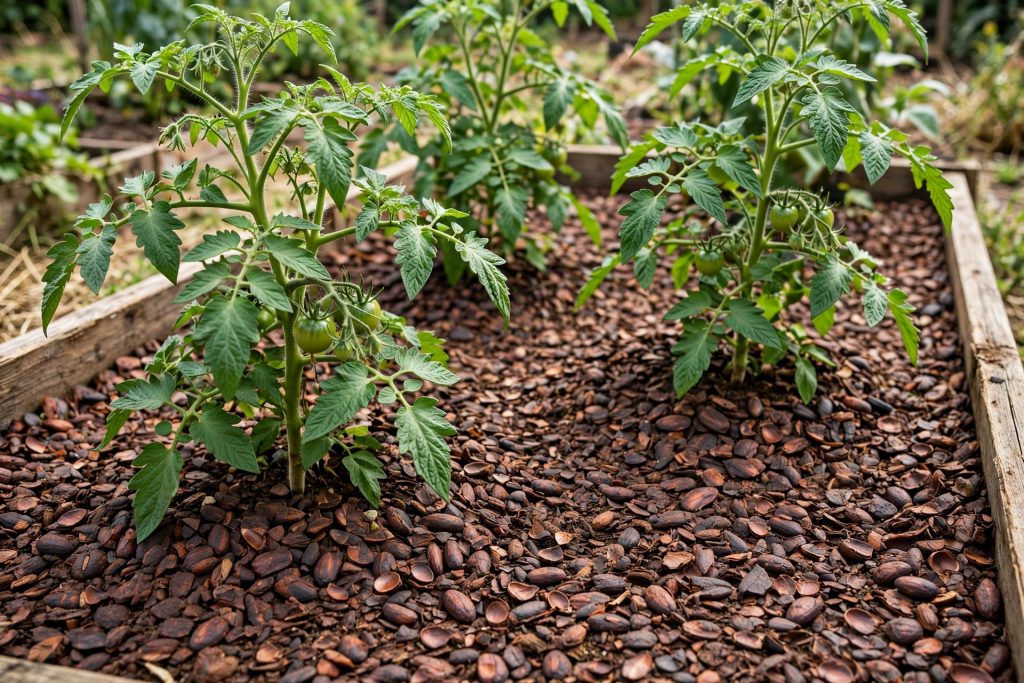
Cocoa bean shell mulch is the prettiest mulch on this list. It is made from the outer shells of cocoa beans, a by-product of chocolate making, and it comes in a 2 cubic foot bag. The shells are small, light and dark brown, they smell faintly of chocolate for the first week or two, and they settle into a neat, even layer. Spread it 1 to 2 inches deep, which is the depth Iowa State Extension recommends for cocoa shells, and one bag covers about 12 square feet. Go thicker than 2 inches and the shells can mat together when wet, which keeps water from reaching the soil.
The maker states an approximate fertilizer value of 2.5-1-3 for the shells, and notes that they add nutrition to the soil as they break down. That is a modest feed, not a fertilizer, but it is one reason cocoa shell mulch suits tomatoes and peppers. There is one hard rule with this product, and it is not negotiable. Cocoa bean shells contain theobromine and caffeine, the same compounds that make chocolate toxic to dogs. Dogs that eat cocoa shell mulch can become seriously ill. If you have a dog that digs or chews in the garden, do not use this mulch.
Price and value: $46.79 for the 2 cubic foot bag at Target, about $3.90 per square foot at the 2 inch depth the draft uses, the highest cost per square foot in the roundup. Local garden centers have listed it near $23 a bag.
Owner feedback: Target buyers rate it 4.7 out of 5 from 40 ratings. They report the mulch resists wind and breaks down within a season, but some report a sour smell while it is still wet.
Rating rationale: Hull Farm Cocoa scores 8.6 because it leads the roundup on soil benefit with an NPK of 2.5-1-3 and holds moisture well, but it loses heavily on safety for food beds in any household with a dog because cocoa shells are toxic to dogs, and on value at about $3.90 per square foot, the highest in the roundup.
Real-world limitation: Besides the dog risk, cocoa shells can grow mold in warm, wet weather if they stay constantly damp, and they cost more per square foot than straw or bark. They are a one-season mulch.
Who should buy: Dog-free households that grow tomatoes, peppers and other heavy feeders, and gardeners who want a mulch that looks as good as it works on a small, visible bed.
7. Back to the Roots Organic Coconut Husk Mulch
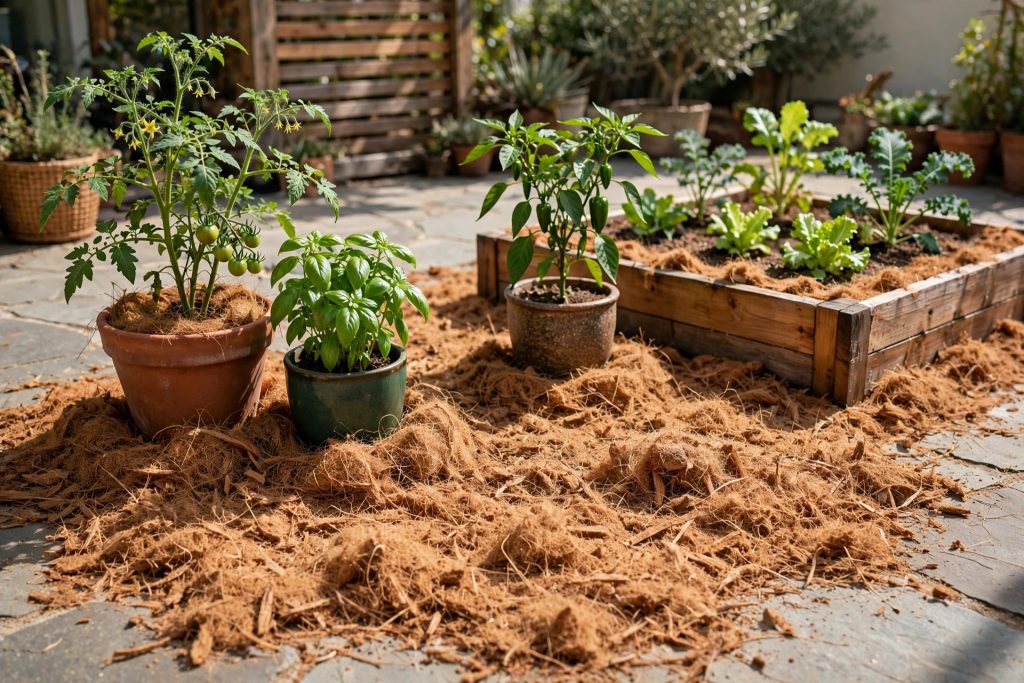
Back to the Roots sells its coconut husk mulch as a compressed block, and that format is the product’s main advantage. The block weighs 10 pounds and expands to about 2 cubic feet (15 gallons) when you add water. It stores on a shelf for years, it weighs little in the car, and you open exactly as much as you need. OMRI listed means the product has been reviewed by the Organic Materials Review Institute and is allowed for use in certified organic production. OMRI does not certify the product itself as organic. It is made from coconut husks with no added dyes.
Once expanded, the husk mulch holds moisture well, suppresses weeds, and breaks down over time to feed the soil. At 2 cubic feet expanded, one block covers about 8 square feet at a 3 inch depth, the same as a standard 2 cubic foot bag of bark. That makes it a small-bed product, not a whole-garden product. A gardener with four large beds would need many blocks, and at that point straw bales are the practical choice. But for containers, a single raised bed, or a small urban garden, one block is often exactly enough.
Price and value: $29.99 for the 10 pound block at the maker’s own store, currently out of stock. A related Back to the Roots 10 pound coir block is listed at Home Depot at $19.65. At the maker’s price that is about $3.75 per square foot at garden depth.
Owner feedback: No independent owner feedback was found for this product, so the score below is editorial only.
Rating rationale: Back to the Roots scores 8.5 because it is OMRI listed with no dyes, so it leads on safety for food beds, and it is easy to store and apply, but it loses on value at about $3.75 per square foot and on coverage, since one block covers only about 8 square feet at garden depth. The score rests on the maker’s published specifications, since no independent owner feedback was found.
Real-world limitation: You must soak and expand the block before use, which takes time and a large container, and the coverage per block is small. Rinse the expanded mulch if you are using it around salt-sensitive seedlings, because unwashed coir can carry salt.
Who should buy: Container gardeners, small-space growers, and anyone with one or two raised beds who values storage and convenience over bulk coverage.
8. FibreDust Coco Mulch
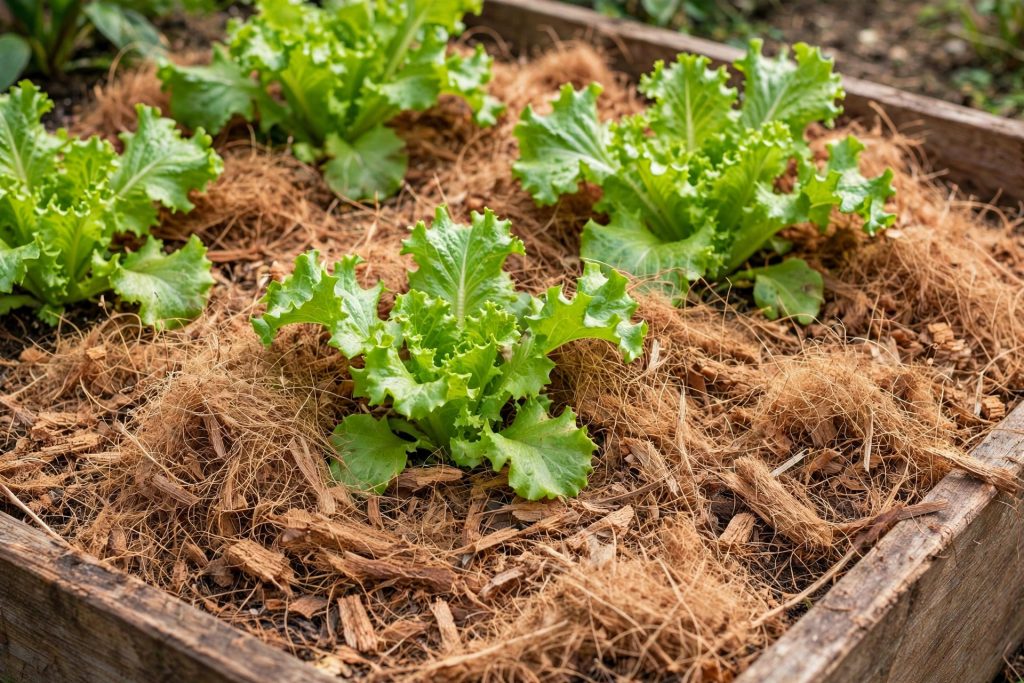
FibreDust Coco Mulch is shredded coconut husk, sold as a compressed 11 pound block, 12 by 12 by 6 inches, that expands with water. So plan for some waiting: the block must be soaked, expanded and rinsed before it can be spread, unlike a loose bagged mulch you open and use at once. The pieces are larger than coir pith and smaller than bark nuggets, a size that sits well around leafy greens and young plants without smothering them. The honest gap in this listing is coverage.
The maker publishes the expansion as 2.2 to 2.5 cubic feet, which covers about 8 to 10 square feet at 3 inches of depth. A bag of shredded husk is best treated as enough for a small raised bed or a few containers, and the right move is to buy one bag, spread it at 2 to 3 inches, measure what it covered, and then order the rest with a real number in hand. Coir holds water well without turning soggy, and it breaks down slowly enough to last the season while still feeding the soil as it decays.
- Best for: Raised beds and containers where you want a coir mulch and do not mind soaking the block first.
- Real-world limitation: The block must be soaked, expanded and rinsed before use, so it is not a grab-and-spread mulch.
- Who should buy: Raised bed gardeners who like coir and are happy to soak the block first, and container growers who need a small, tidy block of mulch.
Price and value: about $25 for the 11 pound block, about $3.12 per square foot at garden depth. Prices vary by retailer.
Owner feedback: No independent owner feedback was found for this product, so the score below is editorial only.
Rating rationale: FibreDust scores 8.3 because coir holds moisture very well and lasts two to three years for weed suppression, but it loses on value at about $3.12 per square foot and on ease of application because the block must be soaked, expanded and rinsed before use. The score rests on the maker’s published specifications, since no independent owner feedback was found.
9. Wyoming Hemp Company Hemp Guard
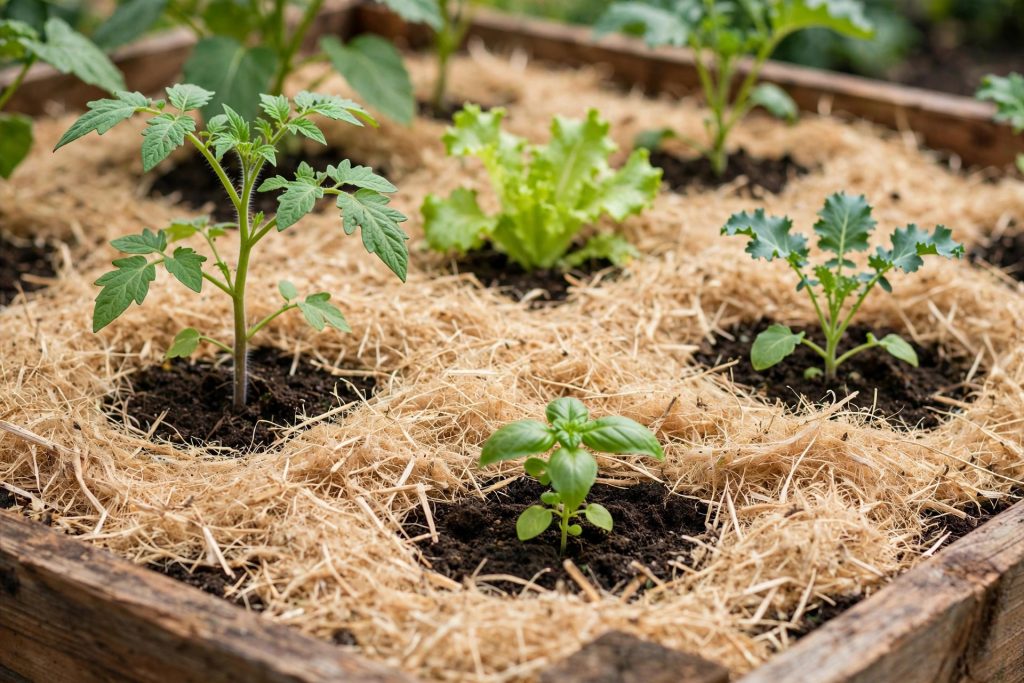
Hemp Guard is the newcomer on this list, and it is the most interesting one. It is made entirely from 100 percent industrial hemp, grown and milled in the United States, and it is sold in bags that are ready to spread. The maker describes it as all-natural and biodegradable, with no synthetic dyes and no chemicals, and it is designed for vegetable gardens, containers and raised beds as well as flower beds. Hemp mulch works the way a good straw mulch works, with a few differences. The fibers hold moisture in the soil well, they form a dense enough mat to block light from weed seeds, and they break down into organic matter that feeds the soil.
Hemp fiber is also notably clean to handle: it is light, it does not have the dust that straw sometimes carries, and it spreads evenly without clumping. No independent owner feedback was found for this newer product, so the score below is editorial only. The gap to flag is that the maker does not publish a bag size in cubic feet or a coverage figure, and we do not invent either. The bag is a 33 pound jumbo bag, per the brand’s own graphic.
Price and value: $69.99 for one bag at the maker’s own store. The maker publishes no coverage figure, so no cost per square foot can be worked out honestly.
Owner feedback: No independent owner feedback was found for this product, so the score below is editorial only.
Rating rationale: Hemp Guard scores 8.2 because it is 100% natural industrial hemp with no dyes or chemicals, so it leads on safety for food beds and feeds the soil as it breaks down, but it loses on value at $69.99 a bag with no published coverage figure, and the score rests on maker claims alone because no independent owner feedback was found.
Real-world limitation: No published bag size or coverage, limited availability outside the maker’s own channels, and a shorter track record than straw or bark. It also costs more per square foot than a straw bale.
Who should buy: Gardeners who want a low-waste, US-grown, chemical-free mulch and are happy to try a newer product, and anyone with a small organic garden who values the sustainability story as much as the mulch itself.
10. Scotts Earthgro Mulch
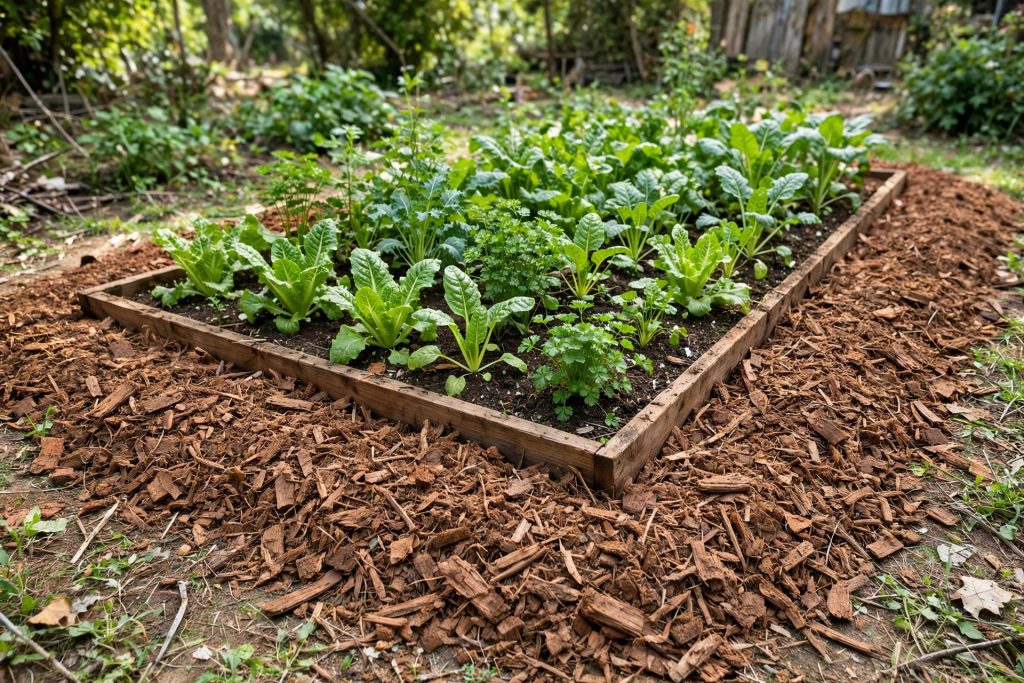
Earthgro is the bag most American gardeners have actually bought, because it is in every home improvement store in the country. It is shredded hardwood mulch from forest products, made by Scotts, and it helps conserve soil moisture, moderate soil temperature and prevent weeds when applied at a 3 inch depth. There are two things to know before you buy it for a vegetable garden. First, the bag size. Older listings describe Earthgro as a 2 cubic foot bag, but the current retail bag in the United States is 1.5 cubic feet.
That matters, because a 1.5 cubic foot bag covers only about 6 square feet at a 3 inch depth, not 8. We use the current 1.5 cubic foot figure, and we flag the conflict because a gardener who plans from an old 2 cubic foot listing will under-order by a quarter. Second, Earthgro is sold in color-enhanced versions, brown, black and red, as well as natural.
For a vegetable bed, choose the natural, undyed version. If the source and ingredients of a dyed mulch are unknown, do not use it in a food bed; use the natural undyed version instead. The natural version avoids that question entirely. As a mulch, shredded hardwood is solid and unexciting: it suppresses weeds well, holds moisture, and breaks down over a season or two.
Price and value: $3.97 a bag at Home Depot, the regular price, with frequent sales at $2.00 a bag. At the regular price that is about $0.66 per square foot at garden depth, and about $0.33 per square foot at the sale price, the cheapest per square foot in the roundup at sale price.
Owner feedback: Home Depot buyers rate it 4.3 out of 5 from about 41,200 reviews. The review pool is shared across Earthgro colors, and only 48 percent of reviewers recommend the product despite the 4.3 average. Recurring complaints are that the color fades after a season, some bags arrive moldy, and the color varies between bags.
Rating rationale: Earthgro Mulch scores 8.0 because it leads the roundup on value at about $0.33 to $0.66 per square foot and suppresses weeds well, but it loses on safety for food beds because only the natural undyed version belongs in a food bed, and on soil benefit because dyed wood breaks down slowly. If the source and ingredients of a dyed mulch are unknown, do not use it in a food bed; use the natural undyed version instead.
Real-world limitation: The bag size changed from 2 to 1.5 cubic feet, so coverage planning from old sources is wrong. The dyed colors are best kept out of food beds, and the mulch is slow to feed the soil compared with straw.
Who should buy: Gardeners on a tight budget who need a widely available bagged mulch for borders and the edges of the vegetable garden, and anyone who can only shop at a single big-box store and wants a natural hardwood mulch.
Best Organic Mulch for Vegetables
If you remember one rule from this article, make it this one: the best organic mulch for vegetables is the one that breaks down in a single season and feeds the soil while it does. Straw, shredded leaves, compost and cocoa shells all pass that test. Bark, wood chips and cedar mostly do not, at least not on the timetable a vegetable bed needs.
The University of Minnesota Extension recommends straw for vegetable gardens specifically, because it is effective for moisture retention and weed suppression and it keeps produce clean. Iowa State Extension calls straw an excellent mulch for the vegetable garden. Virginia Cooperative Extension recommends a 6 to 8 inch layer of hay or straw for weed control, a thicker number than the 2 to 3 inches used for most other mulches, because straw settles and compresses quickly.
There is a second rule that matters just as much: know where your mulch came from. Straw or hay sprayed with a persistent broadleaf herbicide can carry that herbicide into your bed, and grass clippings from a lawn treated that season with a weed-and-feed product should not be used as mulch until after two or three mowings. Buy straw from a source you trust, ask whether it was treated, and avoid hay, which is full of grass and weed seeds, in favor of straw, which carries far fewer seeds.
Straw vs Wood Chip Mulch
Straw wins in the vegetable bed. Wood chips win on the path beside it. Straw is light, loose and easy to move. You can push it aside with one hand to set a transplant, tuck it back when you are done, and pull it away from a stem in seconds. It lets water through freely, it does not compact into a mat, and it breaks down within a season so you can till it in at fall cleanup. The University of Minnesota Extension and Iowa State Extension both single out straw for vegetable gardens for these reasons.
Wood chips are the opposite in every way that matters inside a bed. They are coarse and heavy, hard to push aside for planting, take one to two years to break down, and are difficult to work into the soil. Fresh wood chips also tie up nitrogen at the soil surface as they decompose, which is why the University of Georgia Extension advises letting fresh chips age for months before use, and why Iowa State Extension says wood chips are best used around trees, shrubs and roses rather than in vegetable beds. Aged chips, six months old or more, are a different story.
| Straw | Wood chips | |
|---|---|---|
| Best place | Inside vegetable beds | Paths, trees, shrubs, perennial beds |
| How long it lasts | One season | One to three years |
| Ease of planting through it | Easy to push aside | Hard, pieces are heavy |
| Soil feeding | Breaks down fast, adds organic matter in one season | Slow, feeds soil over years |
| Nitrogen risk | Very low | Fresh chips tie up surface nitrogen |
| Weed suppression | Good at 2 to 4 inches | Very good at 3 to 4 inches |
| End of season | Till in or compost | Leave in place, top up next year |
Mulch Depth for Vegetables
The right mulch depth for vegetables is 2 to 3 inches, and that number is not a guess. The University of Georgia Extension says apply mulch only 2 to 3 inches deep over plant roots. The University of Minnesota Extension says 2 to 4 inches for most beds, and Iowa State Extension says generally 2 to 4 inches is effective, with finer mulches on the lower end and coarser mulches on the higher end. Two inches is the minimum that actually works. Less than that, and light reaches the soil surface, weed seeds germinate, and moisture evaporates almost as fast as from bare soil.
Three inches is the sweet spot: enough to block weeds and hold moisture, thin enough that water and air still reach the roots. Virginia Cooperative Extension goes further for straw specifically, recommending 6 to 8 inches of hay or straw, because straw compresses to about half its depth within two weeks. That is not a contradiction. It is the same rule adjusted for a material that settles.
The other half of the depth rule is the gap around the stem. Keep mulch 2 to 3 inches away from every plant stem, and 3 to 4 inches away from tree trunks. Mulch piled against a stem holds moisture against the tissue, invites rot and stem disease, and gives slugs and rodents a damp hiding place. A small ring of bare soil around each plant is cheap insurance.
How Much Mulch for Your Garden
Mulch math is simple once you know the formula. Multiply the bed area in square feet by the depth in inches, then divide by 324. The answer is cubic yards. Multiply cubic yards by 27 to get cubic feet, then divide cubic feet by the bag size to get the number of bags. A worked example makes it concrete.
Take one standard raised bed, 4 feet by 8 feet, which is 32 square feet. At 3 inches deep, that bed needs 32 times 3 divided by 324, which is about 0.3 cubic yards, or about 8 cubic feet. That is four standard 2 cubic foot bags of bark, or one 3 cubic foot bale of straw with some left over, or one box of the Georgia Pine Straw product. Straw is sold compressed, so one 3 cubic foot GardenStraw bale fluffs to about 25 to 30 cubic feet loose once opened, which is why the maker rates it at 100 square feet. A 10 by 10 foot bed, 100 square feet, needs about 25 cubic feet at 3 inches deep, which is thirteen 2 cubic foot bags, or about one cubic yard in bulk.
The coverage figures to remember are these. One cubic yard covers about 108 square feet at 3 inches deep, 162 square feet at 2 inches, and 81 square feet at 4 inches. One 2 cubic foot bag covers about 8 square feet at 3 inches and 12 square feet at 2 inches. One 1.5 cubic foot bag, the current Earthgro size, covers about 6 square feet at 3 inches. Add 5 to 10 percent extra for settling and uneven ground, and round up to whole bags. Straw is the exception to the bag math, because straw bales are sold compressed and fluff up when opened. Use the maker’s coverage claim for straw, and treat it as an estimate.
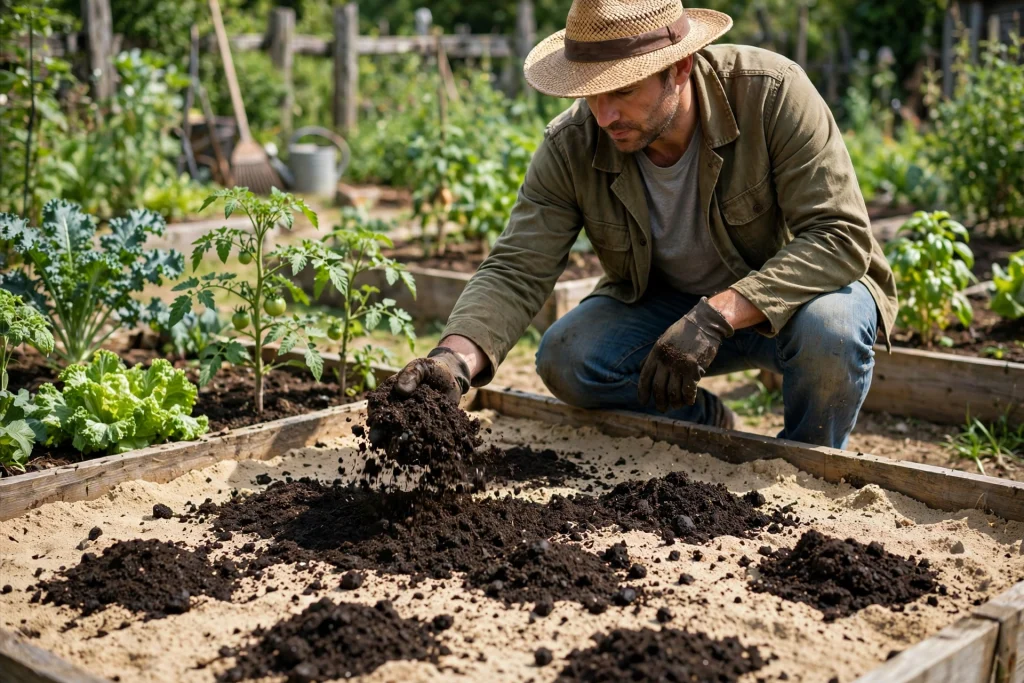
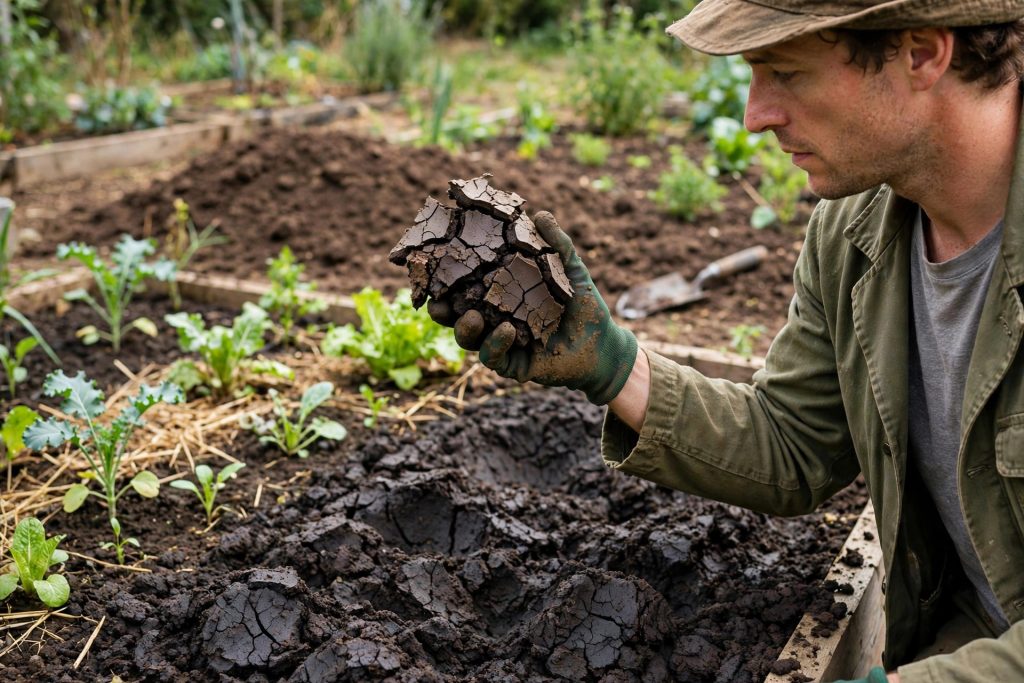
Test your garden soil before you mulch, because mulch is not a substitute for knowing what is in the ground. Our guides to improving sandy soil and improving clay soil both treat mulch as one tool among several, not as a fix on its own.
When to Mulch a Vegetable Garden
Timing matters as much as material, and the rule is simple: mulch after the soil has warmed, not before. Organic mulch insulates the soil, which is exactly what you want in July and exactly what you do not want in April. A mulch layer spread over cold spring soil keeps that soil cold, slows seed germination, and delays transplant growth. Iowa State Extension says to wait until the ground warms and perennials emerge in early spring, and the UC Master Gardener program says the best time to apply organic mulch is when warm weather sets in, in late spring.
For warm-season crops like tomatoes, peppers and squash, wait until the soil has warmed to at least 65 degrees and your transplants are established, usually two to three weeks after transplanting. For cool-season crops like lettuce, peas and brassicas, you can mulch at planting time. For direct-seeded beds, leave the bed bare until the seedlings are 3 to 4 inches tall, then tuck straw or shredded leaves between the rows at 2 to 3 inches deep. One timing mistake to avoid is mulching dry soil. Water the bed thoroughly first, or wait for a good soaking rain, and then spread the mulch over moist soil.
Best Mulch for Tomatoes
Tomatoes are the crop most gardeners mulch first, and they repay the effort more than almost any other vegetable. A good mulch around tomatoes keeps soil moisture even, which reduces blossom end rot; it stops soil from splashing onto low leaves, which is how early blight spreads; it keeps fruit clean where it touches the ground; and it steadies soil temperature through hot spells. Iowa State Extension lists reduced blight severity and cleaner fruit among the direct benefits of mulching, and those two benefits matter most for tomatoes.
Straw is the classic tomato mulch, and it is still the best all-round choice. Lay it 3 to 4 inches deep after the soil has warmed and the plants are established, keep it a few inches back from each stem, and it will do the job all season. Shredded leaves are a close second, and they are free if you have trees. Cocoa bean shell mulch is the best-looking option for a small tomato bed, and it adds a little nutrition as it breaks down, but only in a dog-free garden.
What not to use around tomatoes matters too. Fresh wood chips tie up nitrogen at the surface and keep the soil cool when tomatoes want it warm. Dyed mulch from an unknown source is a poor choice for a food crop. Grass clippings are fine in thin, dry layers, but never use clippings from a lawn treated with herbicide that season.
How We Chose
No mulch in this roundup was tested in our own garden. That matters, and we say it plainly. The scores are editorial ratings, worked out from manufacturer specifications, retailer listings and owner feedback, using the scoring system in the table. A rating of 9.6 does not mean we grew tomatoes in that mulch. It means the product scored highest against the factors that matter for a vegetable garden, as measured by the evidence we could verify.
| Factor | Weight | What it measures |
|---|---|---|
| Weed suppression | 25% | How well the mulch blocks light and stops weed seeds at the stated depth |
| Moisture retention | 20% | How well it holds soil moisture and reduces watering |
| Soil benefit as it breaks down | 20% | How much organic matter and nutrition it adds to the bed over one season |
| Safety for food beds | 15% | Whether it is safe around edible crops, with no dye, chemical or contamination concern |
| Ease of application | 10% | How easy it is to spread, to plant through, and to work in at season’s end |
| Value | 10% | Coverage per bag or bale against how much ground it covers |
| Total | 100% |
How a score is worked out: each product gets an editorial score out of 10 on each factor, and the final score is the weighted sum. GardenStraw is the worked example: weed suppression 10 times 25 percent, moisture retention 10 times 20 percent, soil benefit 9 times 20 percent, safety for food beds 10 times 15 percent, ease of application 8 times 10 percent, value 10 times 10 percent, which gives 2.5 plus 2.0 plus 1.8 plus 1.5 plus 0.8 plus 1.0, a total of 9.6.
For the five products with no independent owner feedback (Georgia Pine Straw, Earthgro Pine Bark Nuggets, Back to the Roots, FibreDust and Hemp Guard), the scores rest on the maker’s published specifications and our editorial judgment of them, not on owner experience.
The weights reflect what a vegetable garden actually needs. Weed suppression and moisture retention come first, because those are the two jobs every gardener notices first. Soil benefit is weighted equally with moisture, because a vegetable mulch that does not feed the soil is only doing half its job. Safety for food beds gets a full 15 percent, because a mulch that introduces dye, chemicals or herbicide residue into a food bed fails no matter how well it suppresses weeds.
Three rules guided the research: every specification had to come from a manufacturer page or a major retailer listing, with the conservative figure used where sources disagreed; where a maker does not publish a specification, we wrote “Not published” rather than guessing; and no product was given credit for a claim its maker does not make.
Final Choice
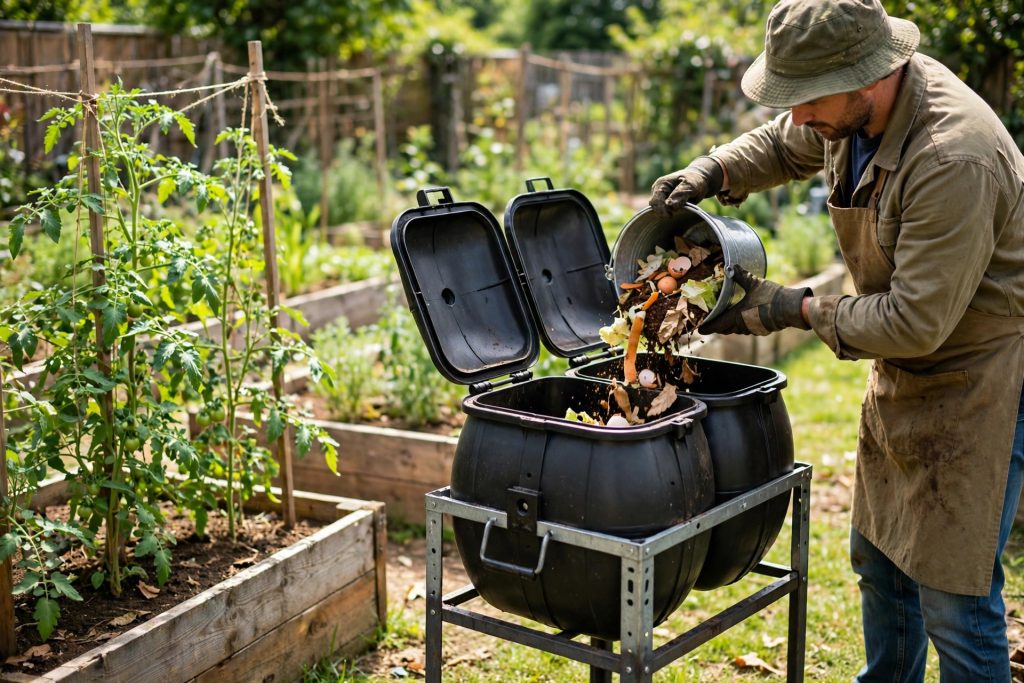
If you buy one mulch this year, buy HealthiStraw GardenStraw. It is the best mulch for vegetable garden beds because it does every part of the job well and none of it badly: it suppresses weeds, holds moisture, breaks down into the soil, is safe around food, and is easy to spread and to plant through. One bale covers a standard raised bed, and at the end of the season you can turn what is left into the soil or into the compost bin. Our guide to compost bins is a good next step if that end-of-season step is new to you, because spent straw mulch is one of the best compost ingredients a vegetable gardener has.
If GardenStraw is sold out, buy EZ-Straw, especially if your garden is windy or sloped. If you grow tomatoes and have no dog, buy the Hull Farm cocoa shell mulch for the tomato bed and straw for everything else. If you garden in containers or a single small bed, buy the Back to the Roots coconut husk block. The deeper point is simpler than any product pick. Mulch your vegetable beds, mulch them after the soil warms, keep the mulch off the stems, and use a material that breaks down and feeds the soil.
References
- University of Minnesota Extension, “Mulching for soil and garden health.” Supports the 2 to 4 inch application depth, keeping mulch clear of stems and trunks, and the recommendation of straw for vegetable gardens.
- Iowa State University Extension, “Using Mulch in the Garden.” Supports the 2 to 4 inch depth range by material, the 1 to 2 inch depth for cocoa shells, the dog warning for cocoa shells, and the guidance that bark and wood chips suit trees and perennial beds rather than vegetable beds.
- University of Georgia Extension, “Mulch plants, but not too much.” Supports the 2 to 3 inch depth over plant roots, keeping mulch 3 to 4 inches from the plant base, and aging fresh wood chips before use.
- University of Georgia Extension, “Protect landscape plants with just the right amount of mulch.” Supports the 2 to 4 inch depth range and the risks of mulching too deeply, including root rot and blocked water movement.
- Virginia Cooperative Extension (Relf and McDaniel), “Mulches for the Home Vegetable Garden,” publication 426-326. Supports the 6 to 8 inch straw layer, mulching after plants are established, and watering before mulching.
- ASPCA, “Our Top Three Summer Garden Safety Tips.” Supports the warning that cocoa shell mulch is toxic to dogs.
Frequently Asked Questions
What is the best mulch for a vegetable garden?
Straw is the best all-round mulch for a vegetable garden. It is light, easy to spread and to plant through, it keeps fruit clean, and it breaks down within a season so you can work it into the soil. A cleaned wheat straw bale, such as HealthiStraw GardenStraw, is the simplest choice.
How deep should mulch be in a vegetable garden?
Apply organic mulch 2 to 3 inches deep in a vegetable garden. That is the range the University of Georgia Extension recommends, and it sits inside the 2 to 4 inch range given by the University of Minnesota and Iowa State Extensions. Straw is the exception: spread it 6 to 8 inches deep because it settles to about half that within two weeks. Keep mulch 2 to 3 inches away from every plant stem.
Is wood chip mulch good for vegetable gardens?
Wood chips are good for paths and perennial beds, but they are a poor choice inside an annual vegetable bed. Fresh chips tie up nitrogen at the soil surface, they are hard to plant through, and they take one to two years to break down. Aged chips, six months old or more, are safer, but straw, shredded leaves or cocoa shells are better for annual vegetables. Use wood chips on the paths between your beds instead.
When should I mulch my vegetable garden?
Mulch after the soil has warmed and the plants are established. For warm-season crops like tomatoes, peppers and squash, wait until the soil reaches at least 65 degrees, usually two to three weeks after transplanting. For cool-season crops, you can mulch at planting time. Mulching too early keeps cold soil cold and slows growth. Always water the bed first, or mulch after a good rain.
How much mulch do I need for a raised bed?
Multiply the bed area in square feet by the depth in inches and divide by 324 to get cubic yards. A standard 4 by 8 foot raised bed is 32 square feet, and at 3 inches deep it needs about 8 cubic feet of mulch, which is four 2 cubic foot bags of bark or about one 3 cubic foot bale of straw. Add 5 to 10 percent extra for settling and uneven ground.
Is cocoa shell mulch safe for vegetable gardens?
Cocoa shell mulch is safe for the vegetables, and it adds a small amount of nutrition to the soil as it breaks down. It is not safe around dogs, because cocoa shells contain theobromine and caffeine, which are toxic to dogs that eat them. If you have a dog that digs or chews in the garden, use straw or coir mulch instead.

Thesis Link : https://saulibrary.edu.bd/daatj/public/uploads/BAU200601_19-Pp_5.pdf
- 10 Best Mulches for Vegetable Gardens - November 14, 2026
- 10 Best Coco Coir Bricks for Gardens, Pots and Seed Starting - November 14, 2026
- 10 Best Perlite Brands for Potting Mix - November 10, 2026