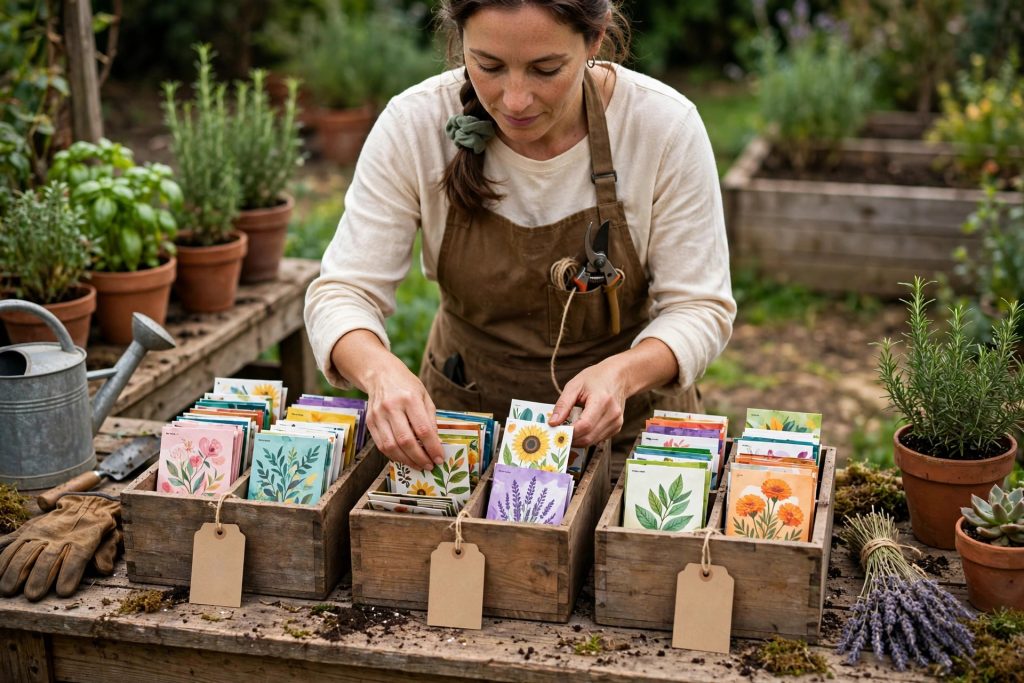

A seed collection usually starts tidily. A few packets arrive in spring, they go into a drawer, and by autumn the drawer holds a damp, dog-eared pile that nobody wants to sort. The seeds inside may still be fine, but the gardener has lost track of what is there, when each packet should be sown, and which packets are already past their best.
That is the real job of a seed storage organizer. It does two things at once. First, it protects seed from the three things that shorten its life: heat, moisture, and light. Second, it makes the collection findable, so the right packet is in hand on sowing day instead of buried under last year’s leftovers.
This guide compares 10 real seed storage organizers you can buy in the United States, from photo keeper boxes that hold more than 100 packets to a locking tin for rare seed and a drawer cabinet for saved seed. Each pick states its size, its sorting system, and
Quick Recommendation
For most home seed starters, the IRIS USA 4 x 6 Photo Keeper is the safest first organizer. It holds 16 removable inner cases in one handled box, each case is the right size for standard seed packets, and the whole collection can be carried to the potting bench in one trip. If your collection is small, under about 40 packets, a dedicated seed tin such as the Gardenary galvanized organizer or the Burgon and Ball tin will feel tidier and will look better on a shelf.
If you keep a written sowing plan, choose a binder instead. The GLADYS binder holds 100 packets in clear sleeves you can flip through like a book, and the SeedShield binder stretches that to 200 pockets for a large collection. For saved seed in small paper envelopes, rather than shop-bought packets, the Akro-Mils drawer cabinet is the practical pick, because each variety gets its own labelled drawer.
One warning applies to every pick in this guide. An organizer only helps if the seed going into it is dry. Colorado State University Extension puts it plainly: seed moisture and storage temperature are the most important factors in how long seed stores, and the drier the seed, the longer it stores. A beautiful tin in a hot, damp shed will not save seed that went in wet.
The 10 Best Seed Storage Organizers Compared
| Organizer | Type | Sorting system | Best for | Our rating |
|---|---|---|---|---|
| IRIS USA 4 x 6 Photo Keeper | Photo keeper box, 16 cases | 16 removable cases | Large collections, portability | 9.4/10 |
| novelinks Transparent 4 x 6 Photo Cases | Photo keeper box, 16 cases | 16 removable cases | Large collections on a budget | 9.2/10 |
| GLADYS Seed Storage Organizer Binder | Binder, 100 packets | Side-loading sleeves, 4 dividers | Sowing plans, flipping through | 9.0/10 |
| SeedShield Seeds of Life Binder | Binder, 200 pockets | 50 sheets, 4 pockets each | Very large collections | 8.9/10 |
| Gardenary Galvanized Seed Storage Organizer | Galvanized tin, 2 sections | 2 sections, by planting time | Small collections, display | 9.1/10 |
| Burgon and Ball Seed Packet Storage Tin | Steel tin, 3 compartments | 3 compartments | Small collections, gifts | 8.8/10 |
| Orionstar Metal Seed Saving Box | Metal box, 30 slots | 4 compartments, 30 slots | Saved seed, starter kit | 8.7/10 |
| Vaultz Locking Index Card Box | Locking card box, 450 cards | Index dividers, key lock | Rare or valuable seed | 8.5/10 |
| Akro-Mils 10144 44-Drawer Cabinet | Drawer cabinet, 44 drawers | Labelled drawers | Saved seed, bulk envelopes | 8.6/10 |
| ArtBin Super Satchel Double Deep 6990 | Compartment box, up to 8 sections | Removable dividers | Mixed supplies, deep storage | 8.7/10 |
How to Choose a Seed Storage Organizer
Count packets, not good intentions
Count the packets you actually own before you buy. A box that holds 30 packets is generous for a gardener with 25 packets and useless for one with 150. Count twice: once for shop-bought packets and once for saved seed in envelopes, because envelopes are thinner and behave differently in a filing system. If the count is close to a box’s limit, buy the next size up. Collections grow every spring.
Match the sorting system to how you sow
There are three sensible ways to sort seed, and the best organizer is the one that matches yours. Sorting by crop type (tomatoes together, brassicas together) suits gardeners who plan by bed. Sorting by sowing date (February sowings first, May sowings last) suits gardeners who work from a calendar and want the next job at the front. Sorting by season (cool season, warm season) is the simplest split and works well in a two-section tin.
A binder suits sowing-date sorting best, because pages can be reordered as the season moves on. A photo keeper suits crop-type sorting, because each inner case can hold one crop family. A tin suits season sorting, because two or three compartments are enough for that split and no more.
Check packet fit before anything else
Most standard seed packets are roughly the size of a 4 x 6 inch photo card, which is why photo keepers work so well for seed. Oversized packets, especially for large seed such as beans and squash, may not fit a 4 x 6 case without folding, and folding a packet repeatedly can split it and spill seed. Measure your three largest packets before ordering. If they are wider than 4 inches, favour a binder with larger sleeves, a tin, or a drawer cabinet over a 4 x 6 case.
Protection is about the room, not just the box
No ordinary organizer is a sealed vault. Clear plastic boxes let in light, so they belong in a cupboard, not on a sunny shelf. Metal tins block light but can sweat if they move between a cold garage and a warm house, so keep them in one stable spot. A locking box protects seed from curious hands and pets, but it does not protect it from heat. The room matters as much as the box: cool, dry, dark, and stable beats any single feature.
Plan for saved seed separately
Shop-bought packets have printed sowing dates and variety names. Saved seed has neither unless you write them on. Any organizer for saved seed must leave room for a label with four facts: variety, year saved, source plant, and any note about germination. Drawer cabinets and photo keeper cases handle this well, because each drawer or case can carry its own label. A binder can too, if blank envelopes are included in the kit.
How Long Do Seeds Last in Storage
Seed life varies far more by crop than by container. Colorado State University Extension notes that vegetable and flower seeds may be kept for one year without appreciable decrease in germination, and that storage may be extended to 10 or more years under proper conditions. That range is the reason a simple “use by” reading misleads. Onion, parsley, and parsnip seed often fade within a year or two, while tomato, cucumber, and many brassica seeds commonly last three to five years when kept cool and dry.
The table below gives planning ranges, not guarantees. Treat them as a reason to test old seed before relying on it for a full planting, not as expiry dates.
| Storage life | Examples | What to do |
|---|---|---|
| About 1 year | Onion, parsley, parsnip, some lettuce | Test before sowing a full row; buy fresh if the test is weak |
| About 2 years | Sweet corn, leek, okra, some peppers | Test if storage was warm or damp at any point |
| About 3 to 4 years | Beans, peas, carrots, broccoli, cabbage, kale, beets, tomato | Usually reliable if kept cool and dry; test if the planting matters |
| About 4 to 5 years | Cucumber, melon, squash, endive | Do not assume every packet in the group lasts equally long |
A simple germination test settles the question. Place 10 seeds on a damp paper towel, keep it moist at room temperature, and count sprouts after one to two weeks. Eight sprouts from 10 means roughly 80 percent germination, which is plenty for home sowing if you sow a little thick. The University of Nebraska-Lincoln Extension recommends the same approach for seed stored more than one year, with a final count at two to three weeks.
One practical rule from Colorado State Extension deserves repeating: never dry seed in a microwave, and never heat it above 100 degrees Fahrenheit when drying. Heat above that point can kill the embryo, leaving seed that looks perfect and never sprouts.
Setting Up a System That Survives the Season
Start with dry seed. Seed saved at home must feel hard and snap rather than bend before it goes into storage. Seed that folds is still too wet, and sealing it wet invites mould. Shop-bought packets are already dry, so they can go straight into the organizer.
Next, label everything the day it arrives. A packet with no year on it becomes a mystery within two seasons. Write the year bought or saved on the packet itself, not only on the box, because packets move between boxes over time.
Then choose one sorting rule and stick to it for a full season. Mixed systems, half by crop and half by date, are how collections become unfindable again. If you sort by sowing date, put a divider or a case at the front for “sow now” and move packets forward as each sowing passes. That moving front is the most useful habit in this whole guide.
Finally, pick one home for the organizer and leave it there. A cool cupboard indoors beats a shed that swings from freezing to baking. If you refrigerate seed, keep the container sealed until it has returned to room temperature before opening it, so condensation forms on the outside of the container rather than on the seed. That single habit, from extension guidance on refrigerated seed, prevents more damage than most gardeners expect.
The 10 Best Seed Storage Organizers
Please note: none of the 10 organizers below was hands-on tested for this guide. The ratings are editorial judgments from published specifications and university extension guidance, as explained in How We Chose. Treat them as a shortlist to compare, not as test results.
1. IRIS USA 4 x 6 Photo Keeper
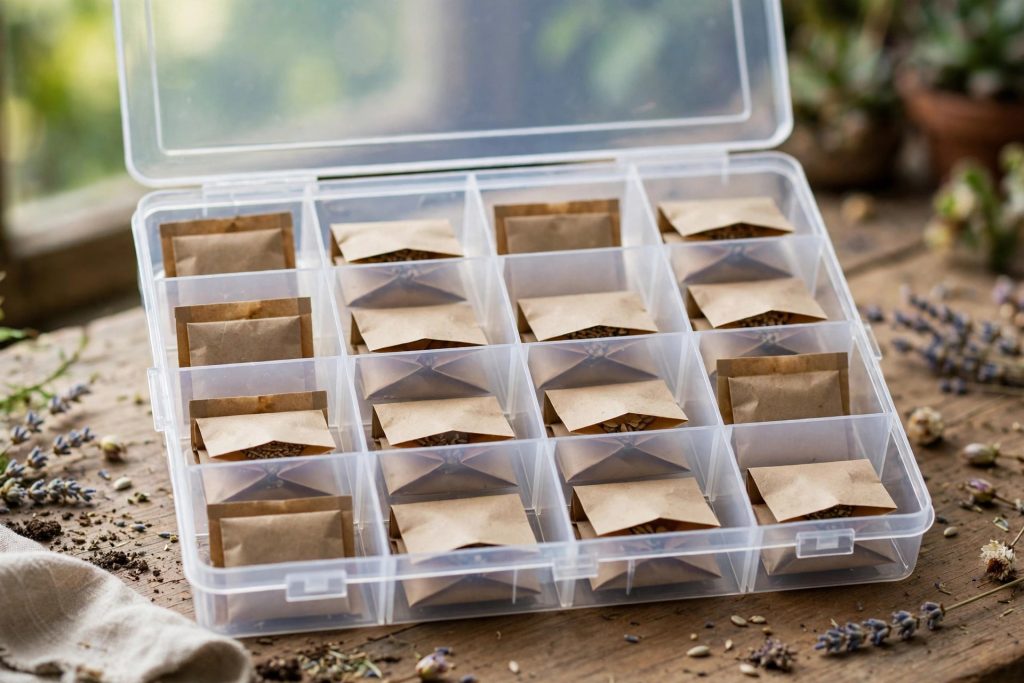
The IRIS USA keeper is the default recommendation for a reason that has little to do with gardening. It was designed for photographs, which happen to be almost exactly seed packet size, and its 16 inner cases, each about 4.75 by 6.70 by 1.23 inches inside a handled outer box of about 14.98 by 12.08 by 5.05 inches, swallow a large collection without a filing system to learn. Each case has a snap-tight closure, the material is acid-free and BPA-free, and the outer box stacks.
The honest limit is light. The clear box shows its contents, which is handy, but it must live in a dark cupboard, not on a sunny shelf. Large, fat packets for beans or squash may also need folding to fit a case. For most collections, though, this is the box to beat: one case per crop family, a label on each case, and the whole seed library in one handled box.
Best for: collections over 60 packets, and gardeners who want to carry everything to the bench at once. Skip if: your packets are mostly oversized, or the only storage spot is in bright light.
Official page: IRIS USA Photo Keeper
2. novelinks Transparent 4 x 6 Photo Cases and Craft Keeper
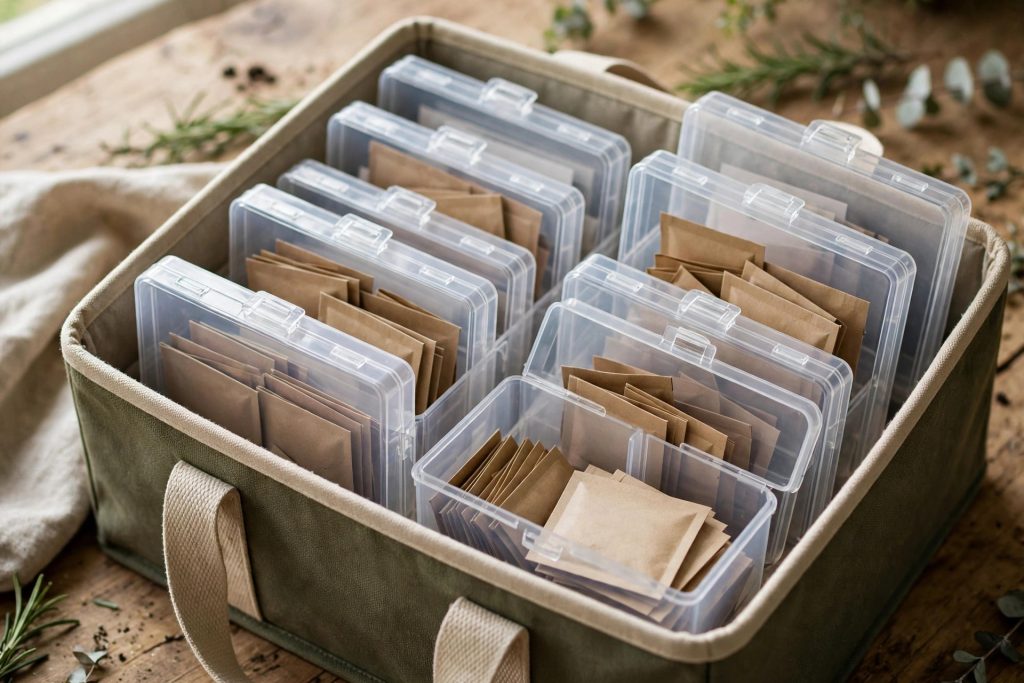
The novelinks keeper follows the same pattern as the IRIS keeper: 16 inner cases of about 4.75 by 6.70 by 1.23 inches inside an outer box of about 12.0 by 14.8 by 5.1 inches. The difference is mostly in feel and cost. It is the pick for a gardener who wants the photo keeper system without paying for the best-known brand, and who is happy to label the cases themselves.
Its limit is the same as the IRIS keeper’s. Clear plastic needs a dark home, and the cases suit standard packets better than oversized ones. Where it wins is as a second box. Many gardeners end up with one keeper for vegetables and a second for flowers, and at this level a second box does not feel like an extravagance.
3. GLADYS Seed Storage Organizer Binder
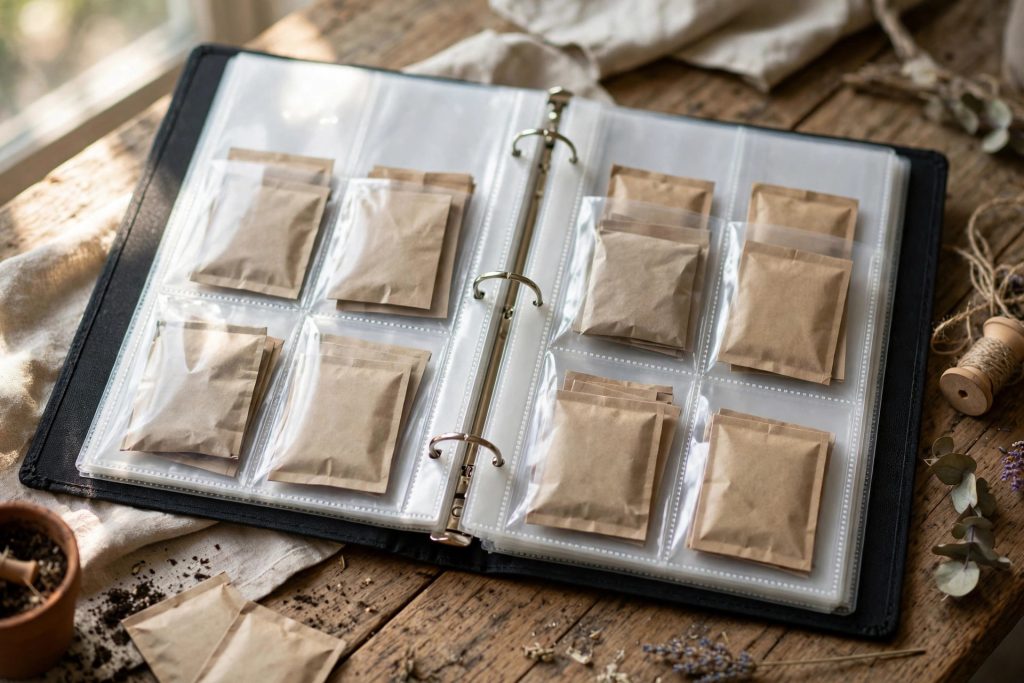
A binder changes how a collection is used. Instead of lifting cases out of a box, you flip pages. The GLADYS binder holds 100 seed packets in side-loading sleeves, which matters because side loading stops packets slipping out when the binder tips. It includes 4 kraft paper dividers for sorting by your own system and 10 blank envelopes for saved seed.
The trade-off is thickness. A full binder is heavier than it looks, and very thick packets can strain sleeves. It is also the best organizer for a gardener who plans on paper, because the binder can hold a sowing calendar and notes alongside the packets. If you like to sit down in January with a plan and flip through what you own, this format will suit you better than any box.
4. SeedShield Seeds of Life Binder
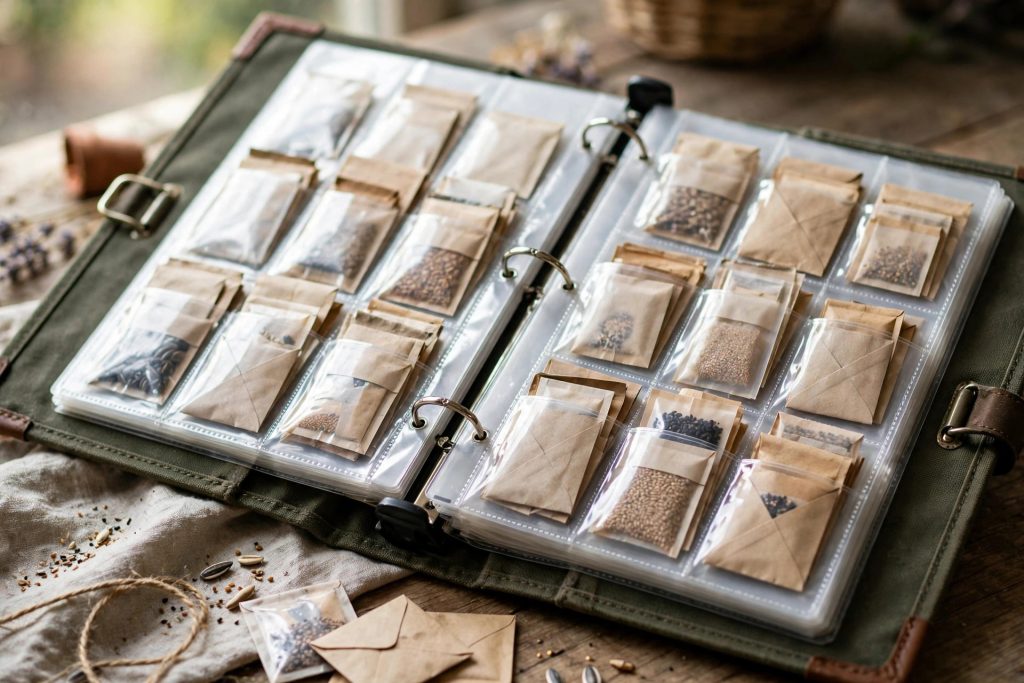
SeedShield’s binder is the GLADYS idea scaled up: 50 plastic sheets, each with 4 pockets, for up to 200 seed envelopes. The 3-ring design means pages can be added, removed, or rearranged as the collection grows, which is exactly what a large collection needs. Clear pockets keep each envelope visible, so a variety can be found without pulling packets out one by one.
The limit is size. Two hundred pockets is a lot of seed, and a full binder is not a pocket notebook. It also suits envelopes better than thick, glossy retail packets, so check your fattest packets against the pocket size before committing a whole collection to it. For seed savers with dozens of varieties, though, no box in this guide files that many envelopes as neatly.
5. Gardenary Galvanized Seed Storage Organizer

Gardenary’s organizer is a galvanized steel tin, about 10 inches wide by 5.25 inches deep by 8 inches tall, with a leather carrying handle and 2 built-in sections for sorting by planting time or plant type. It blocks light completely, it looks at home on a shelf, and it is the tin most likely to stay in use because it is pleasant to pick up.
Two sections are both its charm and its limit. A gardener with 30 packets will find two sections plenty. A gardener with 150 packets will outgrow it quickly and will need a second system for the overflow. Buy this one when the collection is small and the goal is to keep it small, not when the collection is already spilling out of a drawer.
Official page: Gardenary Galvanized Seed Organizer
6. Burgon and Ball Seed Packet Storage Tin
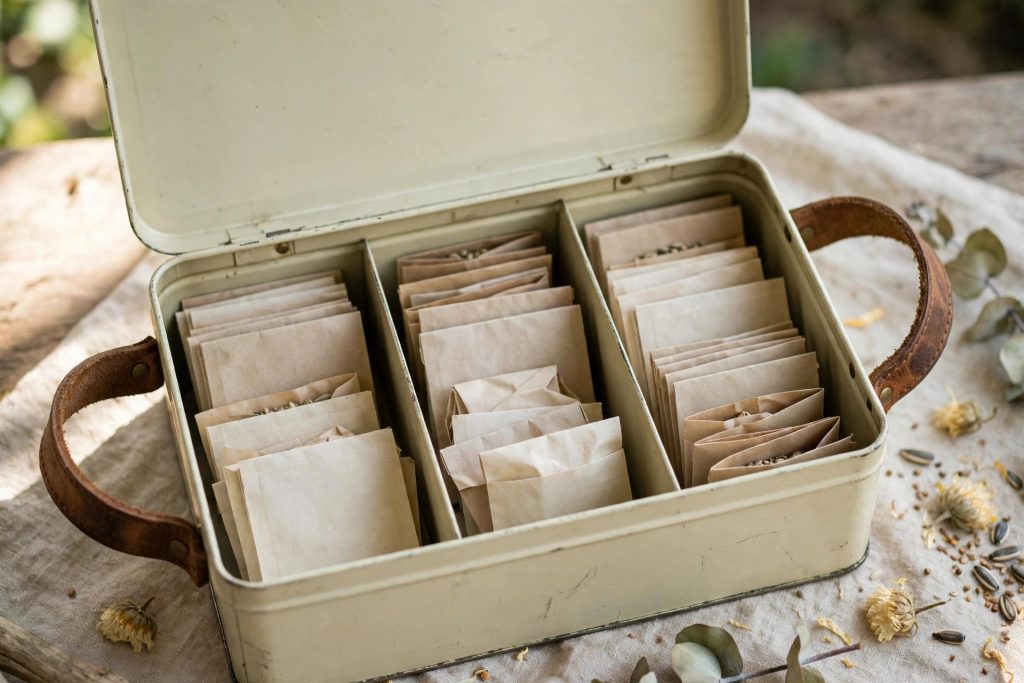
Burgon and Ball’s tin is the gift version of the same idea: powder-coated steel, a hinged lid held by two metal clasps, natural leather handles, and three interior compartments, one of which runs the full length of the tin for oversized packets. That long compartment is a genuinely useful detail, because it solves the oversized packet problem that defeats many 4 x 6 cases.
The limit, again, is capacity. Three compartments hold a modest collection well and a large collection badly. It is also a tin that deserves an indoor spot. Steel lasts for years indoors; left in a damp shed, even powder-coated steel will eventually show its age. For a small collection, or as a present for a gardener starting out, it is hard to beat on looks and on lid security.
Official page: Burgon and Ball Seed Packet Storage Tin
7. Orionstar Metal Seed Saving Box
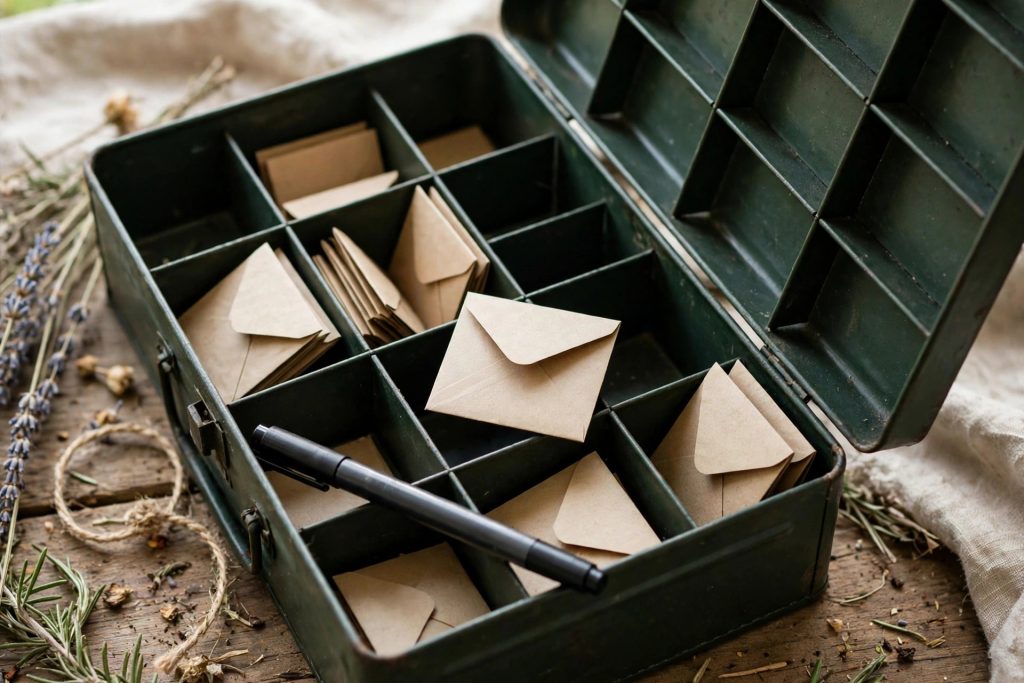
Orionstar’s box is the starter kit in this guide. It measures about 13.2 by 7.3 by 5.2 inches, it has 4 compartments and 30 slots, and it arrives with 30 seed envelopes, a marker pen, and a label sticker sheet, plus safety locks on the lid. A gardener who has never saved seed before can start with this box and need nothing else for the first season.
Its limit is honesty about water. The maker’s own specification lists it as not water resistant, so it is an indoor box, not a shed box in a wet climate. The 30 slots also set a hard ceiling. Treat it as a first kit for saved seed, and move to a larger system when the slot count starts to feel tight, rather than forcing extra envelopes in and crushing them.
8. Vaultz Locking Index Card Box
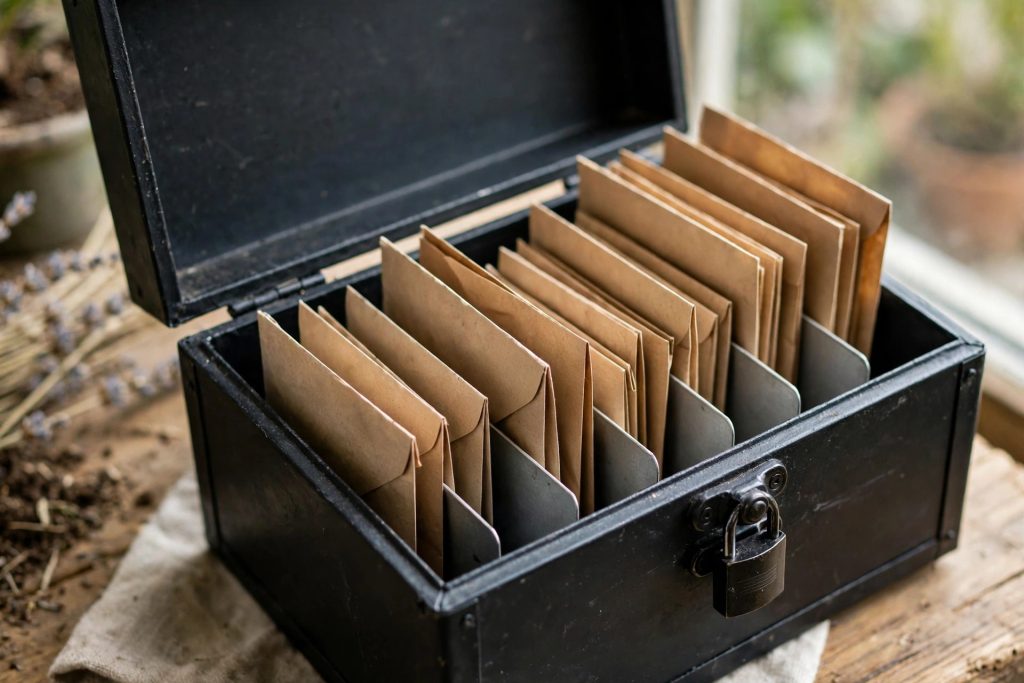
Vaultz’s box files seed the way a library files cards: upright, behind dividers, in a metal-framed box with a key lock. The card version holds 450 4 x 6 notecards, which tells you two things. First, the filing system is excellent for finding one packet fast. Second, seed packets are thicker than notecards, so the real packet count will be well below 450. Do not buy it expecting 450 packets.
Buy it for a different reason: security. Rare, expensive, or irreplaceable saved seed deserves a lock, especially in a shared house or a community garden shed. The lock keeps packets from being borrowed, spilled, or mixed up. The trade-off is that a locked box is slightly slower to use every day, so keep everyday seed elsewhere and reserve this box for the seed you would hate to lose.
Manufacturer’s listing: Vaultz Locking Index Card Box
9. Akro-Mils 10144 44-Drawer Cabinet
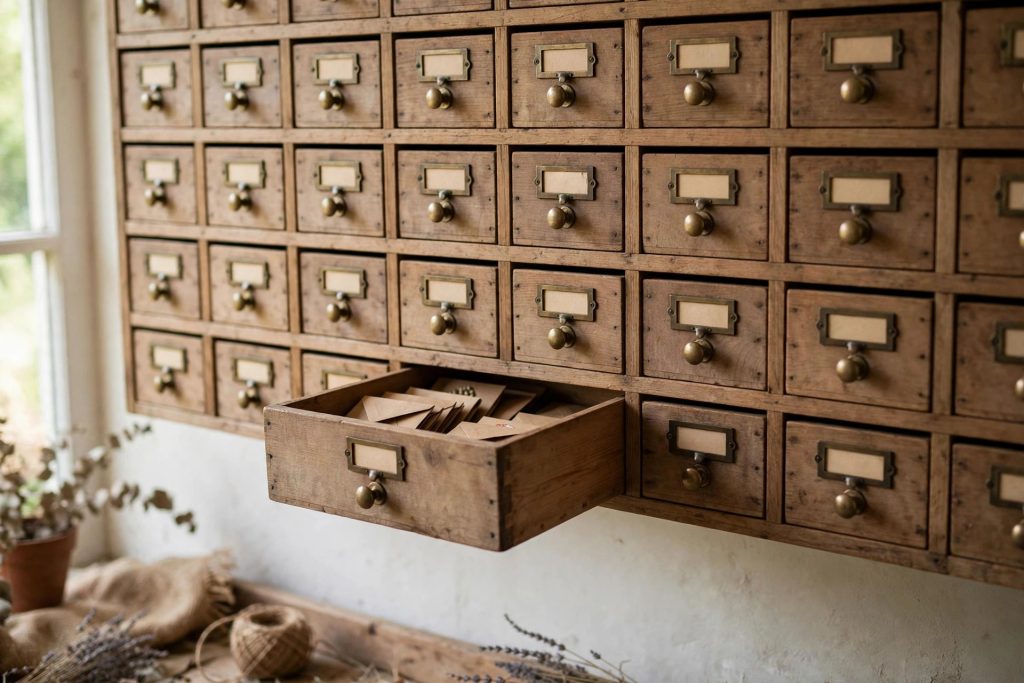
Akro-Mils model 10144 is a 20 by 6.37 by 15.81 inch cabinet with 44 drawers in rugged polystyrene. Large drawers measure about 4-7/8 by 4-1/4 by 2 inches inside, and small drawers about 5-1/4 by 1-11/16 by 1-1/2 inches inside. That size range is the point. Small drawers hold small envelopes of saved seed, large drawers hold bigger envelopes and packets laid flat, and every drawer can be labelled by variety and year.
The limit is that this is not a packet filing system. Standard retail packets do not stand upright in these drawers, so this cabinet suits saved seed in envelopes far better than a shop-bought collection. It also needs wall or bench space and stays put, unlike a handled box. For a seed saver with 30 or 40 varieties, though, opening exactly one drawer for exactly one variety is a pleasure no box can match.
Manufacturer’s specification sheet: Akro-Mils 10144
10. ArtBin Super Satchel Double Deep 6990
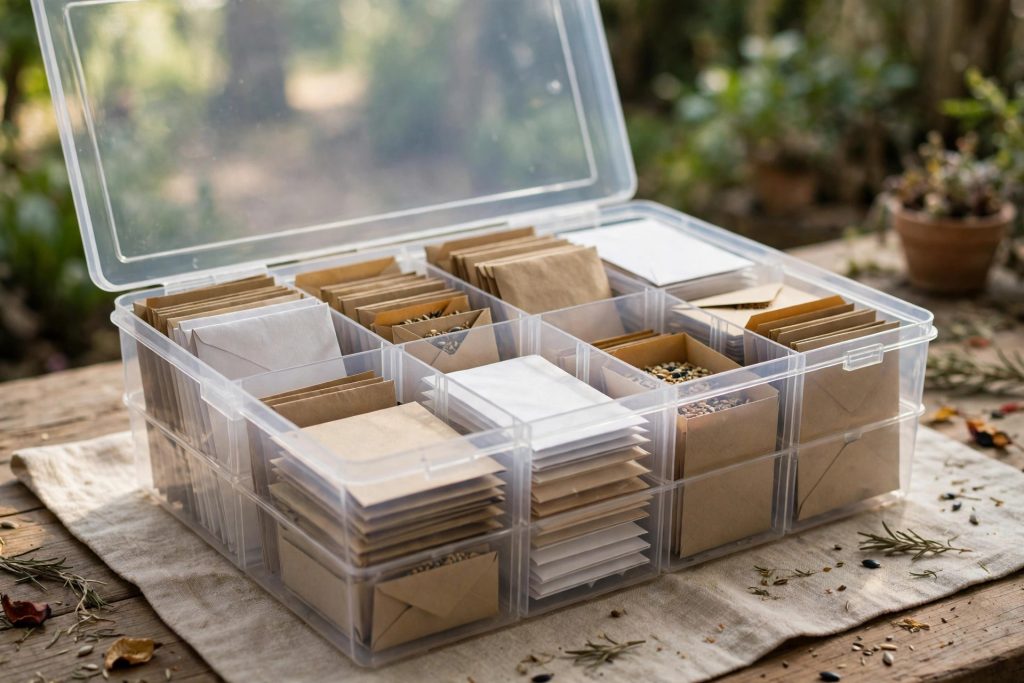
ArtBin’s Super Satchel Double Deep, model 6990, measures about 15.25 by 14 by 6.25 inches and can be used as one open core or divided into up to eight compartments with removable dividers. The extra depth is the selling point. Bulkier items that would crush a shallow case, such as thick envelopes, seed tapes, and small tools, fit without forcing the lid.
The limit is that flexibility needs discipline. With dividers removed, the satchel becomes a jumble box again, and seed packets slide around in a deep space. Use it with the dividers in, one compartment per crop group, and keep it in a dark cupboard, because the clear body lets in light. For a gardener whose seed supplies include envelopes, labels, and small tools alongside packets, the deep, dividable space is genuinely useful.
Official page: ArtBin Super Satchel Double Deep
How We Chose: The Scoring System
How the ratings were worked out. No organizer in this guide was bought, handled, or tested by us, and no germination test was run for this guide. Each rating is an editorial judgment, not a test result. For each organizer we read the manufacturer’s published specification, checked its stated size and capacity against standard seed packet sizes, and compared it with the seed storage guidance from Colorado State University Extension and the University of Nebraska-Lincoln Extension.
We also looked at how owners describe using it, where that feedback was available. We then judged each organizer against the five factors in the table below, using the weights shown. A high rating means the organizer does its whole job well on the published facts. It does not mean we used it ourselves.
| Factor | Weight | What it means here |
|---|---|---|
| Packet fit | 25% | Standard packets fit without folding; oversized packets have a home |
| Sorting ease | 25% | Finding one packet fast, and putting it back in the right place |
| Protection | 20% | Light, moisture, and physical protection in a normal indoor spot |
| Capacity honesty | 15% | The stated capacity survives contact with real, thick packets |
| Portability and durability | 15% | Carrying to the bench, stacking, and lasting more than one season |
A high score means the organizer does its whole job well, not that it is perfect at one thing. The Vaultz box, for example, scores lower overall despite excellent security, because its card-based capacity overstates how many seed packets it holds. The Gardenary tin scores highly despite small capacity, because it does exactly what a small collection needs, and does it durably.
Common Seed Storage Mistakes
Storing seed wet is the first mistake, and it is also the most damaging. Seed that feels soft or bends should dry further, in shade with air moving, before it is sealed away. Heat is the second mistake. A shed roof in summer, a boiler cupboard, and a car boot all shorten seed life faster than most gardeners expect. The third mistake is no label, or a label on the box instead of the packet. Boxes change; packets travel.
A fourth mistake is opening refrigerated seed straight from the fridge. Cold seed in warm, humid air gathers condensation, and that moisture goes straight onto the seed. Let the sealed container warm to room temperature first. A fifth mistake is trusting a packet’s printed year without testing. A packet from three years ago may be perfectly good, or it may be dead, and only a 10-seed towel test tells you which.
Final Choice
If you buy one organizer today, buy the IRIS USA photo keeper, and sort it by crop family with a label on each case. It holds a real collection, it travels to the bench, and it costs less than replacing a season of lost seed. If you keep a written sowing plan, buy the GLADYS binder instead, and sort it by sowing date so the next job is always at the front.
If your collection is small and you want it to stay that way, the Gardenary tin or the Burgon and Ball tin will serve you better than a big box, because a box with room to spare invites a collection with no limit. And if you save your own seed, give it the system it deserves: envelopes labelled with variety and year, in a photo keeper case, a binder sleeve, or a drawer of the Akro-Mils cabinet, in a cool, dry, dark cupboard indoors.
Whatever you choose, choose one system, label every packet with its year, and keep the whole collection in one stable indoor spot. That habit protects more seed than any single box feature. As noted above, none of these organizers was hands-on tested, so the ratings are editorial judgments, not test results.
If you are new to starting seed, our guide to starting seeds indoors walks through the whole process, from trays to transplanting.
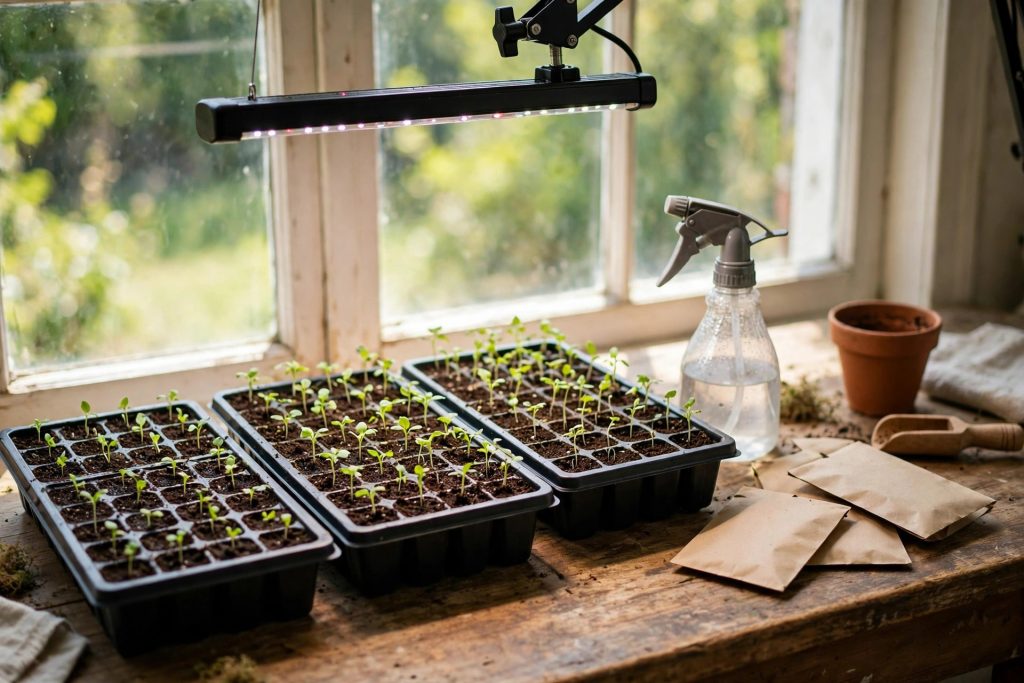
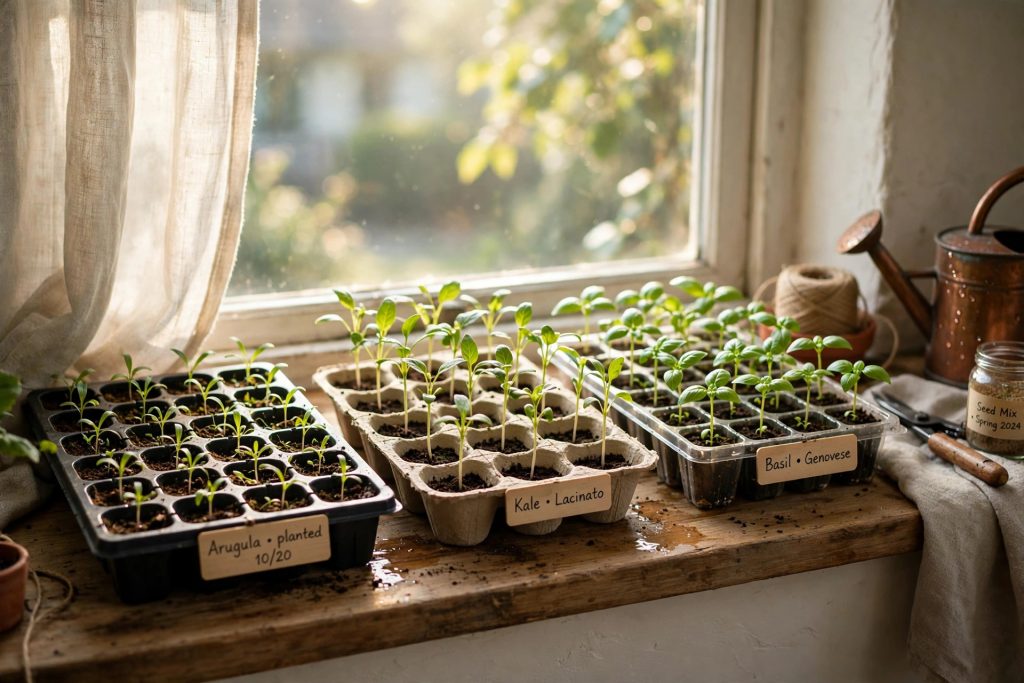
For the trays and kits themselves, our roundup of the best seed starting trays compares 10 kits for strong seedlings.
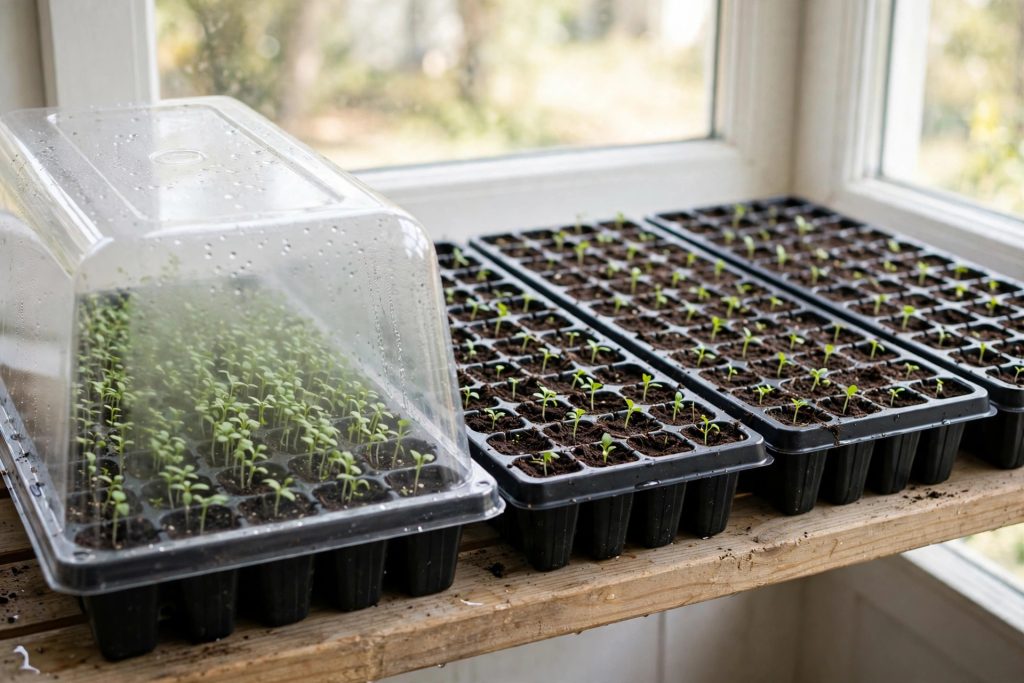
Timing matters as much as storage, so our guide to when to start seeds indoors by zone maps sowing dates to your zone.
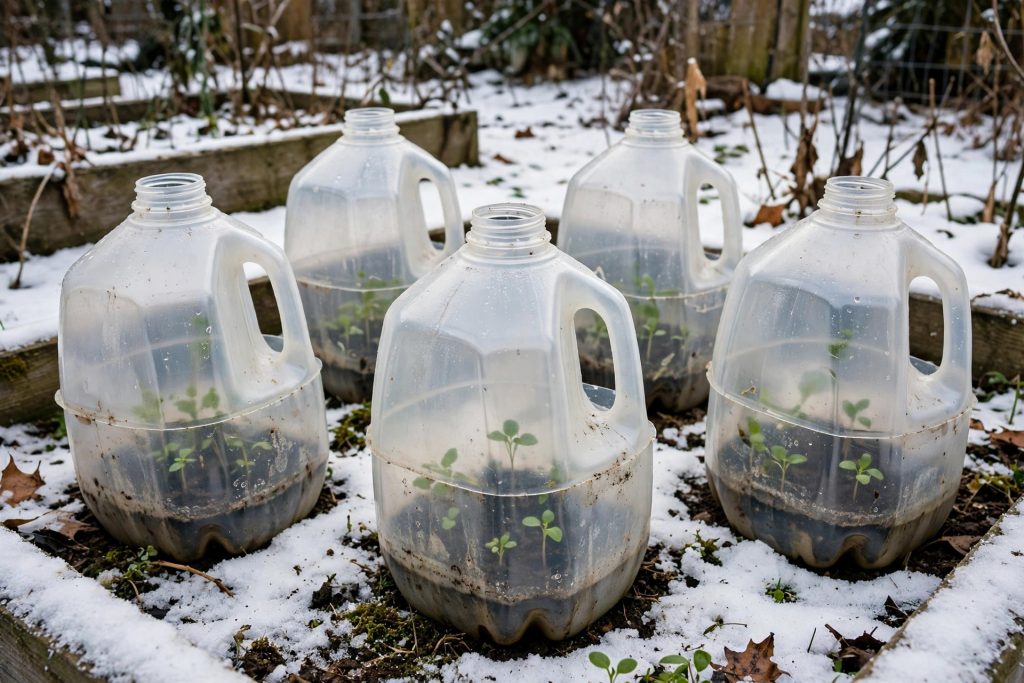
For seeds that prefer a cold start, our winter sowing guide explains how to start seeds outdoors in milk jugs through winter.
References
- Colorado State University Extension, Storing Vegetable and Flower Seeds
- University of Nebraska-Lincoln Extension, Vegetable Garden Seed Storage
- University of California Agriculture and Natural Resources, UC Master Gardener guidance on storing seeds
- Gardenary, The Best Seed Storage Organizer for Keeping Every Packet in One Place
- Farmstand App, 6 Best Seed Packet Organizers for Seasonal Rotation
Frequently Asked Questions
What is the best seed storage organizer for a beginner?
The IRIS USA 4 x 6 Photo Keeper is the simplest start. It needs no system to learn, each case holds standard seed packets, and the handled box carries the whole collection to the potting bench. Label one case per crop family and keep the box in a dark cupboard.
How long do seeds last in storage?
It depends on the crop and on storage conditions. Colorado State University Extension notes that seeds may keep for one year without appreciable loss, and that proper storage can extend life to 10 or more years for some seeds. Onion, parsley, and parsnip seed often fade within a year or two, while tomato and cucumber seed commonly last three to five years when kept cool and dry. Test old seed before relying on it.
Should I store seeds in the refrigerator?
A refrigerator can help, because cool and stable conditions slow seed deterioration, but only if the seed is dry and sealed first. Keep the container sealed until it has warmed to room temperature before opening it, so condensation forms outside the container rather than on the seed. For most home gardeners, a cool, dry, dark cupboard indoors is simpler and safer than a fridge.
Do seed packets fit in a photo keeper box?
Most standard seed packets fit a 4 x 6 inch photo case, which is why photo keepers are so popular for seed. Oversized packets, especially for beans and squash, may need folding or a different home, such as a tin with a long compartment or a binder with larger sleeves. Measure your three largest packets before ordering.
Can I store seeds in a plastic bag?
A sealed plastic bag keeps moisture out only if the seed inside is already dry. A bag on its own does not organize anything, and clear bags let in light. Put packets or paper envelopes inside a bag, then put the bag inside a box, tin, or binder in a cool, dark spot, and the bag becomes useful instead of just tidy.
How do I test old seed before sowing?
Place 10 seeds on a damp paper towel, keep it moist at room temperature, and count sprouts after one to two weeks, with a final count at two to three weeks. Eight sprouts from 10 means roughly 80 percent germination. Sow a little thick if the result is lower, and buy fresh seed if the test is very weak for a planting that matters.

Thesis Link : https://saulibrary.edu.bd/daatj/public/uploads/BAU200601_19-Pp_5.pdf
- How to Grow Tomatoes from Seed: A Step by Step Guide for Beginners - November 6, 2026
- Best Compost Bins for Beginners: 10 Picks for Easy First Compost - November 6, 2026
- Best Seed Storage and Organizers: 10 Picks for Every Collection - November 5, 2026