



Pink Muhly Grass: The Ultimate Guide to a Stunning Pink Landscape
Pink muhly grass (Muhlenbergia capillaris) is a show stopping ornamental grass known for its billowing pink plumes each fall, Home gardeners and landscape professionals alike prize this pink muhly grass plant for its cotton candy colored flowers and easy care nature. Native to the central and eastern U.S., pink muhly grass brings late season color and texture to gardens with very little maintenance . In this comprehensive guide, we’ll cover everything you need to know, from planting and pink muhly grass care to design ideas , so you can grow this beautiful grass in your own landscape.
Pink Muhly Grass Plant Overview
To kick off, let’s look at some quick facts about muhly grass (pink) and its key characteristics:

- Botanical Name: Muhlenbergia capillaris commonly known as pink muhly grass
- Type: Perennial warm season ornamental grass, clump forming, non invasive
- Native Range: North America – from Massachusetts and Kansas down to Florida and Texas . Often found in prairies, pine barrens, and coastal uplands.
- Hardiness: USDA Zones 6–9 can survive Zone 5 in ideal conditions . Thrives in warm climates; may die back in severe cold.
- Mature Size: Typically 2–3 feet tall and wide about 0.6–0.9 m. When in bloom, pink plumes can reach up to 4–5 feet high creating an airy pink cloud above the foliage.
- Foliage & Form: Fine, wiry dark green leaves forming neat clumps. Pink muhly grass size stays compact and it does not spread via rhizomes a well behaved, non invasive habit.
- Bloom Time & Color: Produces feathery pink plumes in late summer through fall generally September November. The blooms start vivid pink hence muhly grass pink plumes and often fade to tan, adding winter interest as dried seed heads.
- Sun Requirements: Full sun at least 6 hours of direct sun daily for best flowering. Tolerates partial shade but blooms less in too much shade.
- Soil Preferences: Adaptable to many soil types – loamy, sandy, or even rocky soils are fine as long as drainage is good. Prefers neutral to slightly acidic soil pH (~6.0–7.0) and does not like consistently wet or boggy soil. Salt tolerant .
- Water & Drought: Low water needs once established. It’s drought tolerant, needing only occasional watering in prolonged dry spells. Overwatering or poor drainage can cause root rot.
- Maintenance: Low maintenance. No heavy feeding or pampering required in fact, avoid high fertilizer, as excessive nitrogen can make the grass floppy. Pests and diseases are rare; in humid climates a fungal leaf spot can occur, but proper spacing and sun exposure prevent issues. Deer generally ignore pink muhly , making it great for areas with wildlife pressure.
Benefits and Features of Pink Muhly Grass
There are plants that quietly blend into the garden, and then there are plants like pink muhly grass that stop you in your tracks. Anyone who has seen it glowing in the late autumn sun knows why it has become such a beloved ornamental grass across the United States.
It’s beautiful, incredibly tough, and surprisingly easy to grow , a rare combination in the gardening world.
A Fall Display You Don’t Forget
Pink muhly grass has earned its reputation mostly because of what it does in fall.
Just when other plants begin to lose their color, this grass lifts up airy plumes in shades of soft pink and lavender. From a distance, it looks like a gentle cloud floating above the foliage.
Many gardeners say the effect feels almost unreal , especially when planted in large drifts. A slight breeze or a touch of sunlight through the plumes creates movement and glow that no flower can quite mimic.
Attractive in All Seasons
Although the fall bloom gets the attention, pink muhly grass doesn’t disappear the rest of the year.
During spring and summer, it grows into a tidy mound of fine green leaves that fit neatly into most landscape styles. When winter arrives, the dried seed heads remain standing and give the garden a soft, natural texture.
Even in its dormant months, it holds a quiet beauty until it’s time to cut it back in late winter.
A Low Care Plant for Busy or New Gardeners
One of the biggest surprises with pink muhly is how little it asks for.
It grows well in heat and humidity, and once established it handles long dry periods without complaint.
Areas with poor, sandy, or rocky soil , places where many plants fail are often perfect for this grass.
It also has very few issues with pests or diseases. Problems only tend to appear in conditions it doesn’t enjoy, such as deep shade or soggy ground.
Because it also tolerates salt, coastal gardeners and those with salted winter walkways find it especially reliable.
All of this makes pink muhly a great choice for low maintenance or eco-friendly landscapes.
Grows in Place Without Spreading
A lot of ornamental grasses spread aggressively, but pink muhly is different.
It grows as a well behaved clump and slowly widens over the years without sending underground runners into nearby plants.
This makes it easy to fit into formal beds, narrow borders, and small home gardens without fear of it taking over.
Since it’s a native American species, it also sits comfortably alongside other native plants rather than competing with them.
Fits Almost Any Landscape Style
Pink muhly is one of those rare plants that works in almost every type of design.
Landscape professionals love using it in long sweeps for dramatic color, while home gardeners often tuck it beside pathways, patios, or garden edges for its soft texture.
It pairs beautifully with:
- hardy perennials
- evergreen shrubs
- stone, metal, or wood features
Whether your garden feels modern, natural, cottage style, or coastal, pink muhly blends right in and adds a gentle, flowing rhythm.
Helpful for Wildlife, Too
Although it isn’t a major pollinator plant, pink muhly still plays a role in the local ecosystem.
Its dense clumps offer shelter for insects and small birds, and the seeds are eaten by various birds and small mammals during fall and winter.
Because it’s a native species, it supports natural habitats without disturbing them, a quiet but meaningful ecological contribution.
A Plant That Creates an Experience
There’s something special about seeing a group of pink muhly grasses in full bloom.
People often describe the sight as magical , a soft, rosy haze that transforms an ordinary space into something almost painterly.
It has become a favorite subject for photographers and garden visitors, especially in autumn when fields of it look like they’re brushed with color.
If you enjoy plants that add emotion and atmosphere, not just foliage, pink muhly grass never disappoints.
References
- Lady Bird Johnson Wildflower Center – Muhlenbergia capillaris
- University of Florida IFAS Extension – Muhly Grass
- Clemson Cooperative Extension – Muhly Grass (HGIC 1175)
- USDA NRCS Plants Database – Muhlenbergia capillaris
- Missouri Botanical Garden – Plant Finder
How to Plant Pink Muhly Grass
Planting pink muhly grass (Muhlenbergia capillaris) is not complicated, but a little attention to timing, soil, and aftercare will help your plants settle in quickly and put on their best show in fall. Whether you’re planting one clump or creating a full drift of pink clouds, here’s a clear, practical guide to doing it right.

1. Choose the Best Time to Plant
Pink muhly grass can be planted in either spring or early fall, and both seasons work well for slightly different reasons:
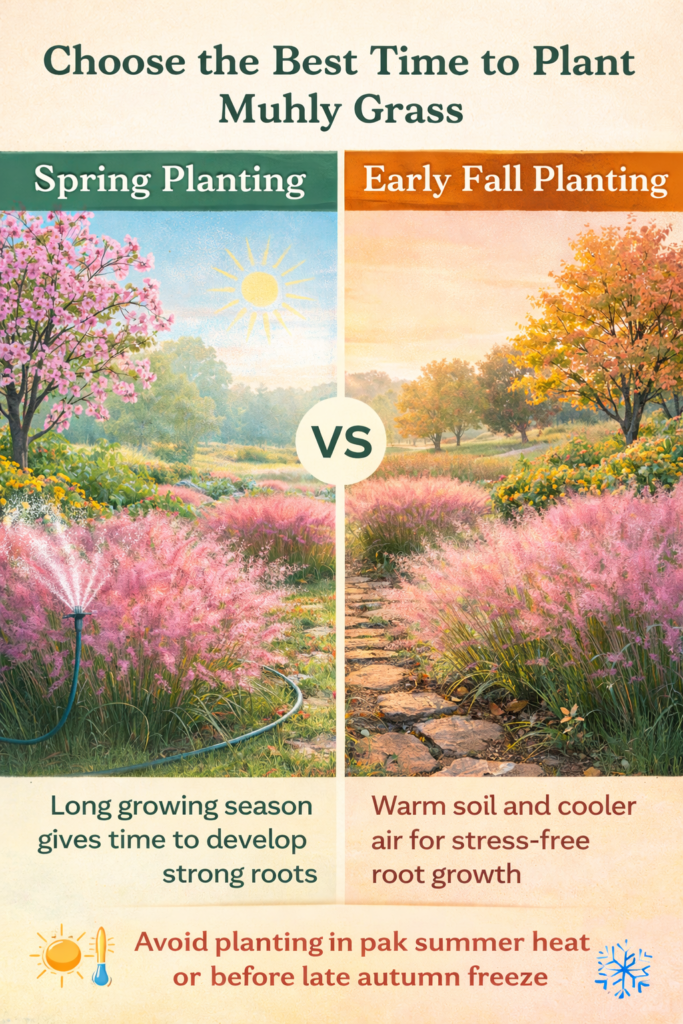
- Spring planting gives the plant a long, warm growing season to develop strong roots.
- Early fall planting works beautifully in warm regions. The soil is still warm, and the cooler air makes stress free root growth more likely.
Try to avoid the peak of summer heat and the late fall freeze window, when new transplants struggle to adjust.
2. Pick a Sunny, Well Drained Location
For the best color and bloom performance, pink muhly grass needs full sun, which means at least 6 hours of direct sunlight a day.
Good drainage is just as important. The plant prefers soil that is “moist but drains well.” If your soil is heavy or clay like:
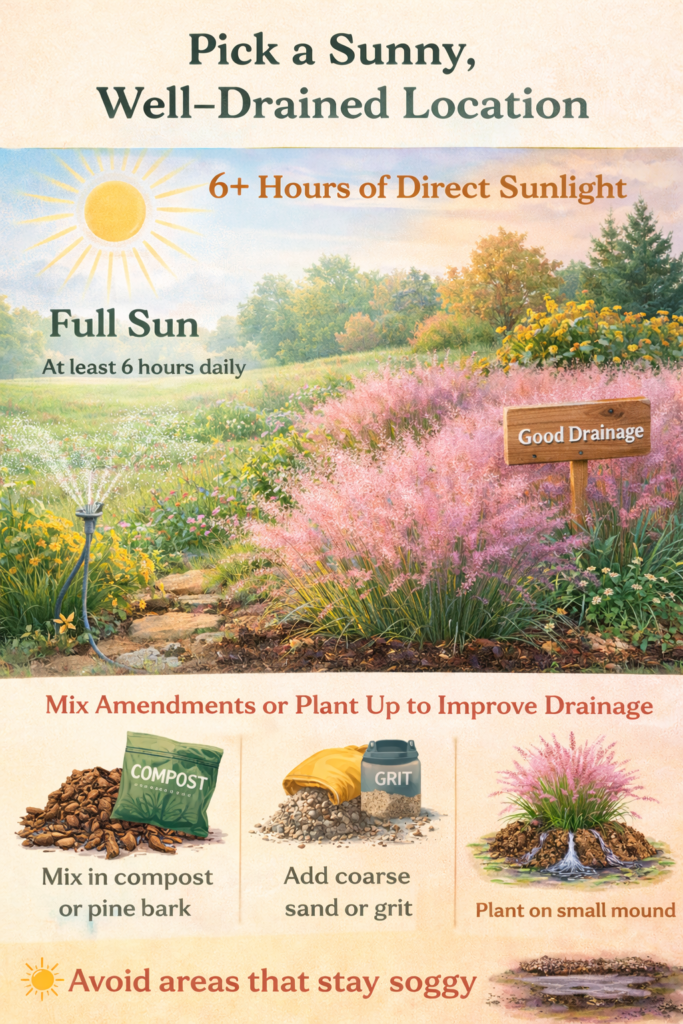
- Mix in compost or pine bark
- Add coarse sand or grit to loosen the soil
- Or plant on a small mound to encourage runoff
Pink muhly grass dislikes standing water and will fail in soggy areas.
3. Spacing and Garden Layout
Pink muhly grass becomes a full, rounded clump over time often reaching around 3 feet wide. If you’re planting several together:
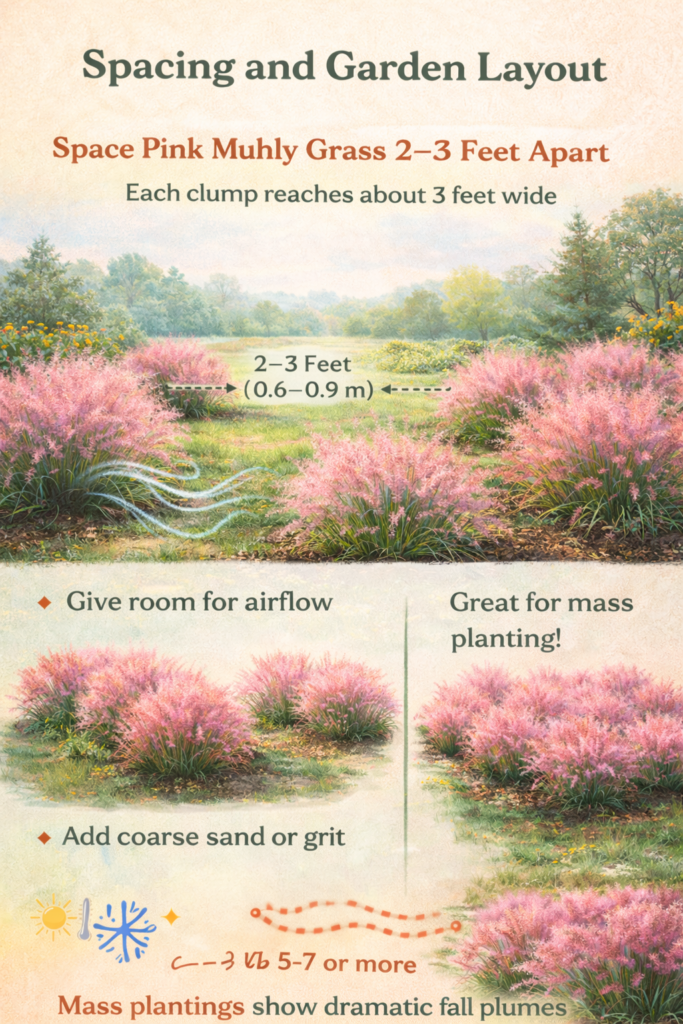
- Space each plant 2–3 feet apart
- Leave enough room for airflow, especially in humid climates
- For a soft “wave” effect, plant in groups of 5–7 or more
Mass plantings give the most dramatic look when the plumes appear in fall.
4. Planting the Grass: Step by Step
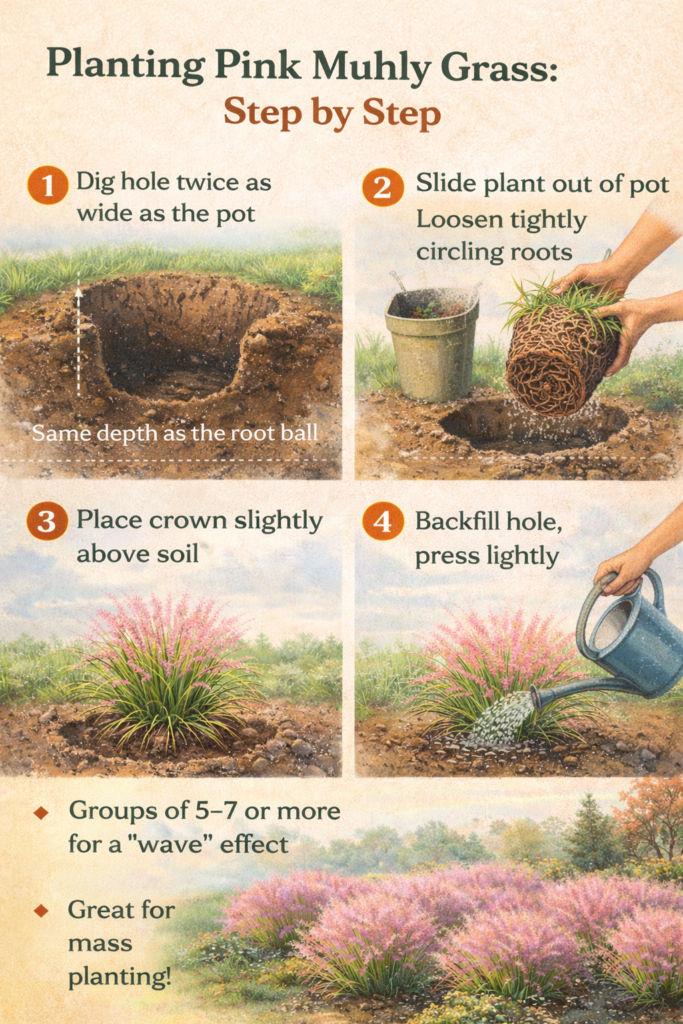
- Dig a hole twice as wide as the nursery pot.
- Keep the hole depth the same height as the root ball.
- Gently slide the plant out of its container.
- If roots are circling tightly, loosen them slightly.
- Position the plant so the crown sits level with or slightly above the soil.
- Backfill the hole and press lightly to remove air pockets.
- Water thoroughly.
This first watering helps the soil settle around the roots.
5. Watering to Establish
Even though pink muhly grass becomes drought tolerant later, new transplants need consistent moisture.
Here’s a simple routine:

- Keep the soil slightly moist for the first few weeks.
- Water deeply when the top 1–2 inches of soil feel dry.
- Reduce watering after the plant begins showing new growth.
Avoid overwatering pink muhly doesn’t enjoy wet feet.
6. Mulching
Mulch isn’t required, but a light layer can help:
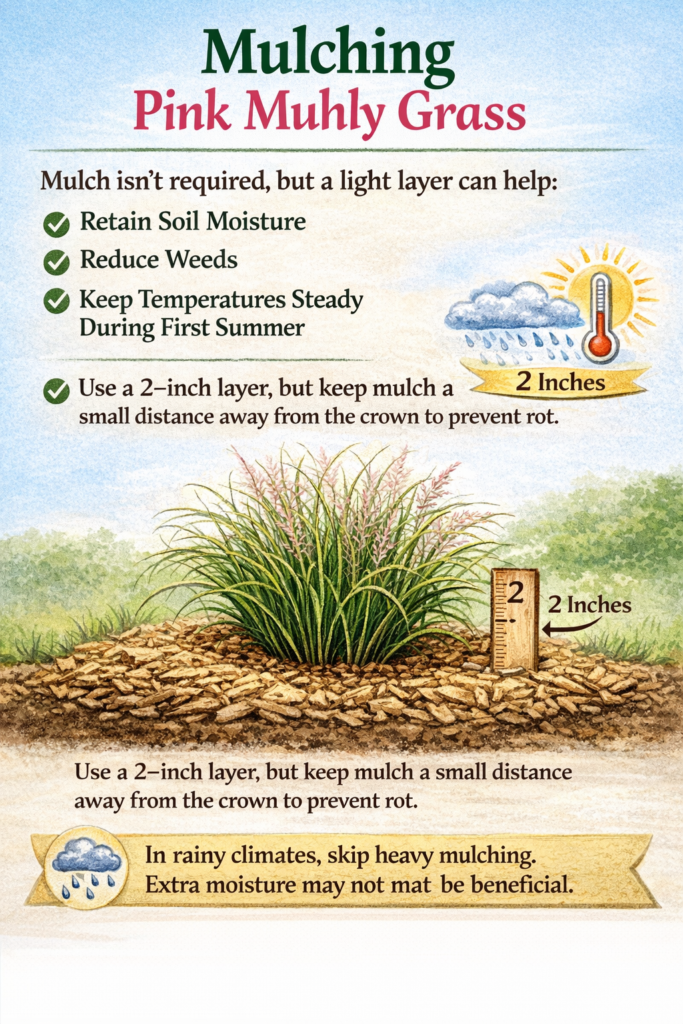
- Retain soil moisture
- Reduce weeds
- Keep temperatures steady during the first summer
Use a 2-inch layer, but keep mulch a small distance away from the crown to prevent rot.
If you garden in a rainy climate, skip heavy mulching, as the extra moisture may not be beneficial.
7. Buying Pink Muhly Grass
Most gardeners start with small potted plants usually 1 to 3 gallon nursery pots because they fill out faster than seed grown plants.

Look for plants at:
- Local garden centers especially in spring and early fall
- Native plant nurseries
- Reputable online sellers
If you search “pink muhly grass near me,” nurseries in USDA Zones 6–9 usually stock it since it’s a widely used landscape grass.
8. Growing Pink Muhly Grass from Seed
You can grow pink muhly from seed if you’re patient. The seeds are tiny and require light to germinate.
To grow from seed:
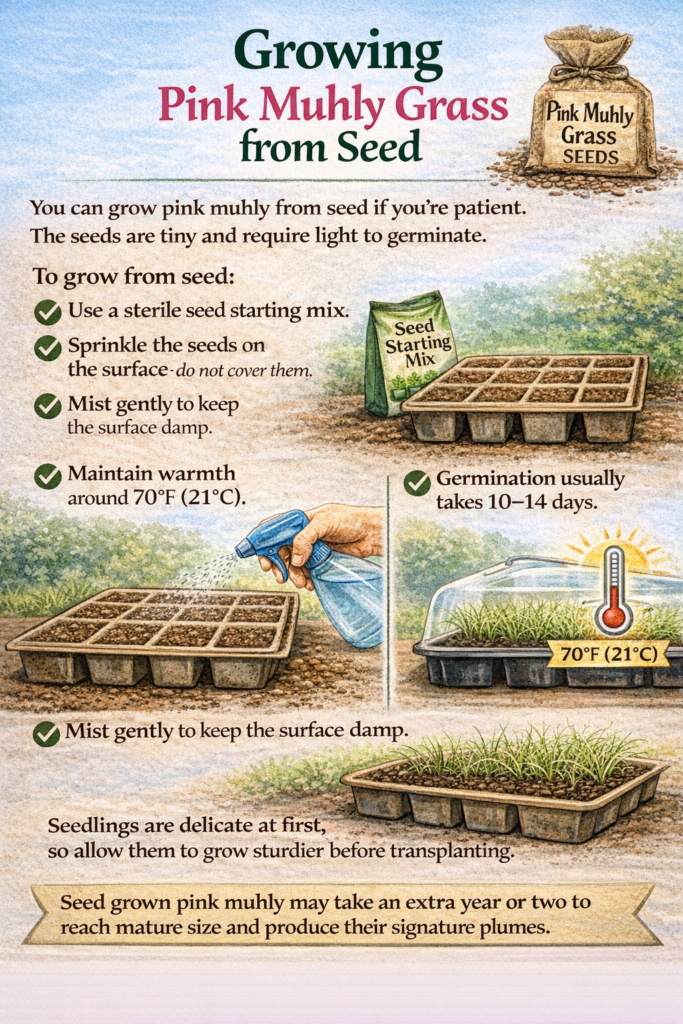
- Use a sterile seed starting mix.
- Sprinkle the seeds on the surface do not cover them.
- Mist gently to keep the surface damp .
- Maintain warmth around 70°F (21°C).
- Germination usually takes 10–14 days.
Seedlings are delicate at first, so allow them to grow sturdier before transplanting.
Seed grown pink muhly may take an extra year or two to reach mature size and produce their signature plumes.
References
- HGTV – Ornamental Grass Seed Starting Tips
- Lady Bird Johnson Wildflower Center – Muhlenbergia capillaris
- University of Florida IFAS Extension – Muhly Grass
- Clemson Cooperative Extension – Muhly Grass (HGIC 1175)
- USDA NRCS Plants Database – Muhlenbergia capillaris
- The Spruce – Pink Muhly Grass Growing Guide
- Gardening Know How – Muhly Grass Care
Pink Muhly Grass Care Guide
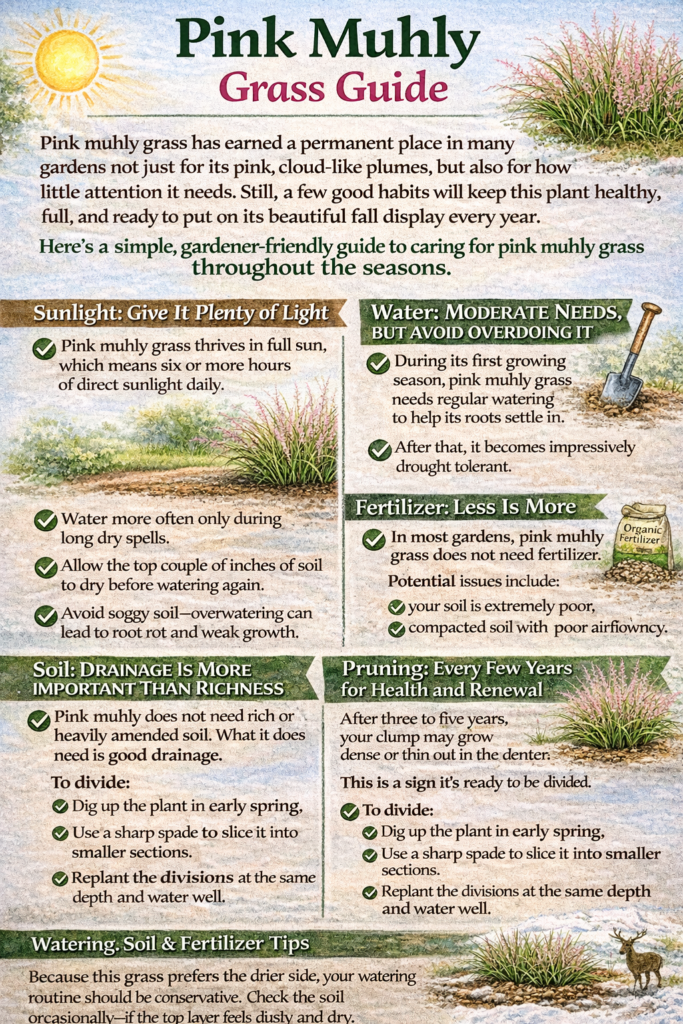
Pink muhly grass has earned a permanent place in many gardens not just for its pink, cloud like plumes, but also for how little attention it needs. Still, a few good habits will keep this plant healthy, full, and ready to put on its beautiful fall display every year.
Here’s a simple, gardener friendly guide to caring for pink muhly grass throughout the seasons.
Sunlight: Give It Plenty of Light
Pink muhly grass thrives in full sun, which means six or more hours of direct sunlight daily.
When it doesn’t get enough light, the plant may grow well but produce fewer or smaller plumes in fall.
If your plant hasn’t been blooming, sunlight is often the first thing to check.
Water: Moderate Needs, But Avoid Overdoing It
During its first growing season, pink muhly grass needs regular watering to help its roots settle in. After that, it becomes impressively drought tolerant.
- Water more often only during long dry spells.
- Allow the top couple of inches of soil to dry before watering again.
- Avoid soggy soil overwatering can lead to root rot and weak growth.
Once established, this plant is one of the easiest grasses to maintain.
Soil: Drainage Is More Important Than Richness
Pink muhly does not need rich or heavily amended soil. What it does need is good drainage.
It grows comfortably in:
- sandy soil
- rocky soil
- light, loamy soil
What it dislikes:
- heavy clay
- constantly wet ground
- compacted soil with poor airflow
If your soil tends to hold water, you can plant on a mound or mix in materials that lighten the soil.
Fertilizer: Less Is More
In most gardens, pink muhly grass does not need fertilizer. Because it’s a native species adapted to lean soils, too much nitrogen actually makes it flop or become floppy and reduces flowering.
Use fertilizer only when:
- your soil is extremely poor,
- or you see obvious nutrient deficiency.
If needed, a gentle, slow release feeding in early spring is enough.
Pruning: One Yearly Cut Is All It Needs
Pink muhly grass benefits from a single annual trim.
The best time is late winter or very early spring, right before new growth begins.
How to prune:
- Cut the clump back to about 4–6 inches above the ground.
- Remove only the old, dried stems.
- Don’t prune in summer or fall this removes the developing flower stalks.
Those tawny winter plumes also add texture to winter gardens, so there’s no reason to cut early.
Dividing: Every Few Years for Health and Renewal
After three to five years, your clump may grow dense or thin out in the center.
This is a sign it’s ready to be divided.
To divide:
- Dig up the plant in early spring.
- Use a sharp spade to slice it into smaller sections.
- Replant the divisions at the same depth and water well.
Division keeps plants vigorous and also gives you free new plants to use elsewhere.
Pest and Disease Issues: Rare and Manageable
Pink muhly grass is almost trouble free when grown in the right place.
Potential issues include:
- Fungal leaf spots in high humidity or overcrowded beds
- Muhly grass mealybug, a pest occasionally spotted in parts of the Southeast
Both issues are uncommon. Good spacing, full sun, and avoiding wet soil prevent most problems naturally.
Deer tend to leave it alone thanks to its slightly rough foliage.
Winter Care: Depends on Your Climate
In its warmer native range, pink muhly grass needs almost no winter protection beyond its annual trim.
In cooler regions:
- Zones 6–7: A light layer of mulch around the base helps protect roots, especially during the first winter.
- Zone 5: Prolonged deep freezes may kill it. Many gardeners treat it as an annual or overwinter it in a container indoors.
As long as the roots stay dry and insulated, the plant usually comes back strong.
Watering, Soil & Fertilizer Tips
Because this grass prefers the drier side, your watering routine should be conservative.
Check the soil occasionally if the top layer feels dusty and dry, that’s a good time for a deep soak. Otherwise, let nature handle the watering.
Fertilizer should be used sparingly, if at all. Pink muhly grass grows naturally in low nutrient soils, and too much fertility leads to more leaves and fewer blooms.
Seasonal Cleanup
Late winter cleanup is essential because it clears away old growth, allows air to circulate, and helps new shoots come in fresh.
The plant will respond almost immediately once spring temperatures rise.
Propagation by Division
If you enjoy expanding your garden or sharing plants, division is your best method.
It’s straightforward and results in strong, healthy new plants that establish quickly.
References
- Gardening Know How – Muhly Grass Care
- University of Florida IFAS Extension – Muhly Grass
- Clemson Cooperative Extension – Muhly Grass (HGIC 1175)
- NC State Extension – Muhly Grass Mealybug
- The Spruce – Ornamental Grass Care & Pink Muhly Guides
Landscaping with Pink Muhly Grass
Pink muhly grass has a way of lifting the mood of a landscape. Even before it blooms, its soft, fine leaves bring a gentle movement to the garden. And when autumn arrives, the plumes turn into a dreamy pink haze that can make an ordinary corner of the yard look like a painting. Because it’s such a flexible plant, you can use it in many different ways, depending on the space you have and the style you prefer.
Mass Plantings for a Statement Look
If you’ve ever seen a field of pink muhly grass in bloom, you know how striking it can be. There’s something special about seeing dozens of plants opening their plumes all at once.
Garden slopes, wide borders, and open sunny areas are perfect places for this kind of planting. Even if your garden is smaller, devoting one bed to a cluster of these grasses creates a strong visual impact.
Spacing them about two to three feet apart allows each plant to expand naturally without crowding. When the wind passes through, the entire bed seems to shift and ripple like pink fog.
A Single Plant Can Hold Its Own
Large sweepings of pink muhly are impressive, but one plant on its own can also make a quiet, elegant statement.
A single clump placed in the right spot in a mixed border, beside a boulder, or near a small patio feels like a soft brushstroke of color. The plant’s rounded form and airy silhouette help break up the heavier shapes of shrubs or hardscape.
It also works surprisingly well in containers. A wide, shallow pot with good drainage can turn one plant into a movable pink cloud in the fall.
Softening Edges and Walkways
Pink muhly grass is useful anywhere the garden needs a gentle transition.
It softens the edges of paths, fences, and patios without overwhelming nearby plants.
Along a walkway, the grass leans slightly as it sways, creating a relaxed, welcoming feel. Since it doesn’t grow too tall, it won’t block sightlines or hide smaller plants behind it. In long borders or beside straight driveways, it adds a flowing rhythm that breaks up sharp lines.
Helpful on Slopes and Tough Spots
Some areas of the yard are just difficult to plant sunny slopes, dry banks, and places where water runs off too quickly. Pink muhly grass handles these conditions better than many ornamentals.
Its fibrous roots help hold soil in place, making it a good option for erosion control.
What makes it even better is how it improves the appearance of spots that could otherwise look plain or neglected. Instead of a bare slope, you get a living hillside that changes color with the seasons.
Designing with Seasonal Interest
Pink muhly grass earns its biggest attention in the fall, but you can design a bed that looks appealing all year by pairing it with plants that shine in other seasons.
Some gardeners like to mix it with spring bulbs that disappear by the time the muhly starts growing strongly. Others plant summer blooming perennials nearby, so the area stays lively until the pink plumes take over in autumn.
Even in winter, the dried flower stalks catch frost and light snow, adding a quiet beauty to the garden instead of leaving an empty space.
Companion Plants for Pink Muhly Grass
Pink muhly grass has a charm of its own, especially when the soft pink plumes show up in fall. But it becomes even more beautiful when it grows alongside plants that match its sunlight and soil preferences. If you choose the right companions, the whole garden feels more balanced and colorful from one season to the next.
Here are some plants that naturally blend well with pink muhly grass.
Black Eyed Susans & Coneflowers
Black eyed Susans and coneflowers feel like old friends in the garden. They bloom through the warm months and keep the space bright long before the muhly begins to change color.
Even after the flowers fade, the dried seed heads stand tall and sturdy. These darker shapes look striking beside the soft pink plumes that arrive later.
All three are sun lovers and don’t mind dry soil, so they grow happily in the same spot without extra attention.
Russian Sage & Summer Salvias
Russian sage has a loose, airy look that pairs beautifully with muhly grass.
Its blue lavender flowers appear in late summer and blend gently with muhly’s movement and softness.
Garden salvias offer a similar feel. Their upright flower spikes bring a bit of structure while the colors especially purples and blues mix well with pink muhly’s fall tones. The silvery or green foliage also brightens the planting on hot, sunny days.
Sedums
Sedums are tough plants with a completely different texture from muhly grass, which makes them excellent companions.
Their fleshy leaves and rounded flower heads add weight and shape to a bed, balancing the lighter, finer look of the muhly.
Upright sedums like ‘Autumn Joy’ blush into soft pinks and reds toward the end of summer, creating a natural bridge into the muhly’s fall show.
Low growing sedums are good for filling gaps near the front of the planting.
Lavender & Other Drought-Tolerant Perennials
For gardens with a dry, sunny feel, lavender is a lovely match.
The scent, the soft purple flowers, and the gray green foliage all work beautifully beside pink muhly grass.
Other drought tolerant perennials, such as smaller sages or gaura, add lightness and movement. Their simple blooms and airy stems blend effortlessly with the texture of the grass without overwhelming it.
Succulents, Agaves & Yucca
If you enjoy bold shapes in the garden, try mixing pink muhly with tough, architectural plants like yucca or agave.
Their strong outlines and thick leaves create a striking contrast to the wispy, cloud like plumes of the muhly.
This combination is perfect for gravel gardens, modern landscapes, or water wise plantings where you want both simplicity and drama.
Little Bluestem & Switchgrass
Pink muhly also looks right at home in a more natural, prairie inspired setting.
Little bluestem shifts into rich copper and rust tones in autumn, and the warm colors sit beautifully behind the pink muhly plumes.
Switchgrass adds height and gentle, airy seed heads that bring movement and texture without stealing the spotlight.
Just give each grass enough space to grow naturally so they retain their individual shapes.
How to Choose Good Companions
You don’t need many rules , just a few simple ideas:
- Stick to plants that like full sun and dry soil.
- Choose plants that grow around 1–4 feet tall, so nothing gets lost or hidden.
- Mix different textures — broad leaves, narrow blades, round flower heads , to create a natural flow.
- Combine plants with different bloom times so there’s always something happening.
With the right mix, pink muhly grass becomes a highlight in autumn, while its companions keep the garden lively through spring and summer.
Pink Muhly Grass: How It Fits Into Different Landscaping Styles
Pink muhly grass is one of those rare plants that can slip into almost any garden and still feel like it belongs. It doesn’t matter whether your yard leans modern, traditional, coastal, or something in between, its soft, airy plumes add a touch of charm wherever they land. Below is a simple look at how this plant works in different designs and how to use it to your advantage.
Modern Gardens
Modern landscapes often rely on sharp lines and strong materials, think concrete pads, gravel, steel, and minimal colors. Those spaces can sometimes feel a little too rigid on their own. This is where pink muhly makes a big difference.
Set against a black fence or a rust colored steel panel, the pink plumes look almost illuminated. Even a small cluster can soften the entire space. If you want something clean but memorable, line a straight walkway with evenly spaced clumps. The neat layout keeps the modern feel, while the blooms add a touch of softness that moves with the wind.
Cottage or Meadow – Inspired Gardens
In cottage gardens, where everything is meant to look a bit relaxed and free flowing, pink muhly blends right in. It mixes easily with fall bloomers like asters, coneflowers, liatris, and goldenrod. Instead of standing out in a loud way, it acts more like a gentle haze that ties all the colors together.
In meadow style plantings, it provides little bursts of texture among native grasses and wildflowers. When the sun hits the plumes, you get a glowing, cloud like effect that gives the whole area depth and movement. It’s simple, natural, and never feels forced.
Coastal & Beachy Landscapes
Because pink muhly handles salt and sandy soil without complaining, it’s a natural fit near the coast. You can tuck it in among sea oats, dune sunflowers, or other tough coastal plants and it won’t skip a beat.
The pink color tends to echo the soft tones of early morning or sunset the colors many coastal gardens are already known for. It also works well around pools or patios where splashes of chlorine or saltwater might land. Pair it with weathered wood, stone, or shells, and the whole space takes on an easy, beach inspired feel.
Formal Landscapes
At first glance, you might not picture pink muhly in a formal setting. But because it grows in a tidy mound, it actually behaves better than people expect. Used in a structured pattern , like matching clumps on each side of a walkway or spaced evenly along a border, it still feels intentional.
In fall, when the blooms open, you get a soft wave of color that lifts the whole space without breaking the formal style. It’s a nice way to add personality without losing order.
Simple Tips for the Best Look
No matter where you plant it, a few things always help pink muhly shine:
Use more than one plant if you want a truly eye catching effect; small groups are far more dramatic than single clumps.ill make those pink plumes appear even more vivid. And if possible, position the plants where they’ll be illuminated by low angle morning or afternoon sun, the plumes will glow, seemingly lighting up from within.
Give it space so the plumes can open up and sway naturally.
Place it against something darker , a hedge, a wall, even a row of evergreens—to make the color stand out.
Let sunlight play a role, morning or late afternoon light makes the grass glow.
Pink Muhly Grass Quick Summary Table
| Feature | Details |
|---|---|
| Common Name | Pink muhly grass |
| Botanical Name | Muhlenbergia capillaris |
| Plant Type | Perennial, warm season ornamental grass (clump forming, non invasive) |
| Native Range | Central & eastern U.S. from Massachusetts/Kansas to Florida/Texas |
| USDA Hardiness Zones | 6–9 (may survive in 5 with protection and excellent drainage) |
| Mature Height | 2–3 ft foliage; plumes up to ~4–5 ft |
| Mature Spread | About 2–3 ft wide |
| Foliage | Fine, wiry, dark green leaves in neat, rounded clumps |
| Bloom Time | Late summer to fall (usually Sept–Nov) |
| Bloom Color | Pink to pink lavender plumes, fading to tan in winter |
| Sun Requirements | Full sun (6+ hours direct sun daily); fewer blooms in shade |
| Soil Type | Loamy, sandy, or rocky soils; must be well drained |
| Soil pH | Neutral to slightly acidic (~6.0–7.0) |
| Water Needs | Low once established; drought tolerant |
| Salt Tolerance | Good, suitable for coastal sites and salted areas |
| Maintenance Level | Low, one yearly cutback, little to no fertilizer needed |
| Growth Habit | Clump forming, does not spread by rhizomes |
| Wildlife Value | Shelter and seeds for small birds and wildlife |
| Deer Resistance | Generally deer resistant |
| Best Uses | Mass plantings, borders, slopes, containers, coastal and modern designs |
Final Thought
In summary, pink muhly grass is a remarkable ornamental grass that combines striking beauty with tough as nails adaptability. Its floating pink plumes each fall can transform ordinary gardens into cotton candy wonderlands, delighting everyone who sees them. We’ve covered how to successfully plant and care for pink muhly from choosing a sunny spot with well drained soil, to mindful watering, and the simple once a year trim. We’ve also explored creative ways to use it in the landscape and answered common questions.
References
- Lady Bird Johnson Wildflower Center – Muhlenbergia capillaris (Pink muhly grass).
- University of Florida IFAS Extension – Muhly Grass (Muhlenbergia capillaris).
- Clemson Cooperative Extension – Muhly Grass (HGIC 1175).
- USDA NRCS Plants Database – Muhlenbergia capillaris profile.
- Missouri Botanical Garden – Plant Finder – Muhlenbergia capillaris.
- HGTV – Articles on ornamental grass seed starting and garden use of pink muhly grass.
- The Spruce – Pink Muhly Grass Growing Guide and general ornamental grass care guides.
- Gardening Know How – Muhly Grass Care and troubleshooting articles.
- NC State Extension – Information on muhly grass and muhly grass mealybug.
Frequently Asked Questions (FAQs) about Pink Muhly Grass
1. Why isn’t my pink muhly grass blooming?
A few things can hold it back:
It’s not getting enough sun. Pink muhly really needs full sun around 6 hours or more a day.
It’s getting too much fertilizer, especially high nitrogen products. That makes lots of leaves, but few or no plumes.
The soil stays too wet or the spot is too shady, which stresses the plant.
If you move it to a sunnier, drier spot and stop overfeeding, you’ll usually see better flowering the following season.
2. How often should I water pink muhly grass?
Think of it in two stages:
When it’s new: Keep the soil slightly moist. Water when the top of the soil feels dry to the touch, but don’t let it turn muddy.
Once it’s established: It’s quite drought tolerant. Only give it a deep watering during long hot, dry periods.
If the soil is often wet or soggy, you’re watering too much.
3.When is the right time to cut back pink muhly grass?
The safest and easiest time is:
Late winter or very early spring, just before you see new green growth starting.
Cut the clump down to about 4–6 inches above the ground.
Try not to cut it in summer or fall, because you’ll be removing the stems that would have carried the pink plumes .
4. Can I grow pink muhly grass in a pot?
Yes, you can grow it in containers, and it looks great that way.
Just make sure:
The pot has good drainage holes.
You use a light, well draining potting mix .
The container sits in full sun most of the day.
A wide, stable pot is best so the plant has room to grow and doesn’t tip over when the plumes get tall.
5. Will pink muhly grass live through winter where I live?
It depends on your USDA zone:
In Zones 6–9, it’s usually winter hardy and comes back each year with little fuss.
In Zone 5, it’s more of a gamble. It might survive in a sheltered, well drained spot with a light mulch over the roots, but some gardeners grow it in pots and treat it like a tender perennial.
Cold weather plus wet soil is the real problem, so keeping the roots in well drained ground is very important.

Thesis Link : https://saulibrary.edu.bd/daatj/public/uploads/BAU200601_19-Pp_5.pdf
- Why Are My Zucchini Leaves Turning Yellow? Causes & Fixes - August 31, 2026
- What Is Eating My Plants at Night? - August 27, 2026
- Why Are My Tomato Leaves Curling Up? Causes & Fixes - August 20, 2026


[…] Read more Best Time to Travel to Costa Rica – Weather, Seasons, Costs & Top Travel Tips Pink Muhly Grass – Planting, Care and Landscaping Guide […]