
Every spring it’s the same story. Your grass wakes up and so do the dandelions, clover, and crabgrass. You want them gone, but one wrong product can turn your whole lawn yellow in a weekend. That’s why choosing the best weed killer for lawns isn’t about killing weeds. It’s about killing only the weeds.
The secret is selectivity. A selective herbicide targets broadleaf weeds and weed grasses while leaving your turf unharmed. A non-selective product like standard glyphosate kills everything it touches grass included.
In this guide, we compare the 10 best options for every situation: overall performance, budget, seeding, pets, organic gardens, and stubborn weeds like crabgrass and nutsedge. Every pick below is a genuine best weed killer that won’t kill grass when used at label rates.
Quick Picks: Best Weed Killer for Lawns at a Glance
| Product | Best For | Type | Key Active Ingredient |
|---|---|---|---|
| Ortho WeedClear | Best overall | Post-emergent spray | 2,4-D, MCPP, dicamba |
| Syngenta Tenacity | Seeding & overseeding | Pre + post-emergent | Mesotrione |
| Spectracide Weed Stop | Best budget | Post-emergent spray | 2,4-D, MCPP, dicamba |
| Scotts Turf Builder Weed & Feed | Weed & feed combo | Granular | 2,4-D, mecoprop |
| Prodiamine 65 WDG | Best pre-emergent | Pre-emergent | Prodiamine |
| Quinclorac 75 DF | Crabgrass (post-emergent) | Post-emergent | Quinclorac |
| Trimec Classic | Dandelions | Post-emergent | 2,4-D, MCPP, dicamba |
| IronX (Iron HEDTA) | Pet-safe | Post-emergent | Iron HEDTA |
| Burnout Fast-Acting | Organic spot treatment | Contact (non-selective) | Citric acid, clove oil |
| Celsius WG | Warm-season lawns | Post-emergent | Dicamba blend |
How a Weed Killer Spares Your Grass
Selective herbicides exploit biology. Broadleaf weeds like dandelions absorb chemicals such as 2,4-D differently than grass does, so the weed dies from the root while the turf keeps growing. Grassy weed killers work the other way, targeting enzymes found in crabgrass but not in bluegrass or fescue.
Two timing categories matter just as much:
- Pre-emergent weed killer — creates a barrier in the soil that stops weed seeds from sprouting. It prevents weeds; it doesn’t kill existing ones.
- Post-emergent weed killer — applied to weeds that are already up and growing. This is what most homeowners reach for.
Get the category wrong and even the best weed killer for lawns will disappoint you. Now, the picks.
1. Ortho WeedClear Lawn Weed Killer — Best Overall
Type: Ready to use / concentrate liquid | Kills: 250+ broadleaf weeds | Safe on: Most cool and warm season lawns (check label)
If you want one bottle that handles the average lawn’s weed problems, this is it. WeedClear combines three proven broadleaf herbicides that take out dandelions, clover, chickweed, and plantain down to the root, usually with visible curling within days. It starts working on contact and is rainproof in about an hour.
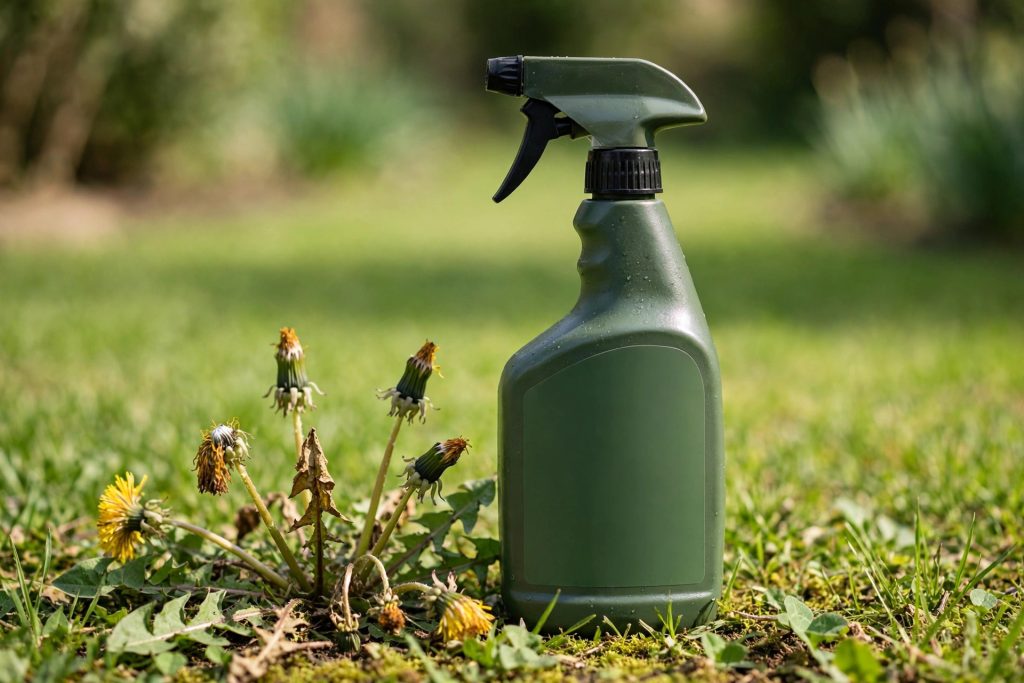
The ready to use sprayer version is ideal for spot treating, while the concentrate covers whole lawns cheaply through a hose end sprayer. It’s the bottle we recommend first because it balances power, price, and availability better than anything else here.
Pros: Fast visible results; kills weeds to the root; widely available; rainproof quickly
Cons: Not for St. Augustine (use the Southern formula); repeat application needed for tough perennials
2. Syngenta Tenacity — Best for Seeding and Overseeding
Type: Liquid concentrate | Active: Mesotrione | Kills: 46+ weeds, pre and post emergent
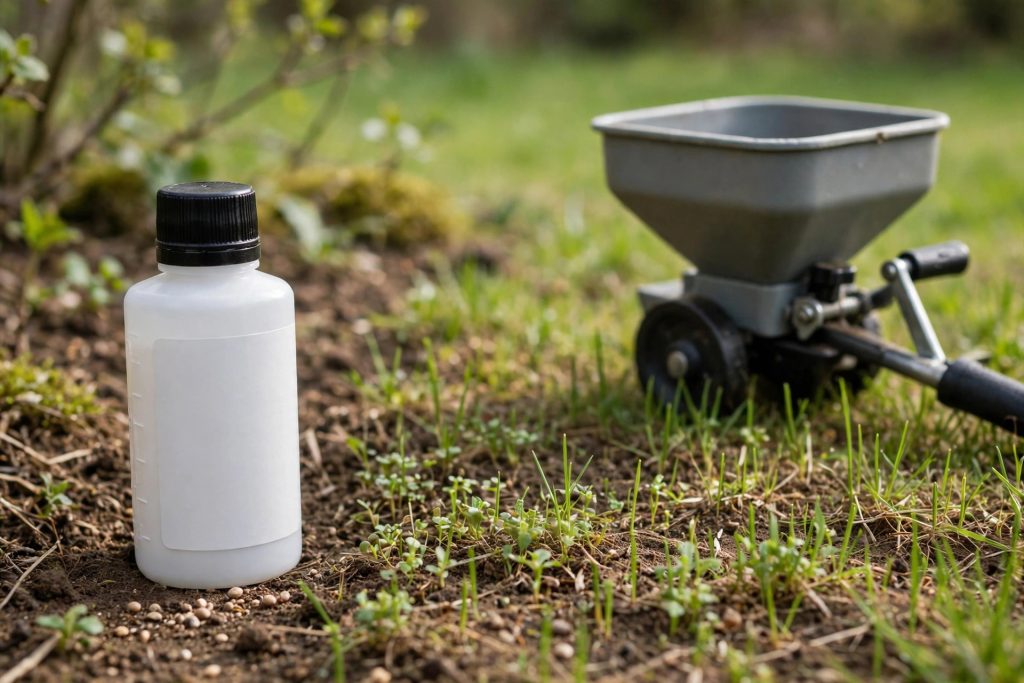
Tenacity is the one product on this list you can apply the same day you seed. Almost every other herbicide forces you to wait weeks before or after overseeding; mesotrione doesn’t. It works both as a pre emergent weed killer at seeding time and as a post-emergent on young broadleaf weeds and crabgrass.
Treated weeds turn white a bleaching effect, then die over 2–3 weeks. It looks alarming but it’s harmless to established turf. One 8 oz bottle makes up to 30 gallons, so the high upfront price stretches much further than it first appears.
Pros: Safe at seeding time; pre + post in one product; excellent on crabgrass and bentgrass
Cons: Premium price; whitening effect can worry first-time users; needs a sprayer and measuring
3. Spectracide Weed Stop for Lawns — Best Budget Pick
Type: Ready to use / concentrate | Kills: 200+ weeds | Rainproof: ~6 hours
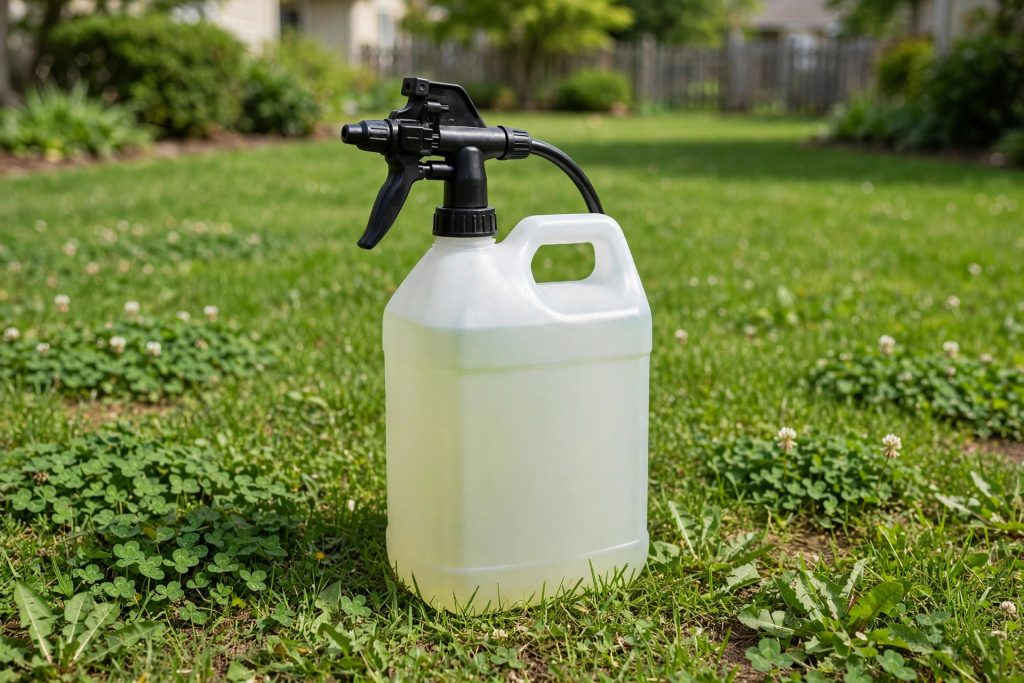
Weed Stop delivers the classic 2,4-D/MCPP/dicamba combination at the lowest price per treatment of any product here. It kills dandelions, clover, and most common broadleaf weeds, and the formula with crabgrass control adds sulfentrazone for extra punch.
Results are a touch slower than Ortho’s , expect 7–14 days for full die off but at this price, patience is cheap. For a big lawn on a budget, nothing else comes close.
Pros: Lowest cost per application; proven active ingredients; concentrate covers large areas
Cons: Slower results; more odor than some rivals; may need a second pass on mature weeds
4. Scotts Turf Builder Weed & Feed — Best Weed and Feed Combo
Type: Granular | Analysis: Fertilizer + herbicide in one bag | Coverage: Up to 15,000 sq ft
Too busy to spray and fertilize? Weed & Feed does both in a single spreader pass. The granules stick to wet weed leaves, kill listed broadleaf weeds, and feed the lawn so grass thickens into the bare spots weeds leave behind. Thick turf is itself the best long-term weed defense, it shades the soil so weed seeds can’t germinate.
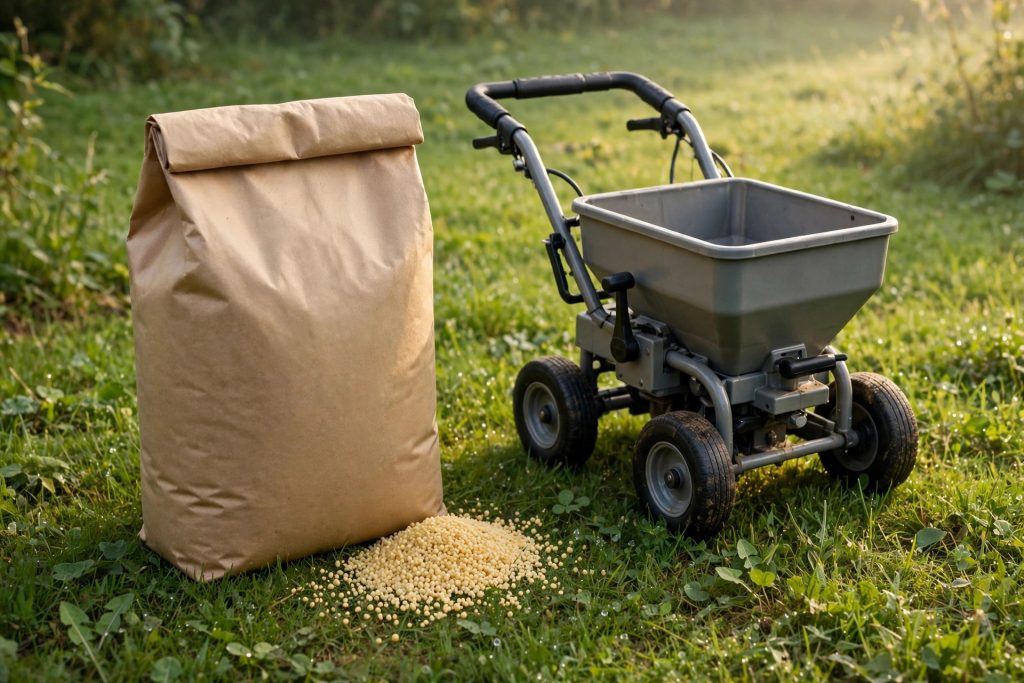
Apply it in the morning when dew helps granules stick, and don’t mow for a day or two before and after. Wondering whether granular or liquid products suit your yard better? Our guide to liquid vs granular fertilizers breaks down the pros and cons of each format.
Pros: Two jobs in one pass; feeds while it kills; huge coverage per bag
Cons: Less precise than spraying; must apply to damp lawn; not for new seed
5. Prodiamine 65 WDG — Best Pre Emergent Weed Killer
Type: Water-dispersible granule (mix with water) | Active: Prodiamine | Protects against: Crabgrass, goosegrass, poa annua, spurge
The cheapest insurance in lawn care. Prodiamine is the same active ingredient in professional products like Barricade, sold here as an affordable generic. One application in early spring when soil temperatures approach 55°F , stops crabgrass before it ever appears.
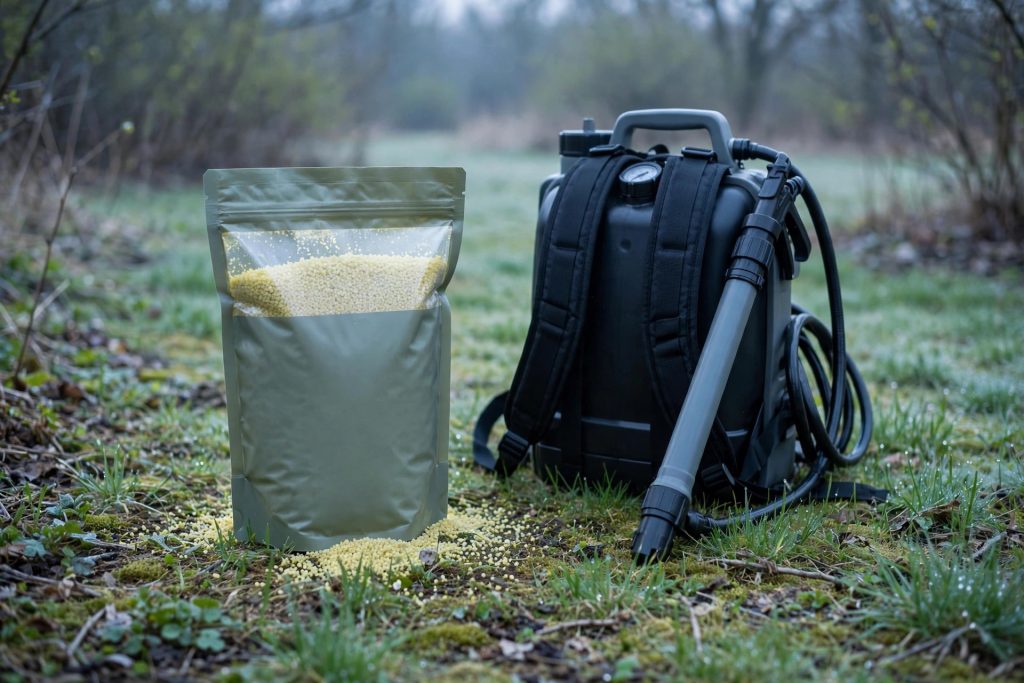
Timing is everything. Crabgrass seed germinates when soil holds near 55°F for several days, and a single plant can scatter thousands of seeds for next year. A spring barrier breaks that cycle cold. Pros mix prodiamine by weight for pennies per 1,000 sq ft.
Healthy soil biology also helps your lawn resist weed pressure naturally , see our guide to garden soil health for the basics.
Pros: Season long prevention; extremely cheap per application; low toxicity once watered in
Cons: Prevents grass seed too , don’t use when overseeding; requires accurate mixing and a sprayer
6. Quinclorac 75 DF — Best Crabgrass Killer
Type: Dry flowable concentrate | Active: Quinclorac | Best on: Mature crabgrass, clover, foxtail
Missed your pre-emergent window and now crabgrass owns your lawn edges? Quinclorac is the post emergent crabgrass killer the pros reach for. Unlike weaker products that only work on baby crabgrass, quinclorac kills tillered, mature plants, the ugly, spreading mats you notice in July.
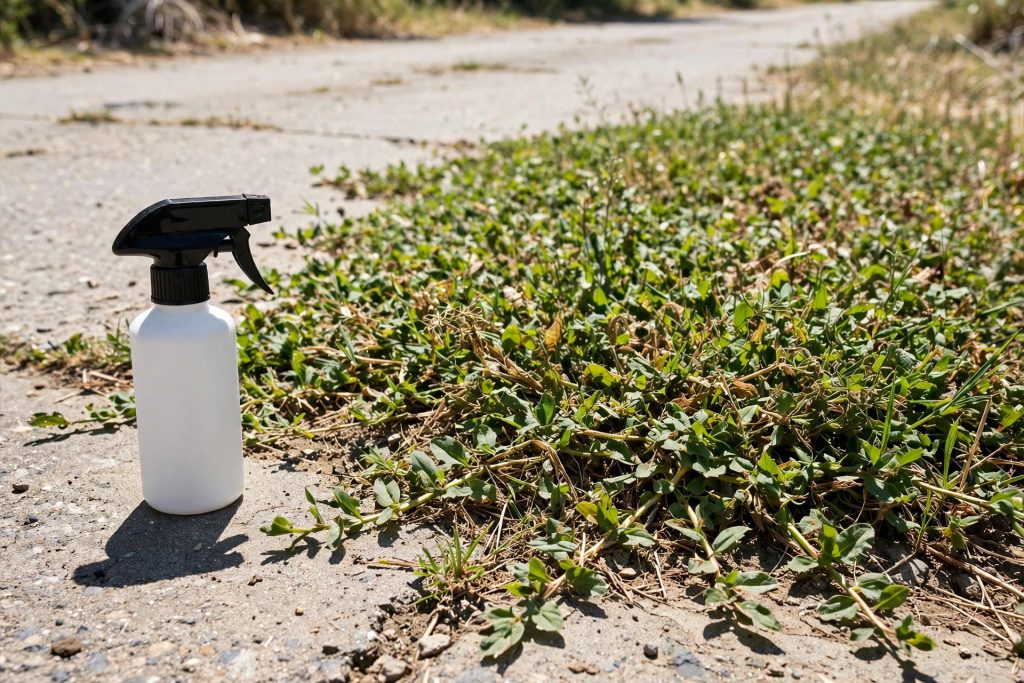
Mix it with a methylated seed oil (MSO) surfactant for best results, and apply when crabgrass is actively growing but before it sets seed. It’s also effective on white clover and torpedograss, two other summer headaches.
Pros: Kills mature crabgrass other products can’t; also handles clover; economical concentrate
Cons: Requires mixing and surfactant; limited use on some warm-season grasses — check the label
7. Trimec Classic — Best Dandelion Killer for Lawns
Type: Liquid concentrate | Actives: 2,4-D, MCPP, dicamba | Kills: 200+ broadleaf weeds
If dandelions are your main enemy, Trimec is the benchmark dandelion killer for lawns. This three-way blend has been the turf industry’s workhorse for decades because it destroys the whole plant, including that deep taproot a dandelion uses to regrow after mowing. One dandelion head releases roughly 200 seeds, so killing the root, not just the flower, is what actually ends the cycle.
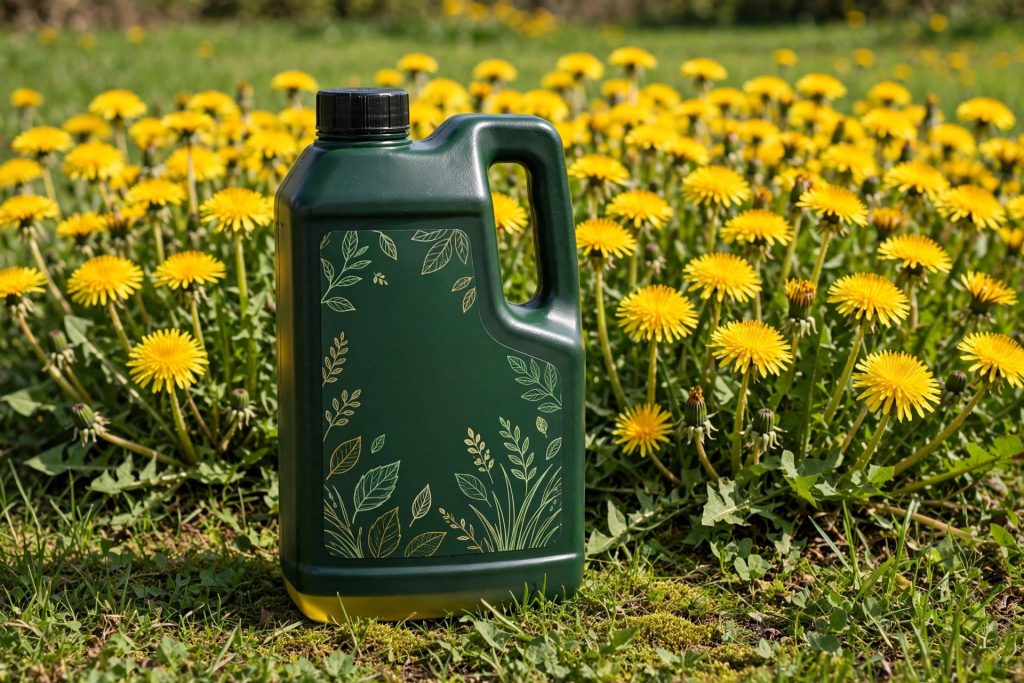
It also flattens plantain, henbit, spurge, and wild violet with a follow-up application. Golf courses and sports fields use it by the drum; homeowners can buy the same formula in quart bottles.
Pros: Gold standard broadleaf control; kills to the taproot; concentrate is cheap per acre
Cons: Strong herbicide odor; keep off garden beds, dicamba can drift to ornamentals
8. IronX Selective Weed Killer — Best Pet Safe Weed Killer for Lawns
Type: Ready to use liquid | Active: Iron HEDTA (FeHEDTA) | Safe on: All common lawn grasses
Dog owners, this one’s yours. IronX uses iron , yes, the nutrient to overload broadleaf weeds while grass shrugs it off. Weeds turn dark and shrivel within 3–24 hours, and once the spray has dried, kids and pets can walk the lawn again. That’s what makes it our top pet safe weed killer for lawns.
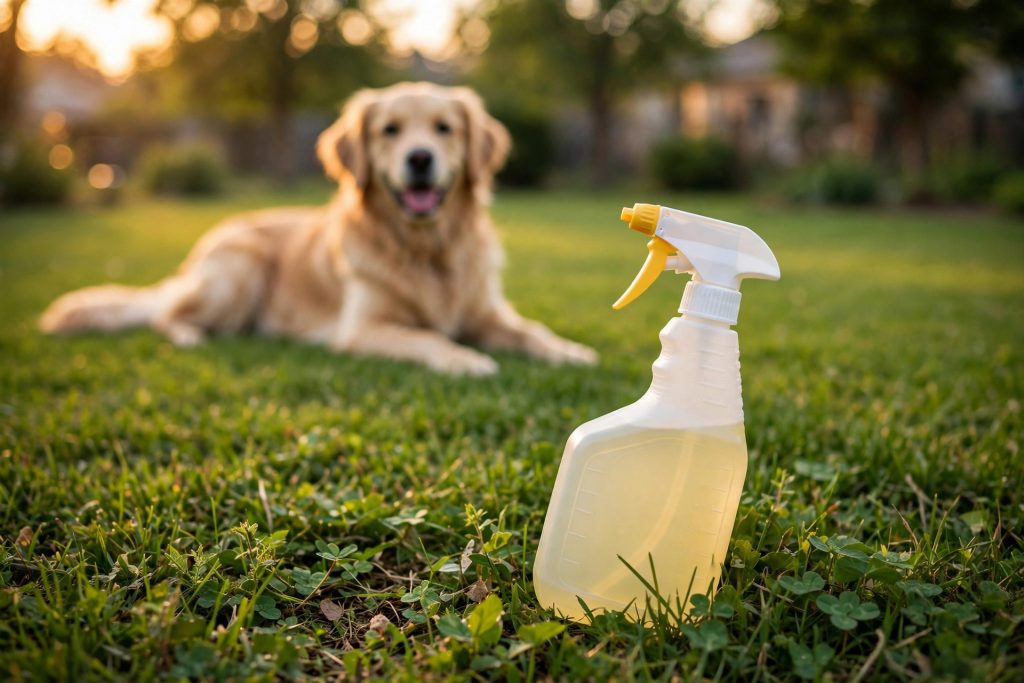
Expect to reapply every 3–4 weeks for deep-rooted perennials, and don’t be surprised if your grass greens up a little , it loves the iron too. It’s the same chemistry (Fiesta is the commercial twin) used on school fields and playgrounds where chemical restrictions apply.
Pros: People and pet safe once dry; fast visible results; no chemical smell; grass safe on all turf types
Cons: Needs repeat applications on tough weeds; can temporarily darken grass; pricier per treatment
9. Burnout Fast-Acting Weed & Grass Killer — Best Organic Option (Spot Treatment)
Type: Ready-to-use contact spray | Actives: Citric acid, clove oil | Certification: Organic ingredients
Honesty first: Burnout is non-selective. It’s an organic weed killer for lawns in the sense that it’s made from plant based acids and oils with no synthetic herbicides but it will burn any grass it touches. Use it surgically: dandelions in bare patches, weeds in driveway cracks, and along edges where a little collateral damage doesn’t matter.
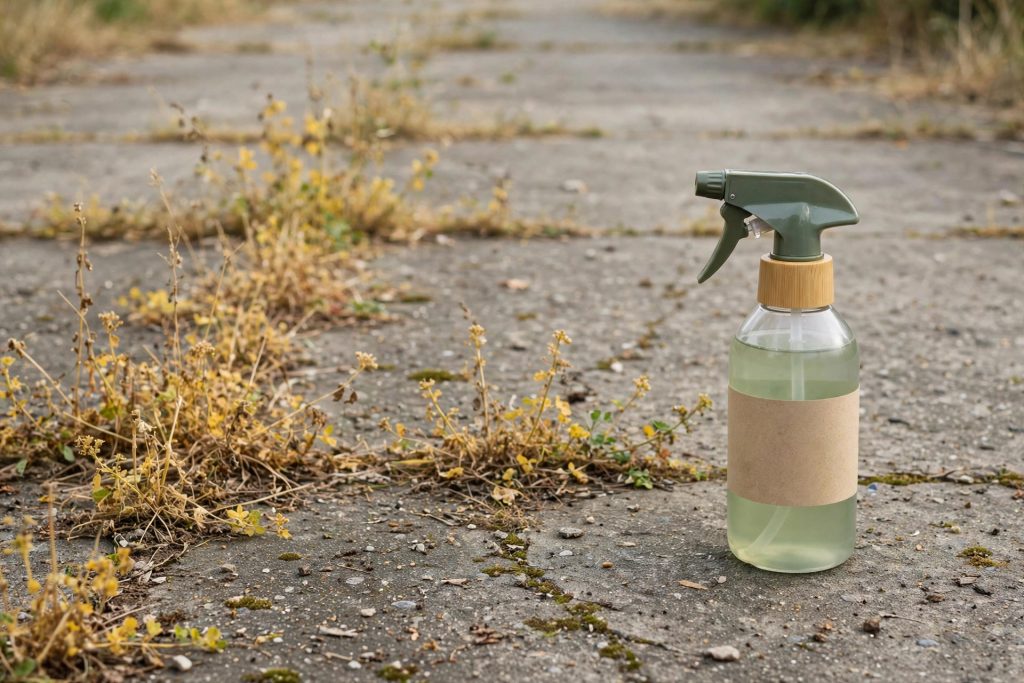
Within hours, treated weeds yellow and collapse. Because it only burns top growth, deep-rooted perennials may need a second hit. For full-lawn organic control, IronX above is the better tool. For everything else, our organic farming guide covers chemical-free strategies that scale.
Pros: Organic ingredients; results in hours; no synthetic residue; good for edges and cracks
Cons: Non-selective — burns grass on contact; perennials regrow from roots; spot use only
10. Celsius WG — Best for Warm-Season Lawns
Type: Water dispersible granule | Actives: Dicamba, iodosulfuron, thiencarbazone | Safe on: Bermuda, zoysia, St. Augustine, centipede
Southern lawns play by different rules. Products that are fine on fescue can wreck St. Augustine, and summer heat makes many herbicides risky. Celsius WG was engineered for exactly this: broadleaf and grassy weed control that’s safe on warm-season turf even in high temperatures, where 2,4-D products carry heat restrictions.
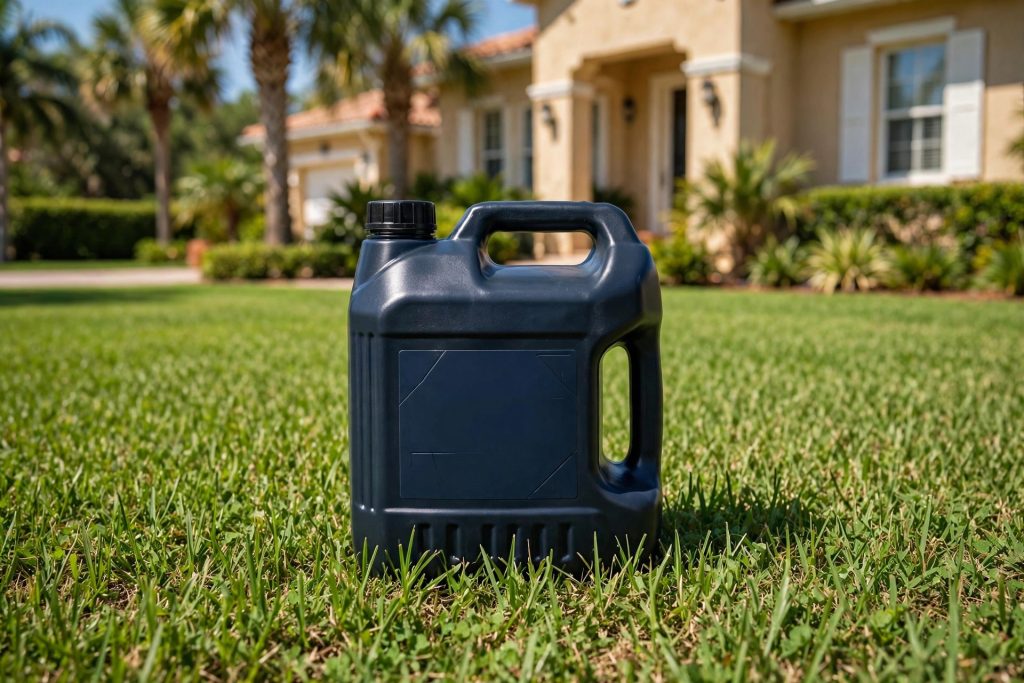
One 10 oz bottle treats acres, which is why lawn-care companies love it. It handles dollarweed, Virginia buttonweed, doveweed, and dozens more southern invaders.
Pros: Safe on sensitive southern grasses; works in summer heat; huge coverage per bottle
Cons: Professional price; slow visible action (2–4 weeks); requires weighing and mixing
Summary Table: All 10 Weed Killers Compared
Short on time? Here’s the entire guide on one screen , every pick, its job, and what it costs:
| # | Product | Best For | Type | Key Ingredient | Price Level |
|---|---|---|---|---|---|
| 1 | Ortho WeedClear | Best overall | Post-emergent spray | 2,4-D, MCPP, dicamba | $ |
| 2 | Syngenta Tenacity | Seeding & overseeding | Pre + post-emergent | Mesotrione | $$$ |
| 3 | Spectracide Weed Stop | Best budget | Post-emergent spray | 2,4-D blend | $ |
| 4 | Scotts Turf Builder Weed & Feed | Weed & feed combo | Granular | 2,4-D, mecoprop | $$ |
| 5 | Prodiamine 65 WDG | Pre-emergent barrier | Pre-emergent | Prodiamine | $ |
| 6 | Quinclorac 75 DF | Crabgrass | Post-emergent | Quinclorac | $$ |
| 7 | Trimec Classic | Dandelions | Post-emergent spray | 2,4-D, MCPP, dicamba | $$ |
| 8 | IronX (Iron HEDTA) | Pet-safe | Post-emergent spray | Iron HEDTA | $$ |
| 9 | Burnout Fast-Acting | Organic spot treatment | Contact spray | Citric acid, clove oil | $$ |
| 10 | Celsius WG | Warm-season lawns | Post-emergent | Dicamba blend | $$$ |
Note: Price level reflects the upfront purchase price, not the cost per application. Concentrates like Tenacity and Celsius WG carry a premium bottle price ($$$) but treat very large areas, so their actual cost per application is among the lowest on this list.
How to Choose the Best Weed Killer That Won’t Kill Grass
Before you buy anything, answer three questions:
- What weeds do you actually have? Broadleaf weeds (dandelion, clover, plantain) are easy. Grassy weeds (crabgrass, goosegrass) need different chemistry. Sedge (nutsedge) needs a specialist product entirely.
- What’s your grass type? Cool-season lawns (bluegrass, fescue, ryegrass) tolerate most products. Warm-season lawns (Bermuda, zoysia, St. Augustine) are pickier, St. Augustine and centipede are the most sensitive of all.
- Are you seeding this season? If yes, your only real options are Tenacity at seeding time or waiting until new grass has been mowed 2–3 times.
Identify Your Weed First
Not sure what’s growing in your lawn? Match it here — the weed decides the product:
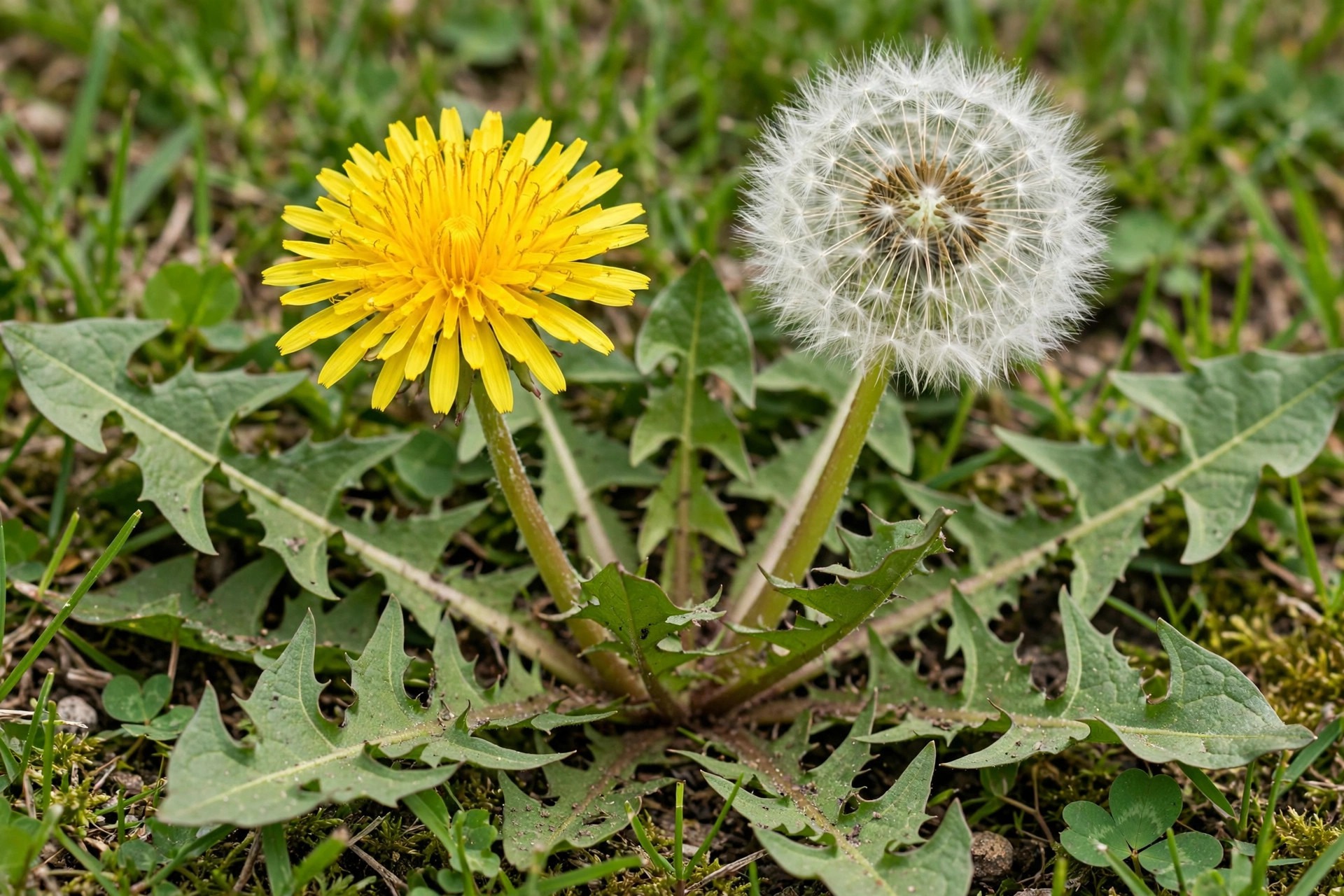
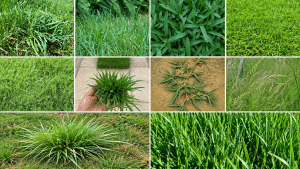
Dandelion — Jagged, lion’s-tooth leaves lying flat on the ground, bright yellow flowers, then white puffballs. Grows from a deep taproot. Best fix: Trimec Classic or any three-way spray.
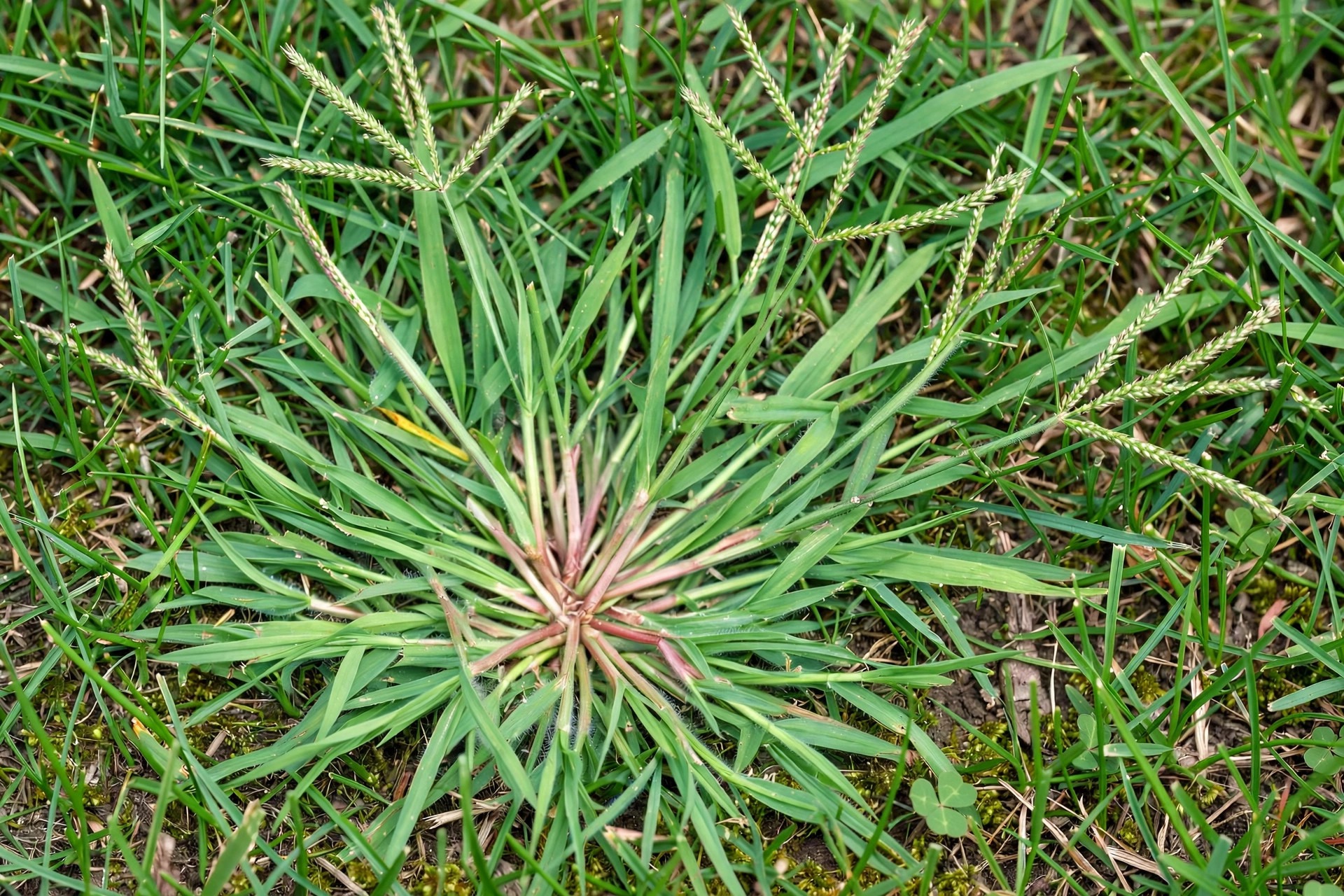
Crabgrass — Spreads flat like a crab from a single center point, with finger-like seed heads. Loves hot edges along driveways and sidewalks. Best fix: Prodiamine in spring to prevent it, Quinclorac once it’s growing.
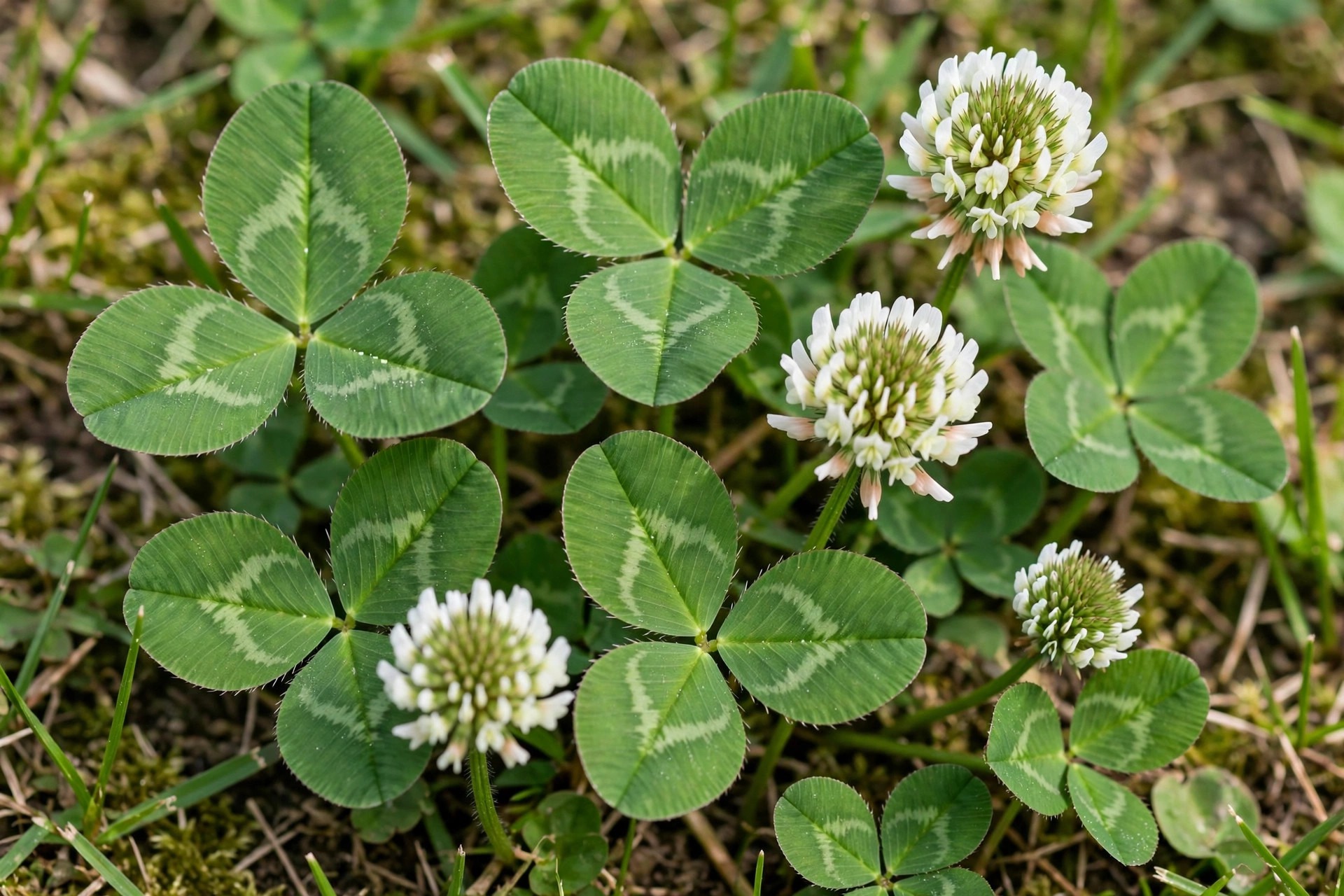
White clover Round three leaf clusters with a pale chevron mark, topped with small white ball flowers. Spreads quickly through thin, underfed lawns. Best fix: Any three way spray and feed the lawn so thick grass crowds it out.
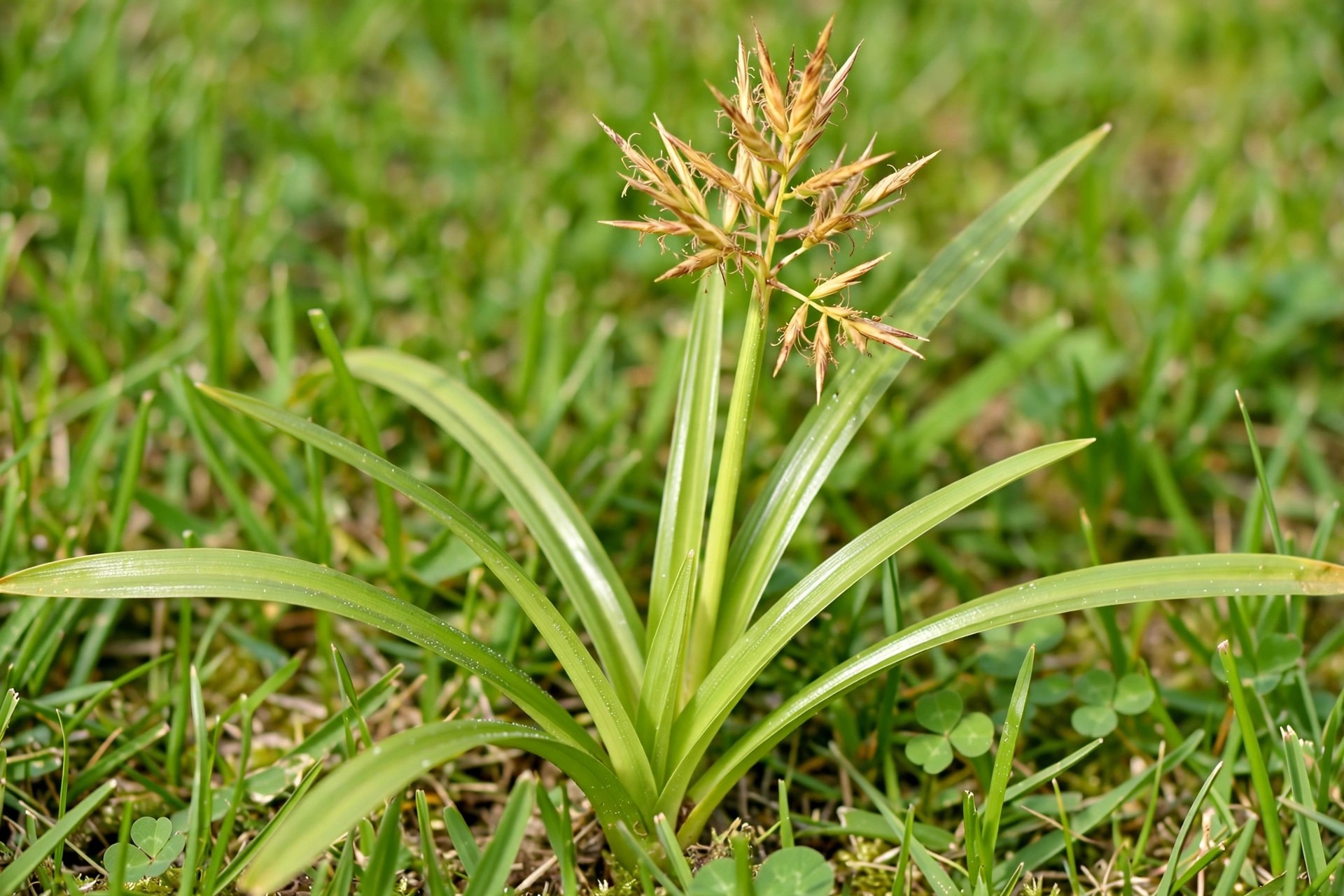
Yellow nutsedge — Not a true grass at all. Glossy, upright blades that shoot up taller than your lawn days after mowing, topped with a spiky yellow-brown seed head. Best fix: A sedge-specific herbicide (sulfentrazone or halosulfuron) — standard lawn sprays won’t kill it.
Also match the product form to the job. Liquids win for spot-spraying and fast action. Granular weed and feed wins for whole lawn convenience. Concentrates win on cost for big properties.
When to Apply Weed Killer for Best Results
- Early spring (soil ~55°F): Pre-emergent barrier for crabgrass and other annual weeds.
- Mid-spring: Post-emergent sprays on actively growing broadleaf weeds; weed & feed applications.
- Summer: Spot-treat escapees only. Avoid spraying in heat above 85–90°F or during drought stress unless the label allows it.
- Fall: The secret weapon. Weeds are pulling nutrients down into their roots in fall, so herbicides ride along and kill the whole plant. Fall treatment means far fewer dandelions next spring.
A thick, well-fed lawn is the ultimate weed prevention. Pair any treatment with proper feeding, our guide to compost fertilizer shows how organic matter builds turf density over time.
How to Apply Weed Killer Without Damaging Your Lawn
- Read the label first. Rates, grass types, and temperature limits are printed there for a reason. The label is the law, literally.
- Mow 2–3 days before, not the same day. Leaves need surface area to absorb the spray.
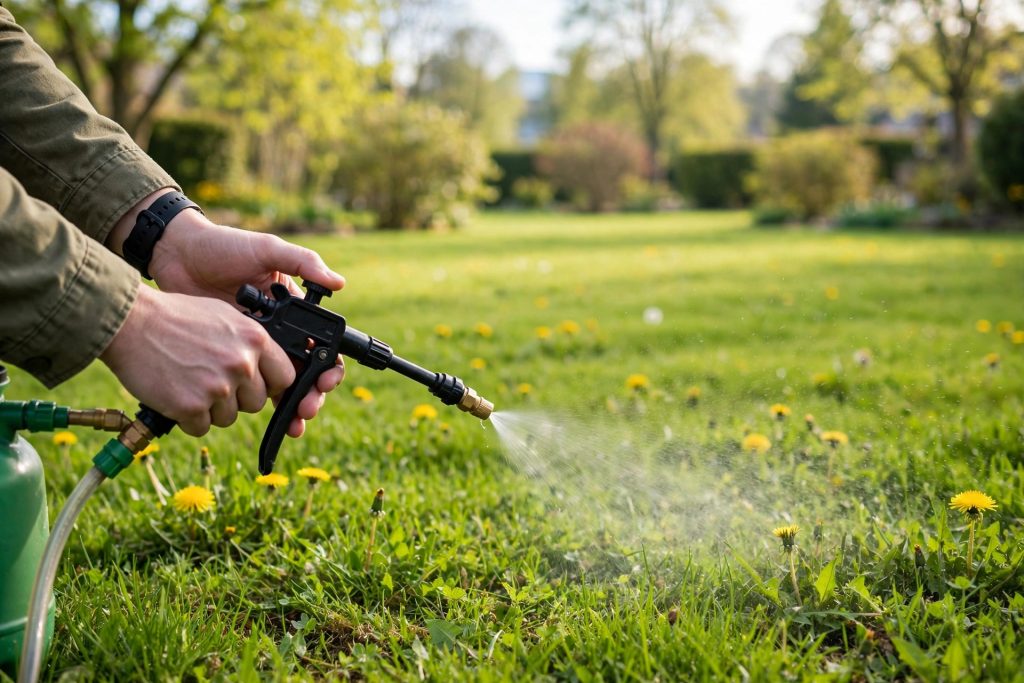
- Spray on a calm, dry morning. No wind (drift burns flowers and vegetables), no rain expected for 24 hours.
- Measure, don’t guess. More is not better. Over-applying is the #1 way homeowners burn their own grass with a “grass-safe” product.
- Spot-spray when you can. Blanket spraying a whole lawn for a dozen weeds wastes product and adds unnecessary chemical load.
- Wait before mowing and watering. Give the herbicide 24–48 hours to move into the roots. Most products are rainproof within 1–6 hours.
- Reassess in 2 weeks. Tough perennials like wild violet and ground ivy almost always need a second application 10–14 days later.
Keep Pets, Kids, and Pollinators Safe
For conventional sprays, keep people and pets off the lawn until the product has dried completely, typically 24 hours to be conservative. Iron-based products like IronX shorten that to “once dry,” which is why they’re popular with pet owners.
Protecting bees is simple: never spray blooming weeds like clover while bees are actively foraging. Mow off the flowers first, then spray in the early evening. Our guide to pollinator gardens explains how to keep the rest of your yard bee friendly while you treat the lawn.
5 Mistakes That Make Weed Killers Fail
- Spraying stressed weeds. Drought-dormant or frost-nipped weeds barely absorb herbicide. Wait for active growth.
- Skipping the surfactant. Some products (quinclorac especially) need a sticker/spreader to work at full strength.
- Applying pre-emergent too late. Once crabgrass has sprouted, a soil barrier does nothing. Soil temperature, not the calendar, sets the date.
- Mowing right after spraying. You just cut off the leaves that were supposed to absorb the chemical.
- Expecting one pass to fix years of neglect. A thin, weed-choked lawn needs a season long plan: pre-emergent in spring, post-emergent follow-ups, fall overseeding, repeat.
Frequently Asked Questions
What is the best weed killer for lawns that won’t kill grass?
For most homeowners, a three-way selective herbicide like Ortho WeedClear is the best weed killer for lawns: it kills 250+ broadleaf weeds to the root without harming turf. If crabgrass is the problem, pair a prodiamine pre-emergent in spring with quinclorac for escapes.
Is there a pet safe weed killer for lawns?
Yes. Iron-based products like IronX (Iron HEDTA) are the leading pet safe weed killer for lawns, weeds overdose on iron while grass tolerates it. Once the spray dries, pets and kids can return to the lawn. With conventional products, wait until fully dry, usually up to 24 hours.
When is the best time to apply pre emergent weed killer?
Apply pre emergent weed killer in early spring when soil temperatures reach about 55°F for several consecutive days, often when forsythia or lilacs bloom. A second fall application helps against winter annuals like poa annua and henbit.
What is the best crabgrass killer after it has already sprouted?
Quinclorac is the most reliable post-emergent crabgrass killer, it kills mature, tillered crabgrass that other products miss. Add a methylated seed oil surfactant and apply while crabgrass is actively growing for best results.
Does organic weed killer for lawns really work?
Partially. Iron-based organic options (Iron HEDTA) genuinely control broadleaf weeds across a whole lawn. Acid-based organic sprays like Burnout only burn top growth on contact and are non-selective, so they’re best for spot-treating weeds in cracks, edges, and bare spots , not blanket lawn applications.
Can I apply weed killer and grass seed at the same time?
Usually no , most herbicides prevent seed germination or damage young seedlings. The exception is Tenacity (mesotrione), which is labeled for use at seeding time. Otherwise, wait until new grass has been mowed 2–3 times before spraying, or seed 6–8 weeks after a post-emergent application per the label.
Final Thoughts
The best weed killer for lawns is the one matched to your weeds, your grass type, and your season. Start with prevention (prodiamine in spring), spot treat what breaks through (a three way spray or quinclorac for crabgrass), and lean on iron-based products if pets and kids are your priority. Do that, feed the lawn so it thickens up, and each year you’ll need less herbicide than the year before.
Ready to reclaim your lawn? Pick the product that fits your situation from the list above, check the label against your grass type, and start this weekend. Have a weed you can’t identify, or a result to share? Drop it in the comments and subscribe to the Agribloom newsletter for seasonal lawn and garden guides timed to when you actually need them.
Sources
- U.S. Environmental Protection Agency — Pesticide Labels and Safety Guidance
- University of California Statewide IPM Program — Weed Management in Lawns
- University of Minnesota Extension — Yard and Garden Resources
Note: Always read and follow the product label for your specific grass type and state regulations. Product availability and formulations verified as of October 2026.

Thesis Link : https://saulibrary.edu.bd/daatj/public/uploads/BAU200601_19-Pp_5.pdf
- Best Weed Killer for Lawns – 10 Picks That Won’t Kill Grass - October 3, 2026
- Best Lawn Fertilizer – 10 Expert Picks That Actually Work - October 2, 2026
- Best Grass Seed – 10 Top Choices for a Thick Green Lawn - October 1, 2026