Why the Wrong Pruner Costs You Plants
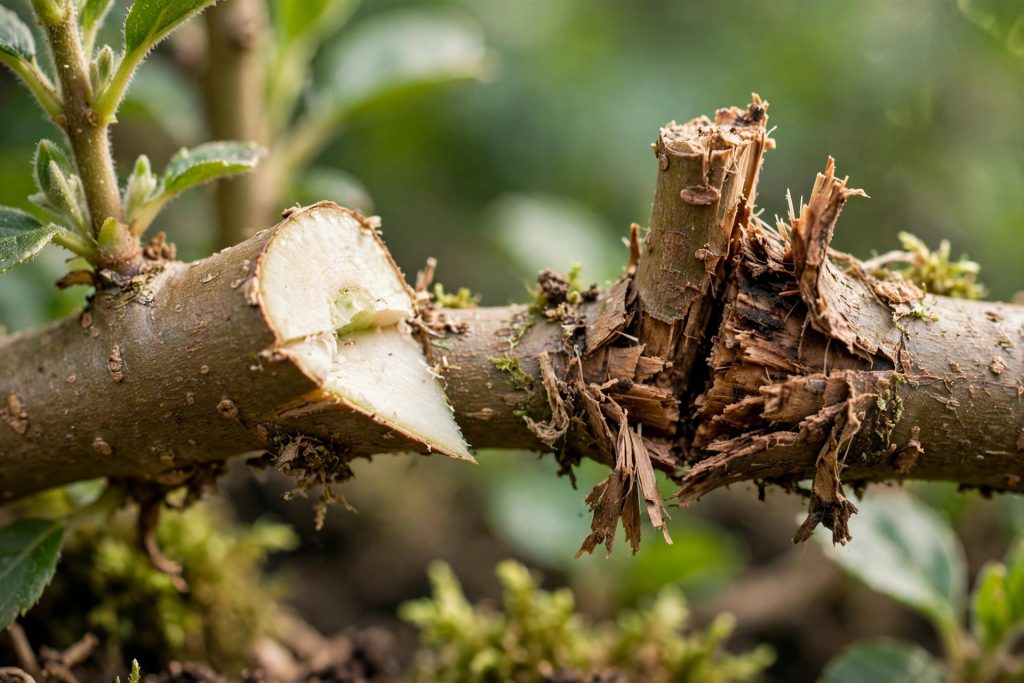
A pruning shear does one job: it cuts a stem cleanly. When it fails, it does not just make an ugly cut. A dull or wrong-type pruner crushes the tissue around the cut, and crushed tissue heals slowly, which gives fungal disease and borers an easy way in. Gardeners who lose a rose bush or a young fruit tree to dieback often blame the weather. Half the time, the tool did it.
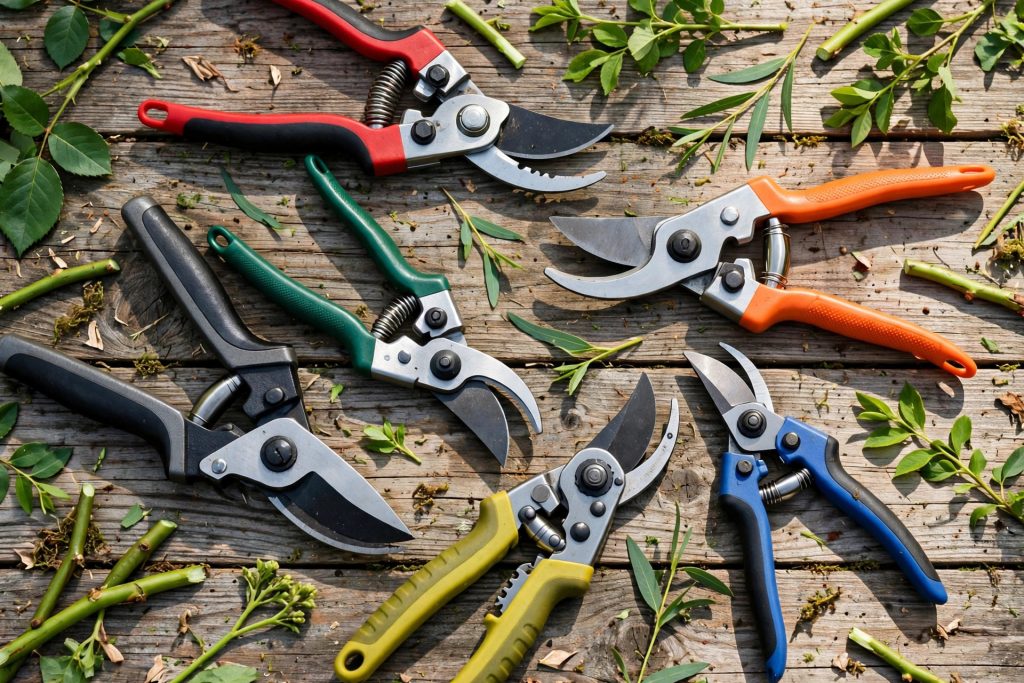
We compared ten models to find the best pruning shears for the three jobs gardeners actually do: bypass pruners for live green wood, anvil and ratchet pruners for thicker or dead wood and weaker hands, and one cordless electric pruner for heavy seasonal work. The list is built from manufacturer specifications and verified owner feedback, cross-checked against extension pruning guidance, so you can match a pruner to your hands and your plants instead of buying whatever is on the shelf.
How We Chose These Pruning Shears
We analyzed dozens of hand pruners before choosing these ten. For every model we checked the same evidence: the manufacturer’s specification sheet and stated cutting capacity, blade steel and coating, the warranty terms, and whether replacement blades and springs are sold separately. We then read the pattern of verified owner feedback for each model, watching for the complaints that repeat across many owners: blades that chip, springs that tire, latches that fail.
The weighting was simple. Clean-cut factors came first (blade steel, cutting capacity, closing mechanism), then hand fit and weight, then parts support and price. One honesty note: we did not bench test these pruners ourselves, so no ranking in this guide rests on a hands-on claim. Every model below is a current, buyable product with a full product page on this site, and where a pruner has a real weakness, such as a small cutting capacity or a tool-only battery setup, we say so in its section.
Quick Picks: The 10 Pruning Shears Compared
| Product | Type | Cutting Capacity | Best For | Our Verdict |
|---|---|---|---|---|
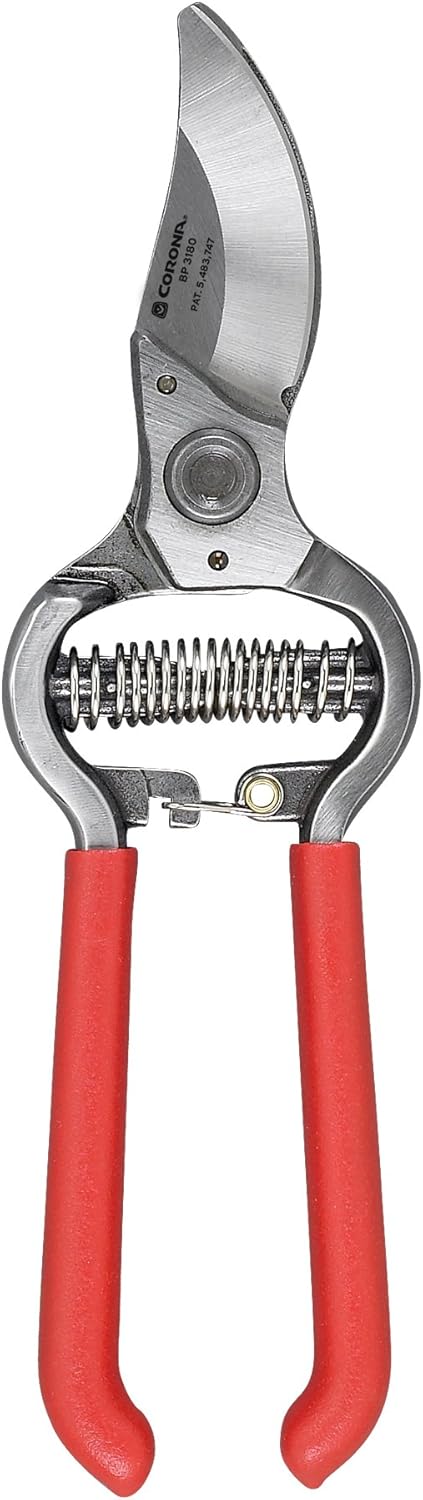 Corona BP 3180D Corona BP 3180D | Bypass | 1 inch | Daily all-round pruning | Excellent |
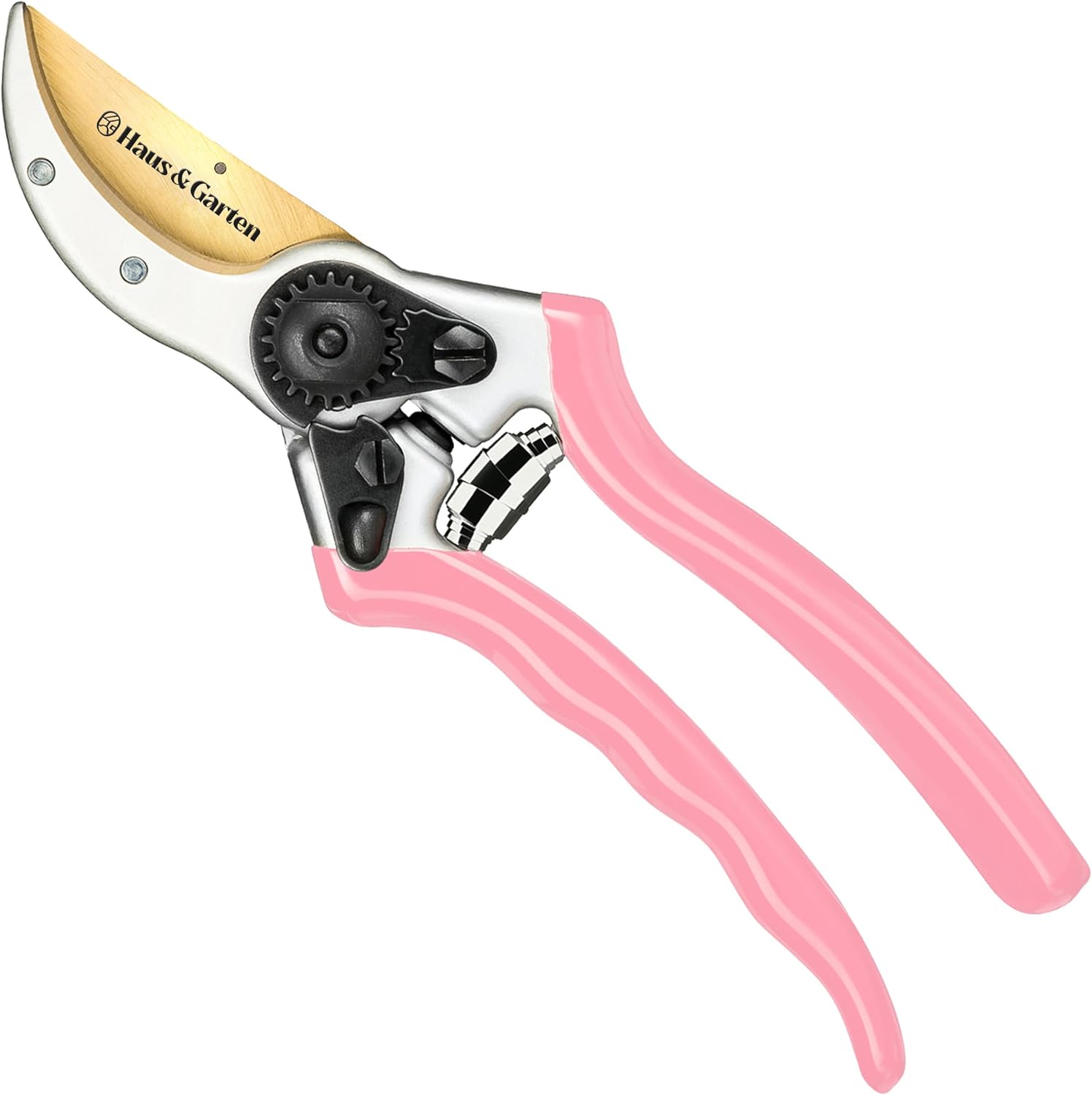 Haus & Garten ClassicPRO Haus & Garten ClassicPRO | Bypass, titanium-coated blade | 3/4 inch | Roses, shrubs, sap-heavy plants | Excellent |
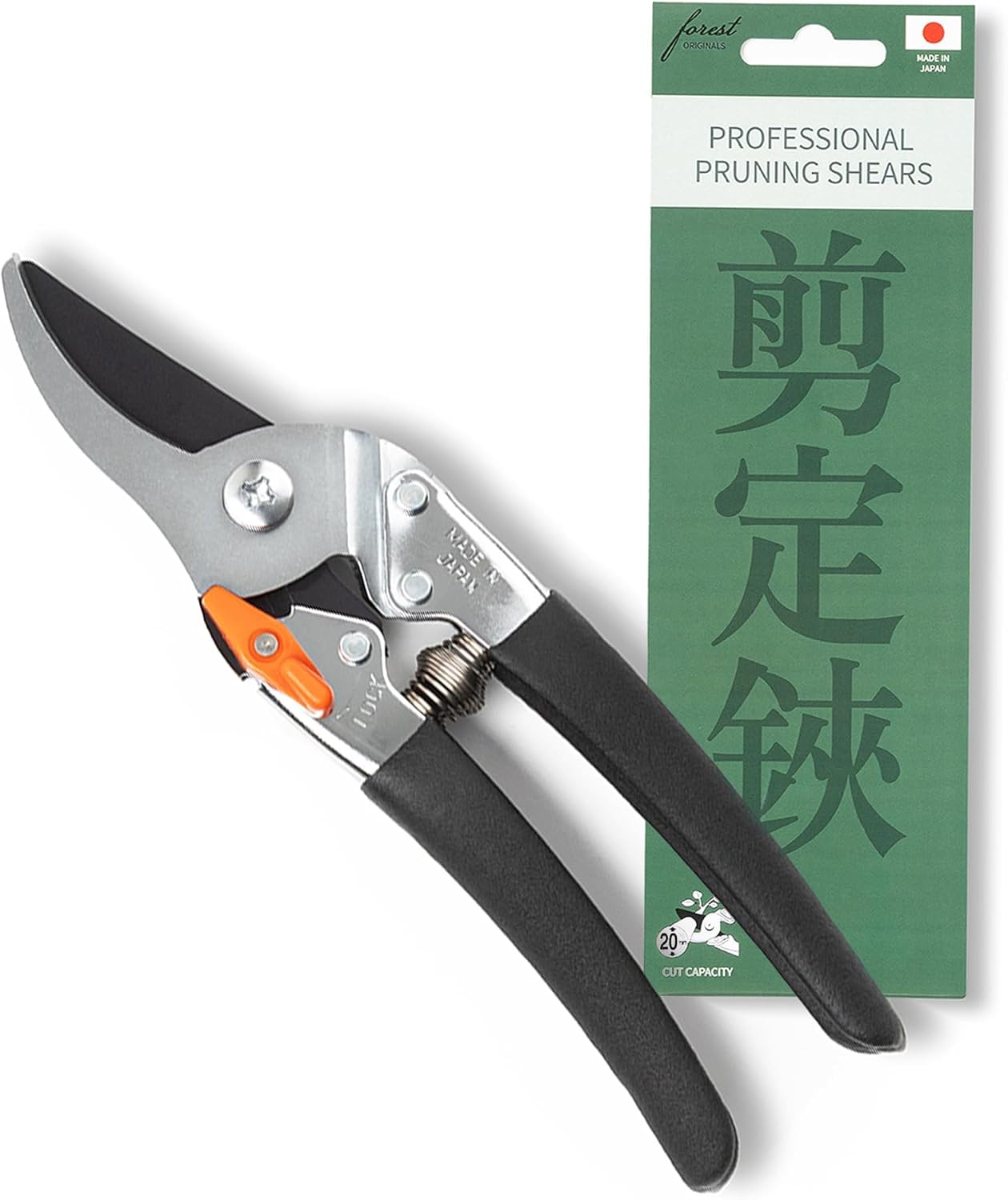 Saboten Japanese Bypass 7.9 inch Saboten Japanese Bypass 7.9 inch | Bypass, fluorine-coated blade | 3/4 inch | Precision work, fruit trees | Very good |
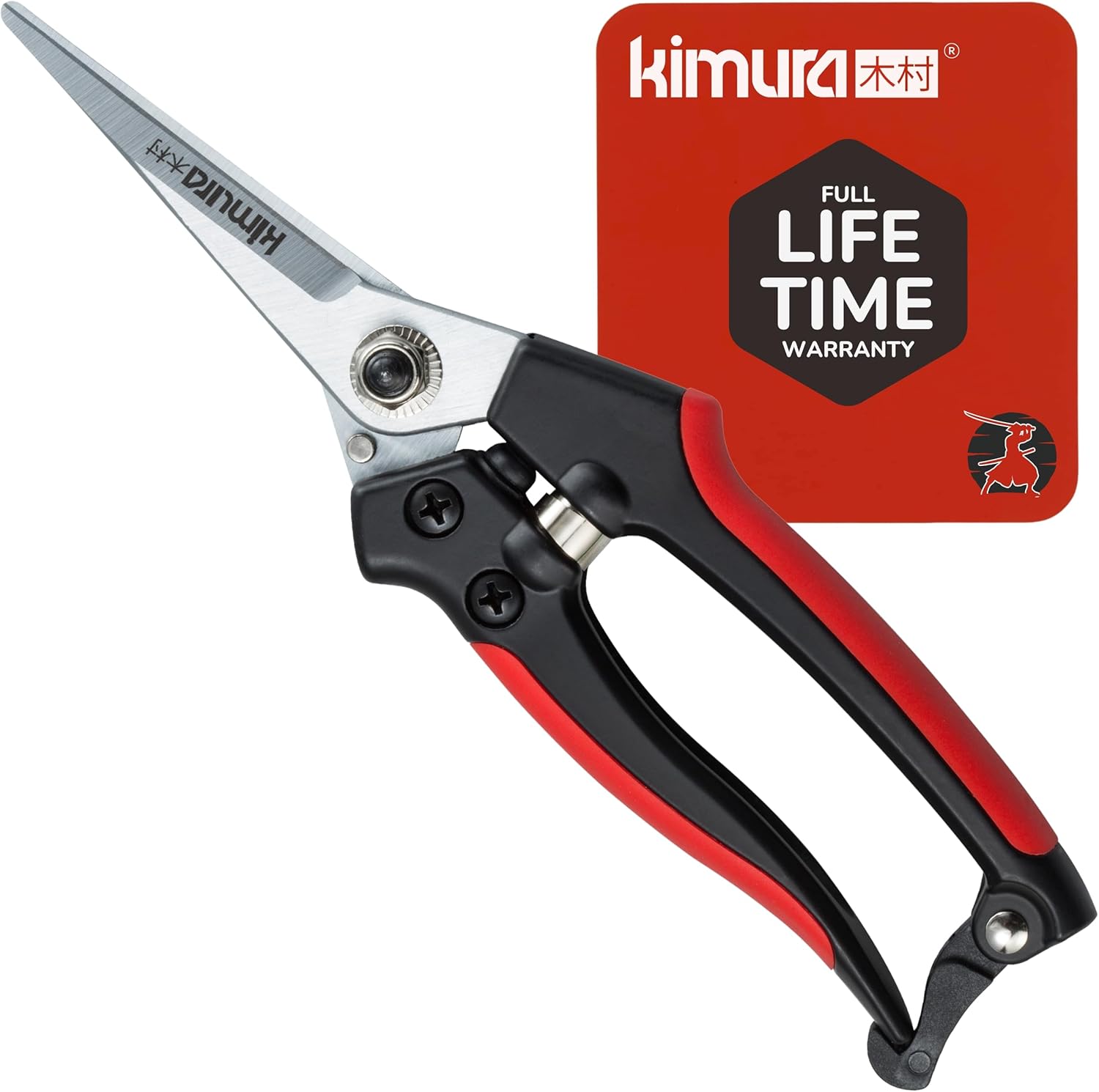 Kimura Pro 8 inch Kimura Pro 8 inch | Bypass, SK5 steel | 3/4 inch | Clean cuts on a budget of hand effort | Very good |
 The Gardener’s Friend Ratchet The Gardener’s Friend Ratchet | Ratchet anvil | Up to 1 inch | Dead wood, woody stems | Good |
 Kings County Tools Ratchet Anvil Kings County Tools Ratchet Anvil | Ratchet anvil | Up to 1 inch | Weak hands, arthritis | Very good |
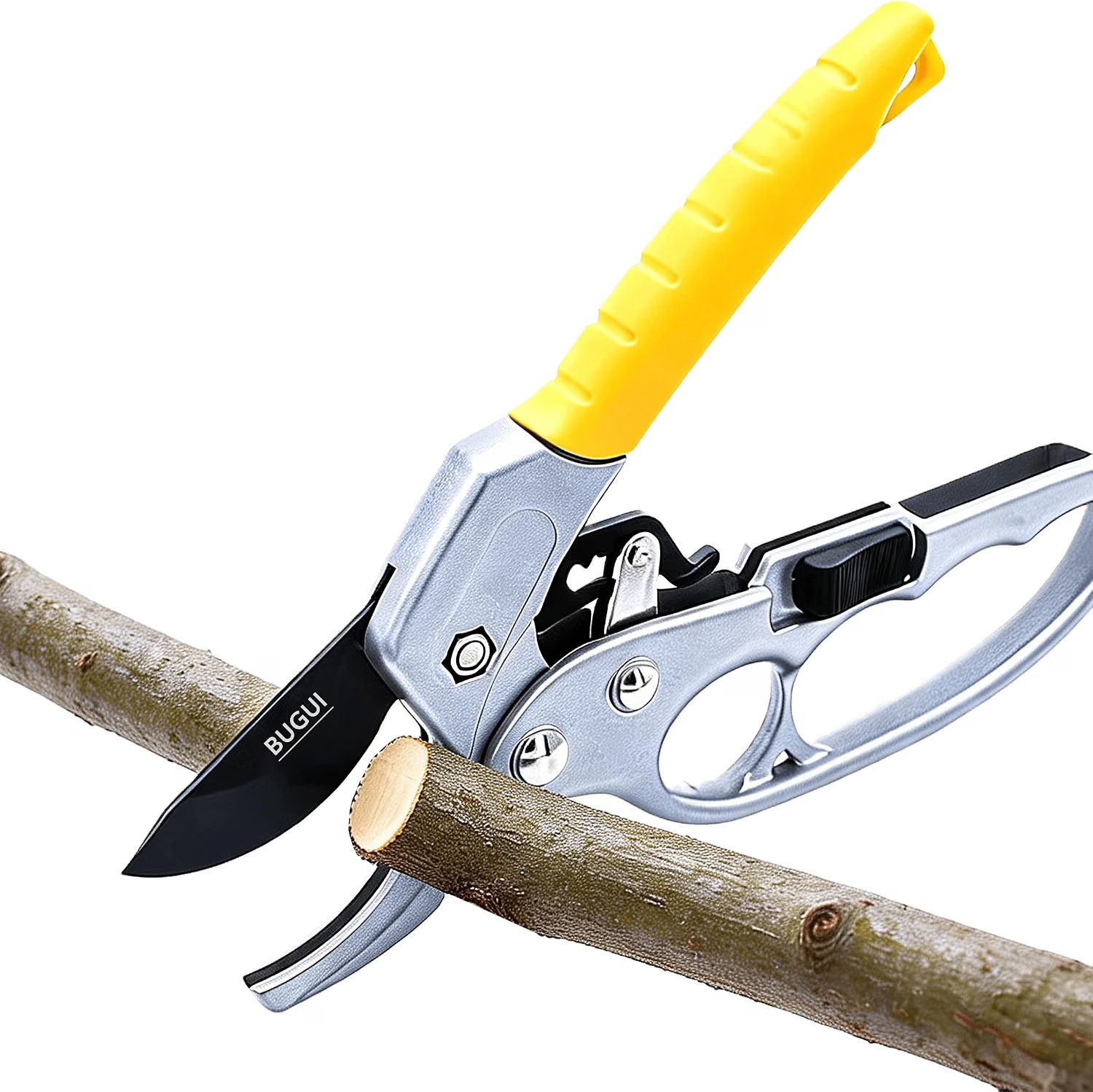 BUGUI 8 Inch Ratchet BUGUI 8 Inch Ratchet | Ratchet, 3-step | 7/8 inch | Thick branches on a budget | Good |
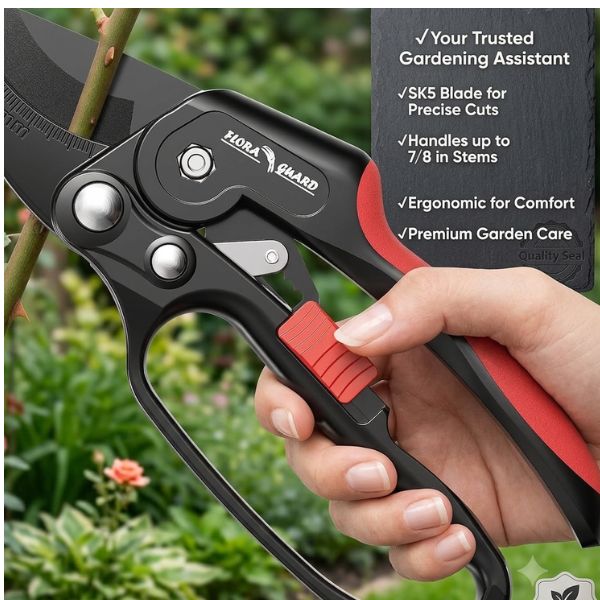
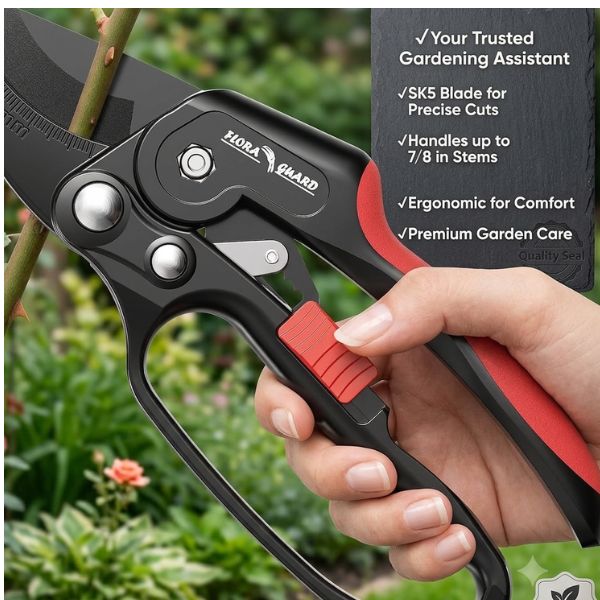 FLORA GUARD Ratchet FLORA GUARD Ratchet | Ratchet, 3-step | 7/8 inch | Shrubs and fruit trees | Good |
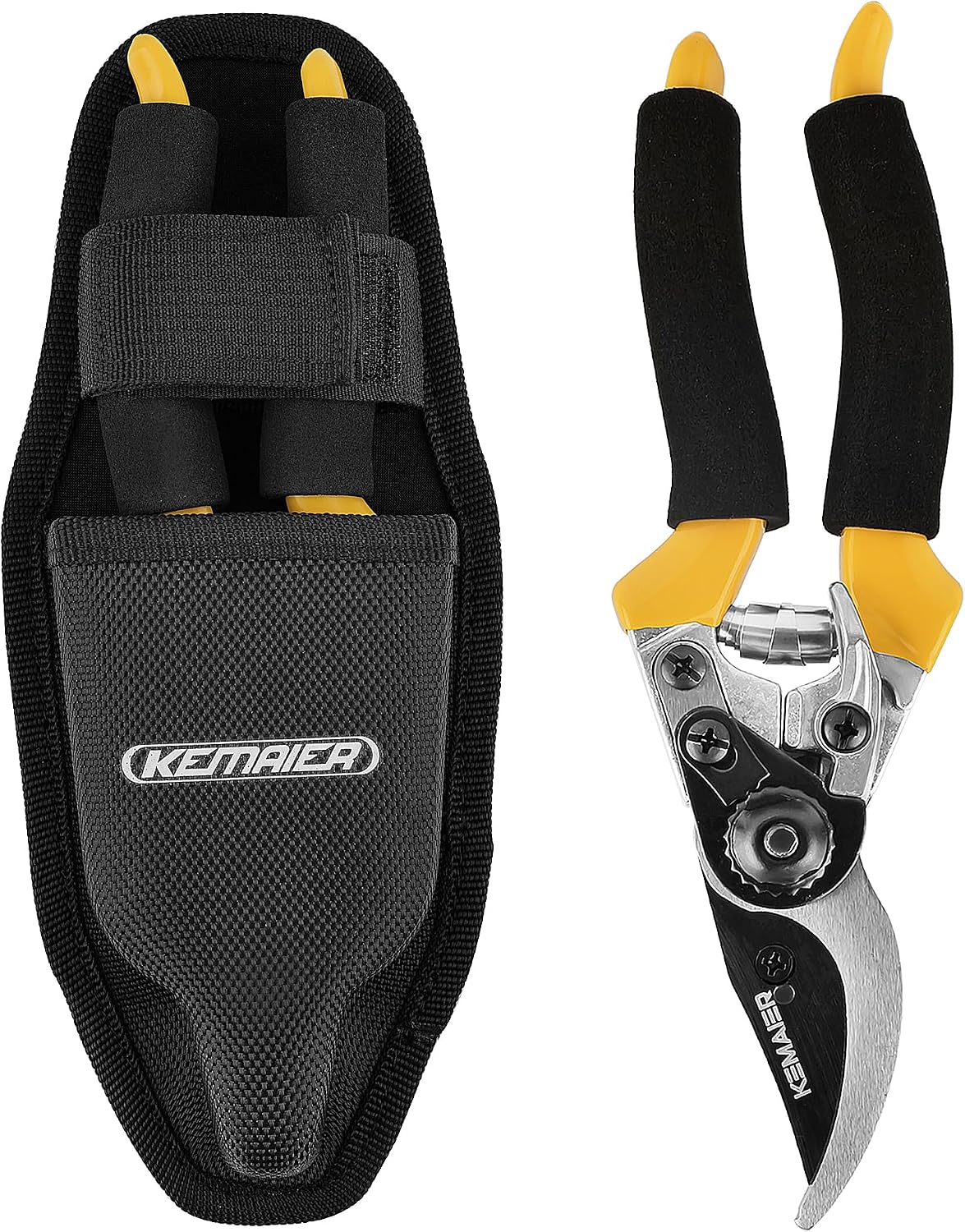 Kemaier Ergonomic Kemaier Ergonomic | Bypass | 3/4 inch | Beginners, light trimming | Good |
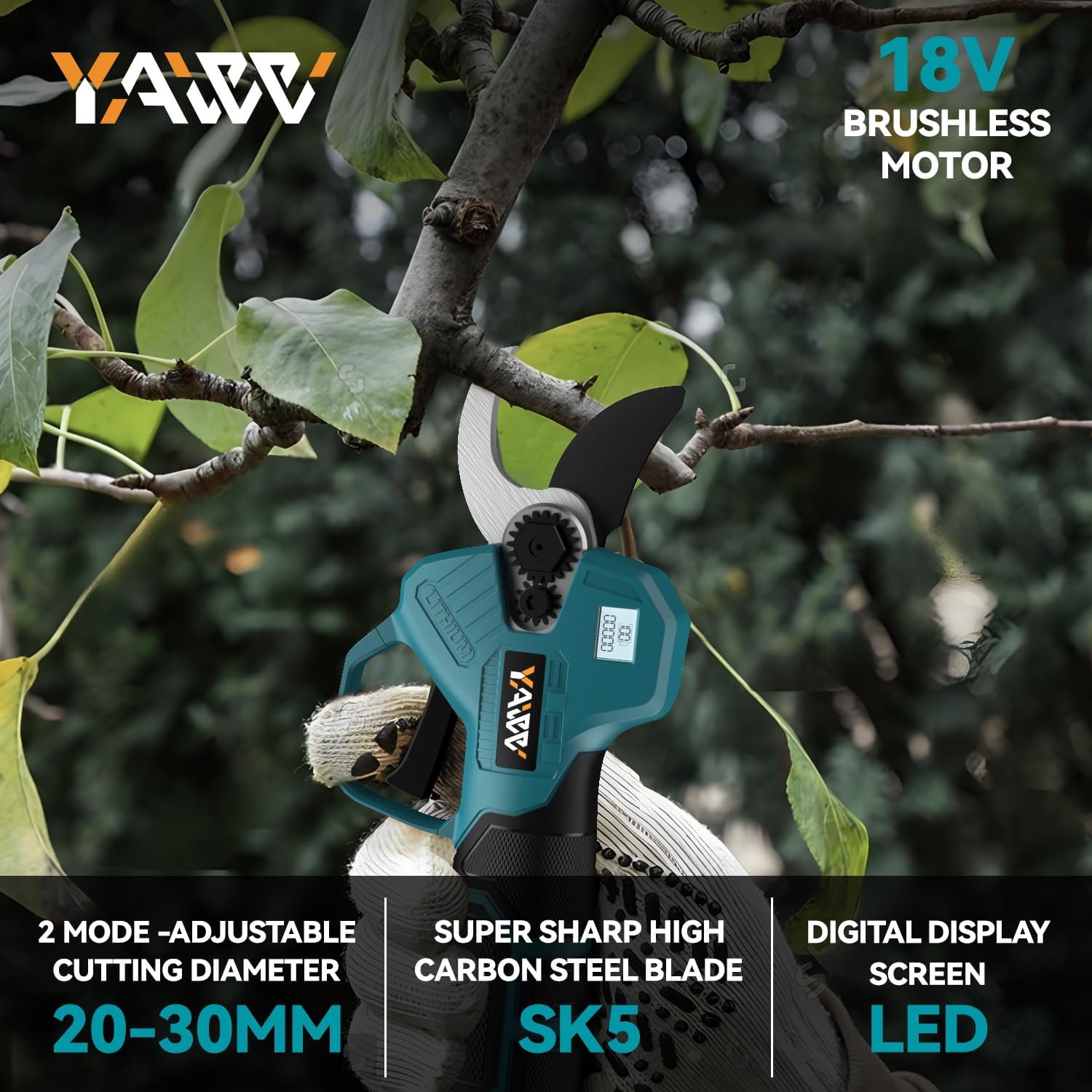 Electric Pruning Shears for Makita 18V Electric Pruning Shears for Makita 18V | Cordless electric | 1.2 inch | Orchards, heavy pruning days | Very good |
The 10 Best Pruning Shears, Reviewed
1. Corona BP 3180D: Forged Steel Bypass Pruner With a 1-Inch Cut
The BP 3180D is the classic workhorse pattern: a fully forged steel bypass head, a slant-ground hook that pulls the branch into the blade, and a capacity of one full inch, which is more than most home gardeners will ever ask of a hand pruner. Forged construction matters here because cheaper pruners use stamped or cast heads that flex under load, and flex is what turns a slice into a crush.
The blade can be sharpened and replaced, and Corona sells the parts, so this is one of the few pruners in this price range that is genuinely a ten-year tool rather than a two-season one. The trade-off is weight and a plain grip: there is no cushioning or rotating handle, so long sessions are harder on the palm than with the ergonomic models below.
Best for: Gardeners who want one dependable bypass pruner for shrubs, roses, and small tree work.
Skip if: You have weak hands or arthritis and need cutting assistance.
See the full specifications and price on the Corona BP 3180D product page.
2. Haus & Garten ClassicPRO: Titanium-Coated Blade on an 8.5-Inch Frame
The ClassicPRO earns its place on coatings and comfort. The blade is high-carbon steel with a titanium coating, which shrugs off the two things that kill pruner blades: rust and baked-on sap. Owners working with pines, figs, and other sappy plants notice the difference, because a gummed blade starts tearing cuts long before it feels dull.
Shock-absorbing pads in the handles take the sting out of the final close on thicker stems, and the thumb lock can hold the blade partway open, a small feature that makes delicate work on thin stems much easier to control. Cutting capacity is around 3/4 inch, standard for a precision bypass tool.
Best for: Roses, shrubs, and sap-heavy plants where blade fouling is a constant problem.
Skip if: You regularly cut branches over 3/4 inch and need a bigger head.
See the full specifications and price on the Haus & Garten ClassicPRO product page.
3. Saboten 7.9-Inch: Fluorine-Coated Japanese Bypass Pruner
Saboten has made cutting tools in Japan for decades, and this 7.9-inch pruner shows it in the details. The fluorine coating is the headline: sap and resin slide off instead of building up, so the blade keeps gliding through a long session of fruit tree work without constant cleaning. The compact frame suits smaller hands and tight canopies, where a full-size pruner feels clumsy.
It is a precision tool first. The capacity suits stems up to about 3/4 inch, and the light action is tuned for many clean cuts on live wood rather than force on dead wood. If your pruning is mostly orchard care, topiary, and detailed shaping, this is the most refined cutter on this list.
Best for: Fruit trees, bonsai-adjacent detail work, and gardeners with smaller hands.
Skip if: Your main job is clearing old, hard dead wood.
See the full specifications and price on the Saboten Japanese Bypass Pruning Shears product page.
4. Kimura Pro 8-Inch: Japanese SK5 Steel at a Sensible Price
SK5 is the steel you want to see named on a pruner. It is a Japanese high-carbon steel that takes a keen edge and, just as important, resharpens well on a basic stone or file. The Kimura Pro builds its 8-inch pruner around SK5 blades and keeps the rest simple: clean bypass geometry, a secure lock, and handles shaped for a full day of trimming.
There is no ratchet and no coating story here, just sound steel and geometry at a mid-range price. For gardeners who sharpen their own tools and value that ritual, this is the straightforward pick. Treat the blade to a wipe of oil after wet work, because high-carbon steel trades some rust resistance for that edge quality.
Best for: Gardeners who want sharp, resharpenable steel without paying premium-brand prices.
Skip if: You want a coated blade you can put away wet and forget.
See the full specifications and price on the Kimura Pro Pruning Scissors product page.
5. The Gardener’s Friend: Ratchet Anvil Pruner for Woody Stems
A ratchet pruner closes in stages. You squeeze, the mechanism holds the blade in place, and you squeeze again, so a thick stem is cut with several smaller efforts instead of one maximal grip. The Gardener’s Friend pairs that mechanism with an anvil head, the right combination for dead wood, old canes, and woody stems that would make a bypass blade skate or twist.
Anvil heads crush a little on the anvil side of the cut, which is why this design belongs on dead and dormant wood, not on live stems you need to heal cleanly. Used in its lane, it turns a job that used to need loppers into hand-pruner work, and it is the model that shows up again and again in roundups of ratchet pruners for exactly that reason.
Best for: Dead wood, raspberry and rose canes, and renovation pruning of old shrubs.
Skip if: Most of your cutting is live green wood that needs a healing-clean cut.
See the full specifications and price on the Gardener’s Friend Ratchet Pruning Shears product page.
6. Kings County Tools Ratchet Anvil: Built for Weak Hands and Arthritis
This pruner exists for one reason: to keep people with weak grips, arthritis, or recovering hand injuries gardening. The ratcheting anvil mechanism multiplies your squeeze across several short strokes, and the carbon steel blade is sized to use that leverage on stems up to about an inch. Reviews from older gardeners are consistent on the point that matters: cuts that were impossible with a standard pruner become routine.
The compact 5-inch class body keeps the tool light, which also helps tired hands. As with any anvil tool, keep it for dead and woody growth, and clean the anvil pad of fiber buildup so the blade seats fully.
Best for: Gardeners with arthritis, carpal tunnel, or reduced grip strength who still prune their own plants.
Skip if: You have full hand strength and mostly cut live wood; a bypass pruner cuts cleaner.
See the full specifications and price on the Kings County Tools Ratchet Anvil Pruning Shears product page.
7. BUGUI 8-Inch: 3-Step Ratchet Power at a Budget Price
BUGUI’s 8-inch ratchet pruner uses a 3-step mechanism: the blade advances in three locked stages, cutting branches in the 7/8-inch range with noticeably less squeeze than a plain pruner. At under twenty dollars on its product page, it is the cheapest way on this list to find out whether ratchet cutting suits your hands.
Budget tools ask for realistic expectations. The finish and spring hardware are a step below the Corona and Saboten, and heavy daily use will find the play in the pivot sooner. For a home gardener who prunes a few weekends a season, that trade is perfectly sensible.
Best for: Occasional pruners who want ratchet assistance without a premium price.
Skip if: You prune professionally or daily and need forged durability.
See the full specifications and price on the BUGUI Ratchet Pruning Shears product page.
8. FLORA GUARD: 3-Step Ratcheting Clippers for Thick Branches
FLORA GUARD’s ratchet pruner is the other budget ratchet worth shortlisting. The 3-step action is tuned for thicker shrub and fruit tree branches, and the handle shape spreads the load across the palm better than the BUGUI, which some users with sore joints will prefer. Owner feedback highlights exactly that: less next-day hand ache after big pruning sessions.
Between this and the BUGUI, the honest difference is ergonomics and small hardware quality rather than cutting power. If your hands are the limiting factor, this is the budget ratchet to start with; if your wallet is, start with the BUGUI.
Best for: Home orchard and shrub work where hand fatigue ends the session early.
Skip if: You need fine precision cuts on thin, live stems all day.
See the full specifications and price on the FLORA GUARD Ratchet Pruning Shears product page.
9. Kemaier: Light Ergonomic Bypass Pruner With a Blade Cover
Not every gardener needs a forged orchard tool. The Kemaier is a light bypass pruner aimed at flowers, herbs, houseplants, and light shrub trimming, with non-slip ergonomic handles and a blade cover that makes it safe to toss in a tote or drawer. For new gardeners building a first kit, the cover and the price remove the two usual hesitations.
Keep it within its design limits: stems up to about 3/4 inch, live growth, and no levering or twisting on stubborn wood. Used that way, it is sharp, comfortable, and entirely adequate for container and flower garden work.
Best for: Beginners, container gardeners, and light flower and herb trimming.
Skip if: You prune mature trees and thick shrubs every week.
See the full specifications and price on the Kemaier Pruning Shears product page.
10. Electric Pruning Shears for Makita 18V: Brushless Power, 1.2-Inch Cut
When the pruning list runs to an orchard row or a vineyard block, hand tools stop being charming. This cordless pruner pairs a brushless motor with SK5 steel blades and cuts up to 1.2 inches per trigger pull, with an LCD showing the cut count and battery state. It runs on Makita 18V batteries, so anyone already on that platform pays only for the tool.
Be clear about the setup: this is a tool-only package, so you need a Makita 18V battery and charger you already own. Weight rises with the battery fitted, and electric pruners demand respect and a lock-out habit between cuts. For the right user, though, nothing else on this list comes close on a big pruning day.
Best for: Makita 18V owners with orchards, vineyards, or long hedgerows to get through.
Skip if: You do not already own Makita 18V batteries; the platform cost changes the math.
See the full specifications and price on the Electric Pruning Shears product page.
Bypass, Anvil, or Ratchet: Which Pruner Design Do You Need?
Bypass pruners work like scissors: two curved blades pass each other and slice. They make the cleanest cut on live wood, which is why they are the default for roses, shrubs, fruit trees, and any stem you need to heal fast. If you buy one pruner, buy a bypass.
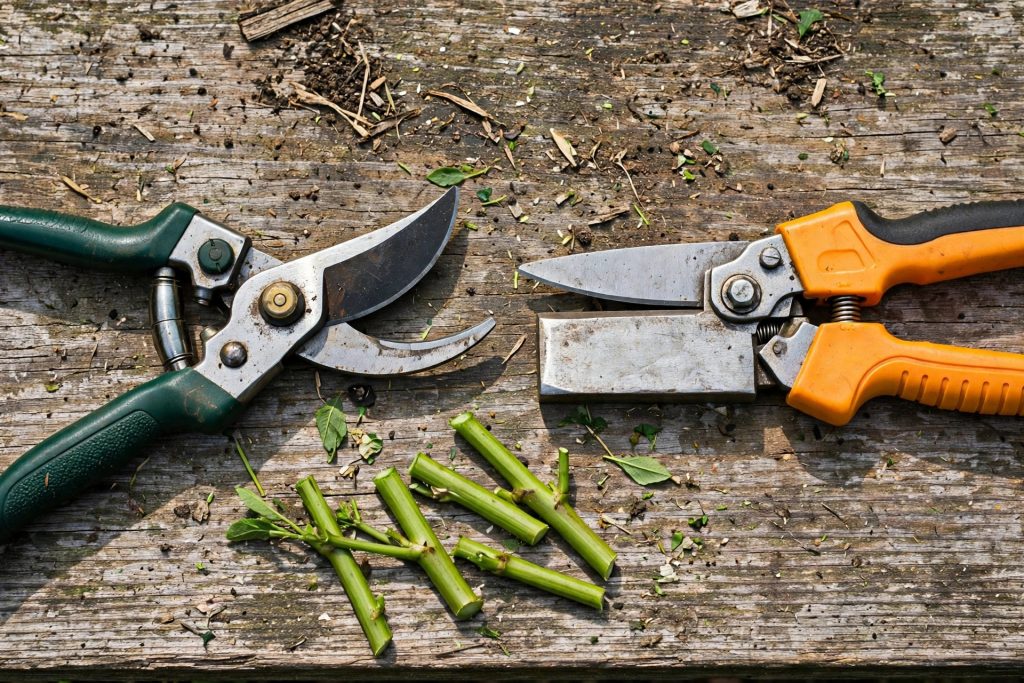
Anvil pruners close a straight blade onto a flat pad. They are stronger on dead, dry, and woody stems, but they crush the underside of the cut, so keep them off live growth you care about.
Ratchet pruners add a staged mechanism to an anvil or bypass head, trading several easy squeezes for one hard one. They are the difference between pruning and not pruning for gardeners with weak hands, and they handle the thick end of hand-pruner work.
Blade steel decides how the tool ages. High-carbon steels such as SK5 take the sharpest edge and resharpen easily, but they rust if put away wet. Coated blades (titanium or fluorine) give up a little ultimate sharpness for rust and sap resistance, which suits gardeners who would rather prune than maintain tools.
On capacity, be honest with the tape measure: most hand pruners are rated between 3/4 inch and 1 inch. Forcing a pruner past its rating twists the blade and ruins the cut. Branches above an inch belong to loppers, and above 2 inches, to a pruning saw.

Keep Them Sharp, Keep Them Clean
Two habits double the life of any pruner on this list. First, clean the blade after sappy or diseased wood: sap glues the blades together, and pruning a diseased plant and then a healthy one with the same tool is a reliable way to spread the problem. A wipe with rubbing alcohol between plants is standard practice in orchards for a reason. Second, sharpen little and often. A few strokes with a fine file or stone, following the factory bevel angle, restores a working edge in a minute; waiting until the blade tears cuts turns sharpening into a repair job.
References
- University of Georgia Extension, pruning ornamental plants guidance
- Oregon State University Extension, pruning basics and tool selection
- Royal Horticultural Society (RHS), pruning advice
- University of Florida IFAS Extension, pruning landscape trees and shrubs
Frequently Asked Questions
What is the difference between bypass and anvil pruning shears?
Bypass shears slice with two blades passing each other, like scissors, and give the cleanest cut on live wood. Anvil shears press one straight blade onto a flat pad; they are stronger on dead and woody stems but crush tissue, so they should not be used on live stems that need to heal.
What size branch can hand pruning shears cut?
Most hand pruners are rated for 3/4 inch to 1 inch branches, and the electric model in this guide reaches 1.2 inches. Forcing a pruner beyond its rating damages the blade and the plant. Use loppers for branches up to about 2 inches and a pruning saw above that.
Are ratchet pruning shears good for arthritis?
Yes. A ratchet mechanism cuts in several locked stages, so each squeeze needs far less force than a standard pruner. Gardeners with arthritis, carpal tunnel, or reduced grip strength consistently find ratchet pruners let them prune independently again.
How often should I sharpen pruning shears?
Little and often is best. A few strokes with a fine file after every few sessions keeps the edge working. If the pruner starts tearing or folding stems instead of slicing them, it is overdue.
How do I stop pruning shears spreading disease?
Clean and disinfect the blades when moving between plants, especially after cutting diseased wood. Wiping the blades with 70 percent rubbing alcohol or a household disinfectant between plants is the standard practice recommended by extension services.
Are electric pruning shears worth it?
For an orchard, vineyard, or a property with long hedgerows, yes: they remove hand fatigue entirely and cut thicker wood than hand pruners. For a few shrubs and roses, a good bypass pruner is cheaper, lighter, and all you need.

- 10 Best Pruning Shears for Clean Cuts - October 7, 2026