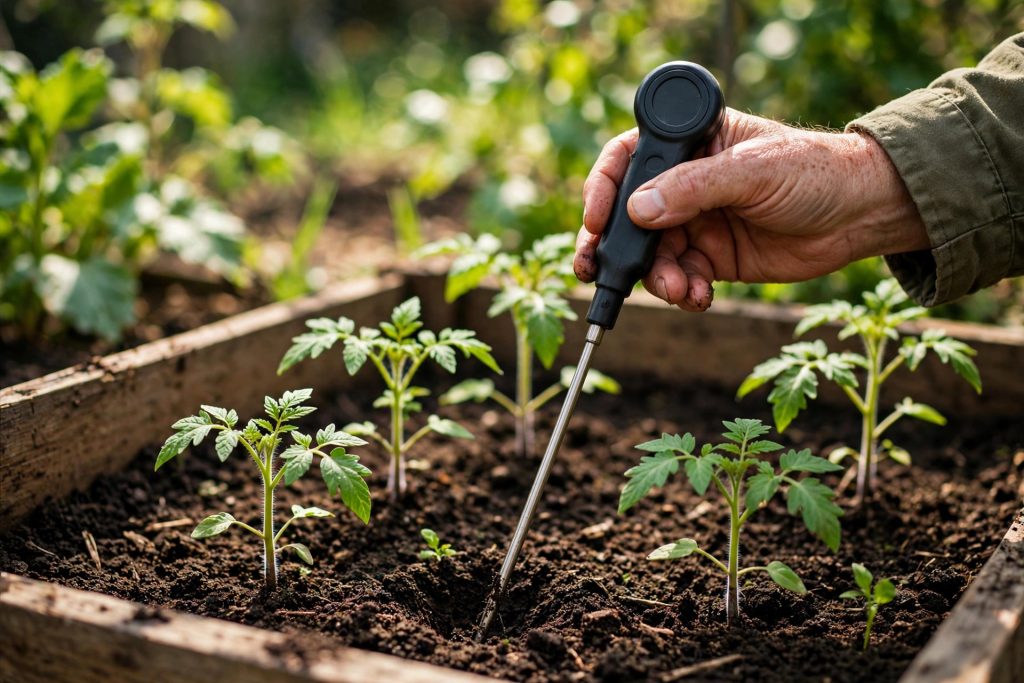

Your tomatoes look hungry, so you feed them. The leaves stay yellow, so you feed them more. Nothing changes, and by August you are wondering whether the variety was a dud. The problem is often not food at all. It is pH. When soil drifts too acidic or too alkaline, the nutrients are already there, locked in forms the roots cannot take up. A bag of fertilizer cannot fix a pH problem, and lime cannot fix one you have not measured. That is why the best soil ph meter earns its place in the tool shed: one number, taken in the root zone, decides whether the next thing you buy should be lime, sulfur, compost, or nothing at all.
This roundup compares ten soil pH meters you can buy in the United States right now, from ten-dollar analog probes to a lab-grade glass-electrode tester. Every specification below was verified against a live manufacturer page or a major retailer’s listing on the day of writing, and where a maker does not publish a specification, this article says so plainly instead of guessing. Prices were checked on retailer listings at writing time and are shown with their source, because a price without a source goes stale in a week. Ratings are editorial scores from verified specifications and owner feedback, worked out against the scoring system in the How We Chose section. No meter here was tested in our own garden.
Quick Recommendation
Short on time? Here is the fast answer.
- Best overall: Hanna HI981030 GroLine Soil pH Tester. The only pick with a glass electrode built for direct soil contact, at plus or minus 0.05 pH. If you want a real number before you lime a bed, this is the meter.
- Best lab-grade pen: Apera PH60. Plus or minus 0.01 pH, a replaceable probe, and 1 to 3 point calibration for $110, the official Apera Instruments price. Test soil as a slurry and you get near-lab accuracy at a hobbyist price.
- Best root-zone pen: Bluelab Soil pH Pen. Reads pH and temperature directly in soil, coco and potting mix, with a probe cap that doubles as a dibber.
- Best analog probe: Gain Express ZD-06. A 295 mm probe that reaches the root zone, plus or minus 0.2 pH, and the strongest independent test result of any analog meter in this roundup.
- Best rugged analog: Kelway HB-2. No batteries, no calibration, a metal body that survives a truck bed, and a moisture reading on the same dial.
- Best digital on a budget: Luster Leaf Rapitest 1845. A digital readout for about $15, with a plant pH preference list for more than 450 plants in the box.
- Best budget 3-in-1: SONKIR MS02. pH, moisture and light for about $10, and the best-selling soil tester on Amazon. Treat its pH number as a rough guide, not a lab result.
If you only buy one meter from this list, buy the Hanna HI981030. It is the only pick that measures soil directly with a real glass electrode, and its accuracy is the best of any direct-reading meter in this roundup. Its stated accuracy is four times tighter than the best analog meter in this roundup. If the price stops you, buy the Gain Express ZD-06 instead: it costs about a third of what the Hanna costs, reaches deep into the bed, and its readings held up against a lab result in independent testing.
Best Soil pH Meters Compared
| Product | Type | pH Range | Accuracy | Best For | Weighted Score |
|---|---|---|---|---|---|
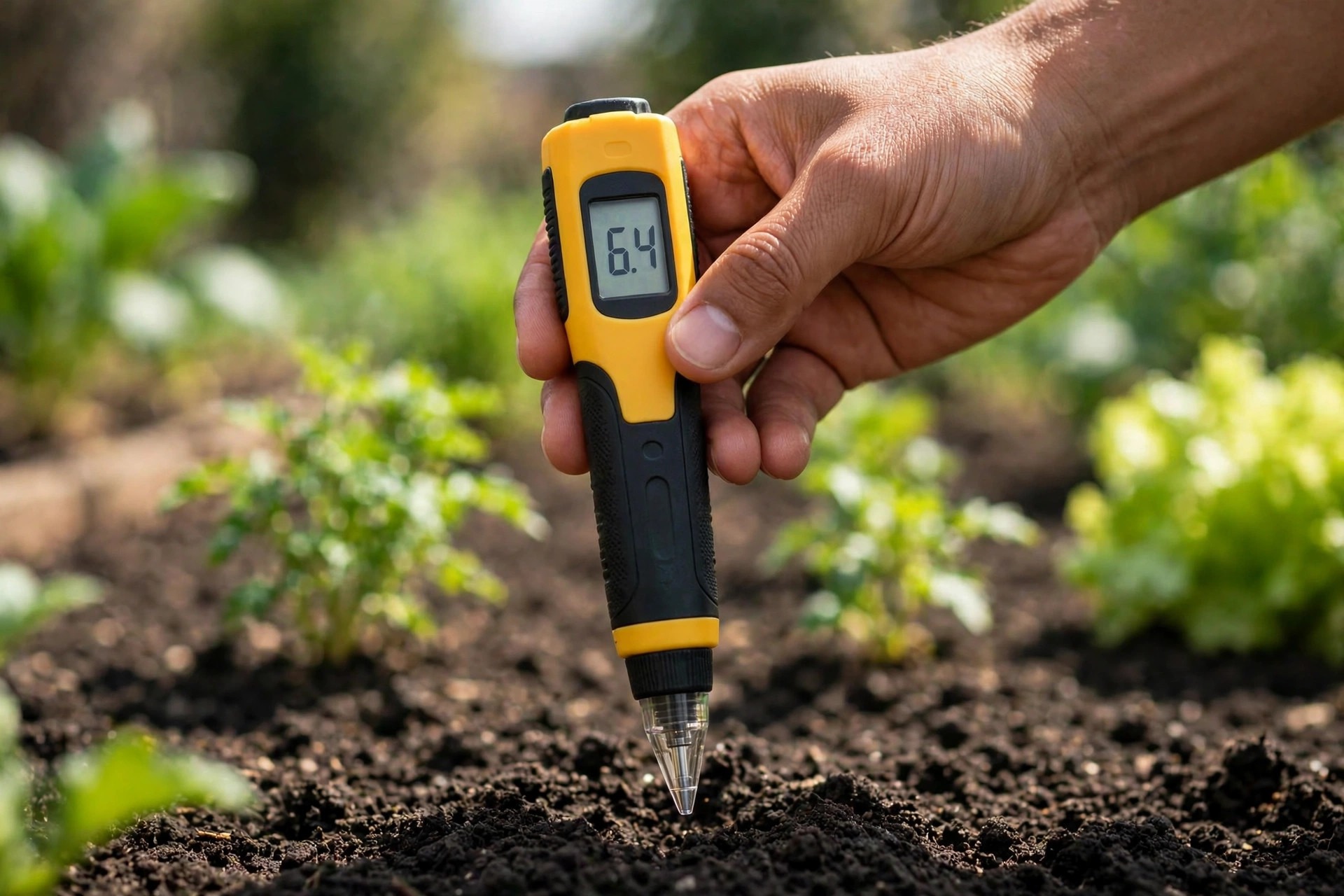 Hanna HI981030 GroLine Soil pH Tester | Digital pen, glass electrode | 0.00-12.00 | +/-0.05 pH | Best overall, most accurate | 8.4 |
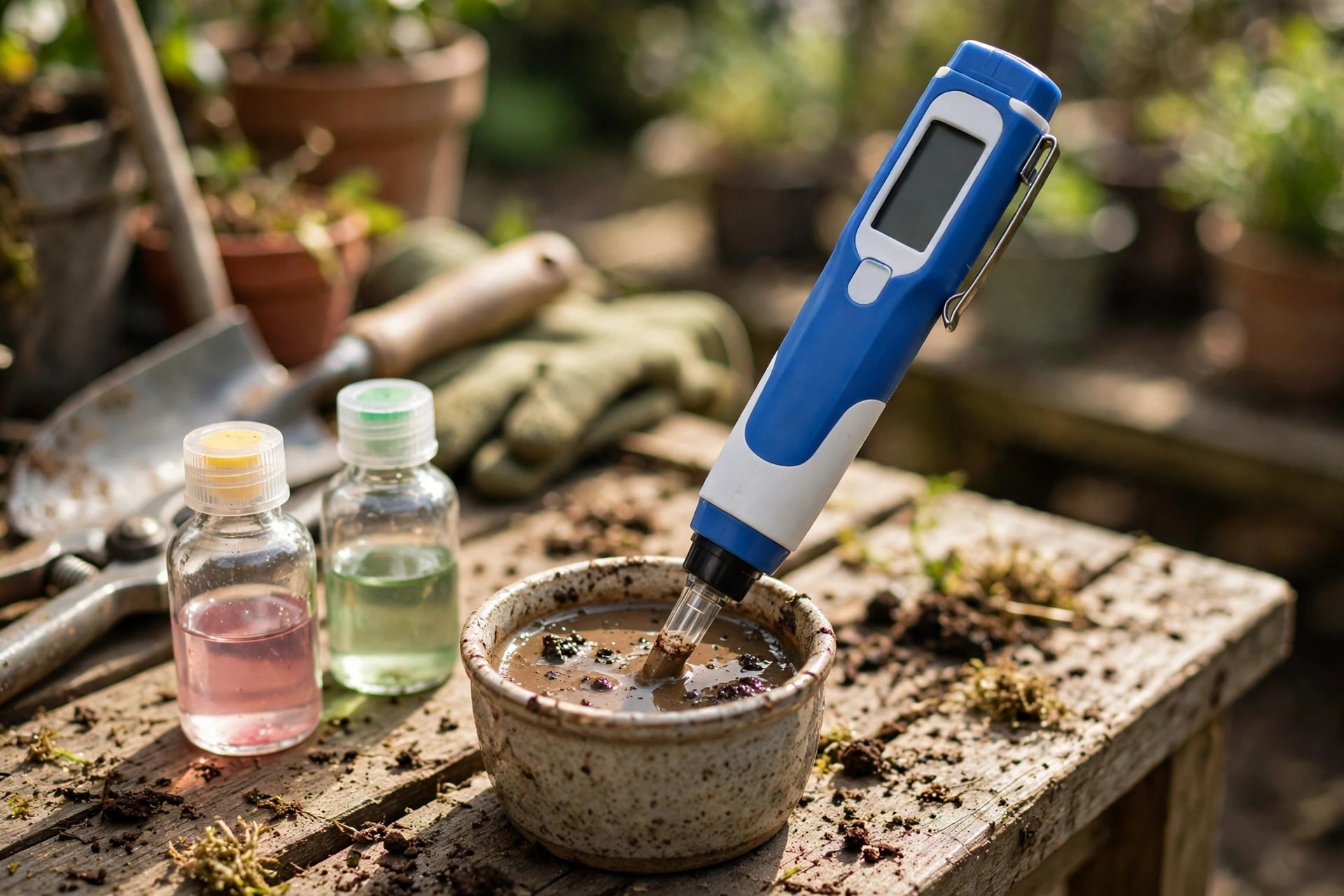 Apera Instruments PH60 | Digital pH pen, slurry method | -2.00 to 16.00 | +/-0.01 pH | Lab-grade accuracy on a budget | 8.6 |
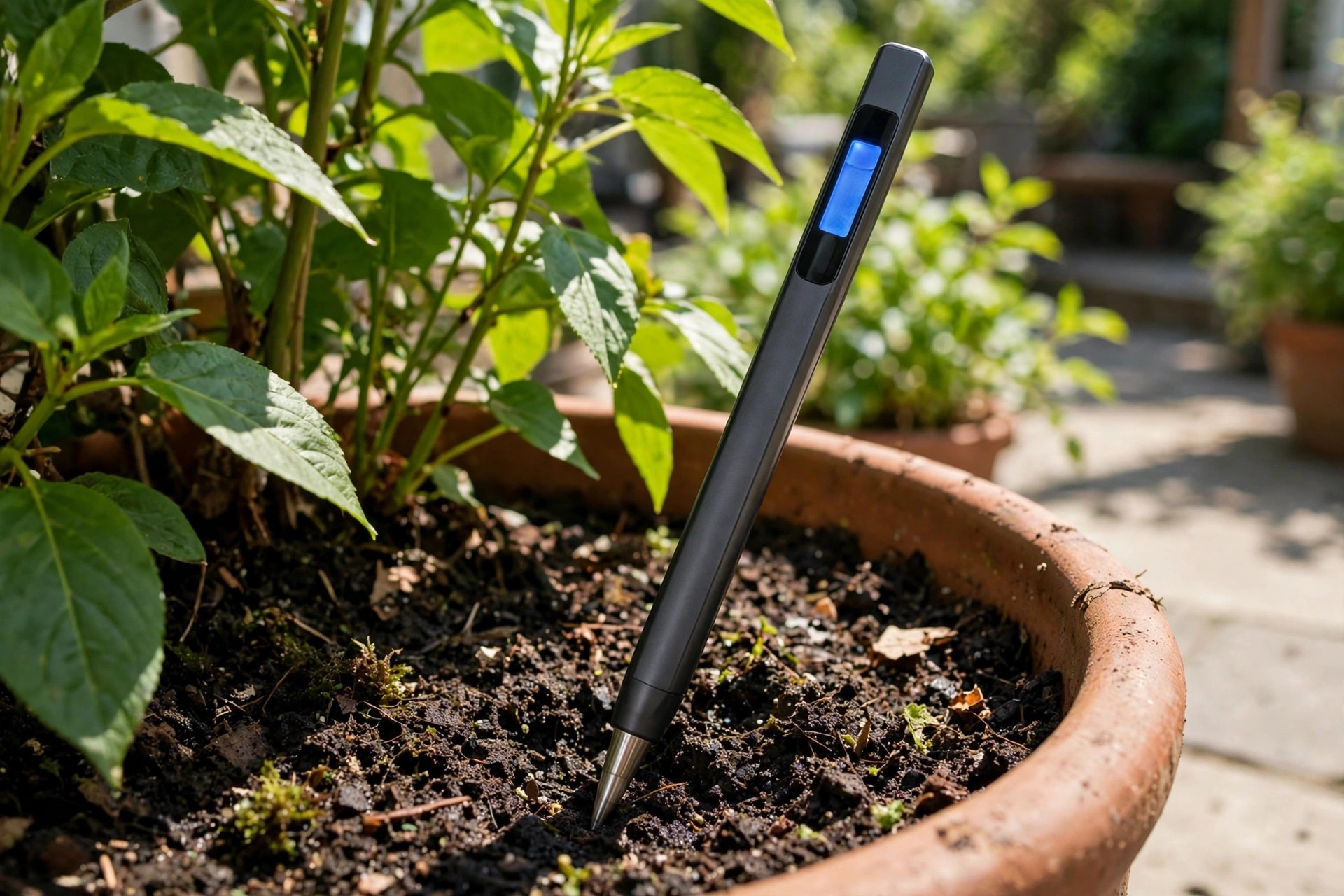 Bluelab Soil pH Pen | Digital pen, direct soil | 0.0-14.0 | +/-0.1 pH | Root-zone readings, coco and soil | 8.0 |
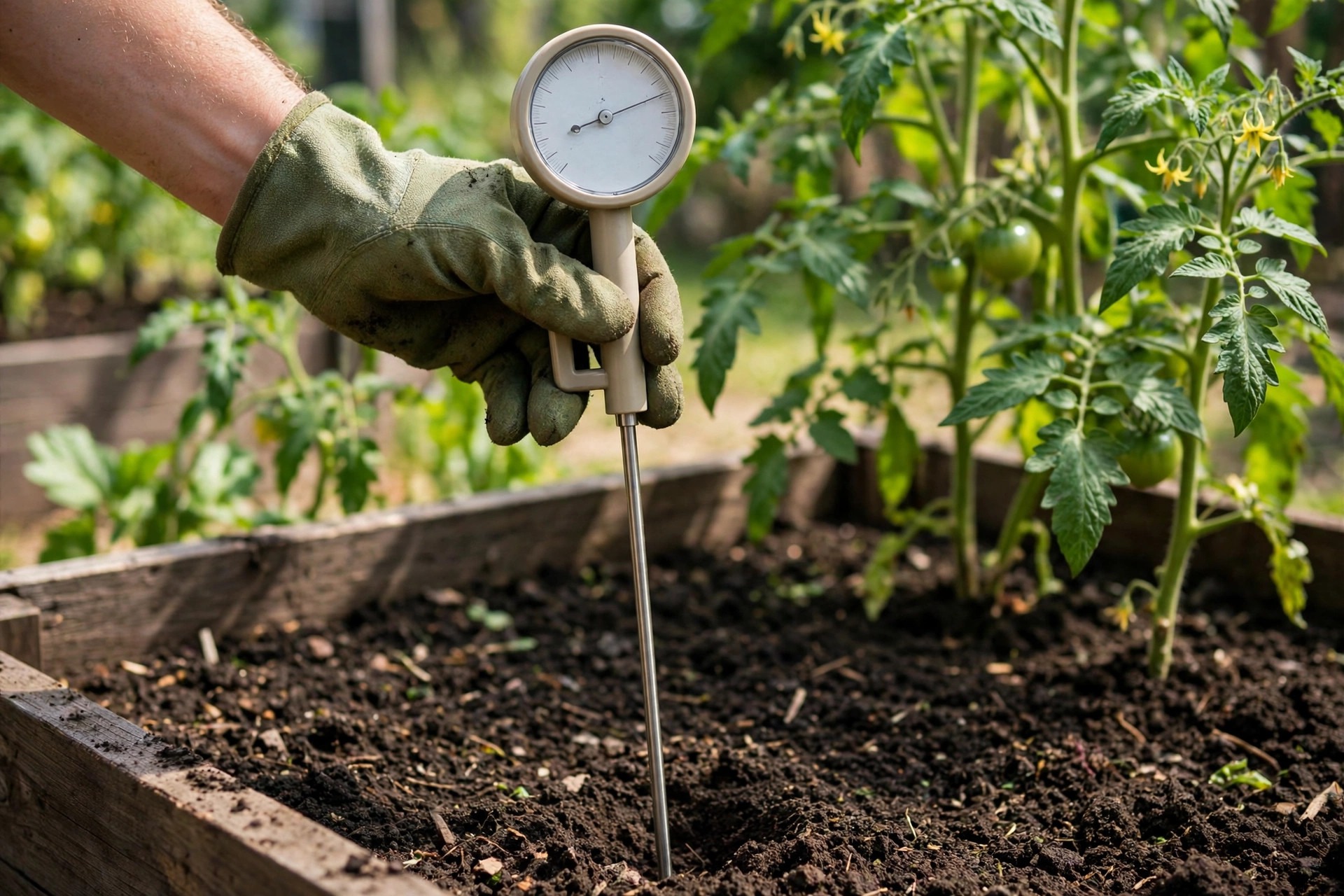 Gain Express ZD-06 | Analog probe, pH and moisture | 3-8 | +/-0.2 pH | Deep beds, best analog accuracy | 6.6 |
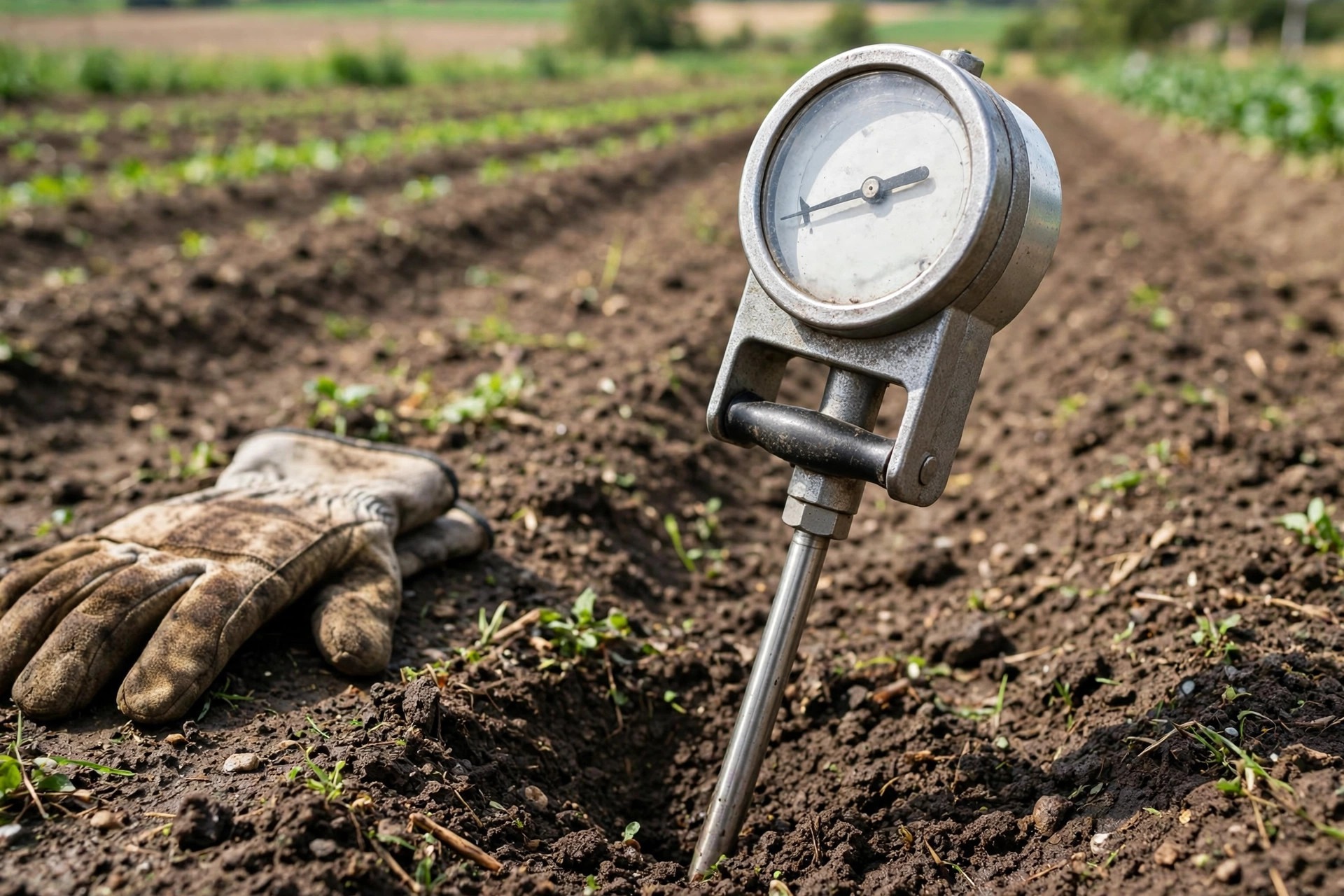 Kelway HB-2 | Analog, pH and moisture | 3.5-8 | +/-0.2 pH | Rugged field use, no batteries | 6.3 |
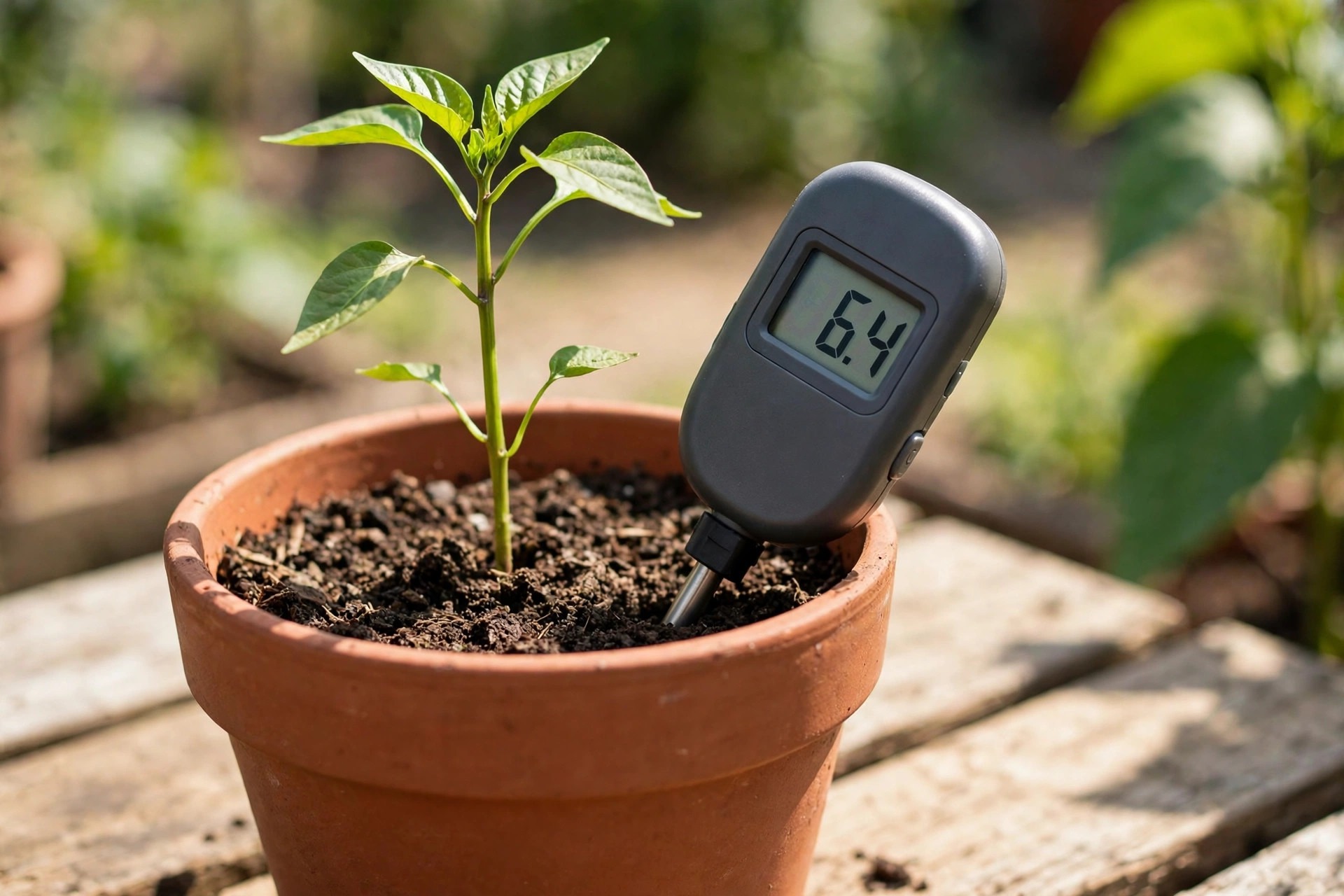 Luster Leaf Rapitest 1845 | Digital probe, not glass electrode | 3.5-9.0 | Not published | Budget digital, repeat checks | 5.6 |
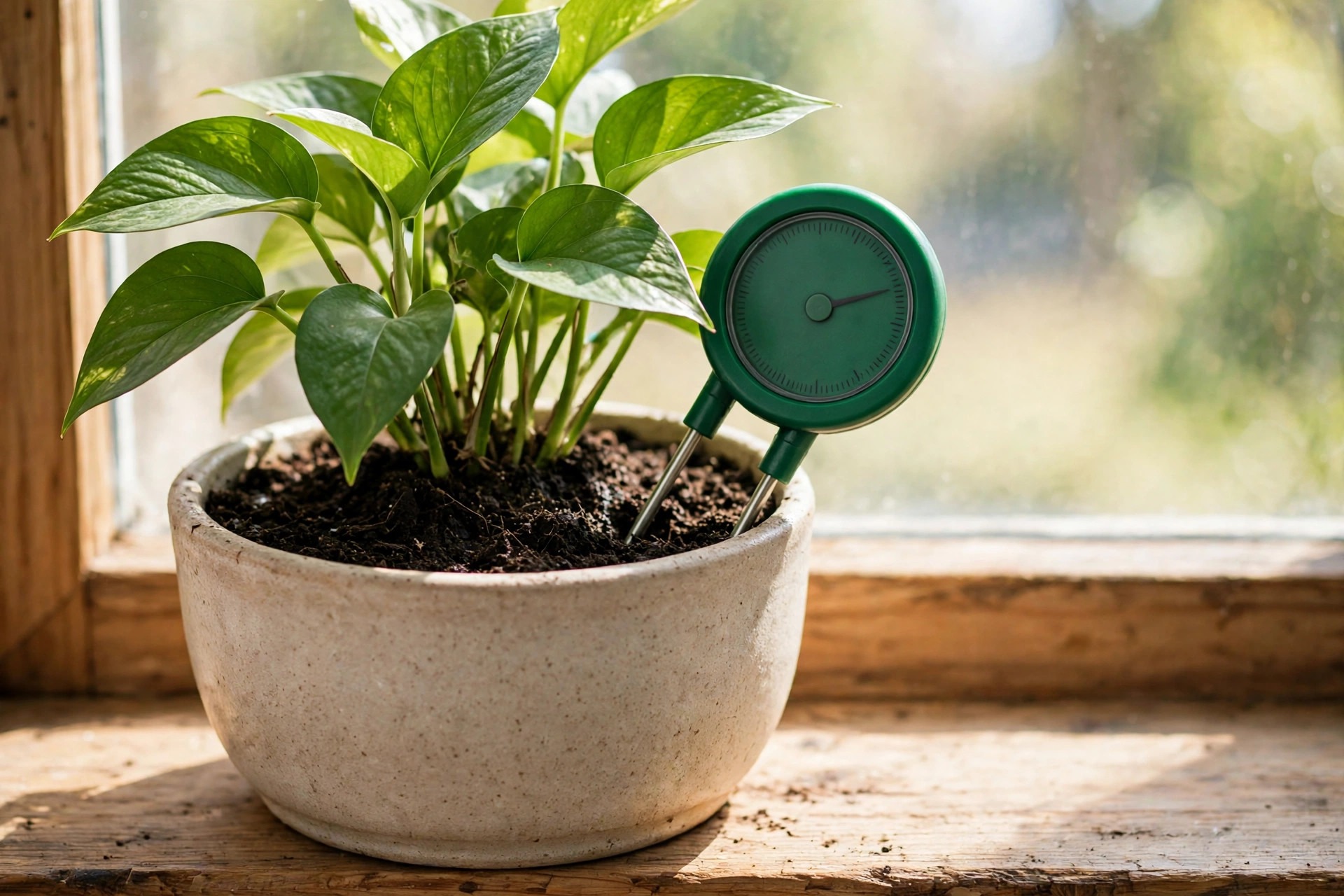 SONKIR MS02 3-in-1 | Analog 3-in-1 | 3.5-8 | Not published | Budget 3-in-1, houseplants | 5.0 |
 Dr.meter S30 3-in-1 | Analog 3-in-1 | 3.5-8 | Not published | Quick checks, spare meter | 4.8 |
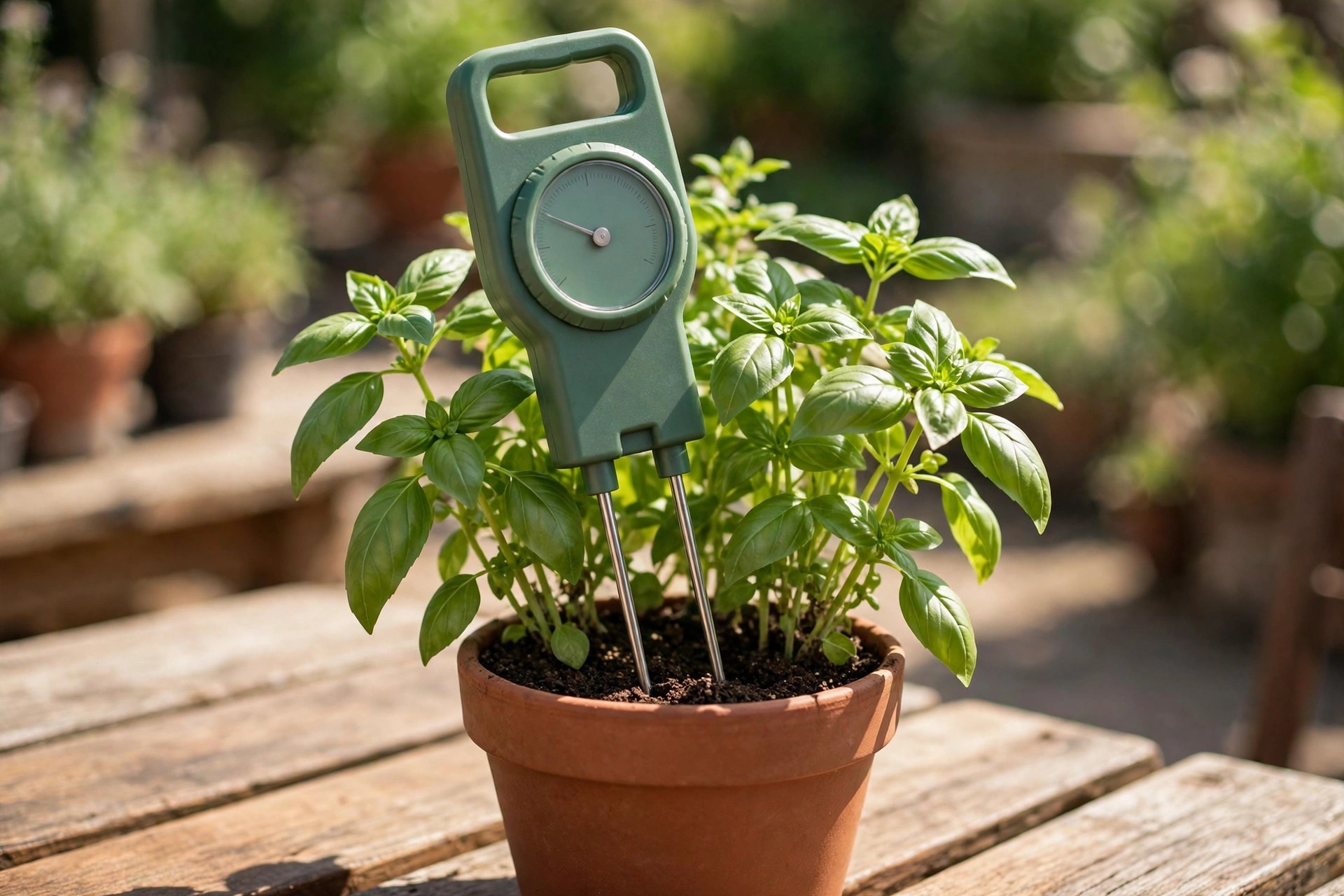 Atree 3-in-1 | Analog 3-in-1 | 3.5-8 | Not published | Budget 3-in-1, balcony pots | 4.3 |
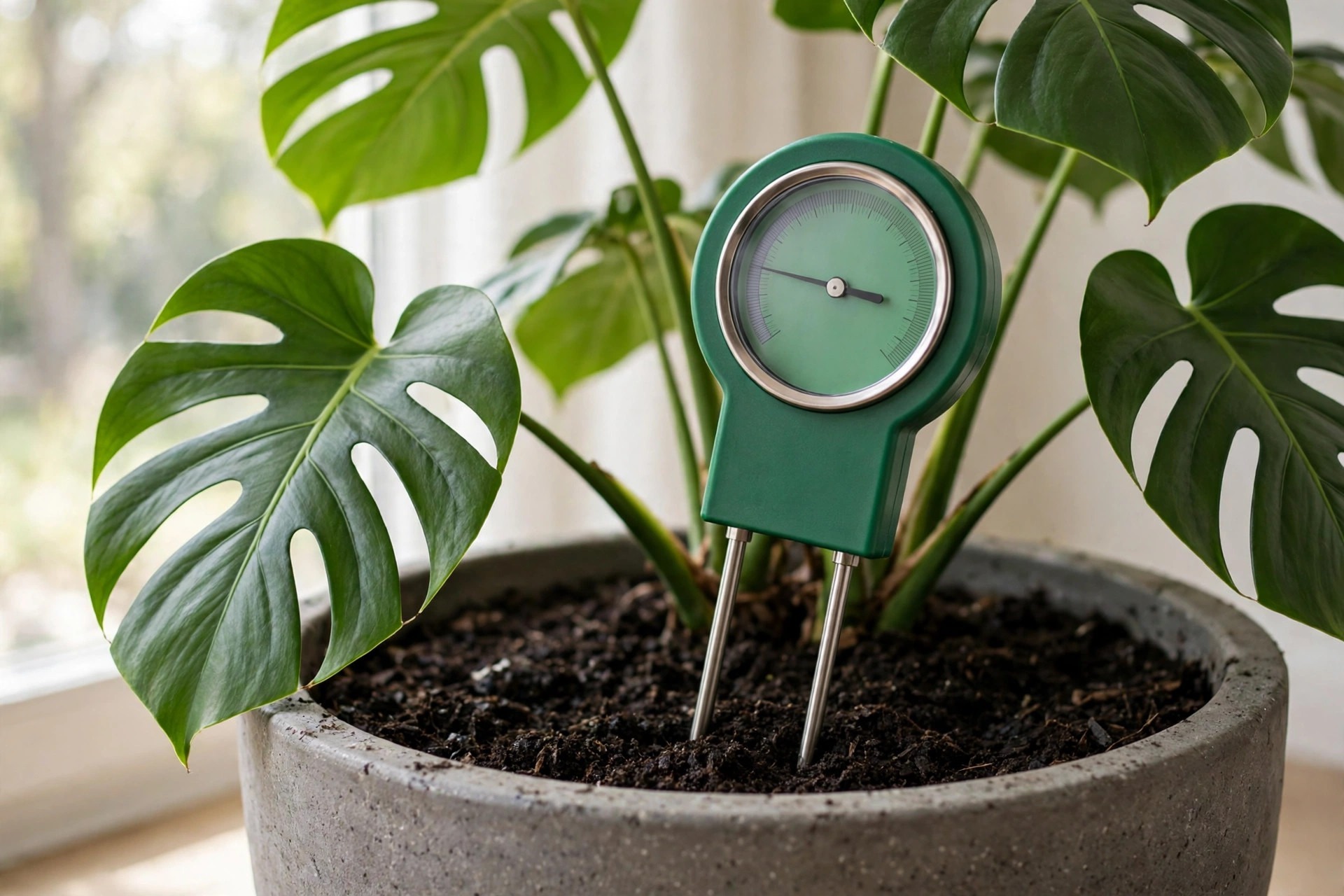 VIVOSUN 3-in-1 | Analog 3-in-1 | 3.5-8 | Not published | Indoor plants, moisture checks | 4.7 |
Ratings are weighted final scores from the How We Chose system at the end of this article. They are not laboratory measurements. A product with no published pH accuracy gets a low accuracy sub-score, so its final score drops: the four 3-in-1 meters and the Luster Leaf 1845 score 4.3 to 5.6, not 8.5 to 9.0. The full factor scores and the calculation for every product are in the scoring table in How We Chose, and the same weighted figure appears in each product section.
The 10 Best Soil pH Meters
1. Hanna HI981030 GroLine Soil pH Tester
Best overall, most accurate
The Hanna HI981030 is the only meter in this roundup that was designed from the ground up to measure soil, and it shows in the one place that matters: the electrode. Instead of two metal plates that guess at pH from electrical current, the HI981030 uses a real glass pH electrode with a conical tip, an open reference junction, and a removable PVDF sleeve. You push it straight into moist soil or a soil slurry, wait about 30 seconds for the reading to settle, and the screen shows pH to two decimal places. Hanna lists a range of 0.00 to 12.00 pH, a resolution of 0.01 pH, and an accuracy of plus or minus 0.05 pH at 25 C. Its stated accuracy is four times tighter than the best analog meter in this roundup.
Calibration is automatic at one or two points, and the kit ships with pH 4.01 and 7.01 buffer sachets plus two cleaning solutions, one for mineral soil and one for humus. A plastic auger is included to break through harder soil before you insert the tip, which matters, because a glass tip forced into dry, stony ground will chip. One CR2032 battery runs the meter for about 1,000 hours.
Price, verified at writing time: $154.99 on the Hanna Instruments store. At that price it costs about fifteen times what a budget analog probe costs, which is the honest trade. A meter that reads to plus or minus 0.05 pays for itself the first time it stops you from liming a bed that did not need it. A bag of lime is cheap; a season of locked-out iron is not.
Owner feedback: Roundups that compare meters against lab results consistently put the HI981030 at the top for home use, and buyers who move up from an analog probe report the same thing: the number stops wandering. The repeated complaint is the price, and a smaller one is that the kit’s cleaning solutions run out, so you need to buy more.
Rating rationale: Weighted final score 8.4 out of 10. Accuracy 9.0, Ease of use 9.0, Durability 7.5, Calibration 9.0, Features 8.0, Value 6.0. Calculation: 9.0 x 0.30 + 9.0 x 0.20 + 7.5 x 0.15 + 9.0 x 0.15 + 8.0 x 0.10 + 6.0 x 0.10 = 2.70 + 1.80 + 1.13 + 1.35 + 0.80 + 0.60 = 8.38, rounded to 8.4. Accuracy is high because the stated figure is plus or minus 0.05 pH for direct soil, and value is low because it is the most expensive direct meter here.
Real-world limitation: A glass electrode is a precision instrument, not a trowel. It must be kept moist in storage solution, it must be calibrated, and the tip will break if you force it into dry or rocky soil. If you want a meter you can leave in the truck and forget, this is not it.
Who should buy: Gardeners who amend soil by the numbers, growers with pH-sensitive crops like blueberries, and anyone who has been burned by an analog probe reading that changed with the weather.
Specification source: Hanna Instruments product page (range 0.00-12.00 pH, resolution 0.01, accuracy +/-0.05 pH, 1 or 2 point calibration, CR2032, about 1,000 hours); Amazon listing ASIN B07Q2GFQQC. Note: a few secondary listings print an accuracy of +/-0.2 pH for this model. That figure conflicts with Hanna’s own specification, so this article uses the maker’s +/-0.05 and flags the disagreement rather than printing the larger number. Official page | Amazon listing
2. Apera Instruments PH60
Best lab-grade pen
The Apera PH60 is a pH pen for liquids, not a soil probe, and that distinction is the whole point of including it. You mix a soil sample with distilled water, let it sit, and dip the pen into the slurry. That is the same method a soil lab uses, and it removes the two variables that make direct-insert probes unreliable: soil moisture and compaction. Apera rates the PH60 at plus or minus 0.01 pH across a range of -2.00 to 16.00, with 1 to 3 point automatic calibration that recognizes five buffer types, automatic temperature compensation from 0 to 50 C, and an IP67 waterproof body.
The feature that sets it apart from every other pen at this price is the replaceable probe. A glass pH electrode lasts about one to two years with regular use, and on most pens that means buying a new pen. On the PH60 you twist off the PH60-E probe and fit a new one, so the body, the display, and the calibration system keep working for years. The kit arrives in a hard case with calibration solutions, vials, and batteries.
Price, verified at writing time: $110, the official Apera Instruments price. For a meter that reads to a hundredth of a pH unit, that is the best accuracy per dollar in this roundup, and it costs about $45 less than the Hanna.
Owner feedback: Home brewers and hydroponic growers, who use the PH60 heavily, report years of service from a single body with one probe swap, and they praise the automatic calibration and the smiley-face stability indicator that tells you when a reading has settled. The recurring complaint is that the pen is long and a little heavy for a shirt pocket, and that stabilization can be slow in low-conductivity water.
Rating rationale: Weighted final score 8.6 out of 10. Accuracy 10.0, Ease of use 6.5, Durability 8.0, Calibration 10.0, Features 8.5, Value 7.5. Calculation: 10.0 x 0.30 + 6.5 x 0.20 + 8.0 x 0.15 + 10.0 x 0.15 + 8.5 x 0.10 + 7.5 x 0.10 = 3.00 + 1.30 + 1.20 + 1.50 + 0.85 + 0.75 = 8.60. Accuracy and calibration lead the roundup, while ease of use is lower because it needs a slurry, not a direct soil reading.
Real-world limitation: The slurry method is accurate but slow. Testing ten spots in a garden means ten cups, ten mixes, and ten rinses. For a quick check before watering, an analog probe is faster. For a number you will act on with lime or sulfur, the extra minutes are worth it.
Who should buy: Serious vegetable growers, hydroponic gardeners who already own a TDS meter, and anyone who wants lab-grade numbers without paying lab-grade prices.
Specification source: Apera Instruments PH60 product page and instruction manual (range -2.00 to 16.00 pH, accuracy +/-0.01 pH, 1 to 3 point calibration, replaceable probe). Official page | Instruction manual (PDF) | Amazon listing
3. Bluelab Soil pH Pen
Best root-zone pen
Bluelab built its reputation in hydroponics, and the Soil pH Pen brings that same engineering to garden soil. It reads pH and temperature directly in soil, coco coir, rockwool, and potting mixes, with a double-junction probe that resists contamination longer than a single-junction design. The range is 0.0 to 14.0 pH at 0.1 resolution, with an accuracy of plus or minus 0.1 pH at 25 C, and temperature from 0 to 50 C. Calibration is two-point, at pH 7.0 and 4.0 or 10.0, with automatic temperature compensation, and the backlit display carries a 30-day calibration reminder so you know when the reading may have drifted.
Two design details deserve mention. The probe cap doubles as a dibber, so you make the test hole with the cap instead of forcing the glass probe into the soil. And the pen runs on a single AAA battery, which you can buy anywhere, instead of a button cell you have to order.
Price, verified at writing time: $219.00 list on the Bluelab store, with US retailers selling it for $175.20 (BG Hydro) to $179.11 (Growers House). That is the most expensive pen in this roundup, and the price gap between the list price and the street price is worth noting: shop around before you pay full price. At street price it costs about the same as the Hanna, for half the accuracy.
Owner feedback: Growers who run coco and hydroponic systems praise the pen’s durability and the fact that it reads directly in the medium, and the double-junction probe is repeatedly credited for a longer working life than cheaper pens. The recurring complaints are the price and that only one sachet of each calibration solution is included in the box.
Rating rationale: Weighted final score 8.0 out of 10. Accuracy 8.0, Ease of use 8.5, Durability 8.0, Calibration 8.0, Features 9.0, Value 5.5. Calculation: 8.0 x 0.30 + 8.5 x 0.20 + 8.0 x 0.15 + 8.0 x 0.15 + 9.0 x 0.10 + 5.5 x 0.10 = 2.40 + 1.70 + 1.20 + 1.20 + 0.90 + 0.55 = 7.95, rounded to 8.0. Features lead the roundup, while value is low because it is the most expensive meter here for plus or minus 0.1 pH accuracy.
Real-world limitation: The pen is built for growing media, not for field soil full of stones. It needs moisture to read, so dry soil must be wetted with distilled water first, and the probe should never be pushed into dry, hard ground.
Who should buy: Coco and container growers, greenhouse gardeners, and anyone who tests the same pots and beds week after week and wants a pen that lives on the potting bench.
Specification source: Bluelab product page and manuals (range 0.0-14.0 pH, resolution 0.1, accuracy +/-0.1 pH at 25 C, temperature 0-50 C, 2-point calibration, 1 x AAA battery, 1-year warranty). Official page | Instruction manuals | Amazon listing
4. Gain Express ZD-06 Soil pH and Moisture Meter
Best analog probe
The Gain Express ZD-06 looks like a simple tool, and it is, but it is the simple tool that performed best when someone actually checked it against a lab. It is a single-probe analog meter with a top-mounted dial: pH on one scale, moisture on the other, switched by a button on the side. The probe is 295 mm long, about 11.6 inches, which is the longest probe in this roundup by a wide margin, and it is a thick, waterproof metal electrode that resists bending when it hits a clump. The pH range is 3 to 8 with a manufacturer-stated accuracy of plus or minus 0.2 pH, moisture reads on a scale of 1 to 8, and the meter needs no battery at all. It works from 5 to 50 C and carries a one-year warranty.
The reason it ranks above the cheaper analog meters is evidence. Bob Vila’s test team compared six soil pH meters against professional lab results, and the Gain Express was the most accurate and consistent of the group. Their garden soil tested at pH 6.42 in the lab, and the ZD-06 read 6.2 to 6.4 across five tests over two weeks. That is inside its stated accuracy, and it is the only analog meter in this roundup with that kind of independent check behind it.
Price, verified at writing time: about $56, with AgricareHub listing $55.99 and BackyardStyle noting it was priced slightly under $60 at the time of its review. That puts it in the middle of the price range: about five times a budget 3-in-1, about a third of the Hanna. For a meter you will use for years, the per-use cost is a few cents per reading.
Owner feedback: Buyers praise the long probe and the sturdy build, and the meter’s 4.4 out of 5 average from more than 800 reviews (per AgricareHub) is the strongest owner rating among the analog picks. The complaint everyone mentions is the waiting time: you must leave it in the soil for 5 to 10 minutes before the reading settles, which feels slow when you are checking ten spots.
Rating rationale: Weighted final score 6.6 out of 10. Accuracy 7.5, Ease of use 7.0, Durability 8.5, Calibration 2.0, Features 6.0, Value 8.0. Calculation: 7.5 x 0.30 + 7.0 x 0.20 + 8.5 x 0.15 + 2.0 x 0.15 + 6.0 x 0.10 + 8.0 x 0.10 = 2.25 + 1.40 + 1.28 + 0.30 + 0.60 + 0.80 = 6.63, rounded to 6.6. Accuracy is the best of any analog meter here at plus or minus 0.2 pH, verified against a lab result, but calibration scores 2.0 because an analog meter cannot be calibrated.
Real-world limitation: The pH range stops at 8, so if your soil is strongly alkaline, this meter will not tell you by how much. And it does not work below 5 C, so it is useless for a winter soil check in a cold climate.
Who should buy: Vegetable gardeners with raised beds, orchard and vineyard owners who test at depth, and anyone who wants the most trustworthy analog meter without paying digital-pen prices.
Specification source: Gain Express ZD-06 specifications via retailer listings (range 3-8 pH, accuracy +/-0.2 pH, 295 mm probe, moisture 1-8, no battery, 5-50 C, 1-year warranty); Bob Vila test results (lab pH 6.42, meter 6.2-6.4). Official page | Instruction manual (PDF) | Amazon listing | Bob Vila independent test
5. Kelway HB-2 Soil pH and Moisture Meter
Best rugged analog
The Kelway HB-2 is the oldest design in this roundup, and it is still here for a reason. It is a professional-grade analog meter, made in Japan, that measures soil pH and moisture with two dissimilar metal plates on the probe. The plates react with the soil to generate a tiny current that moves the needle, so the meter needs no batteries, no electrodes, and no buffer solutions. The pH range is 3.5 to 8 with an accuracy of plus or minus 0.2 pH, and moisture reads as 0 to 100 percent relative saturation with plus or minus 10 percent accuracy. A reading takes 2 to 3 minutes to stabilize. The meter is 6.5 inches long, weighs 8 ounces, and comes with a carrying case and conditioning film sheets for cleaning the plates.
What you are paying for is durability. There is no glass to break, no battery to die on a cold morning, and no electronics to fail in the rain. Nursery professionals and small farmers have used the HB-2 for decades, and the same meter keeps working year after year if you polish the plates with the supplied scouring pad before each use.
Price, verified at writing time: this is the one price in the roundup with a real conflict, so here are both figures. Amazon listings show about $137, and Certified MTP lists $213.24. The gap is large enough that you should check the seller before you buy, and buy from a reputable source rather than the cheapest listing. Either way, it is a significant investment for an analog meter, and it only makes sense if you will use it for years.
Owner feedback: FarmStandApp calls it the definition of a buy-it-for-life tool, and owners report the same story: it survives drops, rain, and truck beds that would kill a digital pen. The complaints are consistent too. The plates must be polished before every use, the needle takes minutes to settle, and it cannot match the precision of a calibrated digital pen.
Rating rationale: Weighted final score 6.3 out of 10. Accuracy 7.5, Ease of use 6.0, Durability 9.5, Calibration 2.0, Features 6.0, Value 5.0. Calculation: 7.5 x 0.30 + 6.0 x 0.20 + 9.5 x 0.15 + 2.0 x 0.15 + 6.0 x 0.10 + 5.0 x 0.10 = 2.25 + 1.20 + 1.43 + 0.30 + 0.60 + 0.50 = 6.28, rounded to 6.3. Durability leads the roundup, but calibration scores 2.0 because it cannot be calibrated, and value is low at $137 to $213 for an analog meter.
Real-world limitation: The HB-2 should not be used in highly saline alkaline soil, where the readings go wrong, and it cannot test liquids at all. If liquid gets inside the housing and touches the circuitry, the damage is not covered by the guarantee.
Who should buy: Small farmers, nursery owners, and gardeners who are hard on tools and want one meter that will still be working in ten years.
Specification source: Kelway HB-2 specifications via Certified MTP and Amazon listing (range 3.5-8 pH, accuracy +/-0.2 pH, moisture 0-100% +/-10%, no batteries, 6.5 in, 8 oz). Official page | Instruction manual (PDF) | Amazon listing
6. Luster Leaf Rapitest Digital Soil pH Meter 1845
Best digital on a budget
The Luster Leaf Rapitest 1845 is the cheapest way to get a digital pH number instead of a needle on a dial. It is a small handheld meter with a 5.6 inch probe and an LCD screen, and it reads soil pH from 3.5 to 9.0. You push the probe into moist soil, wait a moment, and read the number. No reagent capsules to buy, no color chart to squint at, and no waiting ten minutes like the analog probes. The meter re-calibrates itself each time it is turned on, it turns itself off after about ten minutes to save the batteries, and it runs on three 357 silver oxide button cells, which are included.
The box also includes a printed Plant pH Preference List covering more than 450 plants, which is genuinely useful. It tells you at a glance whether your soil suits the plant in front of you, instead of making you look the number up on your phone.
Price, verified at writing time: $14.99 at Stark Bro’s and $15.99 at ARBICO Organics. At that price it costs about the same as two budget analog probes, and it is the only digital meter in this roundup under $20. Over a season of weekly checks, that works out to well under a dollar per reading.
Owner feedback: No owner feedback was found that is specific enough to quote for this model beyond the retailer rating: Stark Bro’s lists 3.0 out of 5 from 44 reviews, which is the weakest owner rating in this roundup. Buyers like the instant digital readout and the low price, and the complaints center on inconsistent readings when the probe is dirty or the soil is dry, and on the short probe, which cannot reach the root zone of a deep bed.
Rating rationale: Weighted final score 5.6 out of 10. Accuracy 3.0, Ease of use 8.5, Durability 5.0, Calibration 4.0, Features 7.0, Value 9.0. Calculation: 3.0 x 0.30 + 8.5 x 0.20 + 5.0 x 0.15 + 4.0 x 0.15 + 7.0 x 0.10 + 9.0 x 0.10 = 0.90 + 1.70 + 0.75 + 0.60 + 0.70 + 0.90 = 5.55, rounded to 5.6. Accuracy scores only 3.0 because Luster Leaf does not publish an accuracy figure, so the weighted score drops even though ease of use and value are high.
Real-world limitation: Luster Leaf does not publish an accuracy figure for this meter, so there is no number to hold it to. Some retailers claim plus or minus 0.1 pH, but that figure comes from a retail Q and A, not from the maker, so this article does not print it as a specification. Treat the reading as a good guide, not a lab number, and keep the probe clean with the supplied pad, because a dirty probe is the most common cause of erratic readings.
Who should buy: Gardeners who want a quick digital check on pots and shallow beds, and beginners who want to learn their soil without spending much.
Specification source: Luster Leaf Rapitest 1845 specifications via ARBICO Organics and the maker’s instruction sheet (range 3.5-9.0 pH, probe 5.6 in, auto re-calibration on power-up, auto-off after about 10 minutes, 3 x 357 batteries included, preference list for 450+ plants); ASIN B0777MKGZL (via Ubuy listing). Luster Leaf official site | Instruction sheet (PDF) | Amazon listing
7. SONKIR MS02 3-in-1 Soil pH Meter
Best budget 3-in-1
The SONKIR MS02 is the meter most American gardeners actually own, and the numbers explain why. It is a battery-free analog tester that measures pH, moisture, and light with two stainless steel probes and one dial, switched by a button on the front. The pH range is 3.5 to 8, moisture reads 1 to 10, and light reads 0 to 2000 lux. The probes are about 7.9 inches long, the whole meter is 11.5 inches long and weighs 2.89 ounces, and you insert the probes 4 to 6 inches into moist soil and wait about ten minutes for the needle to settle.
It is worth being straight about what this meter does well and what it does not. The moisture reading is the useful one: it tells you whether the soil at root depth is dry, moist, or wet, and that alone prevents most overwatering. The pH reading is a rough guide. It is not calibrated, it cannot be calibrated, and the maker publishes no accuracy figure for it. Roundups disagree wildly about its accuracy, quoting plus or minus 0.2, plus or minus 0.3, and plus or minus 0.5, which is why this article prints Not published rather than picking the smallest number.
Price, verified at writing time: $9.99 on Amazon. At that price you can buy one for every bed and still spend less than a single digital pen. One flag: Amazon’s product information notes this model as discontinued by the manufacturer, though it remains widely stocked at the time of writing, so availability may change.
Owner feedback: More than 45,000 buyers have rated the MS02, with a 4.1 out of 5 average, which is a large sample for a ten-dollar tool. Owners praise the moisture reading and the fact that it needs no battery. The complaints are consistent: the pH needle sometimes sticks near 8 no matter where the meter is placed, the reading drifts with soil moisture and recent fertilizer, and the meter gives no reading at all in dry soil until you water first.
Rating rationale: Weighted final score 5.0 out of 10. Accuracy 2.0, Ease of use 8.0, Durability 6.5, Calibration 1.0, Features 7.0, Value 9.5. Calculation: 2.0 x 0.30 + 8.0 x 0.20 + 6.5 x 0.15 + 1.0 x 0.15 + 7.0 x 0.10 + 9.5 x 0.10 = 0.60 + 1.60 + 0.98 + 0.15 + 0.70 + 0.95 = 4.98, rounded to 5.0. Accuracy scores only 2.0 because SONKIR publishes no pH accuracy and the pH reading is unreliable, so the weighted score drops even though value is high.
Real-world limitation: University of Georgia Extension’s Walter Reeves calls these two-metal-probe meters wildly inaccurate for pH, because soil moisture, temperature, and recent fertilizer all move the number independently of true pH. Use this meter to learn whether your soil is trending acidic or alkaline, and confirm any number you plan to act on with a lab test or a calibrated pen.
Who should buy: Houseplant owners, new gardeners, and anyone who wants a cheap moisture check in every pot.
Specification source: SONKIR MS02 specifications via Amazon listing and user manual (pH 3.5-8, moisture 1-10, light 0-2000 lux, probes about 7.9 in, no battery, 11.5 x 2 x 1.5 in, 2.89 oz); Amazon listing ASIN B07BR52P26. No separate manufacturer website was found. Amazon listing (maker’s sales page) | Instruction manual (PDF)
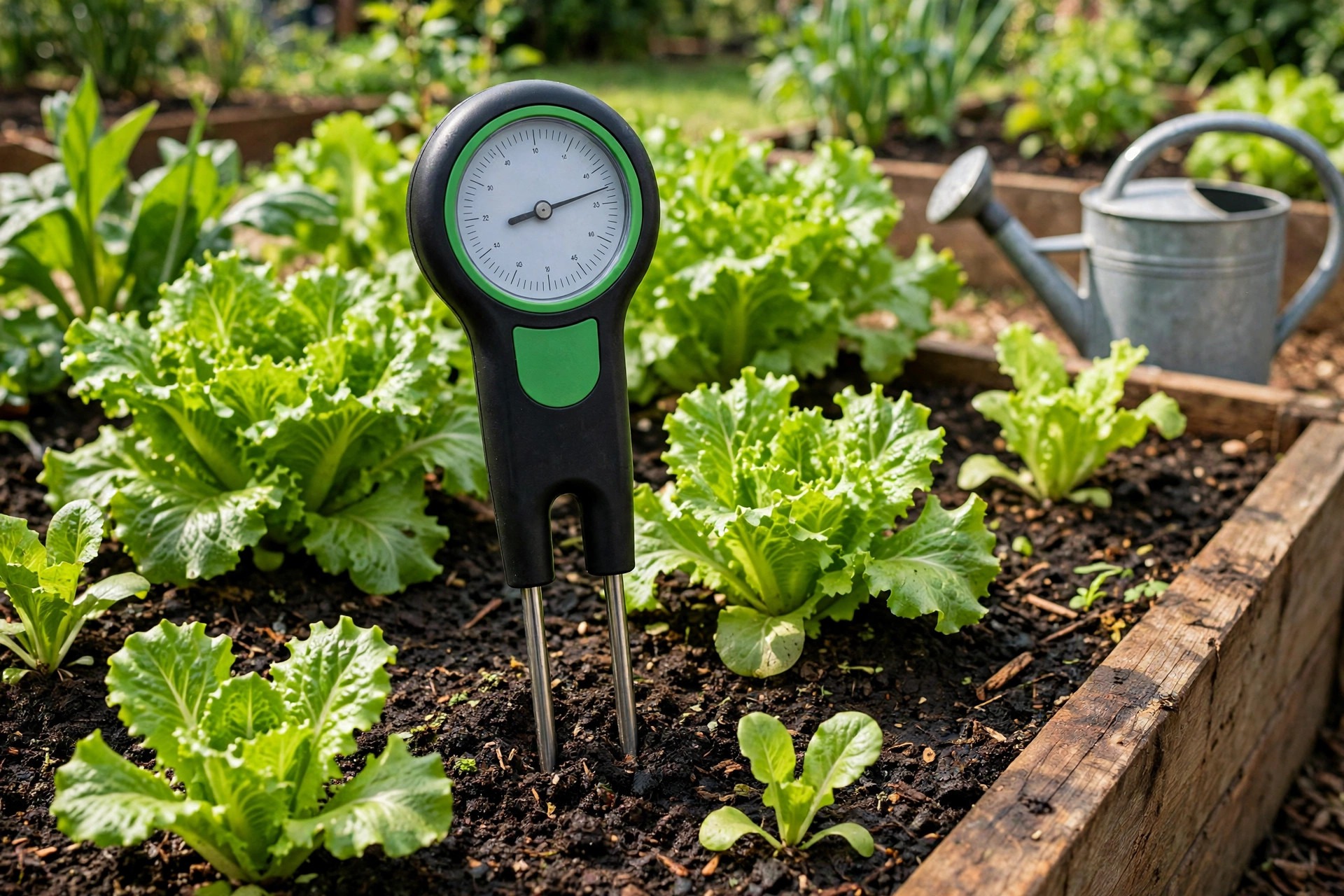
8. Dr.meter S30 3-in-1 Soil pH Meter
Best spare meter
The Dr.meter S30 is the same idea as the SONKIR and the Atree, in a slightly different body: a battery-free analog 3-in-1 tester with two 20 cm metal probes, a round dial, and a switch that moves between moisture, pH, and light. The pH range is 3.5 to 8, moisture reads 1 to 10, and light reads 0 to 2000 lux. You push the probes into moist soil, wait about ten minutes, and read the needle. There is no battery to replace and nothing to calibrate, because there is nothing to calibrate with.
It earns its place in this roundup as the honest middle of the budget group. It does the same job as the other two budget 3-in-1 meters, at a similar price, with a slightly longer probe than the Atree and a sturdier-feeling body than the cheapest options. It is the meter to buy when you want a second tester for the far end of the garden, or a spare to keep in the shed so the good meter never leaves the potting bench.
Price, verified at writing time: the price for this model was not verified on a live listing at writing time, so this article does not print one. Similar 3-in-1 analog testers sell for about $10 on Amazon, and the Dr.meter sits in that same budget band, but the exact figure should be checked before buying. Prices change, and a roundup that guesses one goes stale fast.
Owner feedback: No owner feedback specific to the S30 model was found during research, so this article says so plainly rather than borrowing reviews from a different Dr.meter model. The general pattern for this class of tester applies: buyers like the price and the moisture reading, and they report the same pH limitations described for the SONKIR above.
Rating rationale: Weighted final score 4.8 out of 10. Accuracy 2.0, Ease of use 7.5, Durability 6.0, Calibration 1.0, Features 7.0, Value 9.0. Calculation: 2.0 x 0.30 + 7.5 x 0.20 + 6.0 x 0.15 + 1.0 x 0.15 + 7.0 x 0.10 + 9.0 x 0.10 = 0.60 + 1.50 + 0.90 + 0.15 + 0.70 + 0.90 = 4.75, rounded to 4.8. Accuracy scores only 2.0 because Dr.meter publishes no pH accuracy, so the weighted score drops even though value is high.
Real-world limitation: The same limitation applies to every meter in this class: the pH reading is an estimate, not a measurement. Do not lime a bed on the strength of this dial alone. Confirm with a lab test or a calibrated pen, and do not force the probes into hard or rocky soil, which bends them.
Who should buy: Gardeners who already own a good meter and want a cheap second one, and anyone who mainly needs a moisture check with a pH reading as a bonus.
Specification source: Dr.meter S30 specifications via retailer roundups and the 3-in-1 instruction manual (pH 3.5-8, moisture 1-10, light 0-2000 lux, two 20 cm probes, no battery). Amazon listing ASIN B07N19JD3K. Official page | Instruction manual | Amazon listing
9. Atree 3-in-1 Soil pH Meter
Budget 3-in-1
The Atree 3-in-1 is the second-lowest-priced meter in this roundup, just behind the VIVOSUN at $7.99, and it is built to the same pattern as the other budget testers: two metal probes, one dial, three functions. The pH range is 3.5 to 8, moisture reads 1 to 10, and light reads 0 to 2000 lux. The probes are about 6.7 inches long, a little shorter than the SONKIR’s, and the instructions say to insert two-thirds of the probes, about 4 to 6 inches, into moist soil and wait about five minutes. No battery is needed.
The price is the story here. At under nine dollars, it is one of the cheapest ways to get any pH reading at all, and for a gardener with a few herb pots on a balcony, that may be enough. The moisture reading works the same way it does on the other budget meters, and for many buyers that is the function they actually use every week.
Price, verified at writing time: $8.49 on BestAdvisor’s Amazon price listing. At that price it costs less than a bag of potting soil, and if it lasts one season of weekly checks, each reading costs a few cents.
Owner feedback: The feedback for this model is the most negative in the roundup, and it is worth reporting plainly. One Amazon review states flatly that the pH measurement does not work, and roundups note that the probes are fragile and tend to break when forced into hard soil. The moisture function draws fewer complaints, which matches the pattern for this whole class: the moisture reading is useful, the pH reading is the weak point.
Rating rationale: Weighted final score 4.3 out of 10. Accuracy 2.0, Ease of use 7.0, Durability 4.0, Calibration 1.0, Features 6.5, Value 9.0. Calculation: 2.0 x 0.30 + 7.0 x 0.20 + 4.0 x 0.15 + 1.0 x 0.15 + 6.5 x 0.10 + 9.0 x 0.10 = 0.60 + 1.40 + 0.60 + 0.15 + 0.65 + 0.90 = 4.30. Accuracy scores only 2.0 because Atree publishes no pH accuracy and owners report the pH reading does not work, and durability is the lowest in the roundup because the probes are fragile.
Real-world limitation: Do not buy this meter expecting a trustworthy pH number. Buy it for moisture, treat the pH dial as a rough hint, and never push the probes into dry, hard soil. If the pH number matters to you, spend the extra few dollars on the SONKIR, or step up to the Luster Leaf 1845.
Who should buy: Balcony and windowsill gardeners who want the cheapest possible moisture check, and buyers who understand exactly what a nine-dollar meter can and cannot do.
Specification source: Atree 3-in-1 specifications via Amazon listing (pH 3.5-8, moisture 1-10, light 0-2000 lux, probes about 6.7 in, no battery, model RR-07-007); Amazon listing ASIN B07R4RPS54. No separate manufacturer website was found. Amazon listing (maker’s sales page) | Instruction manual
10. VIVOSUN 3-in-1 Soil Tester
Best for indoor plants
The VIVOSUN 3-in-1 is the third budget analog tester in this roundup, and it is the one aimed most clearly at indoor growers. It is a battery-free meter with a double-sensor design, a one-button mode switch, and a length of 10.8 inches, which reaches into most pots and beds. The pH range is 3.5 to 8, moisture reads 1 to 10, and light reads 0 to 2000 lux. VIVOSUN states that it is for soil only and must not be used to test water or other liquids.
It replaces the XLUX T10 in this roundup. The T10 was on the original candidate list, but the evidence showed it is a moisture-only meter, not a pH meter, so including it here would have been wrong. The VIVOSUN is a verified 3-in-1 with a published pH range, and it is the right replacement at the same price.
Price, verified at writing time: $7.99 on ShopAbunda and CouponBirds, marked down from $8.99. That makes it the cheapest meter in this roundup, and at that price it is a fair buy for what it does well.
Owner feedback: The VIVOSUN has 9,862 global ratings with a 3.4 out of 5 average on Amazon.in, which is a large sample and a middling score. The pattern in the reviews is consistent: the moisture meter works well, the light meter is roughly right, and the pH meter draws the complaints. Several buyers report that the pH needle stays at 7 to 8 no matter what soil it is in, including soil mixed with a pH 4.0 solution. That is a serious flaw in a pH meter, and it is why this pick sits last.
Rating rationale: Weighted final score 4.7 out of 10. Accuracy 1.5, Ease of use 7.5, Durability 6.0, Calibration 1.0, Features 7.0, Value 9.5. Calculation: 1.5 x 0.30 + 7.5 x 0.20 + 6.0 x 0.15 + 1.0 x 0.15 + 7.0 x 0.10 + 9.5 x 0.10 = 0.45 + 1.50 + 0.90 + 0.15 + 0.70 + 0.95 = 4.65, rounded to 4.7. Accuracy scores only 1.5 because VIVOSUN publishes no pH accuracy and the pH needle stays near 7 to 8 even in a pH 4 solution, so the weighted score drops even though it is the cheapest meter here.
Real-world limitation: Do not use this meter to decide on lime or sulfur. Use it to learn when to water and whether a plant is getting enough light, and confirm any pH reading with a lab test or a calibrated pen before you amend the soil.
Who should buy: Indoor plant owners who want one cheap tool for moisture and light, and who already know they will not rely on its pH dial.
Specification source: VIVOSUN 3-in-1 specifications via Amazon listing and user manual (pH 3.5-8, moisture 1-10, light 0-2000 lux, 10.8 in, no battery, soil only); Amazon listing ASIN B01DNUIGUY. Official page | Instruction manual | Amazon listing
The Most Accurate Soil pH Meter
The most accurate soil pH meter in this roundup is the Hanna HI981030, at plus or minus 0.05 pH, and the Apera PH60 is technically tighter at plus or minus 0.01 pH. The difference between them is what they measure and how. The Hanna measures soil directly with a glass electrode built for the job. The Apera measures a soil slurry with a liquid pH pen, which is more accurate on paper but takes more work in practice. The measurement method matters too: a plus or minus 0.05 pH lab-style reading and a plus or minus 0.2 pH field reading are not measured the same way, so compare the stated figures as a guide, not as results from one test. Its stated accuracy is four times tighter than the best analog meter in this roundup.
Accuracy also depends on what kind of meter you buy. A glass-electrode pen measures hydrogen ion activity directly, which is what pH actually is. A two-metal-probe analog meter measures electrical current between two dissimilar metals, which is influenced by soil moisture, soluble salts, and recent fertilizer. That is why University of Georgia Extension’s Walter Reeves says the two-prong probes are not accurate at all for pH (see References: University of Georgia Extension). The Luster Leaf Rapitest 1845 is the exception in this roundup: it is digital, but it does not use a glass electrode, so do not judge it by glass-electrode figures.
Three rules decide whether your number is trustworthy. First, calibrate before you trust it. A glass electrode drifts as it ages, and a meter calibrated last spring is not the same meter today. Second, test moist soil, not dry soil. A dry sample gives a weak, unstable reading on every type of meter. Third, take several readings and average them. Soil pH varies across a single bed by half a point or more, so one reading from one spot is a sample, not a verdict.
If accuracy is the whole job, buy the Hanna. If you want the tightest number per dollar and do not mind making a slurry, buy the Apera. If you only need to know whether your soil is roughly right, the Gain Express or the Kelway will tell you that for a fraction of the price.
How to Test Soil pH at Home
Testing soil pH at home is a short job, but the sample matters more than the meter. A bad sample gives a precise-looking wrong number, and that number can send you liming a bed that never needed it. There are two separate methods in this guide, and they must not be mixed: Method A tests moist soil directly, and Method B tests a soil slurry. Choose the method that fits your meter, and follow only that method. Clemson Extension’s method is the standard, and it works for any meter in this roundup.
- Pick your spots. Test each area separately: the vegetable garden, the lawn, and the shrub beds are three different samples, because they have different histories of fertilizer and lime. Skip unusual spots like low patches, old fence lines, and areas near a limestone path.
- Take 8 to 10 cores. From each area, collect 8 to 10 small cores from the surface down to 6 inches deep, or 2 to 4 inches for a lawn. A trowel works; a soil probe is tidier. Mix all the cores from one area together in a clean plastic bucket.
- Method A: Direct soil testing. Test suitably moist soil directly, following that meter’s own instructions. Push the probe into moist soil at root depth and wait for the reading to settle: about 30 seconds for a digital pen, 5 to 10 minutes for an analog probe. Do not dry the sample for a direct test.
- Method B: Soil slurry testing. First dry and clean the sample: spread the mixed soil thin and let it dry at room temperature, then pick out stones, roots, and mulch. Do not use tools that contain zinc, chrome, or brass, because they can contaminate the sample. Then mix one part soil with one part distilled water, stir, wait a few minutes, and dip a liquid pH pen such as the Apera PH60 into the slurry. Never use tap water, which has its own pH.
- Repeat and average. Test three spots in the same bed and average the results. If one reading is far from the others, test a fourth spot before you believe it.
- Confirm before you amend. If the number says to add lime or sulfur, confirm it with a lab test through your state extension service first. A lab test costs about $15 to $25, and it gives you pH plus nutrient levels and a lime rate matched to your soil type. That is cheap insurance against over-correcting, which can take years to undo.
Test in spring or fall, a couple of months before planting, so lime has time to react. Clemson Extension recommends testing every year, because pH moves with rain, fertilizer, and the crops you grow.
A meter reading is a good start, but a lab test tells you the whole story, including the lime rate your soil actually needs.
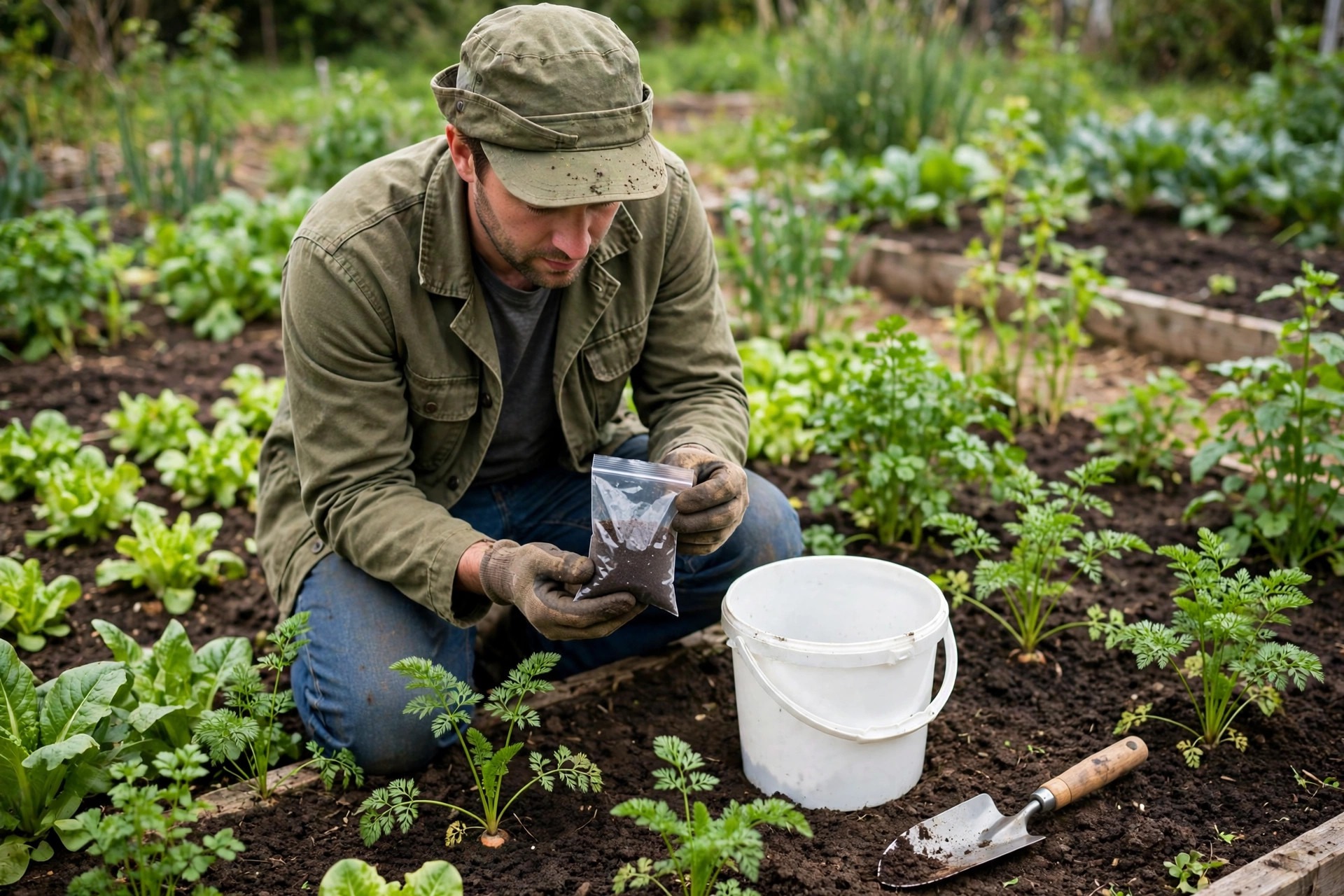
Once the lab report comes back, the numbers only help if you know how to read them.
Digital vs Analog Soil pH Meter
Digital vs analog is the first choice every buyer faces, and it comes down to what you value more: a number you can trust, or a tool that never needs power. Display type and sensing technology are two separate things, so this section explains them separately. A digital display is only the way the reading is shown. It does not by itself tell you how the meter senses pH.
A digital meter shows a number on a screen, but the sensor behind that number varies. The Hanna HI981030, the Apera PH60 and the Bluelab Soil pH Pen use a glass electrode, which measures hydrogen ion activity and can be calibrated with buffer solutions. The Luster Leaf Rapitest 1845 is digital too, but it is not a glass-electrode pen like the Hanna or the Apera: it is a direct-reading digital meter with its own probe, and Luster Leaf does not describe a glass electrode or publish an accuracy figure for it. The best glass-electrode pens in this roundup read to plus or minus 0.01 or plus or minus 0.05 pH. The tradeoff for a glass electrode is that the tip is fragile, the batteries or button cells run out, and the meter needs regular calibration and careful storage.
An analog meter shows a needle on a dial and uses metal plates or probes, not a glass electrode. The Gain Express ZD-06 and the Kelway HB-2 use two metal plates, publish an accuracy of plus or minus 0.2 pH, need no battery and no calibration, and give a reading in about 5 to 10 minutes for the Gain Express and 2 to 3 minutes for the Kelway. The SONKIR MS02, Dr.meter S30, Atree 3-in-1 and VIVOSUN 3-in-1 use two metal probes, and none of the four publishes a pH accuracy at all, so you cannot compare them on that figure. Their pH reading is an estimate, and the moisture reading is the part you can rely on.
| Feature | Digital meter | Analog meter |
|---|---|---|
| Display | Number on a screen | Needle on a dial |
| How it senses pH | Glass electrode in the Hanna HI981030, Apera PH60 and Bluelab Soil pH Pen; probe sensor in the Luster Leaf Rapitest 1845, which is not a glass-electrode pen | Two metal plates in the Gain Express ZD-06 and Kelway HB-2; two metal probes in the SONKIR MS02, Dr.meter S30, Atree 3-in-1 and VIVOSUN 3-in-1 |
| Accuracy | Plus or minus 0.01 to plus or minus 0.05 pH for glass-electrode pens; not published for the Luster Leaf 1845 | Plus or minus 0.2 pH for the Gain Express ZD-06 and Kelway HB-2; not published for the SONKIR, Dr.meter, Atree and VIVOSUN 3-in-1 meters |
| Calibration | Yes, with buffer solutions; the Luster Leaf 1845 self-calibrates on power-up instead | No, and none is possible |
| Power | Battery or button cell | None |
| Reading time | About 30 seconds for direct pens; instant for the Luster Leaf 1845 | 5 to 10 minutes for the Gain Express; 2 to 3 minutes for the Kelway; about 10 minutes for 3-in-1 probes |
| Fragility | Glass tip can break; the Luster Leaf probe is sturdier | Very rugged |
| Price in this roundup | $15 to $219 | $8 to $213 |
| Best for | Acting on a number, liming decisions | Quick checks, moisture, rough trends |
The practical answer for most gardeners is to own one of each. Use the analog meter for weekly walk-throughs and watering decisions, and use the digital pen, or a lab test, when the number will decide what you buy. If you can only own one, and you amend your soil, buy digital. If you never amend and only want to know whether to water, analog is enough.
Best 3-in-1 Soil Tester
The best 3-in-1 soil tester in this roundup is the SONKIR MS02, and the reason is not its pH reading. It is the combination: a moisture reading you can trust, a light reading that is roughly right, and a pH dial that gives a trend, all for about $10, with no battery to buy. No other 3-in-1 here beats it on owner feedback, with more than 45,000 ratings at 4.1 out of 5.
The 3-in-1 design has one honest weakness, and it applies to every brand in the class. The three functions share one probe and one dial, so the pH reading is a byproduct of the same electrical measurement as the moisture reading. That is why the pH dial on these meters moves with soil moisture and fertilizer, and why extension sources warn against trusting it for an actual pH value. The moisture function is the one that works: it tells you whether the soil at root depth is dry, moist, or wet, and that single piece of information prevents more dead plants than any pH number.
Use a 3-in-1 tester the way it is meant to be used. Push the probes 4 to 6 inches into moist soil, near the roots, and wait about ten minutes for the needle to settle. Read moisture first, because that is the reading you can act on today. Read pH as a trend: if it reads 5.5 in the tomato bed and 7.0 in the lawn, the tomato bed is more acidic, and that is useful information. Then confirm the exact number with a calibrated pen or a lab test before you buy lime.
A 3-in-1 tester is a good daily tool, but a proper soil test kit gives you the nutrient numbers a probe never will.

If you want the most accurate 3-in-1, there is not one in this roundup, because accuracy and the 3-in-1 design do not go together. The closest thing is a digital pen for pH plus a separate moisture meter for watering. If you want one tool that does three jobs for ten dollars, the SONKIR MS02 is the pick.
Soil pH for Vegetables Chart
Most vegetables grow best in soil between pH 6.0 and 7.0, where the widest range of nutrients stays available to the roots. Penn State Extension puts the ideal range for most crops at 6.0 to 7.0, and Clemson Extension cites 5.8 to 6.5 for most vegetables and ornamentals. A target of 6.5 is a safe default for a mixed vegetable bed. Two crops break the rule: potatoes prefer acidic soil, partly because a lower pH suppresses scab disease, and blueberries need strongly acidic soil and should always have their own bed.
| Crop | Target pH | Notes |
|---|---|---|
| Tomatoes | 6.5 | Needs calcium, blossom end rot often follows pH plus watering problems |
| Peppers | 6.5 | Same range as tomatoes, grows well in the same bed |
| Cucumbers | 6.0-6.8 | Slightly acidic to neutral, keep soil evenly moist |
| Lettuce | 6.0-7.0 | Wide tolerance, bolts faster in hot, alkaline soil |
| Carrots | 6.5 | Neutral soil gives the straightest roots |
| Onions | 6.5 | Narrow tolerance, yellowing often means pH trouble |
| Beans (snap, lima) | 6.2 | Best nodulation near neutral, avoid very acidic soil |
| Broccoli, cabbage, kale | 6.5 | Clubroot is worse in acidic soil, lime helps |
| Squash (summer) | 6.0-7.0 | Forgiving, grows well across the vegetable range |
| Potatoes | 5.5 | Acidic soil suppresses scab, do not lime heavily |
| Asparagus | 6.8 | Tolerates slightly alkaline soil, up to 7.5 |
| Blueberries | 4.5-5.2 | Fruit, not a vegetable, needs its own acidified bed |
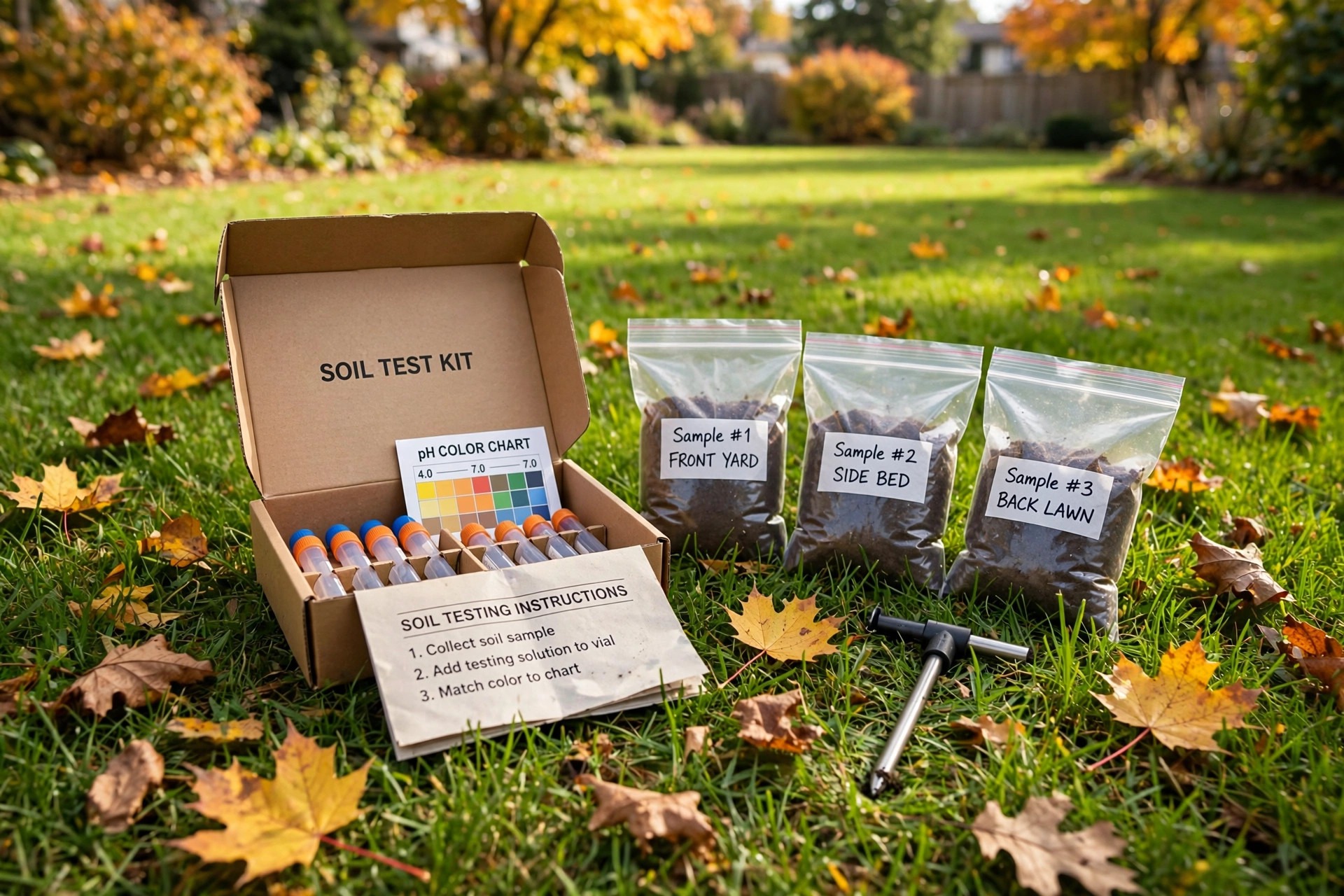
Target values follow the University of Maryland Extension crop table, as summarized in current extension-based guides, with Penn State Extension’s 6.0 to 7.0 range as the general rule. If your meter reads below 6.0 in a mixed vegetable bed, follow the soil test’s lime recommendation, and retest in six months. If it reads above 7.5, apply elemental sulfur only per the soil test’s lab recommendation. Compost improves organic matter and soil structure but is not a reliable pH-lowering treatment, so do not rely on it to bring alkaline soil toward neutral.
Vegetable beds are not the only place pH matters, and the same testing habit pays off on the lawn too.
How to Calibrate a pH Meter
Calibration is the step that separates a number you can act on from a number on a screen. A glass pH electrode drifts as it ages, and a meter that read true in spring can read half a point off by fall. Every digital meter in this roundup needs calibration, and none of the analog meters can be calibrated at all, which is itself a reason to own a digital pen when the number matters.
- Buy buffer solutions. You need at least pH 7.01 and pH 4.01, and pH 10.01 if you test alkaline soil. The Hanna kit includes pH 4.01 and 7.01 sachets. The Apera kit includes its own buffers. Buy fresh sachets, because opened buffer goes stale.
- Rinse the electrode. Rinse the tip in distilled water and shake off the drops. Never wipe a glass electrode with a cloth, which can build static and damage the tip.
- Calibrate at pH 7 first. Dip the tip into the pH 7.01 buffer, wait for the reading to settle, and let the meter recognize the buffer. The Hanna and the Apera both recognize standard buffers automatically.
- Calibrate at a second point. Rinse again, then dip into pH 4.01. A two-point calibration covers the range most garden soils sit in. Add pH 10.01 as a third point if your soil runs alkaline.
- Store the electrode wet. After use, rinse the tip and store it in storage solution or pH 7 buffer, never dry and never in distilled water, which leaches the electrode. A dry electrode drifts fast and dies young.
- Recalibrate on a schedule. Calibrate before the first use of the season, then monthly with regular use, and any time the meter has been stored dry or dropped. The Bluelab pen reminds you with a 30-day calibration alert on its display.
The Luster Leaf 1845 is the exception in this roundup: it re-calibrates itself each time it is turned on, so there is no buffer routine. That convenience is part of its appeal, and part of why its accuracy is unpublished. A meter that calibrates itself against an internal reference is not the same as a meter calibrated against a known buffer.
How We Chose
No meter in this roundup was tested in our garden. Scores come from an editorial analysis of manufacturer specifications, retailer listings and owner feedback, worked out against the same six factors for every pick. The weights add to 100 percent. A product with no published pH accuracy gets a low accuracy sub-score, so its weighted final score falls. The weighted score is a guide, not the whole ranking: the Apera PH60 leads it at 8.6 because it is a lab-grade liquid pen, while the Hanna HI981030 at 8.4 remains the best overall pick for direct soil testing, because the Apera cannot test soil directly.
| Factor | Weight | What we looked for |
|---|---|---|
| Accuracy | 30% | Published accuracy figure, and whether the maker’s figure is consistent across listings |
| Ease of use | 20% | Reading time, direct soil reading vs slurry, display clarity |
| Durability | 15% | Probe strength, waterproofing, battery-free vs glass electrode care |
| Calibration | 15% | Whether it can be calibrated, how many points, buffers included |
| Features | 10% | Extra measurements, temperature, moisture, light, calibration reminders |
| Value | 10% | Price against accuracy and features, judged without overstating cheap prices |
| Total | 100% |
Weighted factor scores, out of 10. A product with no published pH accuracy gets a low accuracy sub-score, shown in the Accuracy column.
| Product | Accuracy (30%) | Ease (20%) | Durability (15%) | Calibration (15%) | Features (10%) | Value (10%) | Weighted Final |
|---|---|---|---|---|---|---|---|
| Hanna HI981030 | 9.0 | 9.0 | 7.5 | 9.0 | 8.0 | 6.0 | 8.4 |
| Apera PH60 | 10.0 | 6.5 | 8.0 | 10.0 | 8.5 | 7.5 | 8.6 |
| Bluelab Soil pH Pen | 8.0 | 8.5 | 8.0 | 8.0 | 9.0 | 5.5 | 8.0 |
| Gain Express ZD-06 | 7.5 | 7.0 | 8.5 | 2.0 | 6.0 | 8.0 | 6.6 |
| Kelway HB-2 | 7.5 | 6.0 | 9.5 | 2.0 | 6.0 | 5.0 | 6.3 |
| Luster Leaf Rapitest 1845 | 3.0 | 8.5 | 5.0 | 4.0 | 7.0 | 9.0 | 5.6 |
| SONKIR MS02 | 2.0 | 8.0 | 6.5 | 1.0 | 7.0 | 9.5 | 5.0 |
| Dr.meter S30 | 2.0 | 7.5 | 6.0 | 1.0 | 7.0 | 9.0 | 4.8 |
| Atree 3-in-1 | 2.0 | 7.0 | 4.0 | 1.0 | 6.5 | 9.0 | 4.3 |
| VIVOSUN 3-in-1 | 1.5 | 7.5 | 6.0 | 1.0 | 7.0 | 9.5 | 4.7 |
A meter scores well when its accuracy is published and consistent, when it reads soil directly or by slurry, and when it can be calibrated. A meter that cannot be calibrated scores low on calibration, and a meter with no published accuracy scores low on accuracy, even if it is cheap and easy to use. That is why the 3-in-1 meters and the Luster Leaf 1845 land at 4.3 to 5.6: their moisture readings are useful, but their pH readings are not published or not trustworthy.
Weighted final score = Accuracy x 0.30 + Ease of use x 0.20 + Durability x 0.15 + Calibration x 0.15 + Features x 0.10 + Value x 0.10. The ratings in the comparison table are editorial scores on that system. They are not laboratory measurements, not retailer star ratings, and not a claim that we grew plants with each meter. Treat them as a guide to which meter fits which job, not as a verdict on your garden. The weights are a judgment call, but they are the same for every meter, so the comparison is fair even if you would weight the factors differently.
Final Choice
If you buy one meter from this list, buy the Hanna HI981030 GroLine Soil pH Tester. It is the only pick that measures soil directly with a glass electrode, and its accuracy is the best of any direct-reading meter in this roundup. Its stated accuracy is four times tighter than the best analog meter in this roundup. A plus or minus 0.05 pH lab-style figure and a plus or minus 0.2 pH field figure are not measured the same way, so treat the comparison as a guide to stated accuracy, not as a lab result. Its weighted final score on the system in How We Chose is 8.4 out of 10.
If the Hanna is more than you want to spend, buy the Apera PH60 instead. At $110, the official Apera Instruments price, it reads to plus or minus 0.01 pH, its probe can be replaced when it wears out, and the slurry method it uses is the same method a soil lab uses. Its weighted final score is 8.6 out of 10, the highest in this roundup, because its accuracy and calibration lead the field. If you want the best analog meter, buy the Gain Express ZD-06: its long probe reaches the root zone, its readings held up against a lab result, and at about $56 it costs about a third of what the Hanna costs. Its weighted final score is 6.6 out of 10. If you only need a cheap tool for watering decisions, buy the SONKIR MS02 for about $10 and treat its pH dial as a rough guide. Its weighted final score is 5.0 out of 10, because SONKIR publishes no pH accuracy.
Whichever meter you choose, remember the two rules that matter most. Test moist soil at root depth, and confirm any number you plan to act on with a lab test before you buy lime or sulfur. A meter is only as good as the sample it reads, and a ten-dollar meter used well beats a two-hundred-dollar meter used badly.
References
- Clemson Cooperative Extension, Home and Garden Information Center. Soil Testing. – Supports the sampling method in this article: 8 to 10 cores, 6 inches deep for gardens and 2 to 4 inches for lawns, mixed into one composite sample, and testing every year.
- Penn State Extension. Soil Acidity and Aglime. – Supports the claim that most crops grow best at pH 6.0 to 7.0, and that a soil test determines both pH and the lime rate.
- Walter Reeves, University of Georgia Extension. pH Meters, Several Different Types. – Supports the claim that two-metal-probe meters vary greatly with moisture and fertilizer and are not accurate for pH, while professional pH pens are accurate to 0.1 pH.
- Hanna Instruments. GroLine Soil pH Tester HI981030. – Supports the HI981030 specifications: range 0.00 to 12.00 pH, accuracy plus or minus 0.05 pH, 1 or 2 point calibration, CR2032 battery with about 1,000 hours of use.
- Luster Leaf Products. Rapitest Digital Soil pH Meter 1845, instruction sheet. – Supports the 1845 specifications: automatic re-calibration on power-up, auto-off after about 10 minutes, probe cleaning with the supplied pad, and the plant pH preference list.
- Apera Instruments PH60. Official page | Instruction manual (PDF) | Amazon listing – Supports the PH60 specifications: range -2.00 to 16.00 pH, accuracy plus or minus 0.01 pH, 1 to 3 point calibration, replaceable probe.
- Bluelab Soil pH Pen. Official page | Instruction manuals | Amazon listing – Supports the Soil pH Pen specifications: range 0.0 to 14.0 pH, accuracy plus or minus 0.1 pH, 2-point calibration, temperature reading.
- Gain Express ZD-06. Official page | Instruction manual (PDF) | Amazon listing | Bob Vila independent test – Supports the ZD-06 specifications: range 3 to 8 pH, accuracy plus or minus 0.2 pH, 295 mm probe, and the Bob Vila lab comparison.
- Kelway HB-2. Official page | Instruction manual (PDF) | Amazon listing – Supports the HB-2 specifications: range 3.5 to 8 pH, accuracy plus or minus 0.2 pH, no batteries.
- SONKIR MS02. Amazon listing (maker’s sales page) | Instruction manual (PDF) – No separate manufacturer website was found. Supports the MS02 specifications: pH 3.5 to 8, moisture 1 to 10, light 0 to 2000 lux, no battery.
- Dr.meter S30. Official page | Instruction manual | Amazon listing – Supports the S30 specifications: pH 3.5 to 8, moisture 1 to 10, light 0 to 2000 lux, no battery.
- Atree 3-in-1. Amazon listing (maker’s sales page) | Instruction manual – No separate manufacturer website was found. Supports the Atree specifications: pH 3.5 to 8, moisture 1 to 10, light 0 to 2000 lux, model RR-07-007.
- VIVOSUN 3-in-1. Official page | Instruction manual | Amazon listing – Supports the VIVOSUN specifications: pH 3.5 to 8, moisture 1 to 10, light 0 to 2000 lux, no battery.
- Bob Vila. Best pH Meters – Independent test of six soil pH meters. Supports the Gain Express ZD-06 lab comparison: lab pH 6.42, meter readings 6.2 to 6.4.
Frequently Asked Questions
What is the most accurate soil pH meter?
The most accurate soil pH meter for direct soil readings is the Hanna HI981030, rated at plus or minus 0.05 pH with a glass electrode built for soil. The Apera PH60 is tighter on paper at plus or minus 0.01 pH, but it tests a soil slurry rather than reading soil directly. Both need regular calibration to hold those figures.
How do you test soil pH at home?
Take 8 to 10 cores from the area, 6 inches deep for a garden bed and 2 to 4 inches for a lawn, mix them in a clean plastic bucket, and choose one method. Method A, direct soil testing: test suitably moist soil directly at root depth, following that meter’s own instructions, and do not dry the sample. Method B, soil slurry testing: dry and clean the sample, then mix one part soil with one part distilled water and dip a liquid pH pen such as the Apera PH60 into the slurry. Take three readings and average them, and confirm any number you plan to act on with a lab test.
Are cheap soil pH meters accurate?
Cheap two-metal-probe meters are not accurate for pH. University of Georgia Extension’s Walter Reeves calls them wildly inaccurate, because soil moisture, temperature, and recent fertilizer move the reading independently of true pH. Their moisture function is useful, but their pH dial should only be used as a rough trend.
Digital vs analog soil pH meter, which is better?
Digital is better when the number decides an amendment, because a glass-electrode pen reads to plus or minus 0.01 or plus or minus 0.05 pH, can be calibrated, and shows a number instead of a needle. The exception in this roundup is the Luster Leaf Rapitest 1845: it is digital, but it is not a glass-electrode pen, and Luster Leaf does not publish an accuracy figure for it. Analog is better for quick, battery-free checks, but it is less precise, and most analog meters in this roundup do not publish an accuracy at all.
How often should you calibrate a pH meter?
Calibrate before the first use of the season, then monthly with regular use, and any time the meter has been stored dry or dropped. Use pH 7.01 and pH 4.01 buffers, rinse the electrode in distilled water between buffers, and store the tip wet in storage solution. The Bluelab Soil pH Pen shows a 30-day calibration reminder on its display.
What soil pH do vegetables need?
Most vegetables grow best between pH 6.0 and 7.0, with 6.5 as a safe target for a mixed bed. Tomatoes, peppers, and carrots all target about 6.5. Potatoes prefer 5.5, which also suppresses scab, and blueberries need 4.5 to 5.2 in their own bed. Below 6.0, follow the soil test’s lime recommendation; above 7.5, apply elemental sulfur only per the soil test’s lab recommendation. Compost improves organic matter and soil structure but is not a reliable pH-lowering treatment.

Thesis Link : https://saulibrary.edu.bd/daatj/public/uploads/BAU200601_19-Pp_5.pdf
- 10 Best Organic Pesticides for Gardens - November 19, 2026
- 10 Best Mycorrhizal Fungi Products - November 18, 2026
- How to Grow Tomatoes from Seed in Pots - November 17, 2026