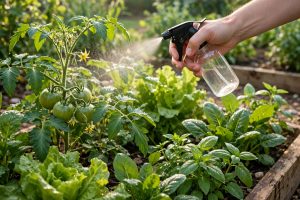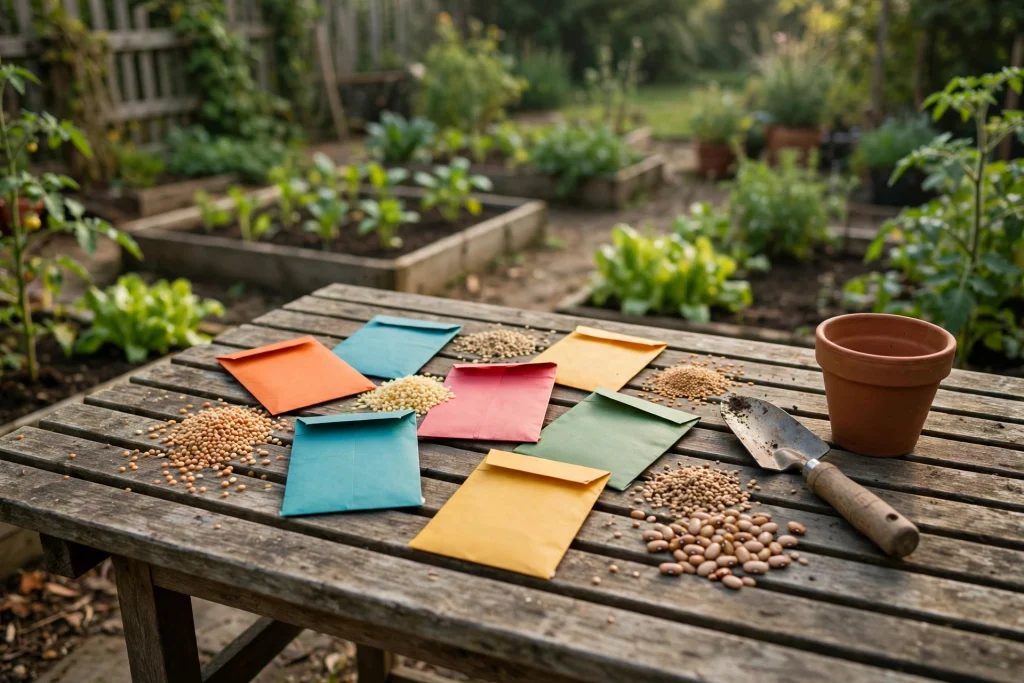

Every good garden starts with a packet. The best vegetable seeds are not the cheapest ones or the ones with the brightest packet art. They are the seeds that sprout reliably, grow true to their description, and come from a company that stands behind them. Pick the wrong supplier and you can lose a whole spring to seedlings that never emerge or a variety that turns out nothing like the picture.
Buying seed online has changed the game for home gardeners in the USA. A decade ago most of us were limited to the rack at the garden centre. Today the best vegetable seeds to buy online come from companies that trial hundreds of varieties, publish growing data and guarantee their seed. This guide compares 10 trusted US seed companies, all verified against their own websites.
Quick Recommendation
If you want one answer, start with Burpee. It has the widest vegetable range on this list, with more than 1,000 varieties, a mix of heirlooms, hybrids and certified organic seed, and a one-year guarantee.
Serious growers should look at Johnny’s Selected Seeds, which runs its own research trials and sells in bulk. Gardeners who care about heritage varieties and seed saving should choose Seed Savers Exchange, where every variety is open-pollinated and your money supports the largest non-governmental seed bank in the USA. Organic-only gardeners should go straight to High Mowing Organic Seeds, where every variety is certified organic. And if you garden in a cool or short season climate, Territorial Seed Company trials its varieties on its own Oregon farm.
The 10 Best Vegetable Seeds at a Glance
| Seed Company | Type | Best For | Our Rating |
|---|---|---|---|
| Burpee | Heirloom, hybrid, organic | Beginners and home gardeners | 9.2 |
| Johnny’s Selected Seeds | Heirloom, hybrid, organic | Serious and market growers | 9.1 |
| Seed Savers Exchange | Open-pollinated heirloom | Heirlooms and seed saving | 9.0 |
| Baker Creek Heirloom Seeds | Heirloom only | Unusual and rare varieties | 8.9 |
| Botanical Interests | Heirloom and organic | First-time gardeners | 8.8 |
| Ferry-Morse | Heirloom, hybrid, organic | Budget-conscious beginners | 8.7 |
| Park Seed | Heirloom and hybrid | All-rounders, seed-starting tools | 8.6 |
| Eden Brothers | Heirloom, hybrid, organic | One-stop catalogue shopping | 8.5 |
| High Mowing Organic Seeds | 100% certified organic | Organic gardeners and small farmers | 8.4 |
| Territorial Seed Company | Heirloom, hybrid, organic | Cool and short-season climates | 8.2 |
1. Burpee
Burpee is the oldest name on this list and, for most home gardeners, the best place to start when shopping for the best vegetable seeds. Founded in 1876 and based in Warminster, Pennsylvania, W. Atlee Burpee Co. sells vegetable, flower, herb and fruit seeds alongside live plants and seed-starting supplies.
Burpee’s own wording promises more than 1,000 varieties of seeds for planting vegetables, and a third-party comparison from 2026 counted more than 100 tomato varieties, more than 70 pepper varieties, 25 pea varieties and 15 watermelon varieties. The catalogue mixes heirlooms, Burpee-bred hybrids and certified organic varieties, with 75 certified-organic vegetable items listed on burpee.com, and all seed is non-GMO. Tomato and pepper packets commonly contain 50 to 100 seeds, though the count varies by variety.
Burpee publishes no company-wide germination rate. What it does publish is a guarantee with real teeth: a refund or replacement any time within one year of purchase if you are not satisfied.
Real-world limitation: the sheer size of the catalogue can be a problem of its own. New gardeners can spend an hour choosing between a dozen near-identical tomato varieties, and the exclusive hybrids cannot be seed saved true to type, so you will buy fresh seed each year.
Who should buy: beginners and general home gardeners who want the widest choice, exclusive hybrids and a forgiving guarantee, and gardeners who want plants as well as seeds.
2. Johnny’s Selected Seeds
Johnny’s Selected Seeds, based in Winslow, Maine, is an employee-owned company supplying home gardeners and market growers alike, and it belongs on any shortlist of the best vegetable seeds for serious growers. What sets it apart is that it runs its own research trials. Varieties are grown, measured and compared before they earn a place in the catalogue, and Johnny’s publishes growing data per variety.
The catalogue holds more than 1,500 seed varieties in total, including more than 100 tomato varieties, with heirlooms, Johnny’s-bred hybrids and more than 500 certified-organic varieties. Seed is sold by seed count, with packets and 1M and 5M bulk options for growers.
Johnny’s publishes no company-wide germination rate either, but it trials varieties for germination and backs its seed with a 100% Satisfaction Guarantee: if anything you buy proves unsatisfactory, Johnny’s will replace the item or refund the purchase price.
Real-world limitation: Johnny’s is aimed at growers who already know what they are doing. The catalogue is deep and technical, and a first-time gardener may find it more detailed than they need.
Who should buy: serious home growers and market gardeners who want trial-backed, disease-resistant varieties and bulk quantities.
3. Seed Savers Exchange
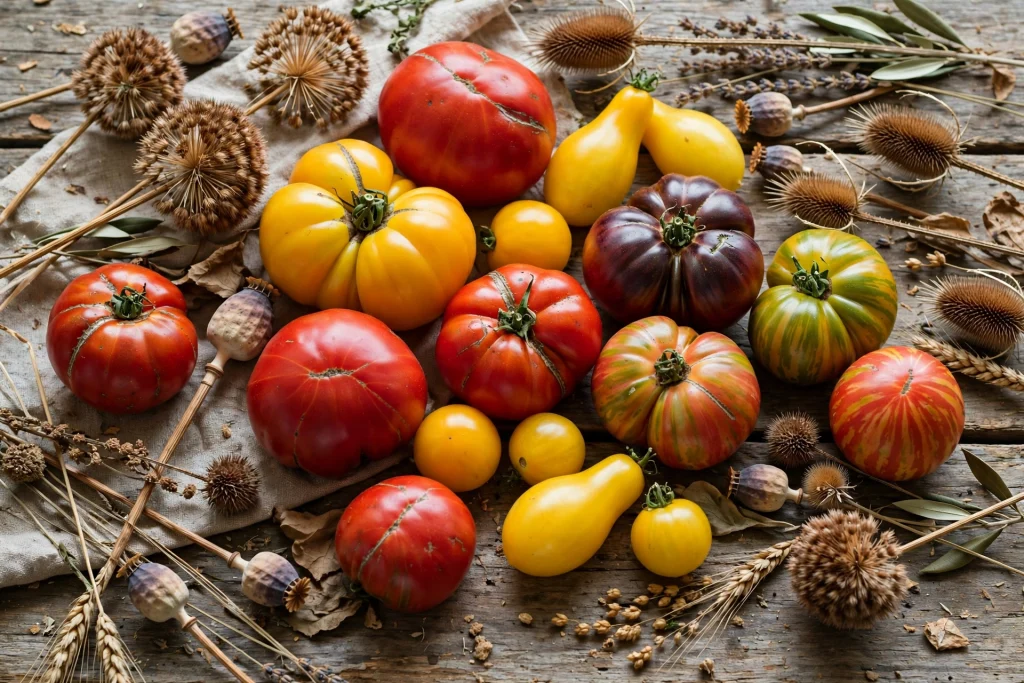
Seed Savers Exchange is unlike any other company on this list: a non-profit seed-conservation organisation first and a seed seller second, offering some of the best vegetable seeds for gardeners who value history and flavour. Founded in 1975 and based at Heritage Farm near Decorah, Iowa, it runs the USA’s largest non-governmental seed bank, preserving more than 20,000 varieties.
Every variety sold is open-pollinated and non-GMO, with no hybrids sold at all, and many are certified organic. The 2025 retail catalogue offers more than 600 varieties for sale, while the member Exchange holds more than 14,000.
Seed Savers germination-tests its seed and states that it is “found to meet or exceed the Federal standards for interstate commerce”. Its Satisfaction Guarantee covers replacement or reimbursement for poor germination.
Real-world limitation: you will not find the newest disease-resistant hybrids here, and the catalogue is smaller than the big commercial houses. Some varieties sell out early in the season.
Who should buy: gardeners who want rare and historic heirlooms, want to save seed true to type, and want their purchase to support conservation.
4. Baker Creek Heirloom Seeds
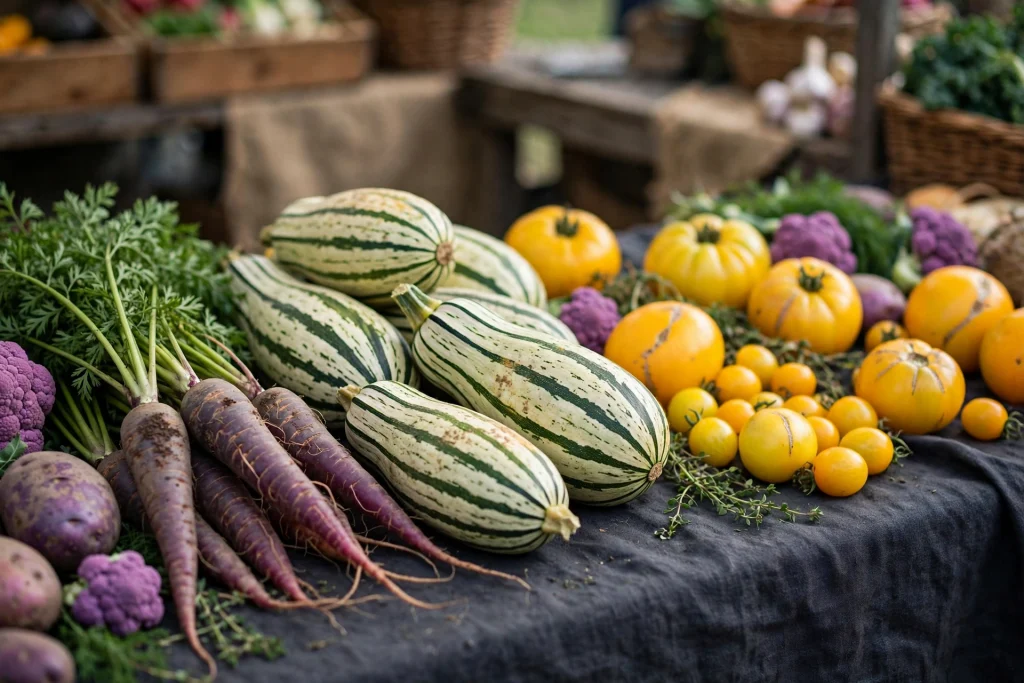
Baker Creek Heirloom Seeds, trading as RareSeeds.com, was founded in 1998 by Jere Gettle and is based in Mansfield, Missouri, and it is a favourite source of the best vegetable seeds for unusual varieties. It sells 100% heirloom, open-pollinated, non-GMO seed, with no hybrids and no treated seed. If you want a tomato in a colour you have never seen before, a striped melon, or a pepper shaped like a lantern, this is where you will find it.
The company’s own shop lists more than 1,300 heirloom varieties. Baker Creek states that every seed is tested twice a year and nearly 3,000 varieties are grown out in trials each year.
One honest gap: we could not verify any guarantee policy on the company’s site during this research, so we do not claim one.
Real-world limitation: heirloom-only means no modern disease-resistant hybrids, so in a bad blight year an heirloom tomato can struggle where a hybrid would hold up. The rarest varieties can also sell out.
Who should buy: gardeners hunting unusual, rare and historic varieties, especially tomatoes, melons, squash and peppers in many colours and shapes.
5. Botanical Interests
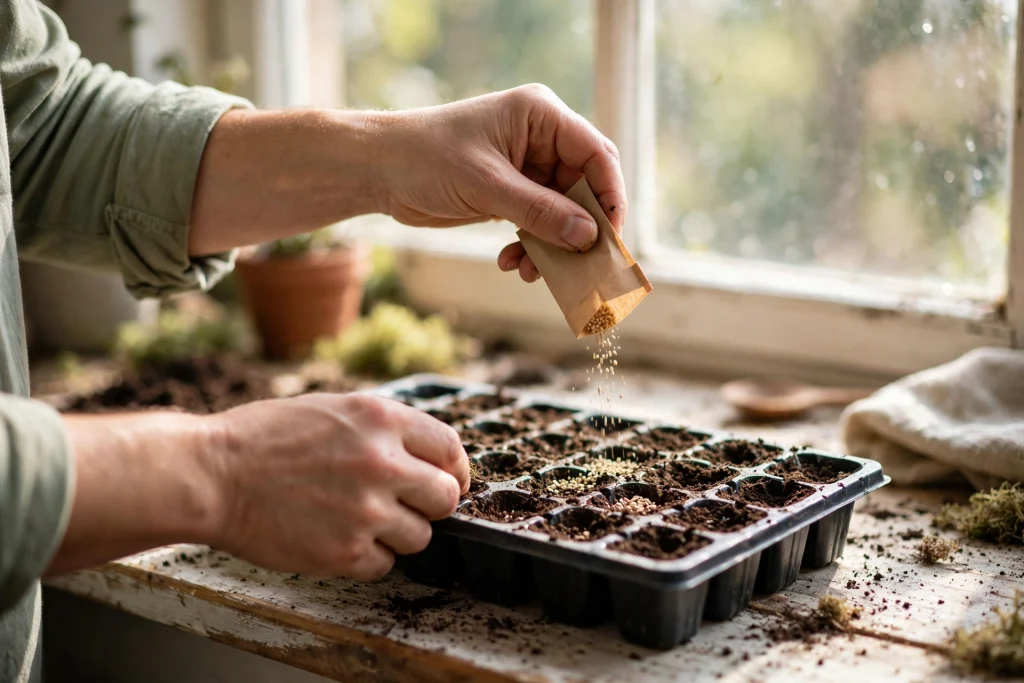
Botanical Interests is a family-owned seed company based in Colorado, now owned by Epic Gardening founder Kevin Espiritu. Its greatest strength is not the size of its catalogue but the quality of its packets. Each packet carries unusually detailed sowing and growing information, which is exactly what a beginner needs.
The range includes many tried-and-true heirlooms plus a growing certified-organic range. The seed is Non-GMO Project Verified, the company was an early signer of the Safe Seed Pledge, and seeds are never treated with pesticides or fungicides. No total vegetable-variety figure is published. Packets are sold by weight in grams, with the approximate seed count printed per variety.
Botanical Interests does not publish a single germination figure, but its seeds are third-party lab tested regularly to meet federal and the company’s own germination standards. It offers a “Happy guarantee” in its own wording: seeds are guaranteed, and you should contact the company if a packet fails. Its Beginner’s Garden Seed Bundle, with 11 varieties, is built specifically for first-timers, and it is one of the smartest starter purchases in this whole roundup.
Real-world limitation: the catalogue is smaller than the big houses, so an experienced gardener hunting a specific rare variety may need to shop elsewhere.
Who should buy: beginners, especially first-time gardeners who want detailed packet instructions and a ready-made starter bundle.
6. Ferry-Morse
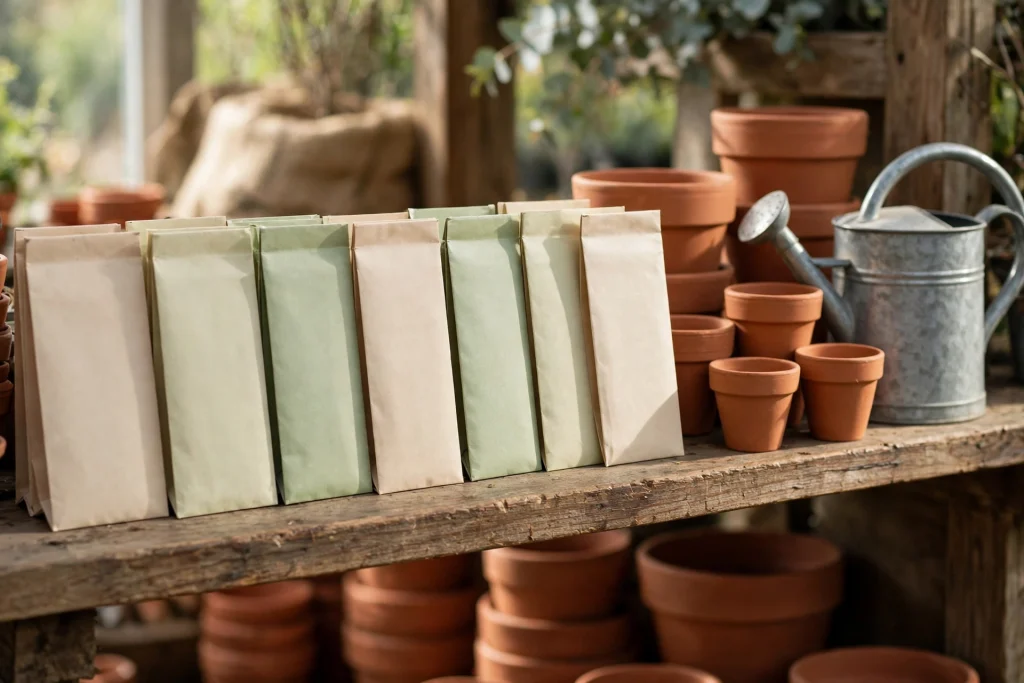
Ferry-Morse is one of the oldest US seed houses, founded in 1856 and now based in Norton, Massachusetts, and its seeds are widely sold in garden centres as well as online.
All Ferry-Morse seed is non-GMO and neonicotinoid-free, and the range covers heirloom, open-pollinated, hybrid and organic varieties. Retailer listings state its germination rates “exceed USDA standards”, though no single company-published percentage exists. The company offers a “Guaranteed to Grow” assurance.
Real-world limitation: the range leans toward dependable mainstream varieties, so a gardener hunting an unusual heirloom will find a thinner choice here than at Baker Creek or Seed Savers Exchange.
Who should buy: budget-conscious beginners and garden-centre shoppers who want dependable mainstream varieties with a long-established name.
7. Park Seed
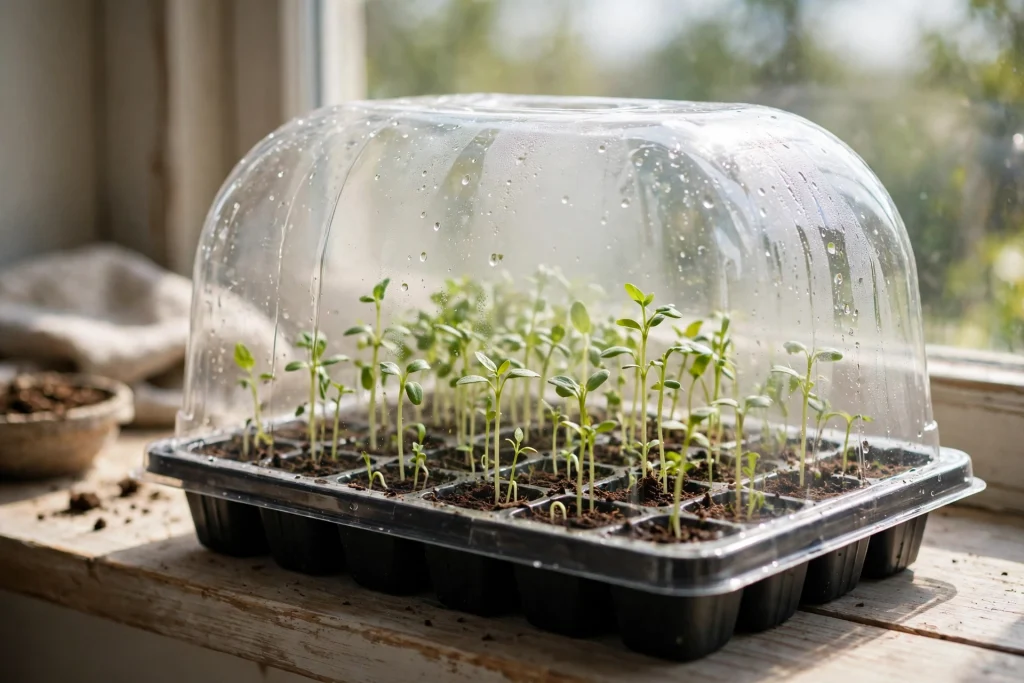
Park Seed was founded in 1868 and is based in Greenwood, South Carolina. It also sells plants, bulbs and seed-starting supplies.
All Park Seed seed is non-GMO, and the range carries both heritage and heirloom types and newer hybrids, including its exclusive Park’s Whopper line. Where Park Seed stands out is quality control: every seed lot is logged, tested for germination rate, uniformity and vigour, retested while in inventory, and stored climate-controlled, and packets carry a lot number. The company offers a germination guarantee plus a satisfaction guarantee: if seed does not grow, contact Park Seed and they will make it right.
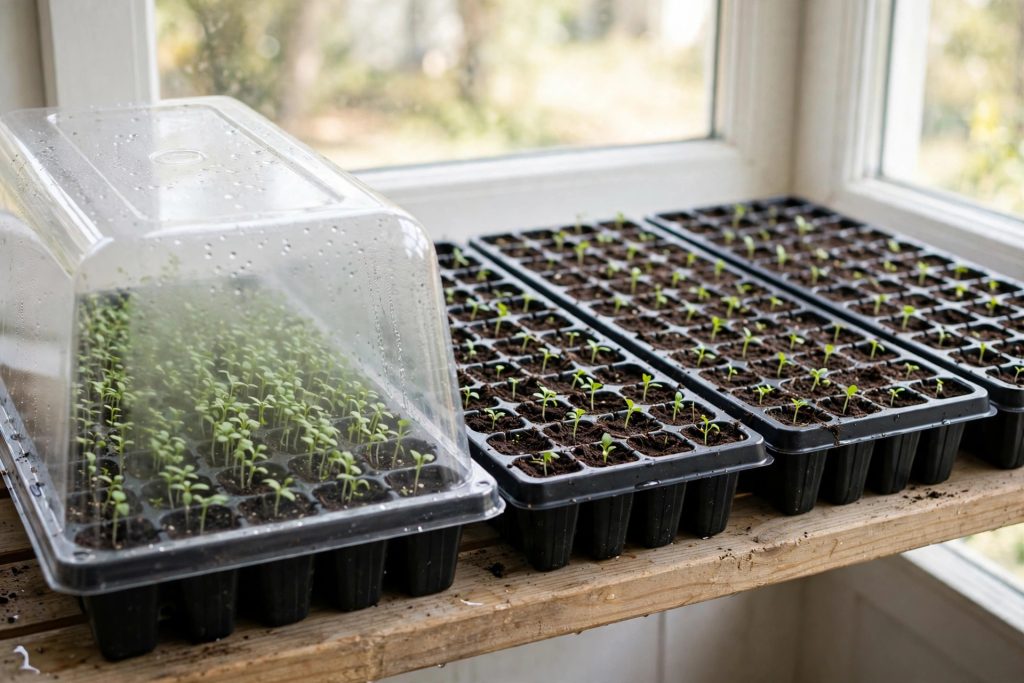
Its seed-starting tools, such as the popular Bio Dome starter kit, are a genuine bonus.
Real-world limitation: The company publishes no total variety count, so its catalogue size is hard to compare directly with Burpee or Johnny’s, and its range leans toward dependable mainstream varieties.
Who should buy: gardeners who want a long-established all-rounder with strong seed-starting tools, such as the Bio Dome, alongside the seeds.
8. Eden Brothers
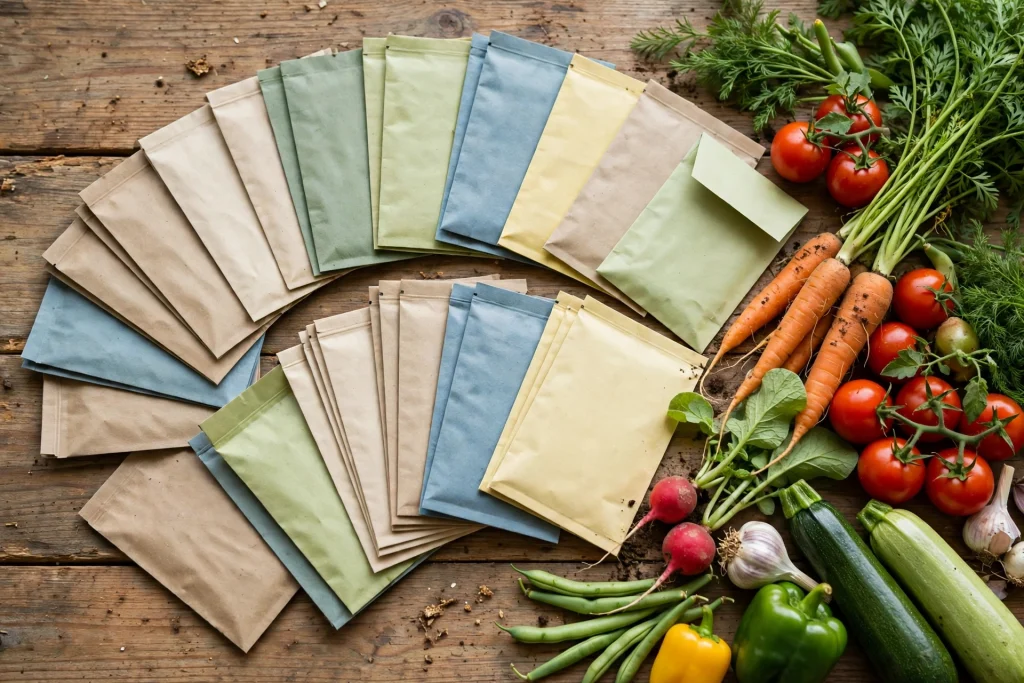
Eden Brothers, based in Arden, North Carolina, sells seeds, bulbs and plants online across the USA, and its huge catalogue makes it a strong pick among the best vegetable seeds for one-stop shopping. Its great strength is the size of its catalogue in one place. The live shop lists 2,148 varieties across all seed categories, and the company says a single vegetable packet is typically enough for the average home garden for one season.
All Eden Brothers seed is non-GMO, and the company is a Safe Seed Pledge signer. The range covers heirloom, open-pollinated, hybrid and organic seeds. No company-wide germination rate is published, but the company states its seeds are 100% pure with no additives or fillers and that germination rates “will exceed your expectations”. The Grow Guarantee is straightforward: if seed does not grow under reasonable conditions, Eden Brothers will make it right with a replacement, store credit or another resolution. Shipping is US-only.
Real-world limitation: with such a large catalogue, the depth of growing information per variety is thinner than at Johnny’s or Botanical Interests, and the company’s own “About our seeds” text still says “over 1,400 varieties”, older wording than the live shop count of 2,148.
Who should buy: gardeners who want a very large catalogue in one place, including seed collections and mixes, with US-only shipping.
9. High Mowing Organic Seeds
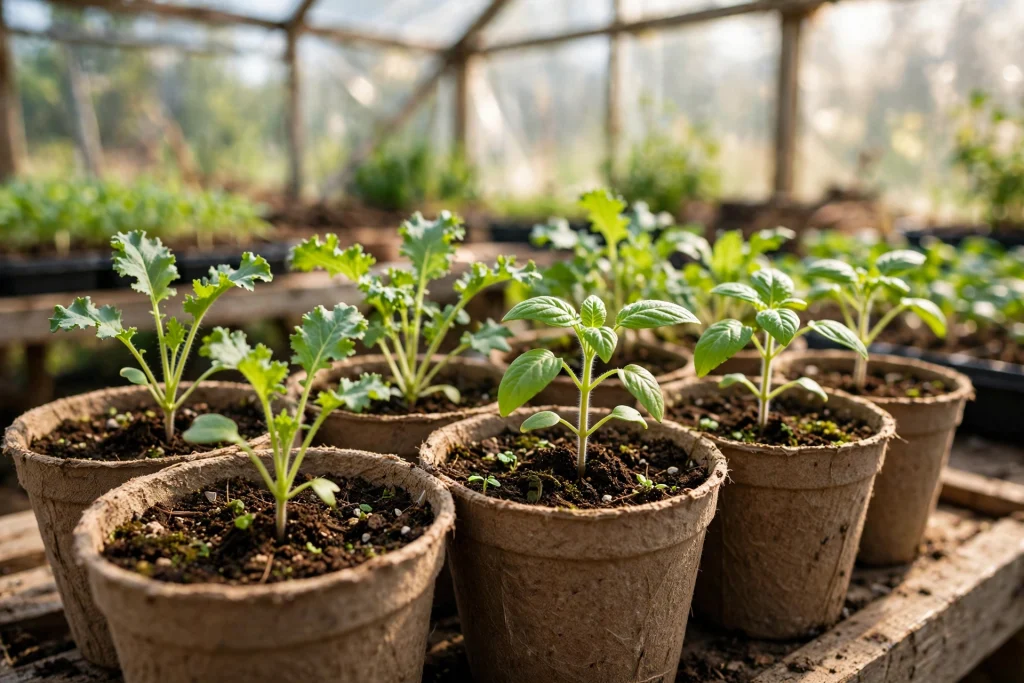
High Mowing Organic Seeds is an independently owned, farm-based seed company founded in 1996 and based in Wolcott, Vermont. It is the only company here where every variety is certified organic, certified by Vermont Organic Farmers, LLC, and non-GMO.
The range mixes heirloom and open-pollinated varieties with organic hybrids, and the 2026 order guide lists more than 340 varieties, with 32 new for 2026. Seed counts vary by variety and are printed per variety. Seed lots are field tested and quality-control tested, and sprouting-seed lots are lab tested for germination and pathogens. No single germination figure is published.
High Mowing has no formal germination guarantee that we could find, and seeds are generally not returnable. Its returns policy says that if a customer is not 100% satisfied they should contact the company, and poor germination not believed to be growing-condition related will be resolved on contact.
Real-world limitation: the catalogue is smaller than the big commercial houses, and the guarantee is the weakest of the ten. Small farmers and market growers will also find a wholesale and rack programme here.
Who should buy: organic gardeners who want everything certified organic, and small farmers and market growers.
10. Territorial Seed Company
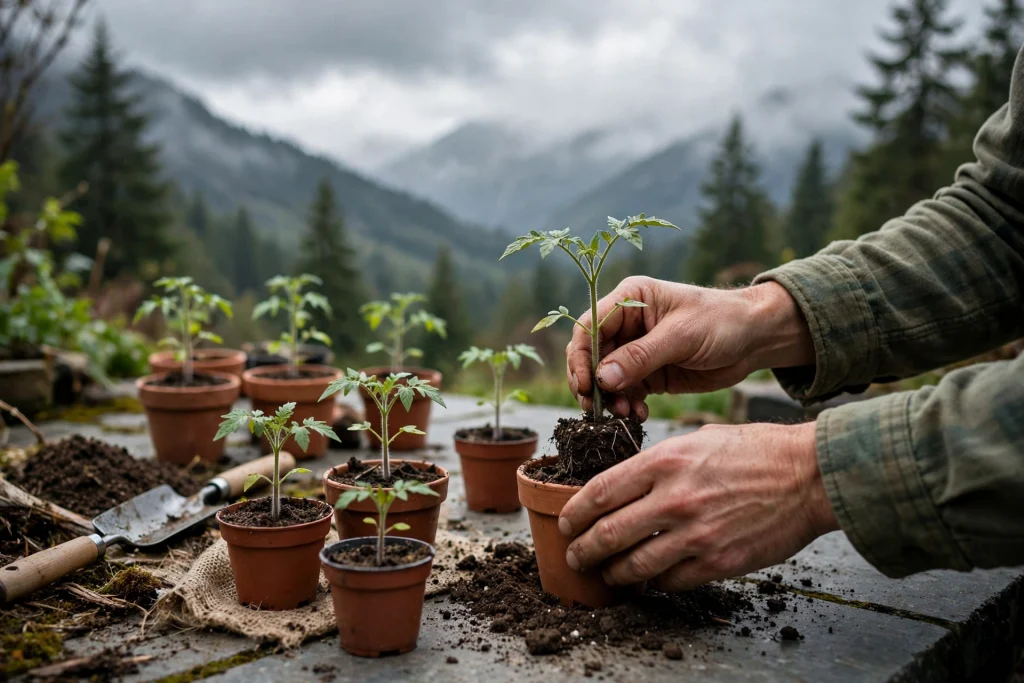
Territorial Seed Company was founded in 1979 and is based in Cottage Grove, Oregon, with its own 75-acre research farm, and it offers some of the best vegetable seeds for cool and short-season gardens. Varieties are tested on its own farm, with more than 250 tomato varieties evaluated each year, so gardeners in the Pacific Northwest and other cool or short-season climates get varieties proven in conditions like theirs.
All seed is 100% non-GMO, and the range covers heirloom, open-pollinated, hybrid and USDA-certified organic varieties, including its own Territorial Select strains. No total vegetable-variety figure is published. Seed counts vary by variety and are printed per product, with no single standard figure.
Territorial is the only company on this list, alongside Seed Savers, that publishes a germination figure you can actually use: a minimum germination figure is printed per product, for example 80% minimum germination on tomato listings. It also offers a 100% Guarantee for one full year from purchase, offering a replacement or a refund of the purchase price, whichever the customer prefers.
Real-world limitation: Gardeners in hot southern climates will find fewer varieties bred for their heat and humidity than at Burpee or Johnny’s, and the catalogue does not publish a total variety count.
Who should buy: gardeners in the Pacific Northwest and other cool or short-season climates who want regionally trialled, organic and heirloom varieties, and tomato growers who value per-product germination figures.
Heirloom vs Hybrid Seeds: What the Labels Mean
Seed packets throw three words at you, heirloom, hybrid and open-pollinated, and the differences matter. A hybrid is a cross between at least two parent lines, bred for consistency, disease tolerance and yield. It is not the same as GMO. Heirlooms, and open-pollinated varieties generally, are cultivars with 50 years or more in cultivation and seed saving. They are genetically stable and produce seed true to type year after year, so they suit seed savers.
The practical difference: save seed from an heirloom and next year’s plants should match this year’s; save seed from a hybrid and they will not reliably grow true to type. Choose hybrids when you want the most reliable yield and disease resistance this season. Choose heirlooms and open-pollinated varieties when you want flavour, history and seed you can save. Many experienced gardeners grow both.
Germination Rates Explained
A germination rate is the percentage of seeds in a tested lot expected to sprout under suitable moisture and temperature. Reputable sellers test each lot and meet federal germination standards for interstate commerce.
Only Seed Savers Exchange and Territorial Seed Company publish a germination figure we could verify. For the other eight, no company-wide germination percentage could be found, and we will not invent one. That does not mean their seed is poor. Judge a company on its testing, its lot control and its guarantee instead.
You can check old seed yourself by sprouting seeds between moist paper towels. Any lot testing at 50% germination or below should probably be replaced, according to Nebraska Extension.
How Long Vegetable Seeds Stay Viable
How long seeds last depends on the crop and on storage. Short-lived seed lasts about one year: onion, parsnip, leek and sweet corn. Moderate seed lasts about three to five years: beans, peas, carrots, lettuce, peppers, radish and spinach. Long-lived seed lasts five years or more: beet, cucumber, eggplant, muskmelon and tomato.
Store seed cold and dry, ideally around 35 F, and at minimum below 55 to 60 F, in moisture-proof and vapour-proof containers. If you are unsure whether old seed is still good, run the paper-towel test above before you sow a whole bed with it.
How to Sow Vegetable Seeds at the Right Depth
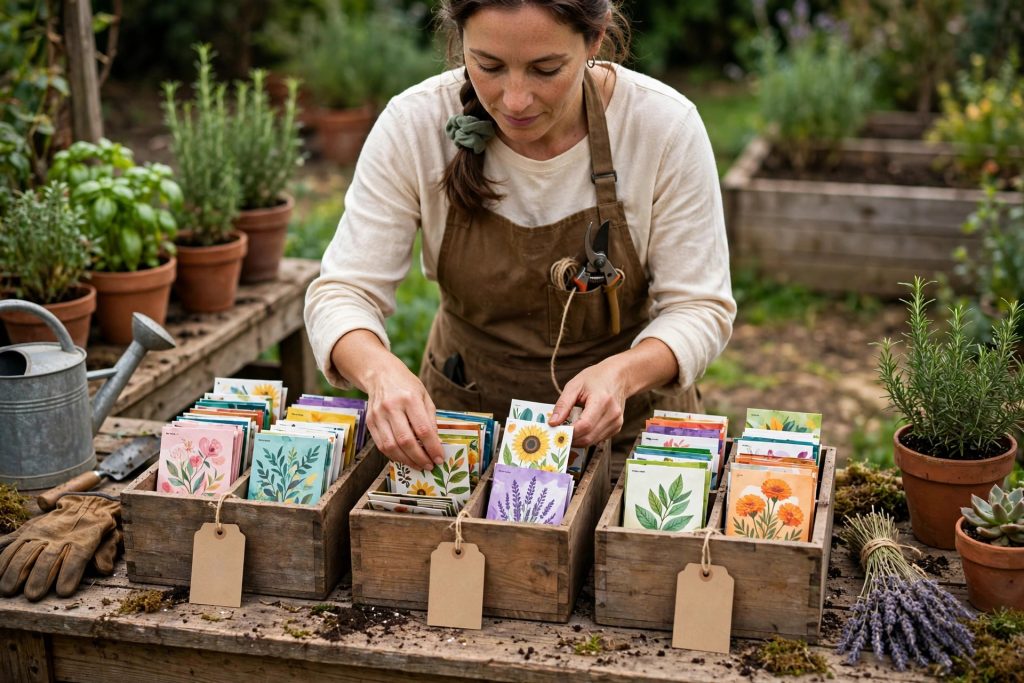
The rule of thumb from University of Maryland Extension: sow seeds about twice their width deep. A seed a quarter of an inch wide goes half an inch deep. Sow deeper in light sandy soil and shallower in heavy clay soil.
But the packet always comes first. Some seeds need light and should not be covered at all. Lettuce is the classic example: bury it and it may never sprout. When the packet and the rule of thumb disagree, follow the packet.
Soil Temperature and Germination
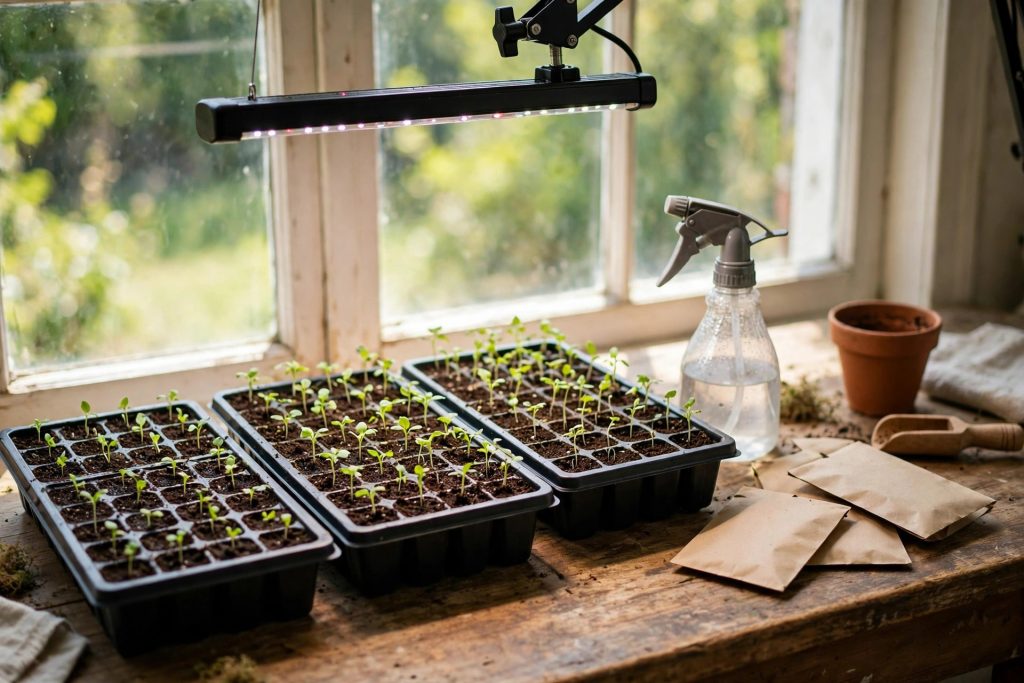
Soil temperature has a major effect on germination speed, and it is the reason so many spring sowings fail. Cold spring soil can make large seeds rot before they sprout.
Optimum soil-temperature ranges from Virginia Tech are: beans 65 to 85 F, beets 50 to 85 F, broccoli and cabbage 50 to 85 F, celery 50 to 65 F, and tomatoes 70 to 80 F. Most vegetables germinate fastest when soil holds around 65 to 75 F. Cool-season crops sprout in cooler soil, and heat-lovers need more warmth.
Where to Buy Quality Seeds
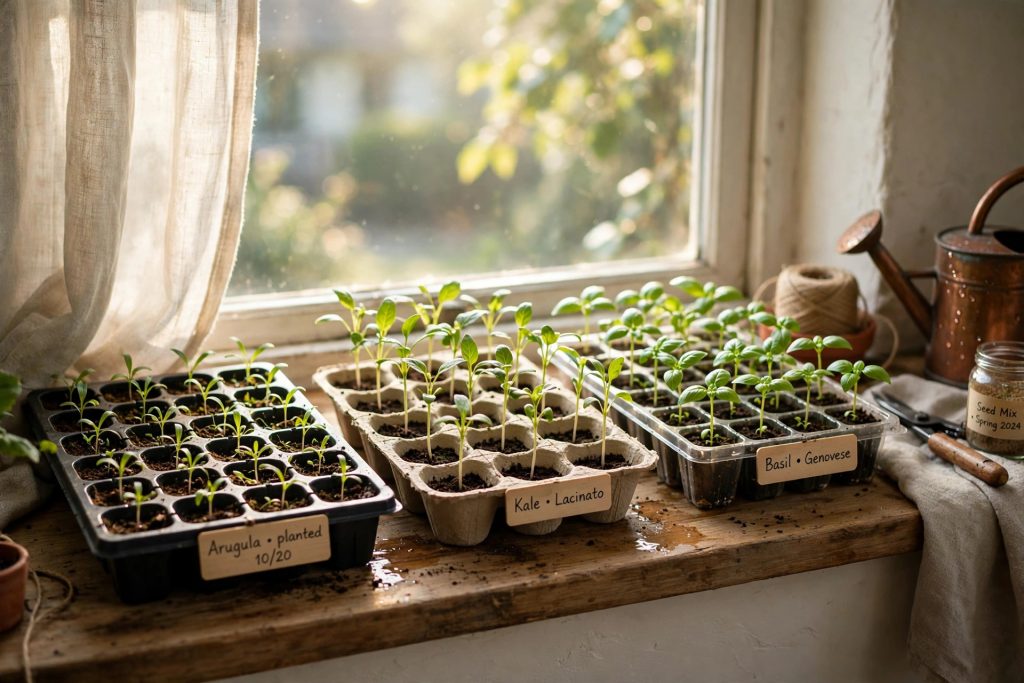
Buy from a named, reputable company rather than an anonymous marketplace listing. Check that the catalogue states whether each variety is heirloom, hybrid or certified organic. Look for a stated germination standard or guarantee and for lot testing.
Every company in this roundup meets that bar.
Best Seeds for Beginners
If this is your first year growing vegetables from seed, keep it simple. The best vegetable seeds for beginners come from companies that explain each step on the packet and back their seed with a guarantee. Start with Burpee for the widest range and a one-year guarantee, or Botanical Interests for the most detailed packet instructions and its Beginner’s Garden Seed Bundle of 11 varieties. Ferry-Morse is a third good first stop, with dependable mainstream varieties and a Guaranteed to Grow assurance.
Best Vegetable Seeds for Containers
Container gardening changes which seeds suit you. The best vegetable seeds for containers are compact varieties with clear packet descriptions, so read the catalogue entry and the packet before you order. Burpee, with more than 1,000 vegetable varieties, and Johnny’s, with more than 1,500 varieties in total, give you the widest choice of compact types. The same rules apply: buy from a named company, check whether the variety is heirloom, hybrid or certified organic, and look for a stated germination standard or guarantee.
How We Chose: Our Scoring System
We did not test these seeds in a garden, and we want to be honest about that. This ranking is based on manufacturer specifications, published seed-testing practices, product range, customer guarantees, catalogue information and publicly available company policies. No hands-on seed testing was carried out, built from each company’s own website, its published guarantees and testing practices, and the breadth and type of its range. No hands-on testing was carried out.
Each company was scored out of 10 against six factors:
| Factor | Weight | What we looked for |
|---|---|---|
| Variety range | 25% | Number and breadth of vegetable varieties |
| Seed quality and testing | 25% | Germination testing, lot control, published standards |
| Heirloom and organic choice | 15% | Range of heirloom and certified organic seed |
| Guarantee and support | 15% | Clarity and generosity of the guarantee |
| Beginner friendliness | 10% | Packet information and starter bundles |
| Value | 10% | Packet sizes, collections and bulk options |
| Total | 100% |
Why each pick scored as it did:
- Burpee, 9.2. The widest range on the list, with more than 1,000 vegetable varieties, a strong mix of heirloom, hybrid and organic seed, and a one-year refund or replacement guarantee. It loses a few tenths only because it publishes no company-wide germination rate.
- Johnny’s Selected Seeds, 9.1. Trial-backed varieties, more than 1,500 varieties in total, more than 500 certified-organic varieties, and a 100% Satisfaction Guarantee. It trails Burpee only on beginner friendliness.
- Seed Savers Exchange, 9.0. Unmatched conservation value, all open-pollinated seed, and germination that meets or exceeds federal standards. It loses points because the retail catalogue is smaller than the big commercial houses, and because it sells no hybrids.
- Baker Creek Heirloom Seeds, 8.9. The best heirloom-only range anywhere, with more than 1,300 varieties and twice-yearly testing. It loses points because no guarantee policy could be verified.
- Botanical Interests, 8.8. The best packets in the business, with detailed sowing information, third-party lab testing and a beginner bundle. It loses points because the catalogue is smaller than the leaders.
- Ferry-Morse, 8.7. A long-established name with dependable mainstream varieties and a clear Guaranteed to Grow assurance. It loses points because its germination detail rests on retailer listings, not a company-published figure.
- Park Seed, 8.6. Excellent lot-level quality control, with every lot logged, tested and retested, plus a germination guarantee and strong seed-starting tools. It loses points because no total variety figure is published.
- Eden Brothers, 8.5. The largest live catalogue in one place, with 2,148 varieties listed, and a clear Grow Guarantee. It loses points because no germination figure is published and per-variety growing information is thinner than at the leaders.
- High Mowing Organic Seeds, 8.4. The only 100% certified organic range on the list, with more than 340 varieties. It loses points on guarantee and support, because it has no formal germination guarantee, and on variety range.
- Territorial Seed Company, 8.2. The only company printing a minimum germination figure per product, with a one-year 100% guarantee and its own research farm. It scores lowest overall because its regional, cool-climate focus narrows its range for gardeners elsewhere, though its germination transparency is the best on the list.
Final Choice
If you are buying your first seeds online, start with Burpee. It gives you the widest choice, a mix of heirloom, hybrid and organic seed, and a one-year guarantee. Add Seed Savers Exchange for heirlooms you cannot find elsewhere, and Botanical Interests’ Beginner’s Garden Seed Bundle for the most helpful packets.
Experienced growers should choose Johnny’s Selected Seeds, with trial data and bulk quantities. Organic gardeners should choose High Mowing, the only fully certified organic range. And if you garden in a cool or short season, Territorial’s regionally trialled varieties and per-product germination figures make it the smartest pick for your climate.
References
- Kansas State University Extension, “Making Sense of Seed Catalogs” (heirloom vs hybrid, seed viability, judging a catalogue)
- Nebraska Extension, “Saving and Storing Garden Seeds” (viability by crop, storage temperature, germination test, hybrid seed saving)
- University of Maryland Extension, “Sowing Vegetable Seeds Outdoors” (sowing depth rule, soil temperature)
- Virginia Tech, “Seed for the Garden”, Publication 426-316 (seed selection, soil-temperature chart, viability table)
- Johnny’s Selected Seeds, Vegetable Seeds (100% Satisfaction Guarantee, organic and heirloom range)
Frequently Asked Questions
What are the best vegetable seeds for beginners?
Burpee and Botanical Interests are the best starting points. Burpee offers the widest range with a one-year guarantee, and Botanical Interests prints detailed sowing instructions on every packet and offers a Beginner’s Garden Seed Bundle with 11 varieties.
Should I buy heirloom or hybrid vegetable seeds?
It depends on your goal. Hybrids are bred for consistency, disease tolerance and yield, and they are not the same as GMO. Heirlooms are genetically stable and produce seed true to type, so they suit seed savers.
What is a good germination rate for vegetable seeds?
It is the percentage of seeds in a tested lot expected to sprout under suitable moisture and temperature. Reputable sellers test each lot and must meet federal germination standards for interstate commerce. Any lot testing at 50% germination or below should probably be replaced.
How long do vegetable seeds last?
Onion, parsnip, leek and sweet corn last about one year. Beans, peas, carrots, lettuce, peppers, radish and spinach last about three to five years. Beet, cucumber, eggplant, muskmelon and tomato last five years or more. Store seed cold and dry, ideally around 35 F.
How deep should I sow vegetable seeds?
Sow seeds about twice their width deep: a quarter-inch-wide seed goes half an inch deep. Sow deeper in light sandy soil and shallower in heavy clay soil. Always check the packet first, because some seeds need light and should not be covered at all.
Where is the best place to buy vegetable seeds online?
Buy from a named, reputable company that states whether each variety is heirloom, hybrid or certified organic, publishes a germination standard or guarantee, and tests its seed lots.

Thesis Link : https://saulibrary.edu.bd/daatj/public/uploads/BAU200601_19-Pp_5.pdf
- 10 Best Vegetable Seeds to Buy Online - November 20, 2026
- 10 Best Neem Oil Sprays for Plants - November 19, 2026
- 10 Best Raised Bed Soil Mixes for Productive Gardens - November 19, 2026