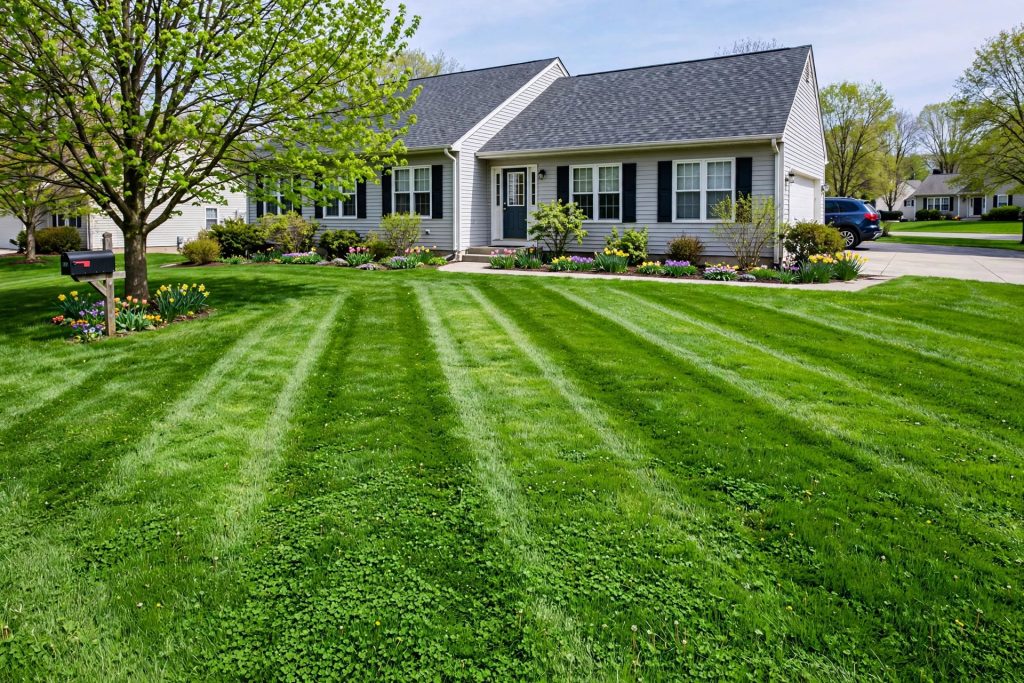
Most lawn problems are timing problems. Fertilizer spread three weeks late feeds weeds instead of grass. Seed scattered in July bakes before it roots. Aeration done on dormant turf tears holes that nothing fills. A good lawn care calendar fixes that. It puts each job in the month when the grass can actually use it, so you do less work and get a thicker lawn for it.
This lawn care calendar is built for US homeowners and it runs on one simple split: cool season grass and warm season grass grow on opposite schedules. Find your grass type first, then follow your column month by month. Soil temperature matters more than the date on the wall, so each month also gives you the signal to watch for in your own yard.
Start With Your Grass Type: Cool Season vs Warm Season
Everything in this lawn care calendar hangs on this one decision, so get it right before you schedule anything.
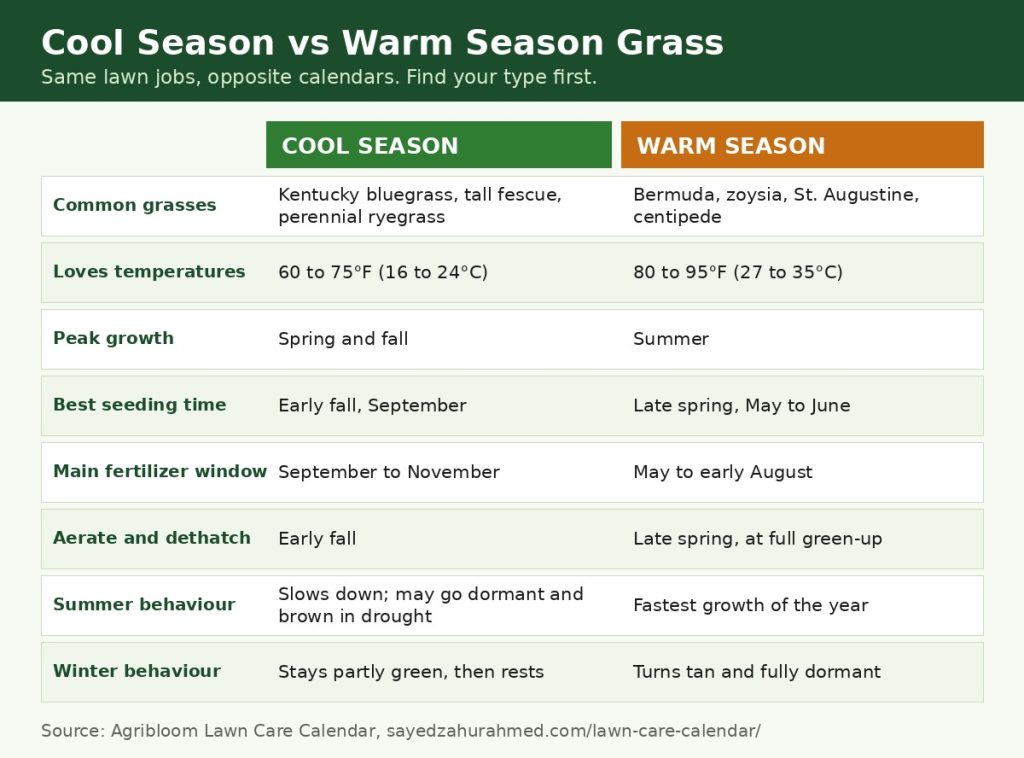
Cool season grasses are Kentucky bluegrass, tall fescue, fine fescue and perennial ryegrass. They dominate the northern half of the country and grow hardest in spring and fall, when air temperatures sit roughly between 60°F and 75°F. In summer heat they slow down, and in a dry July they may go dormant and brown until rain returns. That is normal, not dead.
Warm season grasses are Bermuda, zoysia, St. Augustine, centipede and bahiagrass. They rule the southern states, love air temperatures between 80°F and 95°F, and grow fastest in summer. When temperatures fall below about 50°F to 55°F they stop growing and turn tan for winter.
Not sure which you have? Cool season lawns stay at least partly green into late fall and green up early in spring. Warm season lawns go fully straw colored after the first hard frosts and are among the last lawns on the street to green up. Your local cooperative extension office can identify a sample for free, and it is worth asking once, because the two calendars below differ by months, not days.
Lawn Care Calendar at a Glance
Here is the whole lawn care calendar on one screen. The detailed month by month notes follow, with rates and signals for each job.
| Month | Cool Season Lawns | Warm Season Lawns |
|---|---|---|
| January | Keep off frozen grass, plan and service mower | Keep off dormant grass, plan soil test |
| February | Soil test, sharpen mower blade, order seed | Soil test, service mower, watch for winter weeds |
| March | Rake debris, first mow, pre-emergent at 55°F soil | Pre-emergent, first mow as green-up starts |
| April | Light spring fertilizer, spot spray broadleaf weeds | Begin regular mowing, fertilize after full green-up |
| May | Mow weekly, water deeply, second weed pass if needed | Fertilize, dethatch and aerate late in the month |
| June | Raise mowing height, watch for grubs and disease | Peak growth, fertilize, water deeply |
| July | Water deeply, mow high, hold off on fertilizer | Fertilize lightly, watch for chinch bugs and armyworms |
| August | Plan fall renovation, soil test, order seed | Last full fertilizer round, keep mowing and watering |
| September | Aerate, overseed, main fall fertilizer, best month of the year | Stop nitrogen, raise mowing height, optional ryegrass overseed |
| October | Second fall feeding, keep leaves off, treat weeds | Reduce watering, control winter weeds |
| November | Final mow, winterizer feeding while still green | Final mow, winterize irrigation |
| December | Keep clear of debris, stay off frozen turf | Keep clear of debris, water only if very dry |
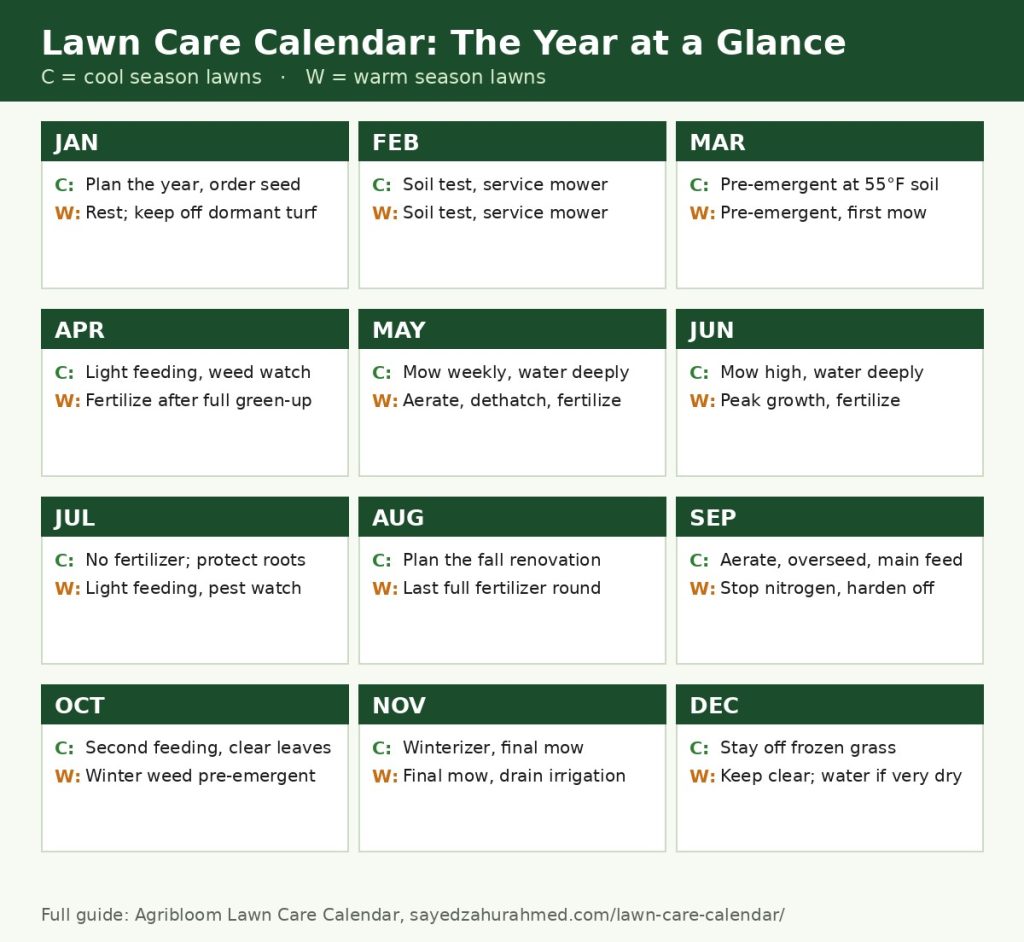
Your Month by Month Lawn Care Calendar
January: Rest and Planning
Cool season: Stay off frozen or frosted grass. Foot traffic on frozen blades snaps them and leaves brown footprints that linger into spring. Use the quiet month to plan: book a soil test, check last year’s notes, and order seed early while the varieties you want are in stock.
Warm season: Your lawn is dormant and tan, and that is fine. Keep leaves and debris off it so the crown stays dry. Do not fertilize dormant warm season grass. Nitrogen now feeds winter weeds, not your lawn.
February: Soil Test and Equipment Month
Both lawn types: February is the smartest month to soil test. Results come back before the spring rush, and you will know your pH and nutrient levels before you buy a single bag. Lawns grow best around pH 6.0 to 7.0, and lime or sulfur corrections take months to work, so early answers matter.
Service the mower now: sharpen or replace the blade, change the oil, and check the cutting height setting. A dull blade tears grass and invites disease all season. Warm season yards in the deep South can also spot treat winter broadleaf weeds on a mild day.
March: Cleanup, First Mow and Pre-Emergent
Cool season: Rake out matted leaves, sticks and any snow mold patches once the ground firms up. Start mowing when grass reaches about 4 inches, and cut it back to 3 to 3.5 inches. The big job is pre-emergent herbicide for crabgrass. Apply it when soil at 4 inches deep reaches about 55°F for several days, which often lines up with forsythia bloom. Water it in lightly.
Warm season: Apply pre-emergent on the same 55°F soil signal, which arrives weeks earlier in the South. Begin mowing as green shoots appear, but do not scalp the lawn down in one pass. Remove no more than one third of the blade at a time.
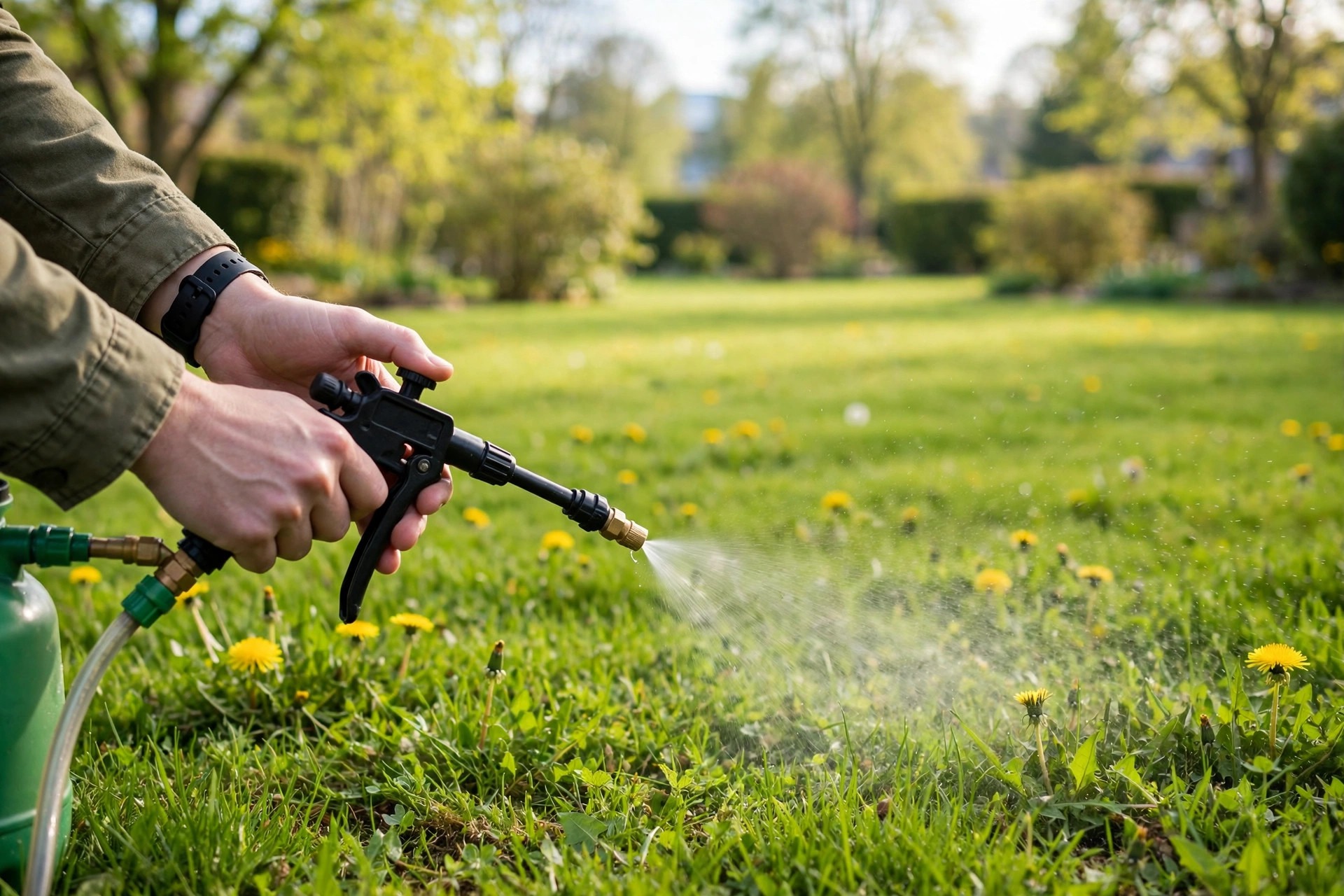
When crabgrass prevention is the job, product choice matters as much as timing, because the barrier has to suit your grass type and your seeding plans.
April: First Feeding and Weed Watch
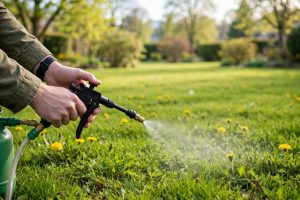
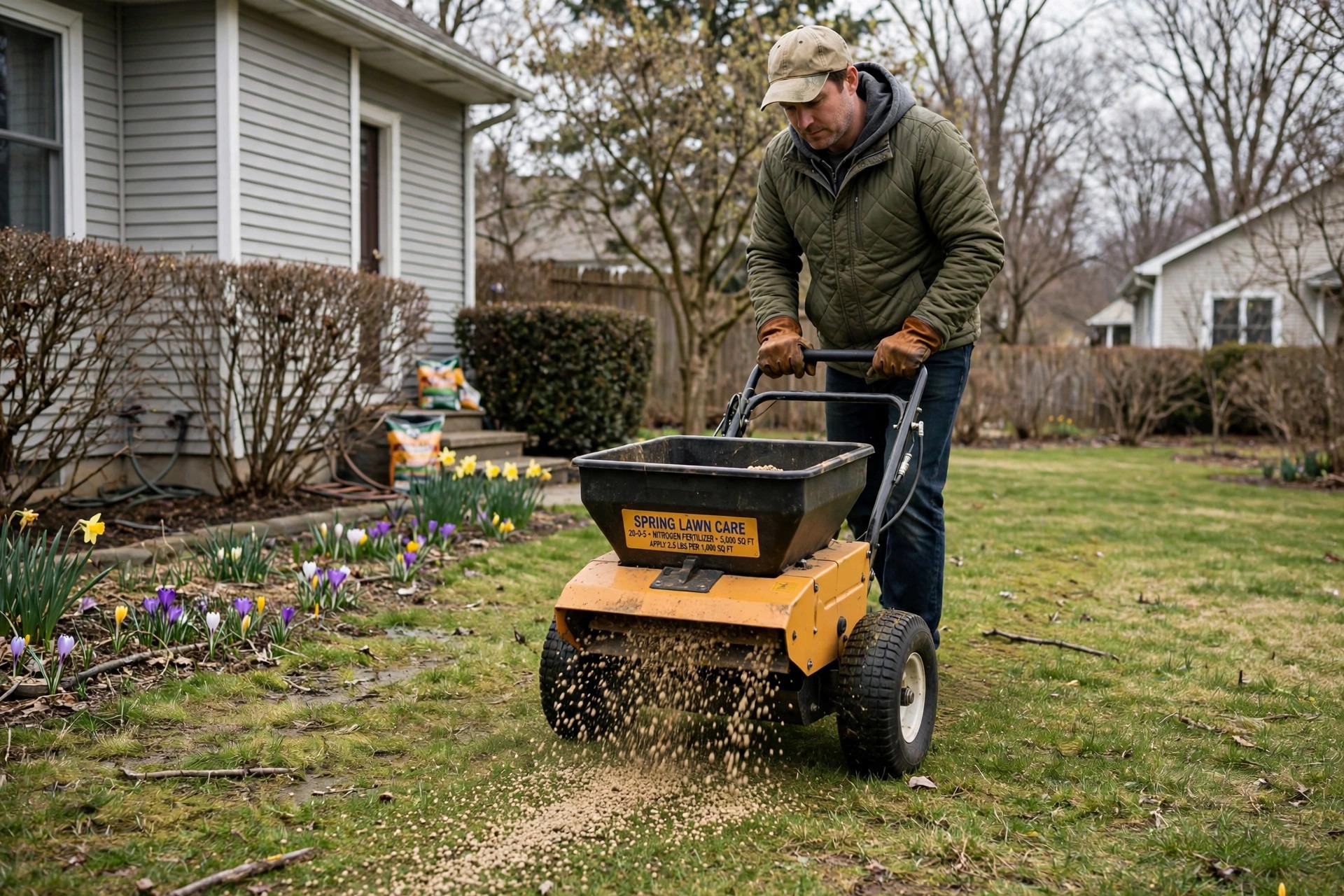
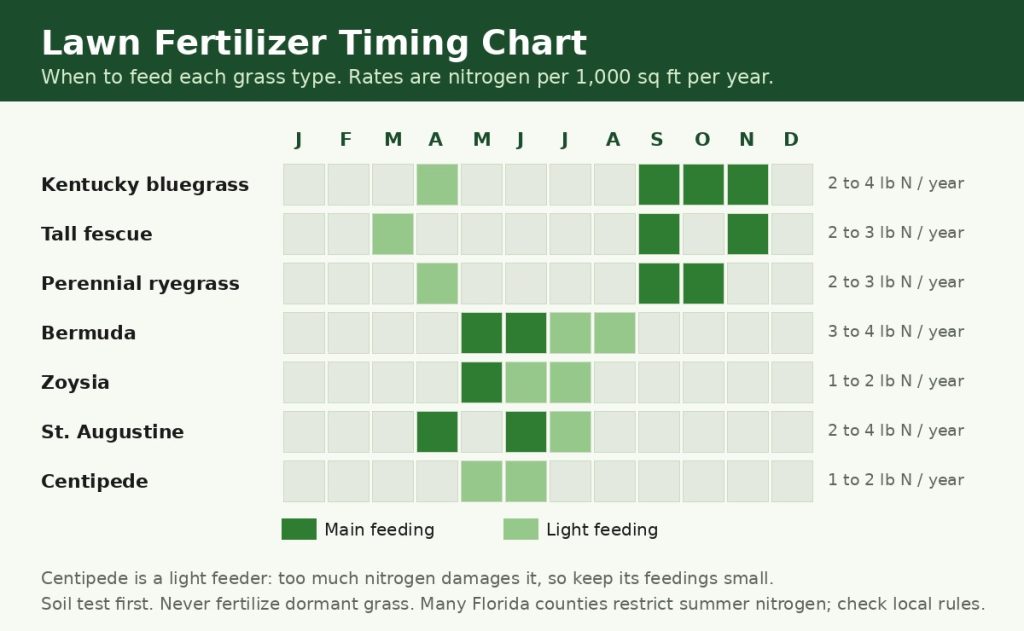
Cool season: If your lawn looks hungry, apply a light spring feeding of about 0.5 to 0.75 lb of nitrogen per 1,000 sq ft. Older, dense lawns often need little or none in spring, because the heavy feeding belongs in fall. Spot spray dandelions, clover and other broadleaf weeds while they are young and growing fast. It is far easier now than in June.
Warm season: Wait until the lawn is fully green before the first fertilizer. Feeding half dormant Bermuda or zoysia pushes weak growth and feeds weeds. Once green-up is complete, apply about 1 lb of nitrogen per 1,000 sq ft and settle into a weekly mowing rhythm.
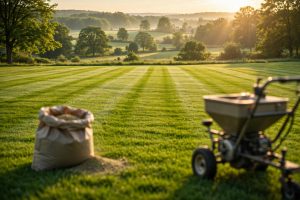
Feeding is the job homeowners overdo most often, so match the product and the rate to your grass and your soil test, not to the picture on the bag.
May: Full Growth and the Aeration Window Opens
Cool season: Mow weekly and water deeply when rain falls short, aiming for about 1 inch per week including rainfall. Leave clippings on the lawn: they return nitrogen for free. Watch for the first crabgrass near hot edges like driveways, and hand pull or spot treat escapes before they spread.
Warm season: This is your renovation month. As growth surges, dethatch if the thatch layer is thicker than half an inch, and core aerate compacted areas. Fertilize with about 1 lb of nitrogen per 1,000 sq ft. Seed new warm season areas now too, because warm soil gives fast germination.
June: Raise the Blade and Water Deeply
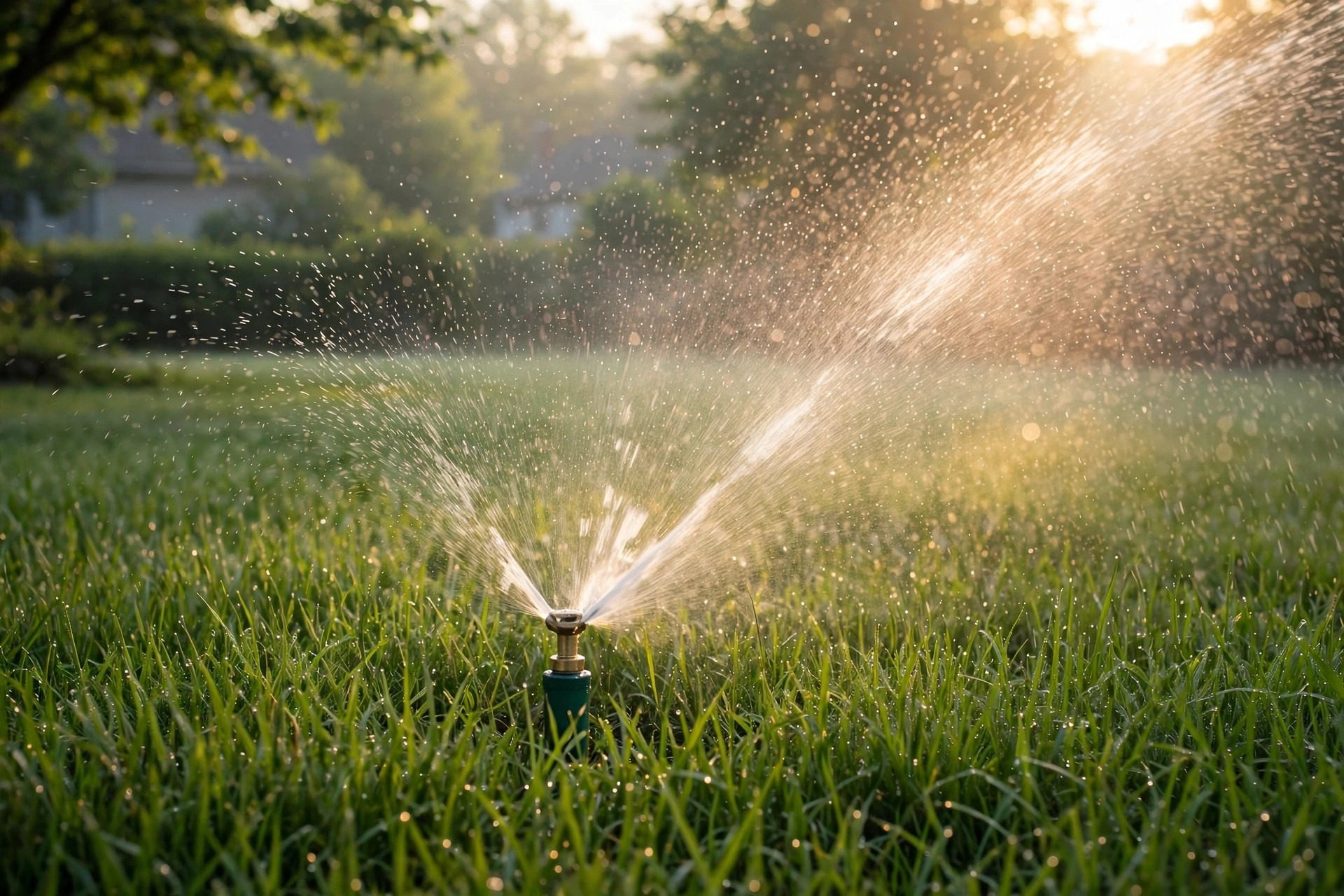
Cool season: Raise the mower to 3.5 to 4 inches. Taller grass shades the soil, keeps roots cooler and crowds out crabgrass better than any spray. Water deeply once or twice a week rather than a little every day, and water in the morning so blades dry quickly. If grubs damaged your lawn in past years, a preventive grub treatment goes down in late June to early July, watered in well.
Warm season: You are at peak growth. Mow weekly, sometimes twice a week for Bermuda, fertilize monthly in lighter doses, and keep water at about 1 to 1.25 inches per week. Watch for gray leaf spot and other fungal problems in humid spells, and improve airflow where you can.
July: Protect, Do Not Push
Cool season: July is a holding month. Do not fertilize heat stressed or dormant grass: feeding now burns roots and feeds disease. Keep mowing high, water deeply during dry spells, and let a dormant lawn rest if water is restricted. Brown summer dormancy is a survival trick, and the lawn usually greens up within two to three weeks of regular rain.
Warm season: Keep feeding lightly and mowing on schedule. Scout for chinch bugs in St. Augustine and armyworms in Bermuda, which can strip a lawn in days in late summer. Catching them early, when damage is a small patch, is the difference between spot treatment and renovation.
August: Plan the Fall Comeback
Cool season: August is decision month. Soil test if you skipped it, order seed, and book or buy your aerator, because September weekends get busy. In the northern states, overseeding can start in late August when nights cool. Hold off on herbicides where you plan to seed, and check each product label for the waiting period before seeding.
Warm season: Give the last full fertilizer application early in the month, and finish nitrogen by about six weeks before your average first frost. Late nitrogen pushes tender growth that winter can kill. Keep mowing and watering normally, and treat summer weeds while they are still growing.
September: The Most Important Month for Cool Season Lawns
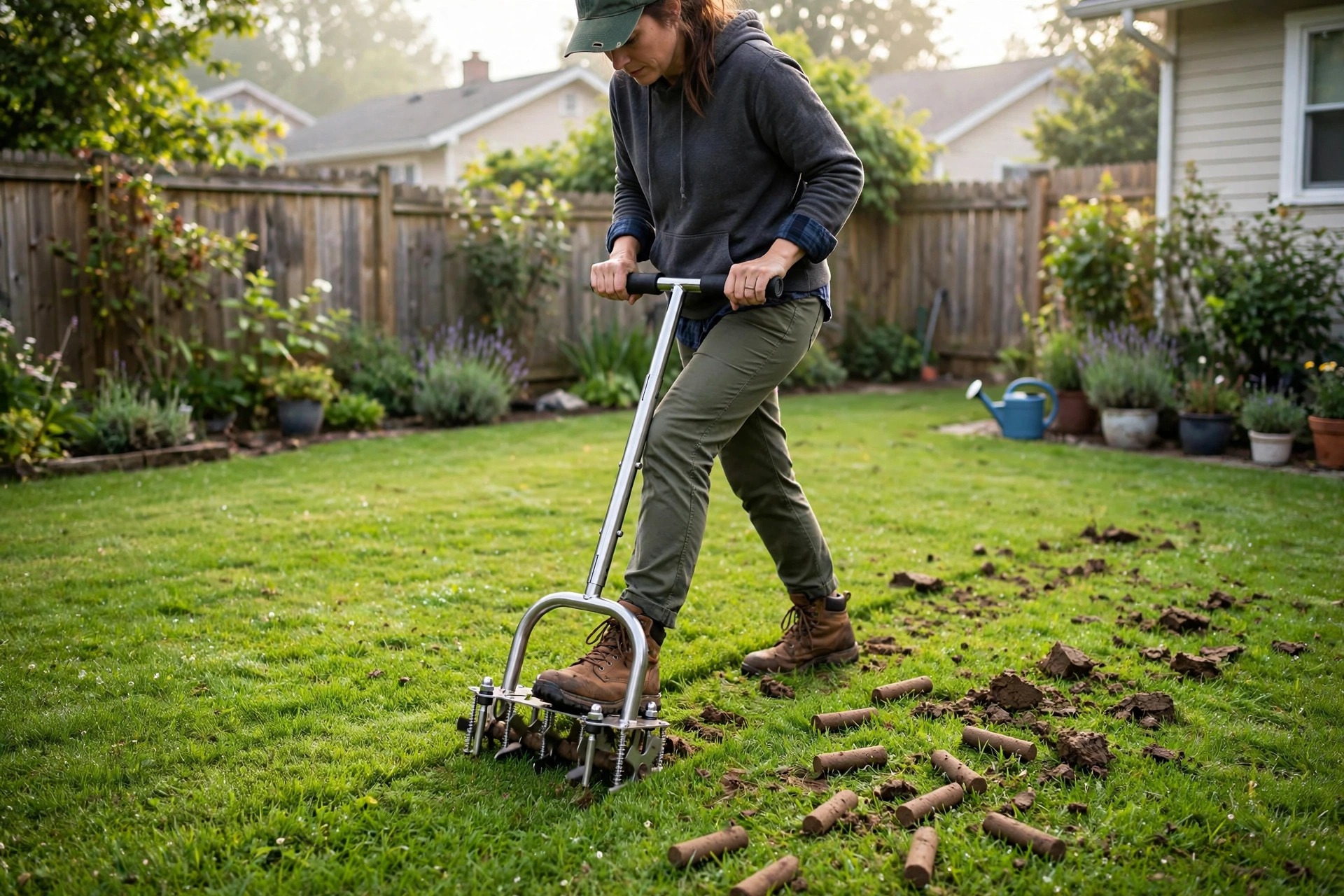
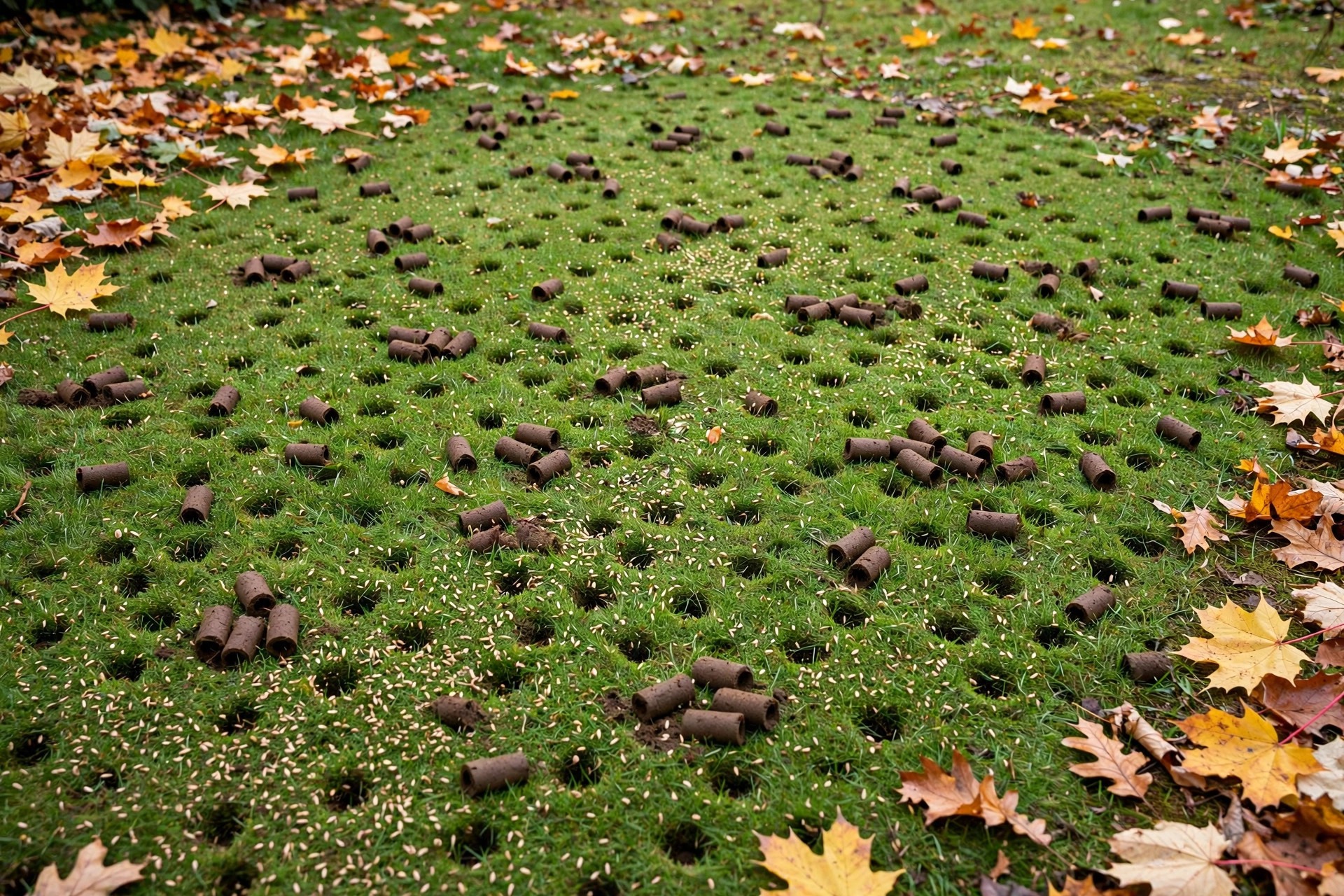
Cool season: If you do only one month of serious lawn work all year, make it this one. Core aerate compacted lawns, overseed thin areas right after aerating so seed falls into the holes, and apply your main fall feeding of about 1 lb of nitrogen per 1,000 sq ft. Aim to finish seeding at least 4 to 6 weeks before your first hard frost, and keep new seed lightly watered every day until it sprouts. Fall weeds also absorb herbicide well now, but keep sprays away from fresh seed until it has been mowed two or three times.
Aeration is what turns a good September into a great one, because it opens the soil right when roots are growing hardest and seed needs contact with real soil.
Warm season: Wind down. Stop nitrogen, raise the mowing height slightly, and let the grass harden off for winter. Southern homeowners who want winter color can overseed with perennial or annual ryegrass once nights cool, but it is optional and it does compete with your permanent grass in spring.
October: Feed Roots and Stay Ahead of Leaves
Cool season: A second, lighter fall feeding helps roots store energy for winter. Keep leaves off the lawn: a thick mat smothers grass and shelters disease. Mulch mow thin leaf layers back into the turf instead of raking, if you can. Continue mowing as long as the grass keeps growing, and treat perennial broadleaf weeds like ground ivy and clover, which take fall herbicide down to their roots very effectively.
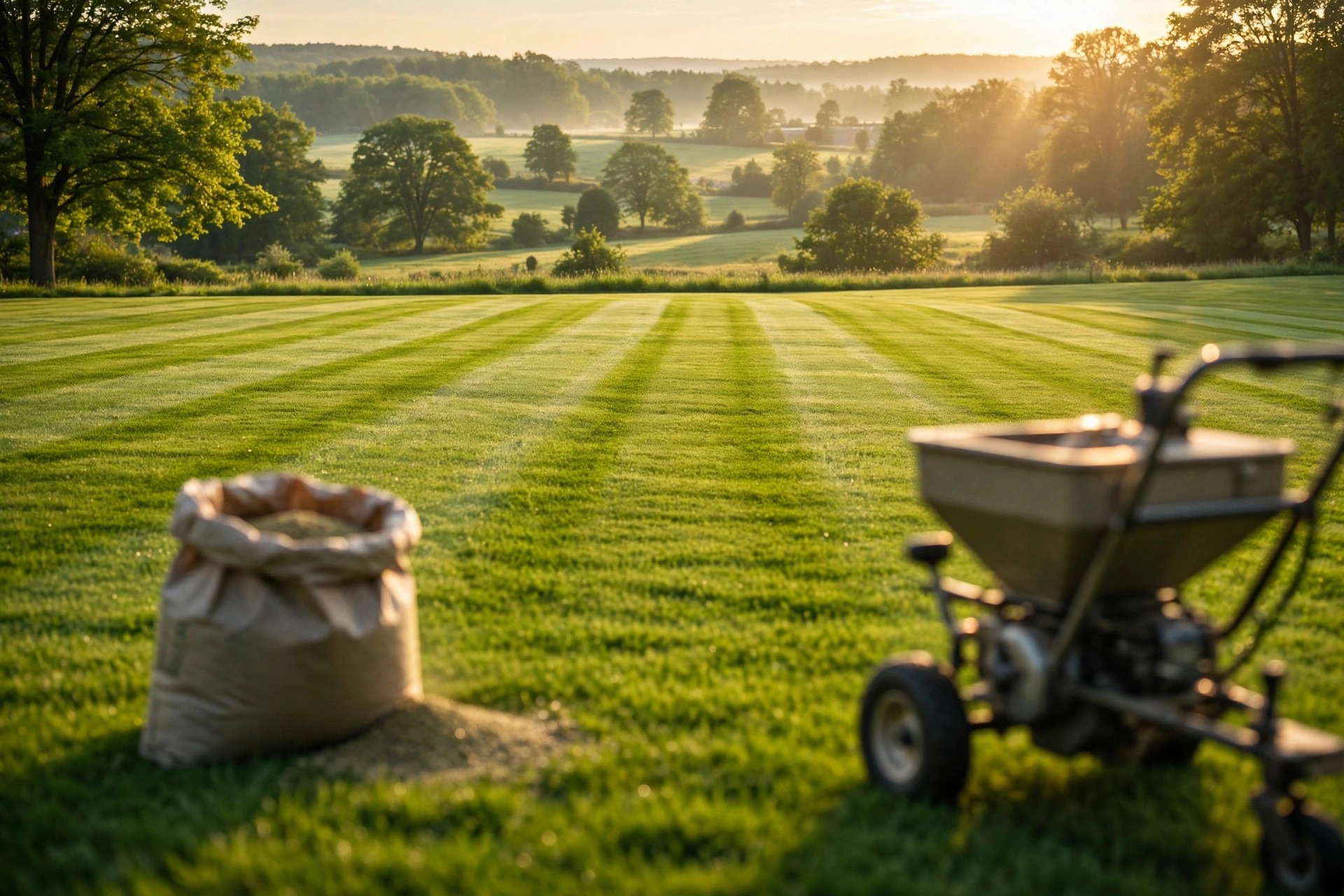
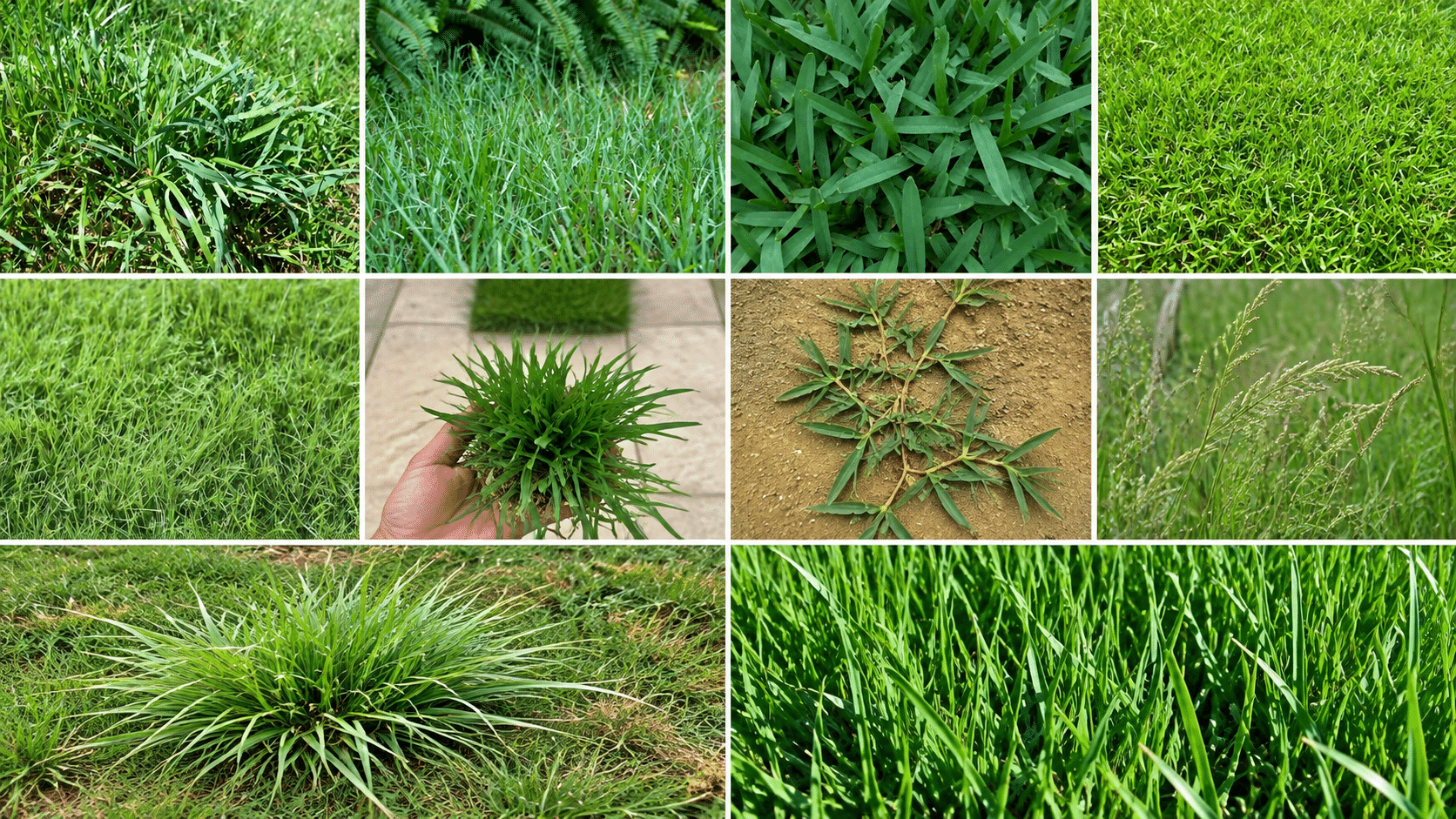
Choosing seed is the other October decision for thin lawns that missed September, and the right blend for your sun and soil beats the cheapest bag every time.
Warm season: Reduce watering as growth slows. Apply pre-emergent for winter annual weeds like annual bluegrass if they troubled you last winter, and spot treat henbit and chickweed as they appear.
November: Winterizer and the Final Mow
Cool season: While the lawn is still green, apply the final winterizer feeding, the one extension services consistently call the most valuable of the year for spring green-up. It should be in place before the ground freezes, and many states set mid November as the last legal date for lawn fertilizer, so check your local rules. Lower the mower gradually for the final cut, down to about 2.5 inches, which helps prevent snow mold and matting.
Warm season: Give dormant grass its final tidy mow, clear every leaf, and winterize the irrigation system before a hard freeze. Do not fertilize now. A dormant lawn cannot use it.
December: Protect the Crown
Both lawn types: December work is mostly restraint. Keep the lawn clear of stored furniture, firewood piles and parked equipment, which crush crowns and leave dead patches by spring. Stay off frozen turf. In the deep South, water dormant warm season grass lightly during long dry, windy spells to prevent the crowns drying out. Then rest. The lawn care calendar starts again in January, and a lawn that was fed and seeded on schedule in fall will show it by April.
Adjust Your Lawn Care Calendar to Your Region
The tables above assume an average US lawn, and there is no such thing. US climates run from Minnesota winters to Miami heat, and the same job can shift by six weeks between them. Here is how the calendar bends in the four regions readers ask about most.
Northeast and Great Lakes: A Short, Intense Fall Window
Your lawn is Kentucky bluegrass, tall fescue or perennial ryegrass, and your spring starts late. In practice, your lawn care calendar runs about a month behind the tables above in spring, then catches up fast. Pre-emergent often goes down in late April or early May, not March, and the first mow may not come until late April.
Fall is where Northeast lawns are won: overseed by mid September, because first frost can arrive in early October, and get the winterizer down by early to mid November, ahead of the freeze and any state fertilizer deadlines. Two regional extras: rake or mulch every leaf before snow, because a matted lawn under snow is where snow mold starts, and flush road salt damage near the street with deep spring watering once the ground thaws.
Florida and the Deep South: Feed Around the Summer Rules
St. Augustine, bahiagrass and centipede grow almost year round in peninsular Florida, and South Florida lawns may never go fully dormant. A Florida lawn care calendar is governed less by temperature than by the rainy season rules below. The biggest calendar change is legal, not biological: many Florida counties and cities ban nitrogen and phosphorus fertilizer during the rainy summer months, commonly from June 1 to September 30, to protect waterways. Feed in the spring and fall windows instead, and never spread before a forecast storm.
Sandy soil leaches nutrients fast, so smaller doses of slow release fertilizer beat one heavy feeding. Summer is pest season here: watch St. Augustine for chinch bugs in hot, sunny patches, and expect fungal pressure in wet spells. North Florida lawns often get a ryegrass overseed for winter color; in Miami it is rarely worth it.
Texas: Two Lawn States in One
North Texas sits in the transition zone: Bermuda in the sun, tall fescue hanging on in shade, and hard freezes that can still bite in February. Central and coastal Texas run St. Augustine and Bermuda on a much longer season, with feeding from May into August. Everywhere in Texas, water sets the real calendar.
Treat your lawn care calendar as a watering plan first and a feeding plan second. Most cities run staged drought restrictions with set watering days, so water deeply on your allowed days, early in the morning, and let the lawn stretch between drinks. Mow Bermuda at about 1.5 to 2.5 inches, higher in heat waves. In dry West Texas, buffalograss is the honest low water choice. Fall armyworms can strip a Bermuda lawn in days, so scout in September and October, and decide early whether a winter ryegrass overseed is worth the water it will drink.
California and the Dry West: Water Is the Calendar
A California lawn care calendar starts with the watering schedule your city allows. The limiting factor is not temperature, it is water. Build everything around it: water deeply on permitted days before sunrise, and accept some summer dormancy in fescue rather than breaking the rules to keep it green. Coastal and northern lawns are mostly tall fescue, fed mainly in fall.
Inland and Southern California Bermuda turns tan in winter: overseed with ryegrass in October if winter color matters, or skip it and save the water. For thirsty or low traffic areas, drought smart swaps like buffalograss, UC Verde Bermuda and kurapia groundcover cut water use far more than any schedule tweak. Keep fertilizer off the lawn entirely when rain is forecast, both for the lawn and for the storm drains it would wash into.
How to Use This Lawn Care Calendar Without Overdoing It
A lawn care calendar is a guide, not a contract. Three rules keep this lawn care calendar working in any state:
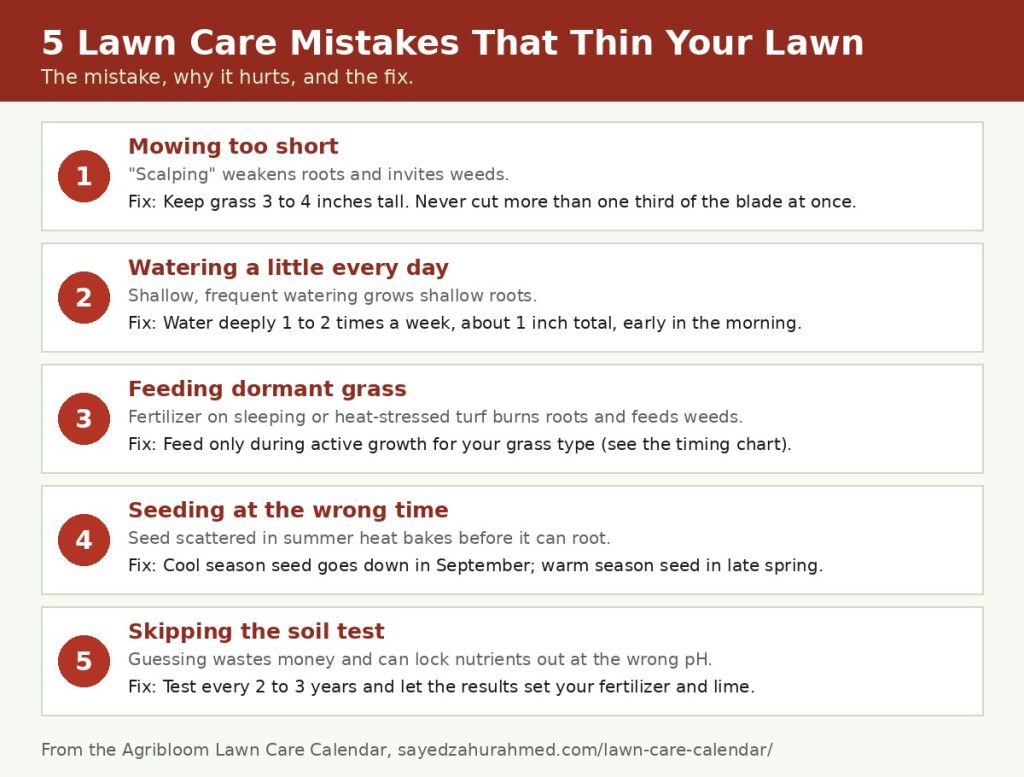
First, follow soil temperature, not just the month. A March week at 55°F soil in Georgia is a May week in Minnesota. A cheap soil thermometer, or even a screwdriver and a weather app showing soil temperature, beats a printed date.
Second, never stack conflicting jobs. Pre-emergent blocks grass seed as surely as it blocks crabgrass seed, so pick one per area per season. Aerate before you apply a fall pre-emergent, never after, because the tines punch holes through the barrier. And give new seed its 4 to 6 clear weeks before frost.
Third, soil test before you spend. The EPA and every extension service in the references below give the same advice: test every two to three years, feed based on results, prefer slow release nitrogen, and keep fertilizer off pavements and away from water. A dense, well fed lawn is itself the best weed control, because weed seeds need light at the soil surface to sprout.
Final Thoughts on Your Lawn Care Calendar
A great lawn is rarely about working harder. It is about doing five jobs in the right month: pre-emergent at 55°F soil in spring, steady deep watering and high mowing in summer, then aeration, overseeding and the main feeding in fall for cool season grass, or in late spring for warm season grass. Print this lawn care calendar, mark your grass type at the top, and check off each month as you go. By this time next year the difference will be visible from the street.
References
1. University of Nebraska-Lincoln Turf Program, “Cool Season Lawn Calendar, Eastern Nebraska”: fertilization rates, the 55°F soil signal for pre-emergent, and mowing heights for cool season lawns.
2. University of Maryland Extension, “Fertilizing Home Lawns”: why late summer and fall are the main feeding season for cool season grass, and why soil testing should set phosphorus and pH decisions.
3. Virginia Cooperative Extension, “Fall Fertilization Strategies for Lawns”: fall nitrogen rates of up to 1 lb per 1,000 sq ft per application and the density and root growth benefits of fall feeding.
4. Kansas State University Turf and Landscape, “Homeowner Do-It-Yourself Lawn Calendar Reminders”: seasonal reminders for both cool and warm season lawns, including warm season nitrogen schedules from May to mid August.
5. U.S. Environmental Protection Agency, “Healthy Lawn: Healthy Environment”: soil testing, slow release fertilizer, aeration for compacted soil, and the target pH range for lawns.
Frequently Asked Questions
What month should I fertilize my lawn?
Fertilize when your grass is actively growing. Cool season lawns get their main feeding in September, a second feeding in October or November, and only a light feeding in spring. Warm season lawns are fed from full green-up in late spring through early August, and never while dormant in winter.
When should I apply pre-emergent herbicide in spring?
Apply pre-emergent when soil temperature at about 4 inches deep holds near 55°F for several days. That is the point where crabgrass seed begins to germinate. In the South this can be February or March, while northern lawns often reach it in April.
What is the best month to aerate and overseed a lawn?
For cool season lawns, early fall, usually September, is best: soil is warm, nights are cool, and seed has 4 to 6 weeks to root before frost. For warm season lawns, aerate in late spring to early summer when growth is at full speed.
How much water does a lawn need each week?
About 1 inch per week including rainfall is a solid target for most lawns, and warm season lawns in peak summer may need up to 1.25 inches. Water deeply once or twice a week in the morning, rather than a light sprinkle every day, to train deeper roots.
Can I use the same lawn care calendar for fescue and Bermuda?
No. Fescue is a cool season grass that grows in spring and fall and needs its main work in September. Bermuda is a warm season grass that grows in summer and needs its aeration and main feeding in late spring and summer. Using the wrong calendar is the most common cause of thin, weedy lawns.
When is it too late to overseed in fall?
It is too late when new grass cannot get 4 to 6 weeks of growth before the first hard frost. In northern states that often means finishing by late September, while transition zone lawns can usually seed into mid October. Seed that sprouts but cannot root before winter rarely survives it.

- Lawn Care Calendar: Month by Month Guide for US Lawns - October 5, 2026